7,363 open-source and SaaS tools, with GitHub stats refreshed every day.

6 alternatives ranked by real activity

Open-source Trengo alternatives

A curated, ranked list of the 6 best open-source alternatives to Trengo.

The best open-source alternative to Trengo is Chatwoot. If that doesn't suit you, other good options are Zammad, FreeScout, DeskcommCRM and Libredesk.

Trengo alternatives are mainly customer support tools, but some are also CRM tools. 6 of them shipped code in the last 30 days, 6 can be self-hosted, and 2 use a permissive licence.

Last updated October 2, 2026 · ranked by GitHub stars, growth and recent commits

Chatwoot

An open-source omnichannel customer support desk with live chat, email and social inbox, an AI agent and a help center, positioned against Intercom and Zendesk.

GitHub stars
37k
Last commit
today
Latest release
v4.18.0
Self-hosted
Yes
Hosted version
Available
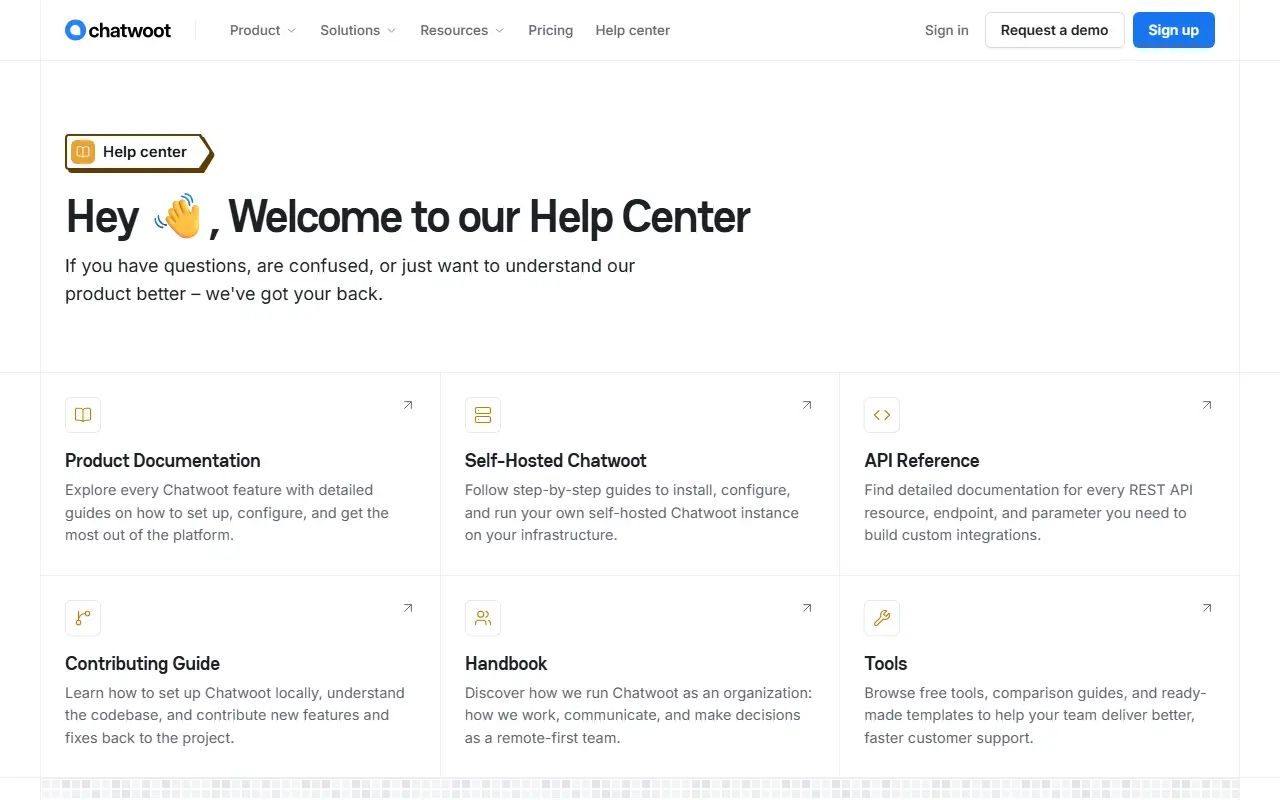
chatwoot.comChatwoot homepage screenshot

Chatwoot is an open-source, self-hostable customer support platform that gathers all customer conversations into one inbox. It is presented as an alternative to Intercom, Zendesk and Salesforce Service Cloud, and aims to give businesses control over their customer data while managing conversations across channels.

The shared inbox takes in website live chat, email, SMS and messaging channels such as Facebook, Instagram, Twitter, WhatsApp, Telegram and Line. An AI agent called Captain automates replies to common questions to reduce agent workload, and a built-in Help Center portal lets you publish articles and FAQs so customers can find answers themselves. Collaboration tools include private notes with mentions, labels, canned responses, auto-assignment based on availability, custom views and filters, a command bar and multi-language support.

Chatwoot is built with Ruby on Rails and Vue and can be run with Docker, with deployment guides on its help center. The repository license is listed as 'Other', so confirm which parts are open source. A hosted cloud version is also available for teams that prefer not to maintain their own server.

Key features

  • Shared inbox across chat, email and social channels
  • Captain AI agent for automated replies
  • Built-in Help Center portal
  • Private notes and @mentions
  • Canned responses and auto-assignment
  • Custom views and filters
  • Support for multiple languages

Pricing: Hacker is free for up to 2 agents. Startups costs $19, Business $39 and Enterprise $99 per agent per month, with a 15-day free trial; extra Captain AI credits are $20 per 1,000.

Zammad

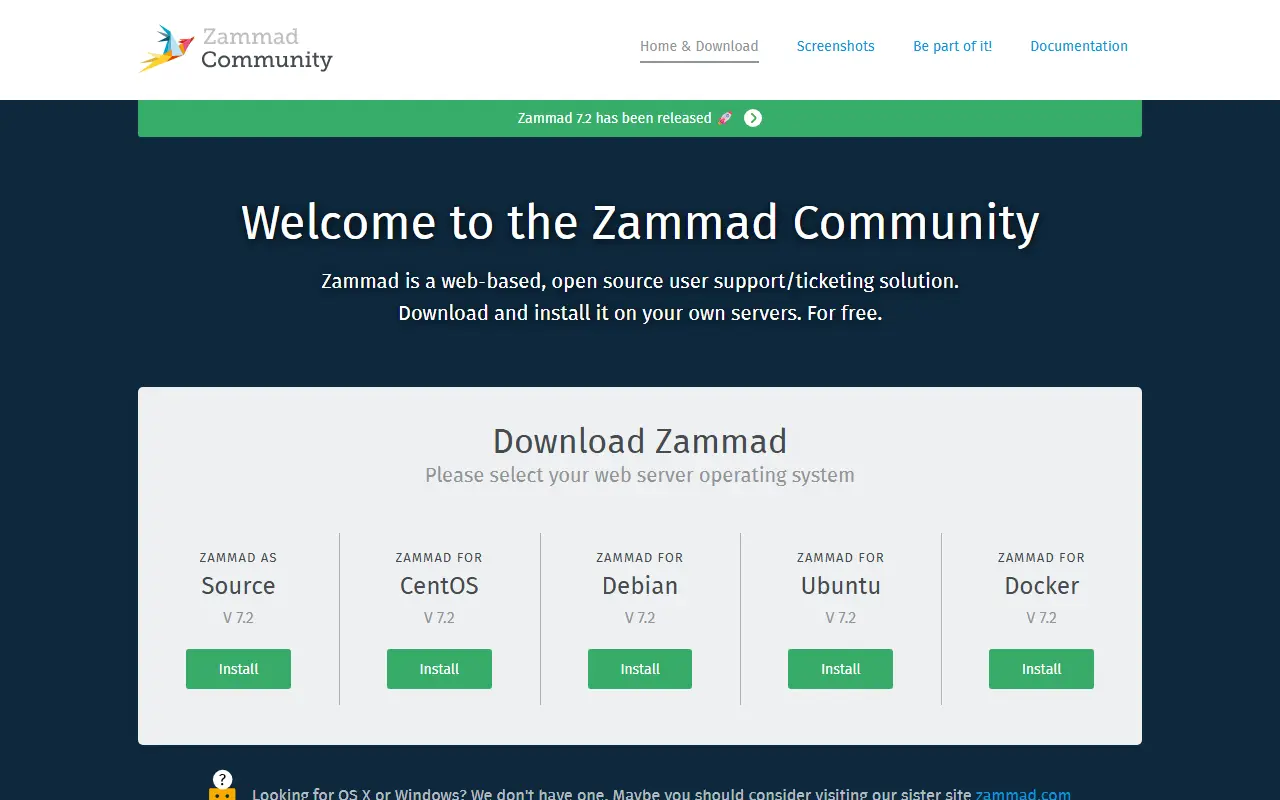
Zammad is an open-source helpdesk for support teams that gathers email, chat, phone and social media requests into one ticket system.

GitHub stars
6k
Last commit
today
Licence
AGPL-3.0
Self-hosted
Yes
Hosted version
Available
zammad.orgZammad homepage screenshot

Zammad is a browser-based helpdesk and customer support platform. Support teams use it to manage inquiries that arrive through email, chat, telephone and social media channels in a single ticket system, so conversations stay organized and the whole team can see what is happening.

The README stresses that the software is and will stay open source under the GNU AGPLv3. Ownership of the source code sits with the Zammad Foundation, an entity separate from commercial providers like Zammad GmbH, the company whose team does much of the development. The technology stack includes Ruby on Rails, GraphQL, TypeScript and Vue.

You can self-host Zammad on your own servers or buy hosting and support from the company behind it. It suits customer support, IT helpdesk and service teams that want an open-source ticketing system with multichannel support and control over where their data lives.

Key features

  • Multichannel tickets from email and chat
  • Telephone and social media channels
  • Web-based agent interface
  • GraphQL API and Vue front end
  • Independent Zammad Foundation owns the code
  • Self-hosted or vendor-hosted deployment

Pricing: The software is free under AGPLv3; hosting and support are offered by Zammad GmbH.

FreeScout

FreeScout is a free, self-hosted help desk and shared mailbox built on PHP and Laravel, positioned as an alternative to Zendesk and Help Scout.

GitHub stars
4.6k
Last commit
today
Latest release
1.8.243
Licence
AGPL-3.0
Self-hosted
Yes
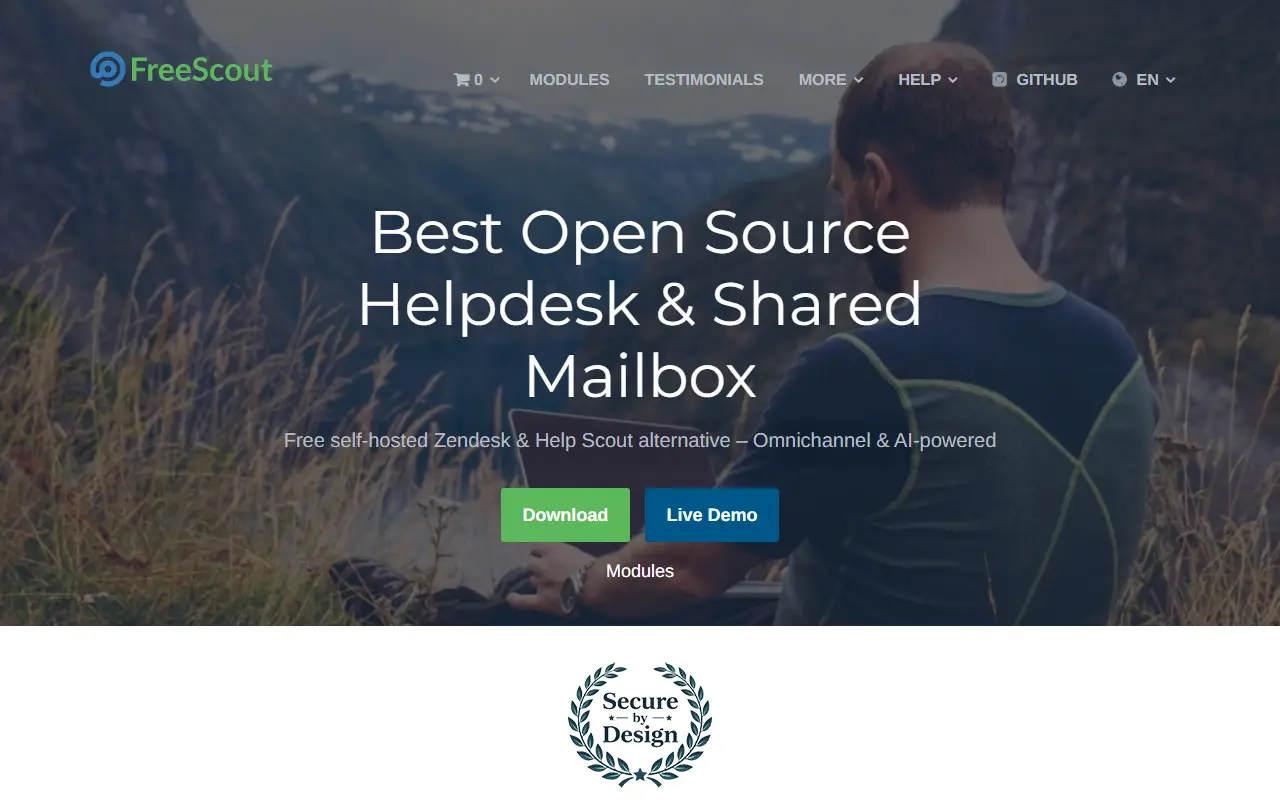
freescout.netFreeScout homepage screenshot

FreeScout is a compact open-source help desk and shared inbox written in PHP on the Laravel framework. It lets support teams handle customer emails and conversations together, with tickets, shared mailboxes and an omnichannel approach, while keeping data on their own servers rather than in a vendor's cloud.

The README presents it as a free self-hosted alternative to Zendesk and Help Scout, developed from scratch without using any copyrighted material from either product. Its table of contents points to a demo, a feature list, mobile apps and system requirements, and the tagline mentions AI-powered assistance. Repository topics also name osTicket as a comparison point.

FreeScout is licensed under AGPL-3.0. Some optional add-on modules are sold separately by the project. It suits small and medium businesses, agencies and nonprofits that want a capable help desk without per-agent subscription fees and with full control over their data.

Key features

  • Shared mailbox and ticketing
  • Omnichannel customer conversations
  • AI-assisted helpdesk features
  • Mobile apps for agents
  • Self-hosted PHP and Laravel application
  • Alternative to Zendesk and Help Scout

Pricing: Free and open source under AGPL-3.0; some optional add-on modules are sold by the project.

DeskcommCRM

DeskcommCRM is an open-source, self-hosted CRM for selling over WhatsApp, with AI agents, multi-tenant support and an MCP-ready design.

GitHub stars
4.4k
Last commit
yesterday
Latest release
v1.69.0
Licence
MIT
Self-hosted
Yes
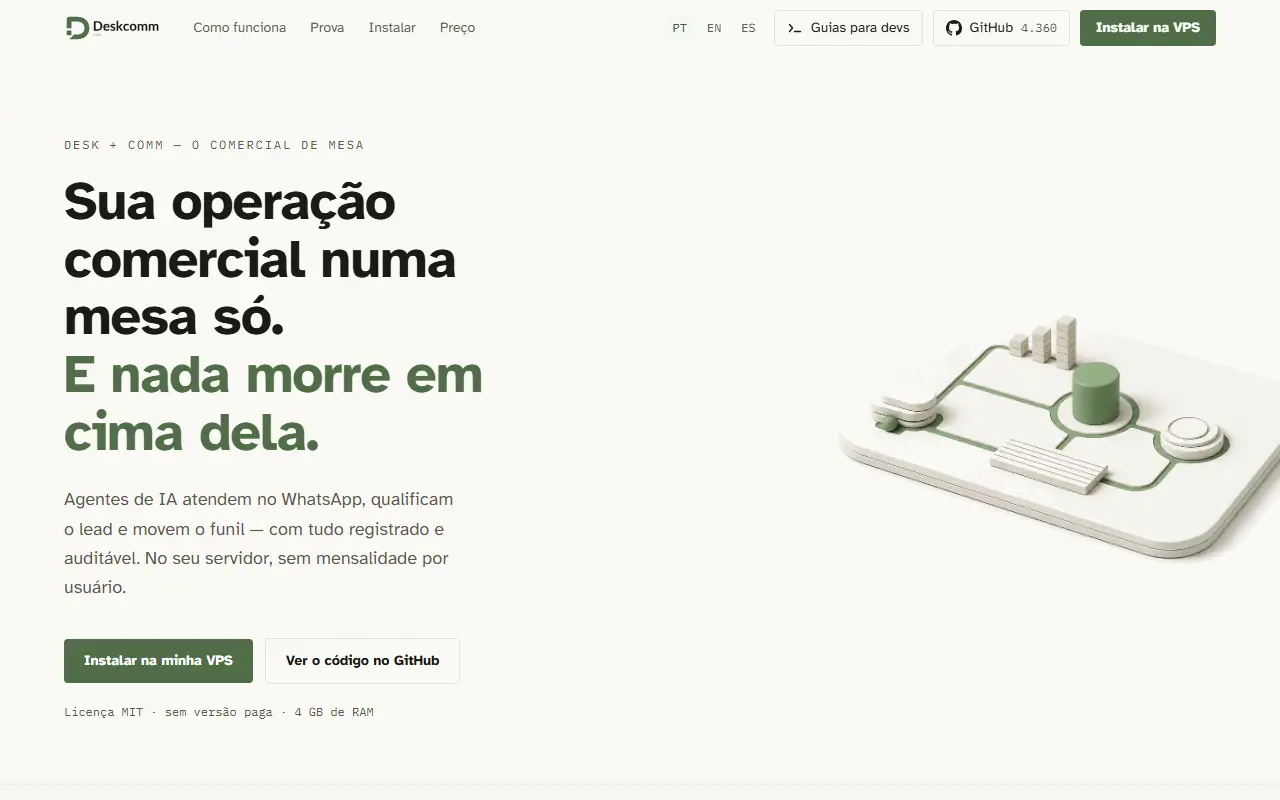
deskcomm.com.brDeskcommCRM homepage screenshot

DeskcommCRM is an open-source sales CRM aimed at businesses that sell through chat, especially WhatsApp. It combines contact and deal management with AI agents that answer customers, qualify leads and help sell, running on your own server instead of a monthly subscription. The project presents itself as an open alternative to Kommo, Octadesk and Intercom.

WhatsApp connectivity uses WAHA, and the stack is TypeScript with Next.js and Supabase. Topics highlight retrieval-augmented generation, MCP readiness, multi-tenant architecture, LGPD data protection compliance for Brazil, and an integration with the Nuvemshop store platform. A hosting partnership produced a setup kit that installs the whole stack on a VPS with a single command. Documentation is available in Portuguese, English and Spanish.

The project is MIT-licensed, with no paid feature gating stated in the README. It suits small businesses, agencies and e-commerce sellers, particularly in Brazil, that run sales and support through WhatsApp.

Key features

  • WhatsApp integration through WAHA
  • AI agents for sales and support chats
  • Multi-tenant CRM architecture
  • Built to work with MCP
  • RAG-based knowledge for agents
  • One-command VPS installer

Pricing: Free and open source under the MIT license; the README says there are no subscription fees or locked features.

Libredesk

Self-hosted customer support desk shipped as a single binary, combining email, live chat, and WhatsApp in one shared inbox with a help center and AI features.

GitHub stars
3k
Last commit
4 days ago
Latest release
v2.8.0
Licence
AGPL-3.0
Self-hosted
Yes
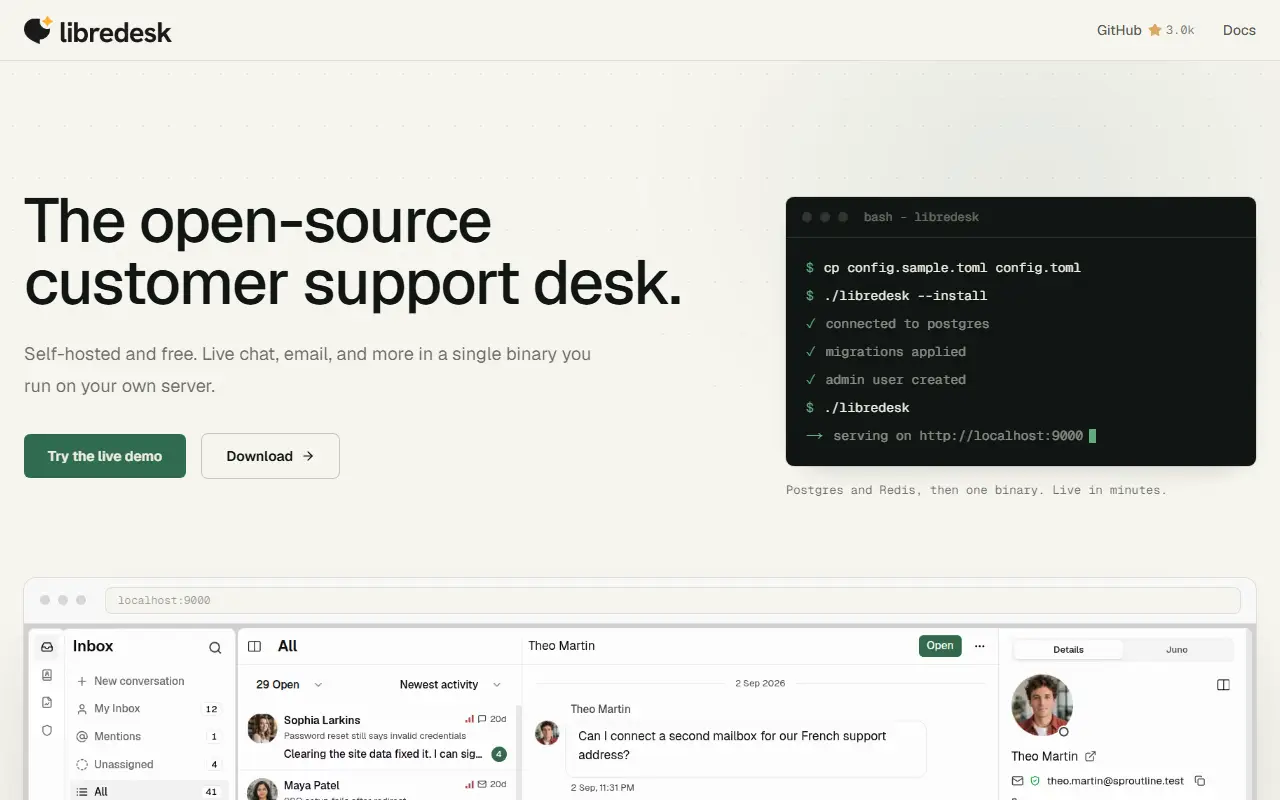
libredesk.ioLibredesk homepage screenshot

Libredesk is an open-source customer support platform that you host yourself and run as one binary. It brings email, a live chat widget for your website, and WhatsApp conversations (connected through the Meta Cloud API) into a shared inbox, and positions itself as a lightweight alternative to Zendesk, Intercom, and Chatwoot. It is released under the AGPL-3.0 license.

Teams can organize conversations with tags, custom statuses and attributes, snoozing, and search. Automations tag, assign, and route conversations by rules, macros apply saved replies and actions in a single step, and auto-assignment distributes work by agent capacity. SLA management warns about conversations at risk of missing targets, and CSAT ratings and analytics track response times and resolution rates.

A multilingual help center publishes a searchable knowledge base, an AI assistant can answer chat questions from it and hand off to an agent, and an agent copilot drafts replies and summarizes threads. Roles with per-action permissions, OIDC single sign-on, activity logs, an API, and webhooks cover administration. It is written in Go and Vue and suits small and mid-sized support teams.

Key features

  • Shared inbox for email, live chat, and WhatsApp
  • Searchable multilingual help center
  • AI assistant and agent copilot
  • Automations, macros, and auto-assignment
  • SLA tracking and CSAT ratings
  • Role-based permissions and OIDC single sign-on
  • API and webhooks

Pricing: Free and open source under the AGPL-3.0 license; run it yourself as a single binary.

Wacrm

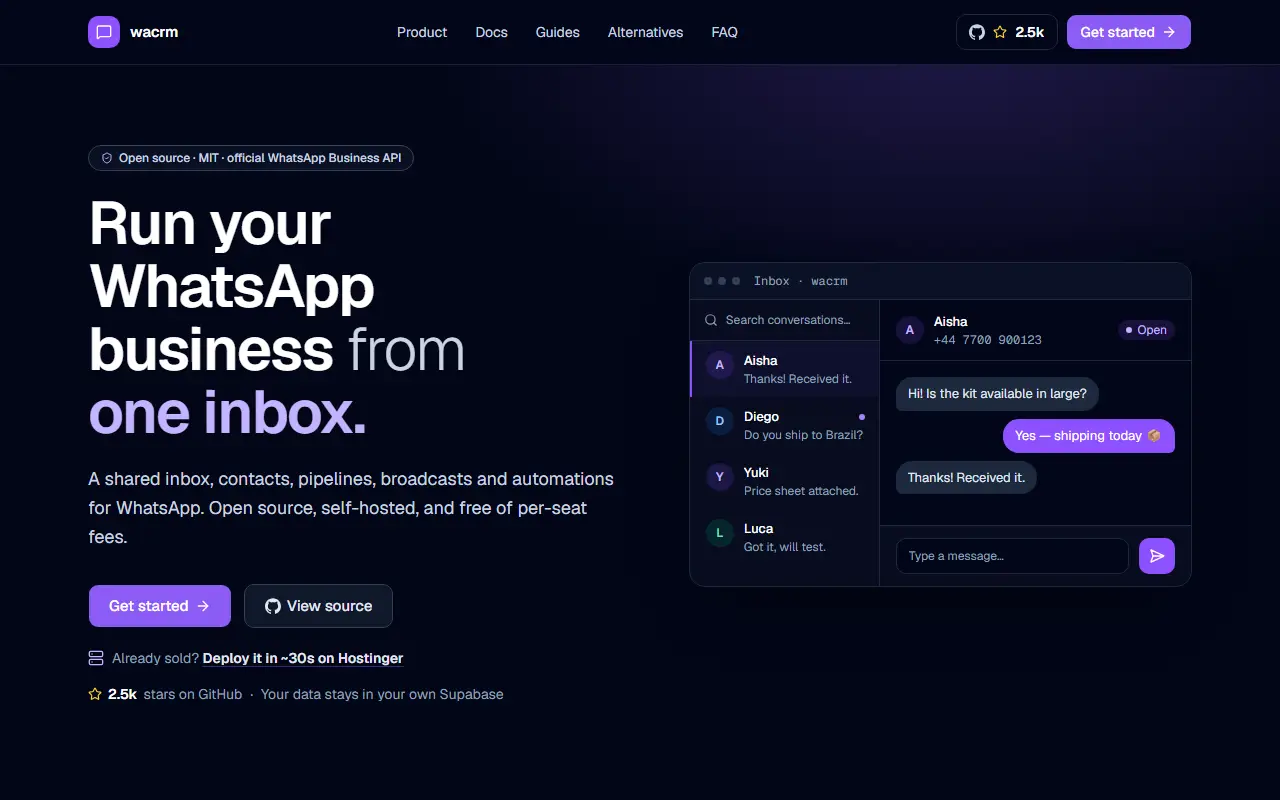
Self-hostable CRM template for WhatsApp with a shared inbox, contacts, Kanban sales pipelines, broadcasts, and no-code automations.

GitHub stars
2.5k
Last commit
4 days ago
Licence
MIT
Self-hosted
Yes
wacrm.techWacrm homepage screenshot

wacrm is a CRM template built around WhatsApp that you can fork, brand, and host yourself. It is built with Next.js and TypeScript and uses Supabase for its backend, according to its topics. The repository is the product itself, while the marketing site and self-hosting documentation live in a separate repository. It is released under the MIT license.

Out of the box it provides a shared inbox on the official WhatsApp Business API, so several agents can work one number with per-conversation assignment, status, and notes. Contacts support tags, custom fields, CSV import, and deduplication. Sales pipelines are shown as Kanban boards with deals linked to conversations, broadcasts use Meta-approved templates with delivery and read tracking and per-recipient variables, and no-code automations trigger on inbound messages.

The project is young, created in 2026, and relies on the WhatsApp Business platform, so using it requires access to the API and compliance with Meta's rules. It suits small businesses, agencies, and developers who want a white-label WhatsApp CRM base.

Key features

  • Shared inbox on the WhatsApp Business API
  • Contacts with tags, custom fields, and CSV import
  • Kanban sales pipelines linked to conversations
  • Broadcasts with approved templates and read tracking
  • No-code automations on inbound messages
  • Forkable and brandable template

Pricing: Free and open source under the MIT license; WhatsApp Business API usage is billed separately by Meta.

Trengo alternatives: questions

What is the best open-source alternative to Trengo?
Chatwoot is the top-ranked open-source alternative to Trengo on Enlisted: An open-source omnichannel customer support desk with live chat, email and social inbox, an AI agent and a help center, positioned against Intercom and Zendesk. Other strong options are Zammad, FreeScout, DeskcommCRM and Libredesk.
Are these Trengo alternatives free?
All 6 are open source, so the code is free to use under its licence, and all of them can be self-hosted on your own server or computer. 2 also offer a paid or managed cloud version if you'd rather not host it yourself.
How is this list of Trengo alternatives ranked?
By a score built from GitHub stars, star growth over the last 30 days and how recently the code changed. 6 of these projects shipped code in the last 30 days. Data is refreshed daily, and nobody can pay to move up.

People also look for alternatives to…

View all