7,363 open-source and SaaS tools, with GitHub stats refreshed every day.

10 alternatives ranked by real activity

Open-source Freshservice alternatives

A curated, ranked list of the 10 best open-source alternatives to Freshservice.

The best open-source alternative to Freshservice is Snipe-IT. If that doesn't suit you, other good options are GLPI, Zammad, Frappe Helpdesk and Faveo Helpdesk.

Freshservice alternatives are mainly customer support tools, but some are also ERP tools. 8 of them shipped code in the last 30 days, 10 can be self-hosted, and 1 uses a permissive licence.

Last updated October 2, 2026 · ranked by GitHub stars, growth and recent commits

Snipe-IT

Snipe-IT is a free, open-source web app for tracking IT assets and software licenses, built on Laravel.

GitHub stars
15k
Last commit
2 days ago
Latest release
v8.8.0
Licence
AGPL-3.0
Self-hosted
Yes
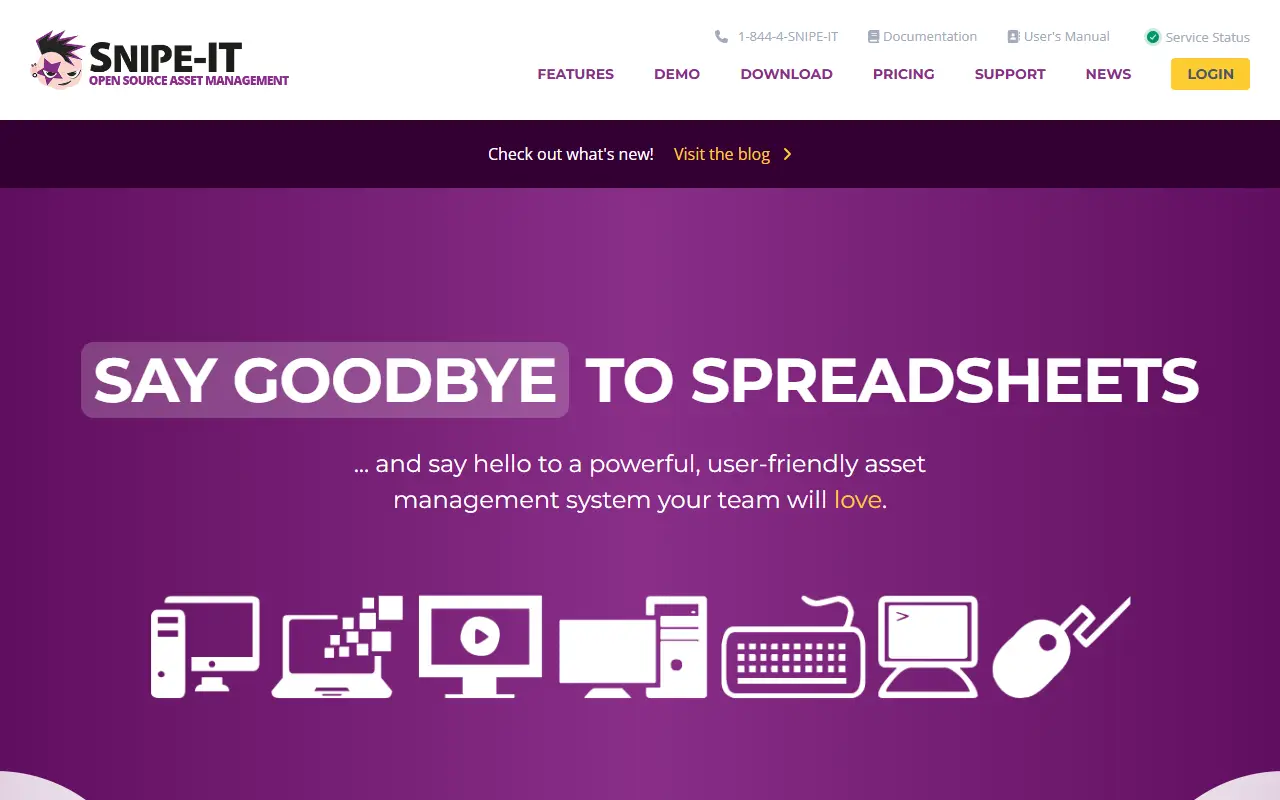
snipeitapp.comSnipe-IT homepage screenshot

Snipe-IT is a free and open-source asset management system for IT operations. It helps answer questions such as who has which laptop, when it was bought so it can be depreciated correctly, and how software licenses are assigned. It is built on Laravel 12 and written in PHP, and it is licensed under AGPL-3.0.

It is web-based software, so there is no executable to install on desktops. It runs on a web server and is used through a browser, and it works on Mac, Linux and Windows hosts. A Docker image is available, and an installation manual, user manual and live demo are linked from the repository.

The project is actively developed with frequent releases. It offers translations, related libraries and modules, an announcement list and community channels, and asks users to read the getting-help guidelines and common issues before opening a ticket. Bug reports and feature requests go through GitHub Issues.

Key features

  • IT asset tracking and assignment
  • Software license management
  • Depreciation based on purchase dates
  • Web-based interface for any browser
  • Docker image available
  • Translations and related modules

Pricing: Self-hosting is free. Managed hosting costs $39.99 (Basic), $99.99 (Small Business) or $249.99 (Dedicated) per month, with about 16% off when billed annually.

Read more about Snipe-ITWebsite GitHub

GLPI

GLPI is a free IT asset management and ITSM suite offering an ITIL service desk, inventory, CMDB, license tracking and software auditing.

GitHub stars
6.4k
Last commit
yesterday
Latest release
11.0.11
Licence
GPL-3.0
Self-hosted
Yes

GLPI is a free IT asset and service management package; its name abbreviates the French Gestionnaire Libre de Parc Informatique. It combines an ITIL-style service desk with inventory and configuration management, so IT teams can track which equipment and software they own while also handling the tickets that relate to it.

Main capabilities include service asset and configuration management for computers, peripherals, network printers and their components, with a native dynamic inventory from version 10 onward to keep the configuration database current. It also covers request fulfillment, incident handling, license tracking, software auditing and data center management, and the project topics mention impact analysis and a CMDB.

GLPI is written in PHP, licensed under GPL-3.0 and normally self-hosted on a web server with a database. It suits IT departments that want a single open-source system for helpdesk tickets, asset inventory and software compliance.

Key features

  • ITIL service desk with ticketing
  • Asset inventory and configuration database
  • Native dynamic inventory since version 10
  • Software license tracking and auditing
  • Incident and request management
  • Data center asset management

Pricing: Free and open source under GPL-3.0.

Read more about GLPIWebsite GitHub

Zammad

Zammad is an open-source helpdesk for support teams that gathers email, chat, phone and social media requests into one ticket system.

GitHub stars
6k
Last commit
yesterday
Licence
AGPL-3.0
Self-hosted
Yes
Hosted version
Available
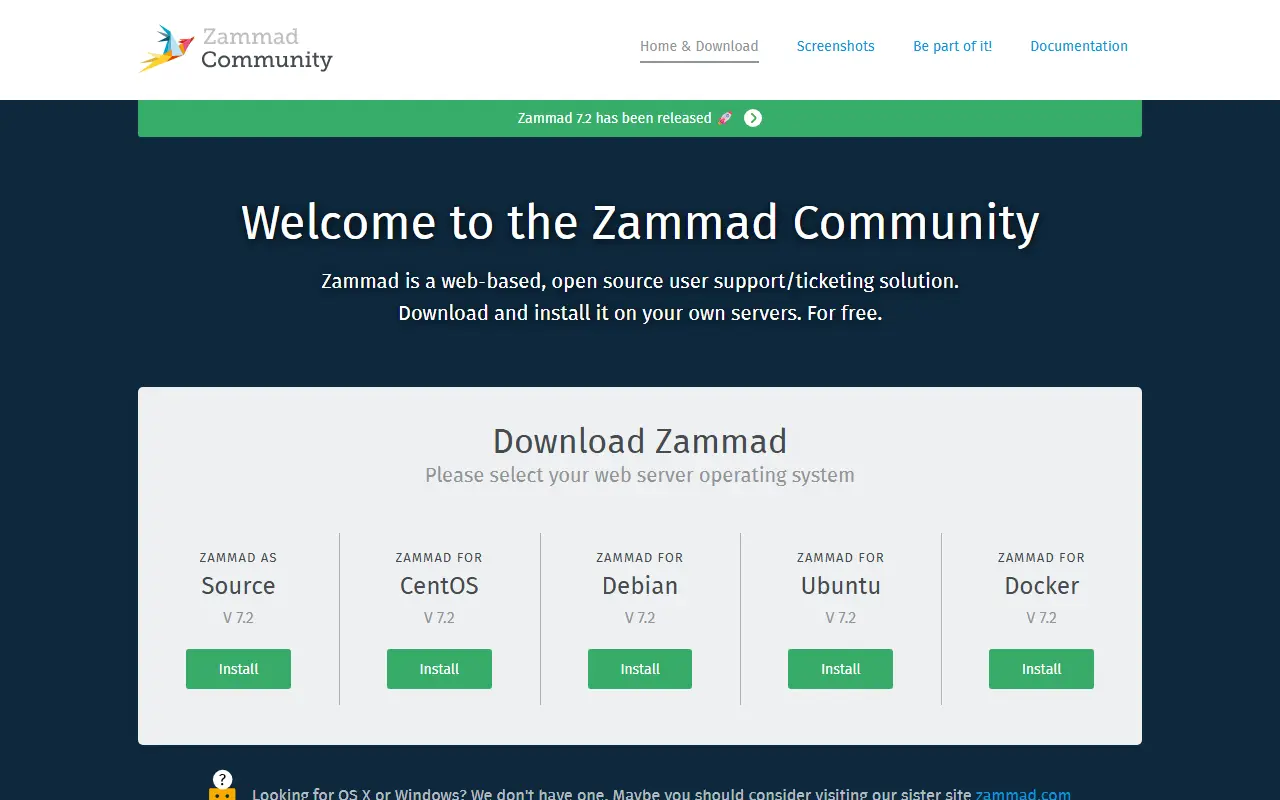
zammad.orgZammad homepage screenshot

Zammad is a browser-based helpdesk and customer support platform. Support teams use it to manage inquiries that arrive through email, chat, telephone and social media channels in a single ticket system, so conversations stay organized and the whole team can see what is happening.

The README stresses that the software is and will stay open source under the GNU AGPLv3. Ownership of the source code sits with the Zammad Foundation, an entity separate from commercial providers like Zammad GmbH, the company whose team does much of the development. The technology stack includes Ruby on Rails, GraphQL, TypeScript and Vue.

You can self-host Zammad on your own servers or buy hosting and support from the company behind it. It suits customer support, IT helpdesk and service teams that want an open-source ticketing system with multichannel support and control over where their data lives.

Key features

  • Multichannel tickets from email and chat
  • Telephone and social media channels
  • Web-based agent interface
  • GraphQL API and Vue front end
  • Independent Zammad Foundation owns the code
  • Self-hosted or vendor-hosted deployment

Pricing: The software is free under AGPLv3; hosting and support are offered by Zammad GmbH.

Read more about ZammadWebsite GitHub

Frappe Helpdesk

Open-source help desk and ticketing system from Frappe with agent and customer portals, SLAs, assignment rules, and a knowledge base.

GitHub stars
3.4k
Last commit
yesterday
Latest release
v1.30.1
Licence
AGPL-3.0
Self-hosted
Yes
Hosted version
Available
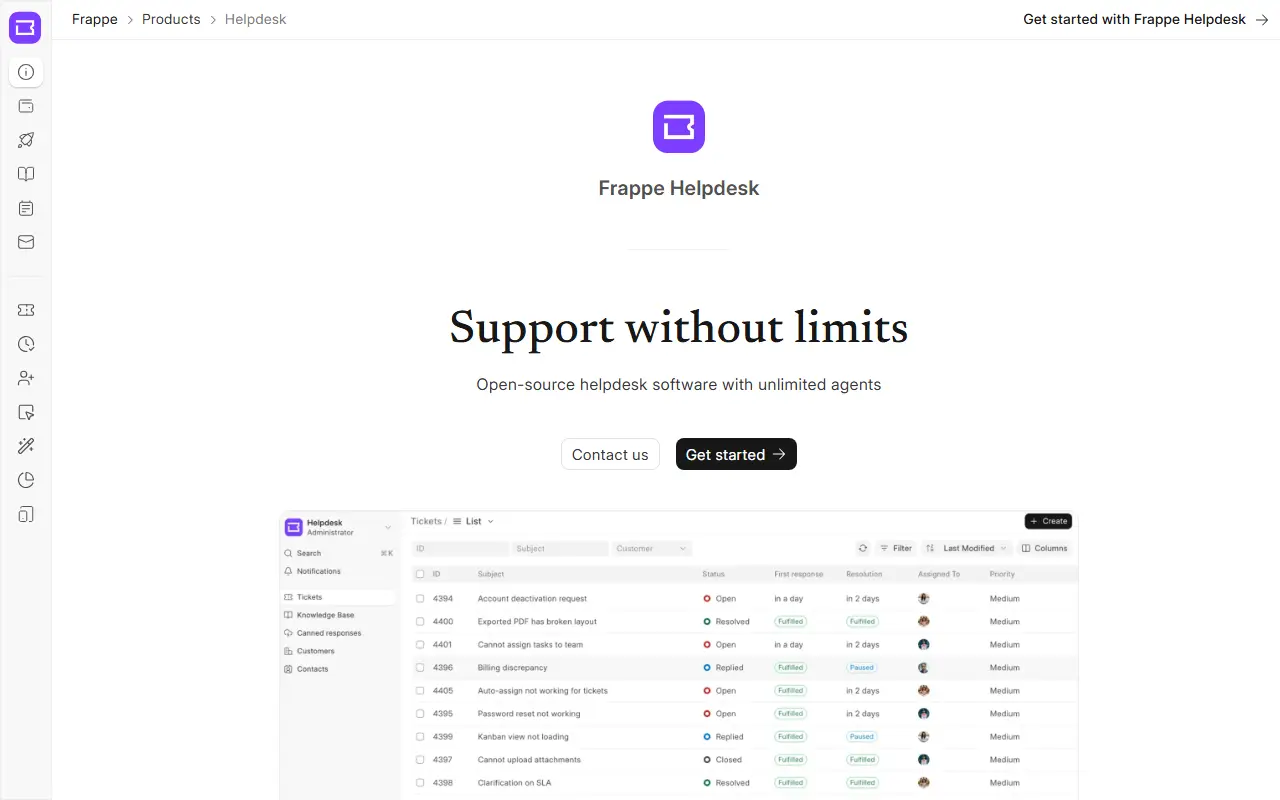
frappe.ioFrappe Helpdesk homepage screenshot

Frappe Helpdesk is an open-source ticket management tool for customer support teams. It was built by the Frappe team after finding the support module in ERPNext too limited, and it aims to give support agents a clean interface and give customers a simple way to raise and follow issues. It is released under the AGPL-3.0 license.

It provides separate portal views for agents and customers, plus customizable SLAs, assignment rules that route tickets by priority, issue type, or workload, saved replies for common questions, and a knowledge base where customers can find help articles before opening a ticket. The interface is built with Vue on top of the Frappe Framework, which is written in Python and JavaScript.

You can install it on your own server as a Frappe app, or use Frappe Cloud, the project's managed hosting platform for Frappe applications. The topics tie it to tools such as Zendesk and Help Scout, so it is a fit for small and mid-sized teams looking for a self-hostable alternative that also integrates with existing Frappe or ERPNext systems.

Key features

  • Separate agent and customer portals
  • Customizable SLAs with response tracking
  • Rule-based ticket auto-assignment
  • Saved replies for common queries
  • Knowledge base with article search
  • Built on the Frappe Framework and Vue

Pricing: Self-hosting is free. Managed hosting on Frappe Cloud starts at $5 per month for a site and $20 per month for a server, with no per-agent fees and a 14-day trial; enterprise plans are by quote.

Faveo Helpdesk

Faveo Helpdesk is a Laravel-based ticketing system for customer support, available in free community and paid enterprise editions.

GitHub stars
1.3k
Last commit
yesterday
Latest release
v2.0.3
Licence
OSL-3.0
Self-hosted
Yes
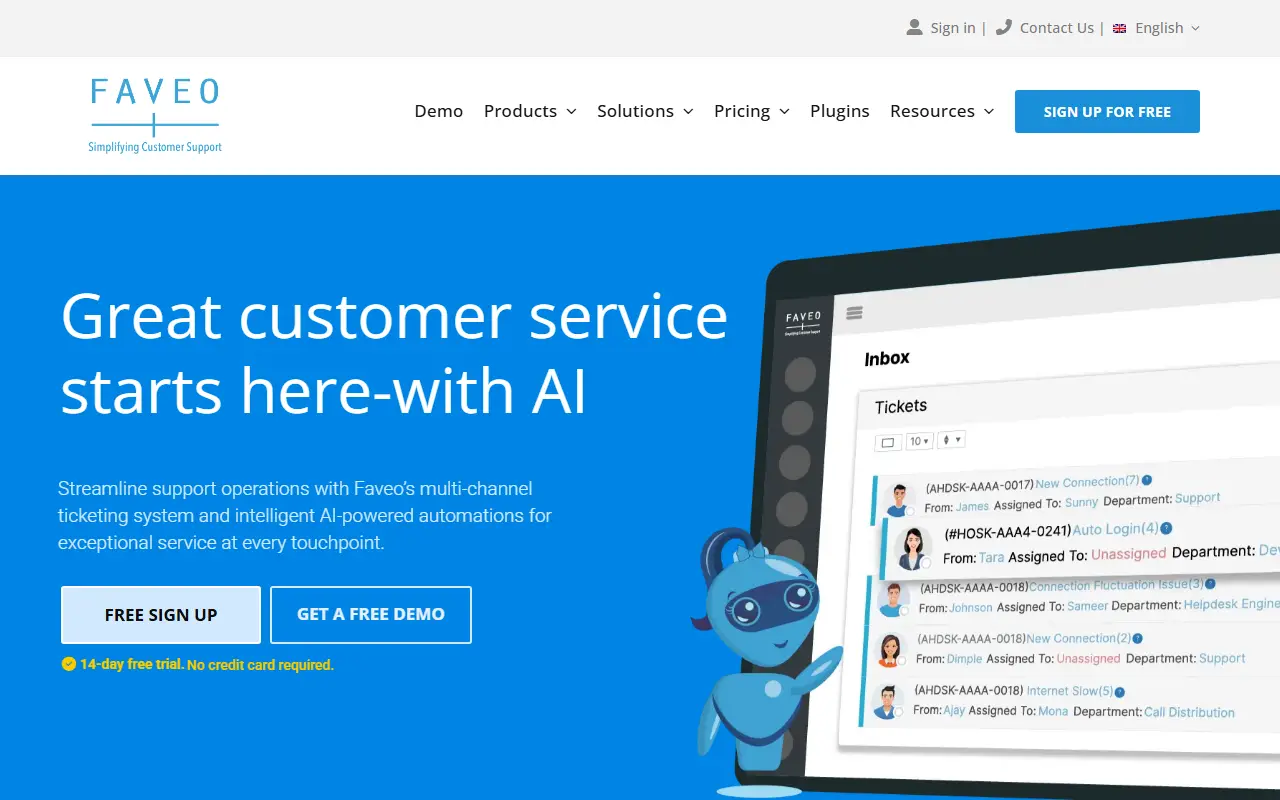
faveohelpdesk.comFaveo Helpdesk homepage screenshot

Faveo Helpdesk is a helpdesk and ticketing system that helps businesses manage customer support. Built on the Laravel framework, it lets support teams receive, track and answer customer queries in one place, and the vendor positions it around retaining customers by handling their requests carefully.

The project is offered in several flavors. The Community Edition is free and open source, a Freelancer edition is free and includes enterprise features for two agents, an Enterprise Edition adds advanced features and integrations, and a separate Service Desk product covers IT asset management. Documentation covers the user manual, API, event list and plugin creation. The maintainers also say they take on customization requests.

Running Faveo requires PHP 8.1 or newer, MySQL 8.0 or MariaDB 10.6, a web server such as Apache, IIS or Nginx and several PHP extensions including IMAP. The repository is licensed under OSL-3.0. It suits small and mid-sized organizations that want a self-hosted ticketing system with an upgrade path to paid features.

Key features

  • Ticket management for customer support
  • Built on Laravel
  • REST API and documented events
  • Plugin creation guide
  • Email integration through IMAP
  • Community, Freelancer, and Enterprise editions

Pricing: A free open source version and a free Freelancer plan for 2 agents are offered. Startup lists $9 and SME $14 per agent per month, with lower discounted rates also shown; Enterprise is custom.

iTop

iTop is an open-source, web-based IT service management platform with a configurable CMDB, helpdesk, change management and SLA tracking.

GitHub stars
1.2k
Last commit
yesterday
Latest release
3.3.0
Licence
AGPL-3.0
Self-hosted
Yes
combodo.comiTop homepage screenshot

iTop, short for IT Operations Portal, is a web-based IT service management platform from Combodo. It combines a fully customizable configuration management database, a helpdesk system and a document management tool, and it follows ITIL practices, which makes it relevant for IT departments and service providers.

Its feature list covers configurable CMDB, helpdesk and incident management, service and contract management, change management, configurable SLA handling and a graphical impact analysis. There are CSV import tools for any data, consistency audits to check data quality and data synchronization for federation. It can be extended with many add-ons and web services, and the iTop Hub lets administrators discover and install extensions.

iTop is written in PHP and licensed under AGPL-3.0, and it runs on your own web server with documentation, GitHub Discussions and release notes for support. It suits IT teams that want an open-source tool for tracking assets and services alongside tickets, with the flexibility to model their own organization.

Key features

  • Configurable CMDB
  • Helpdesk and incident management
  • Change management
  • SLA and contract management
  • Graphical impact analysis
  • CSV import and data synchronization

Pricing: Free and open source under the AGPL-3.0 licence.

Read more about iTopWebsite GitHub

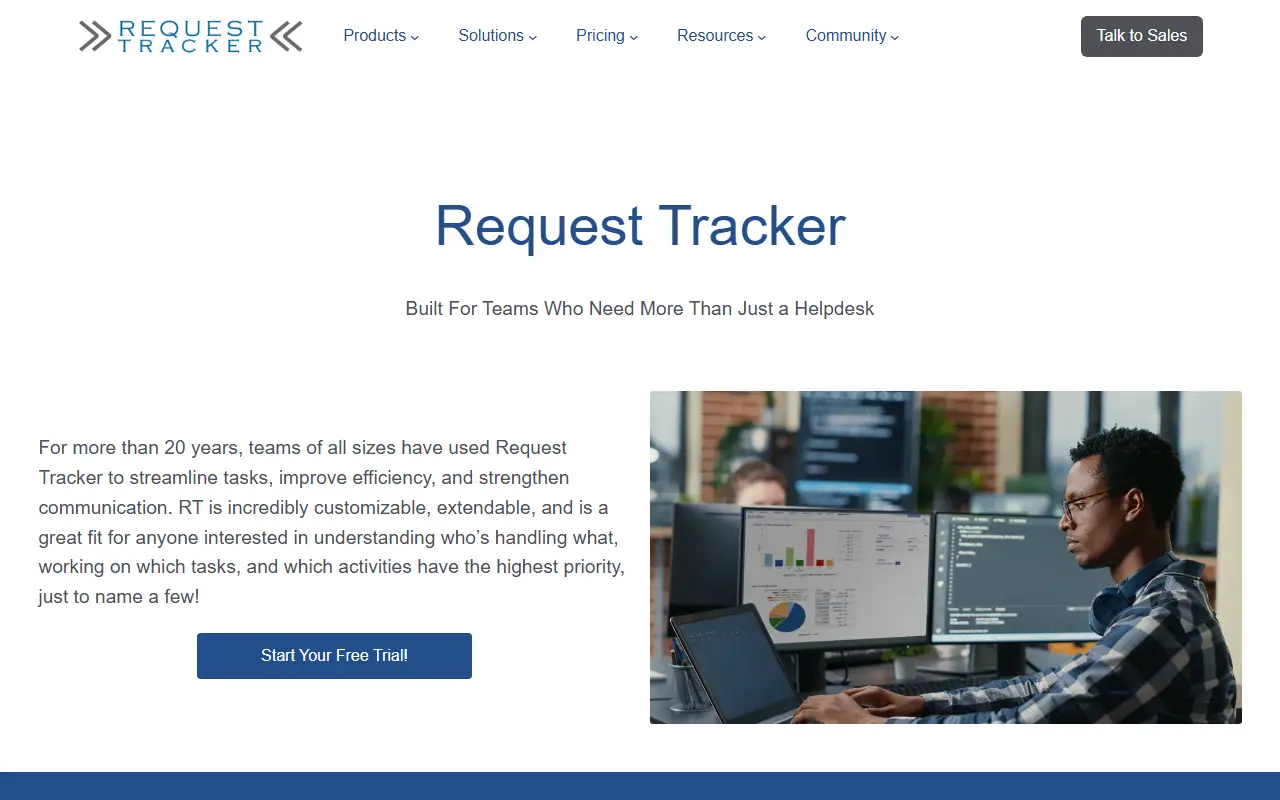
Request Tracker

Request Tracker (RT) is a long-running open-source issue and ticket tracking system for support teams, written in Perl and licensed under GPL v2.

GitHub stars
1.2k
Last commit
yesterday
Latest release
rt-6.0.3
Licence
GPL-2.0
Self-hosted
Yes
Hosted version
Available
bestpractical.comRequest Tracker homepage screenshot

Request Tracker, usually called RT, is an open-source issue and ticket tracking system from Best Practical. It helps organizations keep track of what needs to be done, who is working on each task, what has already been completed and when work was finished or missed, which makes it suitable for support desks and internal operations teams.

The project's topics cover customer support, helpdesk, bug tracking, asset management, workflow and project management uses. RT runs as a web application written in Perl on a supported SQL database such as MySQL, MariaDB, PostgreSQL or Oracle, served through a FastCGI-capable web server like Apache or nginx. A bundled tool installs most Perl module dependencies, and full-text indexing is an optional extra.

RT is free to use under version 2 of the GNU General Public License regardless of scale. It is also commercially supported software: Best Practical sells hosting, support, training, custom development and professional services. Documentation, release notes, a community forum and a public wiki are available. It suits organizations that want a mature, self-hosted ticketing system with the option of paid support.

Key features

  • Ticket and issue tracking
  • Support for MySQL, MariaDB, Postgres, and Oracle
  • FastCGI deployment on Apache or nginx
  • Optional full-text indexing
  • Workflow and asset management uses
  • Commercial hosting and support available

Pricing: Cloud RT is hosted per user: Starter $15, Business $29 and Growth $39 per user per month, with a 14-day free trial. Enterprise is custom, and self-hosted deployment is also supported.

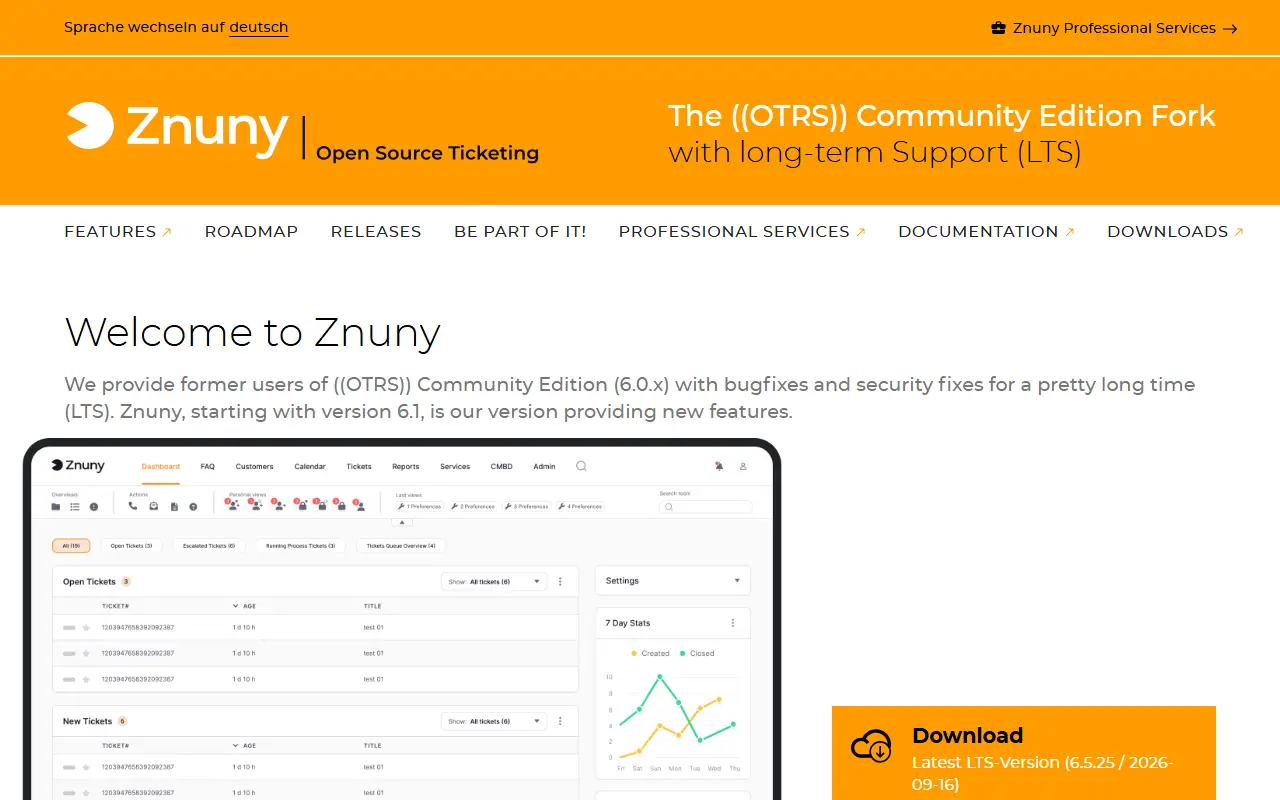
Znuny

Znuny is an open-source web-based ticketing system for help desks, customer service and IT service management, continuing the OTRS Community Edition.

GitHub stars
599
Last commit
2 days ago
Licence
GPL-3.0
Self-hosted
Yes
znuny.orgZnuny homepage screenshot

Znuny is a free, open-source web-based ticketing system for customer service, help desks and IT service management. It is a continuation of the ((OTRS)) Community Edition at version 6.0.30, which reached end of life at the end of December 2020, with the main goal of providing a maintained, stable version of the well-known ticket system and improving it with new features.

A second goal is to rebuild connections with the community. Technically it is written in Perl and JavaScript and designed to be highly tailorable. It runs on Linux, preferably Debian or Red Hat, with Perl 5.16 or newer, an Apache 2 web server with mod_perl2 recommended, and MySQL 8, MariaDB 10.3, PostgreSQL 12 or Oracle 19c databases. The project also lists unsupported old browser versions.

Znuny is distributed under the GPL v3 and its source is public on GitHub, with documentation, a community forum and a Discord server. The project is mainly funded by Znuny GmbH in Berlin, which offers commercial services such as professional support and consulting.

Key features

  • Ticketing for help desk and support teams
  • IT service management use cases
  • Continuation of OTRS Community Edition
  • Runs on Perl with Apache mod_perl
  • MySQL, MariaDB, PostgreSQL and Oracle support
  • Highly tailorable to an organization

Pricing: Free and open source under GPL-3.0; professional support and consulting are offered by Znuny GmbH.

Read more about ZnunyWebsite GitHub

Trudesk

Open-source help desk and ticketing system built on Node.js and MongoDB, with a self-hosted community edition and a hosted cloud version.

GitHub stars
1.5k
Last commit
4 mo ago
Latest release
v1.2.11
Self-hosted
Yes
Hosted version
Available
trudesk.ioTrudesk homepage screenshot

Trudesk is an open-source help desk and ticketing solution intended to keep support work organized and simple. Teams use it to log, track and resolve issues and tasks from one place. This repository holds the Community Edition, while a more comprehensive cloud-hosted version is offered separately as Trudesk Cloud.

It is built with Node.js and MongoDB and can run on any cloud provider, in Docker, on bare metal or even on a Raspberry Pi. The README gives a one-line installer for Ubuntu and lists requirements of Node.js 16 or later and MongoDB 5.0 or later, with Elasticsearch 8 optional for search. Online documentation covers setup and usage.

The README's license text is Apache 2.0, though repository metadata labels it Other, so confirm in the license file. The project invites contributions such as bug reports, features, refactoring and documentation, and thanks sponsors and BrowserStack. It suits small support teams and IT departments that want to run their own ticketing system.

Key features

  • Ticket tracking for support requests
  • Node.js and MongoDB architecture
  • Runs on Docker, bare metal or Raspberry Pi
  • Optional Elasticsearch search
  • Ubuntu installer script
  • Cloud-hosted edition available

Pricing: Community Edition is free to self-host. Trudesk Cloud is a separate hosted product; see the vendor for pricing.

Read more about TrudeskWebsite GitHub

Helpy

Helpy is a free, MIT-licensed, open-core helpdesk platform in Ruby on Rails, combining ticketing, a searchable knowledge base and public community support forums.

GitHub stars
2.5k
Last commit
3 yr ago
Latest release
2.8.0
Licence
MIT
Self-hosted
Yes

Helpy is a help desk platform built with Ruby on Rails, aimed at businesses that want to run support ticketing, a knowledge base and a public community forum from one integrated system instead of stitching together separate tools. It is described as open-core: the core functionality is fully open source and even resellable under the MIT license, with optional paid support available.

It offers multichannel ticketing integrated with inbound email providers such as SendGrid, Mandrill and Mailgun, a full-text searchable and SEO-optimized knowledge base meant to help users self-serve answers, community support forums where both customers and agents can answer questions and vote on threads, and a lightweight embeddable JavaScript widget for contacting support from any page. The interface is mobile-friendly and the platform supports multiple languages, and each of these features can be disabled independently.

Because Helpy is a large system, the project asks organizations using it commercially to consider financially supporting development through Patreon or becoming an official sponsor. It is written in Ruby and released under the MIT license, so it can be self-hosted and modified freely.

Key features

  • Multichannel email-integrated ticketing
  • Searchable, SEO-optimized knowledge base
  • Public community support forums
  • Embeddable support widget
  • Mobile-friendly, multi-lingual interface

Pricing: The core is free and open source under the MIT license; the project asks commercial users to consider sponsoring development, and optional paid support is available.

Read more about HelpyWebsite GitHub

Freshservice alternatives: questions

What is the best open-source alternative to Freshservice?
Snipe-IT is the top-ranked open-source alternative to Freshservice on Enlisted: Snipe-IT is a free, open-source web app for tracking IT assets and software licenses, built on Laravel. Other strong options are GLPI, Zammad, Frappe Helpdesk and Faveo Helpdesk.
Are these Freshservice alternatives free?
All 10 are open source, so the code is free to use under its licence, and all of them can be self-hosted on your own server or computer. 4 also offer a paid or managed cloud version if you'd rather not host it yourself.
How is this list of Freshservice alternatives ranked?
By a score built from GitHub stars, star growth over the last 30 days and how recently the code changed. 8 of these projects shipped code in the last 30 days. Data is refreshed daily, and nobody can pay to move up.

People also look for alternatives to…

View all