7,363 open-source and SaaS tools, with GitHub stats refreshed every day.

10 alternatives ranked by real activity

Open-source Bitdefender SecurePass alternatives

A curated, ranked list of the 10 best open-source alternatives to Bitdefender SecurePass.

The best open-source alternative to Bitdefender SecurePass is Vaultwarden. If that doesn't suit you, other good options are KeePassXC, Bitwarden, KeePassDX and Keepass2Android.

Bitdefender SecurePass alternatives are mainly password managers. 7 of them shipped code in the last 30 days, 9 can be self-hosted, and none uses a permissive licence.

Last updated October 3, 2026 · ranked by GitHub stars, growth and recent commits

Vaultwarden

A lightweight, unofficial Bitwarden-compatible server written in Rust for self-hosting, working with the official Bitwarden clients.

GitHub stars
68k
Last commit
7 days ago
Latest release
1.37.3
Licence
AGPL-3.0
Self-hosted
Yes

Vaultwarden is a Rust server that reimplements the Bitwarden Client API as an alternative to the official service, and it works with the official Bitwarden clients. It was formerly known as bitwarden_rs and is released under the AGPL-3.0 license. It is aimed at people who self-host and find the official server too heavy to run themselves.

The project implements most of the Bitwarden Client API, including personal vaults, Send, attachments, website icons and personal API keys, as well as organizations, with collections, shared passwords, member roles, groups, event logs and policies. Multi-factor authentication covers authenticator apps, email, FIDO2 WebAuthn, YubiKey and Duo, and emergency access is supported. An admin backend and a modified web vault client are included.

Vaultwarden is distributed as a Docker image and the code is on GitHub. The project is unofficial, and its maintainers ask users to report problems to them rather than to Bitwarden's official support channels. It suits individuals, families and small teams who want to host their own password manager while keeping the familiar Bitwarden apps and browser extensions.

Key features

  • Bitwarden Client API-compatible server
  • Works with official Bitwarden clients
  • Organizations with collections and member roles
  • Multi-factor authentication including FIDO2 and YubiKey
  • Emergency access and Send support
  • Admin backend for server management

Pricing: Free and open source under the AGPL-3.0 license.

Read more about VaultwardenGitHub

KeePassXC

A cross-platform, community-driven password manager that stores credentials and notes in an encrypted offline database file, compatible with KeePass.

GitHub stars
29k
Last commit
3 days ago
Latest release
2.7.12
Self-hosted
Yes
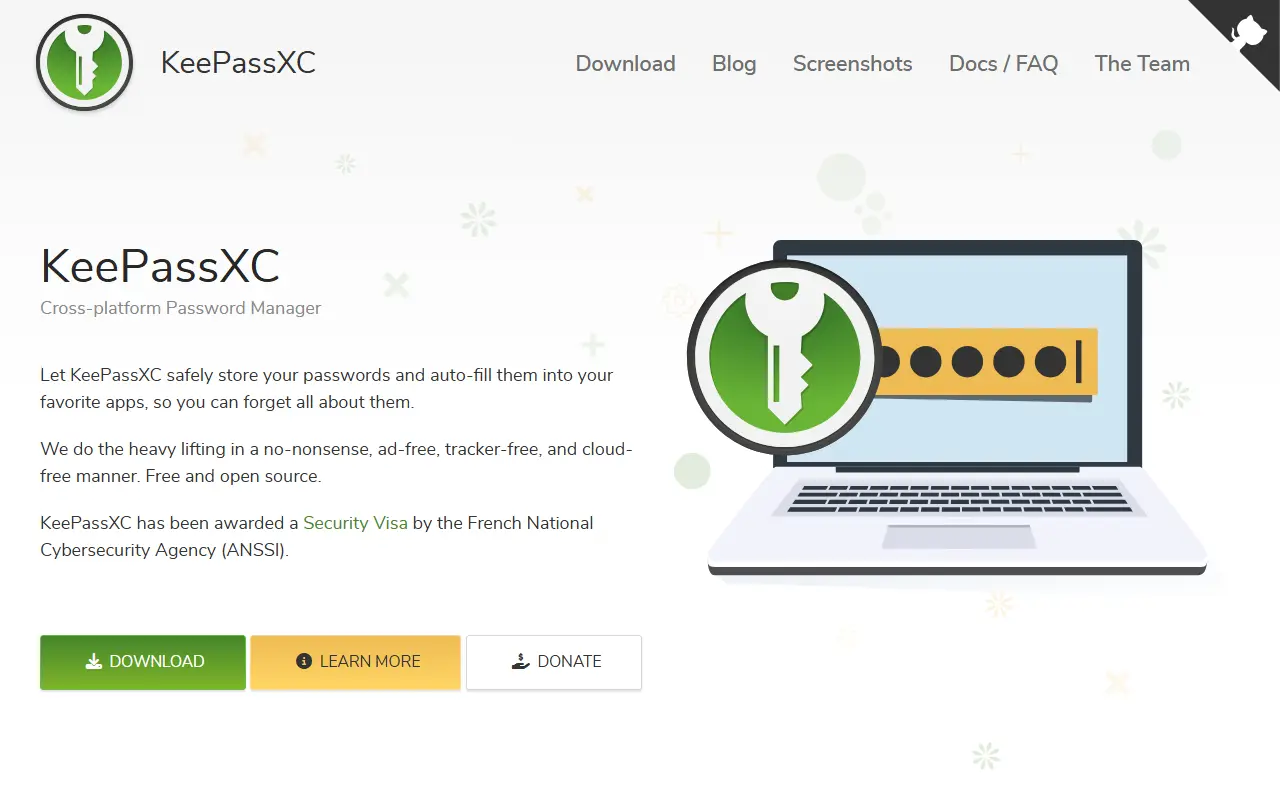
keepassxc.orgKeePassXC homepage screenshot

KeePassXC is a modern, open-source password manager for Windows, macOS and Linux. It began as a community port of the Windows program KeePass Password Safe and is aimed at people with demanding requirements for managing sensitive personal data securely.

It stores usernames, passwords, URLs, attachments and notes in an encrypted file that works offline and can live anywhere, including private or public cloud storage that you sync yourself. Entries have custom titles and icons and are sorted into customizable groups, and a search function supports advanced patterns. A built-in password generator can create strings with any mix of characters or easy-to-remember passphrases, and topics mention YubiKey support.

The app is written in C++ and has a quick-start guide plus pre-compiled binaries on the downloads page. Its license is listed as 'Other' on GitHub, so confirm the terms for your use. Because there is no vendor account or server, it is a good fit for users who want local control of their password database instead of a hosted password service.

Key features

  • Encrypted offline password database
  • Windows, macOS and Linux apps
  • Groups, custom icons and attachments
  • Advanced search patterns
  • Password and passphrase generator
  • Hardware key support with YubiKey
Read more about KeePassXCWebsite GitHub

Bitwarden

This is the Bitwarden server: the API, database and Docker-based infrastructure behind the Bitwarden password manager's client apps.

GitHub stars
20k
Last commit
today
Latest release
v2026.9.2
Self-hosted
Yes
Hosted version
Available
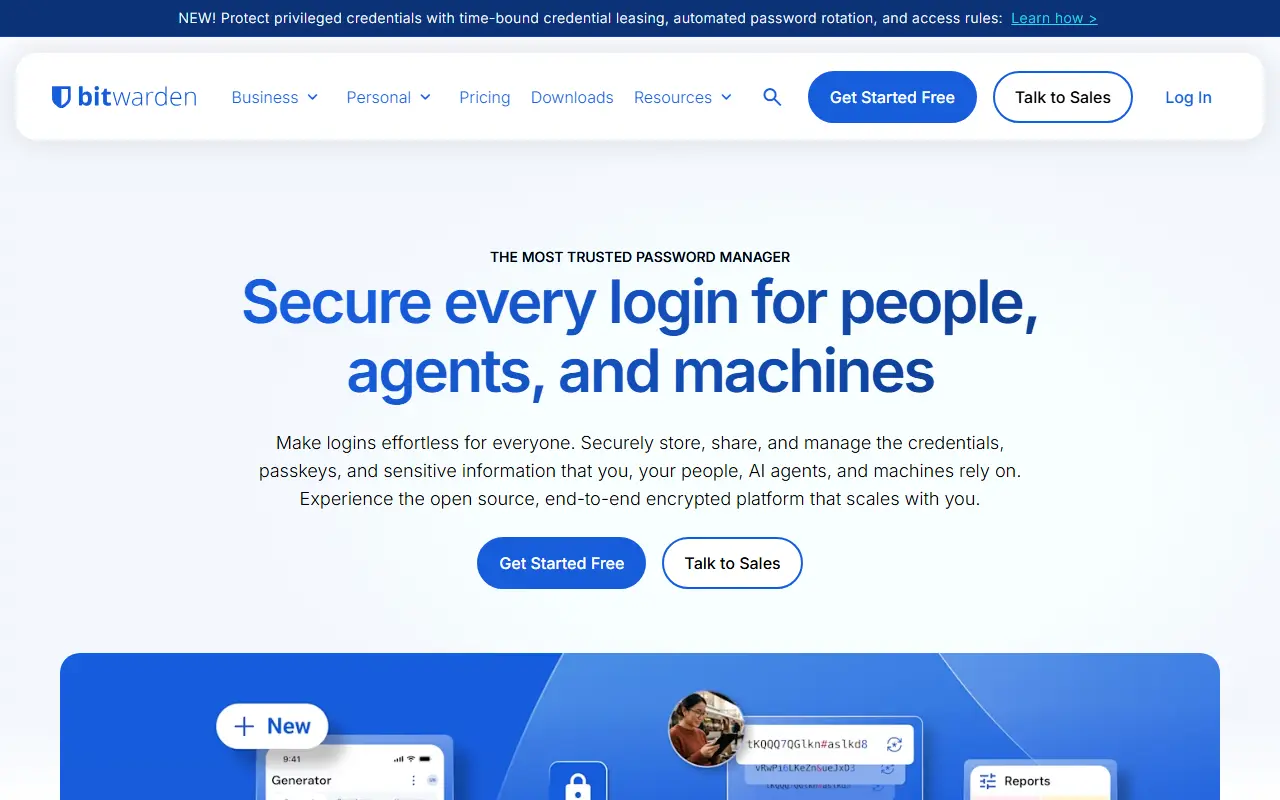
bitwarden.comBitwarden homepage screenshot

Bitwarden is a password manager, and this repository contains its server side: the APIs, database and other core infrastructure that all Bitwarden client applications connect to. The code is written in C# on .NET Core with ASP.NET Core, and the database layer is written in T-SQL for SQL Server.

The server can be developed, built, run and deployed on Windows, macOS and Linux. For deployment, the project provides Docker containers along with PowerShell and Bash scripts that bootstrap an installation, and the images are published on GitHub Container Registry. The services include Admin, API, Billing, Events, Identity, Notifications, SCIM and SSO components.

Organizations that want to keep their vaults on their own infrastructure can follow the on-premise install guide in the Bitwarden help center, which requires Docker and Docker Compose. Bitwarden also runs managed cloud clusters in the US and EU. The repository lists its license as 'Other', so check the license files for the exact terms.

Key features

  • APIs used by all Bitwarden client apps
  • Identity, SCIM and SSO services
  • SQL Server database layer
  • Docker-based on-premise deployment
  • Install scripts for Windows, macOS and Linux
  • Admin and event processing services

Pricing: A free personal plan exists. Premium is $1.65 a month, Families $3.99 a month for six users, Teams $4 and Enterprise $6 per user per month, all billed annually.

Read more about BitwardenWebsite GitHub

KeePassDX

A lightweight Android password and passkey manager that opens KeePass-format database files, with biometric unlock, autofill and one-time password support.

GitHub stars
7.4k
Last commit
7 days ago
Latest release
4.5.5
Licence
GPL-3.0
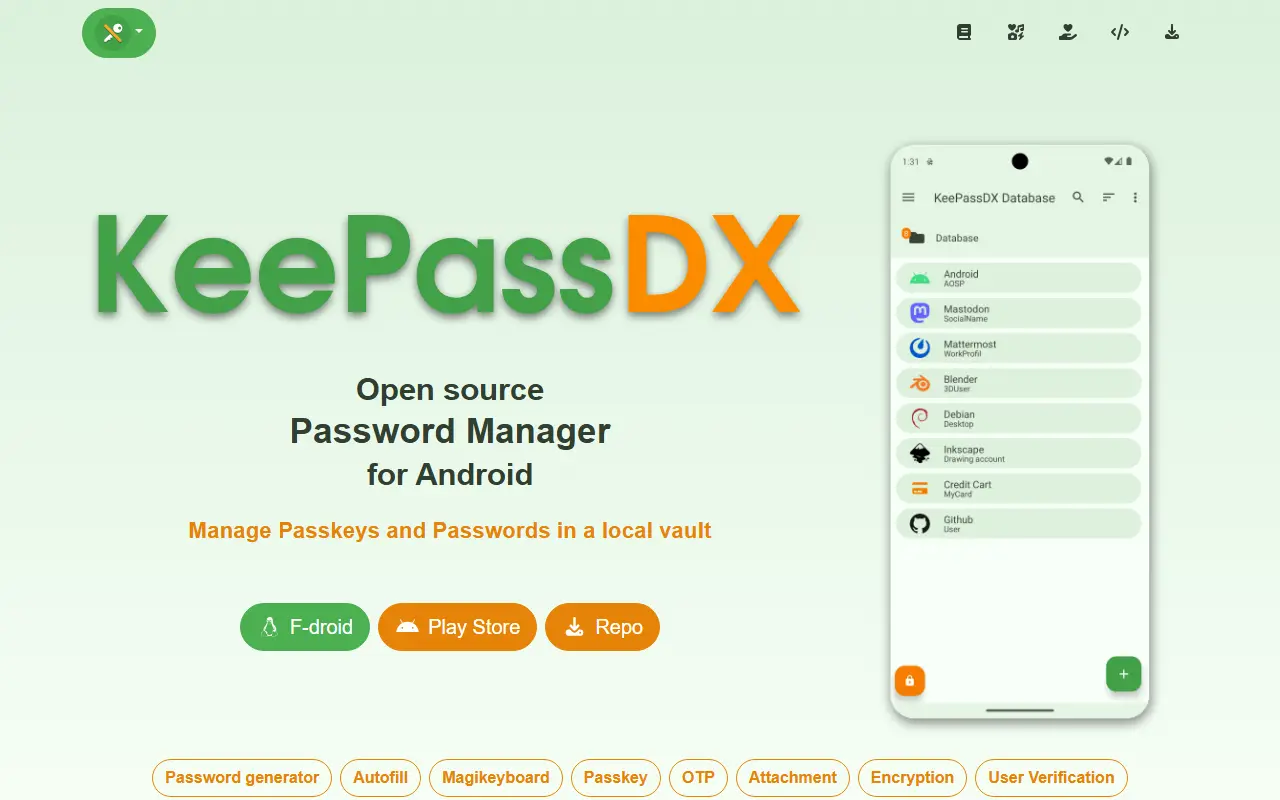
keepassdx.comKeePassDX homepage screenshot

KeePassDX is a password safe for Android that edits encrypted data kept in a single file in KeePass format and fills in forms securely. It is a local manager, so your credentials live in a database locked with a master key, a keyfile or both, and you only need to remember one master password.

Features include passkeys for authentication with local storage of private keys, biometric unlocking, one-time password management for HOTP and TOTP, autofill, a Magikeyboard for entering fields, creation of encrypted database files, entries organized in group trees, dynamic templates, entry history and Material Design themes. It supports kdb and kdbx files, versions 1 to 4, with AES, Twofish, ChaCha20 and Argon2, and is compatible with KeePass, KeePassXC and KeeWeb.

KeePassDX is described as open source and ad-free, written natively in Kotlin, Java, JNI and C, and licensed under GPL-3.0. Because the file is yours, you choose how to sync it between devices. It suits Android users who want a private password manager that stays interoperable with desktop KeePass tools.

Key features

  • KeePass kdb and kdbx database support
  • Passkey storage and authentication
  • Biometric unlock with fingerprint or face
  • HOTP and TOTP one-time passwords
  • Autofill and Magikeyboard input
  • Entry groups, templates and history
  • Compatible with KeePass and KeePassXC

Pricing: Free and open source under the GPL-3.0 licence, described as ad-free.

Read more about KeePassDXWebsite GitHub

Keepass2Android

Keepass2Android is an open-source Android password manager that opens KeePass 2.x databases and aims to make syncing between devices simple.

GitHub stars
6.3k
Last commit
15 days ago
Latest release
v1.15-r4
Licence
GPL-3.0
Self-hosted
Yes
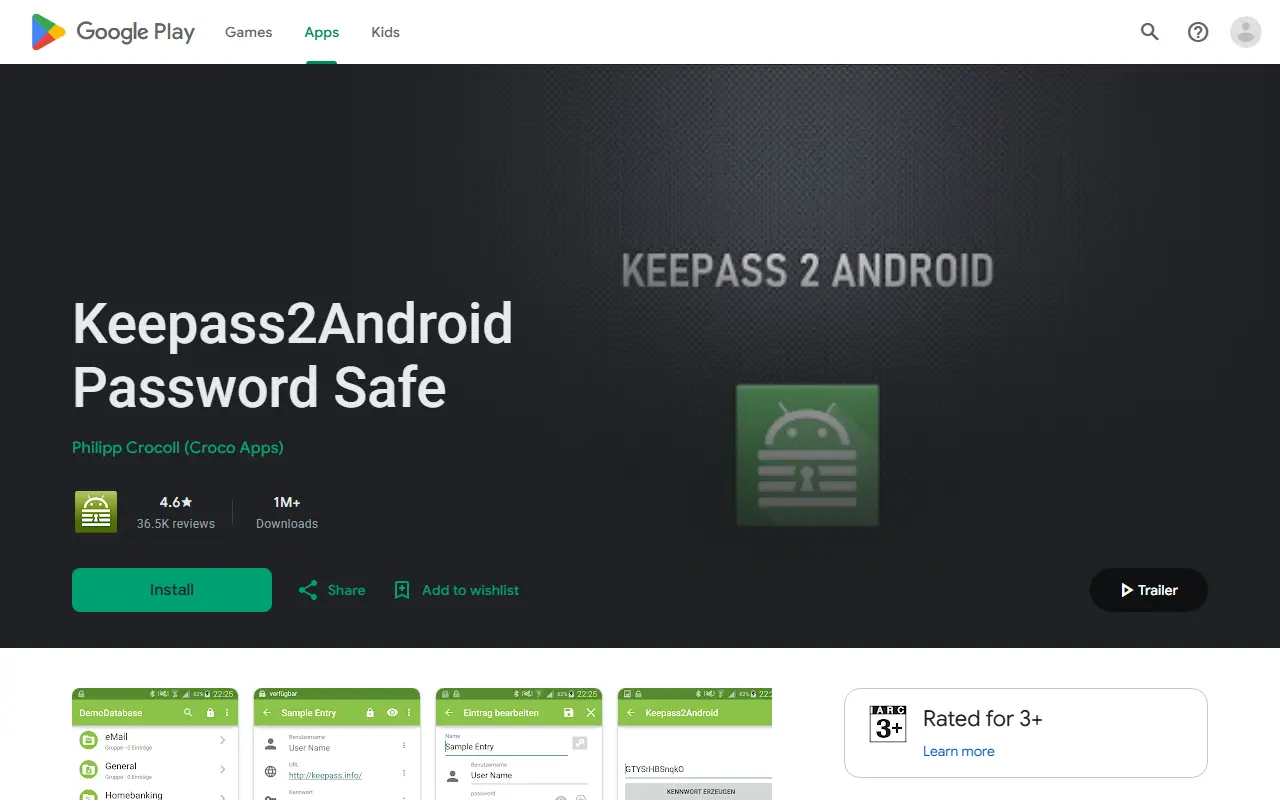
play.google.comKeepass2Android homepage screenshot

Keepass2Android is a password manager app for Android that reads the same database format as KeePass 2.x, the well-known Windows password safe. You keep your credentials in an encrypted database file that you control, instead of handing them to a vendor-run service, and open it on your phone with the app.

The project aims at simple synchronization between devices, so a database edited on a desktop KeePass client can be used on Android and vice versa. It is built on the .NET stack and distributed through the Google Play Store, where it is published by an individual developer. Its repository tags it with the keepass and password-manager topics.

Keepass2Android is licensed under GPL-3.0. Because the database is a file you hold yourself, it fits people who already use KeePass on other platforms or who want a password manager without a hosted account. There is no vendor-operated cloud service for it.

Key features

  • Opens KeePass 2.x password databases
  • Designed for syncing databases between devices
  • Native Android app built on .NET
  • Compatible with desktop KeePass clients
  • Encrypted local password storage
  • Distributed through Google Play

Pricing: Free and open source under GPL-3.0.

Read more about Keepass2AndroidWebsite GitHub

AliasVault

End-to-end encrypted password manager with built-in email aliasing and its own email server, available as a cloud service or self-hosted.

GitHub stars
3.1k
Last commit
today
Latest release
0.30.7
Licence
AGPL-3.0
Self-hosted
Yes
Hosted version
Available
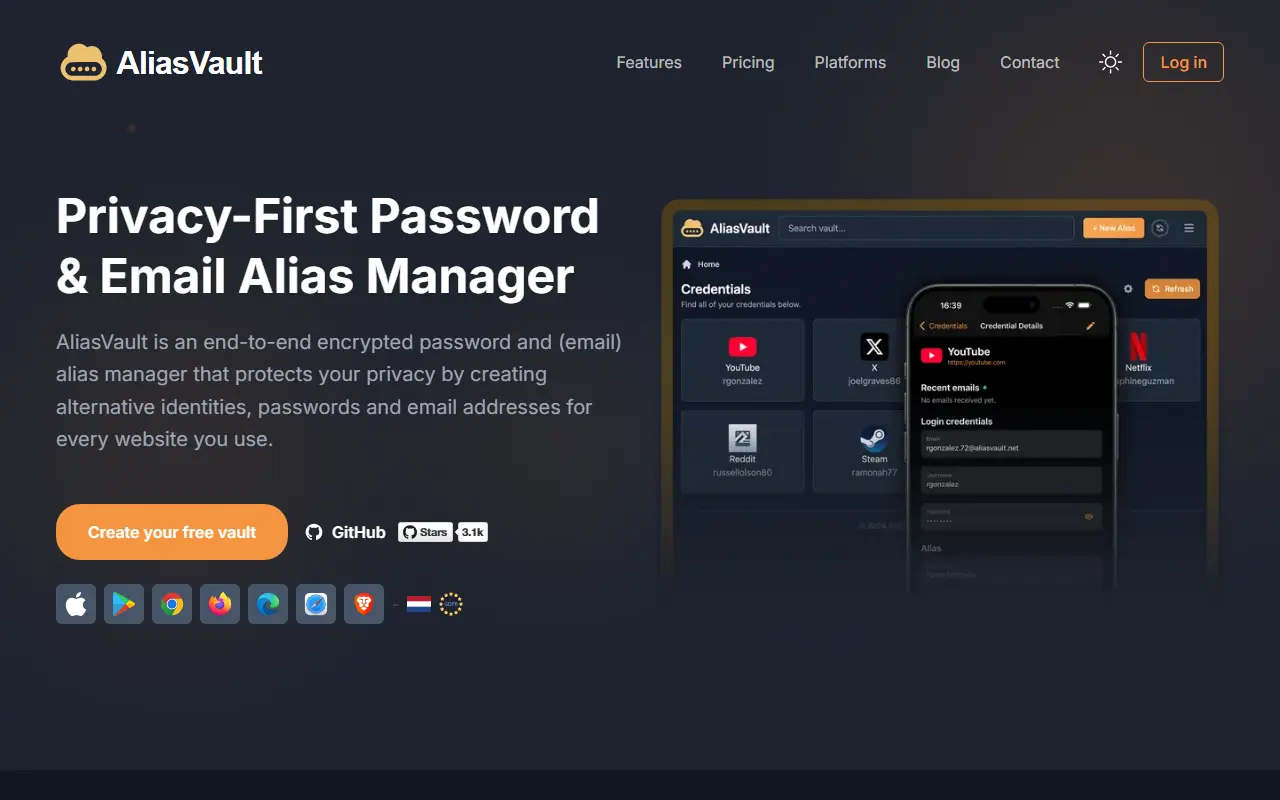
aliasvault.comAliasVault homepage screenshot

AliasVault is a privacy-focused password manager that also creates unique identities and random email aliases for each website you sign up to. Data is end-to-end encrypted, and the product includes its own email server with no third-party dependencies. It is released under the AGPL-3.0 license and describes itself as an independent, community-driven alternative to closed-source password managers.

You can use it as a responsive web app, through browser extensions for Chrome, Firefox, Edge, and Safari, and with native iOS and Android apps. The technology list includes Argon2id key derivation, the SRP authentication protocol, and a .NET Blazor client using WebAssembly, with a React front end for some parts.

The official cloud version runs at app.aliasvault.com, and self-hosting is supported with Docker on a 64-bit Linux server, with modest requirements of one vCPU, 1 GB of RAM, and 16 GB of disk. It suits privacy-conscious individuals and small teams who want to reduce tracking and spam by giving every site a separate email address.

Key features

  • End-to-end encrypted password vault
  • Random email aliases for every website
  • Built-in email server for receiving alias mail
  • Browser extensions for major browsers
  • Native iOS and Android apps
  • Docker-based self-hosting

Pricing: Everything is free today: a cloud tier with fair-use limits and a self-hosted option. Optional Premium and Family cloud plans are announced as coming soon, without prices.

Read more about AliasVaultWebsite GitHub

Proton Pass Android

The open-source Android source code for Proton Pass, the end-to-end encrypted password manager from Proton.

GitHub stars
786
Last commit
today
Licence
GPL-3.0
Self-hosted
No
Hosted version
Available
play.google.comProton Pass Android homepage screenshot

This repository contains the source code for the Proton Pass Android application. Proton Pass is a password manager from Proton, and the app is published on Google Play, with the code opened under the GPL so that users and researchers can inspect how it works.

The topics highlight end-to-end encryption, and the app is used together with a Proton account and Proton's hosted service rather than a server you run yourself. The repository documents how to build the app locally in BUILD.md and how to contribute in CONTRIBUTING.md, and invites help with translations through a blog post.

The code and data files are licensed under version 3 or later of the GNU General Public License. The app is written in Kotlin for Android, and because it is the client side of a hosted product, it is mostly relevant to people who want to audit, build or contribute to the Android client.

Key features

  • Android password manager client
  • End-to-end encryption
  • Open-source Kotlin codebase
  • Local build instructions
  • Community translation program
Read more about Proton Pass AndroidWebsite GitHub

Strongbox

Strongbox is a native iOS and macOS password manager that opens KeePass and Password Safe databases and supports YubiKey.

GitHub stars
1.5k
Last commit
2 mo ago
Licence
AGPL-3.0
Self-hosted
Yes
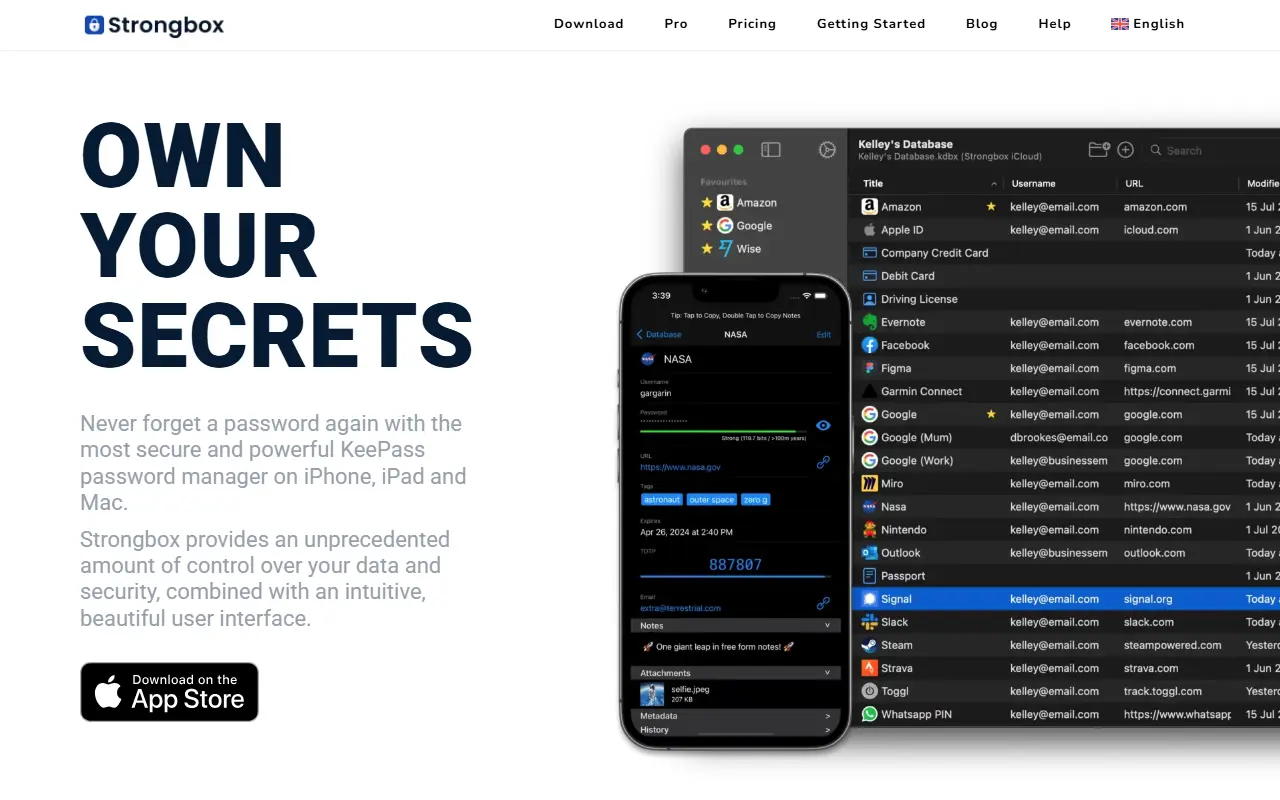
strongboxsafe.comStrongbox homepage screenshot

Strongbox is a native password manager for iOS and macOS built by independent developers. It works with open, portable file formats: Password Safe version 3 and the KeePass formats, including KDB and KDBX versions 3.1 and 4, so your vault is not locked into a proprietary database.

Entries and groups are encrypted using algorithms such as Twofish, Argon2d, ChaCha20, AES and Salsa20 along with SHA-256 hashing, HMACs and secure random generators, and file attachments can be stored in KeePass-format safes. YubiKey is supported. The app is written in Objective-C and distributed through the Apple App Store, and translations are managed through a separate MIT-licensed project called Babel, with volunteer translators credited in many languages.

The source code is licensed under AGPL-3.0, and the README explains ways to support development, including purchasing a subscription or lifetime license through the App Store. Your database files are stored where you choose, so no hosted service is required.

Key features

  • Opens KeePass and Password Safe databases
  • KDBX 3.1 and 4 support
  • Strong encryption options
  • YubiKey support
  • File attachments in KeePass safes
  • Native iOS and macOS apps

Pricing: Source code is AGPL-3.0; the App Store app is supported through a subscription or lifetime license.

Read more about StrongboxWebsite GitHub

KeePassium

KeePass-compatible password manager for iOS and macOS with automatic cloud sync, AutoFill, biometric protection and YubiKey support.

GitHub stars
1.7k
Last commit
4 mo ago
Self-hosted
Yes
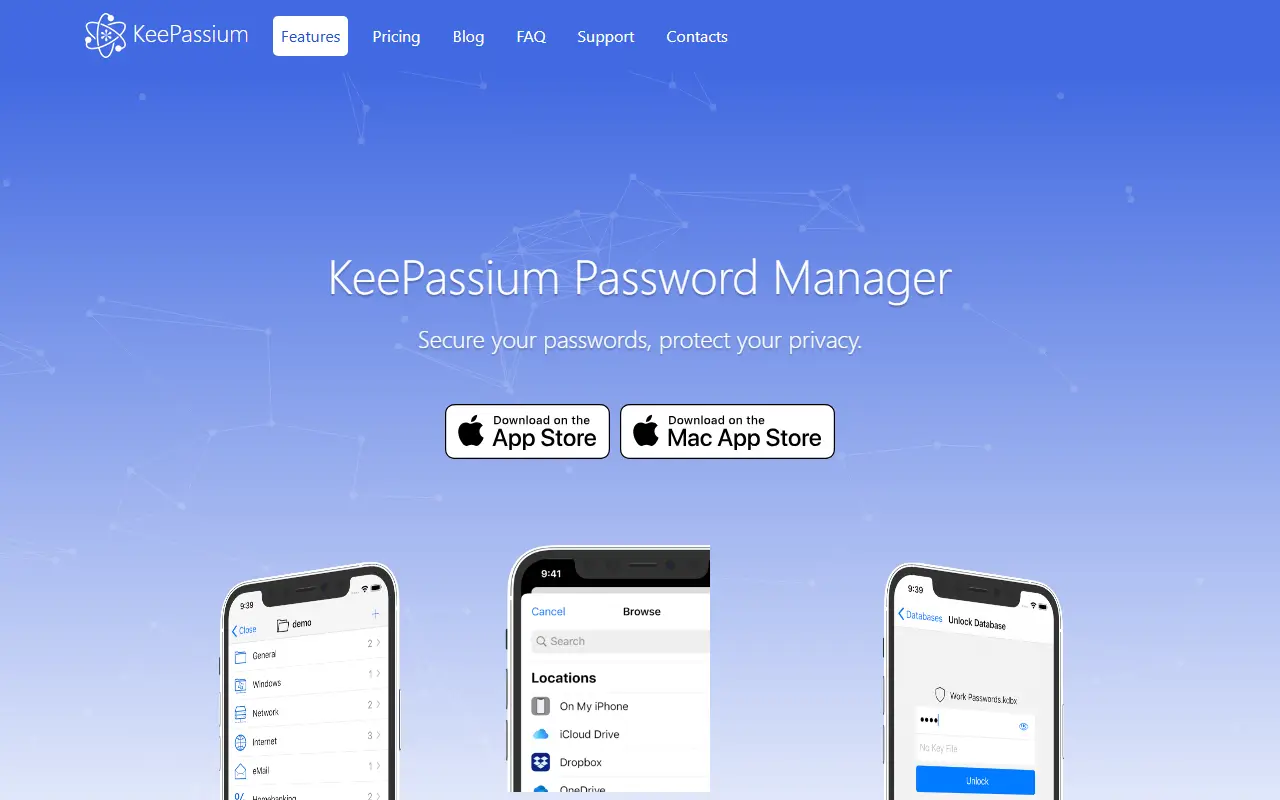
keepassium.comKeePassium homepage screenshot

KeePassium is a password manager that reads and writes KeePass databases on iOS and macOS. The project calls itself a commercial open source app: the commercial side funds maintenance and premium support, while the open source side lets anyone audit the code and build the app themselves. It is aimed at people who want the KeePass ecosystem with a native Apple interface.

It synchronizes databases automatically through the system's own storage integration, so it does not ask for your cloud credentials, and works with iCloud Drive, Dropbox, OneDrive, Google Drive, Box, Nextcloud, SFTP and others. Password AutoFill is supported on iOS. Protection includes Face ID or Touch ID, passcodes, and customizable timeouts for the app, database and clipboard. It handles the kdbx4, kdbx3 and kdb formats with ChaCha20, Argon2, AES, Salsa20 and Twofish, and supports TOTP codes including Steam TOTP, YubiKey challenge-response, attachments, custom fields and custom icons.

Several databases can be used and switched between, and there are no ads. The code is written in Swift, and the repository metadata lists the license as Other, so read the license file for exact terms. The README has a section on whether the app is free; check the vendor for current pricing.

Key features

  • Reads and writes KeePass database formats
  • Automatic sync with iCloud, Dropbox and SFTP
  • Password AutoFill on iOS
  • Face ID, Touch ID and passcode protection
  • TOTP codes including Steam TOTP
  • YubiKey challenge-response support
  • Multiple databases with quick switching

Pricing: A free tier is available forever. Premium costs €19.99 per year, a Pro lifetime license is €79.99 once, and Business & Intune is €36 per user per year with volume discounts.

Read more about KeePassiumWebsite GitHub

Padloc

Padloc is a free, AGPL-licensed, open-source, end-to-end encrypted password manager for individuals and teams, with web, desktop and mobile clients.

GitHub stars
2.9k
Last commit
1 yr ago
Latest release
v4.3.0
Licence
AGPL-3.0
Self-hosted
Yes
Hosted version
Available
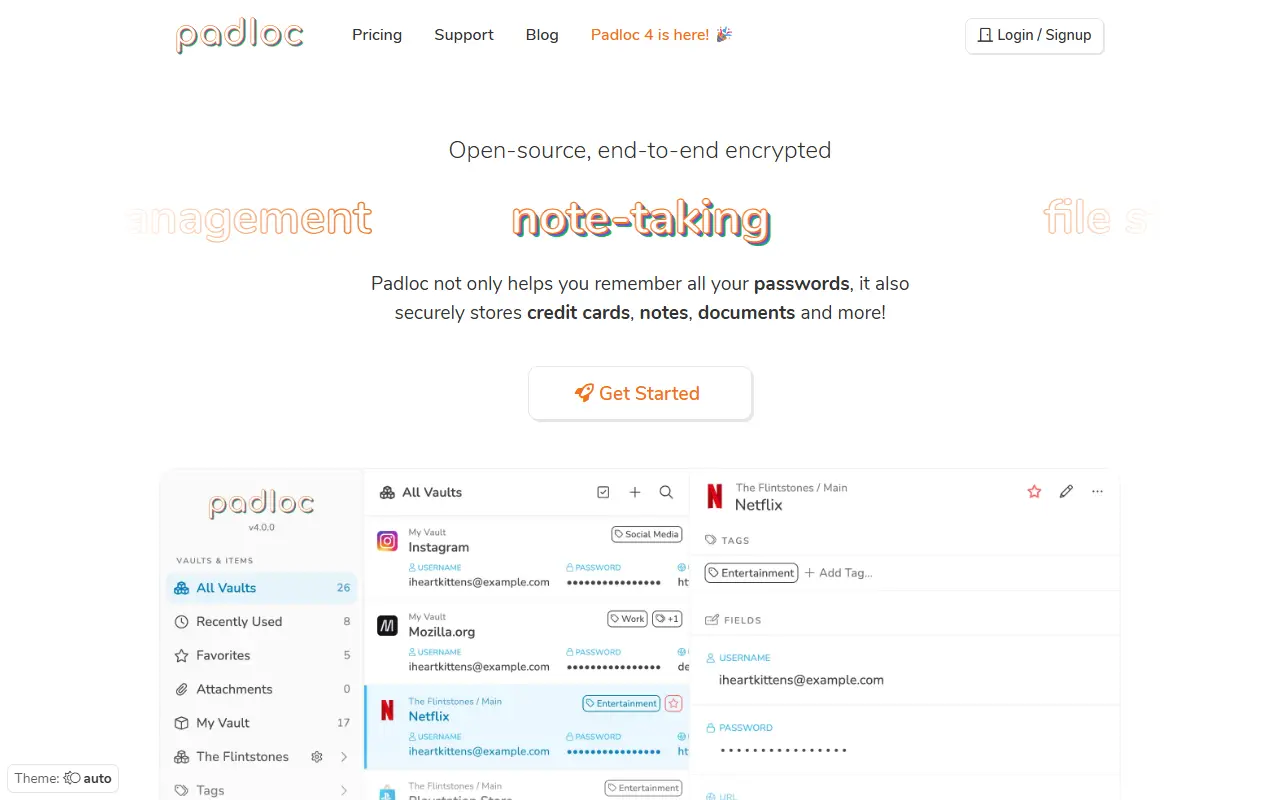
padloc.appPadloc homepage screenshot

Padloc is a password and secure data manager aimed at both individuals and teams who want an open-source alternative to closed commercial password managers. It emphasizes simplicity and security, built around end-to-end encryption so that stored data is protected even from the server operator.

The project is organized as several packages: a core logic library, web-based UI components, a backend server, a progressive web app client, a desktop app built with Electron, mobile apps built with Cordova, a cross-platform native app built with Tauri, and a browser extension, along with a localization package for translations. This split lets different front ends share the same core encryption and data logic.

Setting up a local instance for testing requires installing and configuring at least the server and a web client, which the README describes as quick to do, while guides for running a production deployment and building distributable desktop and mobile apps are still being written. Padloc is written in JavaScript and TypeScript and released under the AGPL-3.0 license, making it self-hostable.

Key features

  • End-to-end encrypted password storage
  • Web, desktop, mobile and browser extension clients
  • Password generator
  • Team and individual vault support
  • Self-hostable backend server
  • Progressive web app client

Pricing: A free plan is available. Personal Premium costs $3.49 and Family $5.95 per month, Team $3.49 and Business $6.99 per month, each with a 30-day trial and cheaper yearly options; Enterprise is by request.

Read more about PadlocWebsite GitHub

Bitdefender SecurePass alternatives: questions

What is the best open-source alternative to Bitdefender SecurePass?
Vaultwarden is the top-ranked open-source alternative to Bitdefender SecurePass on Enlisted: A lightweight, unofficial Bitwarden-compatible server written in Rust for self-hosting, working with the official Bitwarden clients. Other strong options are KeePassXC, Bitwarden, KeePassDX and Keepass2Android.
Are these Bitdefender SecurePass alternatives free?
All 10 are open source, so the code is free to use under its licence, and 9 of them can be self-hosted on your own server or computer. 4 also offer a paid or managed cloud version if you'd rather not host it yourself.
How is this list of Bitdefender SecurePass alternatives ranked?
By a score built from GitHub stars, star growth over the last 30 days and how recently the code changed. 7 of these projects shipped code in the last 30 days. Data is refreshed daily, and nobody can pay to move up.

People also look for alternatives to…

View all