7,363 open-source and SaaS tools, with GitHub stats refreshed every day.

4 alternatives ranked by real activity

Open-source Segment alternatives

A curated, ranked list of the 4 best open-source alternatives to Segment.

The best open-source alternative to Segment is Jitsu. If that doesn't suit you, other good options are RudderStack, Snowplow and Trench.

Segment alternatives are mainly data pipeline & ETL tools, but some are also analytics tools. 2 of them shipped code in the last 30 days, 4 can be self-hosted, and 3 use a permissive licence.

Last updated October 2, 2026 · ranked by GitHub stars, growth and recent commits

Jitsu

An open-source, MIT-licensed event data platform that collects events from sites, apps and servers and delivers them to warehouses, as a Segment alternative.

GitHub stars
5.1k
Last commit
today
Latest release
jitsu-cli1.11.0
Licence
MIT
Self-hosted
Yes
Hosted version
Available
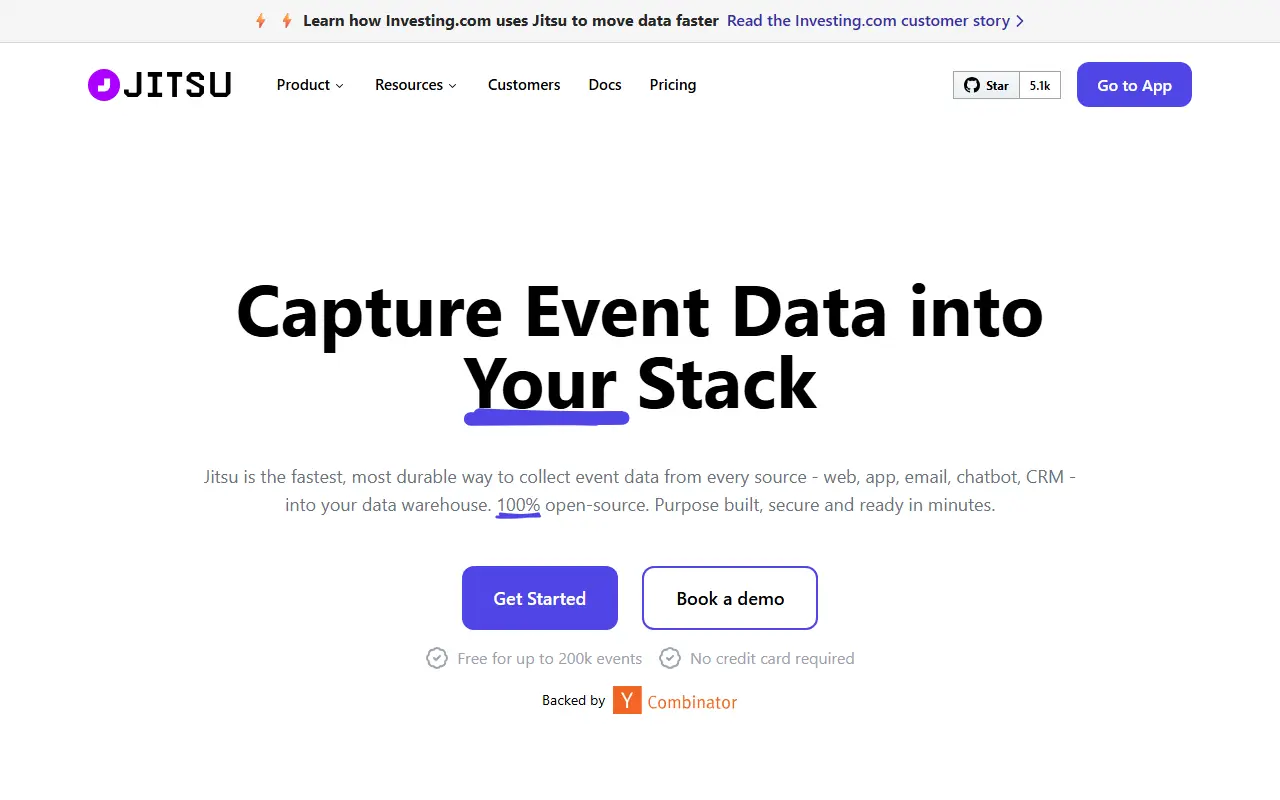
jitsu.comJitsu homepage screenshot

Jitsu is an open-source event data platform that collects events from websites, apps and servers and delivers them to a data warehouse and other tools. It covers similar ground to Segment, and because it is MIT-licensed and self-hostable the whole pipeline can run on your own infrastructure or on the hosted Jitsu Cloud.

Events are collected through SDKs, an HTTP API or a drop-in Segment proxy, then delivered to destinations such as ClickHouse, BigQuery, Snowflake, Redshift, Postgres, S3 and GCS, streamed or in micro-batches depending on the destination. Functions written in JavaScript run on each event to filter, transform and enrich it, and can be written in the browser or deployed from your own repository with the Jitsu CLI. Connector syncs pull data from third-party sources using Airbyte-compatible connectors.

According to the README, batches can land as often as every minute, whereas Segment loads warehouses once or twice a day. Jitsu Cloud bills by event volume rather than monthly tracked users, and self-hosting carries no usage billing. The code is written in TypeScript and Go, and an MCP server is available.

Key features

  • Event collection via SDKs and HTTP API
  • Drop-in Segment proxy
  • Delivery to warehouses like BigQuery and Snowflake
  • JavaScript functions to transform events
  • Airbyte-compatible connector syncs
  • CLI for building and deploying functions
  • User identity graph

Pricing: Free cloud plan includes 200k active events a month, and the MIT-licensed open-source version is free to self-host. Business costs $99 per month with a free trial; Enterprise is custom.

RudderStack

RudderStack's open-source customer data pipeline in Go, a warehouse-first Segment alternative for collecting events and delivering them to warehouses and tools.

GitHub stars
4.5k
Last commit
yesterday
Latest release
v1.89.1
Self-hosted
Yes
Hosted version
Available
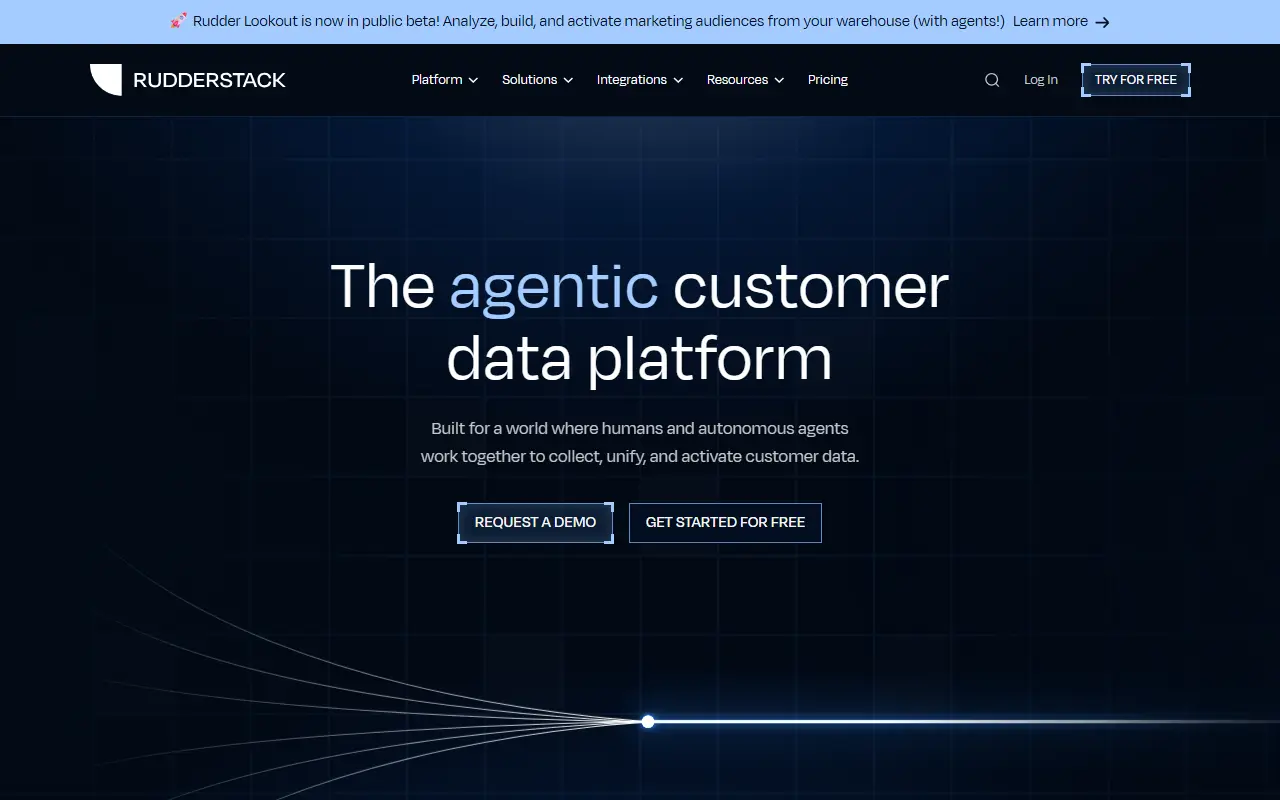
rudderstack.comRudderStack homepage screenshot

Rudder Server is the core of RudderStack, a customer data platform for developers. It provides data pipelines that collect data from applications, websites and SaaS platforms and then deliver it to your data warehouse and business tools, positioning itself as a privacy and security focused alternative to Segment.

RudderStack treats the warehouse as a first-class destination, with configurable near real-time sync, and it is built API-first around SDKs and event source integrations. It supports event streaming as well as cloud-to-warehouse ELT, with Cloud Extract integrations, transformations and a broad library of destination and warehouse integrations including BigQuery, Redshift and Snowflake.

The server is written in Go, and the project offers RudderStack Cloud with a free tier for teams that do not want to host it. The README highlights a built-in error handling and retry system for reliability. Documentation, a changelog, a blog and a Slack community are linked from the README.

Key features

  • Event collection with SDKs
  • Warehouse-first pipeline design
  • Event streaming and cloud-to-warehouse ELT
  • Transformations on event data
  • Large library of destinations
  • Retry and error handling for reliability

Pricing: Free plan covers 250K events a month. Growth costs $265 per month for 1 million events with a 30-day trial, and 15% off annual billing; Enterprise is custom.

Snowplow

Snowplow is a behavioral data collection pipeline that gathers event-level data and delivers it to warehouses, lakes and streams; newer versions use a limited-use licence.

GitHub stars
7k
Last commit
3 mo ago
Latest release
22.01
Licence
Apache-2.0
Self-hosted
Yes
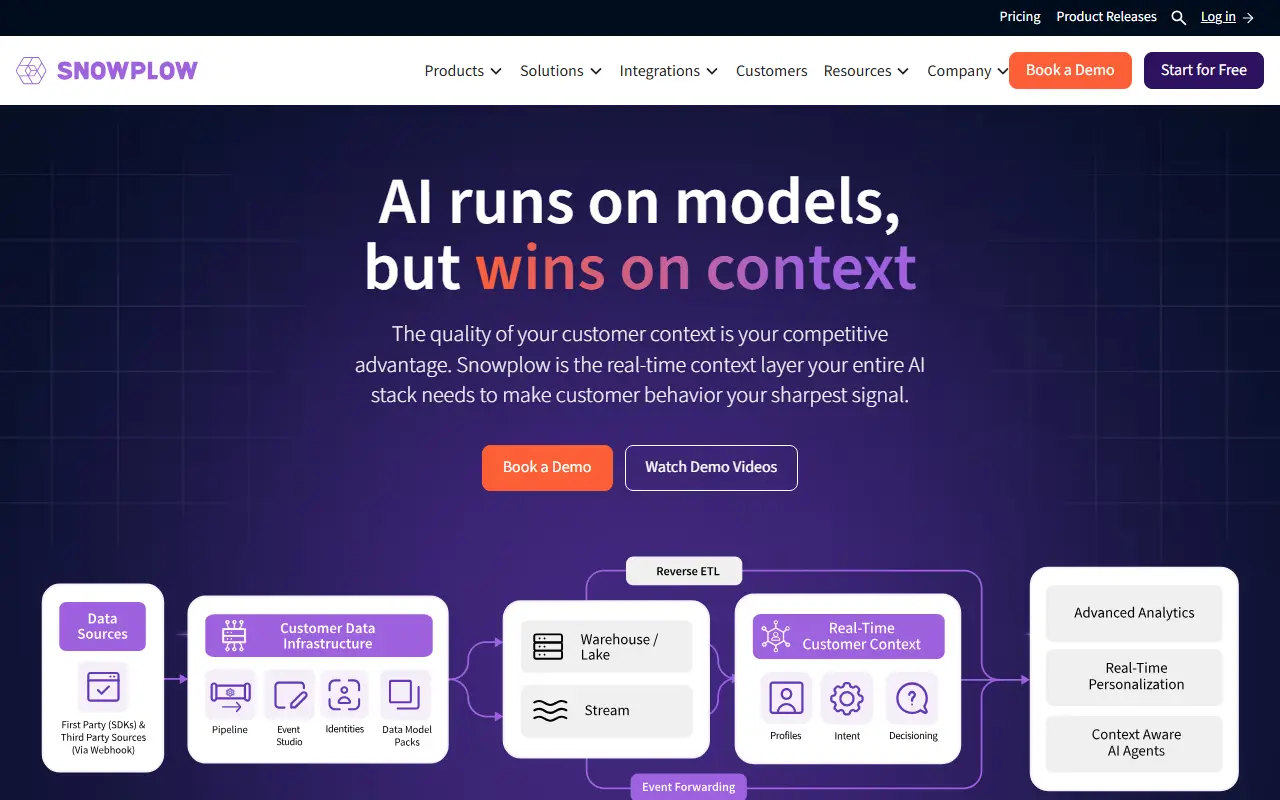
snowplow.ioSnowplow homepage screenshot

Snowplow is customer data infrastructure for collecting and processing behavioral event data in real time. It gathers event-level data from websites, apps and other sources and delivers it to a data warehouse, lake or stream, where it can feed analytics, personalization, fraud detection and AI agents with customer context.

The repository describes a Customer Context Layer with key benefits around data depth and quality, centralized governance and real-time operationalization. The topics point to data pipelines, product analytics and marketing analytics. The pipeline is written mainly in Scala and has been developed since 2012.

The README carries an important notice: since January 8, 2024, new versions of the core pipeline are released under the Snowplow Limited Use License Agreement, and versions from before January 2024 receive no security patches. Users running the pipeline in production or competing with Snowplow are told they are affected and should contact the company. The older code was Apache-2.0, which the repository still lists. Teams should read the current terms before adopting it.

Key features

  • Event-level behavioral data collection
  • Delivery to warehouses, lakes, and streams
  • Real-time data processing
  • Governance and data quality focus
  • Support for product and marketing analytics
  • Scala-based pipeline components

Pricing: A self-managed open-source environment for testing is listed at no cost, plus a 14-day free trial. The self-hosted pipeline and managed Platform are quoted individually, based on event volume and hosting.

Trench

Open-source event tracking and analytics infrastructure built on ClickHouse and Kafka, compatible with the Segment API and deployable as one Docker image.

GitHub stars
1.7k
Last commit
5 mo ago
Latest release
trench-js@0.0.17
Licence
MIT
Self-hosted
Yes
Hosted version
Available
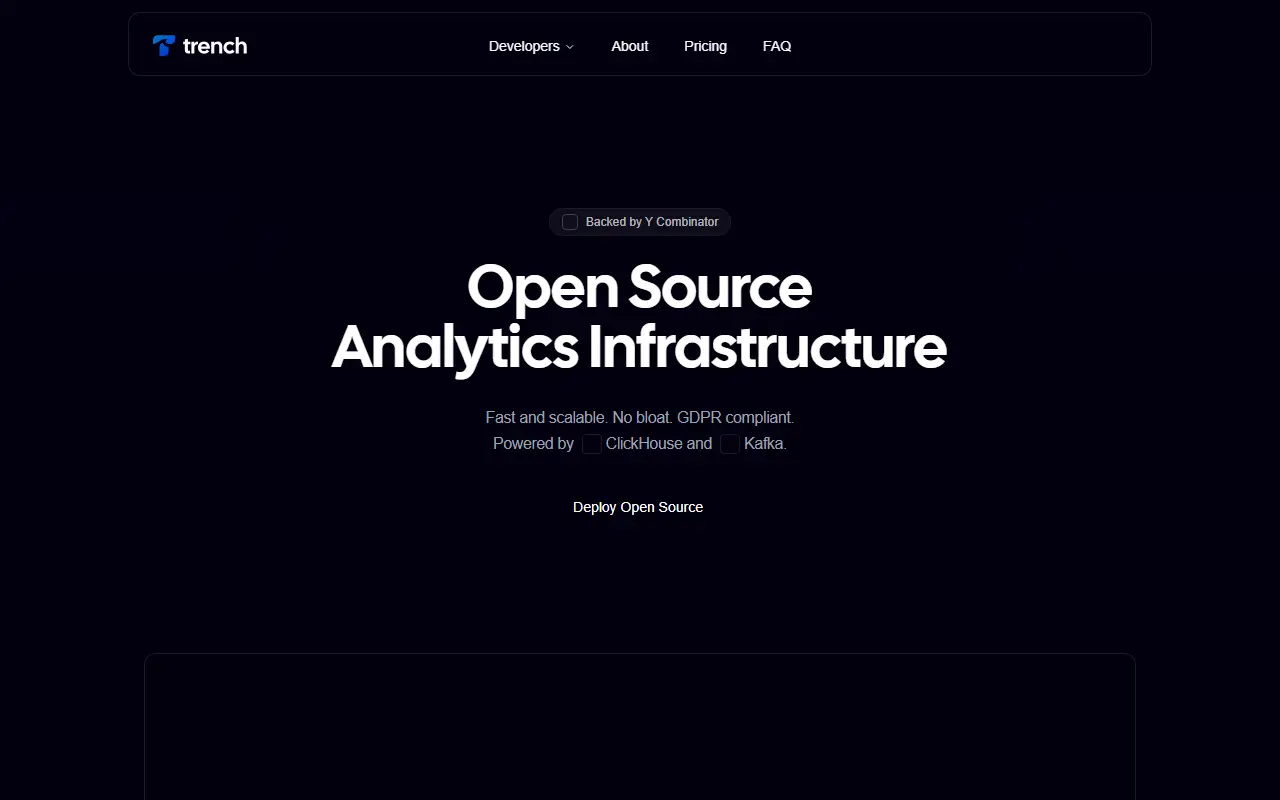
trench.devTrench homepage screenshot

Trench is an event tracking system built on Apache Kafka and ClickHouse that aims to handle large event volumes and provide real-time analytics. It was created by the Frigade team to scale its own tracking pipeline, and is meant for developers who want to build product analytics dashboards or collect events for other data uses on infrastructure they control. The README describes it as cookie-free and compliant with GDPR and PECR, with users able to access, correct or delete their data.

It is compatible with the Segment API, supporting Track, Group and Identify calls, and ships as a single production-ready Docker image. A single node can process thousands of events per second, data can be queried in real time, and webhooks connect events to other destinations. A demo shows how to build a basic Google Analytics-style dashboard using Trench and Grafana.

There are two ways to run it. Trench Self-Hosted is the open-source MIT-licensed version, which needs Docker and Docker Compose and recommends at least 4 GB of RAM and 4 CPU cores for production. Trench Cloud is a fully managed serverless offering. Support is available through a Slack community.

Key features

  • Segment-compatible Track, Group and Identify API
  • Single production-ready Docker image
  • Real-time queries on event data
  • Webhooks to other destinations
  • ClickHouse and Kafka based storage
  • Cookie-free tracking with data deletion controls

Pricing: Self-hosted version is free under MIT. A managed Trench Cloud option exists; see the vendor for pricing.

Segment alternatives: questions

What is the best open-source alternative to Segment?
Jitsu is the top-ranked open-source alternative to Segment on Enlisted: An open-source, MIT-licensed event data platform that collects events from sites, apps and servers and delivers them to warehouses, as a Segment alternative. Other strong options are RudderStack, Snowplow and Trench.
Are these Segment alternatives free?
All 4 are open source, so the code is free to use under its licence, and all of them can be self-hosted on your own server or computer. 3 also offer a paid or managed cloud version if you'd rather not host it yourself.
How is this list of Segment alternatives ranked?
By a score built from GitHub stars, star growth over the last 30 days and how recently the code changed. 2 of these projects shipped code in the last 30 days. Data is refreshed daily, and nobody can pay to move up.

People also look for alternatives to…

View all