6 open-source alternatives ranked by real activity

Open-source Permit.io alternatives

A curated, ranked list of the 6 best open-source alternatives to Permit.io.

The best open-source alternative to Permit.io is Keycloak. If that doesn't suit you, other good options are OpenFGA, OPA, SpiceDB and Pomerium.

Commercial alternatives to Permit.io include Authress, Oso, Clerk and Scalekit. See all 14.

Permit.io alternatives are mainly auth & identity tools, but some are also security tools. 5 of them shipped code in the last 30 days, 6 can be self-hosted, and 6 use a permissive licence.

Last updated November 13, 2026 · ranked by GitHub stars, growth and recent commits

Keycloak

Keycloak is an open-source identity and access management server that adds single sign-on, user management and authorization to applications.

GitHub stars
38k
Last commit
yesterday
Latest release
26.8.2
Licence
Apache-2.0
Self-hosted
Yes
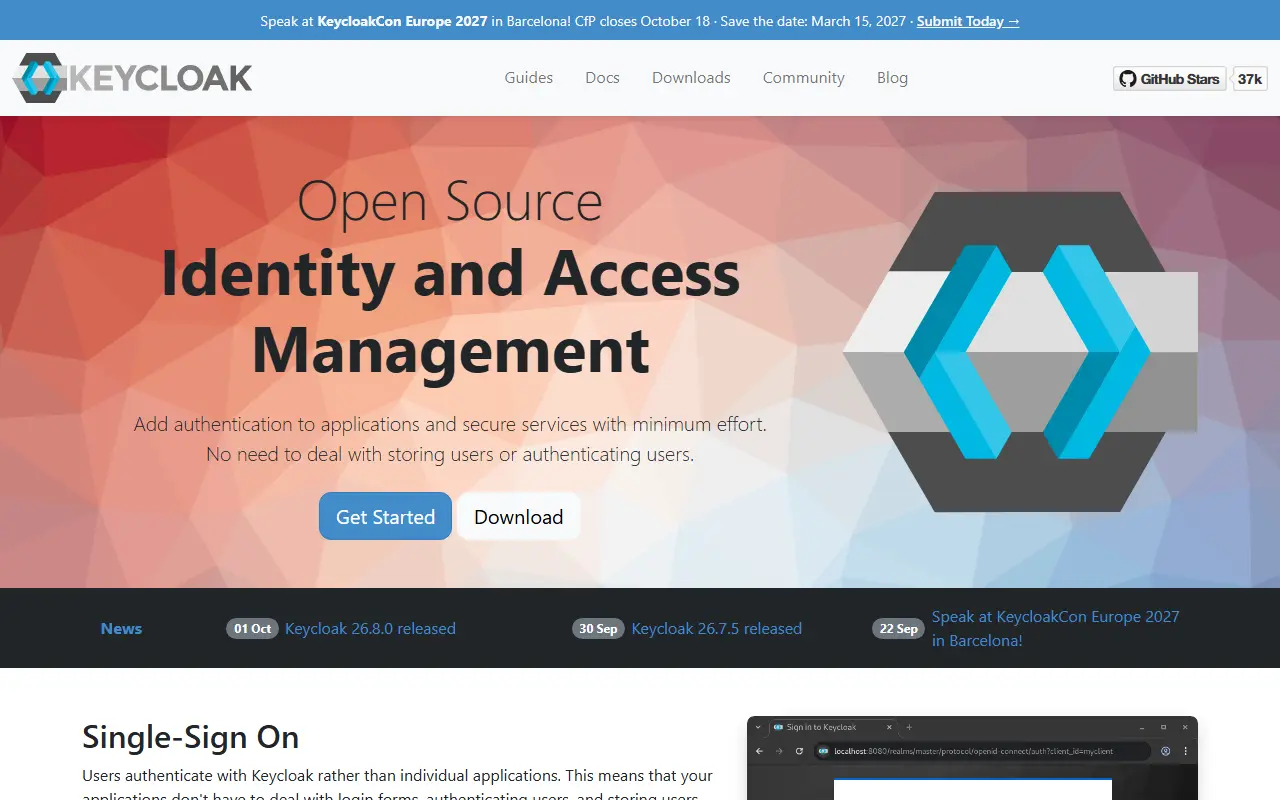
keycloak.orgKeycloak homepage screenshot

Keycloak is an open-source identity and access management server. It lets application teams add authentication and secure services without building their own login system, since Keycloak handles storing users and authenticating them. The project is written in Java, released under the Apache-2.0 license and governed under the Cloud Native Computing Foundation code of conduct.

Keycloak supports standard protocols such as OpenID Connect and SAML, and offers user federation, strong authentication, user management and fine-grained authorization. You can run it from the downloadable distribution using a start-dev command, or use the official Docker image published on Quay for containers and Kubernetes setups. The project provides documentation, a user mailing list and community channels for help, along with guidance for building and testing from source.

Key features

  • Single sign-on with OpenID Connect and SAML
  • User federation with external directories
  • Strong and multi-step authentication options
  • Central user and account management
  • Fine-grained authorization policies
  • Docker image and standalone distribution

Pricing: Free and open source under the Apache-2.0 license; you host and operate it yourself.

OpenFGA

Open-source authorization engine where developers describe access rules in a modeling language and ask the API whether a user may do something.

GitHub stars
6.1k
Last commit
yesterday
Latest release
v1.22.1
Licence
Apache-2.0
Self-hosted
Yes
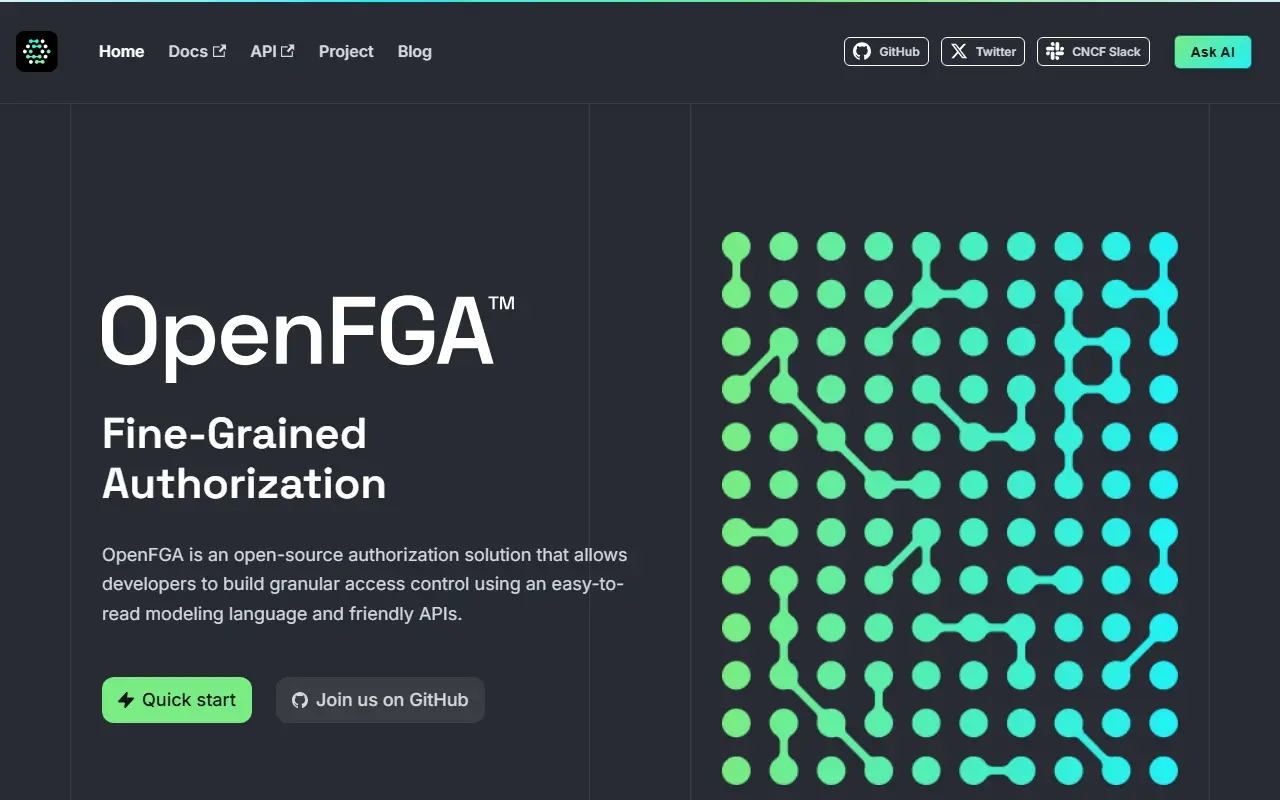
openfga.devOpenFGA homepage screenshot

OpenFGA is an authorization service for applications. Instead of scattering permission checks through code, developers write an authorization model in a readable modeling language and then call an API to ask whether a given user may act on a given object. The project is aimed at fine-grained access control.

The design borrows from Google's Zanzibar paper on relationship-based access control, and the project says it also handles role-based and attribute-based use cases. SDKs exist for popular languages, and the team says check calls are designed to return in milliseconds.

It is open source and governed in the open through an RFC process and a public roadmap. The project belongs to the Cloud Native Computing Foundation as an incubating project. A single Docker command starts a local server on port 8080, and sample models are in the documentation.

Key features

  • Readable modeling language for access control
  • Relationship-based access control modeled on Zanzibar
  • Also covers role-based and attribute-based access
  • SDKs for popular programming languages
  • Authorization checks designed to answer in milliseconds
  • Local start with one Docker command
Read more about OpenFGAWebsiteGitHub#2 Permit.io alternative

OPA

OPA is an open source, general-purpose policy engine that decouples policy from application logic.

GitHub stars
12k
Last commit
yesterday
Latest release
v1.22.4
Licence
Apache-2.0
Self-hosted
Yes
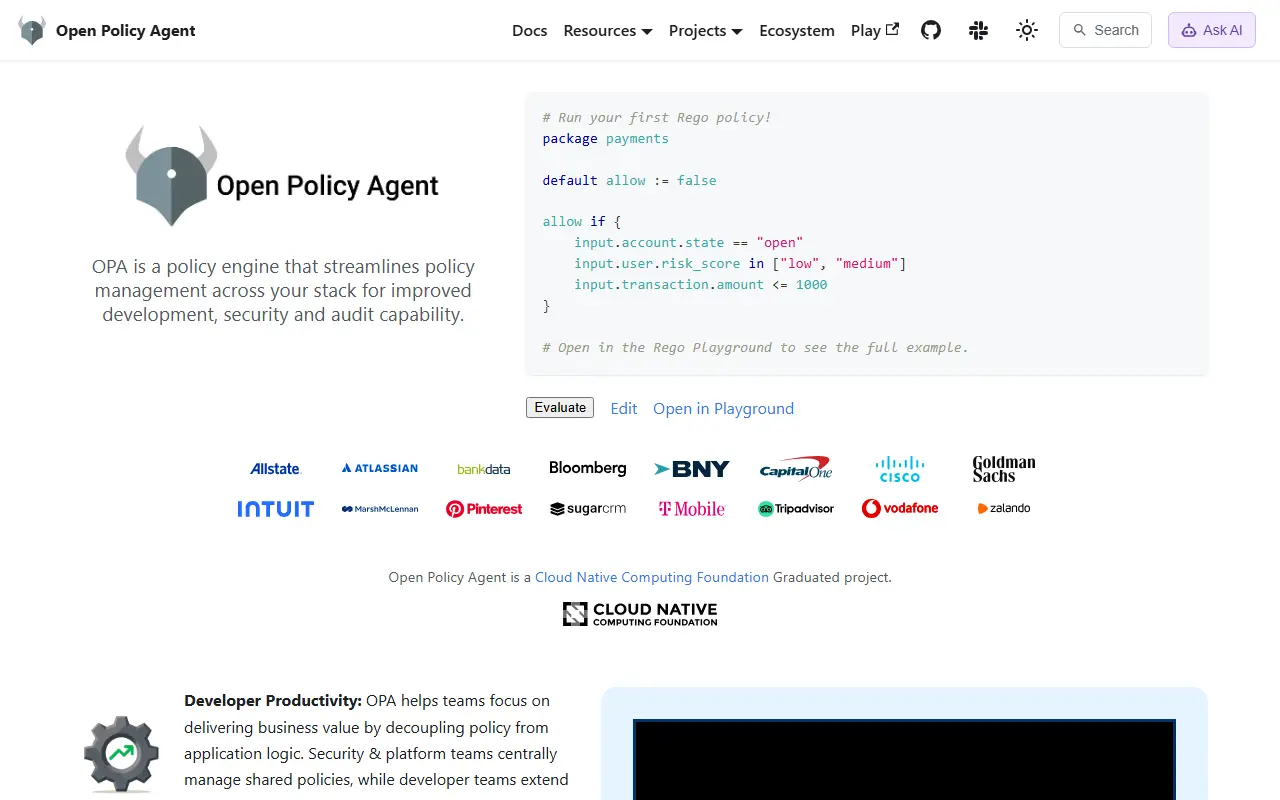
openpolicyagent.orgOPA homepage screenshot

OPA is a policy engine that streamlines policy management across the stack for improved development, security and audit capability. It provides a high-level declarative language (Rego) that lets you specify policy for a wide range of use cases. You can use OPA to enforce policies in applications, proxies, Kubernetes, CI/CD pipelines, API gateways, and more.

OPA helps teams focus on delivering business value by decoupling policy from application logic. Security and platform teams centrally manage shared policies, while developer teams extend them as needed within the policy system. OPA generates comprehensive audit trails for every policy decision, supporting auditing and compliance efforts.

Key features

  • Decouples policy from application logic
  • Uses Rego, a domain-specific policy language built for speed
  • Operates on pre-loaded, in-memory data for fast policy decisions
  • Generates comprehensive audit trails for every policy decision
  • Supports integration via SDKs or REST API
  • Can enforce policies in applications, proxies, Kubernetes, CI/CD pipelines, API gateways, and more
Read more about OPAWebsiteGitHub#3 Permit.io alternative

SpiceDB

SpiceDB from Authzed is an open-source, Google Zanzibar-inspired database for storing and querying fine-grained authorization data, answering whether a subject can perform an action on a resource.

GitHub stars
7.2k
Last commit
today
Latest release
v1.57.1
Licence
Apache-2.0
Self-hosted
Yes
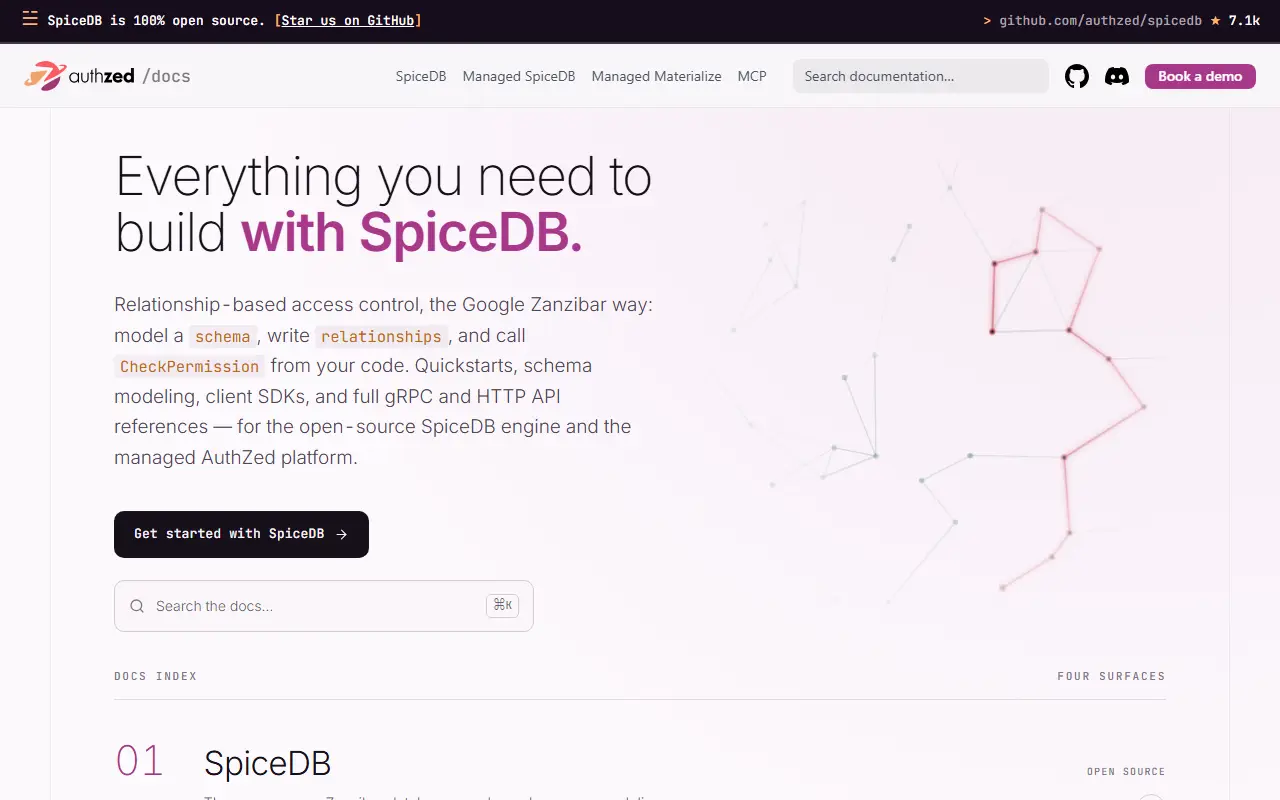
authzed.comSpiceDB homepage screenshot

This entry covers SpiceDB, the open-source authorization database from Authzed. It is inspired by Google's Zanzibar paper and lets platform and product teams answer questions such as whether a given subject can perform an action on a given resource, which addresses broken access control, a major web security risk.

Like a relational database, you define a schema, write data as relationships and then use client libraries to issue permission checks from your application. Other queries are possible too, such as what a subject can do or who can access a resource. SpiceDB typically runs as one central service used by several products and microservices, and it focuses purely on authorization, staying agnostic to authentication and identity providers. Topics mention RBAC, ABAC, ReBAC and fine-grained access control.

SpiceDB is written in Go, runs on Kubernetes and elsewhere, and is licensed under Apache-2.0. Authzed also offers commercial products around it. It suits engineering teams that need consistent, scalable permissions for multi-tenant or collaborative applications.

Key features

  • Zanzibar-style relationship-based permissions
  • Schema language for authorization models
  • Permission check and lookup queries
  • Centralized authorization service
  • Independent of identity providers
  • Distributed, cloud-native design

Pricing: Free and open source under the Apache-2.0 licence.

Read more about SpiceDBWebsiteGitHub#4 Permit.io alternative

Pomerium

An identity and context-aware access proxy written in Go that secures internal apps and services without a corporate VPN.

GitHub stars
5.1k
Last commit
yesterday
Latest release
v0.34.1
Licence
Apache-2.0
Self-hosted
Yes
Hosted version
Available
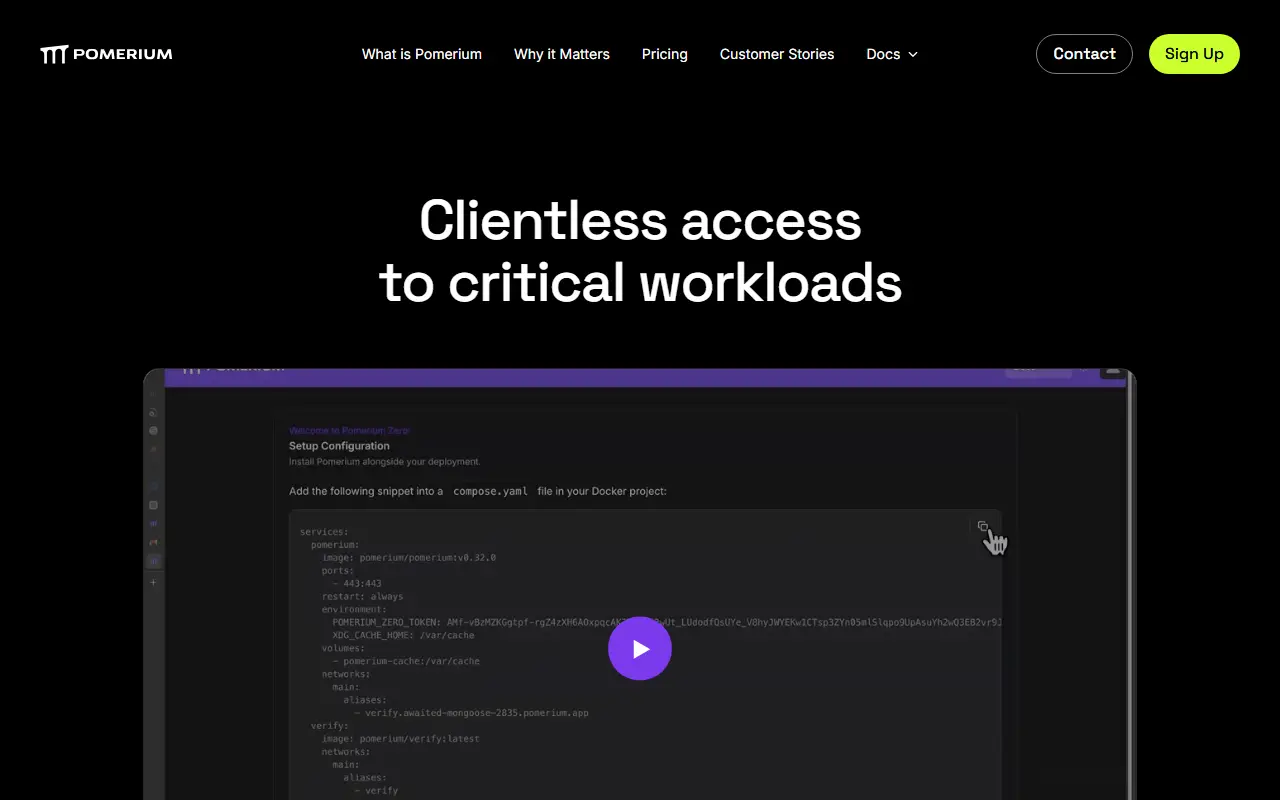
pomerium.comPomerium homepage screenshot

Pomerium is an identity and context-aware reverse proxy that makes secure, clientless connections to internal web apps and other services. The goal is to protect internal resources without asking users to connect through a corporate VPN.

According to the project, clientless access makes it easier to adopt, running tunnel-free and close to your apps and services makes it faster, and verifying each action before it executes makes it safer. Context-aware policies can draw on data from several sources, so access decisions can reflect your organization's own needs. Repository topics point to zero-trust, BeyondCorp-style, identity-aware proxy and IAM use cases.

Pomerium is written in Go and licensed under Apache-2.0. Teams that want a hosted control plane and a management GUI can look at Pomerium Zero, while the open-source proxy can be run on your own infrastructure. Documentation and tutorials are available on pomerium.com.

Key features

  • Identity-aware reverse proxy
  • Clientless access to internal apps
  • Per-request verification of every action
  • Context-aware access policies
  • Tunnel-free deployment near your services
  • Hosted control plane via Pomerium Zero

Pricing: Free Personal plan. Business costs $7 per user per month billed annually, with a free trial; Enterprise for fully self-hosted deployments is quoted.

Keto

Ory Keto is an open source authorization server implementing Google's Zanzibar model for relationship-based permission checks at scale.

GitHub stars
5.4k
Last commit
2 mo ago
Latest release
v26.2.0
Licence
Apache-2.0
Self-hosted
Yes
Hosted version
Available
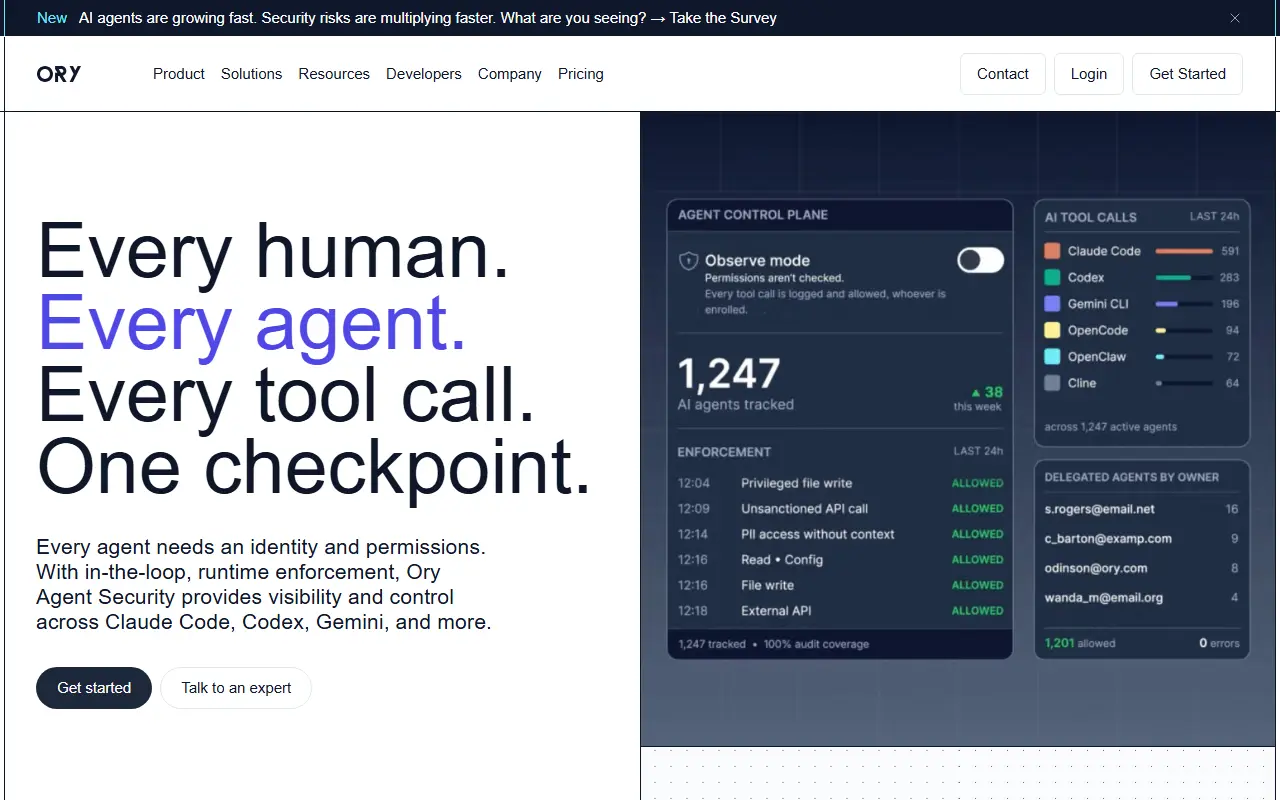
ory.comKeto homepage screenshot

Ory Keto is described as the first and most popular open source implementation of Zanzibar, Google's consistent, global authorization system. It is a headless, API-first server written in Go that manages permissions and answers permission checks.

It centres on relationship-based access control, with policies written in the Ory Permission Language. The README states sub-10ms checks, horizontal scaling to billions of relationships, and use with any identity provider through integration points. It is meant to run in cloud-native environments such as Kubernetes.

There are two ways to run it. On the Ory Network, Ory Permissions is powered by Keto and API compatible, and a free developer account is offered. Self-hosting covers Linux, macOS, Windows and Docker, with PostgreSQL, MySQL or CockroachDB, or building from source.

Key features

  • Scalable Zanzibar-based permission checks
  • Ory Permission Language for policies
  • Relationship-based access control
  • Sub-10ms permission checks
  • Horizontal scaling to billions of relationships
  • Works with PostgreSQL, MySQL and CockroachDB
  • Command-line tuple creation and permission checks
Read more about KetoWebsiteGitHub#6 Permit.io alternative

Commercial Permit.io alternatives

Hosted, closed-source products that compete with Permit.io. Showing 12 of 14.

See every Permit.io alternative on its tool page

Permit.io alternatives: questions

What is the best open-source alternative to Permit.io?
Keycloak is the top-ranked open-source alternative to Permit.io on Enlisted: Keycloak is an open-source identity and access management server that adds single sign-on, user management and authorization to applications. Other strong options are OpenFGA, OPA, SpiceDB and Pomerium.
What are the best commercial alternatives to Permit.io?
Authress, Oso, Clerk, Scalekit and FusionAuth are among the hosted, closed-source alternatives to Permit.io listed on Enlisted, which lists 14 in total. Compare their pricing and features on each tool page.
Are these Permit.io alternatives free?
All 6 are open source, so the code is free to use under its licence, and all of them can be self-hosted on your own server or computer. 2 also offer a paid or managed cloud version if you'd rather not host it yourself.
How is this list of Permit.io alternatives ranked?
By a score built from GitHub stars, star growth over the last 30 days and how recently the code changed. 5 of these projects shipped code in the last 30 days. Data is refreshed daily, and nobody can pay to move up.

People also look for alternatives to…

View all