7,380 open-source and SaaS tools, with GitHub stats refreshed every day.

4 alternatives ranked by real activity

Open-source Lens alternatives

A curated, ranked list of the 4 best open-source alternatives to Lens.

The best open-source alternative to Lens is Portainer. If that doesn't suit you, other good options are Kite, KDash and Kubebox.

Lens alternatives are mainly infrastructure & container tools. 3 of them shipped code in the last 30 days, 4 can be self-hosted, and 3 use a permissive licence.

Last updated October 3, 2026 · ranked by GitHub stars, growth and recent commits

Portainer

A lightweight container management web UI for Docker, Swarm, Podman and Kubernetes, with a free Community Edition and a commercial Business Edition.

GitHub stars
39k
Last commit
today
Latest release
2.45.1
Licence
Zlib
Self-hosted
Yes
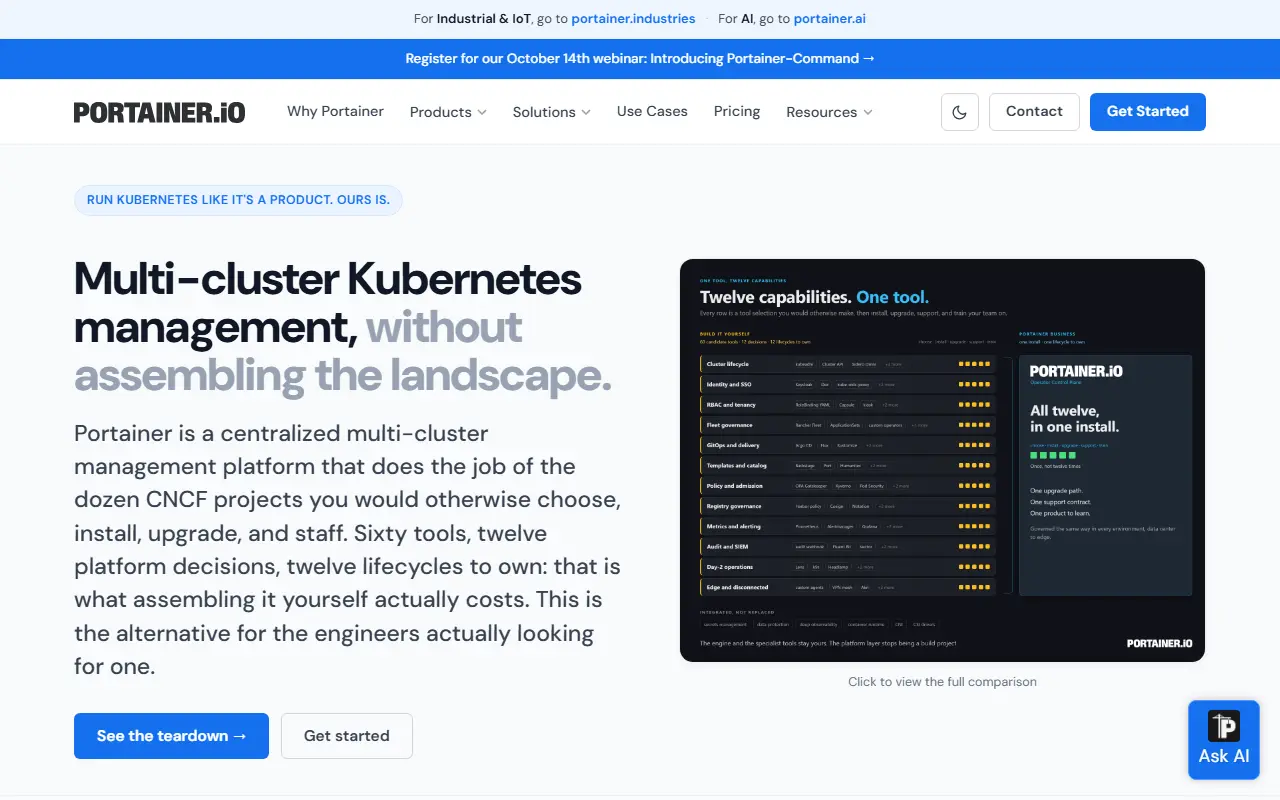
portainer.ioPortainer homepage screenshot

Portainer is a container management interface for Docker, Swarm, Podman, Kubernetes and Azure Container Instances environments. The Community Edition is free and lightweight and is provided as-is, aimed at homelab users, hobbyists, students and others trying out containers on their own machines. It is written in TypeScript and released under the Zlib license.

The README is clear about intended use: The project positions Community Edition for homelabs, learning setups, personal projects and similar non-production use. It comes without support, warranty, SLA or roadmap commitment, and updates arrive without guaranteed cadence. For production or business-critical use, the project points to Portainer Business Edition.

Business Edition is based on the same open-source code and adds hardening, commercial support and features such as RBAC, GitOps, edge management, auditing and SSO. A Take3 offer gives three free Business nodes. Getting started documentation covers deploying Portainer. It suits individuals and small teams who want a visual way to manage containers, with a commercial path available as needs grow.

Key features

  • Web UI for Docker, Swarm and Podman
  • Kubernetes and Azure Container Instances support
  • Lightweight Community Edition
  • Business Edition with RBAC, GitOps and SSO
  • Edge management and auditing in Business Edition
  • Getting-started deployment documentation

Pricing: Portainer is priced by node, not seat. Free for up to 3 nodes; Starter is $1,045 and Scale $2,095 per year billed annually; Enterprise is custom, with a 45-day trial.

Kite

Lightweight open-source Kubernetes dashboard for managing multiple clusters, with metrics, logs, terminals, Helm releases, RBAC, and an AI assistant.

GitHub stars
3.2k
Last commit
yesterday
Latest release
v0.15.1
Licence
Apache-2.0
Self-hosted
Yes
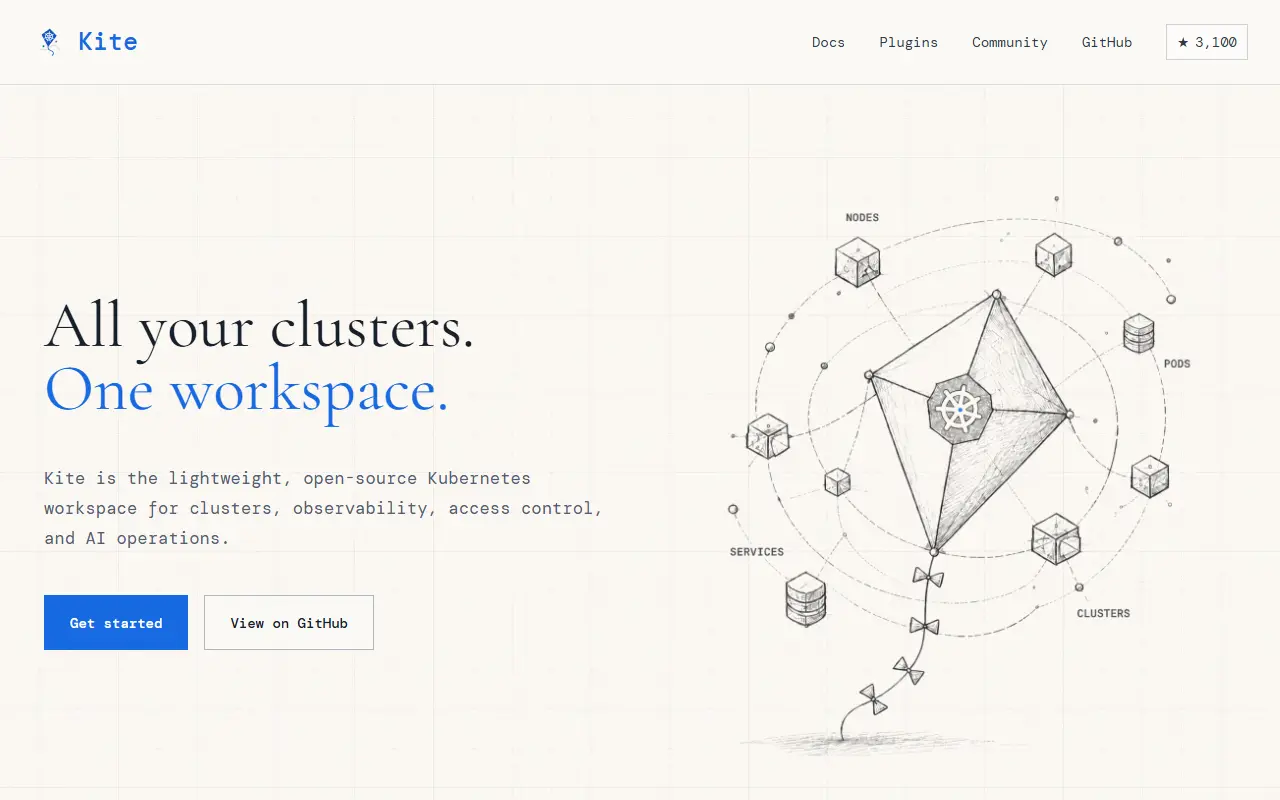
kitehq.devKite homepage screenshot

Kite is an open-source Kubernetes workspace that brings several clusters into a single web interface. It is designed for multi-cluster operations, observability, access control, and troubleshooting with an optional AI assistant, and the project describes itself as lightweight. It is released under the Apache-2.0 license.

For observability it shows CPU, memory, and network usage through per-cluster Prometheus integrations, streams and filters pod logs, and shows events, conditions, and related resources in context. For operations you can manage core resources, custom resource definitions, and Helm releases, edit live YAML, scale or restart workloads, and open browser-based terminals for pods, nodes, and kubectl, plus global search across resources.

Access can be governed with OAuth, LDAP, local accounts, MFA, and passkeys, along with RBAC, per-cluster permissions, and audit logs. The AI assistant can inspect resources, logs, and metrics and asks you to confirm write operations while respecting RBAC. Installation is by Helm chart, and it suits platform and DevOps teams that manage more than one cluster.

Key features

  • Multi-cluster management in one workspace
  • Prometheus-backed CPU, memory, and network charts
  • Live pod log streaming and filtering
  • Browser-based pod, node, and kubectl terminals
  • Helm release and CRD management
  • RBAC, audit logs, and OAuth or LDAP login
  • AI assistant with confirmation for writes

Pricing: Free and open source under the Apache-2.0 license.

KDash

Fast terminal dashboard for Kubernetes written in Rust, with resource views, logs, and actions such as scaling, restarting, and port forwarding.

GitHub stars
2.5k
Last commit
9 days ago
Latest release
v2.1.1
Licence
MIT
Self-hosted
Yes
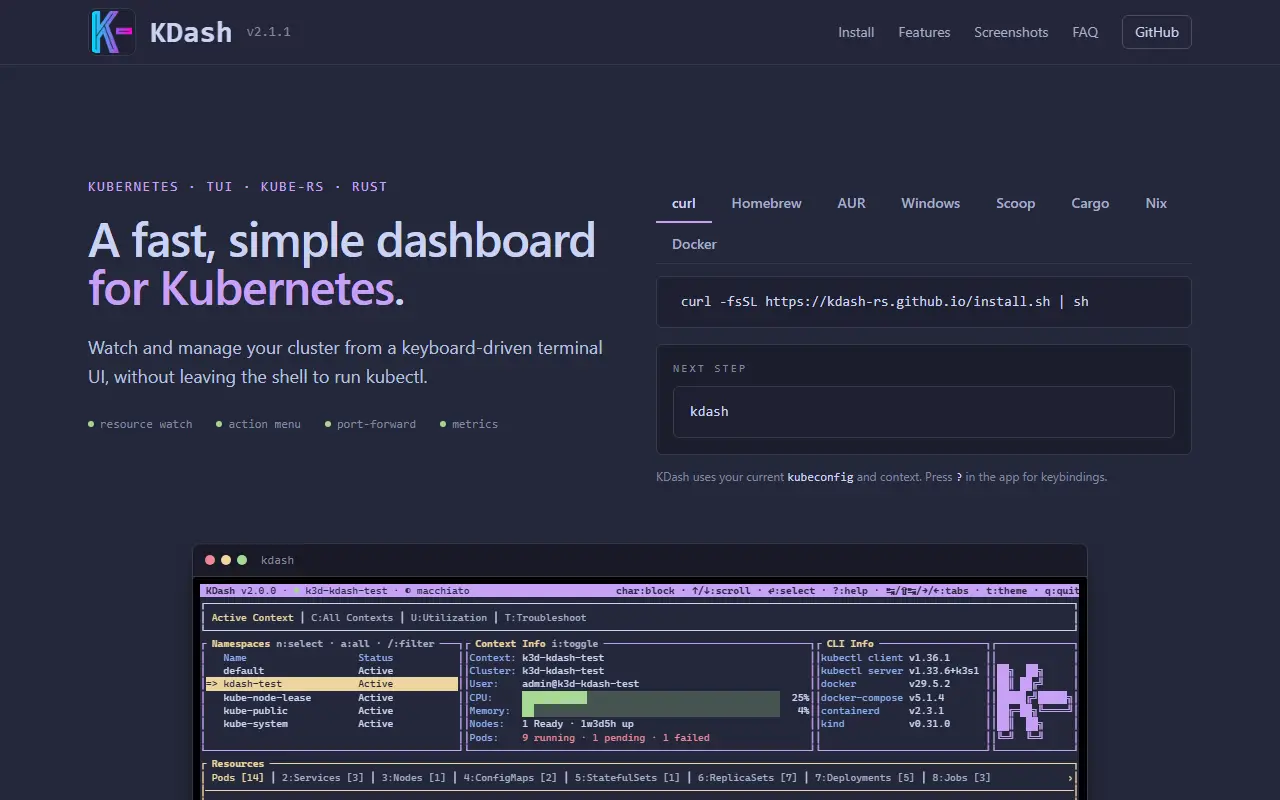
kdash-rs.github.ioKDash homepage screenshot

KDash is a terminal user interface for Kubernetes, built in Rust. It gives a quick overview of cluster resources and lets you work with them from the keyboard without leaving the terminal. It is released under the MIT license.

Version 2.0 added resource management actions: delete any resource, edit a resource in your editor, rollout-restart workloads, view the logs of previous containers, scale workloads, cordon nodes, and suspend, resume, or trigger CronJobs from an action menu. Impactful actions ask for confirmation. You can also port-forward a pod or service, and list and stop active forwards, with forwards running in the background.

The README covers installation, usage, keybindings, configuration, flags, known limitations, and screenshots. KDash suits Kubernetes administrators and developers who prefer a lightweight terminal tool, a role similar to other TUI dashboards, over a browser-based console.

Key features

  • Terminal dashboard for Kubernetes resources
  • Delete and edit resources in place
  • Rollout restart and workload scaling
  • Previous container log viewing
  • Node cordon and CronJob controls
  • Pod and service port forwarding

Pricing: Free and open source under the MIT license.

Kubebox

Kubebox is a free, MIT-licensed terminal and web console for Kubernetes and OpenShift, giving a text-based UI for browsing and monitoring cluster resources.

GitHub stars
2.2k
Last commit
2 yr ago
Latest release
v0.10.0
Licence
MIT
Self-hosted
Yes
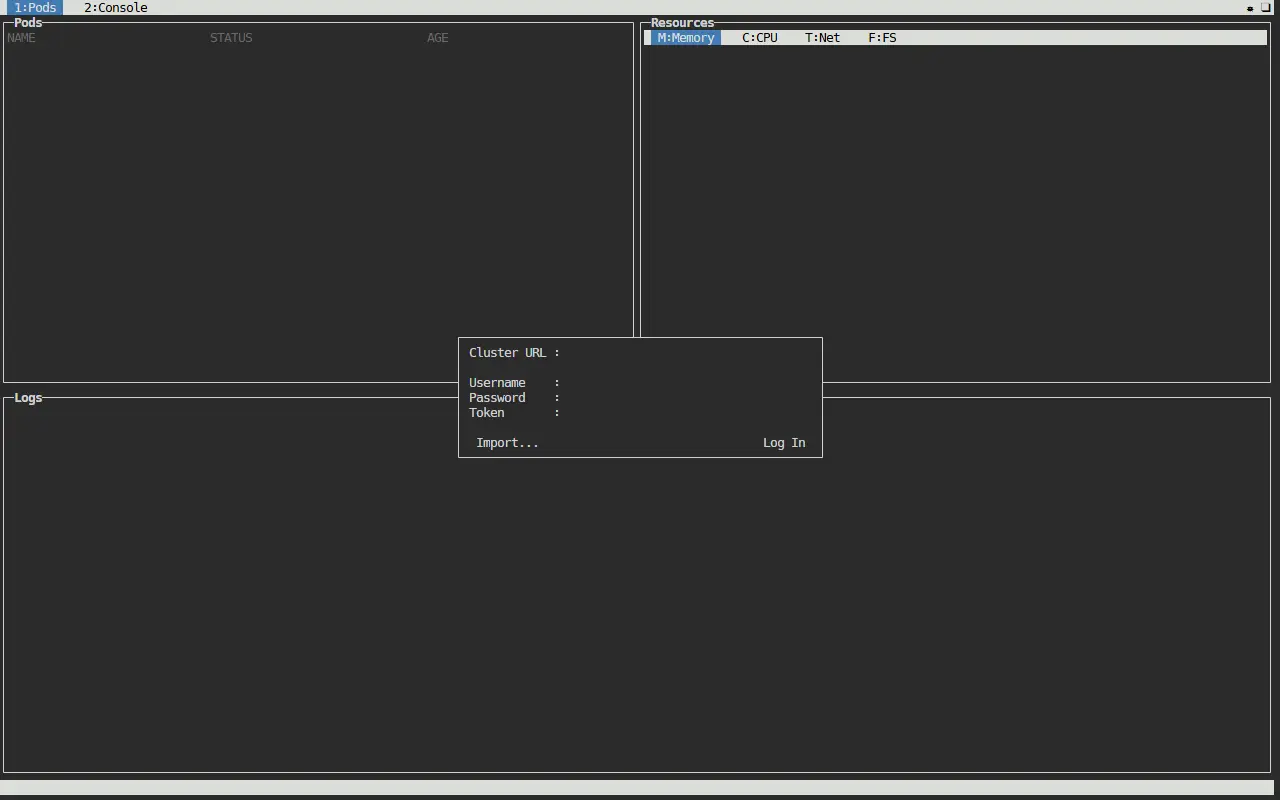
astefanutti.github.ioKubebox homepage screenshot

Kubebox is a console for Kubernetes and OpenShift clusters that runs either in a terminal or as a web application. It is aimed at operators and developers who want a quick, text-based or lightweight browser interface for navigating cluster resources without the overhead of a full graphical dashboard.

It presents a terminal user interface (TUI) style console for browsing cluster objects and monitoring their state, and the same interface is also offered as a web console. Based on its listed topics, it targets both Kubernetes and OpenShift environments.

Kubebox is written in JavaScript and released under the MIT license. The project's homepage content was not available at the time of this summary, so further specifics beyond what is documented in the GitHub repository and its releases should be confirmed there.

Key features

  • Terminal UI for Kubernetes and OpenShift
  • Web console alternative to the terminal UI
  • Cluster resource browsing and monitoring
  • Lightweight alternative to full dashboards

Pricing: Free and open source under the MIT license.

Lens alternatives: questions

What is the best open-source alternative to Lens?
Portainer is the top-ranked open-source alternative to Lens on Enlisted: A lightweight container management web UI for Docker, Swarm, Podman and Kubernetes, with a free Community Edition and a commercial Business Edition. Other strong options are Kite, KDash and Kubebox.
Are these Lens alternatives free?
All 4 are open source, so the code is free to use under its licence, and all of them can be self-hosted on your own server or computer.
How is this list of Lens alternatives ranked?
By a score built from GitHub stars, star growth over the last 30 days and how recently the code changed. 3 of these projects shipped code in the last 30 days. Data is refreshed daily, and nobody can pay to move up.

People also look for alternatives to…

View all