
About HomeDock OS
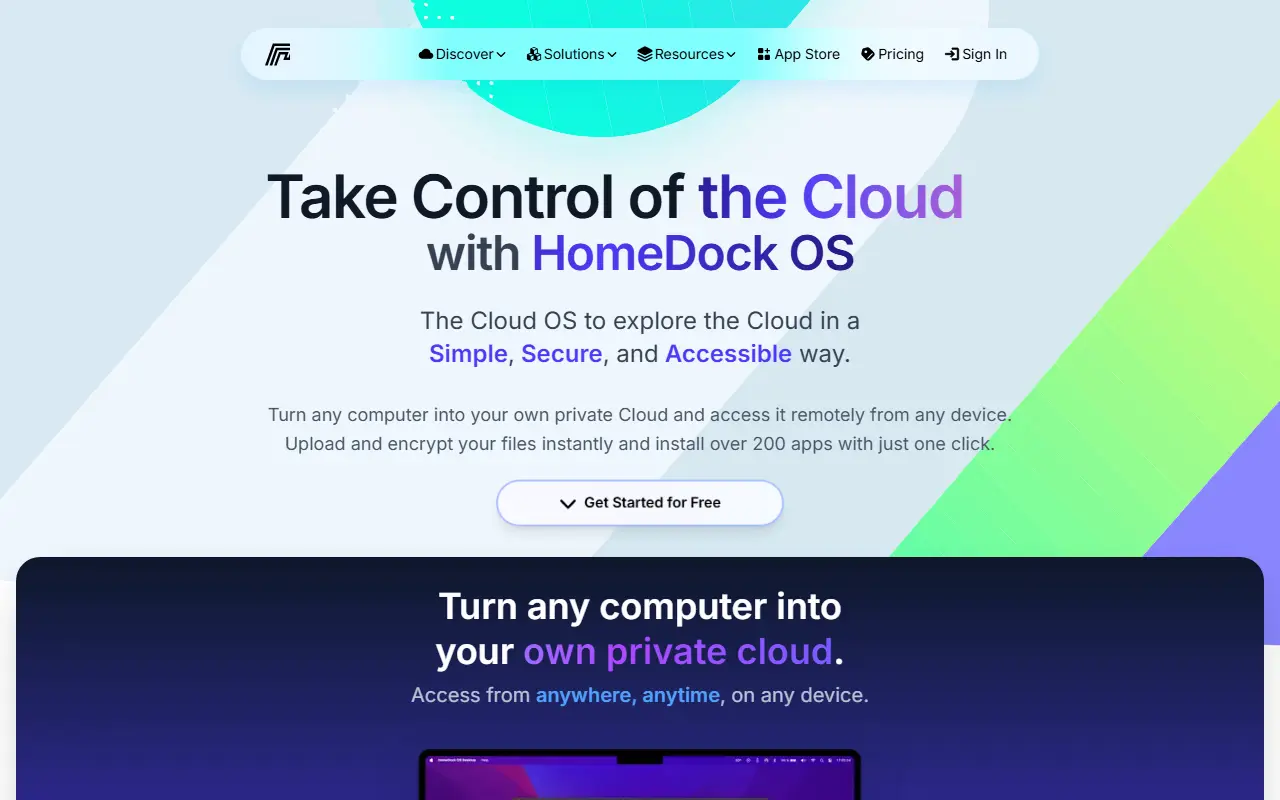
HomeDock OS is a home server operating system for people who want to self-host their own personal cloud. It combines a browser-based desktop, a file manager and an app store, aiming to simplify running self-hosted applications on hardware you already own.
The README describes more than 800 apps, of which around 180 are curated in the official App Store, with six community stores available to add. Files of over 80 types, including photos, camera RAW images, PSDs, spreadsheets, Word documents, PDFs, code, music and video, can be previewed directly in the browser without installing extra plugins or an office suite.
It targets Raspberry Pi, x86 systems and other setups, is built on Docker with Vue, Python and TypeScript, and is described as free and private. Its license is listed as Other, so check the repository for specific terms before redistributing it.
Key features
- Browser-based desktop environment
- Curated app store with community stores
- Docker-based app deployment
- In-browser previews for 80+ file types
- Runs on Raspberry Pi and x86 hardware
Good fit for
- →Personal cloud at home
- →Homelab app management
- →Browsing and previewing files remotely
- Tags
- home-server
- self-hosted
- homelab
- docker
- raspberry-pi
- personal-cloud
- app-store
HomeDock OS: questions and answers
- What is HomeDock OS used for?
- HomeDock OS is a self-hosted cloud operating system that runs on a Raspberry Pi or x86 hardware, with an app store of Docker-based apps. It is a good fit for personal cloud at home, homelab app management, and browsing and previewing files remotely.
- Is HomeDock OS open source?
- Yes. HomeDock OS is open source under a custom licence. Its source code is on GitHub at BansheeTech/HomeDockOS and is written mainly in Vue.
- Is HomeDock OS free?
- Yes. HomeDock OS is open source, so the software itself is free to use under the terms of its own licence. Paid plans are also available, starting at €19.50 per month.
- Can I self-host HomeDock OS?
- Yes. HomeDock OS can be self-hosted on your own server or infrastructure.
- What are some alternatives to HomeDock OS?
- Similar open-source tools in the Infrastructure & Containers category include Umbrel, CasaOS and Runtipi. SaaS products in the same category include Amazon ECR, Azure Container Registry and Docker Desktop.
- Is HomeDock OS actively maintained?
- Yes. The most recent commit to HomeDock OS was on 2 October 2026. The project has 913 stars on GitHub.
Open-source alternatives to HomeDock OS
See all
Umbrel
Infrastructure & Containers
Bring the cloud to your home with umbrelOS - a beautiful home server OS for self-hosting,
OSS★ 12k
CasaOS
Infrastructure & Containers
CasaOS is a simple, easy-to-use, elegant open-source personal cloud system
Apache-2.0★ 37k
Runtipi
Infrastructure & Containers
Easy to use homeserver helper to manage all your favorite self-hosted services.
GPL-3.0★ 9.7k
PiKVM
Infrastructure & Containers
Open and inexpensive DIY IP-KVM based on Raspberry Pi
GPL-3.0★ 10k
Cosmos Server
Infrastructure & Containers
☁️ The Most Secure and Easy Selfhosted Home Server. Take control of your data and privacy
OSS★ 6.2k
Olares
Infrastructure & Containers
Open-Source Personal Cloud OS for Always-On Agents
AGPL-3.0★ 5.3k
SaaS alternatives to HomeDock OS
See all
Amazon ECR
Infrastructure & Containers
Managed container image registry on AWS
SaaS
Azure Container Registry
Infrastructure & Containers
Managed registry for storing container images and artifacts on Azure
SaaS
Docker Desktop
Infrastructure & Containers
Desktop app for building and running containers locally, with Kubernetes support
SaaS
Docker Hub
Infrastructure & Containers
Container image registry and library from Docker
SaaS
OrbStack
Infrastructure & Containers
Lightweight macOS app for running Docker containers and Linux machines
SaaS
Amazon ECS
Infrastructure & Containers
Managed container orchestration service on AWS
SaaS