7,363 open-source and SaaS tools, with GitHub stats refreshed every day.

5 alternatives ranked by real activity

Open-source xMatters alternatives

A curated, ranked list of the 5 best open-source alternatives to xMatters.

The best open-source alternative to xMatters is Keep. If that doesn't suit you, other good options are Alertmanager, OneUptime, Alerta and LinkedIn Oncall.

xMatters alternatives are mainly monitoring & observability tools. 3 of them shipped code in the last 30 days, 5 can be self-hosted, and 3 use a permissive licence.

Last updated October 3, 2026 · ranked by GitHub stars, growth and recent commits

Keep

An open-source AIOps and alert management platform that gathers alerts from many monitoring tools into one place, with deduplication, correlation, enrichment and workflows.

GitHub stars
12k
Last commit
5 days ago
Latest release
v0.54.3
Self-hosted
Yes
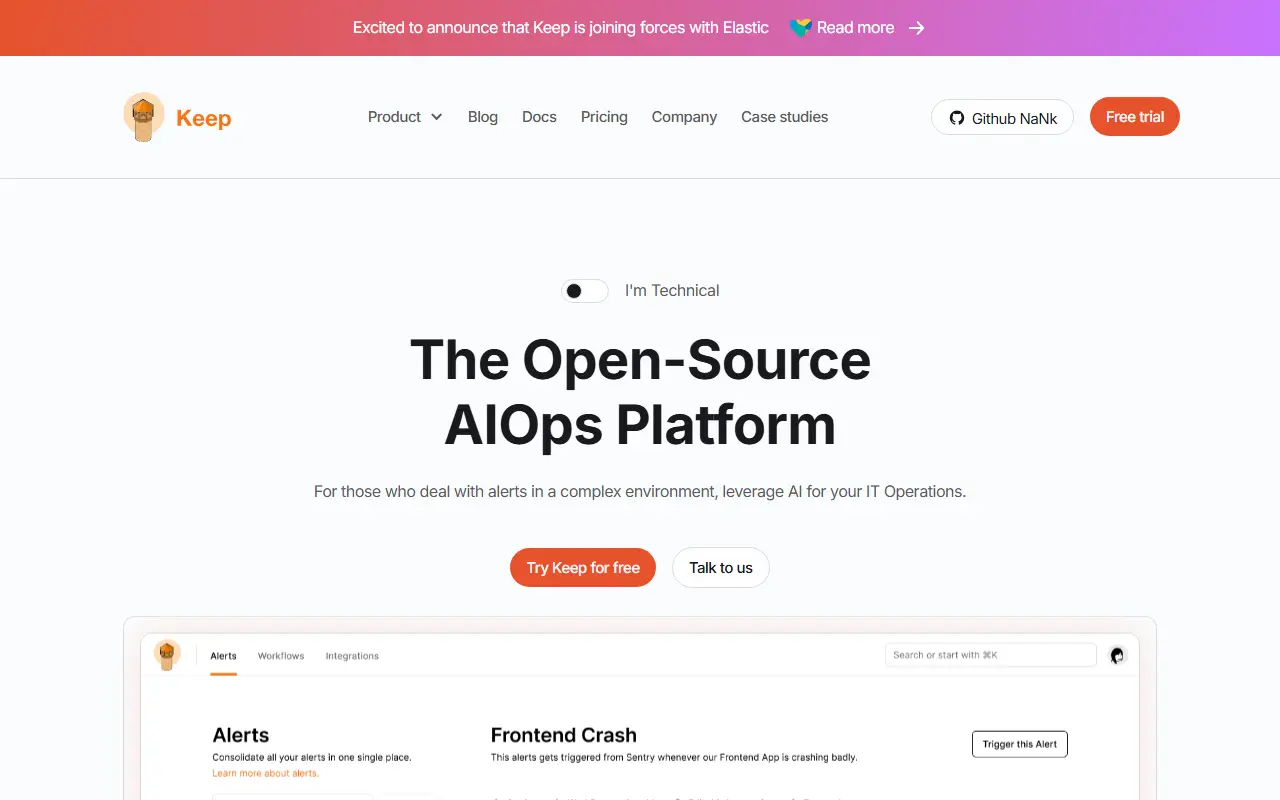
keephq.devKeep homepage screenshot

Keep is an open-source platform for managing alerts and incidents. Teams that run several monitoring tools can bring their alerts into a single view, which saves them from jumping between dashboards, and then clean up the noise through deduplication, filtering, correlation and enrichment.

The platform connects to a long list of monitoring and observability products, and its integrations work in both directions so that data can be synced back to those tools. Workflows act like GitHub Actions for monitoring, letting you automate responses to alerts. AI features can correlate alerts and summarize incidents, using backends such as Anthropic, OpenAI, DeepSeek, Gemini, Grok or local models served by Ollama and LlamaCPP.

Keep is written in Python and the repository lists its license as Other. It positions itself as a customizable alternative to hand-built alert pipelines, with dashboards, documentation, a hosted demo and a request process for new providers. It suits SRE and DevOps teams dealing with alert fatigue across tools.

Key features

  • Single view for alerts and incidents
  • Alert deduplication, filtering and correlation
  • Alert enrichment from external sources
  • Bi-directional integrations with monitoring tools
  • Workflow automation for alert handling
  • AI-assisted correlation and incident summaries
  • Choice of cloud or local AI backends

Pricing: Free Startup plan for personal projects. Growth starts at $199 per month; Enterprise + AI is custom. Self-hosting is available and a free trial is offered.

Alertmanager

The Prometheus component that receives alerts from clients, then deduplicates, groups, silences and routes them to receivers such as email, PagerDuty and Opsgenie.

GitHub stars
8.6k
Last commit
yesterday
Latest release
v0.34.1
Licence
Apache-2.0
Self-hosted
Yes
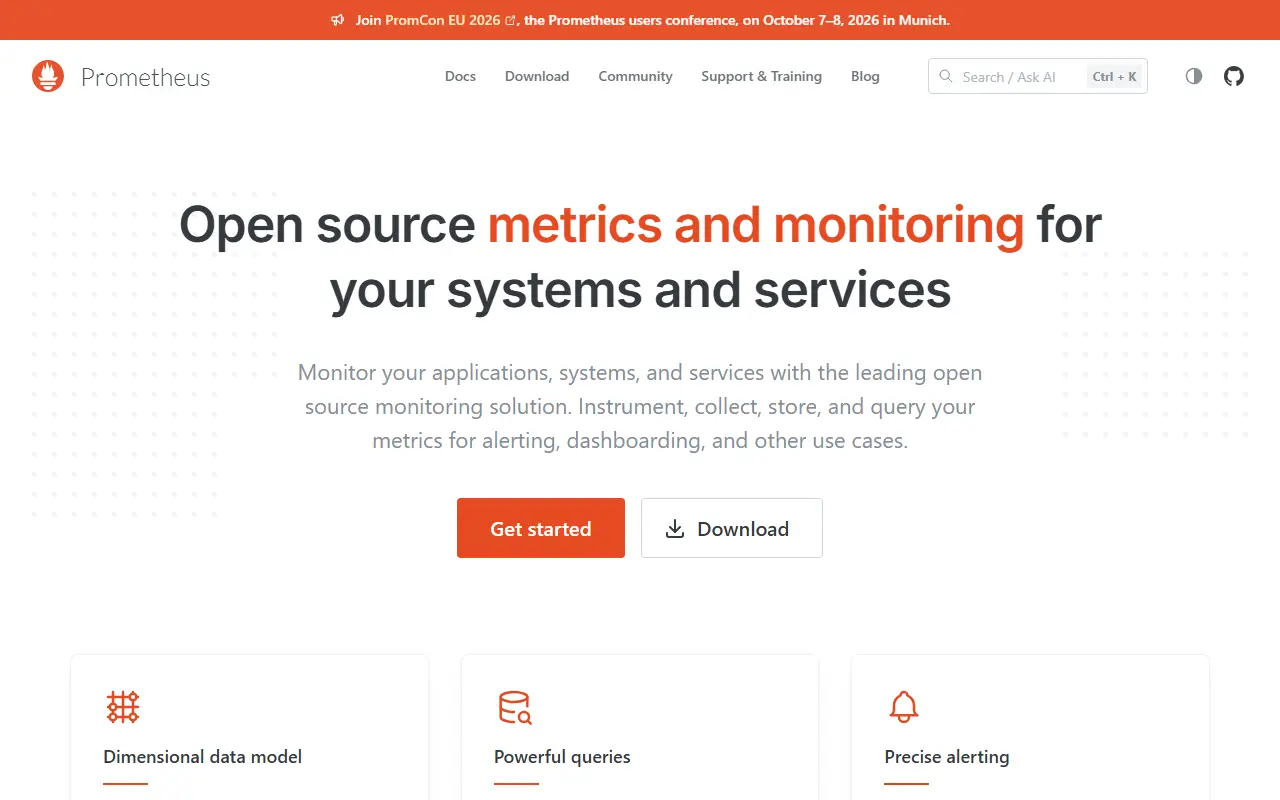
prometheus.ioAlertmanager homepage screenshot

Alertmanager is the part of the Prometheus ecosystem that processes alerts sent by client applications, most often the Prometheus server. Instead of notifying people for every raw alert, it deduplicates and groups them, and routes them to the right receiver integrations.

Receivers include email, PagerDuty and Opsgenie, and the webhook receiver allows many other mechanisms. It also takes care of silencing alerts for a period and inhibition, where one alert suppresses others that it makes redundant. Routing is configured in YAML with a tree of routes starting from a root route that must have a receiver, plus global settings such as the SMTP host for mail notifications.

Alertmanager is written in Go and licensed under Apache-2.0. You can install it from precompiled binaries on prometheus.io, run the Docker image from Quay.io or Docker Hub, or build it from source with Go and Node.js, and the web interface is served on port 9093 by default. It suits any team that runs Prometheus and needs structured on-call notifications.

Key features

  • Alert deduplication and grouping
  • Routing tree to receivers
  • Email, PagerDuty and Opsgenie integrations
  • Webhook receiver for custom targets
  • Silences for muting alerts
  • Inhibition rules to suppress duplicates
  • Docker images and binaries

Pricing: Free and open source under the Apache-2.0 licence.

OneUptime

An open-source platform that combines uptime monitoring, status pages, on-call, incident management, logs, traces, metrics and error tracking in one self-hostable app.

GitHub stars
7.7k
Last commit
today
Latest release
14.0.11
Self-hosted
Yes
Hosted version
Available
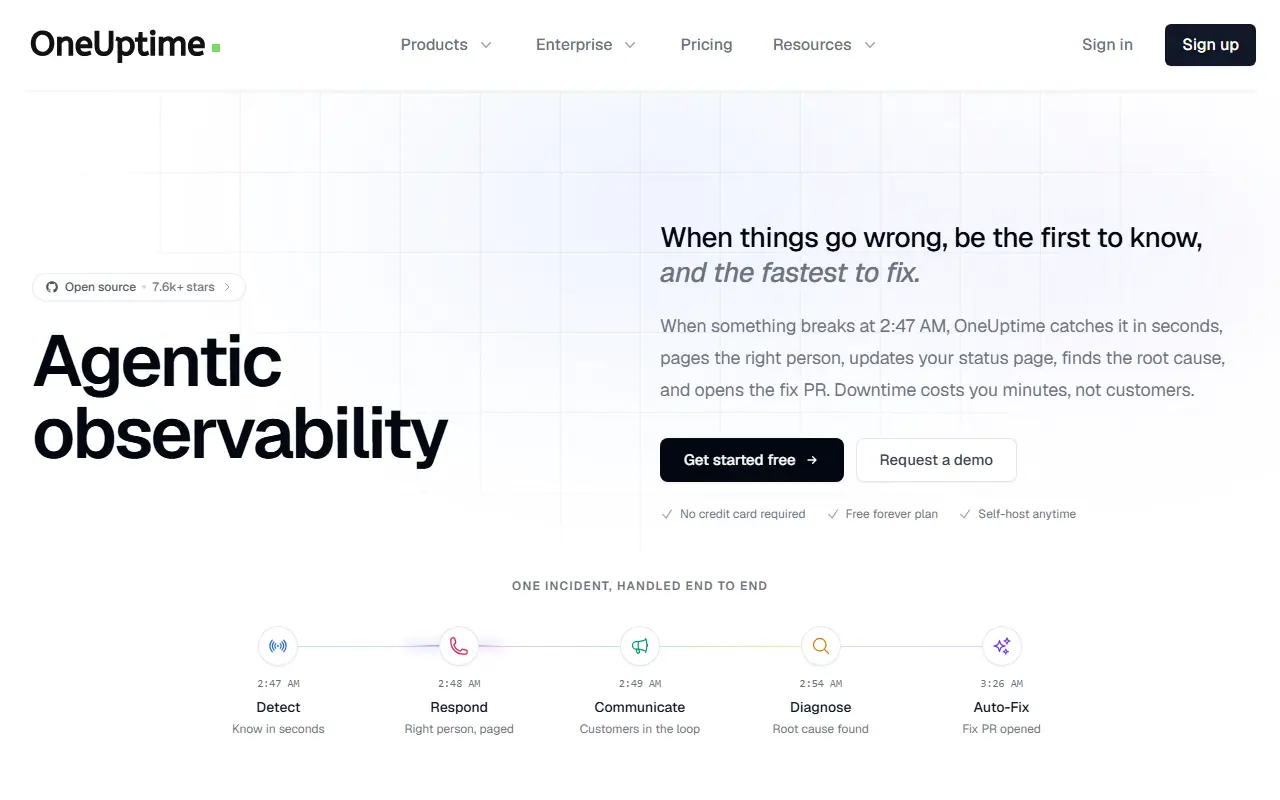
oneuptime.comOneUptime homepage screenshot

OneUptime is an open-source monitoring and observability platform that aims to replace a shelf of separate SaaS tools. It covers uptime monitoring, status pages, on-call and alerting, incident management, logs, traces, metrics, APM and error tracking in one application, and adds AI-assisted features such as helping find the root cause and proposing a fix.

Its README maps each module to the tools it can replace: Pingdom and UptimeRobot for uptime checks across websites, APIs, ports, SSL and DNS, StatusPage.io for branded public and private status pages, PagerDuty and Opsgenie for schedules, escalation policies and SMS, call, push or Slack alerts, Incident.io for declaring and triaging incidents with post-mortems, Datadog and New Relic for traces and dashboards, Loggly for logs, and Sentry for exceptions.

The Community Edition is open source under Apache 2.0 and free to self-host, and OneUptime Cloud offers a free-forever plan with no credit card. It is written in TypeScript. It suits small and mid-sized engineering teams that want one platform for reliability work rather than integrating many vendors.

Key features

  • Uptime monitoring for sites, APIs and ports
  • Branded public and private status pages
  • On-call schedules and escalation policies
  • Incident management with post-mortems
  • Logs, traces, metrics and APM
  • Error tracking with stack traces

Pricing: Free plan with one status page. Growth is $22 and Scale $99 per month with 14-day trials; Enterprise is custom. Monitors, SMS, telemetry and AI use are billed on top.

Alerta

Monitoring tool that consolidates alerts from any source into one scalable server with a web console for at-a-glance views and drill-down.

GitHub stars
2.5k
Last commit
3 mo ago
Latest release
v9.1.0
Licence
Apache-2.0
Self-hosted
Yes
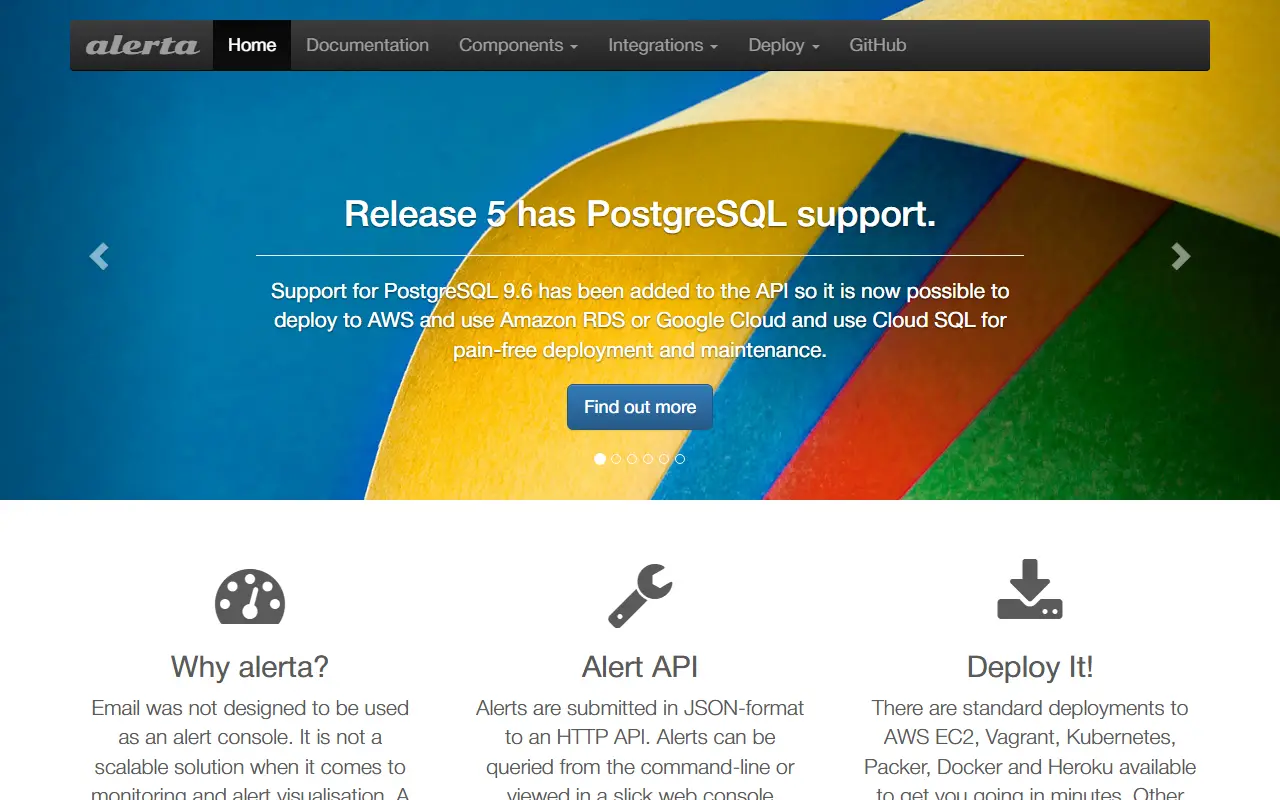
alerta.ioAlerta homepage screenshot

Alerta is an alert aggregation and monitoring system. Its design goals are to be distributed and decoupled so it scales, to need minimal configuration while accepting alerts from any source, and to give a quick visual overview with the option to drill down into detail.

The server is a Python application that needs MongoDB or PostgreSQL as its only mandatory dependency; release 9 requires Python 3.9 or newer, PostgreSQL 13 or better, or MongoDB 6.0 or better. You install the server and command-line client with pip and start it with alertad, then add the web console from a release archive. Settings are overridden in a config file or through an environment variable, and Docker images are provided in a separate repository.

Alerta exposes an API server, which is how monitoring tools feed alerts in and how the web console and client read them. The project has been developed since 2012 and is licensed under Apache-2.0.

Key features

  • Alert intake from any monitoring source
  • Web console with drill-down detail
  • MongoDB or PostgreSQL storage
  • Python API server with command-line client
  • Docker images
  • Simple file or environment variable configuration

Pricing: Free and open source under the Apache-2.0 licence.

LinkedIn Oncall

Oncall by LinkedIn is a free, BSD-licensed, self-hosted calendar tool for scheduling and managing on-call shifts, designed to feed dynamic ownership data to paging systems.

GitHub stars
1.3k
Last commit
1 yr ago
Latest release
v2.1.7
Licence
BSD-2-Clause
Self-hosted
Yes
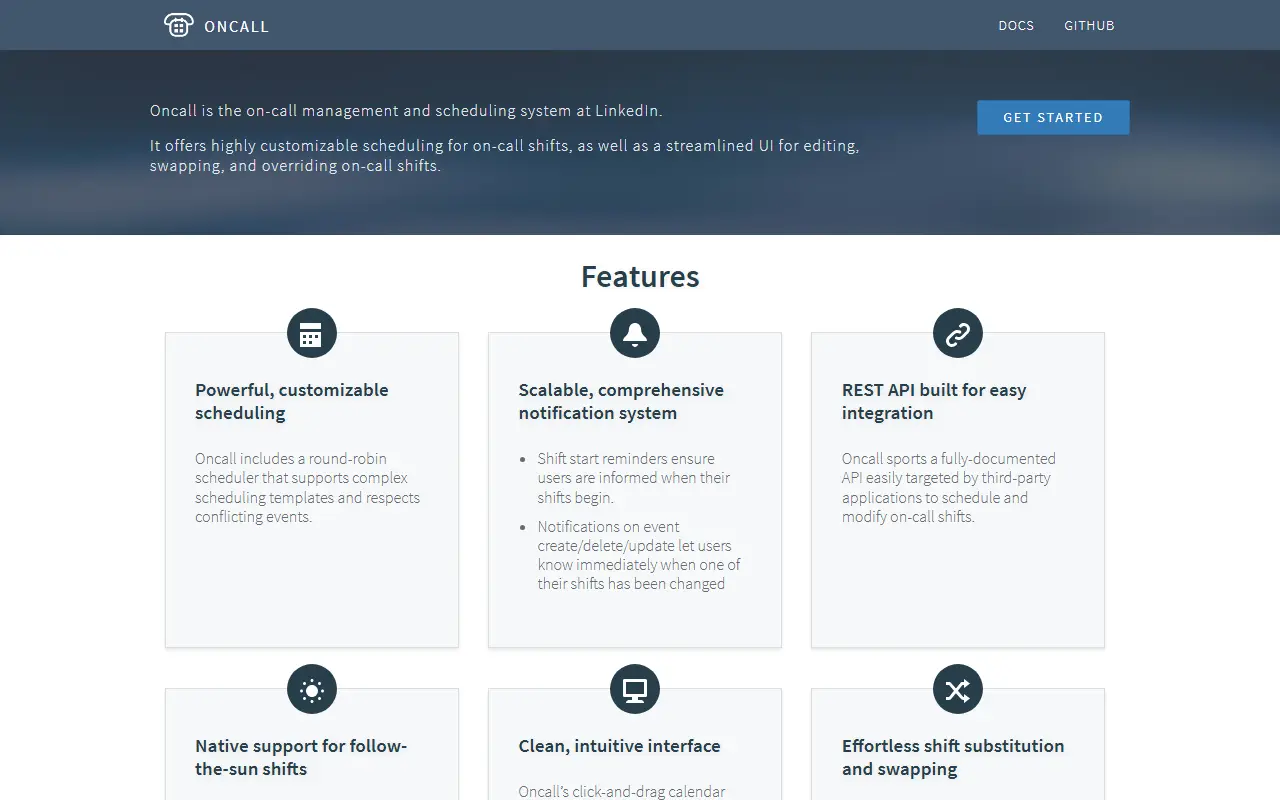
oncall.toolsLinkedIn Oncall homepage screenshot

Oncall is a calendar application built by LinkedIn specifically for scheduling and managing on-call rotations. It is aimed at operations and engineering teams who need to track who is responsible for responding to incidents at any given time, and it is designed to act as a source of dynamic ownership information for paging systems such as Iris.

As a calendar-focused tool, its core job is representing on-call schedules in a way that other systems can query programmatically, rather than functioning as a full incident-management platform on its own. It integrates into a broader on-call and alerting workflow where a paging tool consults Oncall's schedule data to determine who to notify.

Oncall is written in Python and requires a MySQL database, with setup instructions covering local development, Docker Compose deployment, and configuration through a YAML file; dummy data can be imported for testing. It is released under the BSD-2-Clause license, and the README notes some current limitations, including no built-in test-running mechanism documented and a need to rebuild to apply code changes in some setups.

Key features

  • On-call shift scheduling calendar
  • Dynamic ownership data for paging systems
  • MySQL-backed schedule storage
  • Docker Compose deployment option
  • Configurable via YAML

Pricing: Free and open source under the BSD-2-Clause license.

xMatters alternatives: questions

What is the best open-source alternative to xMatters?
Keep is the top-ranked open-source alternative to xMatters on Enlisted: An open-source AIOps and alert management platform that gathers alerts from many monitoring tools into one place, with deduplication, correlation, enrichment and workflows. Other strong options are Alertmanager, OneUptime, Alerta and LinkedIn Oncall.
Are these xMatters alternatives free?
All 5 are open source, so the code is free to use under its licence, and all of them can be self-hosted on your own server or computer. 1 also offers a paid or managed cloud version if you'd rather not host it yourself.
How is this list of xMatters alternatives ranked?
By a score built from GitHub stars, star growth over the last 30 days and how recently the code changed. 3 of these projects shipped code in the last 30 days. Data is refreshed daily, and nobody can pay to move up.

People also look for alternatives to…

View all