5 open-source alternatives ranked by real activity

Open-source kapa.ai alternatives

A curated, ranked list of the 5 best open-source alternatives to kapa.ai.

The best open-source alternative to kapa.ai is Onyx. If that doesn't suit you, other good options are Qdrant, Rocket.Chat, Weaviate and Botpress.

Commercial alternatives to kapa.ai include Landbot, Chatbase, Document360 and KnowledgeOwl. See all 23.

kapa.ai alternatives are mainly AI tools, but some are also databases and team chat tools. 5 of them shipped code in the last 30 days, 5 can be self-hosted, and 2 use a permissive licence.

Last updated November 12, 2026 · ranked by GitHub stars, growth and recent commits

Onyx

An open-source AI platform for enterprise search and chat that indexes knowledge from 50+ apps and works with any LLM, deployable on your own infrastructure.

GitHub stars
33k
Last commit
today
Latest release
v5.1.2
Self-hosted
Yes
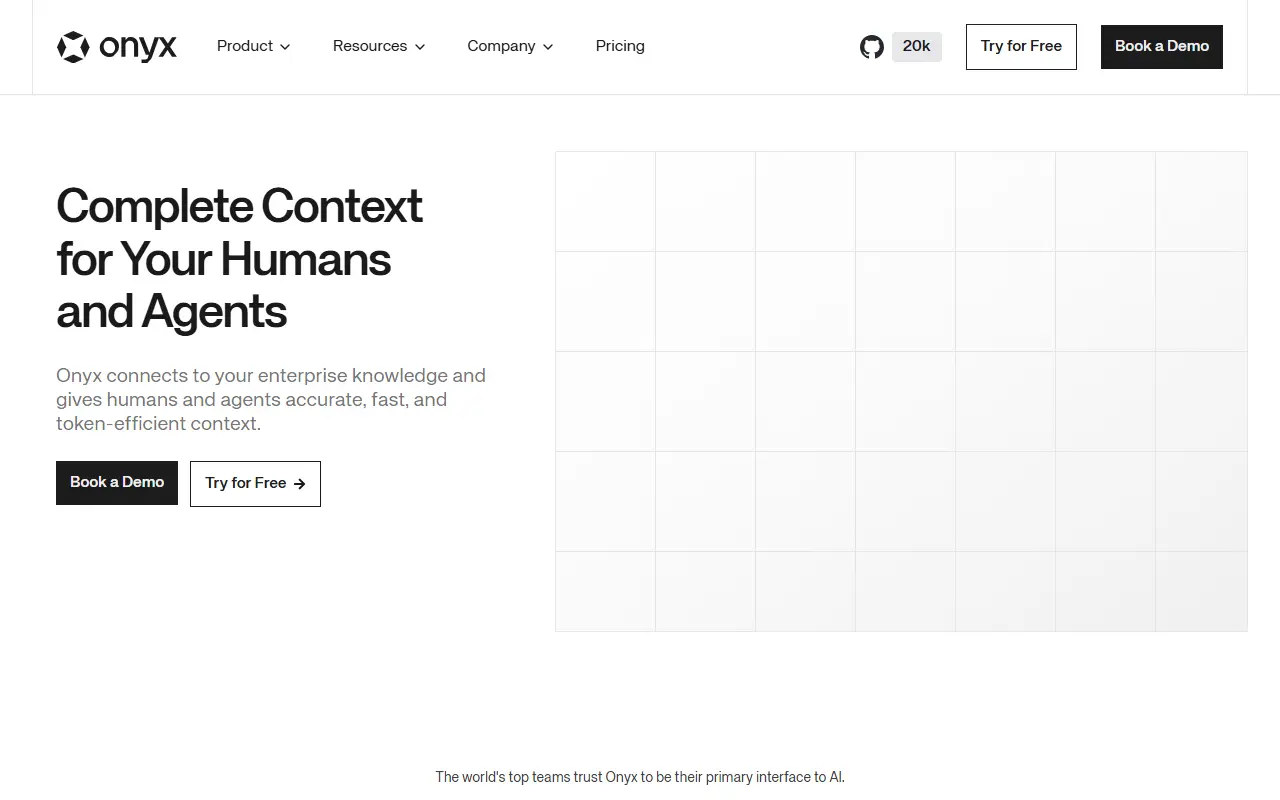
onyx.appOnyx homepage screenshot

Onyx is an open-source AI platform that acts as a knowledge and context layer for teams and their AI agents. It connects to more than 50 applications, pulls in documents along with their metadata and permissions, and builds an internal representation so that LLMs can answer questions grounded in what your company actually knows.

The project argues that this indexed approach gives more reliable, lower-latency and cheaper context than approaches that have an agent search many tools iteratively through MCP. Features include agentic RAG on a hybrid index, a Deep Research mode for multi-step reports, custom agents with their own knowledge, instructions and actions, and live web search through providers such as Serper, Google PSE, Brave and SearXNG. Sandboxes and skills extend what models can do, and the chat interface works with every major LLM.

Onyx emphasizes data sovereignty through flexible self-hosted deployments, with a single-command deploy option. The code is written in Python and Next.js, and the license is listed as 'Other' on GitHub, so check the terms for the enterprise features. It suits organizations that want a private, ChatGPT-style assistant connected to internal documents.

Key features

  • Connectors to 50+ workplace applications
  • Hybrid index with agentic RAG
  • Deep Research multi-step reports
  • Custom agents with their own knowledge
  • Web search via Serper, Brave and others
  • Works with any LLM
  • Indexing that respects source permissions

Pricing: Business costs $25 per user per month on monthly billing, or $20 per user per month billed annually, with a free trial. Enterprise pricing and deployment options are by contact.

Read more about OnyxWebsiteGitHub#1 kapa.ai alternative

Qdrant

A vector database and similarity search engine written in Rust, offering filtering over stored vectors and payloads, available self-hosted or as Qdrant Cloud.

GitHub stars
36k
Last commit
today
Latest release
v1.20.0
Licence
Apache-2.0
Self-hosted
Yes
Hosted version
Available
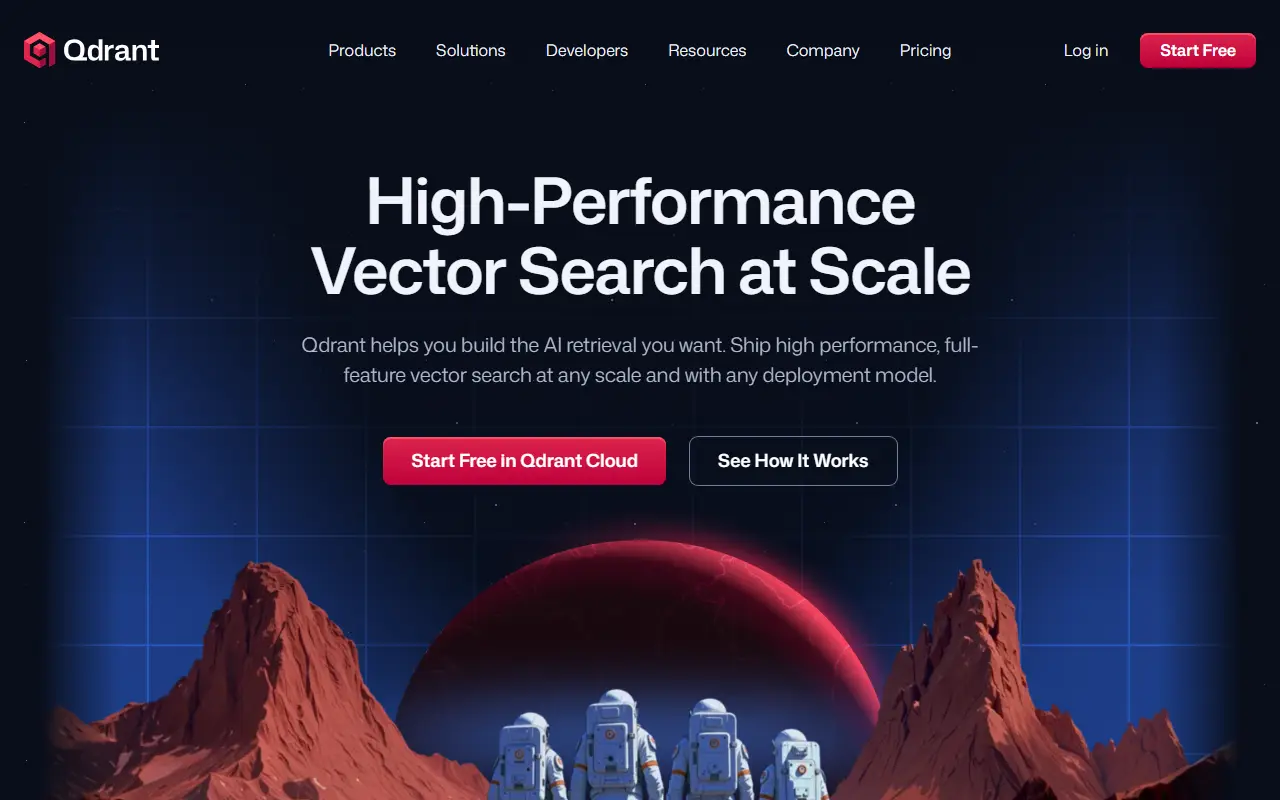
qdrant.techQdrant homepage screenshot

Qdrant is a vector database and similarity search engine. It stores points, which are vectors plus an attached payload, and exposes an API to store, search and manage them. That makes it a building block for semantic search, recommendations, image search and other applications that rely on embeddings from neural networks.

A key selling point is extended filtering support, so a vector query can be combined with conditions on the payload, which is useful for faceted search and matching. The engine is written in Rust and the maintainers point to benchmarks for its speed and reliability under load. Topics mention HNSW indexing and nearest-neighbor search, and there are client libraries, demo projects, integrations and a collection of agent skills that bring vector search into AI coding assistants.

Qdrant is Apache-2.0 licensed and can run on your own infrastructure. It is also available as the fully managed Qdrant Cloud, which includes a free tier. Teams building retrieval-augmented generation, recommendation and similarity features use it as the storage and retrieval layer for their embeddings.

Key features

  • Vector storage with attached payloads
  • Filtering combined with vector search
  • HNSW-based nearest-neighbor search
  • REST-style API with client libraries
  • Agent skills for AI coding assistants
  • Self-hosted or managed Qdrant Cloud

Pricing: A free-forever cloud tier is available. The Standard tier is usage-based, from $25; Premium requires a minimum spend and Hybrid and Private Cloud are quoted by the team.

Rocket.Chat

A customizable team communications platform with real-time chat and video, aimed at organizations with strict data protection needs and offered self-hosted, cloud or air-gapped.

GitHub stars
46k
Last commit
today
Latest release
9.0.0
Self-hosted
Yes
Hosted version
Available
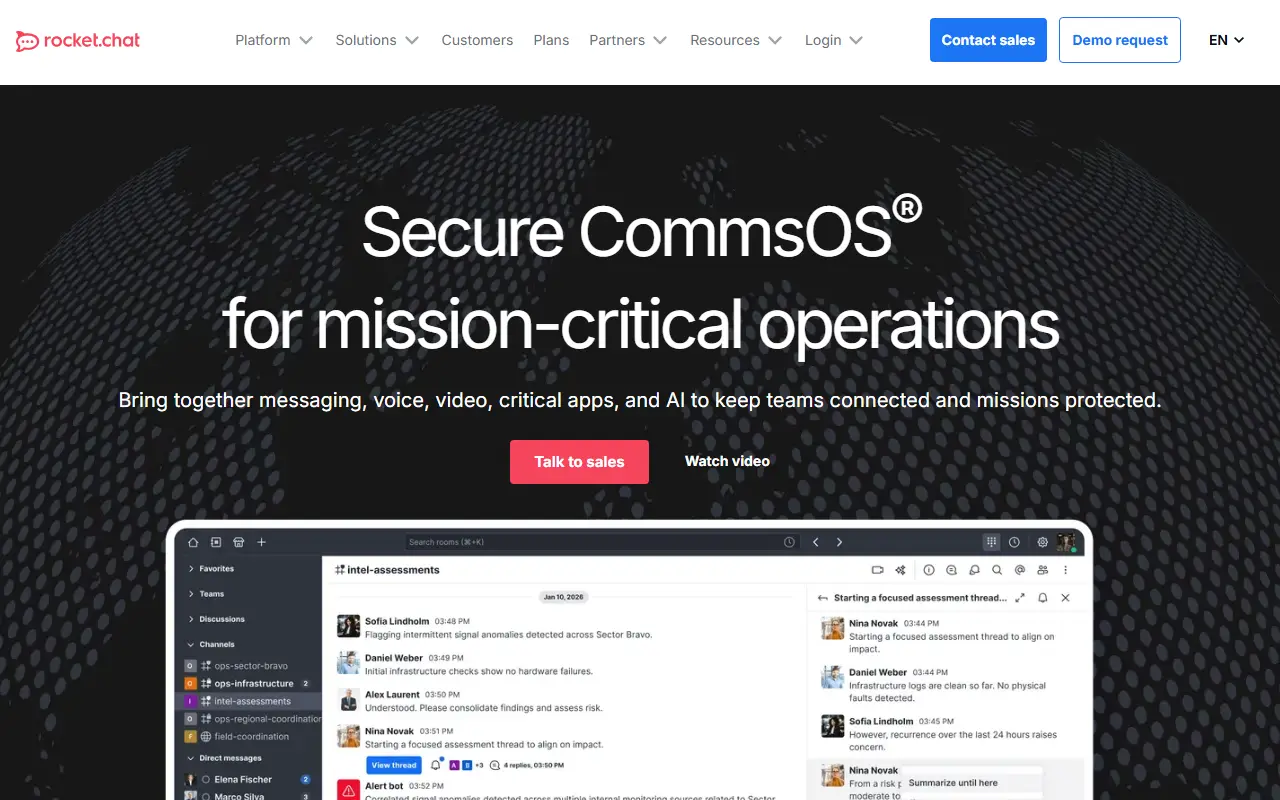
rocket.chatRocket.Chat homepage screenshot

Rocket.Chat is a communications platform written in TypeScript for teams and organizations that care about data protection. It supports real-time conversations between colleagues, with partner companies, and with customers or citizens, and its topics place it in the same space as Slack, with WebRTC for calls and meetings.

The product emphasizes control over where and how it runs. Deployment options include self-hosted servers, a managed cloud and fully air-gapped environments, with a scalable architecture and performance monitoring for workspace administration. Security and sovereignty features, including identity management, are a core part of the pitch, and the platform is built to be highly customizable, so organizations can adapt it to their own workflows and integrations.

The repository's license is listed as 'Other' on GitHub, although the topics reference an MIT-licensed community core, so confirm which components fall under which terms before relying on it commercially. It suits government bodies, enterprises and regulated industries that want a Slack-style tool they can host themselves.

Key features

  • Real-time team messaging and channels
  • Video conferencing built on WebRTC
  • Self-hosted, cloud and air-gapped deployment
  • Scalable architecture with performance monitoring
  • Identity and security controls for data sovereignty
  • Highly customizable platform

Pricing: Rocket.Chat does not publish prices. Commercial, Government and Defense plans are quoted through its sales team, with on-premise and air-gapped deployment options.

Weaviate

A cloud-native vector database that stores objects and embeddings and combines semantic search with keyword filtering, RAG and reranking in one query interface.

GitHub stars
17k
Last commit
yesterday
Latest release
v1.40.5
Self-hosted
Yes
Hosted version
Available
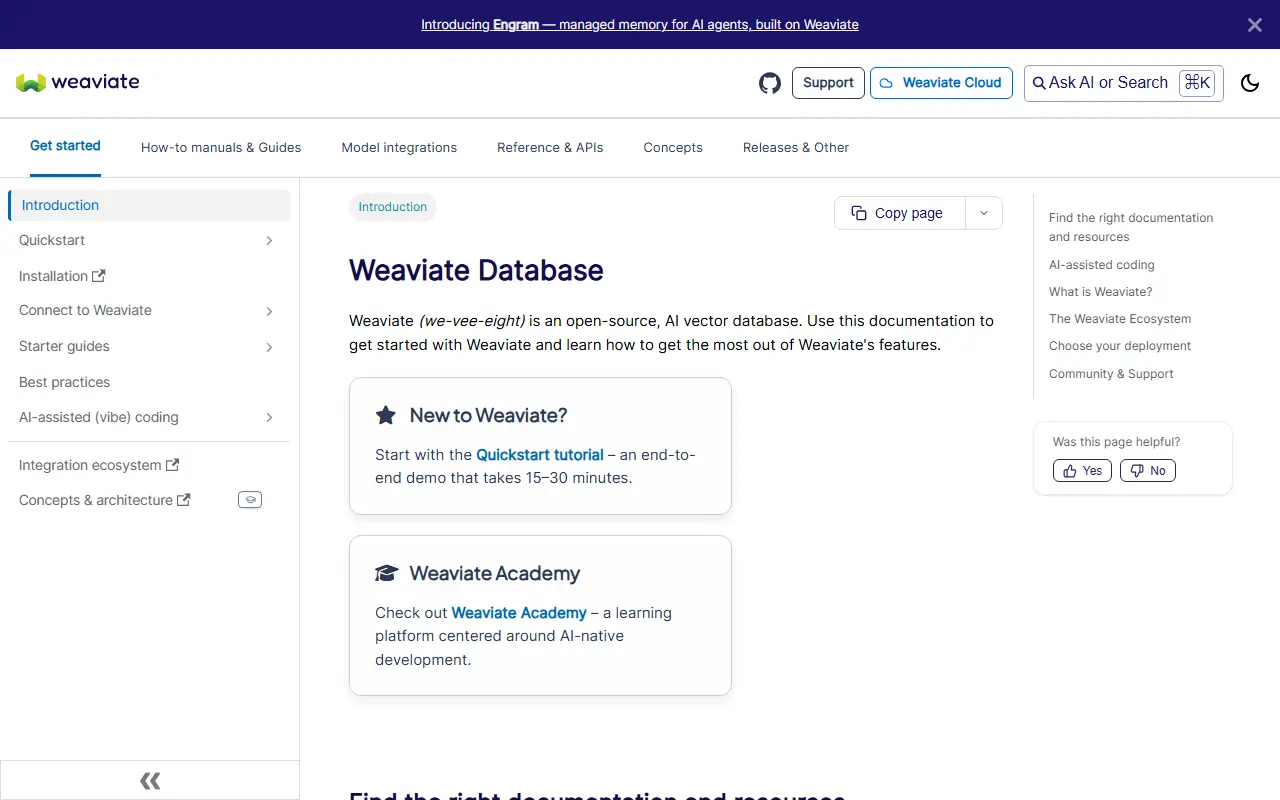
weaviate.ioWeaviate homepage screenshot

Weaviate is a vector database that stores both data objects and their vector embeddings, enabling semantic search at scale. One query interface can blend vector similarity search, keyword filtering, retrieval-augmented generation and reranking, and it is written in Go as a cloud-native system.

Common applications are RAG pipelines, semantic and image search, recommenders, chatbots and content classification. Vectors can be created automatically on import by integrated models from providers such as OpenAI, Cohere and Hugging Face, or you can import pre-computed embeddings. For production, it offers built-in multi-tenancy, replication and role-based access control. Topics reference approximate nearest neighbor search and HNSW indexing.

Weaviate can be deployed with Docker, on Kubernetes, or through the managed Weaviate Cloud, with guides for AWS and GCP, and the documentation includes quickstarts for both cloud and a local Docker instance. Its license is listed as 'Other' on GitHub, so check the repository terms. It suits teams building AI applications that need a scalable store for embeddings alongside structured filters.

Key features

  • Stores objects and vectors together
  • Hybrid vector and keyword search
  • Integrated vectorizer models or bring your own
  • Multi-tenancy and replication
  • Role-based access control
  • Docker, Kubernetes and Weaviate Cloud options

Botpress

Botpress is a platform for building and deploying GPT and LLM-powered chatbots and agents, with an open-source hub of integrations and developer tools.

GitHub stars
15k
Last commit
2 days ago
Latest release
v12.30.9
Licence
MIT
Self-hosted
Yes
Hosted version
Available
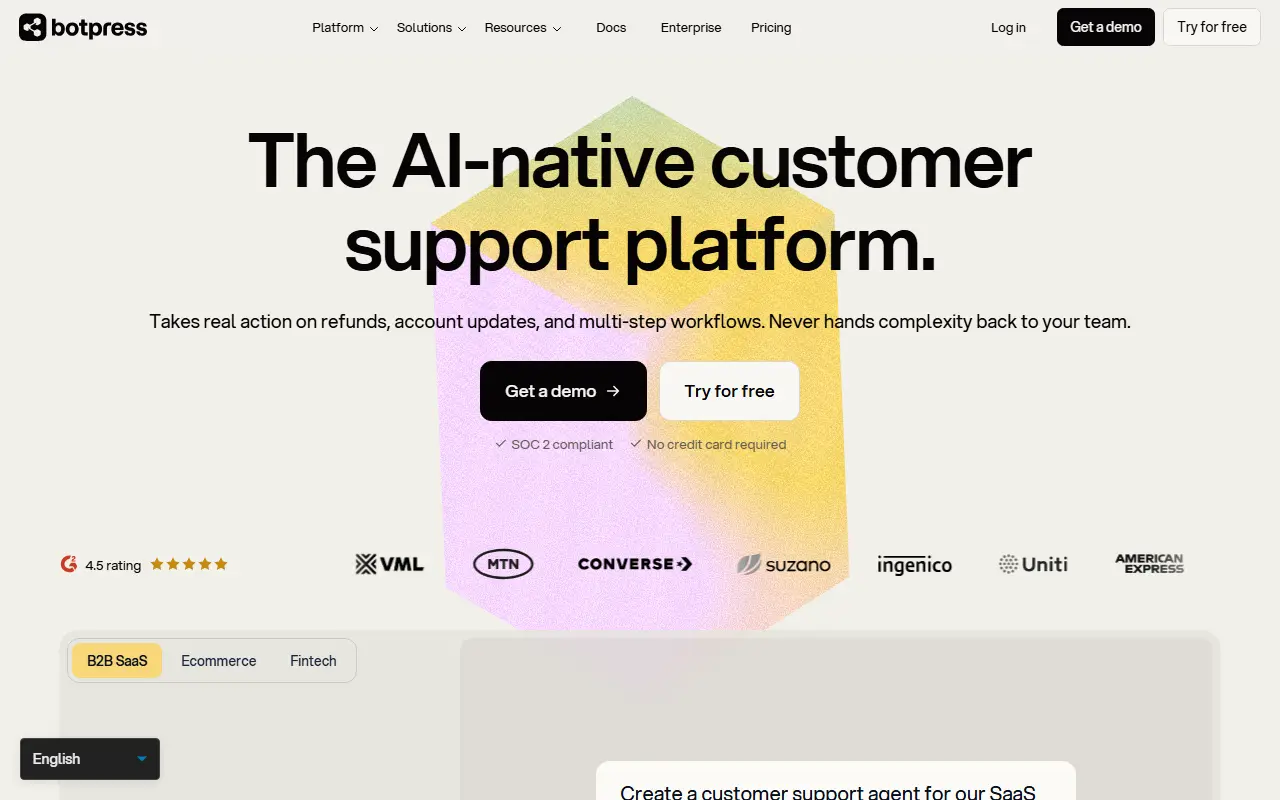
botpress.comBotpress homepage screenshot

Botpress is a platform for building chatbots and AI assistants powered by large language models such as OpenAI's GPT. Its Botpress Cloud product is the main way to build and run agents, and this repository holds the open-source parts that surround it. It is written in TypeScript and released under the MIT license.

The repository contains the public integrations on the Botpress Hub that Botpress maintains, the developer tools for Botpress Cloud including the CLI, SDK and API client, examples of bots written as code with the SDK and CLI, and plugins for Botpress Studio. Developers can create their own integration from a template using the CLI and publish it to the Hub without forking the repository.

Contributions are welcome through pull requests and issues for the code in the repository, while Discord is suggested for faster responses about Cloud issues. On-premise Botpress version 12 is maintained in a separate repository, which is where problems with that version belong.

Key features

  • Open-source integrations for the Botpress Hub
  • CLI, SDK and API client for developers
  • Example bots written as code
  • Integration templates for new connectors
  • Botpress Cloud for building and running agents

Pricing: Free plan with 25 conversations. Plus is $150 and Team $750 per month billed annually, priced by included conversations rather than seats; Enterprise is custom.

Commercial kapa.ai alternatives

Hosted, closed-source products that compete with kapa.ai. Showing 12 of 23.

See every kapa.ai alternative on its tool page

kapa.ai alternatives: questions

What is the best open-source alternative to kapa.ai?
Onyx is the top-ranked open-source alternative to kapa.ai on Enlisted: An open-source AI platform for enterprise search and chat that indexes knowledge from 50+ apps and works with any LLM, deployable on your own infrastructure. Other strong options are Qdrant, Rocket.Chat, Weaviate and Botpress.
What are the best commercial alternatives to kapa.ai?
Landbot, Chatbase, Document360, KnowledgeOwl and Help Scout are among the hosted, closed-source alternatives to kapa.ai listed on Enlisted, which lists 23 in total. Compare their pricing and features on each tool page.
Are these kapa.ai alternatives free?
All 5 are open source, so the code is free to use under its licence, and all of them can be self-hosted on your own server or computer. 4 also offer a paid or managed cloud version if you'd rather not host it yourself.
How is this list of kapa.ai alternatives ranked?
By a score built from GitHub stars, star growth over the last 30 days and how recently the code changed. 5 of these projects shipped code in the last 30 days. Data is refreshed daily, and nobody can pay to move up.

People also look for alternatives to…

View all