5 open-source alternatives ranked by real activity

Open-source NS1 alternatives

A curated, ranked list of the 5 best open-source alternatives to NS1.

The best open-source alternative to NS1 is Technitium DNS Server. If that doesn't suit you, other good options are CoreDNS, Unbound, PowerDNS and bind9.

Commercial alternatives to NS1 include Amazon Route 53, DNSimple, Gcore and Google Memorystore. See all 9.

NS1 alternatives are mainly networking & VPN tools. 5 of them shipped code in the last 30 days, 5 can be self-hosted, and 3 use a permissive licence.

Last updated November 12, 2026 · ranked by GitHub stars, growth and recent commits

Technitium DNS Server

Technitium DNS Server, a self-hosted authoritative and recursive DNS server with ad blocking, encrypted DNS and a web console.

GitHub stars
10k
Last commit
9 days ago
Latest release
v15.6.2
Licence
GPL-3.0
Self-hosted
Yes
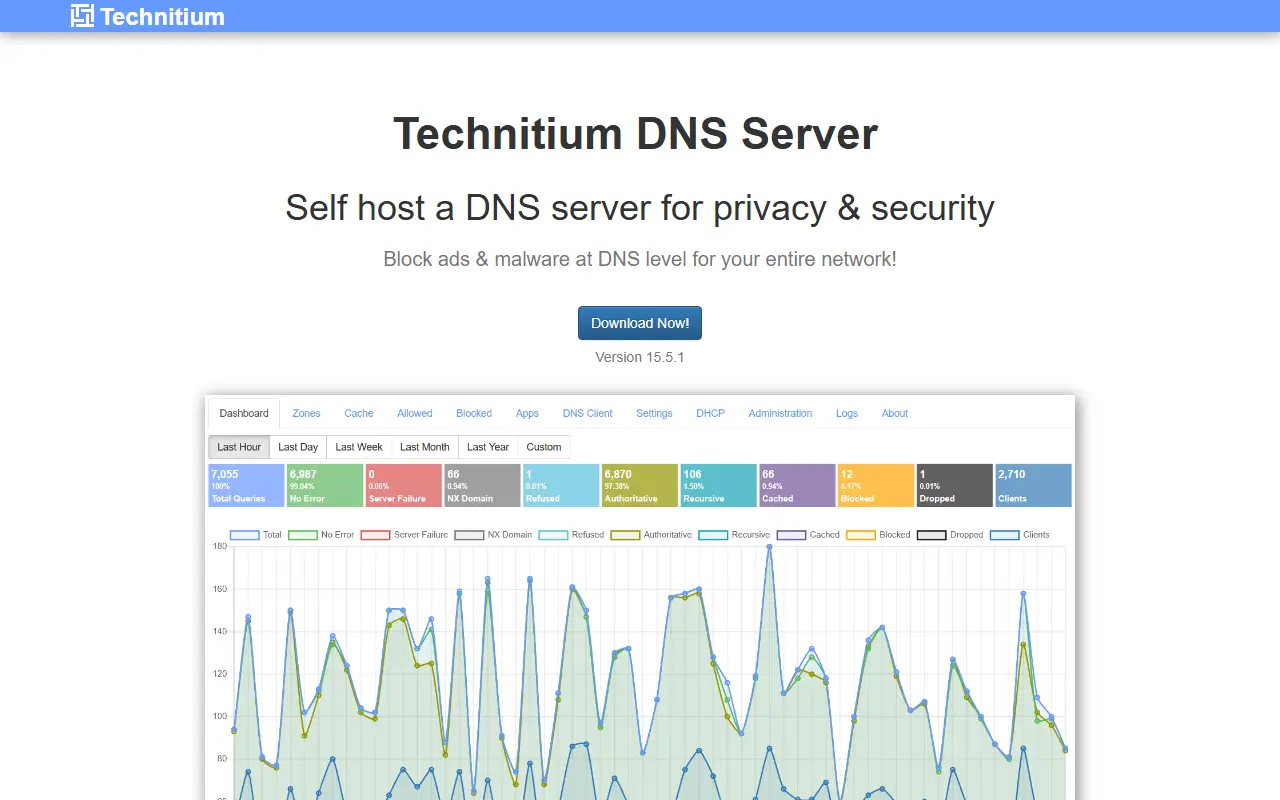
technitium.comTechnitium DNS Server homepage screenshot

Technitium DNS Server is an open-source DNS server that can act as both an authoritative and a recursive resolver. People host it themselves for privacy and security, and it works out of the box with little or no configuration. A friendly web console is reachable from any modern browser.

It can block ads and malware at the DNS level for an entire network. By forwarding queries over DNS-over-TLS, DNS-over-HTTPS or DNS-over-QUIC, it limits what an internet provider can see or tamper with. A local DNS server also gives logs and statistics for understanding network activity, serves many queries from cache, and allows network-wide domain blocking. Repository topics also mention DHCP server functions and DNS-over-Tor.

The server is written in C# on .NET and runs on Windows, Linux, macOS and Raspberry Pi, with Docker support. It is released under the GPL-3.0 license, and the project site at technitium.com provides downloads and documentation. It is suited to home networks and organizations that want more control over name resolution.

Key features

  • Authoritative and recursive DNS server
  • Network-wide ad and malware blocking
  • DNS-over-TLS, HTTPS and QUIC forwarders
  • Browser-based web console
  • DNS logs and statistics
  • Windows, Linux, macOS and Raspberry Pi support

Pricing: Free and open source under the GPL-3.0 license.

CoreDNS

CoreDNS is a flexible DNS server and forwarder written in Go whose functionality comes from chained plugins.

GitHub stars
14k
Last commit
yesterday
Latest release
v1.15.0
Licence
Apache-2.0
Self-hosted
Yes
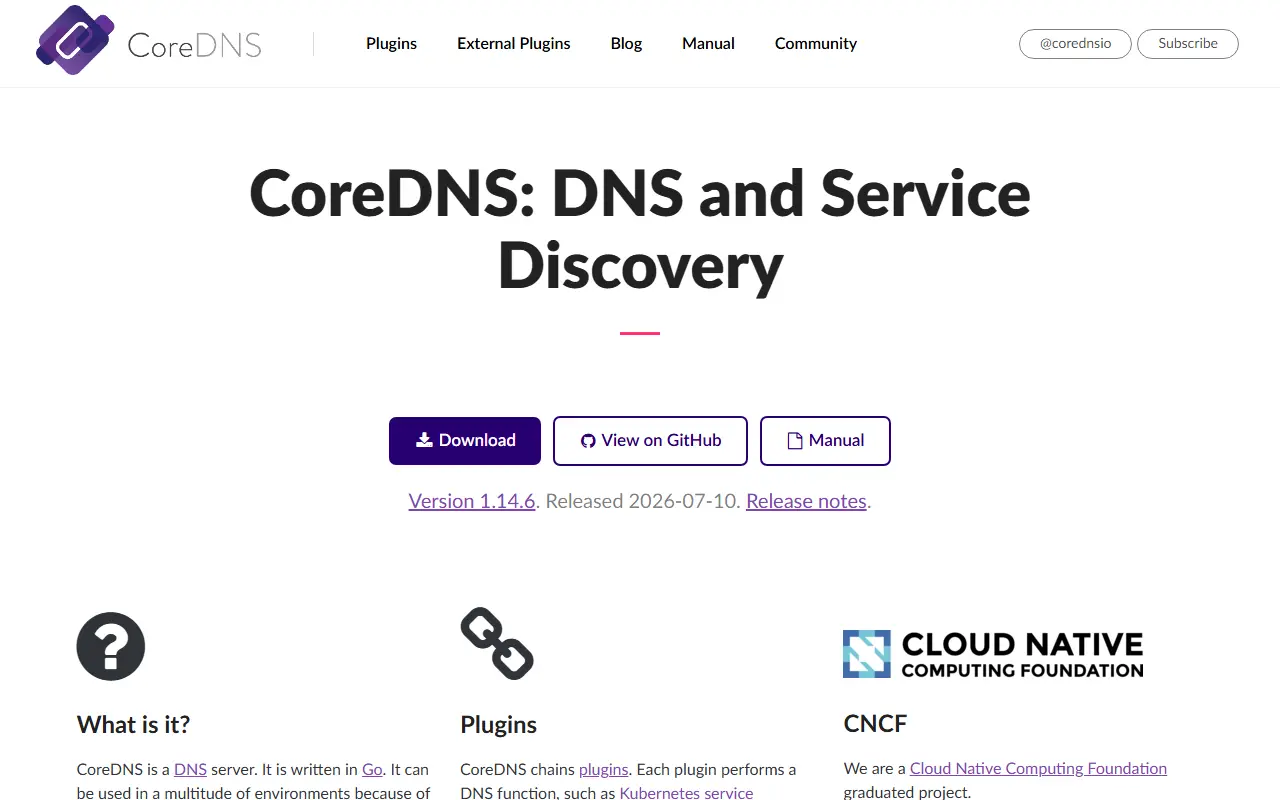
coredns.ioCoreDNS homepage screenshot

CoreDNS is a DNS server and forwarder, written in Go, that chains plugins together, with each plugin performing a DNS function. It is a Cloud Native Computing Foundation graduated project and is released under the Apache 2.0 license. If a function is not available out of the box, it can be added by writing a plugin.

It can listen for DNS requests over UDP and TCP, TLS (DoT), DNS over HTTP/2 (DoH), DNS over HTTP/3, DNS over QUIC (DoQ) and gRPC. Its plugins cover serving zone data from files with DNSSEC and DNS support, acting as a primary or secondary server, signing zone data on the fly, load balancing responses, caching, and forwarding queries to other nameservers.

Backends include etcd and Kubernetes, which is why topics mention service discovery, and there are plugins for Prometheus metrics, query and error logging, Route 53 integration, query rewriting, DNS64 IPv6 translation, profiling and more. Each plugin is documented individually. It is run by operators on their own infrastructure.

Key features

  • Plugin chain architecture
  • DNS over TLS, HTTPS, HTTP/3 and QUIC
  • Zone file serving with DNSSEC signing
  • Caching and query forwarding
  • Kubernetes and etcd backends
  • Prometheus metrics and logging

Pricing: Free and open source under the Apache 2.0 license.

Unbound

Unbound is a validating, recursive, and caching DNS resolver that supports DNS-over-TLS and DNS-over-HTTPS for encrypted client communication.

GitHub stars
5.1k
Last commit
2 days ago
Latest release
release-1.26.2
Licence
BSD-3-Clause
Self-hosted
Yes
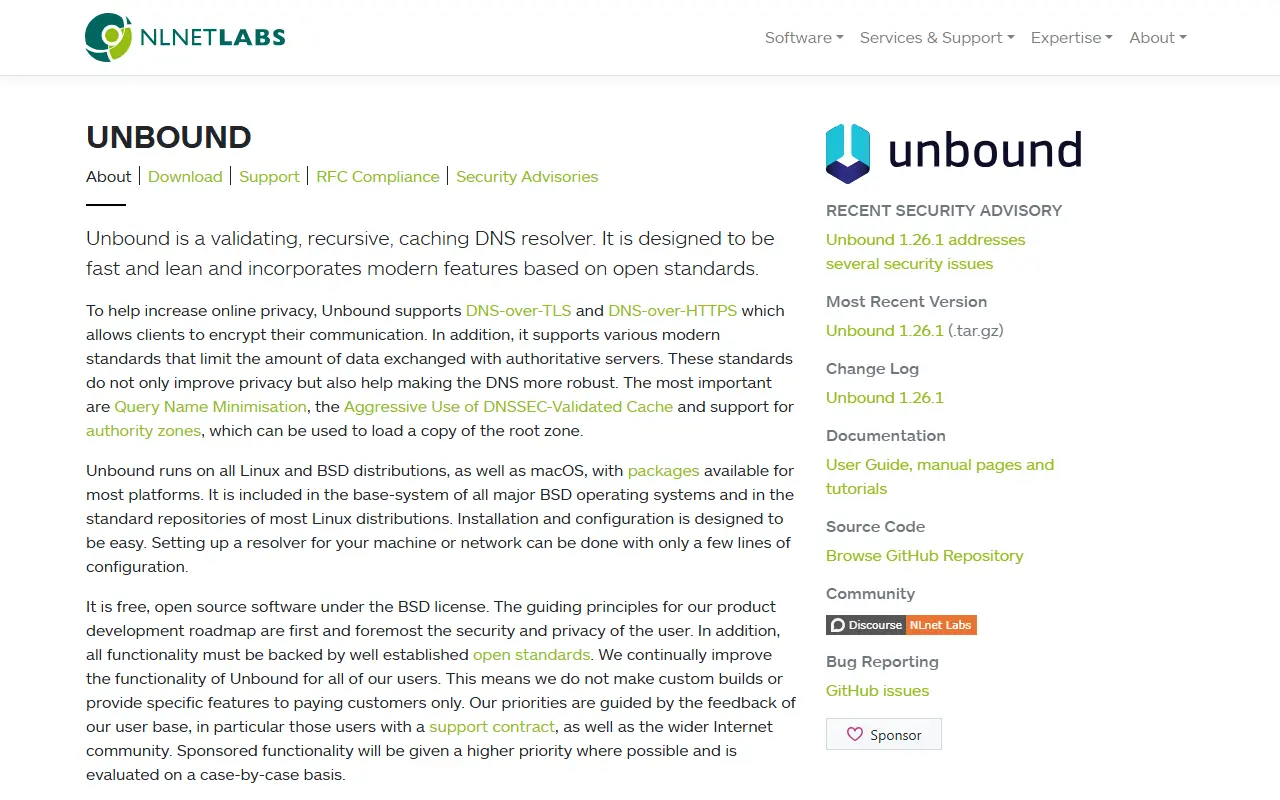
nlnetlabs.nlUnbound homepage screenshot

Unbound is a validating, recursive, and caching DNS resolver designed to be fast and lean, incorporating modern features based on open standards. It supports DNS-over-TLS and DNS-over-HTTPS to encrypt client communication, and includes standards like Query Name Minimisation and Aggressive Use of DNSSEC-Validated Cache.

It runs on all Linux and BSD distributions, as well as macOS, with packages available for most platforms. It is included in the base system of major BSD operating systems and standard repositories of most Linux distributions, with easy installation and configuration.

Key features

  • Validating, recursive, and caching DNS resolution
  • DNS-over-TLS and DNS-over-HTTPS support for encrypted communication
  • Query Name Minimisation to limit data exchanged with authoritative servers
  • Aggressive Use of DNSSEC-Validated Cache
  • Support for authority zones, including loading a copy of the root zone
  • Free and open source under the BSD license

PowerDNS

The PowerDNS source repository containing the Authoritative Server, the Recursor and dnsdist, a DNS load balancer, for running DNS infrastructure.

GitHub stars
4.5k
Last commit
2 days ago
Licence
GPL-2.0
Self-hosted
Yes
powerdns.comPowerDNS homepage screenshot

This repository contains the sources for PowerDNS, a set of DNS server software. It includes the PowerDNS Authoritative Server, the PowerDNS Recursor and dnsdist, a DNS load balancer. All three can be built from the same repository, although they are also released separately as tarball, deb and rpm packages.

The authoritative server depends on Boost, OpenSSL and Lua and needs a compiler with C++17 support, and the project provides pdns-builder, a Docker-based build process for producing the different releases. Docker images are available, with the README mirrored to Docker Hub, and full documentation lives at doc.powerdns.com.

PowerDNS is copyright PowerDNS.COM BV and many contributors and is distributed under the GNU GPLv2, with the NOTICE file describing the exact license and exception. Bugs are reported on the GitHub issue tracker, and the changelog on the documentation site is the place to check for recent updates.

Key features

  • Authoritative DNS server
  • Recursive DNS resolver
  • dnsdist DNS load balancer
  • Releases as tarball, deb and rpm
  • Docker images and Docker-based builder
  • Documentation and changelog online

Pricing: Free and open source under the GPL-2.0 licence.

bind9

ISC's open-source DNS server implementation that can serve as authoritative server, recursive resolver, forwarder or all three.

GitHub stars
790
Last commit
2 days ago
Licence
MPL-2.0
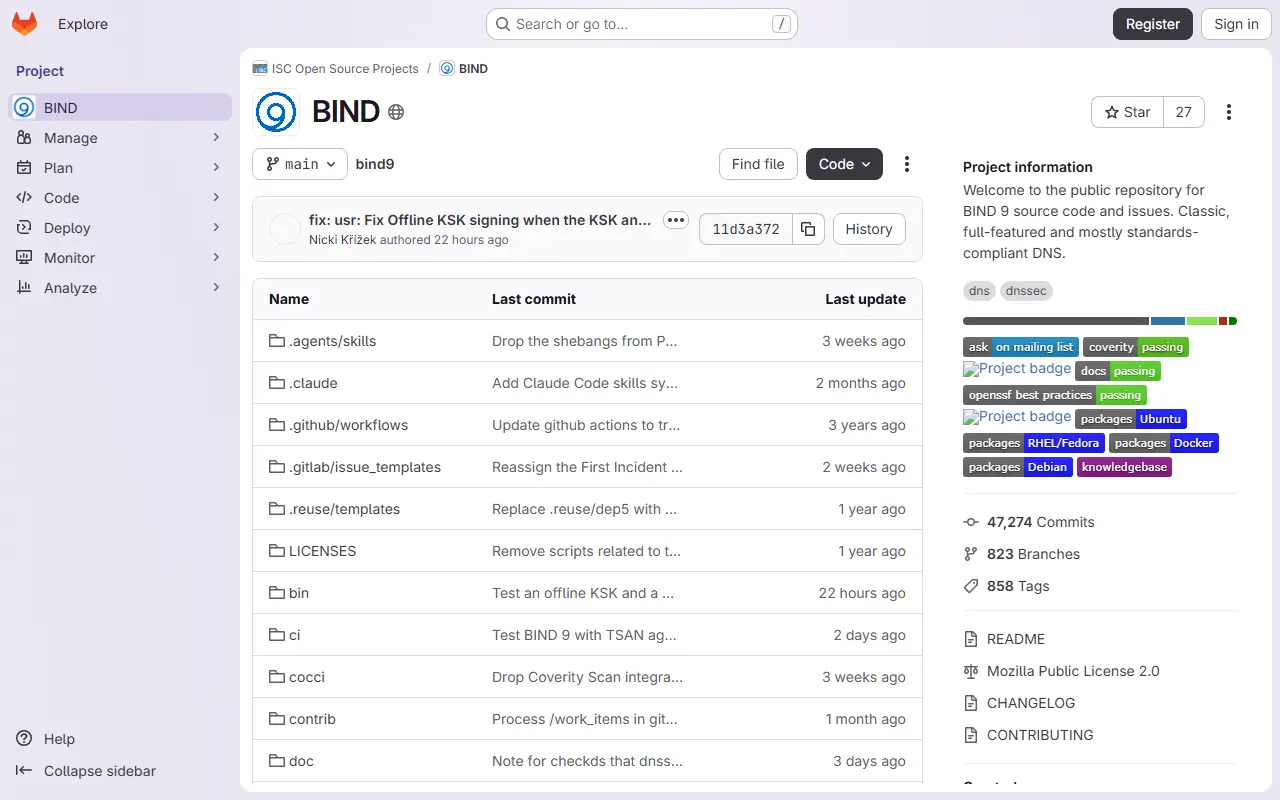
gitlab.isc.orgbind9 homepage screenshot

BIND 9 is an implementation of the Domain Name System protocol, developed and maintained by Internet Systems Consortium. Its name server, named, can act as an authoritative name server, a recursive resolver, a DNS forwarder, or all three at once. BIND 9 began as a rewrite of the architecture used in versions 4 and 8.

Features listed in the README include views for split-horizon DNS, automatic DNSSEC zone signing and key management, catalog zones, response policy zones, response rate limiting and recursive query limits. A set of administrative tools is included: dig and delv for lookups, nsupdate for dynamic updates and rndc for remote administration. The code is under the Mozilla Public License 2.0. The GitHub copy is an archived mirror of the project's GitLab repository.

Key features

  • Authoritative server, recursive resolver and forwarder
  • Views for split-horizon DNS
  • Automatic DNSSEC zone signing and key management
  • Response policy zones to protect clients from malicious data
  • Response rate limiting and recursive query limits
  • Bundled admin tools: dig, delv, nsupdate and rndc

Commercial NS1 alternatives

Hosted, closed-source products that compete with NS1.

NS1 alternatives: questions

What is the best open-source alternative to NS1?
Technitium DNS Server is the top-ranked open-source alternative to NS1 on Enlisted: Technitium DNS Server, a self-hosted authoritative and recursive DNS server with ad blocking, encrypted DNS and a web console. Other strong options are CoreDNS, Unbound, PowerDNS and bind9.
What are the best commercial alternatives to NS1?
Amazon Route 53, DNSimple, Gcore, Google Memorystore and Akamai are among the hosted, closed-source alternatives to NS1 listed on Enlisted, which lists 9 in total. Compare their pricing and features on each tool page.
Are these NS1 alternatives free?
All 5 are open source, so the code is free to use under its licence, and all of them can be self-hosted on your own server or computer.
How is this list of NS1 alternatives ranked?
By a score built from GitHub stars, star growth over the last 30 days and how recently the code changed. 5 of these projects shipped code in the last 30 days. Data is refreshed daily, and nobody can pay to move up.

People also look for alternatives to…

View all