8 open-source alternatives ranked by real activity

Open-source NextDNS alternatives

A curated, ranked list of the 8 best open-source alternatives to NextDNS.

The best open-source alternative to NextDNS is AdGuard Home. If that doesn't suit you, other good options are Pi-hole, Technitium DNS Server, Dnscrypt Proxy and Blocky.

Commercial alternatives to NextDNS include Control D, Cisco Umbrella, Nomoads and AdGuard DNS. See all 12.

NextDNS alternatives are mainly networking & VPN tools, but some are also customer support tools. 7 of them shipped code in the last 30 days, 8 can be self-hosted, and 4 use a permissive licence.

Last updated November 12, 2026 · ranked by GitHub stars, growth and recent commits

AdGuard Home

AdGuard Home is a self-hosted DNS server that blocks ads and trackers for every device on your network without client software.

GitHub stars
38k
Last commit
yesterday
Latest release
v0.107.80
Licence
GPL-3.0
Self-hosted
Yes
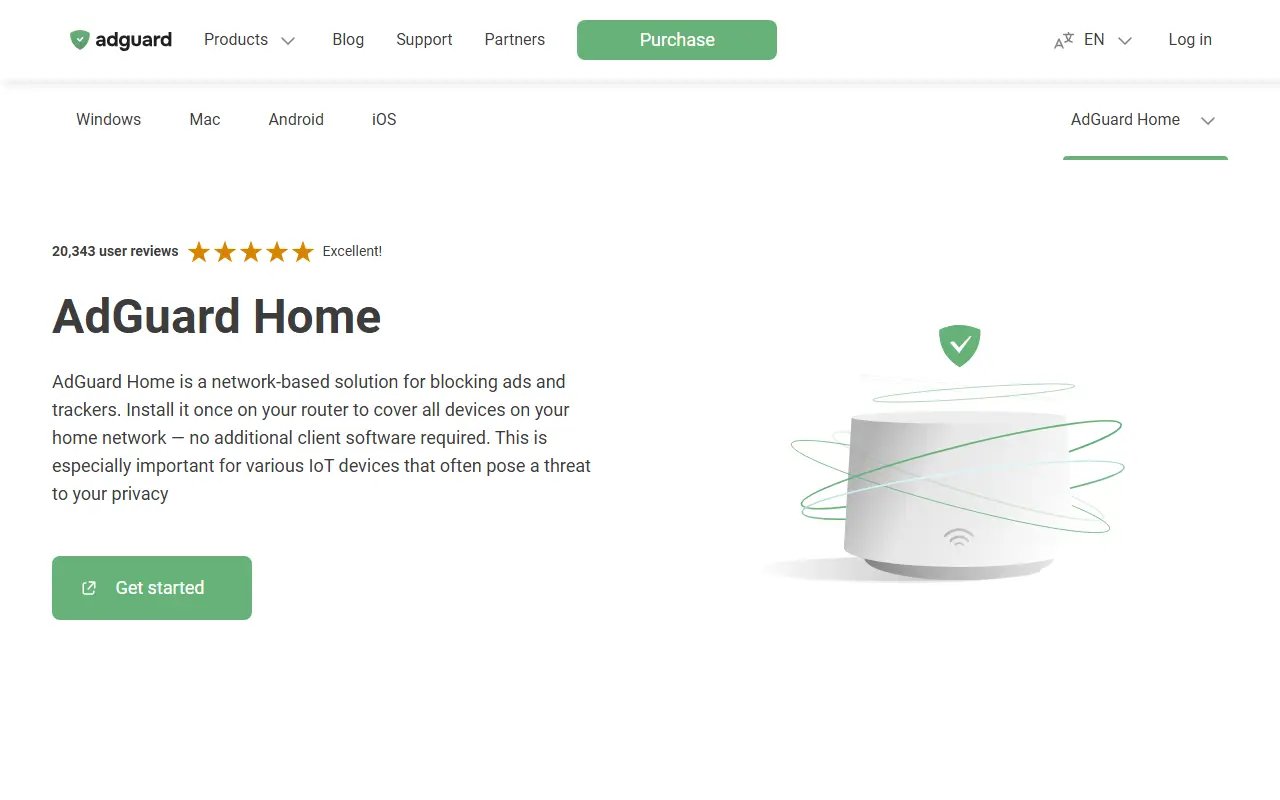
adguard.comAdGuard Home homepage screenshot

AdGuard Home is network-wide software for blocking ads and tracking. Once it is set up, it covers all devices on your home network without any client-side software. It works as a DNS server that redirects tracking and advertising domains to a black hole, so devices never connect to those servers. It is free and open source under the GPL-3.0 license.

The server is written mainly in Go with a TypeScript web interface, and it shares a lot of code with the public AdGuard DNS service. Encrypted DNS protocols are supported, including DNS-over-HTTPS, DNS-over-TLS, DNS-over-QUIC and DNSCrypt. Installation is done with an automated script for Linux, Unix, macOS, FreeBSD and OpenBSD, or manually following the wiki, and there is an HTTP API. The project documents how it differs from Pi-hole and from browser-based ad blockers.

Key features

  • Network-wide ad and tracker blocking via DNS
  • No software needed on client devices
  • DNS-over-HTTPS, TLS, QUIC and DNSCrypt support
  • Web interface and HTTP API
  • Automated install script for Unix-like systems
  • Wiki guides and build-from-source instructions

Pricing: Free and open source under the GPL-3.0 license.

Pi-hole

A network-wide ad blocker that works as a DNS sinkhole on your own Linux hardware, with a web dashboard and no client software needed.

GitHub stars
62k
Last commit
yesterday
Latest release
v6.6
Self-hosted
Yes
pi-hole.netPi-hole homepage screenshot

Pi-hole is a DNS sinkhole that blocks unwanted content, mainly ads, for every device on your network without installing client-side software. You run it on your own Linux hardware, such as a Raspberry Pi, and point your network's DNS at it. The project is written mostly in shell script, and GitHub lists its license as 'Other'.

Because blocking happens at the DNS level, it also covers non-browser locations such as ad-heavy mobile apps and smart TVs, and it speeds up everyday browsing by caching DNS queries. It includes a command-line interface and a responsive web dashboard for viewing and controlling the instance, can optionally act as a DHCP server so all devices are protected automatically, and blocks over both IPv4 and IPv6.

An automated installer walks through setup in under ten minutes, and alternative methods allow reviewing the code first: cloning the repository, downloading the installer manually, or using the official Docker images. Pi-hole runs on modest hardware and, on server-grade machines, can handle very large query volumes. It suits home networks and small offices that want central ad and tracker blocking.

Key features

  • Network-wide ad blocking via DNS
  • No client-side software required
  • Web dashboard for monitoring and control
  • Optional built-in DHCP server
  • DNS query caching
  • IPv4 and IPv6 blocking
  • Official Docker images

Pricing: Free and open source software that runs on your own hardware.

Technitium DNS Server

Technitium DNS Server, a self-hosted authoritative and recursive DNS server with ad blocking, encrypted DNS and a web console.

GitHub stars
10k
Last commit
9 days ago
Latest release
v15.6.2
Licence
GPL-3.0
Self-hosted
Yes
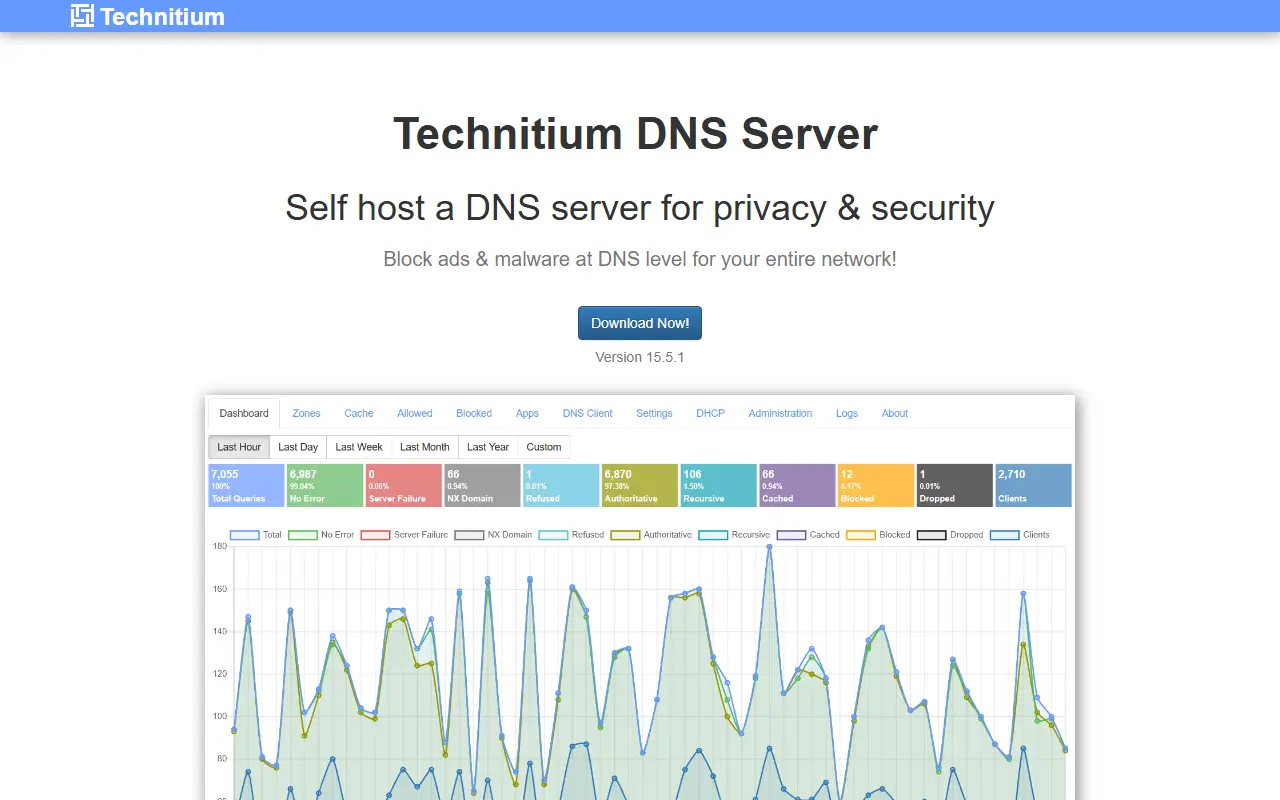
technitium.comTechnitium DNS Server homepage screenshot

Technitium DNS Server is an open-source DNS server that can act as both an authoritative and a recursive resolver. People host it themselves for privacy and security, and it works out of the box with little or no configuration. A friendly web console is reachable from any modern browser.

It can block ads and malware at the DNS level for an entire network. By forwarding queries over DNS-over-TLS, DNS-over-HTTPS or DNS-over-QUIC, it limits what an internet provider can see or tamper with. A local DNS server also gives logs and statistics for understanding network activity, serves many queries from cache, and allows network-wide domain blocking. Repository topics also mention DHCP server functions and DNS-over-Tor.

The server is written in C# on .NET and runs on Windows, Linux, macOS and Raspberry Pi, with Docker support. It is released under the GPL-3.0 license, and the project site at technitium.com provides downloads and documentation. It is suited to home networks and organizations that want more control over name resolution.

Key features

  • Authoritative and recursive DNS server
  • Network-wide ad and malware blocking
  • DNS-over-TLS, HTTPS and QUIC forwarders
  • Browser-based web console
  • DNS logs and statistics
  • Windows, Linux, macOS and Raspberry Pi support

Pricing: Free and open source under the GPL-3.0 license.

Dnscrypt Proxy

dnscrypt-proxy is a flexible DNS proxy that supports encrypted DNS protocols, including DNSCrypt and DNS-over-HTTPS, to secure DNS communications.

GitHub stars
14k
Last commit
yesterday
Latest release
2.1.20
Licence
ISC
Self-hosted
Yes
dnscrypt.infoDnscrypt Proxy homepage screenshot

dnscrypt-proxy is a DNS proxy that encrypts, authenticates, and optionally anonymizes communications between a DNS client and resolver. It prevents DNS spoofing using cryptographic signatures to verify responses. The software supports multiple encrypted DNS protocols, including DNSCrypt version 2 and DNS-over-HTTPS.

The tool is designed for privacy, security, and performance, with features like zero-RTT operation, native parallelism, and lower latency compared to DNS-over-HTTPS. It is decentralized, allowing anyone to run a resolver without corporate approval, and is censorship-resistant due to lack of SNI, HTTP signature, or fixed port.

Key features

  • Encrypts and authenticates DNS communications
  • Supports DNSCrypt version 2 and DNS-over-HTTPS
  • Prevents DNS spoofing with cryptographic signatures
  • Zero-RTT operation with no handshake delay
  • Native parallelism with multiple queries in flight
  • Built-in query padding and multiple crypto suites

Blocky

Blocky is a DNS proxy and ad-blocker for the local network, written in Go, with per-client-group rules, caching and modern DNS protocols.

GitHub stars
7.1k
Last commit
3 days ago
Latest release
v0.36.0
Licence
Apache-2.0
Self-hosted
Yes
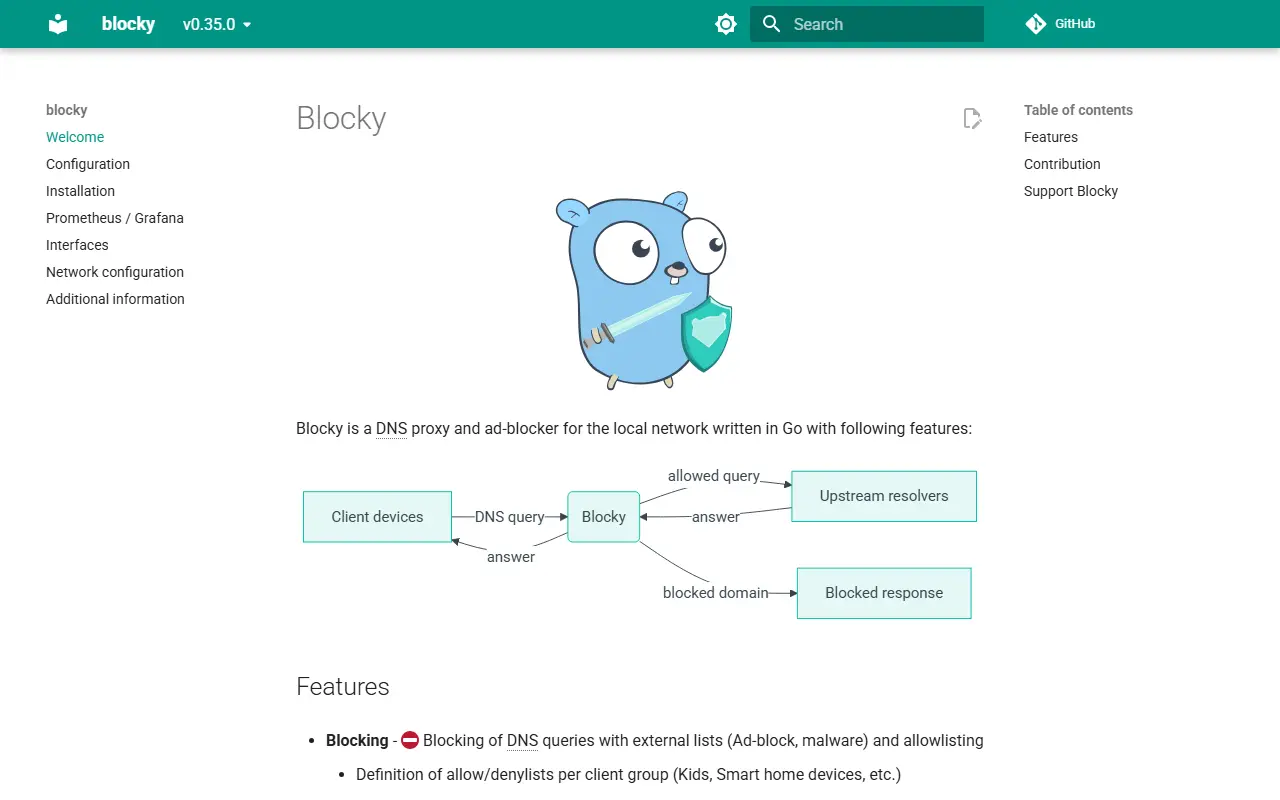
0xerr0r.github.ioBlocky homepage screenshot

Blocky is a DNS proxy and ad-blocker for the local network written in Go. It blocks DNS queries using external lists covering ads and malware, with allowlisting, regex support and periodic reloads of the lists. Blocking can cover the requested domain, response CNAMEs and response IP addresses, and lists can be assigned per client group such as kids or smart home devices.

It is more than a blocker. Custom DNS resolution for chosen domains and conditional forwarding to external DNS servers are available, and upstream resolvers can differ per client group. Answers are cached, often used queries are prefetched, and several external resolvers can be used at once. Supported transports are UDP, TCP, DoH, DoT, DoQ and DoH3, and it can provide a DoH endpoint.

Blocky is a stateless single binary with no database or temporary files, configured in YAML, with a multi-arch Docker image and a community Helm chart. It runs on x86-64, ARM and MIPS, including Raspberry Pi and OpenWrt routers. Prometheus metrics, Grafana dashboards, a REST API, a CLI tool and query logging to CSV or a database are included. The project says it collects no telemetry.

Key features

  • Blocks ad and malware domains with allow and deny lists
  • Different lists per client group
  • Conditional forwarding and custom resolution
  • Caching and prefetching of DNS answers
  • DoH, DoT and DoQ support
  • Prometheus metrics and Grafana dashboards
  • Query logging to CSV or databases

Unbound

Unbound is a validating, recursive, and caching DNS resolver that supports DNS-over-TLS and DNS-over-HTTPS for encrypted client communication.

GitHub stars
5.1k
Last commit
2 days ago
Latest release
release-1.26.2
Licence
BSD-3-Clause
Self-hosted
Yes
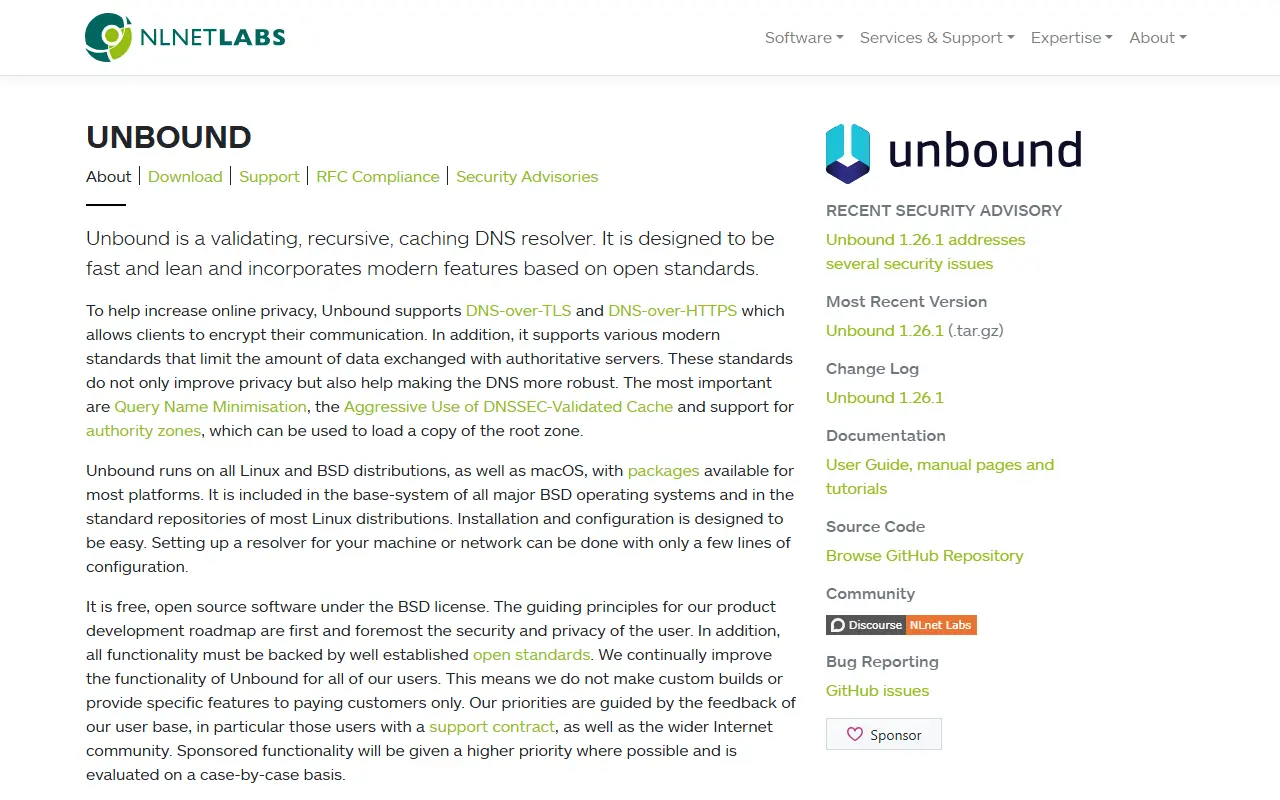
nlnetlabs.nlUnbound homepage screenshot

Unbound is a validating, recursive, and caching DNS resolver designed to be fast and lean, incorporating modern features based on open standards. It supports DNS-over-TLS and DNS-over-HTTPS to encrypt client communication, and includes standards like Query Name Minimisation and Aggressive Use of DNSSEC-Validated Cache.

It runs on all Linux and BSD distributions, as well as macOS, with packages available for most platforms. It is included in the base system of major BSD operating systems and standard repositories of most Linux distributions, with easy installation and configuration.

Key features

  • Validating, recursive, and caching DNS resolution
  • DNS-over-TLS and DNS-over-HTTPS support for encrypted communication
  • Query Name Minimisation to limit data exchanged with authoritative servers
  • Aggressive Use of DNSSEC-Validated Cache
  • Support for authority zones, including loading a copy of the root zone
  • Free and open source under the BSD license

PowerDNS

The PowerDNS source repository containing the Authoritative Server, the Recursor and dnsdist, a DNS load balancer, for running DNS infrastructure.

GitHub stars
4.5k
Last commit
2 days ago
Licence
GPL-2.0
Self-hosted
Yes
powerdns.comPowerDNS homepage screenshot

This repository contains the sources for PowerDNS, a set of DNS server software. It includes the PowerDNS Authoritative Server, the PowerDNS Recursor and dnsdist, a DNS load balancer. All three can be built from the same repository, although they are also released separately as tarball, deb and rpm packages.

The authoritative server depends on Boost, OpenSSL and Lua and needs a compiler with C++17 support, and the project provides pdns-builder, a Docker-based build process for producing the different releases. Docker images are available, with the README mirrored to Docker Hub, and full documentation lives at doc.powerdns.com.

PowerDNS is copyright PowerDNS.COM BV and many contributors and is distributed under the GNU GPLv2, with the NOTICE file describing the exact license and exception. Bugs are reported on the GitHub issue tracker, and the changelog on the documentation site is the place to check for recent updates.

Key features

  • Authoritative DNS server
  • Recursive DNS resolver
  • dnsdist DNS load balancer
  • Releases as tarball, deb and rpm
  • Docker images and Docker-based builder
  • Documentation and changelog online

Pricing: Free and open source under the GPL-2.0 licence.

Stubby

Stubby is a local DNS privacy stub resolver that sends a machine's DNS queries over TLS to a DNS Privacy resolver.

GitHub stars
1.3k
Last commit
1 yr ago
Latest release
v0.4.3
Licence
BSD-3-Clause
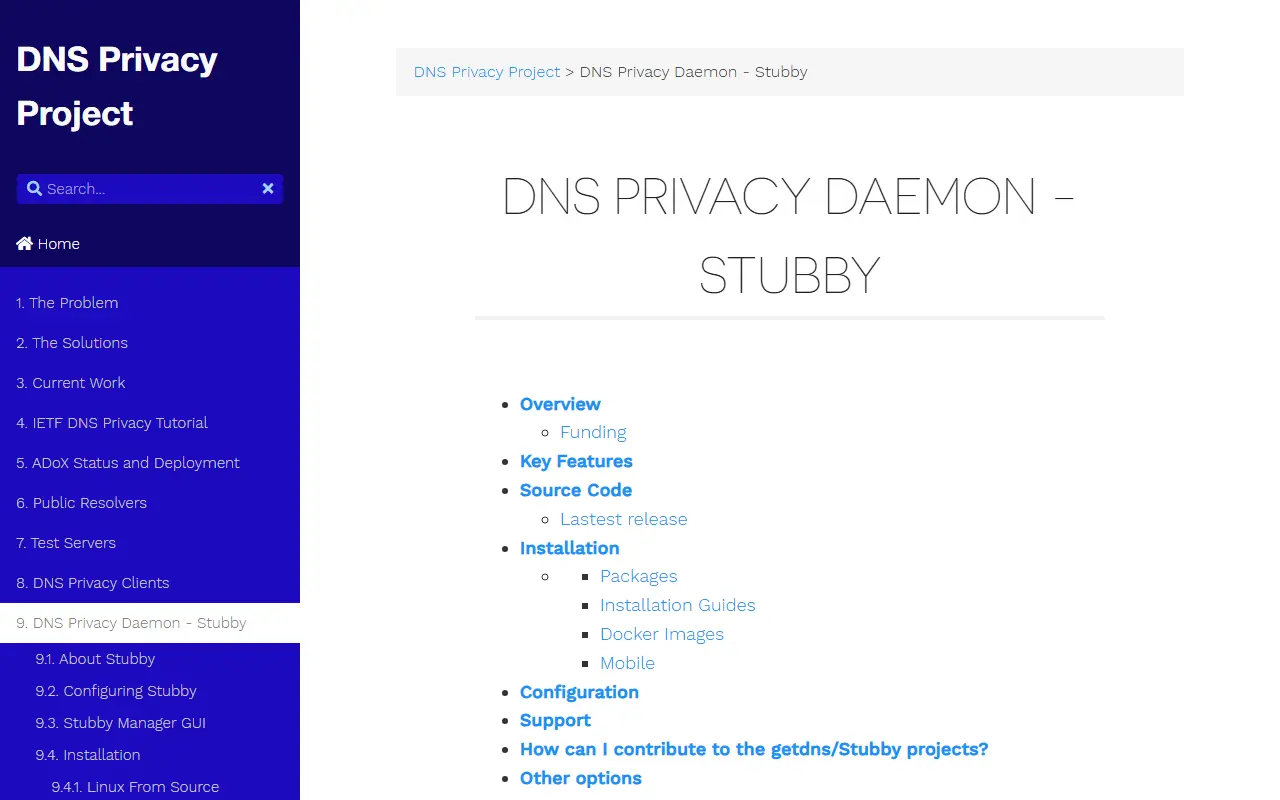
dnsprivacy.orgStubby homepage screenshot

Stubby is an application that acts as a local stub resolver using DNS-over-TLS. It encrypts the DNS queries a desktop or laptop sends to a DNS Privacy resolver, which is meant to increase the privacy of the person using the machine.

It runs as a daemon listening on the loopback addresses, and every outgoing query received there is sent out over TLS. Its default configuration uses Strict Privacy and a subset of the available DNS Privacy servers, with more servers that can be switched on in the configuration.

Stubby is developed under the getdns project and is released under the BSD-3-Clause licence. Documentation is hosted on dnsprivacy.org, with guides for building from source on Linux, running as a service, Homebrew on macOS and a Windows installer. A graphical Stubby Manager is described as in progress.

Key features

  • Local stub resolver using DNS-over-TLS
  • Daemon listening on loopback addresses
  • Sends outgoing queries over TLS
  • Strict Privacy default configuration

Commercial NextDNS alternatives

Hosted, closed-source products that compete with NextDNS.

NextDNS alternatives: questions

What is the best open-source alternative to NextDNS?
AdGuard Home is the top-ranked open-source alternative to NextDNS on Enlisted: AdGuard Home is a self-hosted DNS server that blocks ads and trackers for every device on your network without client software. Other strong options are Pi-hole, Technitium DNS Server, Dnscrypt Proxy and Blocky.
What are the best commercial alternatives to NextDNS?
Control D, Cisco Umbrella, Nomoads, AdGuard DNS and CleanBrowsing are among the hosted, closed-source alternatives to NextDNS listed on Enlisted, which lists 12 in total. Compare their pricing and features on each tool page.
Are these NextDNS alternatives free?
All 8 are open source, so the code is free to use under its licence, and all of them can be self-hosted on your own server or computer.
How is this list of NextDNS alternatives ranked?
By a score built from GitHub stars, star growth over the last 30 days and how recently the code changed. 7 of these projects shipped code in the last 30 days. Data is refreshed daily, and nobody can pay to move up.

People also look for alternatives to…

View all