4 open-source alternatives ranked by real activity

Open-source Carbonite alternatives

A curated, ranked list of the 4 best open-source alternatives to Carbonite.

The best open-source alternative to Carbonite is restic. If that doesn't suit you, other good options are Kopia, Backrest and BorgBackup.

Commercial alternatives to Carbonite include Backblaze Computer Backup, CrashPlan, Acronis Cyber Protect and Degoo. See all 16.

Carbonite alternatives are mainly file storage & sharing tools. 3 of them shipped code in the last 30 days, 4 can be self-hosted, and 2 use a permissive licence.

Last updated November 12, 2026 · ranked by GitHub stars, growth and recent commits

restic

Restic is a cross-platform command-line backup program that stores deduplicated, encrypted snapshots in local or cloud storage backends.

GitHub stars
37k
Last commit
6 days ago
Latest release
v0.19.1
Licence
BSD-2-Clause
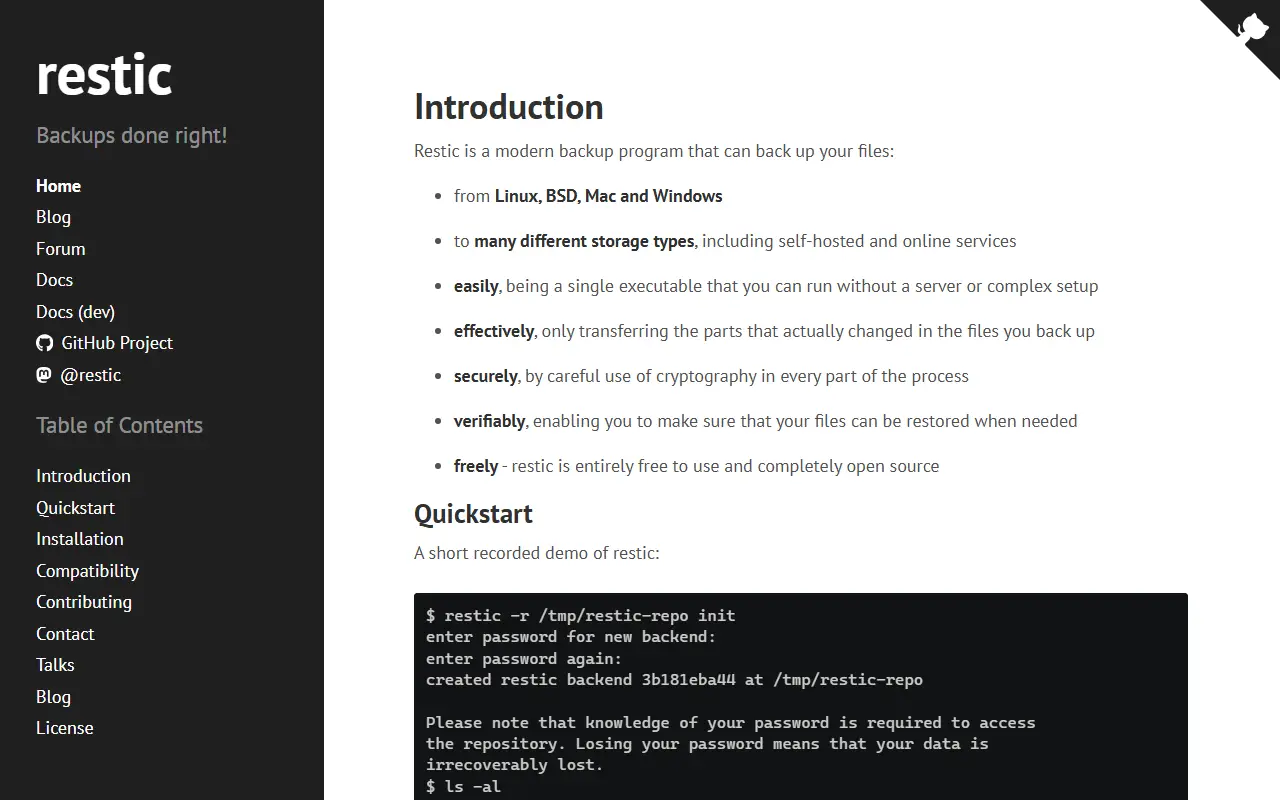
restic.netrestic homepage screenshot

Restic is a backup program designed to be fast, efficient and secure. It runs on Linux, macOS and Windows, with support for FreeBSD and OpenBSD, and ships as a single command-line tool written in Go. It is released under the BSD-2-Clause license, and the project keeps documentation and a Discourse forum for questions.

Backups are stored in a repository that you create with an init command and protect with a password, and the README warns that losing the password means losing the data. Each run saves a snapshot, and deduplication keeps repeated data from using extra space. Files can be restored with a restore command, or the repository can be mounted through FUSE so past snapshots can be browsed. Restic can store backups in a local directory, over SFTP, on an HTTP REST server, in Amazon S3 or S3-compatible storage, OpenStack Swift, Backblaze B2, Azure Blob Storage, Google Cloud Storage, or through rclone.

Key features

  • Encrypted, deduplicated backup snapshots
  • Backends for S3, B2, Azure, GCS and SFTP
  • Any rclone remote supported as a backend
  • Restore command and FUSE mount for browsing
  • Runs on Linux, macOS, Windows and BSD
  • Single Go binary with password-protected repositories

Pricing: Free and open source under the BSD-2-Clause license.

Read more about resticWebsiteGitHub#1 Carbonite alternative

Kopia

Cross-platform backup tool with encrypted, deduplicated snapshots sent to cloud storage, a NAS or local disks, with both CLI and GUI.

GitHub stars
15k
Last commit
2 days ago
Latest release
v0.23.1
Licence
Apache-2.0
kopia.ioKopia homepage screenshot

Kopia is an open-source backup and restore tool that creates encrypted snapshots of selected files and directories. It does not image a whole machine; instead you choose the folders that matter and Kopia stores the snapshots in the location you pick, whether that is cloud storage, a network server or a local disk.

Compression, deduplication, error correction and end-to-end encryption controlled by the user are built in, so repeated backups stay small and the storage provider never sees readable data. Supported destinations include Amazon S3 and S3-compatible services, Azure Blob Storage, Backblaze B2, Google Cloud Storage, WebDAV, SFTP and, experimentally, a subset of Rclone backends.

Both a command-line interface and a graphical interface are included, so the tool suits advanced users and people who prefer a GUI. It runs on Windows, macOS and Linux, is written in Go and is licensed under Apache-2.0. The project site offers installation instructions and a step-by-step getting started guide.

Key features

  • Encrypted snapshots with client-side encryption
  • Incremental backups with data deduplication
  • Compression and error correction
  • S3, Azure, B2, Google Cloud, WebDAV and SFTP targets
  • Command-line and graphical interfaces
  • Runs on Windows, macOS and Linux

Pricing: Free and open source under the Apache-2.0 license.

Read more about KopiaWebsiteGitHub#2 Carbonite alternative

Backrest

A web UI and scheduler for restic backups that lets you create repositories, browse snapshots and restore files.

GitHub stars
7.9k
Last commit
1 mo ago
Latest release
v1.14.1
Licence
GPL-3.0
Self-hosted
Yes
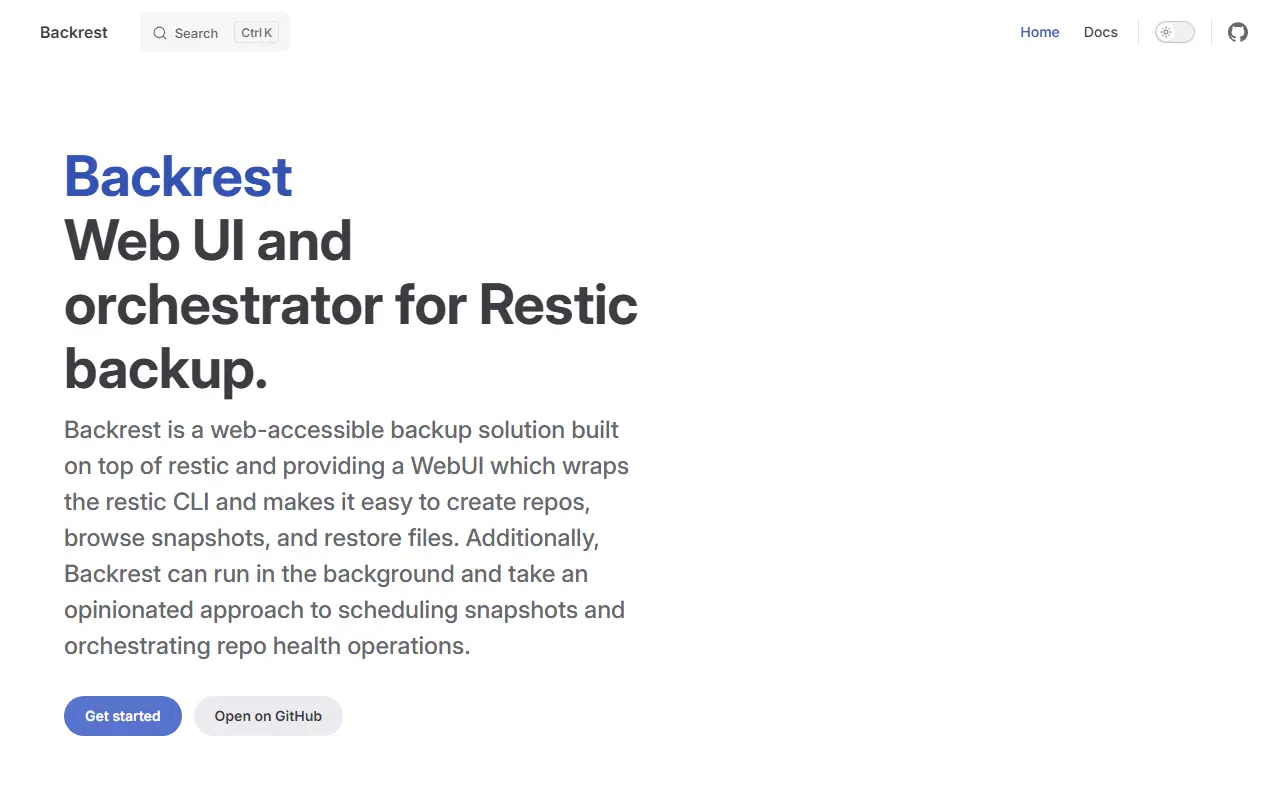
garethgeorge.github.ioBackrest homepage screenshot

Backrest is a web-accessible backup solution built on top of restic. Its web UI wraps the restic command line so repositories can be created, snapshots browsed and files restored without typing restic commands. It can also run in the background and schedule snapshots and repository health operations.

Existing restic repositories can be imported. Backups and health jobs such as prune and forget run on cron schedules, and shell command hooks can run before and after backup operations. Notifications can go to Discord, Slack, Shoutrrr or Gotify, and any storage restic supports works, including S3, B2, Azure, GCS, local disks, SFTP and rclone remotes.

The docs give installation routes for Linux (script or systemd), Arch Linux, macOS (Homebrew or script) and docker-compose, with an image published on ghcr.io. The example configurations expose the web interface on port 9898.

Key features

  • Imports existing restic repositories
  • Cron-scheduled backups and prune or forget jobs
  • Browse and restore files from snapshots
  • Notifications to Discord, Slack, Shoutrrr or Gotify
  • Shell hooks before and after backups
  • Any restic-supported storage backend

BorgBackup

Command-line backup program that deduplicates data, compresses it and encrypts it with authentication, built for efficient repeated backups.

GitHub stars
14k
Last commit
2 days ago
Latest release
1.4.5
borgbackup.orgBorgBackup homepage screenshot

BorgBackup, usually called Borg, is a backup program that stores files as content-defined chunks. Identical chunks are kept only once across files, machines and years of history, so a daily full backup costs little more than the changes made since the previous run. This makes long retention periods practical on modest storage.

Repositories are protected with authenticated AES encryption, which means a backup server only ever sees ciphertext and does not need to be trusted. Compression is configurable, with options such as lz4 for speed, zstd as a balance and zlib or lzma for smaller output. Archives can be mounted as an ordinary filesystem through FUSE so earlier versions of files can be browsed like folders.

Borg is written in Python, has been developed since 2015, and is free software under a BSD license. It installs on Linux, macOS, BSD and other systems from distribution packages, single-file binaries or pip. The project site provides a demo, documentation, a community page and commercial support services.

Key features

  • Content-defined chunking for deduplicated backups
  • Authenticated AES encryption of repositories
  • Selectable compression: lz4, zstd, zlib, lzma
  • Mount archives as a filesystem via FUSE
  • Installs on Linux, macOS and BSD
  • Backs up over SSH to remote servers

Pricing: Free software under a BSD license.

Commercial Carbonite alternatives

Hosted, closed-source products that compete with Carbonite. Showing 12 of 16.

See every Carbonite alternative on its tool page

Carbonite alternatives: questions

What is the best open-source alternative to Carbonite?
restic is the top-ranked open-source alternative to Carbonite on Enlisted: Restic is a cross-platform command-line backup program that stores deduplicated, encrypted snapshots in local or cloud storage backends. Other strong options are Kopia, Backrest and BorgBackup.
What are the best commercial alternatives to Carbonite?
Backblaze Computer Backup, CrashPlan, Acronis Cyber Protect, Degoo and Zoolz are among the hosted, closed-source alternatives to Carbonite listed on Enlisted, which lists 16 in total. Compare their pricing and features on each tool page.
Are these Carbonite alternatives free?
All 4 are open source, so the code is free to use under its licence, and all of them can be self-hosted on your own server or computer.
How is this list of Carbonite alternatives ranked?
By a score built from GitHub stars, star growth over the last 30 days and how recently the code changed. 3 of these projects shipped code in the last 30 days. Data is refreshed daily, and nobody can pay to move up.

People also look for alternatives to…

View all