7,363 open-source and SaaS tools, with GitHub stats refreshed every day.

8 alternatives ranked by real activity

Open-source Blogger alternatives

A curated, ranked list of the 8 best open-source alternatives to Blogger.

The best open-source alternative to Blogger is Ghost. If that doesn't suit you, other good options are Halo, WordPress, WriteFreely and Bludit.

Blogger alternatives are mainly CMS tools. 5 of them shipped code in the last 30 days, 8 can be self-hosted, and 4 use a permissive licence.

Last updated October 2, 2026 · ranked by GitHub stars, growth and recent commits

Ghost

An open-source publishing platform for blogs, newsletters, memberships and paid subscriptions, available as the Ghost(Pro) managed service or self-hosted on Node.js.

GitHub stars
55k
Last commit
today
Latest release
v6.67.0
Licence
MIT
Self-hosted
Yes
Hosted version
Available
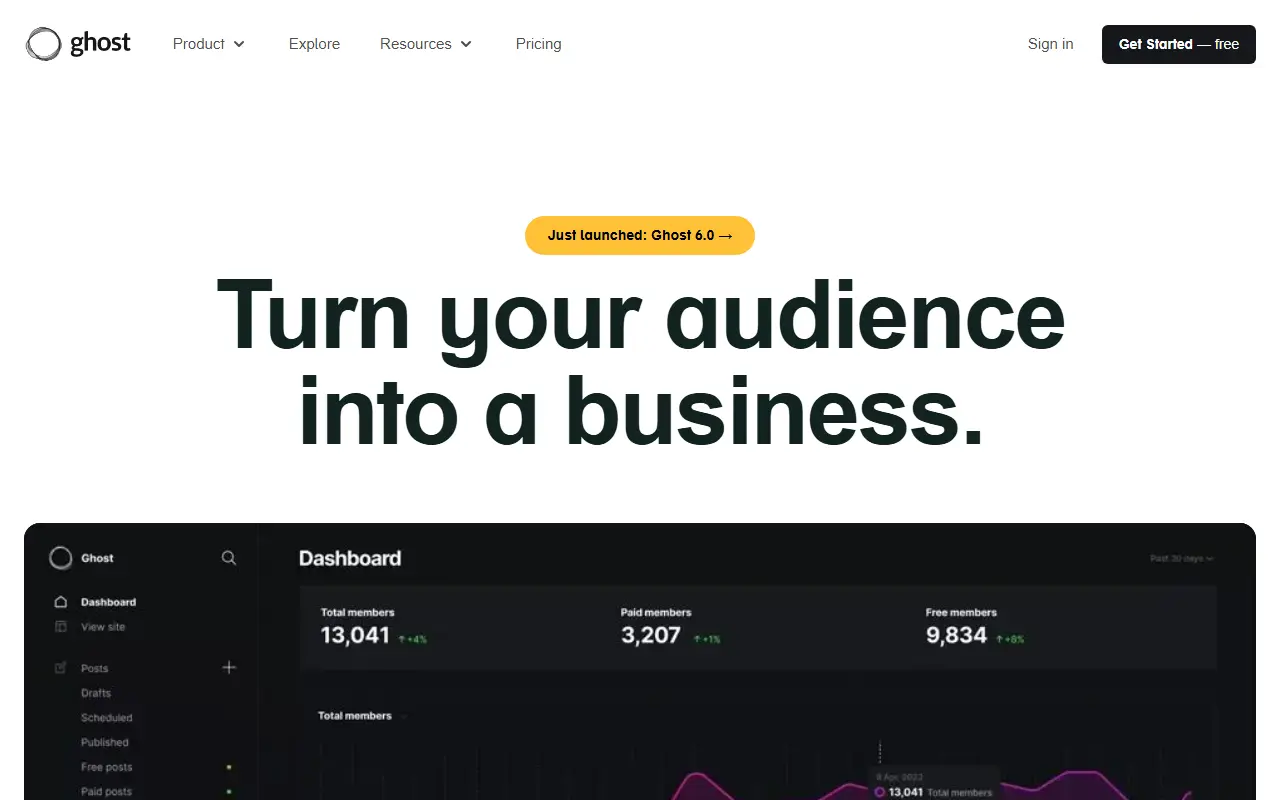
ghost.orgGhost homepage screenshot

Ghost is a publishing platform for independent writers and media businesses. It handles blogging, newsletters, memberships and subscriptions in one product, so a creator can publish articles, email them to subscribers and charge for access without stitching several tools together.

The project is written in JavaScript and TypeScript on Node.js. The official way to get a production site running is the Ghost(Pro) managed service, which launches a site with a worldwide CDN, backups, security and maintenance handled for you, and the maintainers state that all revenue from it funds the nonprofit Ghost Foundation. If you prefer to run your own instance, a CLI tool installs Ghost locally in about a minute or on a server with automatic SSL through Let's Encrypt.

Ghost is MIT licensed and comes with official documentation, a forum and an active contributor community. It suits journalists, bloggers and publishers who want a focused publishing and membership tool rather than a general-purpose CMS.

Key features

  • Publishing editor for blogs and articles
  • Built-in newsletters sent to subscribers
  • Memberships and paid subscriptions
  • CLI installer with automatic SSL
  • Managed hosting with CDN and backups
  • Extensible through documented APIs and themes

Pricing: Ghost(Pro) managed hosting starts at $18 per month billed yearly for Starter, then $29 for Publisher and $199 for Business; Custom is quoted. Plans can be tried free.


Halo

An open-source website builder written in Java for blogs, knowledge bases, company sites and online stores, with a plugin and theme marketplace and Docker setup.

GitHub stars
40k
Last commit
2 days ago
Latest release
v2.26.1
Licence
GPL-3.0
Self-hosted
Yes
halo.runHalo homepage screenshot

Halo is an open-source website building tool written in Java. It targets a range of needs, from personal blogs and knowledge bases to corporate websites and online shops, and aims to cover them all in a single, easy-to-use system. Its documentation and project text are primarily in Chinese.

A quick-start Docker command launches a trial environment, and the maintainers recommend deploying with the 1Panel server management panel for reverse proxy, SSL certificates and upgrade and backup handling. An application market offers more than 100 free themes and plugins, and developers can publish their own. A public demo environment is available for exploring the admin interface.

Halo comes in three editions. The Community edition is free under GPL-3.0 and suits individual developers and open-source projects. The Professional edition adds features such as a mobile app, AI site generation, phone number login and a paid theme and plugin market. A Commerce edition adds an integrated online store with payment support for the Chinese market, including WeChat Pay and Alipay.

Key features

  • Website builder for blogs and company sites
  • Theme and plugin application market
  • Docker quick start
  • Knowledge base and documentation sites
  • Optional online store in the Commerce edition
  • Mobile app and AI site generation in Professional edition

Pricing: The Community edition is free and open source under GPL-3.0; Professional and Commerce editions add paid features.

WordPress

WordPress is an open-source publishing platform and CMS for building websites, blogs and online stores with themes, blocks and plugins.

GitHub stars
21k
Last commit
today
Self-hosted
Yes
Hosted version
Available
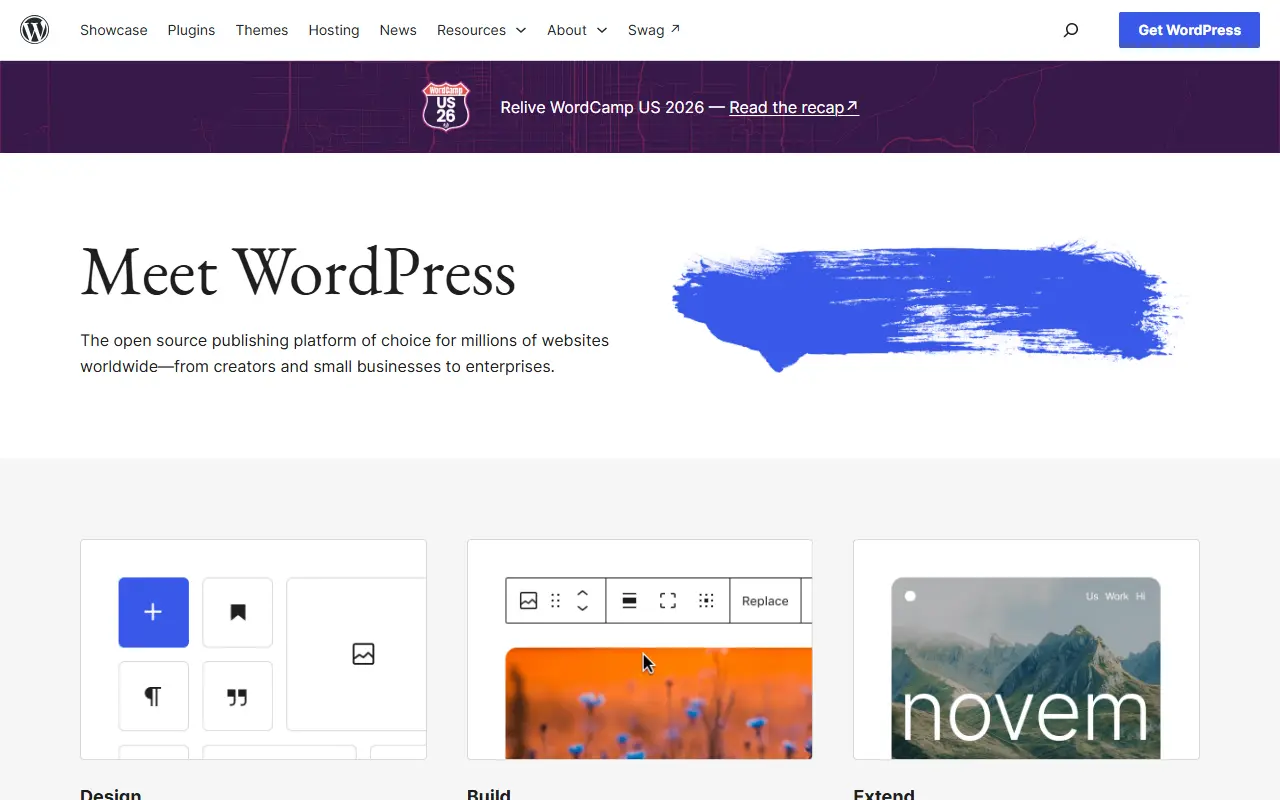
wordpress.orgWordPress homepage screenshot

WordPress is a content management system and publishing platform for building websites, blogs and apps. People write and organize content in a browser-based editor, choose how the site looks with themes, and publish without writing code. Its own site describes it as the platform behind millions of websites, from creators and small businesses to enterprises.

Design and editing are built around blocks, so pages can be assembled and rearranged visually with a live preview as content changes. Styling can be adjusted for different screen sizes and interactive states without writing CSS. Functionality is extended through a large library of plugins that add features such as stores, analytics, newsletters and social media integration.

The software is written in PHP and is open source; the GitHub repository is a read-only mirror of the project's Subversion repository, with development happening elsewhere. You can run it on your own hosting, and a managed service is also available through WordPress.com. It suits individual bloggers, small businesses and larger organizations alike.

Key features

  • Block-based page and post editor
  • Themes for site design
  • Plugin library for extra functionality
  • Site editor with responsive styling controls
  • Media library with a built-in editor
  • Runs on your own PHP hosting

Pricing: The software is free and open source; costs come from hosting and any paid themes or plugins you choose.

WriteFreely

A clean, Markdown-based publishing platform for blogs and writing communities, with ActivityPub federation, written in Go.

GitHub stars
5.3k
Last commit
yesterday
Latest release
v0.17.2
Licence
AGPL-3.0
Self-hosted
Yes
Hosted version
Available
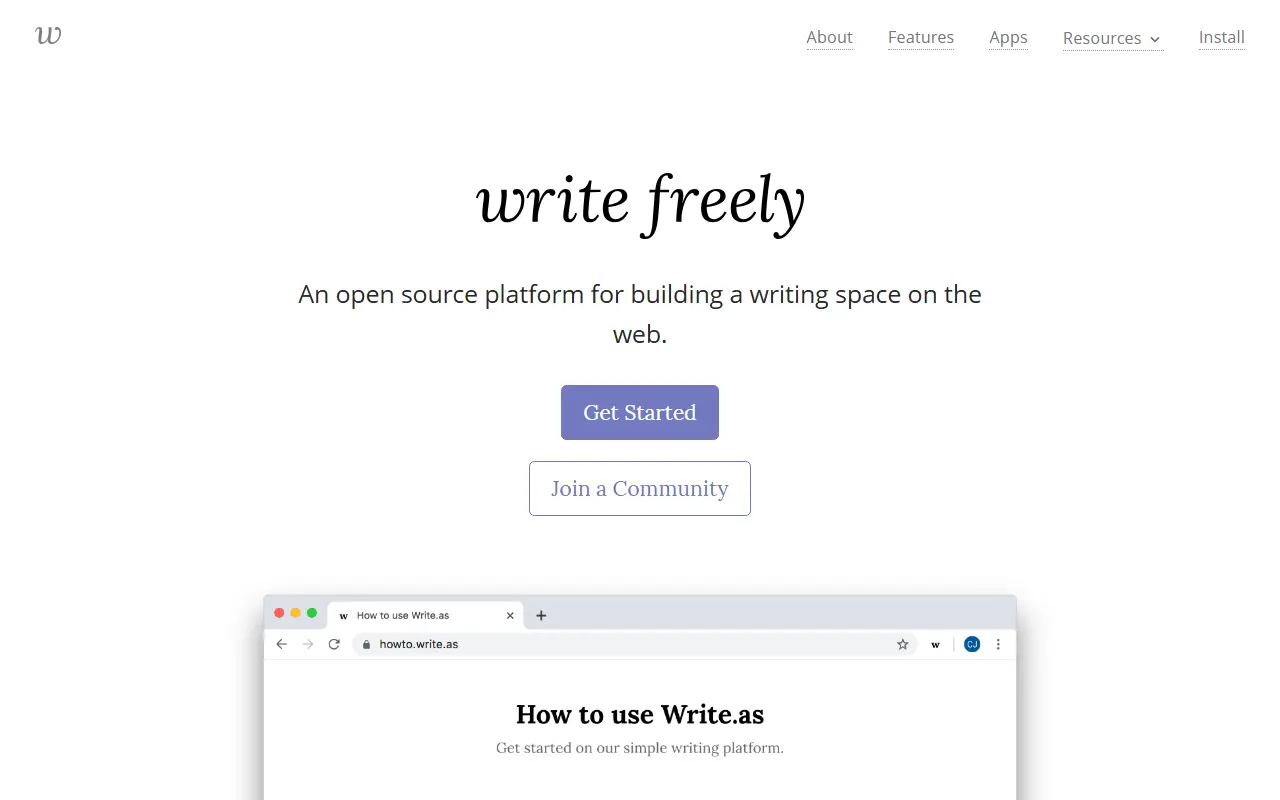
writefreely.orgWriteFreely homepage screenshot

WriteFreely is a publishing platform for writers, kept deliberately minimal. It can be used to start a blog, share knowledge inside an organization, or build a community around writing, with a plain, auto-saving editor that keeps the focus on the text and a clean reading layout once posts are published.

Posts are written in Markdown, organized with hashtags, and can be saved as drafts. A single account can publish to multiple blogs, which lets writers keep separate pen names without publicly revealing the link between them, and normal posts can be pinned to become static pages. Blogs federate through ActivityPub with other WriteFreely, Plume and compatible servers, OAuth 2.0 helps bring members from existing platforms, and the interface is localized in over 20 languages including right-to-left scripts.

WriteFreely deploys as a static binary on any platform that Go supports, using built-in SQLite or an external MySQL or MariaDB database, and is licensed under AGPL-3.0. People who prefer not to run it can use Write.as, the hosted service from the team behind the project, which handles installation, backups and upgrades.

Key features

  • Distraction-free auto-saving editor
  • Markdown posts with hashtags
  • Multiple blogs per account
  • ActivityPub federation
  • OAuth 2.0 sign-in
  • Localized in 20+ languages
  • Single static binary with SQLite

Pricing: Free and open source under AGPL-3.0; the Write.as service offers managed hosting.

Bludit

A flat-file CMS written in PHP that stores content as JSON files, supports Markdown and HTML, and needs no database to run.

GitHub stars
1.5k
Last commit
10 days ago
Latest release
3.22.0
Licence
MIT
Self-hosted
Yes
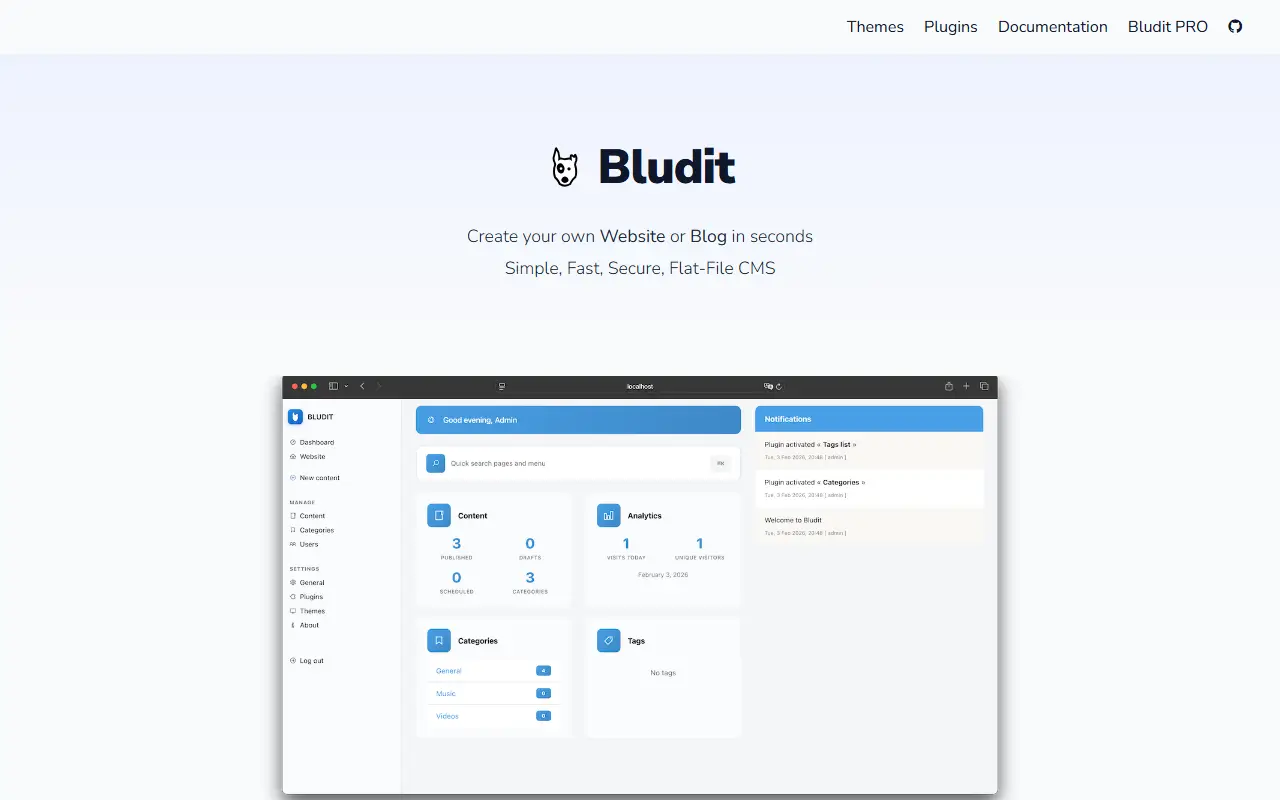
bludit.comBludit homepage screenshot

Bludit is a flat-file content management system for building websites and blogs. It stores content as JSON files on disk instead of in a database, so installation does not involve setting up MySQL or similar, and all you need is a web server with PHP support.

Content can be written in Markdown or HTML, and the system is extended through plugins and themes. Requirements listed in the README are PHP 8.0 or newer with the mbstring, gd, dom and json modules. Installation means downloading the release, uploading it to a web server and following the installer. The README also explains how to configure reverse proxies correctly so client IP addresses are read properly for login protection and statistics.

Bludit is released under the MIT licence and written in PHP, and a Docker image is available according to its topics. Documentation, a forum, Discord and plugin and theme directories support the community. It suits individuals, bloggers and small organizations that want a quick, self-hosted site without database administration.

Key features

  • Flat-file storage using JSON
  • Markdown and HTML content
  • Plugins and themes
  • Installer-based setup
  • Login brute-force protection
  • Docker image available

Pricing: Free and open source under the MIT licence.

HTMLy

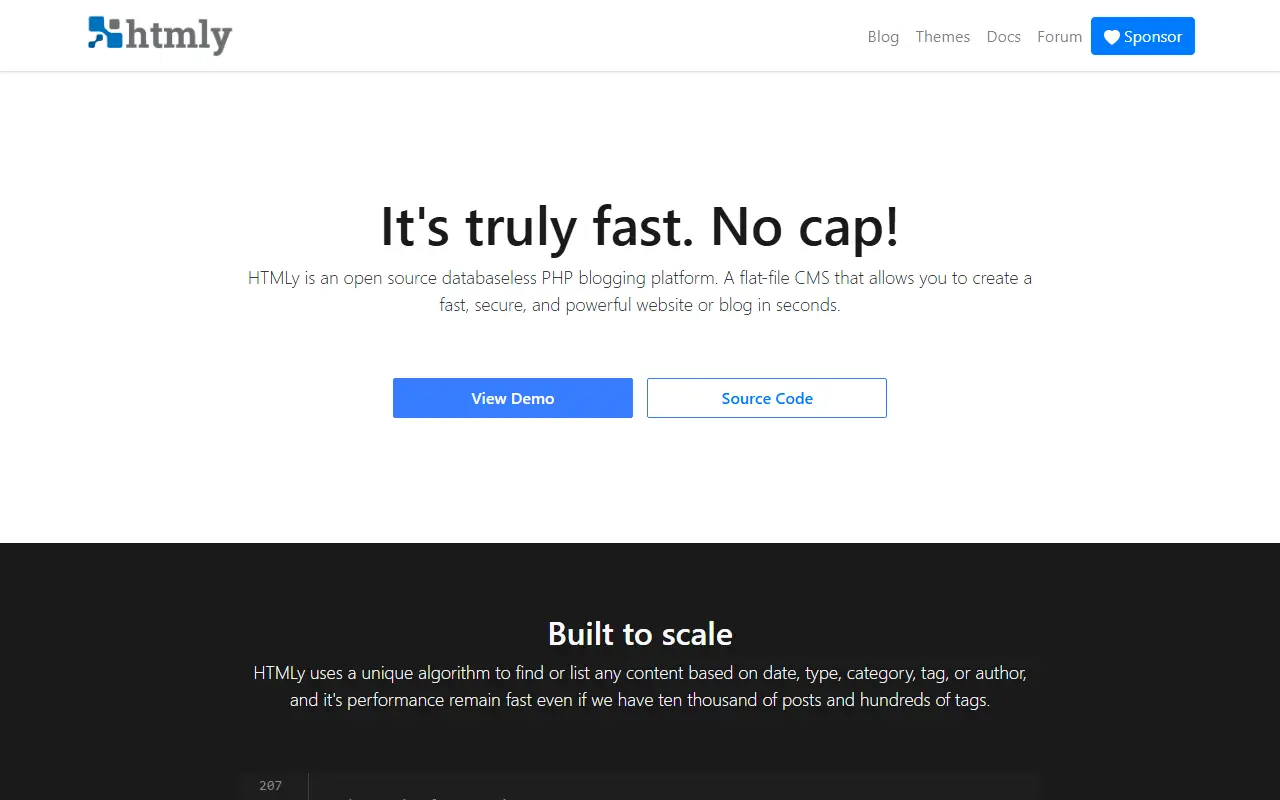
Databaseless PHP blogging platform and flat-file CMS that stores content as files and lists posts by date, type, category, tag or author.

GitHub stars
1.4k
Last commit
8 mo ago
Latest release
v3.1.1
Licence
GPL-2.0
Self-hosted
Yes
htmly.comHTMLy homepage screenshot

HTMLy is an open-source blogging platform and flat-file CMS written in PHP. It does not use a database, so content is stored as files, which keeps installation and backup simple. The project prioritizes simplicity and speed and uses an algorithm that finds or lists content by date, type, category, tag or author, staying fast even with large numbers of posts and tags. It suits individual bloggers and small sites.

Installation takes a few steps: upload and extract the files to a web server, visit the installer page in a browser and follow the prompts, then delete the installer. An online installer can fetch the code for you. Requirements are PHP 7.2 or newer with the mbstring, XML, INTL and GD extensions, and ZIP for the backup feature. Cache and content directories need write permission.

There is a role system in which administrators can edit or delete all users' posts. The topics mention Markdown, and the project is licensed under GPL-2.0. A sign-in to the dashboard is optional if you just want to publish from configuration files.

Key features

  • Flat-file storage with no database
  • Posts organized by category, tag and author
  • Markdown content support
  • Web-based installer and online installer
  • Backup feature
  • Admin role for managing all users' posts

Pricing: Free and open source under the GPL-2.0 license.

Blogifier

Self-hosted publishing platform written in ASP.NET and Blazor WebAssembly for running a lightweight personal or group blog.

GitHub stars
1.3k
Last commit
6 mo ago
Latest release
v3.0
Licence
MIT
Self-hosted
Yes

Blogifier is an open-source publishing platform for creating a personal or group blog or a simple website. It is written in ASP.NET with a Blazor WebAssembly front end, and it is meant to be self-hosted by developers and small teams who work in the .NET ecosystem and want a lightweight, functional blog engine they control.

The current version, 3.0, is built from source and not distributed as a packaged release. The README describes a native build, which needs the .NET 7 SDK and Node.js 14 or later, and runs a publish script on Windows or Linux to produce a distribution folder that can be copied and run anywhere. A Docker build is also documented using docker-compose. Instructions for versions earlier than 3.0 explain how to install a compiled application on a server with the .NET runtime.

The README is available in English and Simplified Chinese. Blogifier is licensed under MIT and uses C# on .NET. After starting, the site is available locally in the browser on a port stated in the documentation. It is an application you operate yourself rather than a hosted service.

Key features

  • ASP.NET and Blazor WebAssembly application
  • Personal or group blogging
  • Native build scripts for Windows and Linux
  • Docker and docker-compose build
  • Self-hosted deployment

Pricing: Free and open source under the MIT license.

Letterpad

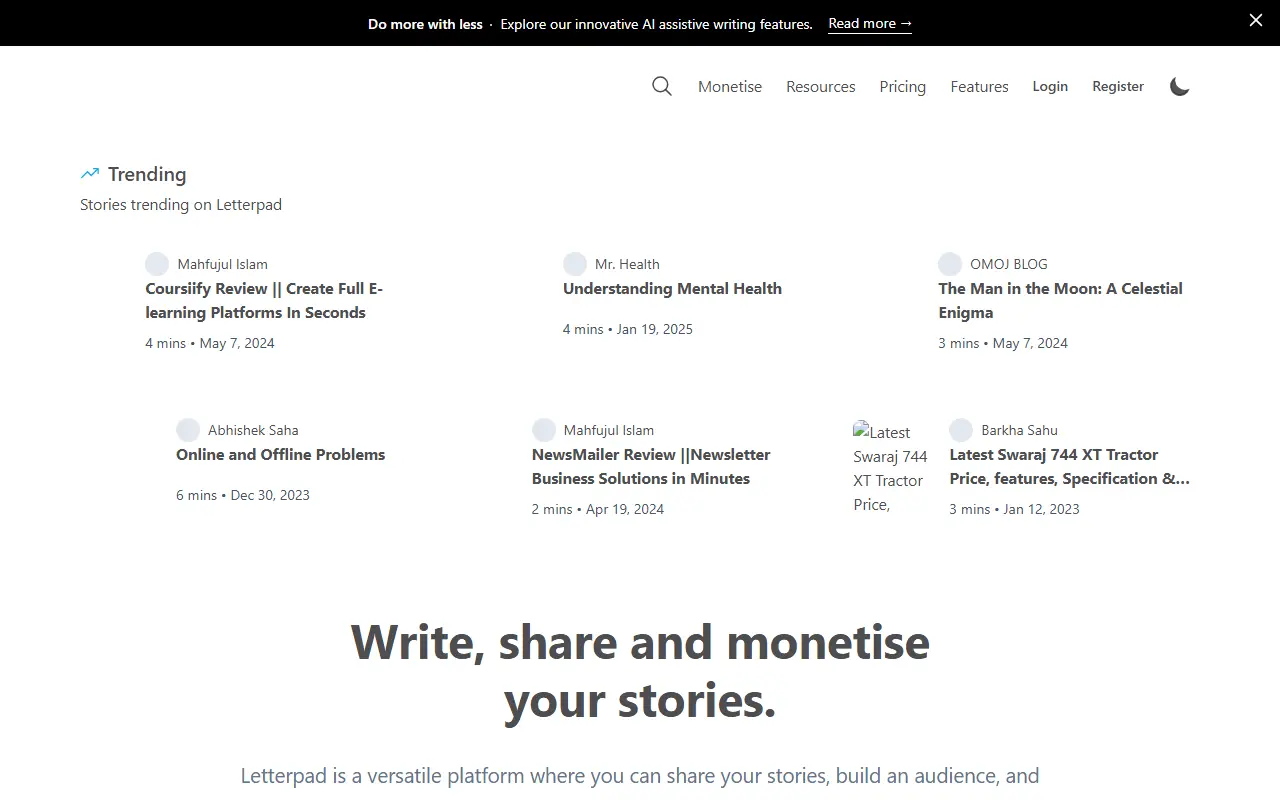
Blog publishing platform built with Next.js, React and GraphQL, offering an admin dashboard, inline editing, domain mapping and a page builder.

GitHub stars
790
Last commit
8 mo ago
Latest release
v5.0.0
Licence
MIT
Self-hosted
Yes
letterpad.appLetterpad homepage screenshot

Letterpad is a blog publishing engine for creatives that simplifies managing and publishing content for a blog or website. It ships with a full admin dashboard and a customizable public website, so you can start writing quickly. It is built with TypeScript, React, GraphQL, Next.js and Tailwind CSS, and it suits writers, photographers and designers who want a self-managed publishing platform.

Features include domain mapping for custom domains, inline editing directly on the website, grid and list layouts, a customizable brand color and three themes. It stores data in MySQL or SQLite3 and integrates with Cloudinary and Unsplash for media. Multi-user installations are supported by default. A Creatives page builder helps make photostories, portfolios and photoblogs, and there is Grammarly integration, built-in SEO features and a server-rendered blog for performance.

The README documents installation, development and production setup, including Docker, plus configuration options for URL and port. A demo is available, and the project is MIT licensed.

Key features

  • Admin dashboard and public website
  • Domain mapping for custom domains
  • Inline editing on the site
  • Creatives page builder for portfolios
  • MySQL or SQLite3 databases
  • Cloudinary and Unsplash integrations
  • Multi-user support

Pricing: A free plan offers unlimited posts and basic analytics. Pro costs $5 per month and adds an AI editor, domain mapping and extended analytics.

Blogger alternatives: questions

What is the best open-source alternative to Blogger?
Ghost is the top-ranked open-source alternative to Blogger on Enlisted: An open-source publishing platform for blogs, newsletters, memberships and paid subscriptions, available as the Ghost(Pro) managed service or self-hosted on Node.js. Other strong options are Halo, WordPress, WriteFreely and Bludit.
Are these Blogger alternatives free?
All 8 are open source, so the code is free to use under its licence, and all of them can be self-hosted on your own server or computer. 3 also offer a paid or managed cloud version if you'd rather not host it yourself.
How is this list of Blogger alternatives ranked?
By a score built from GitHub stars, star growth over the last 30 days and how recently the code changed. 5 of these projects shipped code in the last 30 days. Data is refreshed daily, and nobody can pay to move up.

People also look for alternatives to…

View all