
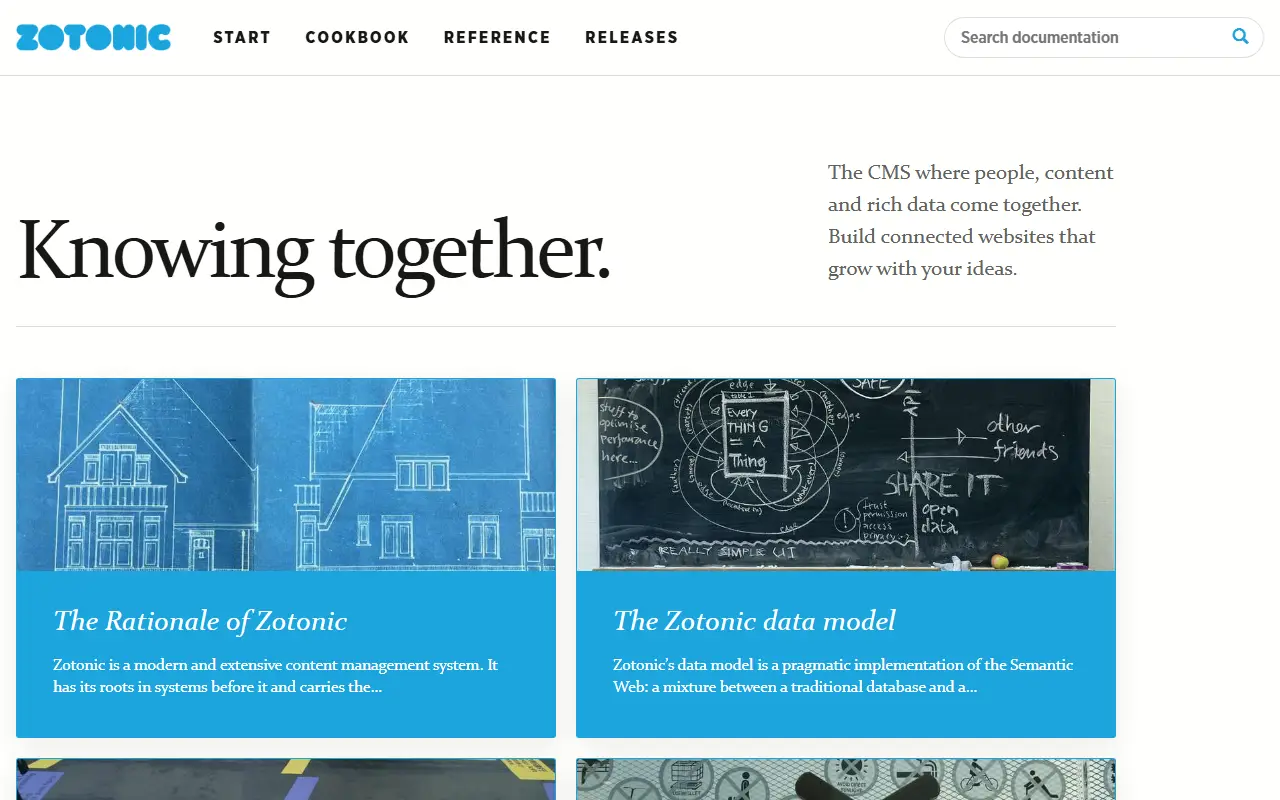
About Zotonic
Zotonic is an open-source web framework and content management system written in Erlang. It is designed for dynamic, interactive websites and mobile solutions, offering an administration backend for managing content alongside the flexibility developers need to build custom applications.
The project emphasizes speed and stability and says it suits anything from basic websites to complex distributed applications. Real-time behavior is a design goal rather than an add-on, and the system is extensible so that developers can adapt it to their needs. Official documentation, release notes and an installation chapter are available on zotonic.com.
You can install Zotonic by downloading it from the website or by starting a Docker or Podman image. It is released under the Apache 2.0 license, and security issues should be reported to the project by email rather than through the public tracker.
Key features
- Erlang-based high-speed web framework
- Content management backend
- Real-time capabilities
- Extensible architecture
- Docker and Podman images
- Documentation and release notes
Good fit for
- →Real-time interactive websites
- →Complex distributed web applications
- Built with
- Erlang
- Tags
- erlang
- cms
- web-framework
- real-time
- docker
- self-hosted
Zotonic: questions and answers
- What is Zotonic used for?
- Zotonic is an open-source web framework and CMS built with Erlang for fast, real-time websites and applications. It is a good fit for real-time interactive websites and complex distributed web applications.
- Is Zotonic open source?
- Yes. Zotonic is open source under the Apache-2.0 licence. Its source code is on GitHub at zotonic/zotonic and is written mainly in Erlang.
- Is Zotonic free?
- Yes. Zotonic is open source, so the software itself is free to use.
- Can I self-host Zotonic?
- Yes. Zotonic can be self-hosted on your own server or infrastructure.
- What are some alternatives to Zotonic?
- Similar open-source tools in the CMS category include Automad, ThriveX and Strapi. SaaS products in the same category include 1FoodMenu, ABHUB and Adobe Experience Manager.
- Is Zotonic actively maintained?
- Yes. The most recent commit to Zotonic was on 2 October 2026, and the latest release is 0.94.1, published on 1 September 2026. The project has 848 stars on GitHub.
Open-source alternatives to Zotonic
See all
Automad
CMS
A flat-file content management system and template engine
OSS★ 938
ThriveX
CMS
🎉 ThriveX 是一个年轻、高颜值、全开源、永不收费的现代化博客管理系统。它采用前后端分离开发模式,是一个 NextJS + Spring Boot 的产物
GPL-3.0vs Medium★ 839
Strapi
CMS
🚀 Strapi is the leading open-source headless CMS. It’s 100% JavaScript/TypeScript, fully
OSSvs Contentstack★ 73k
Payload
CMS
Payload is the open-source, fullstack Next.js framework, giving you instant backend superp
MITvs Contentstack★ 45k
Wagtail
CMS
A Django content management system focused on flexibility and user experience
BSD-3-Clausevs Sitecore★ 21k
Grav
CMS
Modern, Crazy Fast, Ridiculously Easy and Amazingly Powerful Flat-File CMS powered by PHP,
MITvs WordPress.com★ 16k
SaaS alternatives to Zotonic
See all
1FoodMenu
CMS
One-page website builder for restaurants and food trucks with menu, hours and contact info
SaaSABHUB
CMS
No-code website builder and content management system for small and mid-size wineries
SaaS
Adobe Experience Manager
CMS
Enterprise content management and digital asset management for websites and brand content
SaaS
Authorly
CMS
Author page builder where writers showcase books, share samples and connect with readers
SaaS
Awla
CMS
Link-in-bio profile for teachers to show classes, schedules and free materials and capture student leads
SaaS
BlogBowl
CMS
Open-source blog and newsletter management platform
SaaS