7,380 open-source and SaaS tools, with GitHub stats refreshed every day.

8 alternatives ranked by real activity

Open-source Roam Research alternatives

A curated, ranked list of the 8 best open-source alternatives to Roam Research.

The best open-source alternative to Roam Research is Logseq. If that doesn't suit you, other good options are Foam, Neuron, Inkstone and Tangent.

Roam Research alternatives are mainly note-taking tools. 5 of them shipped code in the last 30 days, 8 can be self-hosted, and 3 use a permissive licence.

Last updated October 2, 2026 · ranked by GitHub stars, growth and recent commits

Logseq

A privacy-first, local-first knowledge management app built around linked, outliner-style notes in Markdown or Org-mode, with a graph view and plugin support.

GitHub stars
45k
Last commit
today
Latest release
2.0.1
Licence
AGPL-3.0
Self-hosted
Yes
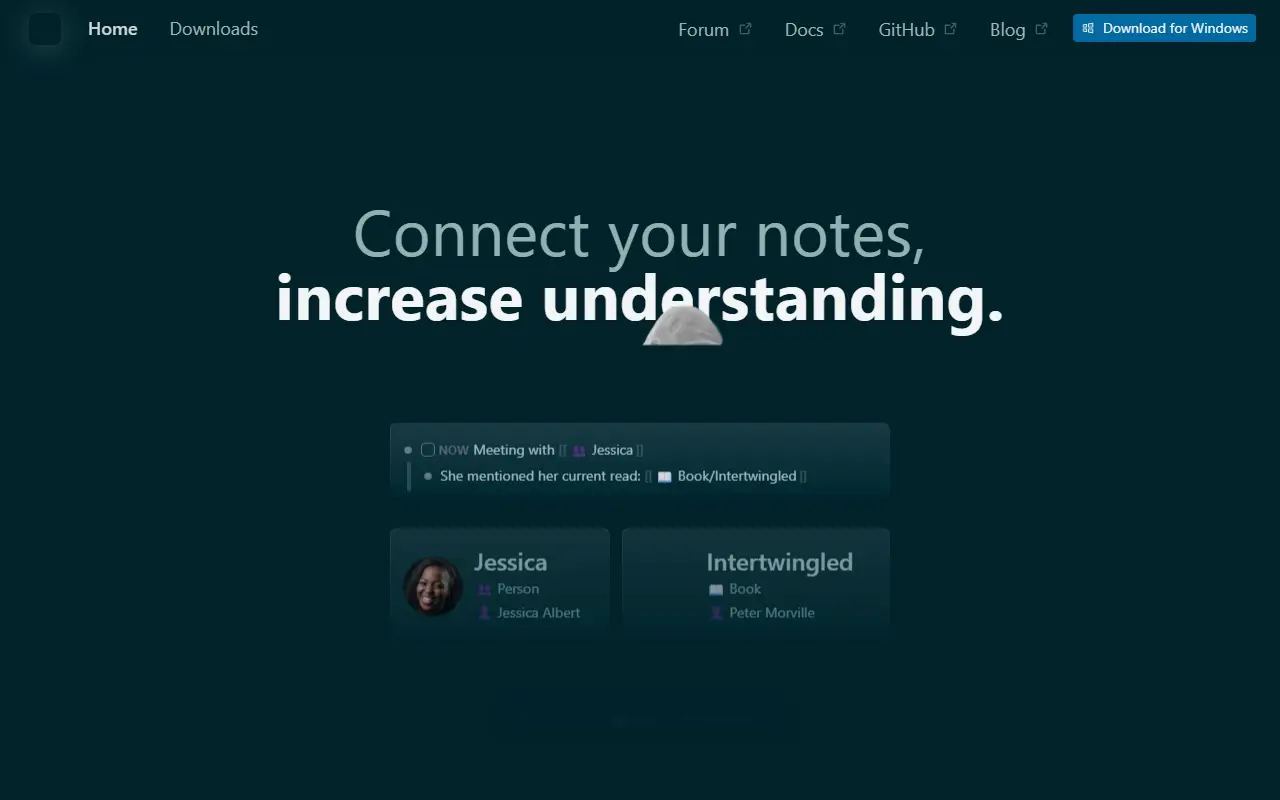
logseq.comLogseq homepage screenshot

Logseq is an open-source platform for knowledge management and collaboration that puts privacy and local storage first. Notes are organized as linked blocks in an outliner, forming a knowledge graph, and topics show it works with both Markdown and Org-mode files and can be backed by Git.

The project is moving toward a database-backed version that introduces DB graphs. That version is in beta, comes with a new iOS mobile app in alpha and a Real Time Collaboration approach to syncing graphs across devices or working with others, also in alpha. Because data loss is possible while these features mature, the maintainers recommend automated backups. A plugin API, themes and a public roadmap round out the ecosystem.

Logseq is written in Clojure and ClojureScript under the AGPL-3.0 license, and desktop builds are available from the releases page. It appeals to researchers, students and knowledge workers who want a personal wiki with bidirectional links and full ownership of their files.

Key features

  • Outliner-style linked notes
  • Markdown and Org-mode support
  • Knowledge graph of connected pages
  • Local-first storage with Git compatibility
  • Plugin API and themes
  • Real Time Collaboration sync in alpha

Pricing: Free and open source under the AGPL-3.0 license.

Read more about LogseqWebsite GitHub

Foam

A notes and knowledge-sharing system that lives in VS Code and GitHub, with wikilinks, a link graph and optional web publishing.

GitHub stars
17k
Last commit
2 days ago
Latest release
vscode@0.46.0
Self-hosted
Yes
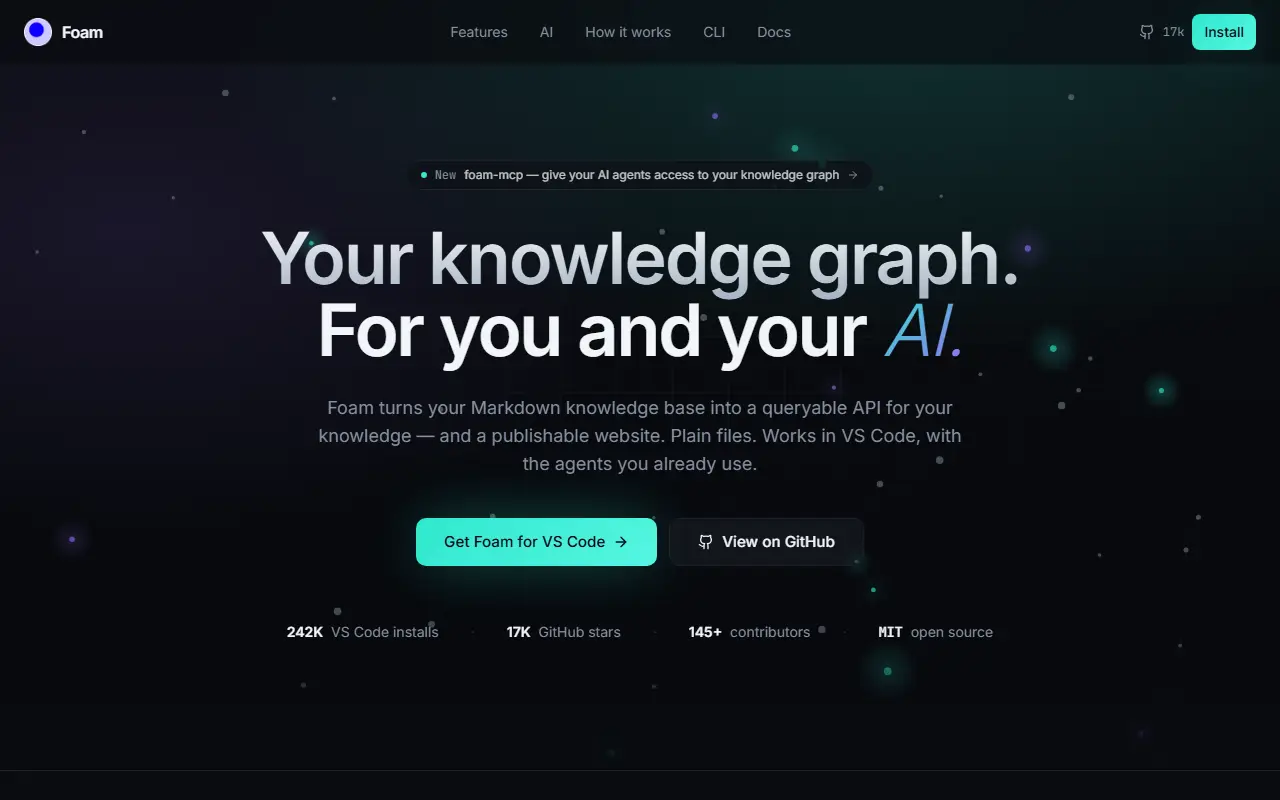
foam.mdFoam homepage screenshot

Foam is a personal knowledge management system that lives inside Visual Studio Code and GitHub. It is intended for organizing research, keeping notes you can rediscover, writing long-form content and, if you want, publishing it to the web. The notes are plain Markdown files you own, so you can share and collaborate on them with anyone.

Its features center on linking notes together. A graph visualization shows how notes connect, link autocompletion helps create connections and placeholders, and links are updated automatically when a file is renamed. Foam supports files with the same name in different folders by using the shortest identifier needed, and it helps find and fix ambiguous wikilinks. Link preview, go to definition and peek references let you see where a note is mentioned. Topics include Zettelkasten and PKM workflows.

Foam is a free, open-source VS Code extension written in TypeScript, and its license is listed as 'Other' on GitHub. It requires VS Code, so it suits developers and technical writers already comfortable in that editor who want a notes workflow built on files and Git instead of a separate app.

Key features

  • Graph visualization of linked notes
  • Autocompletion for wikilinks and placeholders
  • Automatic link updates on file rename
  • Link preview and peek references
  • Markdown files in a Git repository
  • Optional publishing to the web
Read more about FoamWebsite GitHub

Neuron

A Haskell app for plain-text Zettelkasten notes that also builds a static website, since superseded by its successor Emanote.

GitHub stars
1.6k
Last commit
4 days ago
Latest release
1.9.35.0
Licence
AGPL-3.0
Self-hosted
Yes
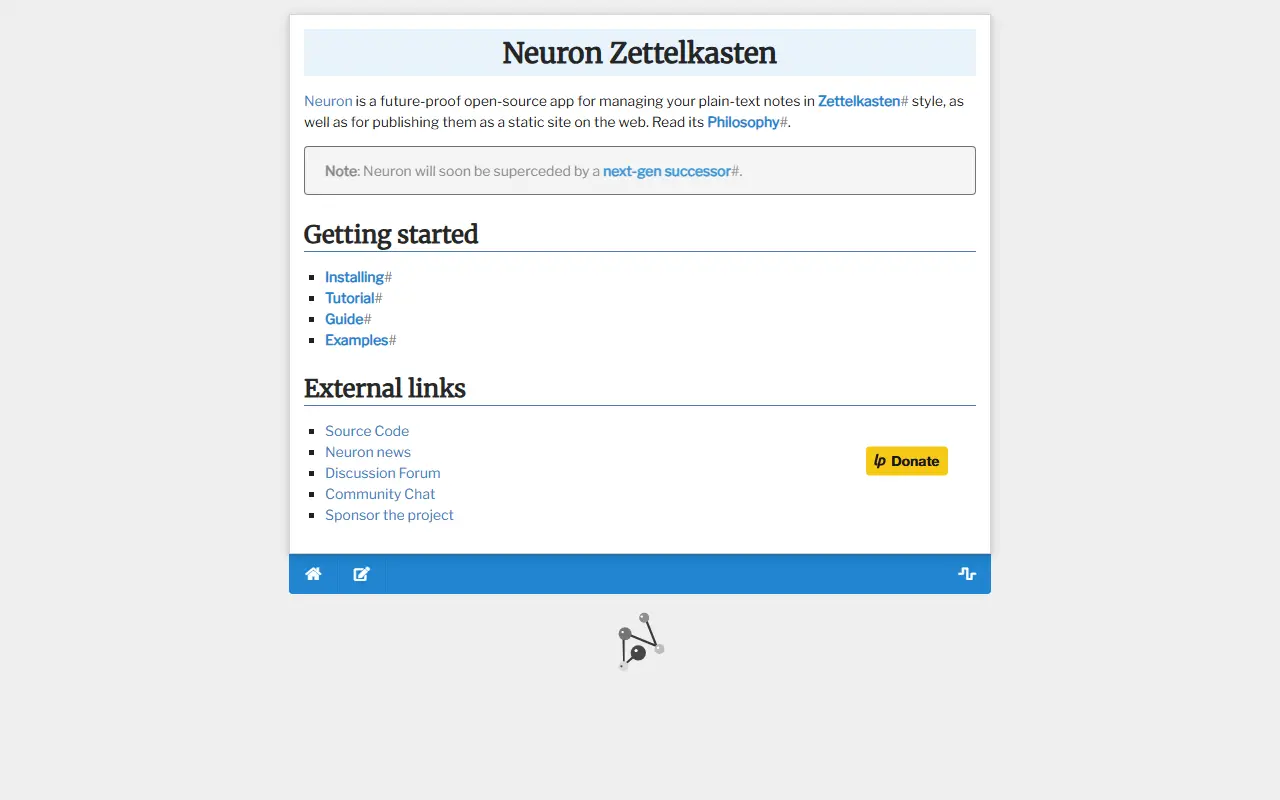
neuron.zettel.pageNeuron homepage screenshot

Neuron is a note-taking and publishing tool built around the Zettelkasten method. You keep a directory of Markdown files, connect them with a flexible linking syntax and hierarchical tags, and neuron can generate a static website from them, so private notes and a public digital garden can come from the same source files.

It is designed to be simple to use, with optional integrations for editors such as Emacs, Vim and VS Code. There is a template repository for publishing a neuron site with GitHub Pages, and the documentation site explains installation and philosophy. Neuron is written in Haskell and licensed under AGPL-3.0.

The README states that neuron is being superseded by Emanote, a successor project by the same author, and directs new users there. Neuron still works as a local tool run on your own machine, with discussion on GitHub and Matrix. It is mainly relevant to people who already maintain notes in neuron or who are interested in plain-text, link-based knowledge management.

Key features

  • Directory of Markdown files as notes
  • Zettelkasten-style linking syntax
  • Hierarchical tagging
  • Generated static website
  • Optional editor integrations
  • Template for GitHub Pages publishing

Pricing: Free and open source under the AGPL-3.0 licence.

Read more about NeuronWebsite GitHub

Inkstone

Inkstone is a self-hosted Markdown notebook that runs on Cloudflare Workers, with wikilinks, backlinks, offline editing, sync, search and MCP access.

GitHub stars
1.1k
Last commit
6 days ago
Latest release
v0.8.0
Self-hosted
Yes

Inkstone is a browser-based Markdown notebook for writing, organizing, syncing and backing up personal knowledge, and it runs entirely on Cloudflare Workers. Notes are always plain Markdown, and the deployer keeps control of the database, attachments and runtime, making it a complete self-hosted application. New accounts get two starter notes in Chinese and English.

Writing features include a CodeMirror 6 editor, live preview, split layouts, focus and typewriter modes, autosave and version history. Markdown support covers GFM tables, footnotes, wikilinks, embeds, callouts, math, Mermaid diagrams and front matter. Notes can be organized in nested folders with tags, favorites, archive and trash, with backlinks, block references and a relationship graph, and search uses D1 full-text search with optional semantic search powered by Workers AI. A private remote MCP server with OAuth 2.1 and PKCE is included, along with offline editing, multi-device sync, sharing and WebDAV backups.

Inkstone is built with TypeScript, React, Hono and Cloudflare services such as D1, R2, KV and Durable Objects. The README names the licence as LGPL-3.0-only, while repository metadata lists it as other, and a browser-only demo is available. It suits people who already use Cloudflare and want a private note system they own.

Key features

  • Plain Markdown notes with live preview
  • Wikilinks, backlinks, and relationship graph
  • Full-text and optional semantic search
  • Offline editing and multi-device sync
  • Private MCP server with OAuth 2.1
  • WebDAV and off-site backups
Read more about InkstoneWebsite GitHub

Tangent

Tangent is a local note-taking and personal knowledge management app with wiki links, a map of your navigation history and a custom query language.

GitHub stars
561
Last commit
3 days ago
Licence
Apache-2.0
Self-hosted
Yes
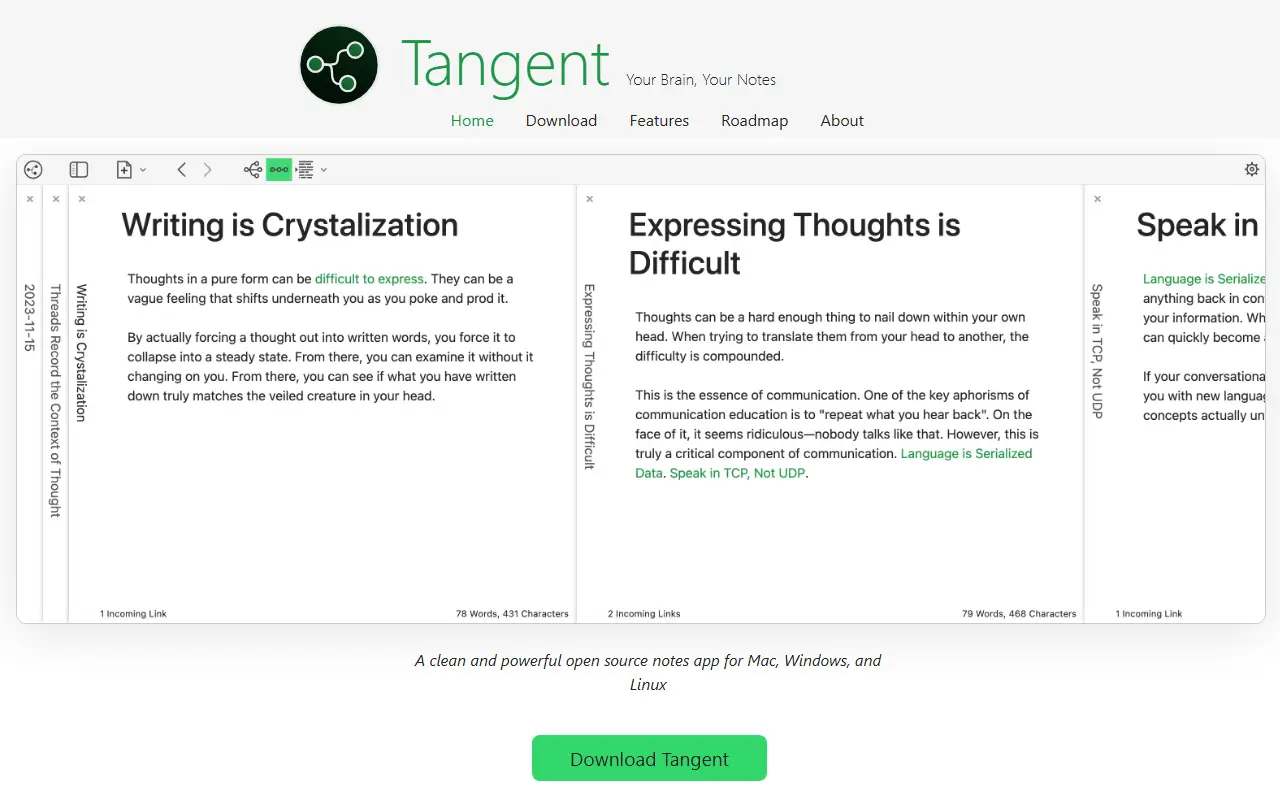
tangentnotes.comTangent homepage screenshot

Tangent is a local note writing and personal knowledge management tool, heavily inspired by Obsidian but developed in its own direction. It uses [[Wiki Links]] and a slightly customized Markdown syntax, and notes are styled as you write, with Markdown syntax hidden and revealed as needed.

Other key features include a two-dimensional connected map of your navigation and linking history, a sliding panel interface inspired by Andy Matuschak's notes, a writing focus mode that highlights the current paragraph, line or sentence, note views that show collections as cards or an infinite feed, and a custom query language with autocomplete for complex searches. Notes can embed images, link previews, PDFs, audio and video, including YouTube links. Pre-built binaries are available from the downloads page and Flathub.

This monorepo holds the Electron-based Tangent application, the source of tangentnotes.com, a test workspace generator, an HTML-to-Markdown parser and the query language parser. Tangent is written in TypeScript and licensed under Apache-2.0.

Key features

  • Wiki links with live-styled Markdown
  • Map of navigation and linking history
  • Sliding panel interface
  • Writing focus mode
  • Custom query language with autocomplete
  • Embedded media and link previews

Pricing: Source is Apache-2.0 licensed; see tangentnotes.com for download and distribution details.

Read more about TangentWebsite GitHub

Notabase

Open-source networked note-taking app with bidirectional links, a graph view and block references, available as a hosted service or self-hosted.

GitHub stars
913
Last commit
2 mo ago
Licence
AGPL-3.0
Self-hosted
Yes
Hosted version
Available
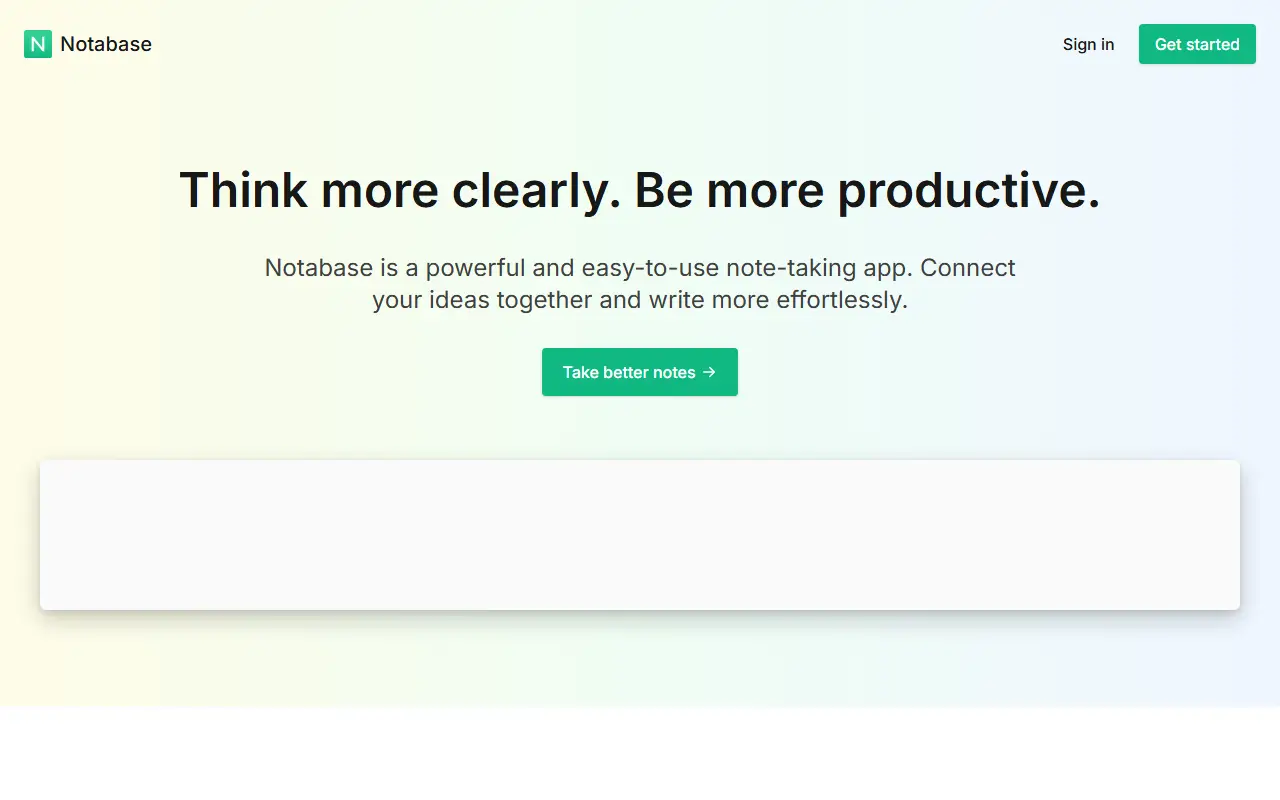
notabase.ioNotabase homepage screenshot

Notabase is a personal knowledge base built for networked thinking. Notes link to one another, so you can move through them like web pages and notice connections you would not have found by filing them in folders. The README describes it as a personal Wikipedia you can edit and browse, and says it draws inspiration from Notion, Obsidian, Typora and Roam Research.

The editor is WYSIWYG with Markdown support. Linked and unlinked references show which other notes mention the one you are viewing, and block references embed a passage from another note that updates when the original changes. Notes can be organized with links, tags and nesting, browsed with page stacking, explored in a graph view and found through full-text search. It installs as a progressive web app for faster loading and offline viewing, and notes sync to the cloud across devices.

You can import or export your notes at any time. Notabase is written in TypeScript and licensed under AGPL-3.0. The project is focused on its hosted experience, but the README says self-hosting or running it locally is possible. It is funded by sponsors and developed in the open.

Key features

  • Linked and unlinked note references
  • Block references that update automatically
  • Graph view of your knowledge network
  • WYSIWYG editor with Markdown support
  • Page stacking for browsing notes
  • Full-text search across notes
  • Installable PWA with offline viewing
  • Import and export of notes

Pricing: The Basic plan is free with a 10-note limit. Pro shows $6.67 per month when billed annually at $80 and adds unlimited notes and web publishing.

Read more about NotabaseWebsite GitHub

Archivy

Archivy is a free, MIT-licensed, self-hostable Python knowledge base and wiki with bidirectional links, bookmark archiving and full-text search via Elasticsearch.

GitHub stars
3.3k
Last commit
3 yr ago
Latest release
v1.7.4
Licence
MIT
Self-hosted
Yes
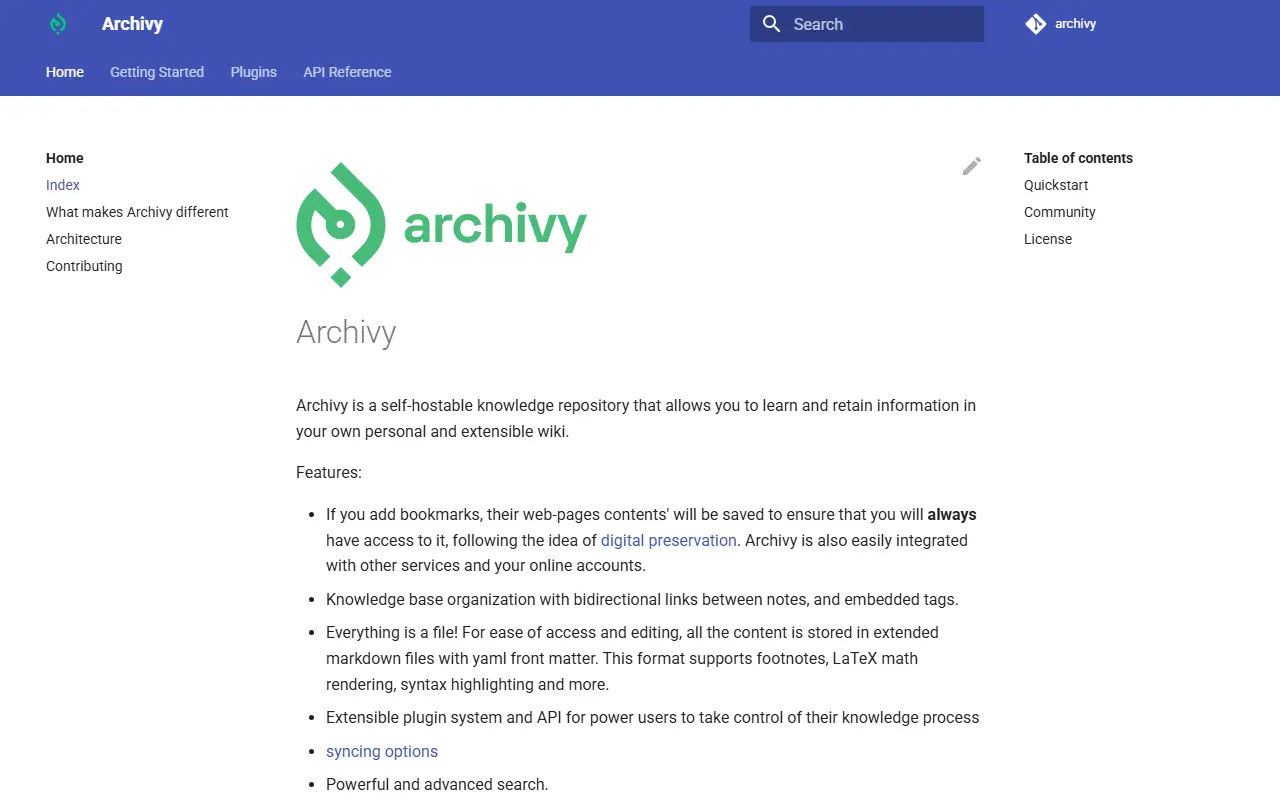
archivy.github.ioArchivy homepage screenshot

Archivy is a self-hostable knowledge repository meant to help individuals learn and retain information in their own personal, extensible wiki. It is aimed at people building a 'digital brain' or personal knowledge base who want full control over their data rather than relying on a cloud note service.

Bookmarked web pages have their content saved for digital preservation, and notes support bidirectional links and embedded tags for organizing the knowledge base. Everything is stored as extended markdown files with YAML front matter, which supports footnotes, LaTeX math, syntax highlighting and other markdown extensions, and content can be searched with the help of Elasticsearch. An extensible plugin system and API let power users customize their workflow, and sync options and image upload are also supported.

Archivy is installed with pip or Docker, after which an init command and a CLI-created user account get it running locally on port 5000. It is written in Python and released under the MIT license. The roadmap mentions annotations and a multi-user permission system as upcoming features.

Key features

  • Bidirectional links between notes
  • Bookmark content preservation
  • Markdown files with YAML front matter
  • Elasticsearch-powered full-text search
  • Extensible plugin system and API
  • Image upload support

Pricing: Free and open source under the MIT license.

Read more about ArchivyWebsite GitHub

TiddlyRoam

TiddlyRoam is an open-source personal wiki built on TiddlyWiki with bi-directional links and graph maps, offered as an alternative to Roam Research.

GitHub stars
614
Last commit
2 yr ago
Latest release
v1.1
Licence
BSD-2-Clause
Self-hosted
Yes
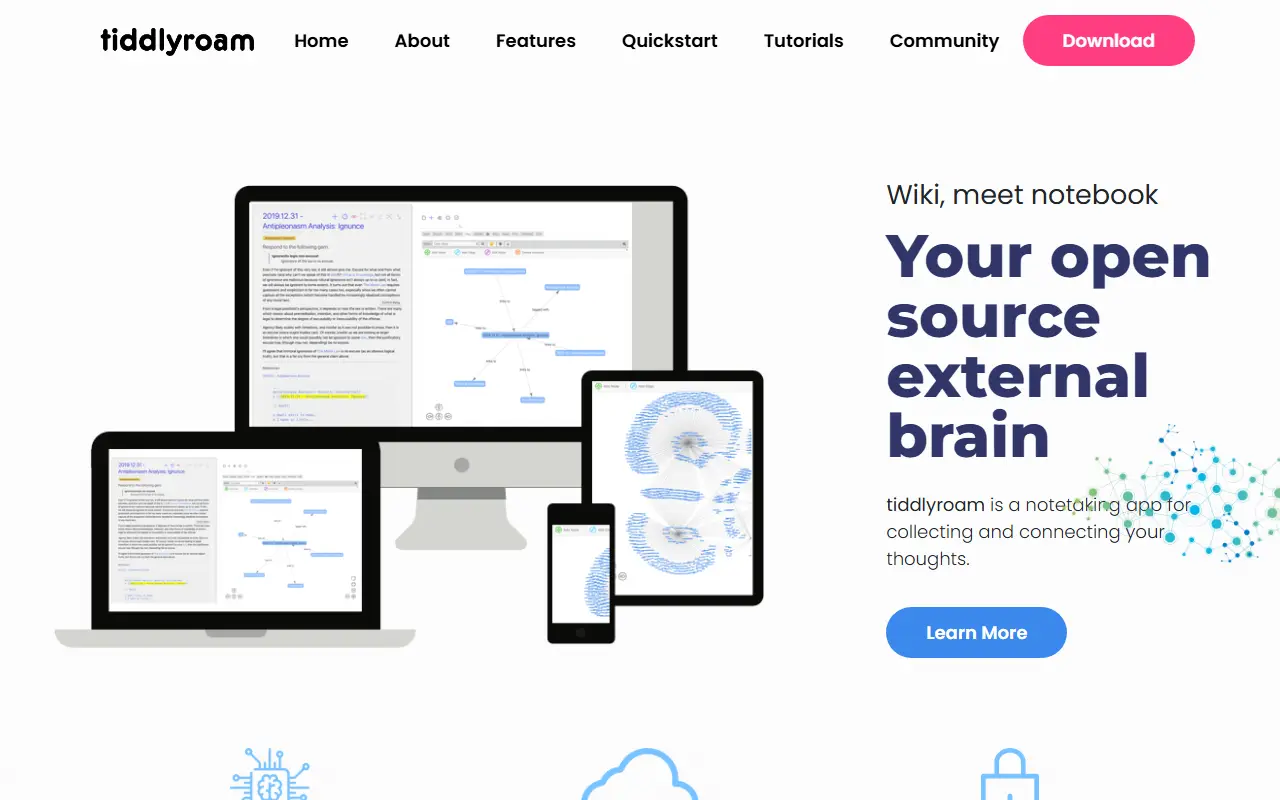
tiddlyroam.orgTiddlyRoam homepage screenshot

TiddlyRoam is a tool for organizing thoughts, ideas and research as a personal wiki made of small, interconnected notes. It is built on TiddlyWiki and positioned as a free, open-source alternative to Roam Research, helping you discover patterns in your knowledge through bi-directional links.

Two key features are bi-directional links, which show both the pages you link to and the pages that link back to the current one, and interactive graph maps that visualize the structure of your wiki. The whole app is distributed as a single HTML file, tiddlyroam.html, which you open in TiddlyDesktop so that changes can be saved easily.

It is licensed under BSD-2-Clause and designed so that no technical skills are required to start. Developers can customize it using a modular Node.js workflow with a local development server and a build step that produces the single distributable file. It suits individuals building a personal knowledge base that stays on their own machine.

Key features

  • Bi-directional links between notes
  • Interactive graph maps
  • Single HTML file distribution
  • Built on customizable TiddlyWiki
  • Works with TiddlyDesktop for saving

Pricing: Free and open source under the BSD-2-Clause license.

Read more about TiddlyRoamWebsite GitHub

Roam Research alternatives: questions

What is the best open-source alternative to Roam Research?
Logseq is the top-ranked open-source alternative to Roam Research on Enlisted: A privacy-first, local-first knowledge management app built around linked, outliner-style notes in Markdown or Org-mode, with a graph view and plugin support. Other strong options are Foam, Neuron, Inkstone and Tangent.
Are these Roam Research alternatives free?
All 8 are open source, so the code is free to use under its licence, and all of them can be self-hosted on your own server or computer. 1 also offers a paid or managed cloud version if you'd rather not host it yourself.
How is this list of Roam Research alternatives ranked?
By a score built from GitHub stars, star growth over the last 30 days and how recently the code changed. 5 of these projects shipped code in the last 30 days. Data is refreshed daily, and nobody can pay to move up.

People also look for alternatives to…

View all