#1
Open-source continuous file synchronization that keeps folders in step between two or more computers, with a focus on safety, security and ease of use.
- GitHub stars
- 90k
- Last commit
- 3 days ago
- Latest release
- v2.1.7
- Licence
- MPL-2.0
- Self-hosted
- Yes
syncthing.net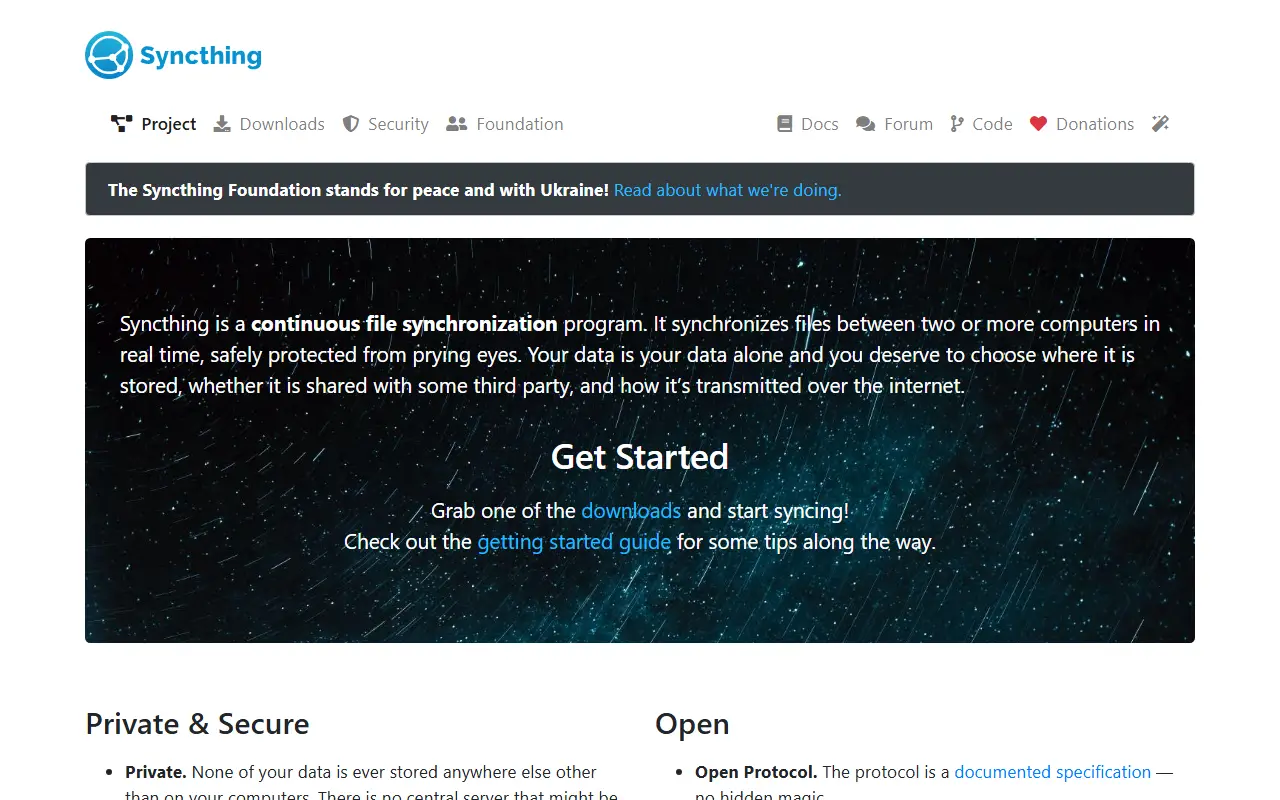
Syncthing is a continuous file synchronization program that keeps files in sync between two or more computers. It is written in Go and released under the MPL-2.0 license, and its peer-to-peer design means your devices exchange files with each other directly rather than through a central storage service.
The project ranks its goals in order of importance: protect users from data loss, stay secure against eavesdropping and tampering, be easy to use, work automatically with minimal interaction, run on every common computer, and focus on empowering individuals. Several graphical front ends exist for Windows, Mac and Linux, and the repository includes sample files for running it as a background service.
Syncthing can also be run in Docker, and a getting-started guide covers setup. It suits individuals and small groups who want to sync folders between laptops, desktops and servers they control instead of relying on a hosted file-sharing service, and who value open, auditable software.
Key features
- Continuous file synchronization between computers
- Peer-to-peer device connections
- Safety and security as top-ranked goals
- Graphical interfaces for Windows, Mac and Linux
- Docker deployment support
- Automatic operation with minimal user interaction
Pricing: Free and open source under the MPL-2.0 license.
#2
A command-line program, described as rsync for cloud storage, that syncs files between local disks and dozens of cloud storage providers.
- GitHub stars
- 61k
- Last commit
- yesterday
- Latest release
- v1.76.0
- Licence
- MIT
rclone.org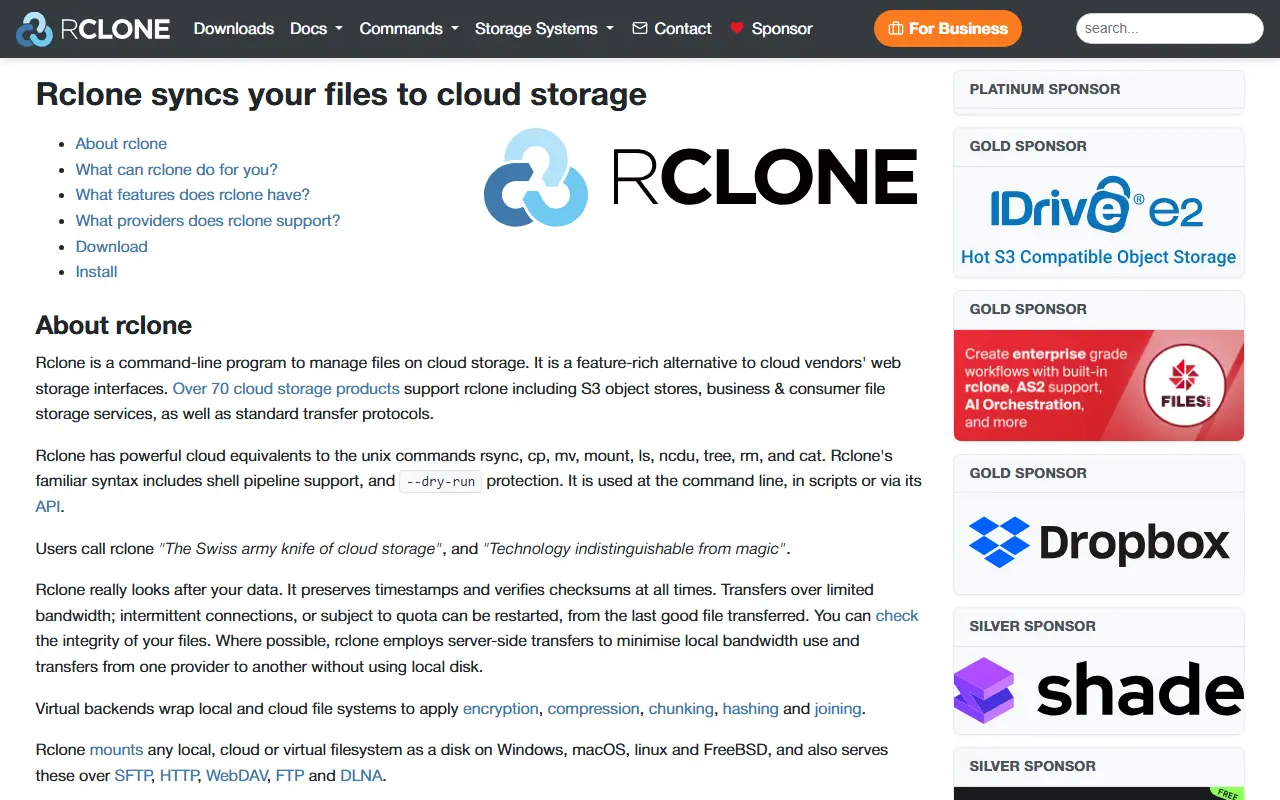
Rclone, which its authors call rsync for cloud storage, works from the command line to keep files and folders in step with many different cloud storage providers. It is written in Go and released under the MIT license.
The list of supported backends is long and includes Amazon S3, Google Drive, Dropbox, Backblaze B2, Box, Cloudflare R2, Google Cloud Storage and Azure storage, as well as protocols such as FTP, SFTP, HTTP and WebDAV. Its topics also point to encryption and FUSE filesystem mounting, so remote storage can be encrypted or accessed much like a local drive.
Because everything runs from the command line, rclone fits scripted backups, migrations between providers and scheduled syncs. Documentation, a downloads page and a community forum are linked from the README. It suits system administrators, developers and home users who work with more than one cloud storage account.
Key features
- Syncs files between local disks and cloud storage
- Supports dozens of storage providers
- Works with S3, Google Drive, Dropbox and Backblaze B2
- Supports SFTP, FTP, HTTP and WebDAV
- Encryption of remote data
- FUSE mounting of remote storage
Pricing: Free and open source under the MIT license.
#3
A cross-platform, community-driven password manager that stores credentials and notes in an encrypted offline database file, compatible with KeePass.
- GitHub stars
- 30k
- Last commit
- today
- Latest release
- 2.8.0
- Self-hosted
- Yes
keepassxc.org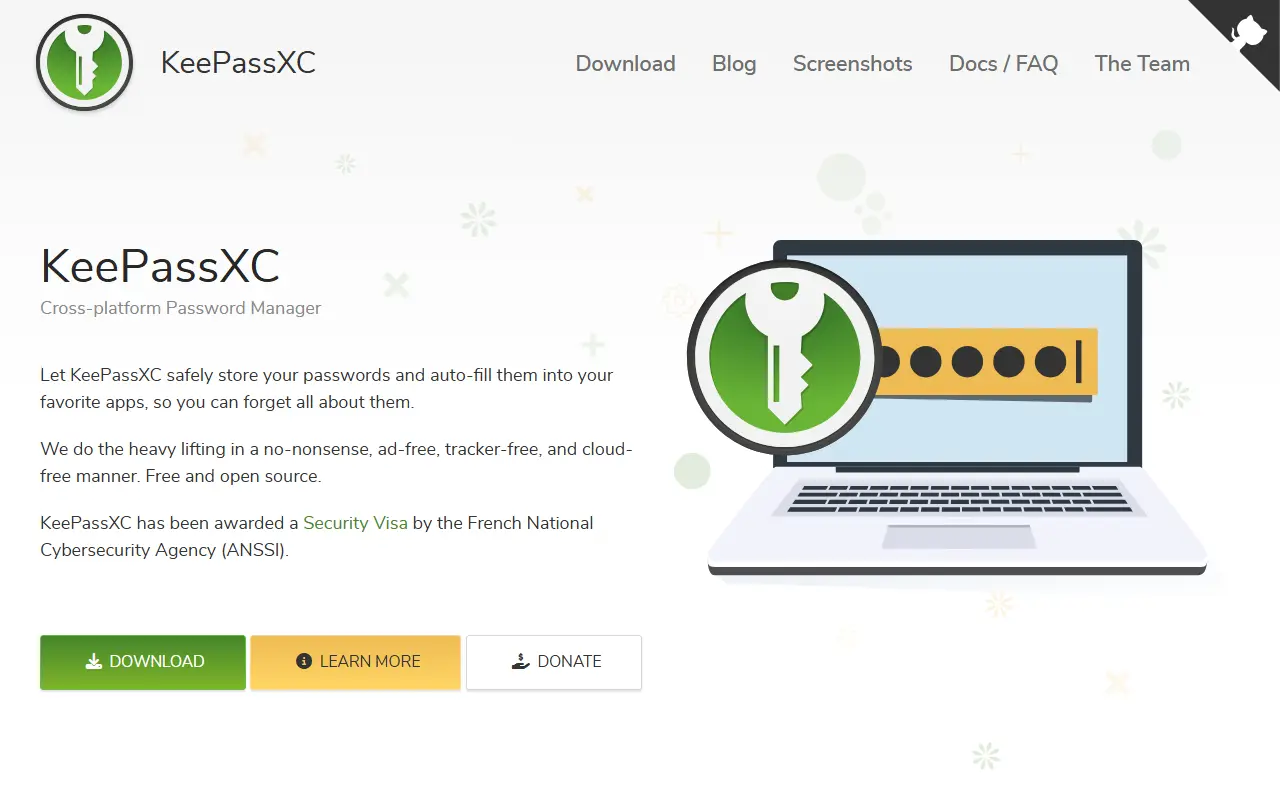
KeePassXC is a modern, open-source password manager for Windows, macOS and Linux. It began as a community port of the Windows program KeePass Password Safe and is aimed at people with demanding requirements for managing sensitive personal data securely.
It stores usernames, passwords, URLs, attachments and notes in an encrypted file that works offline and can live anywhere, including private or public cloud storage that you sync yourself. Entries have custom titles and icons and are sorted into customizable groups, and a search function supports advanced patterns. A built-in password generator can create strings with any mix of characters or easy-to-remember passphrases, and topics mention YubiKey support.
The app is written in C++ and has a quick-start guide plus pre-compiled binaries on the downloads page. Its license is listed as 'Other' on GitHub, so confirm the terms for your use. Because there is no vendor account or server, it is a good fit for users who want local control of their password database instead of a hosted password service.
Key features
- Encrypted offline password database
- Windows, macOS and Linux apps
- Groups, custom icons and attachments
- Advanced search patterns
- Password and passphrase generator
- Hardware key support with YubiKey

A self-hosted file sync, sharing and collaboration platform that stores files, contacts and calendars on a server you choose, extensible with hundreds of apps.
- GitHub stars
- 37k
- Last commit
- yesterday
- Latest release
- v33.0.11
- Licence
- AGPL-3.0
- Self-hosted
- Yes
- Hosted version
- Available
nextcloud.com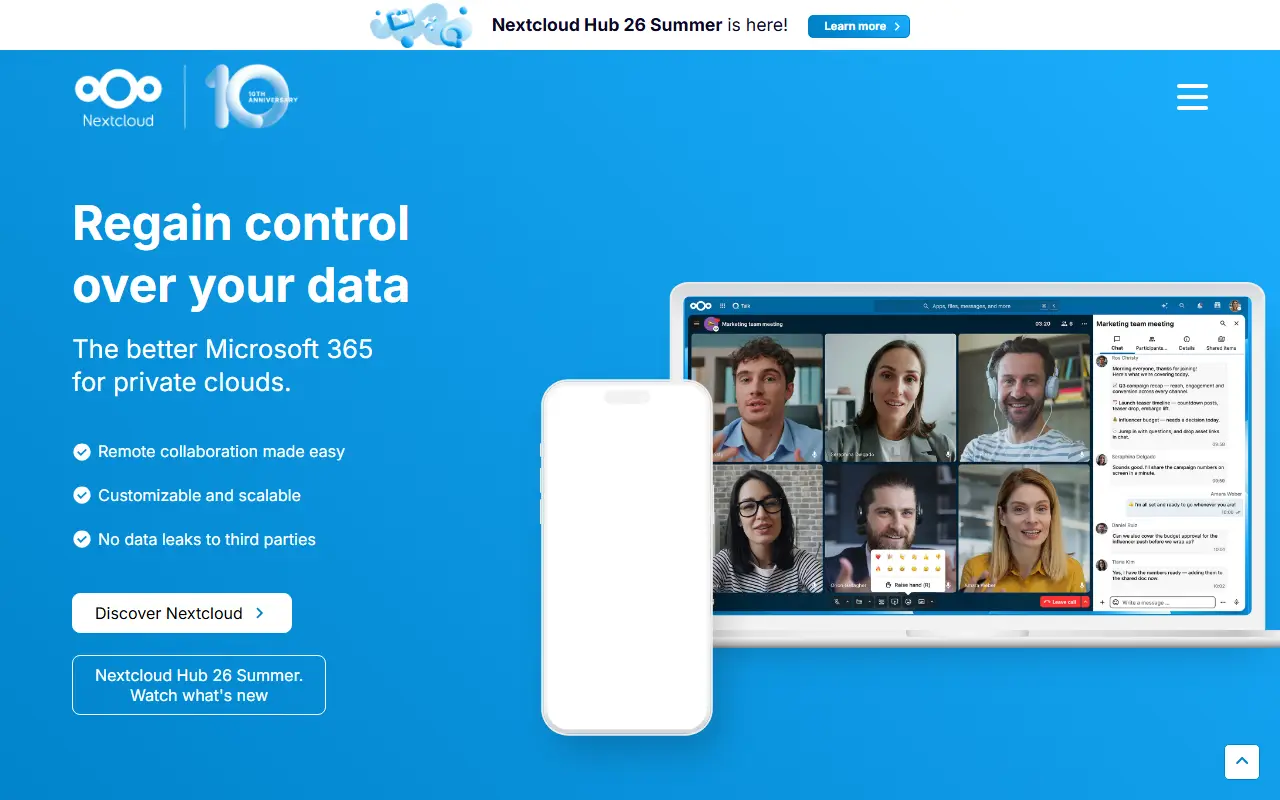
Nextcloud Server is a platform for keeping your files, contacts, calendars and other data on a server of your choosing. Content is synchronized across your devices, can be shared with other people for viewing or collaboration, and stays under your control rather than with a large cloud provider. It grew out of the ownCloud lineage.
Functionality can be expanded through hundreds of apps in its App Store, including Calendar, Contacts, Mail and Video Chat. Security measures include encryption mechanisms, a public bug bounty program and two-factor authentication. There are several ways to get a Nextcloud: sign up with a provider, install the server yourself on your own hardware or with a ready-to-use appliance, buy a device that comes with it preinstalled, or find a service provider to host it for you.
The server is written in PHP and JavaScript under the AGPL-3.0 license. Nextcloud GmbH also offers an Enterprise edition aimed at public sector, education and company users. It suits households, schools and organizations that want to replace commercial cloud storage and office suites with something they run themselves.
Key features
- File storage and sync across devices
- Contacts and calendar hosting
- Sharing and collaboration controls
- App Store with hundreds of apps
- Two-factor authentication and encryption
- Self-install, appliance or provider-hosted options
Pricing: Nextcloud Enterprise Standard starts at 42€ per user per year, with subscriptions from 100 users and 31.50€ from 250 users. Nextcloud One managed hosting is offered for smaller teams.
#5
Open-source disk encryption software derived from TrueCrypt 7.1a, adding security improvements for encrypted volumes and partitions.
- GitHub stars
- 12k
- Last commit
- 3 days ago
- Latest release
- VeraCrypt_1.26.31
veracrypt.jp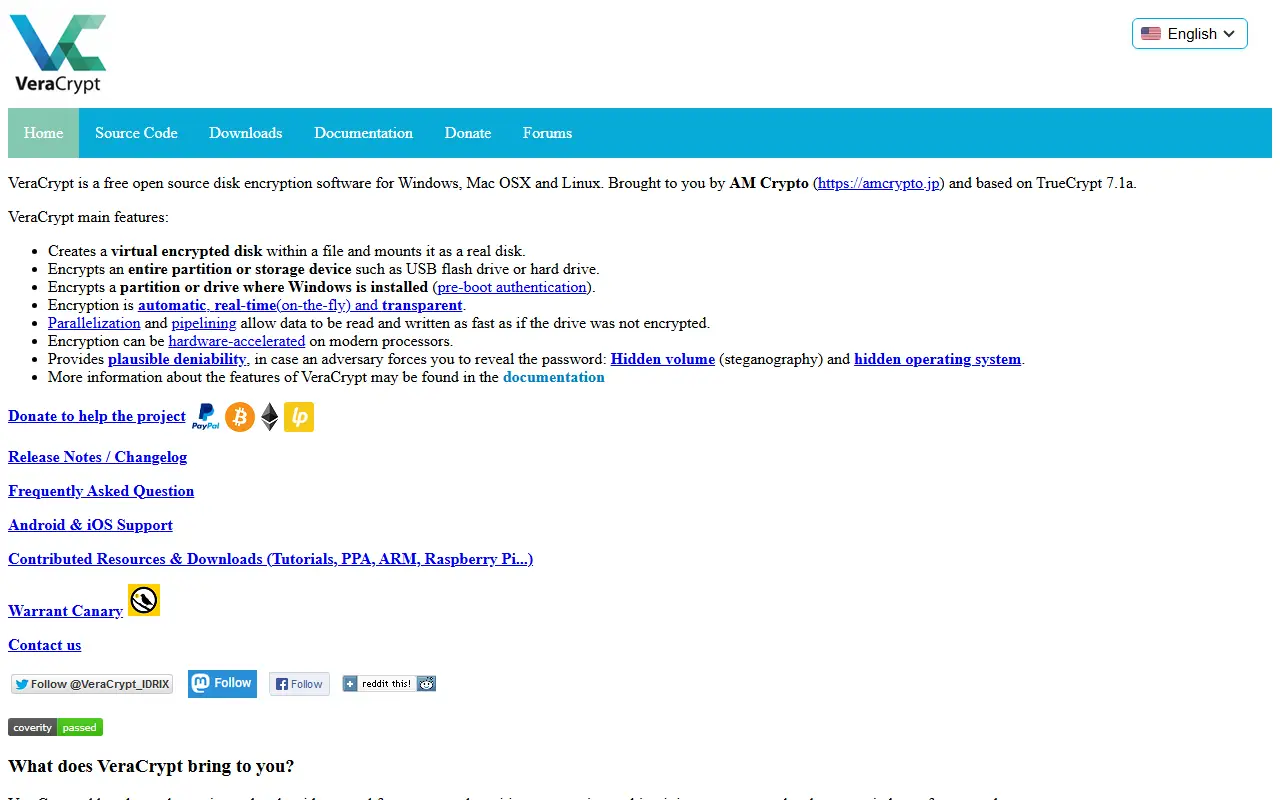
VeraCrypt is disk encryption software based on the original TrueCrypt 7.1a, extended with security enhancements and other modifications. It is used to protect data on drives and in encrypted containers so that files remain unreadable without the correct credentials.
The repository holds the source code, with build instructions for Windows, Linux and macOS, and FreeBSD and OpenBSD. On Windows the driver must be digitally signed, so official binaries are signed with the certificate of IDRIX, the developer, which is why self-built binaries differ slightly in size. Documentation covers building, contributing and legal information for third-party developers.
The source may be used only under the terms of the License.txt file in the archive, which includes a rule that derived works must not be called TrueCrypt or VeraCrypt. The project is written mainly in C and has its own website and download pages. It is free to use, but the custom licensing means it is not a standard SPDX-listed open-source license.
Key features
- Disk and volume encryption
- Based on TrueCrypt 7.1a with security fixes
- Builds for Windows, Linux, macOS and BSD
- Digitally signed Windows drivers
- Documentation for building from source
Pricing: Free to use; source code is available under the terms in License.txt.
#6
A self-hosted file management and sharing system that stores files across local disks and many cloud storage providers, with WebDAV, previews and share links.
- GitHub stars
- 29k
- Last commit
- 23 days ago
- Latest release
- 4.19.1
- Licence
- GPL-3.0
- Self-hosted
- Yes
cloudreve.org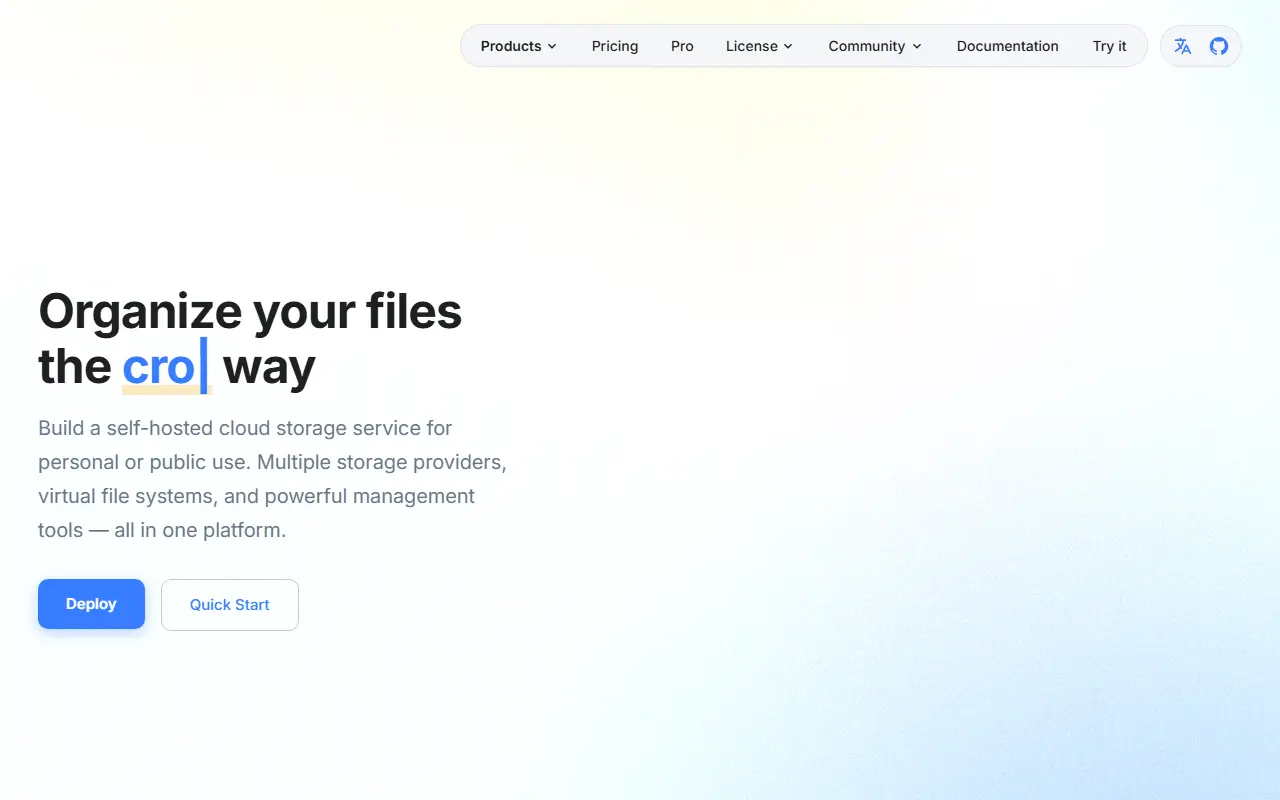
Cloudreve is a self-hosted file management and sharing system with support for multiple storage backends. You can keep files on local disk, on a remote node, or with providers including OneDrive, S3-compatible services and several Chinese clouds such as Aliyun, Tencent, Huawei and Qiniu, and clients transfer data directly to the provider.
Everyday file features include drag-and-drop upload of files and folders with parallel, resumable transfers, batch download, compressing and extracting archives, WebDAV access across all storage providers, and background downloads through Aria2 or qBittorrent using one or more download nodes. Media metadata can be extracted so files can be searched by metadata or tag. Multiple users and groups are supported, and share links for files and folders can carry an expiry date. Videos, images, audio and ePub files preview online, and text, Markdown, diagrams and Office documents can be edited.
Cloudreve is written in Go and licensed under GPL-3.0, with a project homepage, online demo, documentation and Telegram and Discord communities. It suits individuals and small organizations that want a private, Chinese-ecosystem-friendly alternative to commercial cloud drives.
Key features
- Multiple storage backends including S3 and OneDrive
- Direct client-to-provider transfers
- WebDAV access to storage
- Resumable parallel uploads
- Share links with expiry dates
- Online preview and editing of documents
- Multi-user and group management
Pricing: Free and open source under the GPL-3.0 license.
#7
Official Docker-based installer for Nextcloud that bundles the server, database, caching, backups and optional extras behind one admin interface.
- GitHub stars
- 11k
- Last commit
- 2 days ago
- Latest release
- v15.0.2
- Licence
- AGPL-3.0
- Self-hosted
- Yes
nextcloud.com
Nextcloud All-in-One, often shortened to AIO, is the official installation method for Nextcloud. It provides easy deployment and maintenance, packaging most of what an instance needs into a set of containers that are managed from a simple web interface.
The bundle includes Nextcloud itself, a high-performance backend for Files, Redis and APCu caching, PostgreSQL as the database, and optional components such as Nextcloud Office, Talk with its TURN server, a recording server, ClamAV antivirus, full-text search, a whiteboard, Imaginary for previews, and a backup solution based on BorgBackup. Updates, daily backups and restore from an archive are handled from the AIO interface.
It is designed to work behind existing reverse proxies, Cloudflare Tunnel or Tailscale. The project is written in PHP, licensed under AGPL-3.0, and runs on your own hardware with Docker. The maintainers are actively looking for contributors to help with development.
Key features
- One-container-set Nextcloud installation
- Web interface for installation and updates
- Daily backups and restore from archive
- Redis, APCu and PostgreSQL included
- Optional Office, Talk, ClamAV and search
- Works behind reverse proxies or Tailscale
Pricing: Enterprise support subscription for self-hosted Nextcloud: Standard starts at €42 per user per year with a 100-user minimum. Other enterprise tiers are quoted on request.
#8
Cryptomator is a free, open-source desktop app that adds client-side encryption to cloud storage through transparent encrypted vaults.
- GitHub stars
- 16k
- Last commit
- 2 days ago
- Latest release
- 1.19.6
- Licence
- GPL-3.0
- Self-hosted
- Yes
cryptomator.org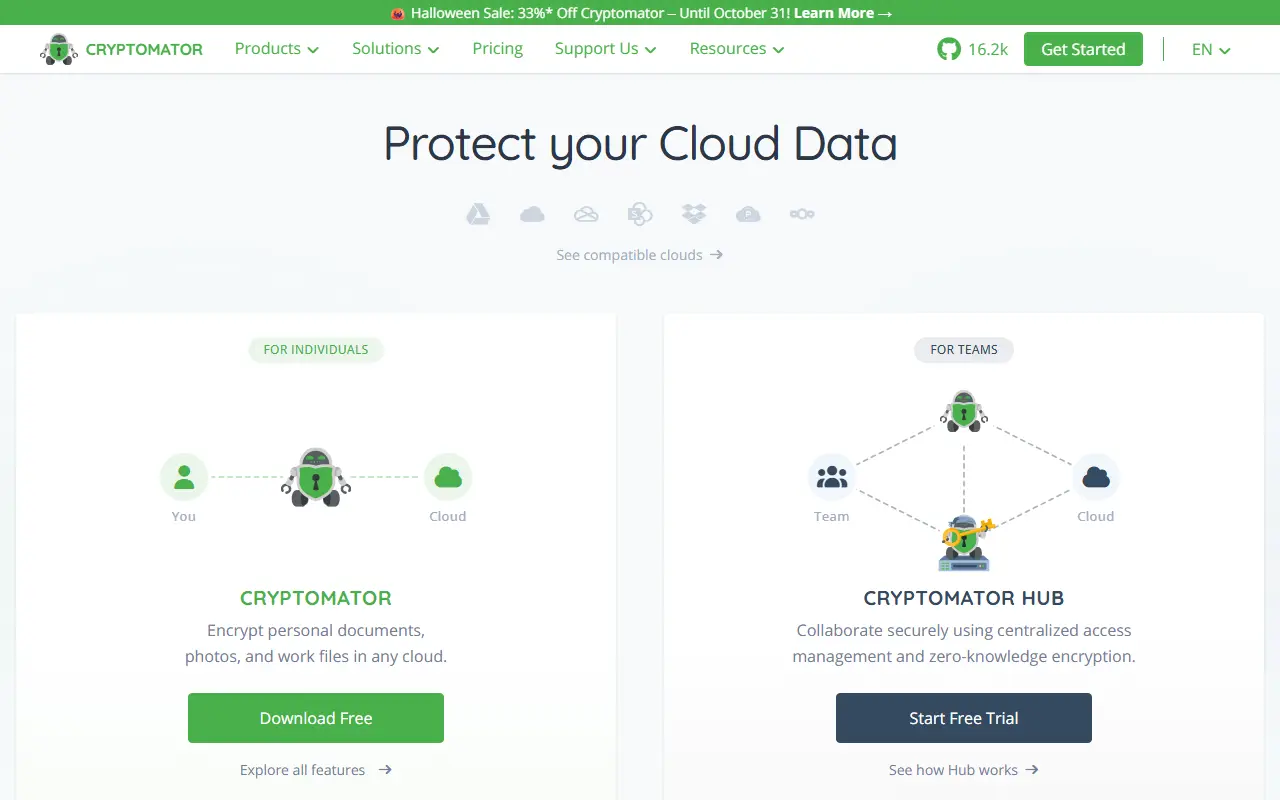
Cryptomator encrypts files on your own device before they reach a cloud storage service. It presents an encrypted vault as a virtual drive, so you work with files as if they were on a USB flash drive while only encrypted data is synced. It runs on Windows, macOS and Linux, is written in Java and is released under the GPL-3.0 license.
It works with any cloud service that synchronizes with a local directory, including Dropbox, Google Drive, OneDrive, MEGA, pCloud, ownCloud and Nextcloud. Files are protected with AES encryption using 256-bit keys, file names are encrypted, and the folder structure is obfuscated. You can keep as many vaults as you like, each with its own password.
The security design uses scrypt key derivation and cryptographically secure random numbers, and it wipes sensitive data from memory quickly. Encryption is client-side, so no account is needed and no data is shared with an online service. The project is provided free of charge and relies on donations and sponsors for development.
Key features
- Client-side AES-256 encryption for cloud files
- Transparent virtual drive for each vault
- Encrypted file names and obfuscated folders
- Works with Dropbox, Google Drive, OneDrive and more
- Multiple vaults with separate passwords
- Scrypt key derivation
Pricing: The desktop app is free for personal use, with optional one-time mobile upgrades from 29.99 euros. Cryptomator Hub has a free self-hosted Community tier, a Standard per-seat tier with a 30-day trial, and Enterprise from 10,000 euros a year.
#9
A file sync and sharing platform with desktop and mobile clients that also lets teams organize files with extensible properties and flexible views.
- GitHub stars
- 15k
- Last commit
- 2 days ago
- Latest release
- v9.0.5
- Self-hosted
- Yes
- Hosted version
- Available
seafile.com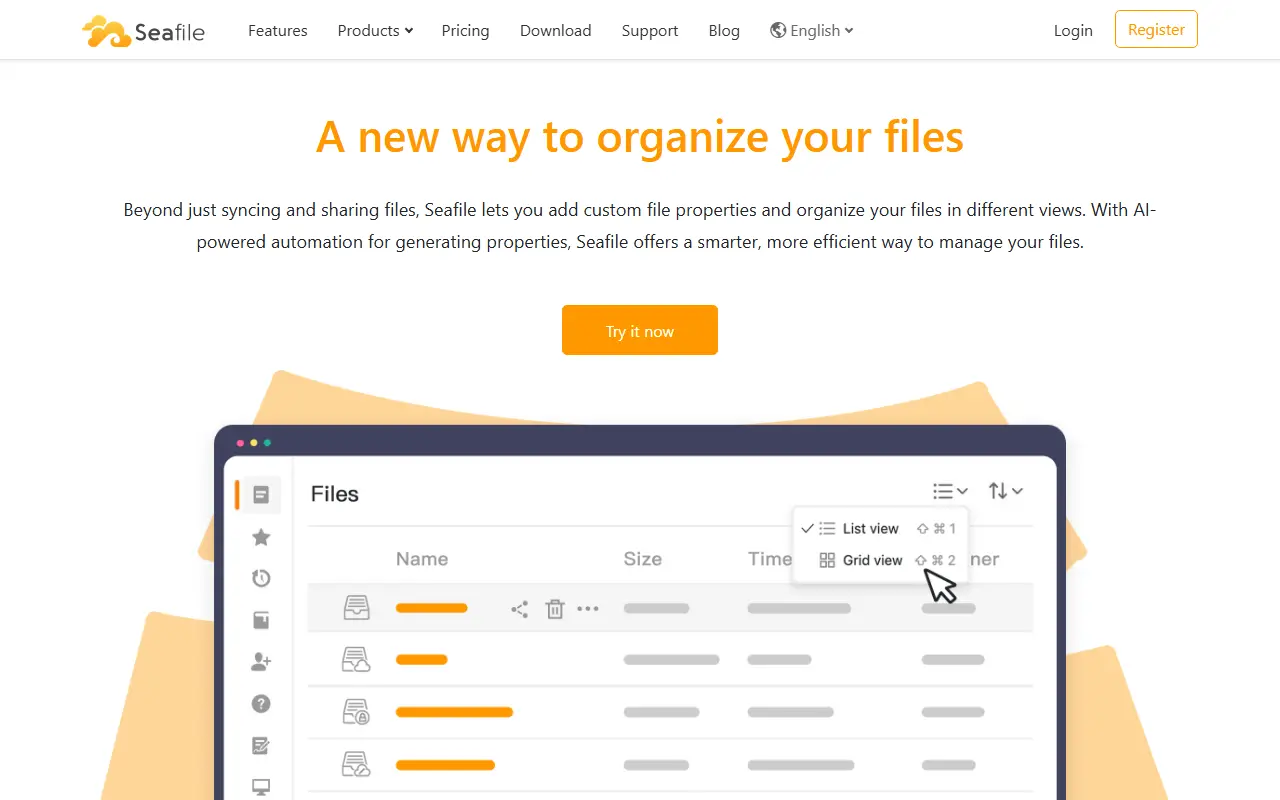
Seafile is a file synchronization and sharing platform written mainly in C. Beyond keeping folders in sync across devices and sharing them with others, it describes a newer way of organizing files using extensible file properties and flexible views. Topics also tie it to wikis, Markdown, knowledge management and document management.
The project's homepage could not be fetched while preparing this entry, so the details here come from the repository description, its topics and general knowledge of the product. Seafile is known for client apps on desktop and mobile, libraries as the unit of syncing and sharing, and an emphasis on reliable syncing of large numbers of files.
The core server is open source, with its license listed as 'Other' on GitHub, and the vendor also sells a professional edition and offers hosted service. You can run it on your own servers, which suits teams and organizations that want private cloud storage under their control.
Key features
- File synchronization across devices
- File and folder sharing
- Extensible file properties
- Flexible views for organizing files
- Wiki and Markdown document features
Pricing: The Community Edition is free to self-host. Pro Edition is $48 per user per year (free for 3 users); the hosted Plus Team plan is $8 per user per month with a 30-day trial.
#10
Filestash is a storage-agnostic web file manager that connects to FTP, SFTP, S3, SMB, WebDAV and many other storage backends through plugins.
- GitHub stars
- 15k
- Last commit
- yesterday
- Licence
- AGPL-3.0
- Self-hosted
- Yes
filestash.app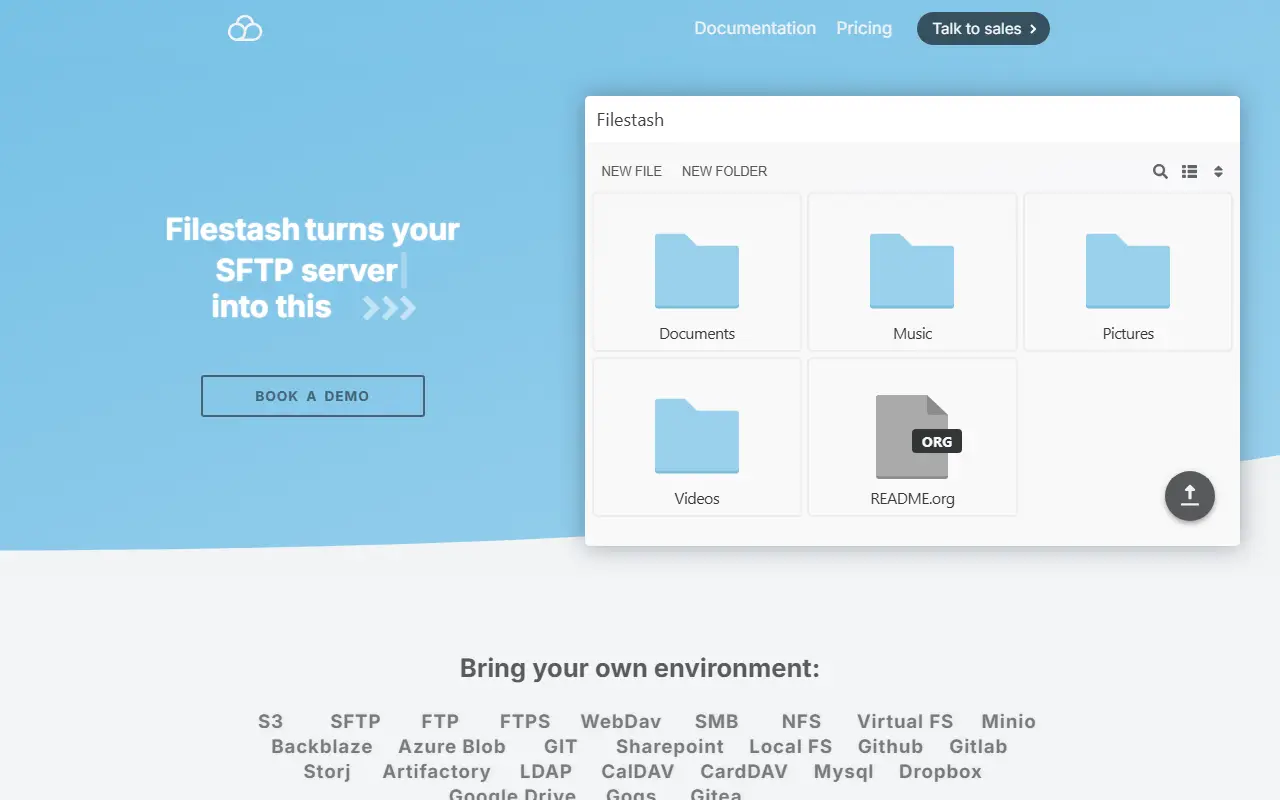
Filestash began as a Dropbox-like file manager that speaks many storage protocols, including FTP, SFTP, S3, SMB, WebDAV and IPFS along with about twenty more. It has since grown into a wider file management platform built around three products: a web client for browsing files in a browser, a native client for syncing data to devices, and gateways that expose storage over other protocols.
Its architecture is plugin-driven, so anything beyond the lean core lives in a plugin and requirements are met by adding or writing plugins rather than forking. The web client is written in vanilla JavaScript, and APIs and gateways can expose data over SFTP, S3, FTP, WebDAV, MCP and AS2. Authentication integrations can go as far as delegating login to a WordPress site and using its roles for access control.
A workflow engine automates actions on files by chaining steps on events, ranging from Slack or email notifications to managed file transfer pipelines. Filestash is written in Go and released under the AGPL-3.0 license, and repository topics point to uses in document management and archiving.
Key features
- Web file manager for FTP, SFTP, S3, SMB and WebDAV
- Plugin-driven architecture
- Gateways exposing storage over other protocols
- Workflow engine for file events
- Native client for syncing files
- Pluggable authentication and access control
Pricing: Self-hosted use is free for up to 3 users. Hobby costs $6, Pro starts at $50 and Enterprise at $290 per month, with free trials available.
MEGA alternatives: questions
- What is the best open-source alternative to MEGA?
- Syncthing is the top-ranked open-source alternative to MEGA on Enlisted: Open-source continuous file synchronization that keeps folders in step between two or more computers, with a focus on safety, security and ease of use. Other strong options are rclone, KeePassXC, Nextcloud and VeraCrypt.
- What are the best commercial alternatives to MEGA?
- pCloud, Dropbox, Sync.com, Google One and iCloud are among the hosted, closed-source alternatives to MEGA listed on Enlisted, which lists 35 in total. Compare their pricing and features on each tool page.
- Are these MEGA alternatives free?
- All 13 are open source, so the code is free to use under its licence, and all of them can be self-hosted on your own server or computer. 2 also offer a paid or managed cloud version if you'd rather not host it yourself.
- How is this list of MEGA alternatives ranked?
- By a score built from GitHub stars, star growth over the last 30 days and how recently the code changed. 13 of these projects shipped code in the last 30 days. Data is refreshed daily, and nobody can pay to move up.
 TrackMedia
 TrackRev