7,363 open-source and SaaS tools, with GitHub stats refreshed every day.

4 alternatives ranked by real activity

Open-source InVideo alternatives

A curated, ranked list of the 4 best open-source alternatives to InVideo.

The best open-source alternative to InVideo is DramaClaw. If that doesn't suit you, other good options are Short Video Factory, ArcReel and ShortGPT.

InVideo alternatives are mainly AI tools. 3 of them shipped code in the last 30 days, 4 can be self-hosted, and 1 uses a permissive licence.

Last updated October 2, 2026 · ranked by GitHub stars, growth and recent commits

DramaClaw

A self-hosted AI video engine that takes a script through storyboards, assets, voices and video generation to a finished film, for dramas, ads and product videos.

GitHub stars
6.6k
Last commit
yesterday
Latest release
v2.0.6
Self-hosted
Yes
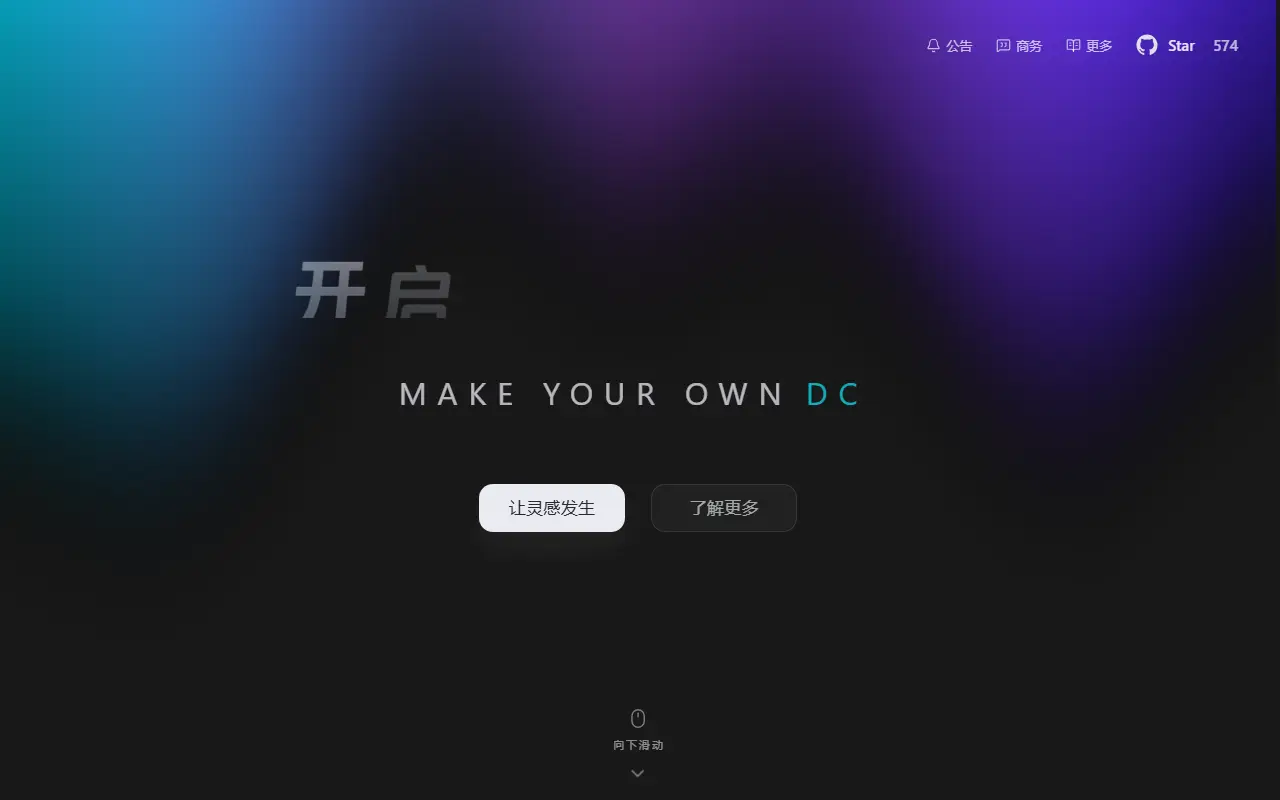
dramaclaw.aiDramaClaw homepage screenshot

DramaClaw is a general-purpose AIGC video engine that moves from script to finished film in a single pipeline. It is used for short dramas, advertisements, product videos, otome games and more, and its team says it is the same production line they use internally, covering storyboards, assets, voice synthesis and video generation. Topics include text-to-video, image-to-video, TTS and AI filmmaking.

The software is written in Python with FastAPI and a React front end and is self-hosted. Documentation, a quick start and trailers are provided, with README versions in several languages. Sample short dramas produced with the pipeline are linked from the repository.

Licensing is notable: DramaClaw uses the Elastic License 2.0, so it is source-available rather than open source. The standalone version is free for commercial use without asking permission, on the condition that a small Powered by DramaClaw credit appears in the interface, but wrapping it as a hosted SaaS for other people is not allowed under the current license. The repository was created in March 2026, so the project is young.

Key features

  • Script-to-film video pipeline
  • Storyboard and asset generation
  • Text-to-video and image-to-video
  • Voice synthesis for characters
  • FastAPI backend with React interface
  • Self-hosted deployment on your servers

Pricing: Elastic License 2.0: free for commercial use of the standalone version with a Powered by DramaClaw credit; offering it as a hosted SaaS is not permitted.

Short Video Factory

Short Video Factory is an open-source cross-platform desktop app that uses AI to turn prompts and footage into marketing and general short videos in batches.

GitHub stars
5.5k
Last commit
4 days ago
Latest release
v1.2.2
Licence
AGPL-3.0
Self-hosted
Yes
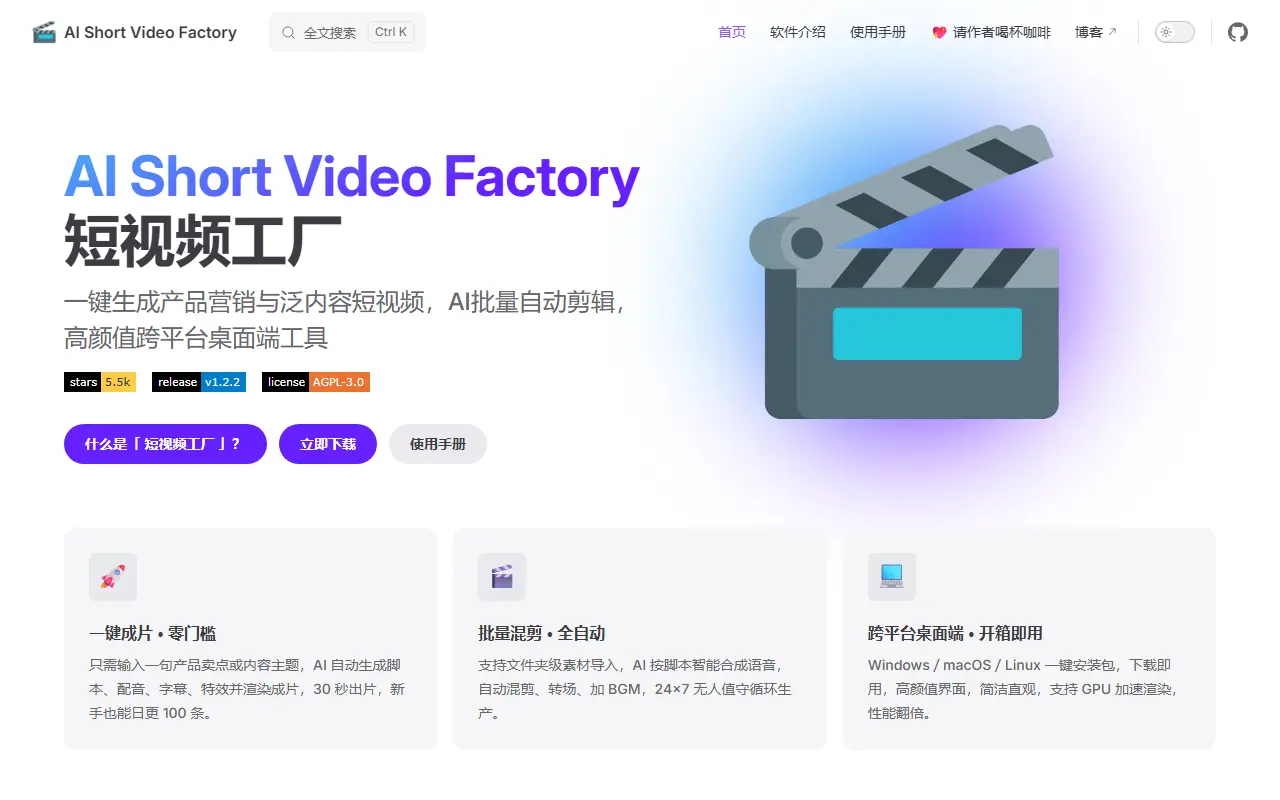
short-video-factory.yils.blogShort Video Factory homepage screenshot

Short Video Factory is an open-source desktop application that simplifies short video production with AI. You supply a text prompt together with storyboard footage, and the app generates copy, voiceover, edits and subtitles to produce marketing and general-interest clips with little manual work.

According to its README, the toolchain covers AI-driven script writing from prompts, text-to-speech narration, automated clip editing across common video formats, automatic subtitles and visual effects, and batch processing so multiple tasks can run in sequence from presets. It is a cross-platform desktop program for Windows, macOS and Linux, aimed at an out-of-the-box experience, and its topics reference TikTok-style short video content.

The project is written in TypeScript and licensed under AGPL-3.0. Its documentation is mainly in Chinese, with an English summary in the repository tagline. It suits marketers, small businesses and content creators who need to produce many short product or promotional videos quickly on their own computer.

Key features

  • AI-generated video copy from prompts
  • Text-to-speech narration for videos
  • Automatic batch video clipping
  • Automatic subtitles and effects
  • Batch task processing from presets
  • Windows, macOS and Linux desktop app

Pricing: Free and open source under AGPL-3.0.

ArcReel

ArcReel is a self-hosted, agent-driven AI video workspace that turns novels and scripts into assets, storyboards and videos, exporting CapCut drafts.

GitHub stars
5.3k
Last commit
yesterday
Latest release
v0.32.0
Licence
AGPL-3.0
Self-hosted
Yes
arc-reel.comArcReel homepage screenshot

ArcReel is an open-source video production workspace that you host yourself. Its AI agents convert novels, finished scripts or product material into characters, scenes and props, then storyboards and video, aiming for shots where characters stay consistent and the process remains controllable and editable.

The workflow outputs finished clips and can produce draft projects for the CapCut editing app, called JianYing in China, for further editing. The README highlights consistency across shots, support for multiple model providers, and cost tracking so you can see what each generation costs. Repository topics mention the Claude Agent SDK, FFmpeg, image-to-video and text-to-video generation, short drama and storyboarding. It is built in Python and deployed with Docker.

ArcReel is licensed under AGPL-3.0, with documentation mainly in Chinese. It suits short-drama creators, small studios and marketers who want an AI video pipeline on their own server using their own model API accounts.

Key features

  • Novel and script to storyboard conversion
  • Character, scene and prop asset generation
  • Cross-shot consistency controls
  • Multi-provider AI model support
  • Cost tracking for generations
  • CapCut draft export

Pricing: Free and open source under AGPL-3.0; you pay your chosen AI model providers.

ShortGPT

ShortGPT is an MIT-licensed, experimental Python framework that uses AI to automate YouTube Shorts and TikTok video creation, from scripting to voiceover and editing.

GitHub stars
8k
Last commit
1 yr ago
Latest release
v0.3.0
Licence
MIT
Self-hosted
Yes
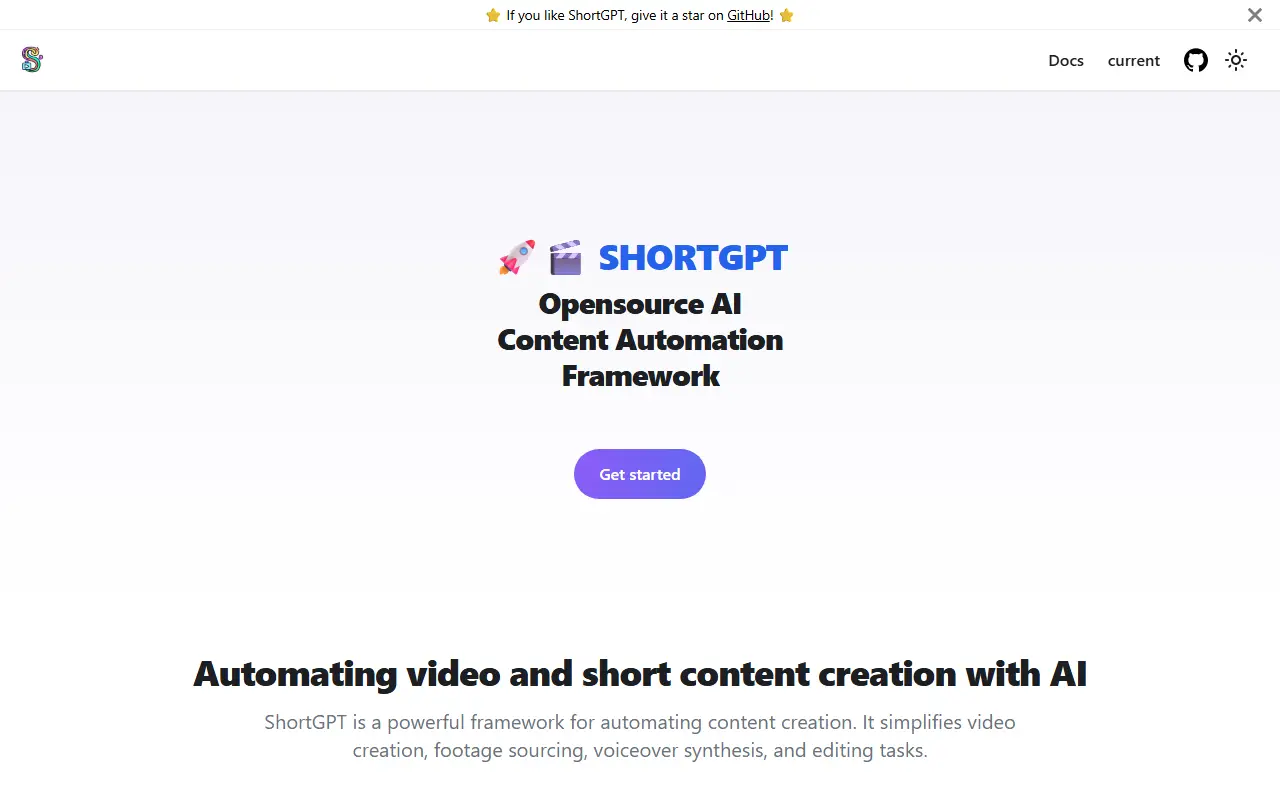
short-gpt-dcs.vercel.appShortGPT homepage screenshot

ShortGPT is an experimental AI framework for automating the creation of short-form video content such as YouTube Shorts and TikTok clips. It is aimed at creators who want to reduce the manual work of scripting, footage sourcing, voiceover synthesis, captioning and editing for high-volume short video channels.

It provides an LLM-oriented video editing language with ready-to-use scripts and prompts, voiceover generation in more than 30 languages through EdgeTTS, automated caption generation, and sourcing of images and video assets. The project showcases voice dubbing and automated editing workflows in demo videos, and it is primarily run as a local web app, with Google Colab recommended for an easier setup.

ShortGPT is written in Python, uses GPT-4 and other OpenAI capabilities, and is released under the MIT license. It is described as experimental, so users should expect ongoing changes and review the installation notes before running it, and API usage with providers such as OpenAI is billed separately.

Key features

  • LLM-driven automated video editing
  • Voiceover synthesis in 30-plus languages
  • Automated caption generation
  • Automated image and video asset sourcing
  • Voice dubbing support
  • Ready-to-use scripts and prompts for editing

Pricing: Free and open source under the MIT license. It calls external AI APIs such as OpenAI, which are billed separately by the provider.

InVideo alternatives: questions

What is the best open-source alternative to InVideo?
DramaClaw is the top-ranked open-source alternative to InVideo on Enlisted: A self-hosted AI video engine that takes a script through storyboards, assets, voices and video generation to a finished film, for dramas, ads and product videos. Other strong options are Short Video Factory, ArcReel and ShortGPT.
Are these InVideo alternatives free?
All 4 are open source, so the code is free to use under its licence, and all of them can be self-hosted on your own server or computer.
How is this list of InVideo alternatives ranked?
By a score built from GitHub stars, star growth over the last 30 days and how recently the code changed. 3 of these projects shipped code in the last 30 days. Data is refreshed daily, and nobody can pay to move up.

People also look for alternatives to…

View all