#1
An open-source project management platform for issues, sprint cycles, roadmaps, docs and triage, positioned as an alternative to Jira, Linear, Monday and ClickUp.
- GitHub stars
- 62k
- Last commit
- yesterday
- Latest release
- v1.4.3
- Licence
- AGPL-3.0
- Self-hosted
- Yes
- Hosted version
- Available
plane.so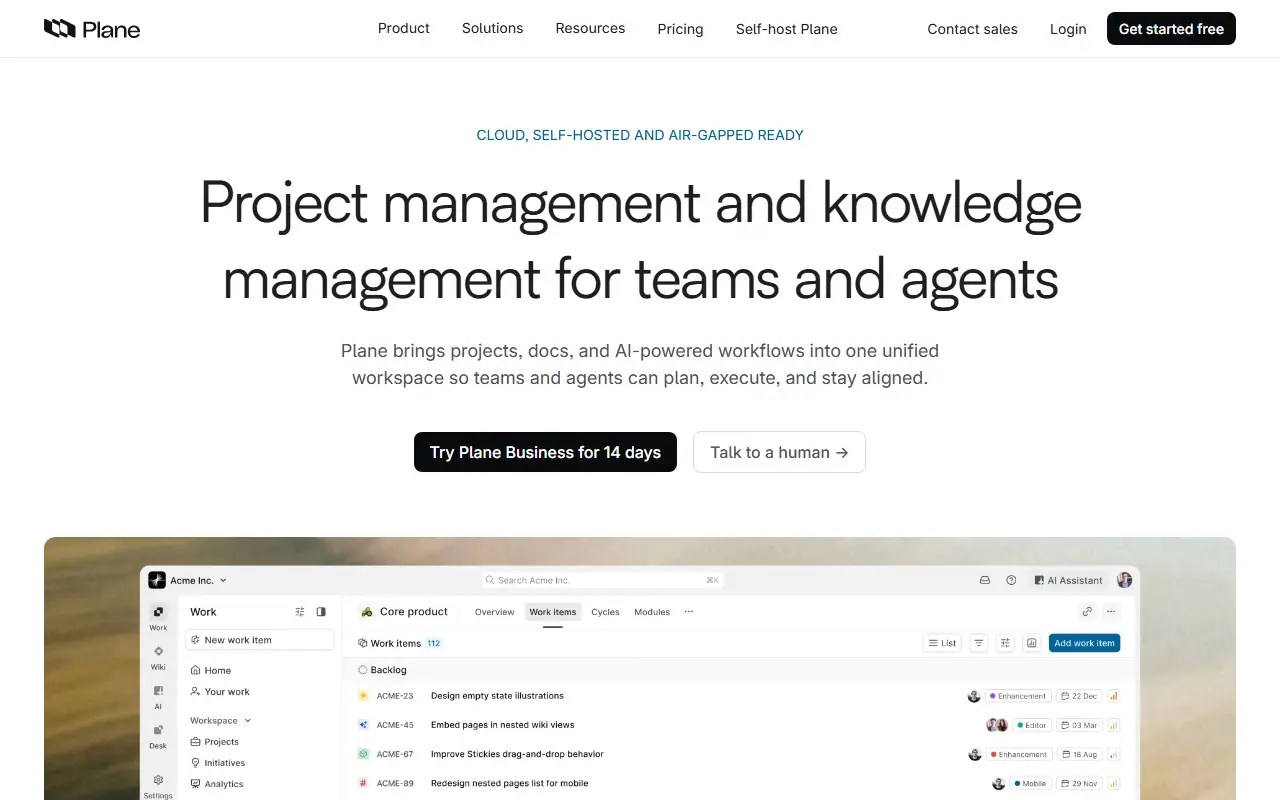
Plane is an open-source project management tool for tracking issues, running sprints and managing product roadmaps. It is positioned as an alternative to Jira, Linear, Monday and ClickUp, and aims to keep the tool itself from getting in the way of the work.
The platform covers task and issue tracking, cycles for sprints, product roadmaps, documentation and a triage flow for incoming work, and topics also mention kanban boards and product management. It is built with a React and TypeScript front end and a Django and Python back end, using PostgreSQL and Redis, and it is packaged for Docker deployments.
You can start with a free account on Plane Cloud, the hosted option, or self-host Plane on your own servers using the deployment guides for full control over data and infrastructure. The code is AGPL-3.0 licensed. It suits teams moving off Jira or Linear who want an open codebase and the choice between a managed service and their own hardware.
Key features
- Issue tracking with kanban boards
- Sprint cycles and roadmaps
- Triage flow for incoming work
- Built-in docs and wikis
- Plane Cloud or self-hosted deployment
- Docker-based installation guides
Pricing: Free plan for up to 12 users. Pro is $6 and Business $13 per seat per month; Enterprise Grid is quoted on request. Paid plans have a two-week trial and Plane can be self-hosted.
#2
OpenProject is open-source project management software for agile planning, Gantt charts, issue tracking and time tracking, positioned as a Jira alternative.
- GitHub stars
- 17k
- Last commit
- yesterday
- Latest release
- v17.9.7
- Licence
- GPL-3.0
- Self-hosted
- Yes
- Hosted version
- Available
openproject.org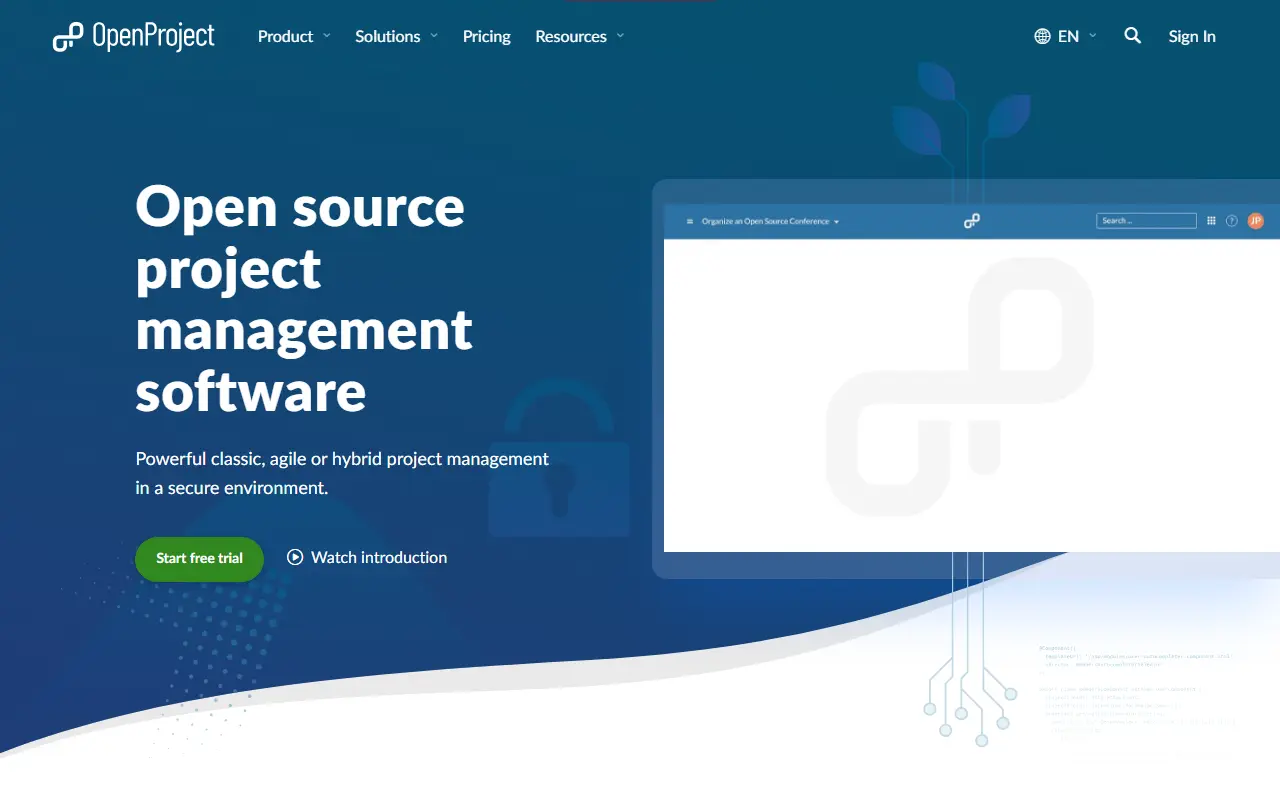
OpenProject is a web-based project management application for teams and organizations that value transparency, flexibility and control over their data. It covers projects, portfolios, products, tasks, bugs, agile workflows, roadmaps and team collaboration in one platform, and it is built with Ruby and Angular under the GPL-3.0 license.
Key capabilities include agile boards with Kanban and Scrum, project planning and scheduling with Gantt charts, product and release planning, bug tracking, and time tracking with cost reporting and budgeting. Collaboration tools cover wikis, forums, news, and meeting agendas and minutes. Integrations are listed for Nextcloud, XWiki, GitHub and GitLab, among others.
The project presents itself as an open-source alternative to Jira and Asana, along with tools such as MS Project, Monday and YouTrack. It can be self-hosted, which suits organizations with data sovereignty requirements. A free Community Edition is available to download, a 14-day free trial exists, and an Enterprise Edition adds support and add-ons in the cloud or on-premises.
Key features
- Agile boards for Kanban and Scrum
- Gantt chart planning and scheduling
- Roadmaps and release planning
- Time tracking, cost reporting and budgets
- Bug tracking and issue management
- Wikis, forums and meeting minutes
Pricing: The Community edition is free. Paid Enterprise plans cost 5.95 (Basic), 10.95 (Professional) or 15.95 (Premium) euros per user per month with user minimums; Corporate is on request. 14-day free trial.
#3
Vikunja is an open-source, self-hostable task and project manager with a Go backend and Vue front end, also offered as a hosted service.
- GitHub stars
- 6k
- Last commit
- today
- Latest release
- v2.8.0
- Licence
- AGPL-3.0
- Self-hosted
- Yes
- Hosted version
- Available
vikunja.io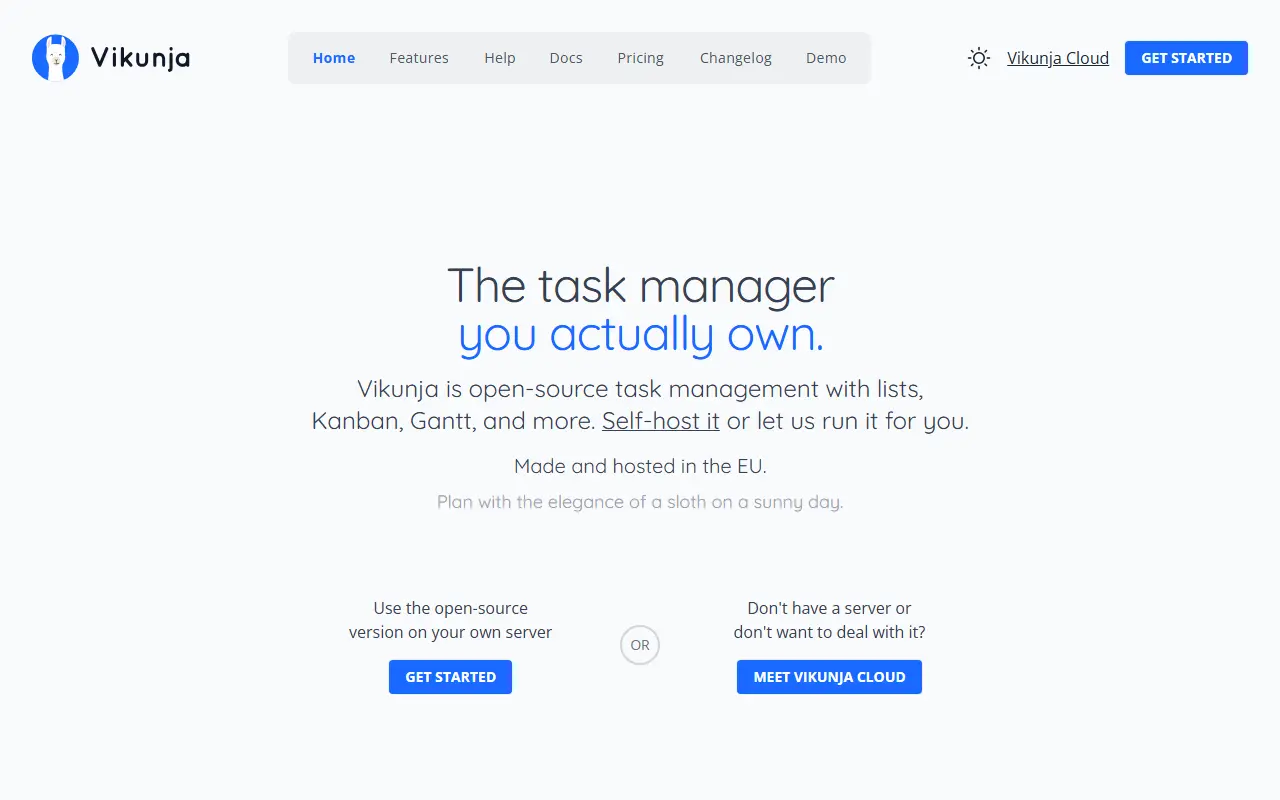
Vikunja is a task manager that you can host and control yourself. It covers to-do lists and broader project management, and exposes an API so it can be connected to other tools. Its backend is written in Go and the web front end in Vue. The tagline stresses ownership: a task manager whose data and hosting you decide.
The README mentions an optional hosted version for people who want a hassle-free setup for themselves or a team, and a Vikunja Pro tier that adds an admin panel, audit logs and time tracking. The maintainers also note that they use LLM-assisted coding tools in parts of the codebase. The repository has documentation, a roadmap and contribution guidelines.
Vikunja is licensed under AGPL-3.0. The community version is free to self-host, which suits individuals, families and small teams who want an open alternative to hosted to-do and project apps. Support comes from donations, sponsorship and paid hosting or Pro plans.
Key features
- To-do lists and project management
- REST API for integrations
- Go backend with Vue web interface
- Self-hosted or vendor-hosted option
- Pro tier with admin panel and audit logs
- Time tracking in the Pro edition
Pricing: Self-hosting is free. Vikunja Cloud costs €4 per month for Personal, €10 for Family (up to 5 users) and €5 per user for Organization, each with a 14-day trial and yearly discounts.
#4
An open-source project management tool with board, list, calendar and Gantt views, GitHub integration and an MCP server, available in the cloud or self-hosted.
- GitHub stars
- 9.8k
- Last commit
- today
- Latest release
- v2.49.0
- Licence
- MIT
- Self-hosted
- Yes
- Hosted version
- Available
kaneo.app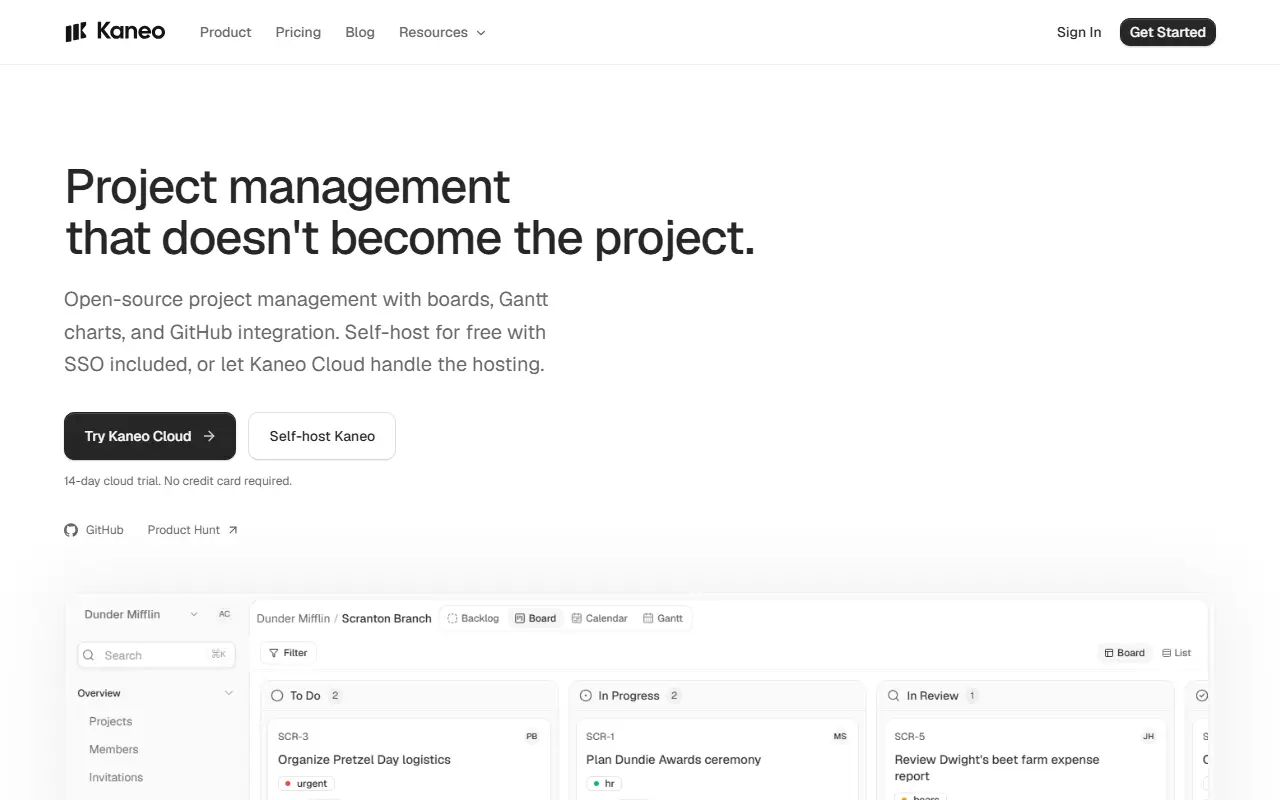
Kaneo is a fast, simple, open-source project management tool. Work can be viewed as a board, list, calendar or Gantt chart, with a backlog, filters and search, and each task keeps its context together, including descriptions, files, subtasks, dependencies, labels, comments and tracked time.
Teams get shared workspaces, member invitations, custom roles, live updates and public project pages, and can shape the workflow with custom columns and fields plus rules that move tasks when repository activity changes. Notifications reach people in the app, by email, ntfy, Gotify and personal webhooks. Integrations include GitHub and Gitea, chat tools, project webhooks, a REST API and an MCP server for AI assistants.
Kaneo can be used through Kaneo Cloud or self-hosted by following the installation guide. It is written in TypeScript with React and Hono and licensed under MIT. Its topics place it as an alternative to Jira and Linear, aimed at teams that want a lighter issue tracker they can host themselves.
Key features
- Board, list, calendar and Gantt views
- Subtasks, dependencies and time tracking
- Shared workspaces with custom roles
- Workflow rules tied to repository activity
- GitHub and Gitea integrations
- REST API and MCP server
- Notifications via ntfy, Gotify and webhooks
Pricing: Self-hosting is free with every feature. Kaneo Cloud costs $40 per year for one user or $50 per user per year for teams, with a 14-day free trial.
#5
Self-hosted, AI-native project management platform where humans and AI agents work as equal teammates on Scrum boards, sprints, and BDD specs.
- GitHub stars
- 2.1k
- Last commit
- yesterday
- Latest release
- v0.20.3
- Licence
- Apache-2.0
- Self-hosted
- Yes
paca-ai.org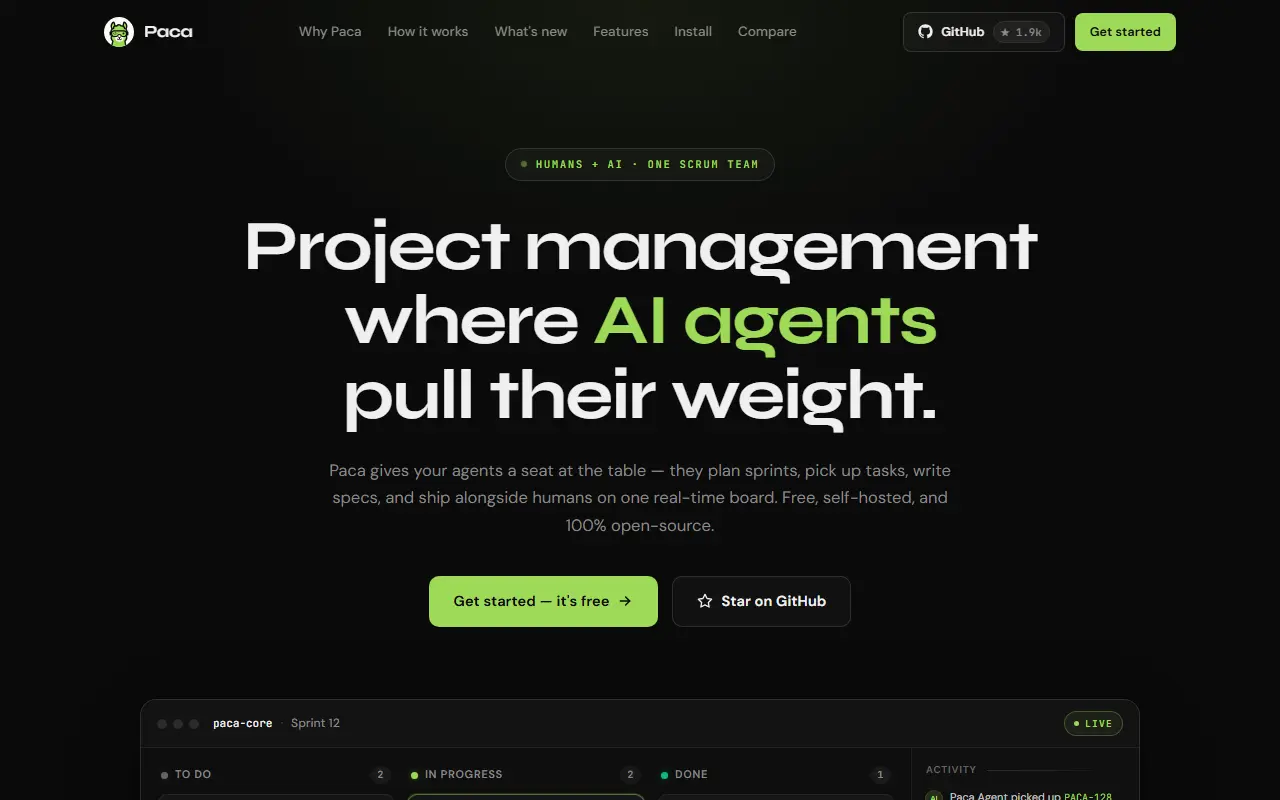
Paca is an open-source, self-hosted project management platform positioned as an alternative to Jira, Trello, ClickUp, and Monday. Its distinguishing idea is that AI agents are teammates inside a Scrum team rather than chatbots on the side: they join sprint planning, pick up tasks from the board, write BDD specs, and adapt alongside people. It is written in Go and released under the Apache-2.0 license.
The platform is lightweight and fully customizable through configuration and plugins, with WebAssembly plugins among the topics. It provides an MCP server and a set of Paca skills so agents can interact with the board, and the documentation covers getting started, architecture, contributing, and a roadmap. The project was created in 2026.
Paca suits software teams experimenting with agent-assisted development who want the project board to be a shared workspace for people and agents, and who prefer to run it on their own infrastructure. As a young project, expect fast change.
Key features
- Scrum and kanban boards for humans and AI agents
- MCP server for agent access
- Agent skills for sprint planning and tasks
- BDD spec writing by agents
- Plugins including WebAssembly
- Self-hosted and customizable
Pricing: Free and open source under the Apache-2.0 license.
#6
An open-source project management system for people who are not professional project managers, combining strategy, planning and execution with ADHD-friendly design.
- GitHub stars
- 12k
- Last commit
- today
- Latest release
- v3.14.0
- Licence
- AGPL-3.0
- Self-hosted
- Yes
- Hosted version
- Available
leantime.io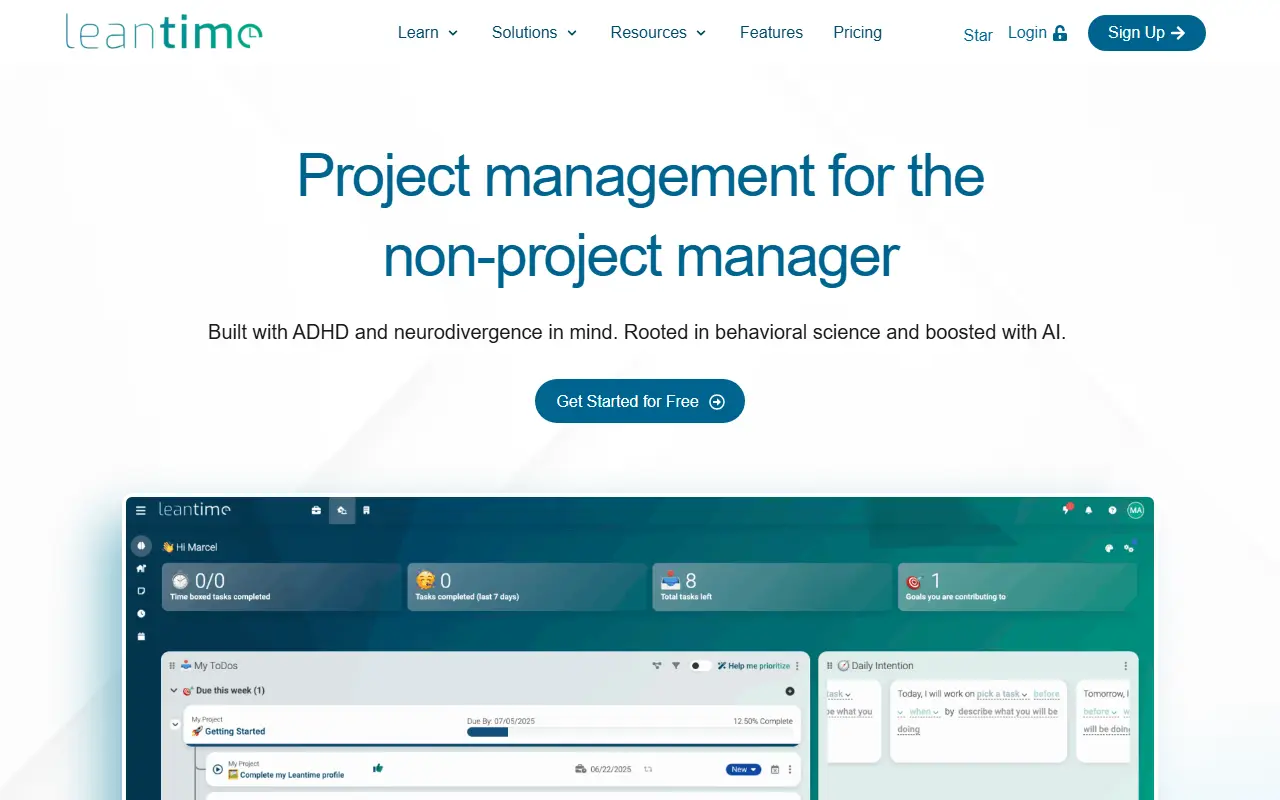
Leantime is an open-source project management system designed for teams where most members are not trained project managers. It joins strategy, planning and execution in one tool and is built with neurodivergent users in mind, including people with ADHD, dyslexia and autism. The README pitches it as simple like Trello yet as capable as Jira.
Task management covers kanban boards, Gantt, table, list and calendar views, unlimited subtasks and dependencies, milestones, sprints and timesheets. Planning and strategy tools include goal and metrics tracking, idea boards, retrospectives, lean and business model canvases, SWOT and risk analysis. There are also wikis and documents, project dashboards, comments on everything, two-factor authentication, LDAP and OIDC, S3 or local file storage, plugins and an API, in over 20 languages.
Leantime is written in PHP, licensed under AGPL-3.0 and installs on your own server, with all of the listed features included in the open-source version. It is positioned as an alternative to Asana, ClickUp, Monday and Notion-style tools, and integrates with Slack, Mattermost and Discord. A hosted option is available at leantime.io.
Key features
- Kanban, Gantt, table, list and calendar views
- Sprints, milestones and time tracking
- Goal and metrics tracking
- Idea boards and strategy canvases
- Wikis, documents and comments
- LDAP and OIDC single sign-on
- Plugins and API for extension
- Interface in over 20 languages
Pricing: The self-hosted Community Edition is free. The hosted Leantime Pro plan is $10 per user per month, or $8 billed annually, with a 14-day trial.
#7
WeKan is an open-source, self-hostable kanban board app for personal and team task tracking, built with Meteor and licensed under MIT.
- GitHub stars
- 21k
- Last commit
- yesterday
- Latest release
- v13.06
- Licence
- MIT
- Self-hosted
- Yes
wekan.fi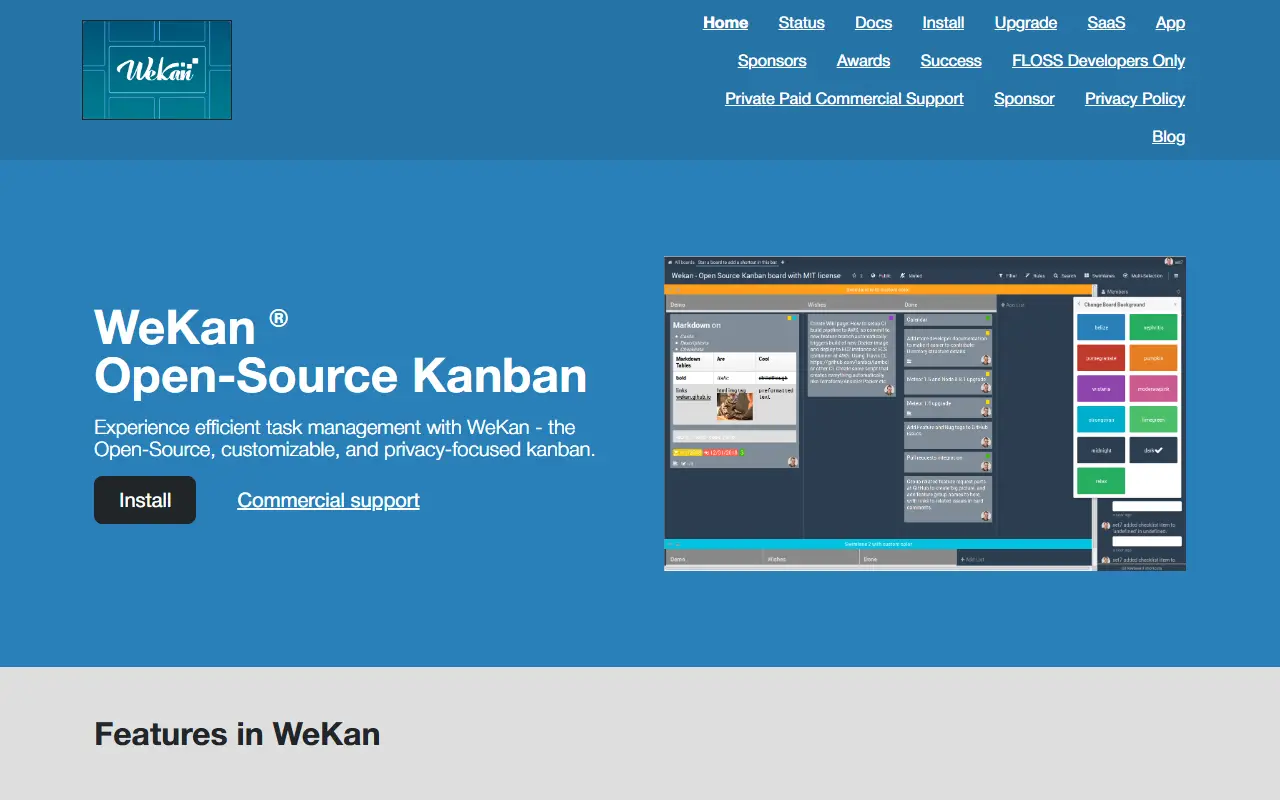
WeKan is a collaborative kanban board application. Cards move across lists on a board, giving a visual overview of where work stands, whether the board is a personal to-do list, a holiday plan shared with friends or a team project. It is free software under the MIT license and is built with the Meteor JavaScript framework.
Because it can be self-hosted, an organization can keep its data on its own server instead of relying on a third party. Installation options include Docker images, a docker-compose file, Snap packages and Sandstorm. The project states that it collects no telemetry, boards update in real time, and the interface is translated by volunteers through Transifex.
Bugs and feature requests go through GitHub issues, while the maintainers point people who need help to a commercial support offering. The Docker latest tag follows the newest release, which makes it straightforward to track updates.
Key features
- Kanban boards with lists and cards
- Real-time collaboration between users
- Self-hosting with Docker, Snap or Sandstorm
- Community-translated interface
- No telemetry collection
- Built with Meteor and JavaScript
Pricing: Free and open source under the MIT license; paid commercial support is available from the maintainers.
#8
Taskosaur is a self-hostable project management platform where a conversational AI can create tasks and manage workflows from natural-language requests.
- GitHub stars
- 616
- Last commit
- 2 mo ago
- Latest release
- v0.1.2
- Self-hosted
- Yes
taskosaur.com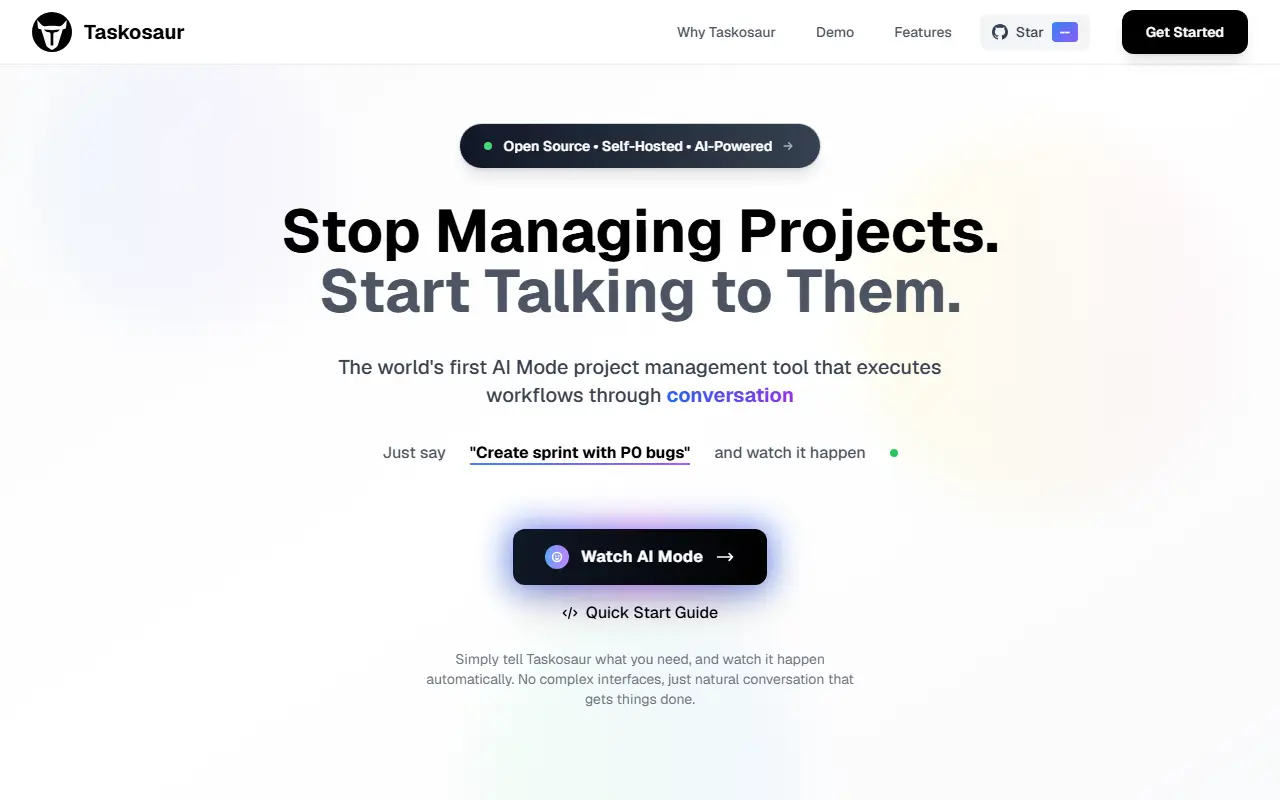
Taskosaur is an open source project management platform with conversational AI that executes tasks inside the app. Instead of navigating menus and forms, you describe what you need, such as creating a sprint with last week's high-priority bugs, and the assistant creates tasks, assigns work and manages workflows directly in the application.
It combines traditional project management with that assistant: kanban boards, sprints, task dependencies and time tracking, plus in-app browser automation in which the AI navigates the interface itself. It is self-hosted so data stays on your infrastructure, and you bring your own LLM, using an API key with OpenAI, Anthropic or OpenRouter or a local model. Jira and Trello integration helps with migration. The stack is TypeScript with Next.js and Node.js, requiring Node.js 22, PostgreSQL 16 and Redis 7 or Docker.
Taskosaur is available under the Business Source License, so it is source-available rather than strictly open source. It is early in its life, with version 0.1.x releases, and provides API documentation and a Docker quick start.
Key features
- Conversational AI task execution
- Natural-language commands
- Kanban boards and sprints
- Task dependencies and time tracking
- Bring your own LLM
- Jira and Trello integration
Pricing: Source-available under the Business Source License; you supply your own LLM API key or local model.
#9
Redmine is a flexible, self-hostable project management web application built on Ruby on Rails, with issue tracking, wikis, Gantt charts and time tracking.
- GitHub stars
- 6.1k
- Last commit
- yesterday
- Self-hosted
- Yes
redmine.org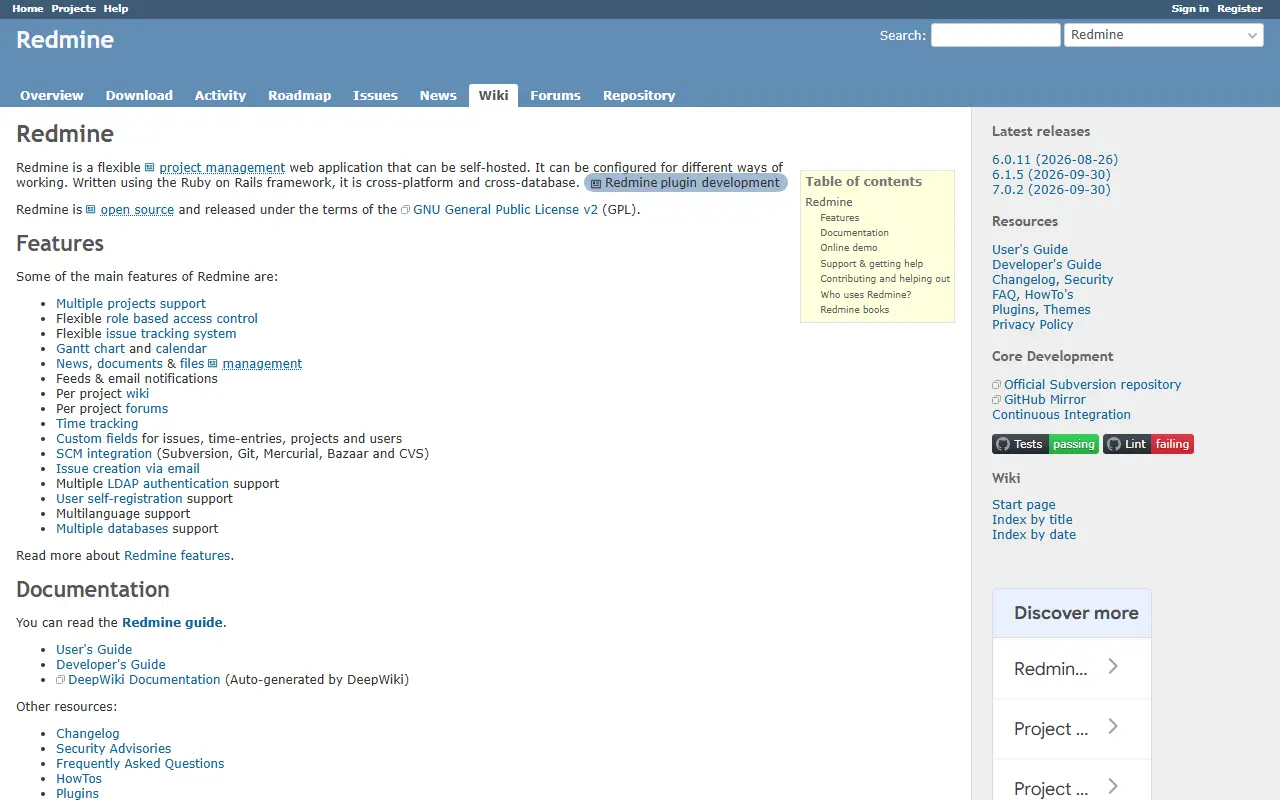
Redmine is a configurable project management web application that you can host yourself. It is written with the Ruby on Rails framework, is cross-platform and cross-database, and can be configured to fit different ways of working. This repository is a GitHub mirror of the official Subversion repository.
The project site lists the main features: support for multiple projects, flexible role-based access control, an issue tracking system, a Gantt chart and calendar, news, documents and file management, feeds and email notifications, a wiki and forums for each project, and time tracking. Custom fields can be added to issues, time entries, projects and users. Integration covers Subversion, Git, Mercurial, Bazaar and CVS, issues can be created by email, and LDAP authentication, user self-registration and multiple languages and databases are supported.
Redmine is open source software distributed under version 2 of the GNU General Public License. Plugins and themes extend it, and a user's guide, developer's guide, FAQ and online demo are available on the project site.
Key features
- Multiple projects with role-based access control
- Issue tracking system
- Gantt chart and calendar
- Per-project wiki and forums
- Time tracking and custom fields
- Git, Subversion and Mercurial integration
- LDAP authentication
Pricing: Free and open source under the GNU GPL v2.
#10
An open source, self-hosted project management tool with boards, offered as a desktop app or personal server, now listed as unmaintained.
- GitHub stars
- 27k
- Last commit
- 5 mo ago
- Latest release
- v8.0.0
- Self-hosted
- Yes
Focalboard is an open source, multilingual, self-hosted project management tool presented as an alternative to Trello, Notion and Asana. It is meant to define, organize, track and manage work across individuals and teams. The repository is tagged with kanban boards and goal tracking.
The standalone project has two editions. Personal Desktop is a single-user macOS, Windows or Linux desktop app for personal todos and projects. Personal Server is a multi-user server for development and personal use, with a compiled version that can be installed on Ubuntu. The Mattermost plugin version lives in a separate repository.
The README warns that the repository is currently not maintained, and asks for volunteers to become maintainers. Building from source needs Go and a web app build; the server is run locally and opened in a browser on port 8000, which is set in config.json. The desktop apps package the server to run against SQLite.
Key features
- Personal Desktop app for Windows, Mac and Linux
- Multi-user Personal Server edition
- Multilingual and self-hosted
- Boards API documentation
- Desktop apps package the server to run on SQLite
Commercial Dart alternatives
Hosted, closed-source products that compete with Dart. Showing 12 of 19.
- View tool
PProofHub
Project Management
All-in-one project tool with tasks, discussions, proofing and time tracking
SaaS
- View tool
Linear is a product development system for planning and building software with issue tracking, projects, initiatives and built-in AI agents.
SaaS
- View tool

Basecamp
Project Management
Project management and team communication with to-dos, message boards and schedules
SaaS
- View tool

Zoho Projects
Project Management
Project tracking with Gantt charts, timesheets and issue management inside Zoho
SaaS
- View tool

monday.com
Project Management
Work management platform with customizable boards, automations and dashboards
SaaS
- View tool

Shortcut
Project Management
Issue tracking and sprint planning aimed at software teams
SaaS
- View tool
Airtable is an app-building platform that combines a relational database with interfaces, automations and AI agents so teams can build their own business apps.
SaaS
- View tool

Taskade
Project Management
Collaborative tasks, outlines and mind maps with built-in AI agents
SaaS
- View tool
Asana is a work management platform where teams and AI agents plan, automate and track projects, tasks and workflows.
SaaS
- View tool

ClickUp
Project Management
ClickUp is an all-in-one work platform that combines tasks, docs, goals, chat, whiteboards and AI in a single app for teams.
SaaS
- View tool

Teamwork
Project Management
Project management for client work with time tracking, billing and resource planning
SaaS
- View tool

Smartsheet
Project Management
Spreadsheet-style work management with grids, forms, automation and reporting
SaaS
See every Dart alternative on its tool page
Dart alternatives: questions
- What is the best open-source alternative to Dart?
- Plane is the top-ranked open-source alternative to Dart on Enlisted: An open-source project management platform for issues, sprint cycles, roadmaps, docs and triage, positioned as an alternative to Jira, Linear, Monday and ClickUp. Other strong options are OpenProject, Vikunja, Kaneo and Paca.
- What are the best commercial alternatives to Dart?
- ProofHub, Linear, Basecamp, Zoho Projects and monday.com are among the hosted, closed-source alternatives to Dart listed on Enlisted, which lists 19 in total. Compare their pricing and features on each tool page.
- Are these Dart alternatives free?
- All 12 are open source, so the code is free to use under its licence, and all of them can be self-hosted on your own server or computer. 5 also offer a paid or managed cloud version if you'd rather not host it yourself.
- How is this list of Dart alternatives ranked?
- By a score built from GitHub stars, star growth over the last 30 days and how recently the code changed. 10 of these projects shipped code in the last 30 days. Data is refreshed daily, and nobody can pay to move up.
 TrackMedia
 TrackRev





