5 open-source alternatives ranked by real activity

Open-source AWS Fargate alternatives

A curated, ranked list of the 5 best open-source alternatives to AWS Fargate.

The best open-source alternative to AWS Fargate is Dokku. If that doesn't suit you, other good options are OpenFaaS, Nomad, CapRover and Virtual Kubelet.

Commercial alternatives to AWS Fargate include Azure Container Apps, AWS App Runner, Google Cloud Run and Northflank. See all 12.

AWS Fargate alternatives are mainly hosting & PaaS tools, but some are also password managers and infrastructure & container tools. 5 of them shipped code in the last 30 days, 5 can be self-hosted, and 2 use a permissive licence.

Last updated November 12, 2026 · ranked by GitHub stars, growth and recent commits

Dokku

A Docker-powered, self-hosted mini-Heroku PaaS that builds, deploys and manages applications on a single server, from first build to scaling.

GitHub stars
32k
Last commit
yesterday
Latest release
v0.38.34
Licence
MIT
Self-hosted
Yes
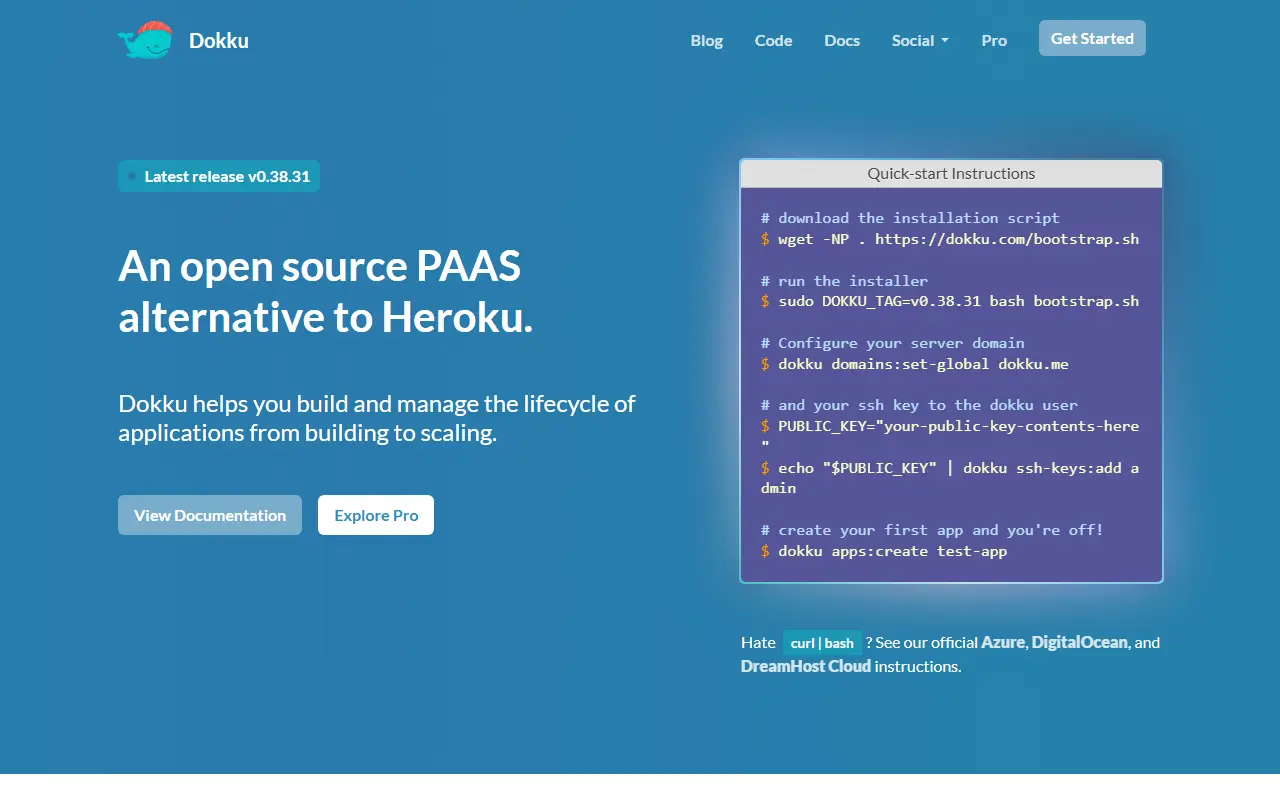
dokku.comDokku homepage screenshot

Dokku is a Docker-powered platform as a service that you install on your own server. It is billed as the smallest PaaS implementation around and as an open-source alternative to Heroku, helping you build and manage the full lifecycle of applications, from building them to scaling them.

Installation uses a bootstrap script that you run on a fresh server, after which you set a global domain and add your SSH key to the dokku user, then create apps and deploy to them. Topics refer to buildpack-based builds, containers, and scheduler support for Docker, Kubernetes and Nomad. The project has documentation, a blog, community chat on Discord, Slack and IRC, GitHub Discussions, and a Pro offering listed on the site.

Dokku is MIT licensed and written in Go and shell, with sponsors and backers supporting its development. It suits developers who like the Heroku workflow but want to run it on their own VPS for less cost or more control.

Key features

  • Docker-based application deployment
  • Heroku-style workflow on your own server
  • Bootstrap installer script
  • Buildpack and container support
  • Scheduler support for Docker, Kubernetes and Nomad
  • Active community channels

Pricing: Free and open source under the MIT license.

Read more about DokkuWebsiteGitHub#1 AWS Fargate alternative

OpenFaaS

OpenFaaS is a serverless framework for running event-driven functions and microservices on Kubernetes, with auto-scaling, metrics and a UI portal.

GitHub stars
26k
Last commit
21 days ago
Latest release
0.27.13
Self-hosted
Yes
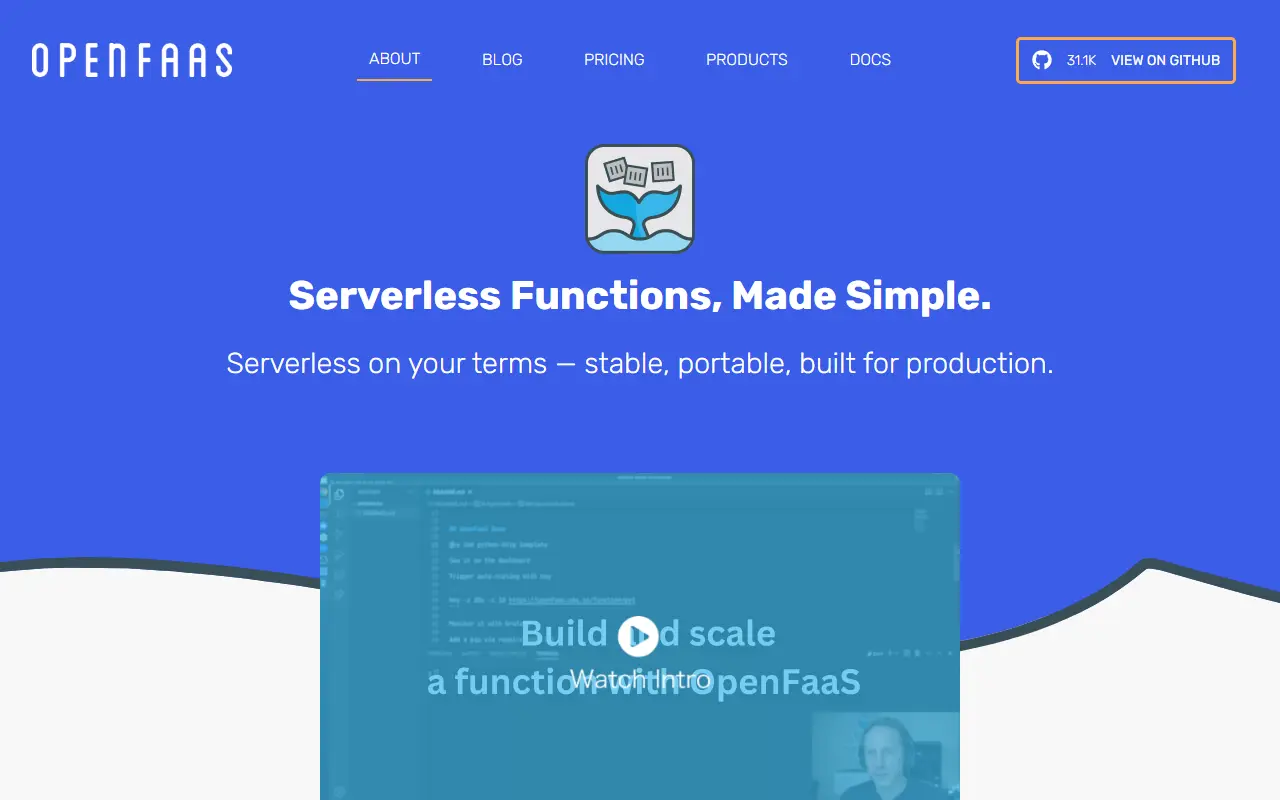
openfaas.comOpenFaaS homepage screenshot

OpenFaaS is a serverless platform that lets developers run event-driven functions and microservices on Kubernetes with little boilerplate code. Your code or a ready-made binary goes into an OCI-compatible container image, and you receive a scalable HTTP endpoint that auto-scales and exposes metrics.

Highlights include ease of use through a UI portal and a one-click install, and the ability to write services and functions in many languages. The project integrates with Prometheus for metrics and with GitOps workflows, and its topics place it in the functions-as-a-service and PaaS categories. The gateway and tooling are written in Go.

Licensing needs attention. The README states that the Community Edition is licensed for individual exploration and hobbyist use, with a 60-day limit for commercial proofs of concept, and that commercial and production use calls for the paid OpenFaaS Standard or Enterprise editions. GitHub reports the license as 'Other'. You run it on your own Kubernetes cluster.

Key features

  • Deploy functions and microservices to Kubernetes
  • OCI image-based packaging
  • Endpoints that scale automatically
  • Built-in Prometheus metrics
  • UI portal and one-click install
  • Functions in many languages

Pricing: Community Edition is free for personal use, with a 60-day limit on commercial use. Standard costs $1250 per month; Enterprise is custom. A 14-day trial is offered, subject to approval.

Read more about OpenFaaSWebsiteGitHub#2 AWS Fargate alternative

Nomad

Nomad is HashiCorp's workload scheduler and orchestrator for containers, binaries and batch jobs, in the cloud or on-prem.

GitHub stars
17k
Last commit
8 days ago
Latest release
v2.1.1
Self-hosted
Yes
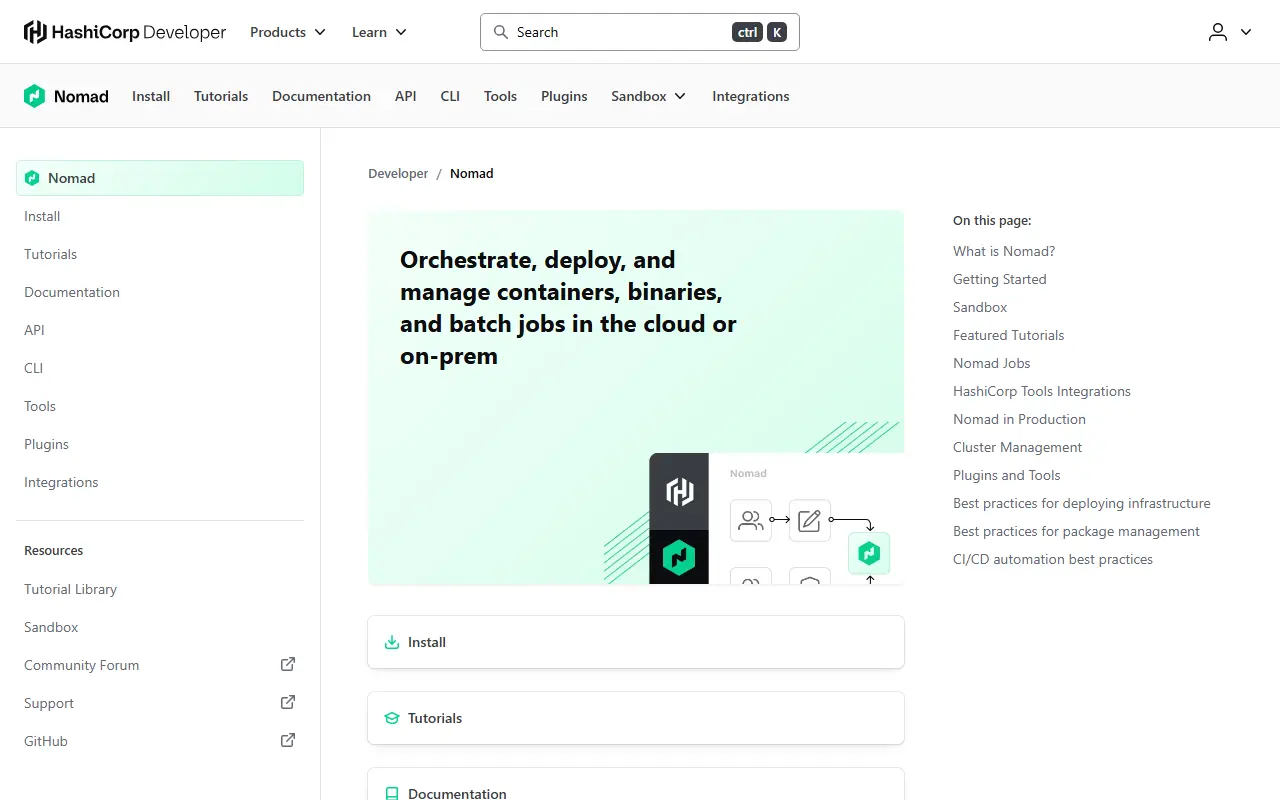
nomadproject.ioNomad homepage screenshot

Nomad is a scheduler and orchestrator from HashiCorp. It deploys and manages containers and non-containerized applications, including binaries and batch jobs, across on-prem environments and clouds.

Workloads are described as Nomad jobs. Parameterized jobs allow dynamic runtime behavior from a single job specification, and Nomad Pack provides reusable job templates. The tutorials show it working alongside Consul for service discovery and health checking, Vault for secrets and Terraform for creating clusters.

HashiCorp offers a sandbox with preinstalled tools for experimenting, and the site documents a separate Nomad Enterprise edition. The listed licence is Other, so check the project's terms before using it.

Key features

  • Containers, binaries and batch jobs
  • Containerized and non-containerized apps at scale
  • Parameterized jobs
  • Reusable job templates with Nomad Pack
  • Consul integration for service discovery and mesh
  • Vault integration for workload secrets
Read more about NomadWebsiteGitHub#3 AWS Fargate alternative

CapRover

A self-hosted app and database deployment platform that uses Docker, nginx and Let's Encrypt behind a simple web GUI and CLI, often described as a Heroku alternative.

GitHub stars
15k
Last commit
6 days ago
Latest release
v1.16.0
Self-hosted
Yes
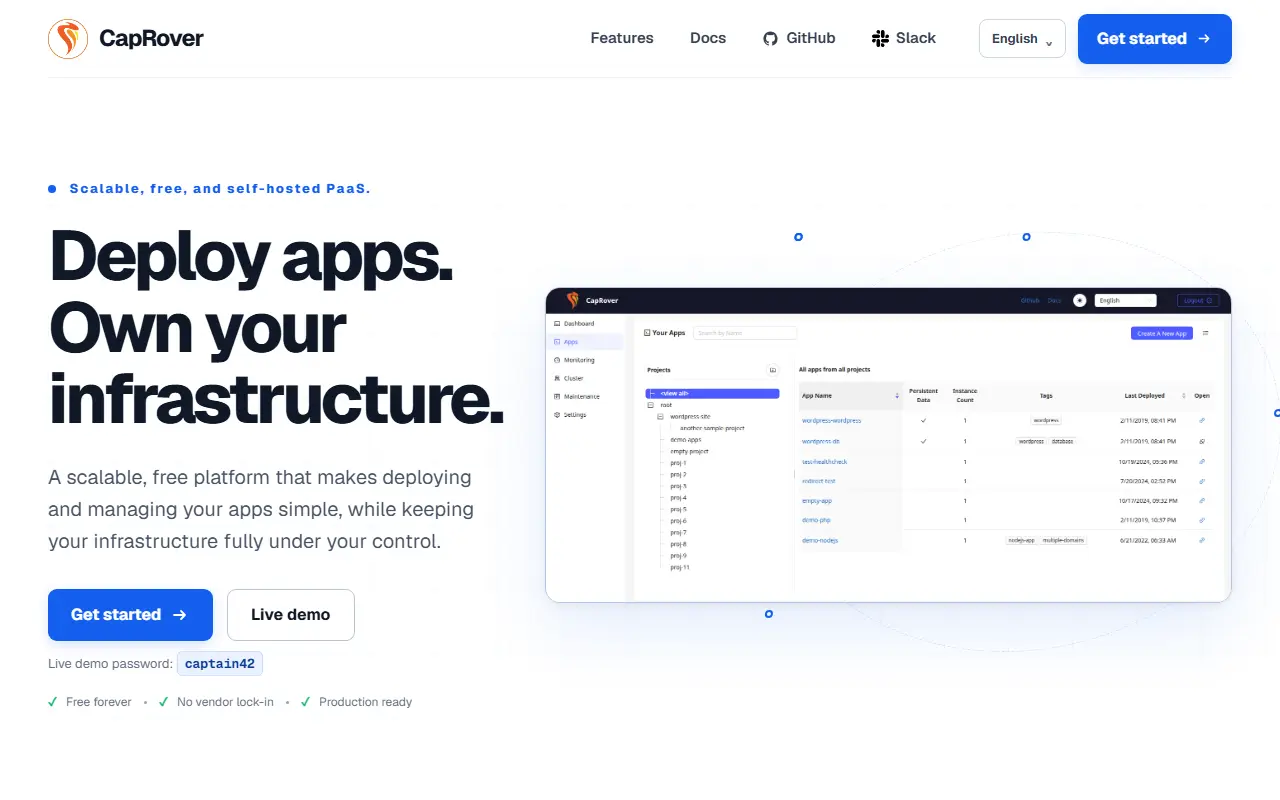
caprover.comCapRover homepage screenshot

CapRover is a deployment platform and web server manager that you install on your own server. It lets you run applications written in NodeJS, Python, PHP, ASP.NET, Ruby and Go, as well as databases like MariaDB, MySQL, MongoDB and Postgres, and apps such as WordPress, without needing deep Docker or nginx knowledge. It is often called a Heroku alternative.

Under the hood it uses Docker Swarm for containerization and clustering, nginx with a customizable template for load balancing, Let's Encrypt for free HTTPS certificates, and NetData for monitoring. You work through a web GUI for convenience or a CLI for automation and scripting. The project emphasizes that there is no lock-in: if you remove CapRover, your apps keep working. It targets developers who do not want to spend days setting up servers, builds, certificates and proxy configuration.

CapRover is written in TypeScript on Node.js, and its license is listed as 'Other' on GitHub, so confirm the terms. It is self-hosted software with no vendor service involved, and it suits small teams and solo developers running several apps on their own VPS.

Key features

  • Web GUI and CLI for deployment
  • Docker Swarm clustering
  • Nginx load balancing
  • Free HTTPS via Let's Encrypt
  • One-click databases and apps
  • No lock-in for deployed applications
Read more about CapRoverWebsiteGitHub#4 AWS Fargate alternative

Virtual Kubelet

Virtual Kubelet is a Kubernetes kubelet implementation that lets nodes be backed by providers such as serverless container platforms.

GitHub stars
4.6k
Last commit
3 days ago
Latest release
v1.14.1
Licence
Apache-2.0
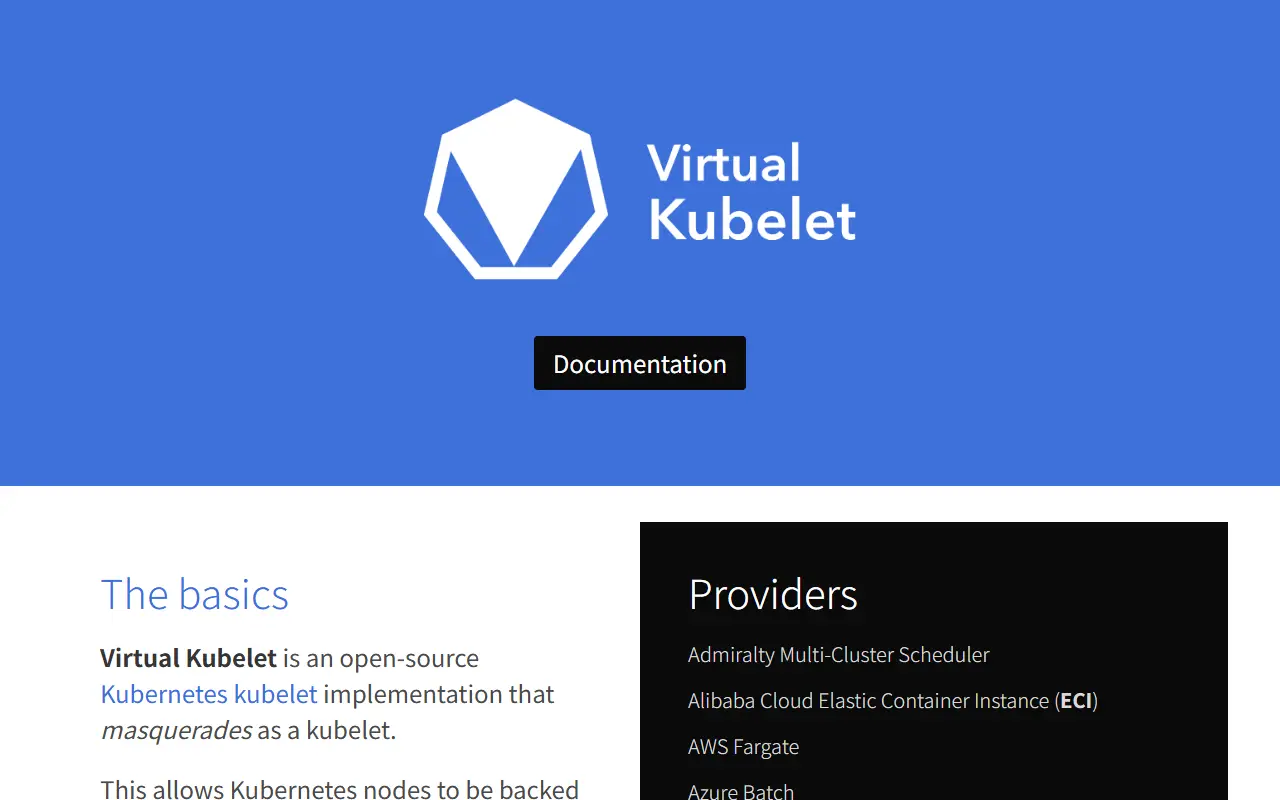
virtual-kubelet.ioVirtual Kubelet homepage screenshot

Virtual Kubelet is an open-source implementation of the Kubernetes kubelet that masquerades as a kubelet. Instead of a normal machine behind the node, a Virtual Kubelet provider sits behind it, which allows Kubernetes nodes to be backed by things like serverless cloud container platforms.

The project's home page lists a range of providers. These include Azure Container Instances, AWS Fargate, Alibaba Cloud Elastic Container Instance, Huawei Cloud Container Instance, HashiCorp Nomad, OpenStack Zun and StackPath Edge Compute, along with Liqo, InterLink and the Admiralty Multi-Cluster Scheduler.

Virtual Kubelet is a Cloud Native Computing Foundation sandbox project and is released under the Apache-2.0 licence. The site links to documentation, GitHub, Twitter and Slack.

Key features

  • Acts as a kubelet for Kubernetes nodes
  • Backs nodes with serverless container platforms
  • Providers for Alibaba, AWS and Azure container services
  • Providers include Nomad, OpenStack Zun and Liqo

Commercial AWS Fargate alternatives

Hosted, closed-source products that compete with AWS Fargate.

AWS Fargate alternatives: questions

What is the best open-source alternative to AWS Fargate?
Dokku is the top-ranked open-source alternative to AWS Fargate on Enlisted: A Docker-powered, self-hosted mini-Heroku PaaS that builds, deploys and manages applications on a single server, from first build to scaling. Other strong options are OpenFaaS, Nomad, CapRover and Virtual Kubelet.
What are the best commercial alternatives to AWS Fargate?
Azure Container Apps, AWS App Runner, Google Cloud Run, Northflank and Fly.io are among the hosted, closed-source alternatives to AWS Fargate listed on Enlisted, which lists 12 in total. Compare their pricing and features on each tool page.
Are these AWS Fargate alternatives free?
All 5 are open source, so the code is free to use under its licence, and all of them can be self-hosted on your own server or computer.
How is this list of AWS Fargate alternatives ranked?
By a score built from GitHub stars, star growth over the last 30 days and how recently the code changed. 5 of these projects shipped code in the last 30 days. Data is refreshed daily, and nobody can pay to move up.

People also look for alternatives to…

View all