10 open-source alternatives ranked by real activity

Open-source Akamai alternatives

A curated, ranked list of the 10 best open-source alternatives to Akamai.

The best open-source alternative to Akamai is Caddy. If that doesn't suit you, other good options are Traefik, SafeLine, CrowdSec and NGINX.

Commercial alternatives to Akamai include Amazon CloudFront, Cloudflare, Fastly and Gcore. See all 25.

Akamai alternatives are mainly networking & VPN tools, but some are also security tools. 10 of them shipped code in the last 30 days, 10 can be self-hosted, and 7 use a permissive licence.

Last updated November 12, 2026 · ranked by GitHub stars, growth and recent commits

Caddy

An extensible web server written in Go that speaks HTTP/1.1, 2 and 3 and obtains and renews TLS certificates automatically.

GitHub stars
79k
Last commit
yesterday
Latest release
v2.11.9
Licence
Apache-2.0
Self-hosted
Yes
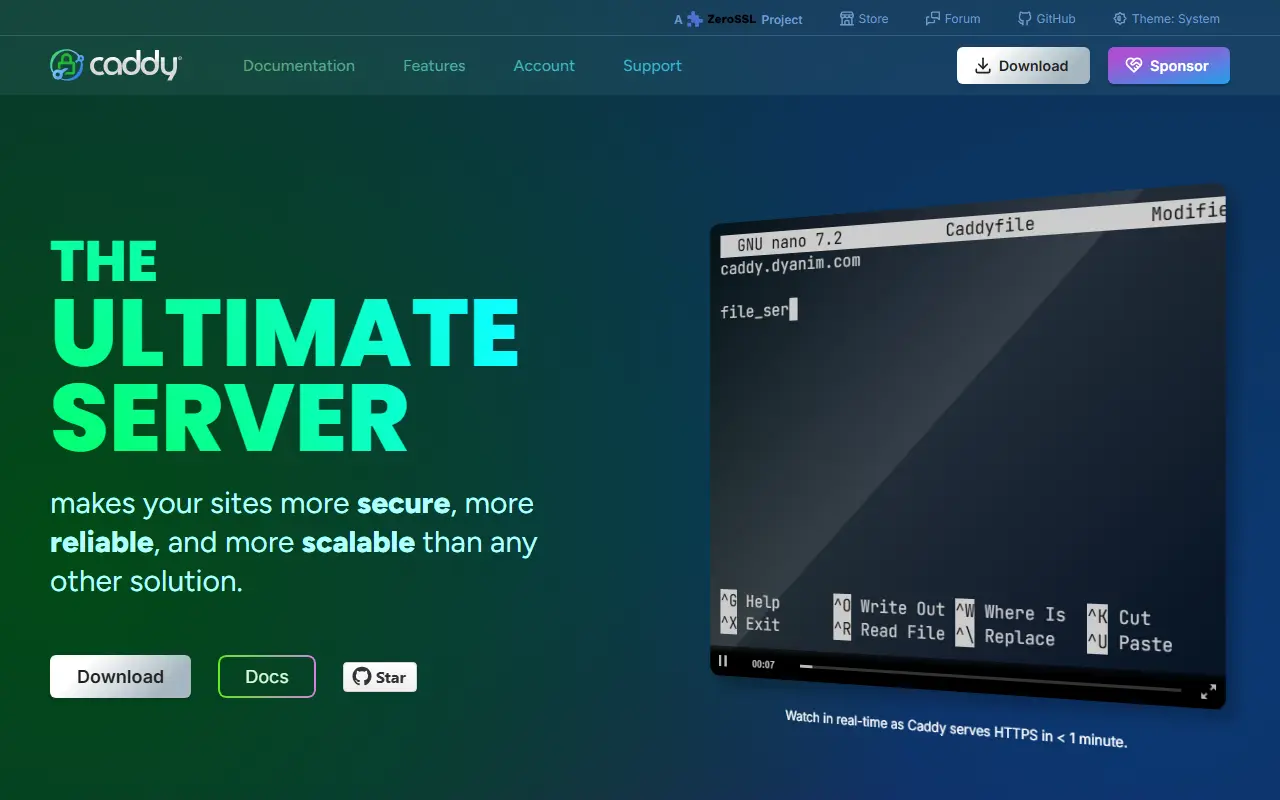
caddyserver.comCaddy homepage screenshot

Caddy is a server platform built to be extended, with TLS enabled by default. It is a web server and reverse proxy written in Go, released under the Apache-2.0 license, and it obtains HTTPS certificates through ZeroSSL and Let's Encrypt, so sites are served over HTTPS without manual certificate work. It runs on macOS, Linux and Windows.

Configuration is flexible: an easy Caddyfile for common cases, a native JSON config for fine control, a JSON API for dynamic changes, and config adapters for other formats. Caddy can manage a local certificate authority for internal names and IP addresses, coordinate with other instances in a cluster, fall back between multiple certificate issuers, and it supports Encrypted ClientHello. All three HTTP versions, 1.1, 2 and 3, work by default.

A modular architecture allows features to be added as plugins, and the binary has no external dependencies, not even libc. Installation can be as simple as downloading the executable from GitHub Releases and placing it on your PATH. It suits developers, small teams and operators who want a reverse proxy or static file server with sensible HTTPS defaults.

Key features

  • Automatic HTTPS with Let's Encrypt and ZeroSSL
  • Caddyfile and native JSON configuration
  • Dynamic configuration through a JSON API
  • Local certificate authority for internal names
  • Supports HTTP versions 1.1, 2 and 3
  • Modular architecture with plugins
  • Single binary with no external dependencies

Pricing: Free and open source under the Apache-2.0 license.

Traefik

A cloud-native reverse proxy and load balancer that configures itself automatically from orchestrators such as Docker and Kubernetes.

GitHub stars
66k
Last commit
yesterday
Latest release
v3.7.18
Licence
MIT
Self-hosted
Yes
traefik.ioTraefik homepage screenshot

Traefik (pronounced like traffic) is an HTTP reverse proxy and load balancer designed to simplify deploying microservices. It is written in Go, released under the MIT license, and designed to integrate with your existing infrastructure and configure itself automatically and dynamically.

Instead of requiring a hand-written route for every service, Traefik listens to a service registry or orchestrator API and generates routes as services are added, removed, upgraded or scaled, without restarts. It connects to Docker, Docker Swarm, Kubernetes, Consul, Etcd, Rancher v2 and Amazon ECS, and routes can still be configured manually if you prefer. A web UI is available, and its topics reference Let's Encrypt.

It is typically deployed on container platforms where services change many times a day, and the project provides a migration guide for major upgrades. It suits platform and DevOps teams running microservices who want routing to follow their orchestrator automatically.

Key features

  • Reverse proxy and load balancer for HTTP
  • Automatic route discovery from orchestrators
  • Configuration updates without restarts
  • Integrations with Docker, Kubernetes and Consul
  • Let's Encrypt certificate support
  • Web UI for inspecting routes

Pricing: Traefik Proxy is free and open source. Traefik Hub API Gateway and API Management are paid products with no published prices; pricing is requested from the vendor.

SafeLine

Self-hosted web application firewall and reverse proxy that filters HTTP traffic to block attacks such as SQL injection, XSS, and bot abuse.

GitHub stars
23k
Last commit
2 days ago
Latest release
v9.4.4
Licence
GPL-3.0
Self-hosted
Yes
ly.safepoint.cloudSafeLine homepage screenshot

SafeLine is a self-hosted web application firewall (WAF) from Chaitin, released under the GPL-3.0 license. It sits in front of a web application as a reverse proxy, so visitors' requests pass through it first. It filters, monitors, and blocks malicious HTTP and HTTPS traffic before that traffic reaches the origin server, and it is also meant to stop unauthorized data from leaving the application.

The firewall targets common web attack classes, including SQL injection, cross-site scripting, command and code injection, server-side request forgery, path traversal, XXE, and remote code execution, as well as brute-force attempts, HTTP floods, and abusive bots. Beyond rule-based filtering, its documented core capabilities include IP-based rate limiting, a web access control list, bot defense, and encryption of the HTML and JavaScript code served to clients.

Security and operations teams that run their own websites or APIs can use it to add a protective layer in front of existing applications. The project is written in Go and hosted on GitHub, and the maintainers provide documentation, a live demo, and a Discord community. Because it is self-hosted, traffic inspection stays on infrastructure you control.

Key features

  • Reverse-proxy WAF filtering HTTP and HTTPS traffic
  • Blocks SQL injection, XSS, and RCE attempts
  • Defense against bot abuse and brute force
  • IP-based rate limiting
  • Web access control list rules
  • HTML and JavaScript code encryption
  • Self-hosted deployment on your own infrastructure

Pricing: Personal is free forever for up to 10 apps. Lite costs $10 per month ($100 per year) and Pro $100 per month ($1000 per year); Ultimate is custom. A 7-day trial is offered.

CrowdSec

CrowdSec is an open-source IDS/IPS, WAF and bot detection engine that blocks malicious IPs using a crowdsourced community blocklist.

GitHub stars
16k
Last commit
yesterday
Latest release
v1.8.2
Licence
MIT
Self-hosted
Yes
docs.crowdsec.netCrowdSec homepage screenshot

CrowdSec is an open-source and participative security solution that detects and blocks malicious behavior on servers. Its Security Engine acts as an all-in-one intrusion detection and prevention system and web application firewall, analyzing log sources and HTTP requests and enforcing decisions through separate remediation components. It runs on Linux, Windows, Docker and Kubernetes.

A Community Blocklist of IP addresses identified as malicious is shared among users, so an address that attacks one participant can be blocked for others before it arrives. Detection and remediation are decoupled, which means logs can be parsed on one machine while blocking happens at a firewall, reverse proxy or CDN elsewhere. A web console supports monitoring and automation.

The README compares it with fail2ban, which reads similar logs, and with ModSecurity, Coraza and naxsi, since the AppSec component is a WAF built on Coraza that loads SecLang rules and the OWASP Core Rule Set. It can also answer suspicious requests with a JavaScript proof-of-work challenge to stop headless scrapers. CrowdSec is written in Go and licensed under MIT.

Key features

  • Log and HTTP request analysis for attack detection
  • Crowdsourced community blocklist of malicious IPs
  • WAF component built on Coraza
  • Remediation at firewall, proxy or CDN
  • Bot detection with proof-of-work challenges
  • Linux, Windows, Docker and Kubernetes support

Pricing: The Security Engine is free and open source under the MIT license.

NGINX

NGINX is a web server, reverse proxy, load balancer, API gateway and content cache, free under a BSD-style license.

GitHub stars
32k
Last commit
4 days ago
Latest release
release-1.31.8
Licence
BSD-2-Clause
Self-hosted
Yes
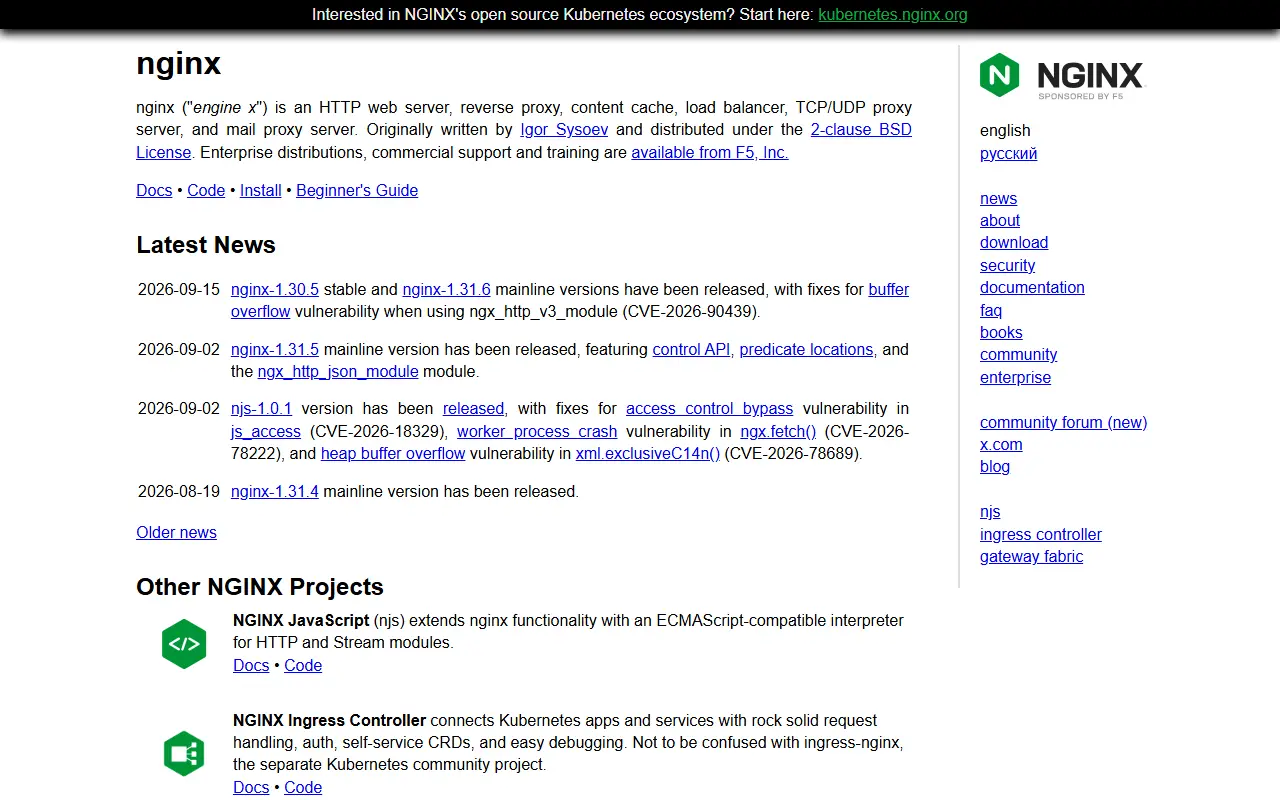
nginx.orgNGINX homepage screenshot

NGINX, pronounced engine x, is a web server that also serves as a reverse proxy, load balancer, API gateway and content cache. The official open source repository is written in C and distributed under a simplified two-clause BSD license. Enterprise distributions, commercial support and training are sold separately by F5, Inc.

NGINX is installed software with binary packages for the major operating systems and Linux distributions, in stable and mainline versions, plus Windows executables and dynamic modules. Typical tasks covered by the project's introduction include installing SSL certificates and enabling TLS, load balancing, rate limiting and content caching. Topics on the repository list TCP, UDP and mail proxying, HTTP/2, HTTP/3 and QUIC. You can also build from source, and the full documentation includes a beginners guide, development guide and directive reference.

Key features

  • Web server and reverse proxy
  • Load balancing across upstream servers
  • TLS termination, HTTP/2 and HTTP/3
  • Rate limiting and content caching
  • TCP, UDP and mail proxying
  • Stable and mainline release channels

Pricing: Free and open source under a two-clause BSD license; enterprise distributions and support are sold by F5, Inc.

Envoy

Envoy is an open source edge and service proxy designed for cloud-native and AI-native applications, providing traffic management, observability, and extensibility.

GitHub stars
29k
Last commit
yesterday
Latest release
v1.40.2
Licence
Apache-2.0
Self-hosted
Yes
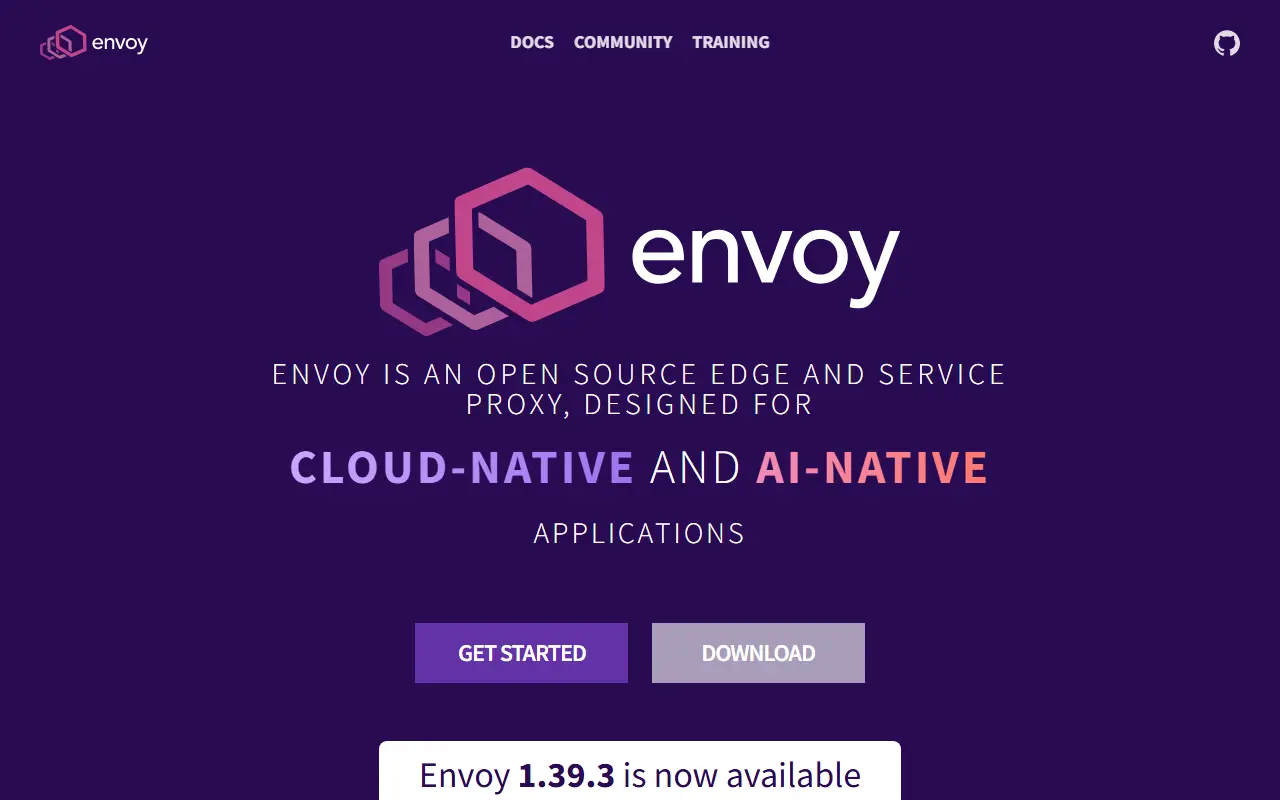
envoyproxy.ioEnvoy homepage screenshot

Envoy is an open source edge and service proxy designed for cloud-native and AI-native applications. It handles traffic for microservices, edge, and AI workloads, including streaming LLM responses and agentic workloads.

It offers deep L7 observability, runtime programmability via xDS APIs, and security features like TLS and mTLS. Envoy is extensible through Wasm, Lua, Go, or Rust modules and external processing.

Key features

  • AI-native traffic handling: streaming LLM responses, agentic workloads, long-lived connections, load balancing for inference backends
  • Extensible data path: Wasm, Lua, Go, Rust dynamic modules, out-of-process external processing
  • Observability: consistent stats, access logs, distributed tracing
  • Runtime programmable: dynamic xDS configuration APIs for routing, clusters, policy
  • Security: TLS termination/origination, mTLS, SNI, JWT auth, RBAC, external authorization

BunkerWeb

Open-source web application firewall built on NGINX that acts as a reverse proxy with a web UI and a plugin system.

GitHub stars
11k
Last commit
yesterday
Latest release
v1.6.17
Licence
AGPL-3.0
Self-hosted
Yes
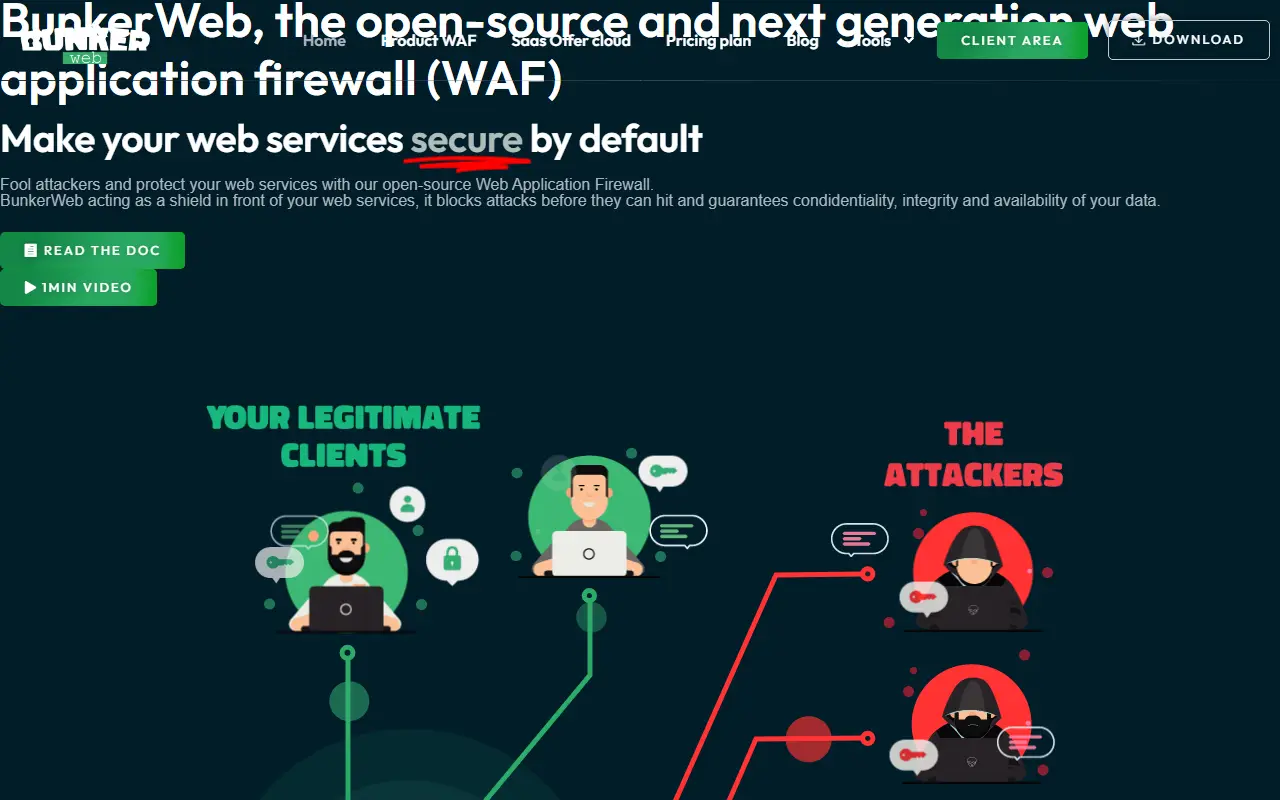
bunkerweb.ioBunkerWeb homepage screenshot

BunkerWeb is an open-source web application firewall that protects web services and aims to make them secure by default. It is a complete web server based on NGINX that sits in front of your applications as a reverse proxy, filtering traffic before it reaches them.

It can be deployed in Linux, Docker, Swarm and Kubernetes environments and is configurable through a command line or a web user interface. Core security features ship in the box, and additional ones can be added with a plugin system. Related topics in the repository include ModSecurity, anti-bot protection, DNS blocklists and Let's Encrypt certificate handling.

The software is written mainly in Python and released under the AGPL-3.0 license. The project provides documentation, a demo, community templates, examples and a forum. Its goal is for administrators to get a reasonable level of protection with minimal configuration while keeping room to tune individual settings for their own use cases.

Key features

  • NGINX-based reverse proxy and WAF
  • Secure-by-default configuration
  • Web UI for managing settings
  • Plugin system for extra protections
  • Deploys on Linux, Docker, Swarm and Kubernetes
  • Anti-bot and DNS blocklist options

Pricing: A free open-source edition is available. Paid self-hosted plans are 49 euros (Shield) and 149 euros (Fortress) a month with a 30-day trial; managed Cloud starts from 639 euros a month and Sentinel is custom.

ModSecurity

Cross-platform web application firewall engine for Apache, IIS and Nginx that inspects HTTP traffic with SecRules-based rule sets.

GitHub stars
9.9k
Last commit
2 days ago
Latest release
v3.0.17
Licence
Apache-2.0
Self-hosted
Yes
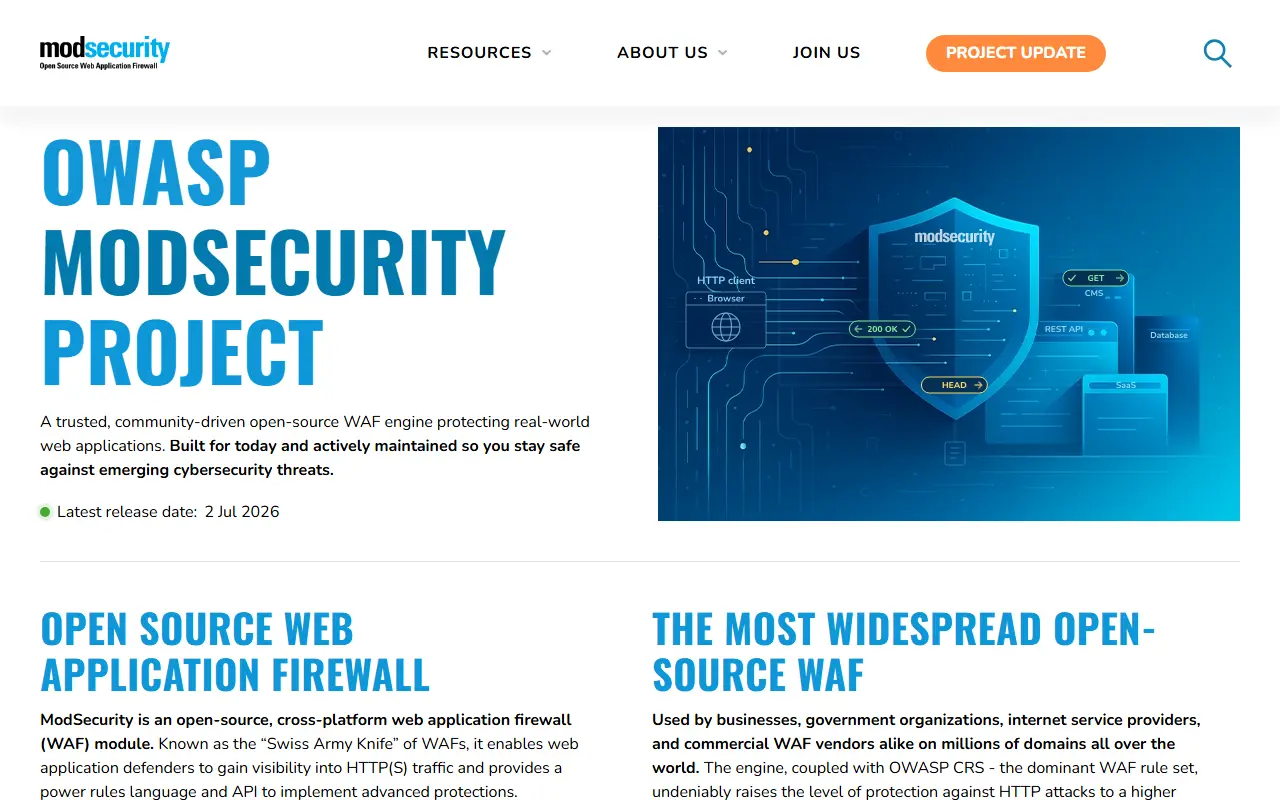
modsecurity.orgModSecurity homepage screenshot

ModSecurity is an open-source, cross-platform web application firewall engine. It started as an Apache module and now serves Apache, IIS and Nginx, protecting web applications from a range of attacks while also allowing HTTP traffic monitoring, logging and real-time analysis through an event-based rule language.

This repository contains libmodsecurity, the ModSecurity v3 library. It acts as an interface to connectors that pass web traffic in, loads and interprets rules written in the SecRules format, and applies them to HTTP content from your application. Version 3 is a full rewrite that removes the Apache dependencies, aims for higher performance and a new architecture, and plans native JSON audit logs.

The older ModSecurity v2.x for Apache is still maintained in its own repository. The code is written in C++ and released under the Apache-2.0 license, under the OWASP organization. Rule sets such as the OWASP Core Rule Set are typically used alongside it.

Key features

  • WAF engine for Apache, IIS and Nginx
  • SecRules rule language
  • HTTP traffic monitoring and logging
  • Connector-based architecture in v3
  • Rewrite without Apache dependencies

Pricing: Free and open source under the Apache-2.0 license.

HAProxy

HAProxy is a free reverse proxy and load balancer for TCP and HTTP applications, offering high availability, written in C.

GitHub stars
7k
Last commit
yesterday
Self-hosted
Yes
git.haproxy.orgHAProxy homepage screenshot

HAProxy is a free reverse proxy offering load balancing, high availability and proxying for applications that use TCP or HTTP. It sits in front of servers, spreads incoming traffic between them and keeps services reachable when individual backends fail.

Repository topics point to features such as HTTP/2, TLS 1.3, caching, FastCGI, IPv6, the PROXY protocol and DDoS mitigation. The documentation is split across several files, including an introduction, a configuration manual, a Lua reference, notes on the SPOE engine, network namespaces under Linux, a management guide, the peers protocol and a regression testing suite, plus a wiki. Load generation utilities are described in separate documents.

HAProxy is written in C, and the repository is the development branch mirrored from git.haproxy.org. The project explains its life cycle in a BRANCHES file so you can choose the right version, offers a Discourse forum, mailing list, Slack and IRC for help, and reserves the issue tracker for bugs and feature requests.

Key features

  • Reverse proxy for TCP and HTTP
  • Load balancing and high availability
  • HTTP/2 and TLS 1.3 support
  • Caching and FastCGI
  • Lua scripting API
  • SPOE engine

Trafficserver

Apache Traffic Server is a caching proxy server that handles HTTP/1.1 and HTTP/2 traffic, used by major CDNs and content providers.

GitHub stars
2k
Last commit
2 days ago
Licence
Apache-2.0
Self-hosted
Yes
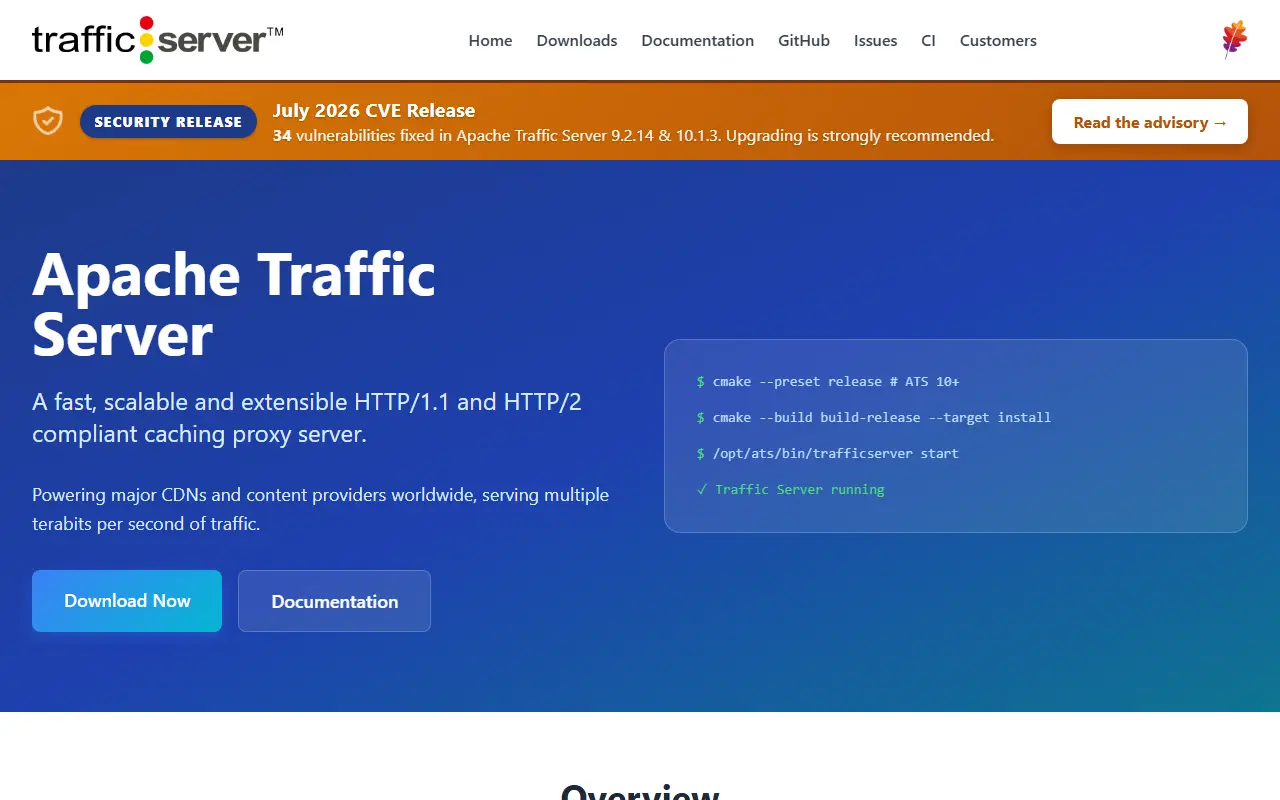
trafficserver.apache.orgTrafficserver homepage screenshot

Apache Traffic Server is a caching proxy server that complies with HTTP/1.1 and HTTP/2. It is designed to handle high traffic volumes, serving multiple terabits per second for major CDNs and content providers worldwide.

The server provides caching to improve response times and reduce server load and bandwidth needs. It also offers proxying capabilities for keep-alive, content filtering, anonymization, and load balancing.

Key features

  • Caching of frequently-requested web pages, images, and web service calls
  • Proxying with keep-alive, content filtering, anonymization, and load balancing
  • Scalable on modern SMP hardware, handling tens of thousands of requests per second
  • Extensible via APIs for writing plug-ins to modify HTTP headers, handle ESI requests, or write custom cache algorithms
  • Full support for HTTP/1.1 and HTTP/2

Commercial Akamai alternatives

Hosted, closed-source products that compete with Akamai. Showing 12 of 25.

See every Akamai alternative on its tool page

Akamai alternatives: questions

What is the best open-source alternative to Akamai?
Caddy is the top-ranked open-source alternative to Akamai on Enlisted: An extensible web server written in Go that speaks HTTP/1.1, 2 and 3 and obtains and renews TLS certificates automatically. Other strong options are Traefik, SafeLine, CrowdSec and NGINX.
What are the best commercial alternatives to Akamai?
Amazon CloudFront, Cloudflare, Fastly, Gcore and Google Cloud CDN are among the hosted, closed-source alternatives to Akamai listed on Enlisted, which lists 25 in total. Compare their pricing and features on each tool page.
Are these Akamai alternatives free?
All 10 are open source, so the code is free to use under its licence, and all of them can be self-hosted on your own server or computer.
How is this list of Akamai alternatives ranked?
By a score built from GitHub stars, star growth over the last 30 days and how recently the code changed. 10 of these projects shipped code in the last 30 days. Data is refreshed daily, and nobody can pay to move up.

People also look for alternatives to…

View all