About pass-import
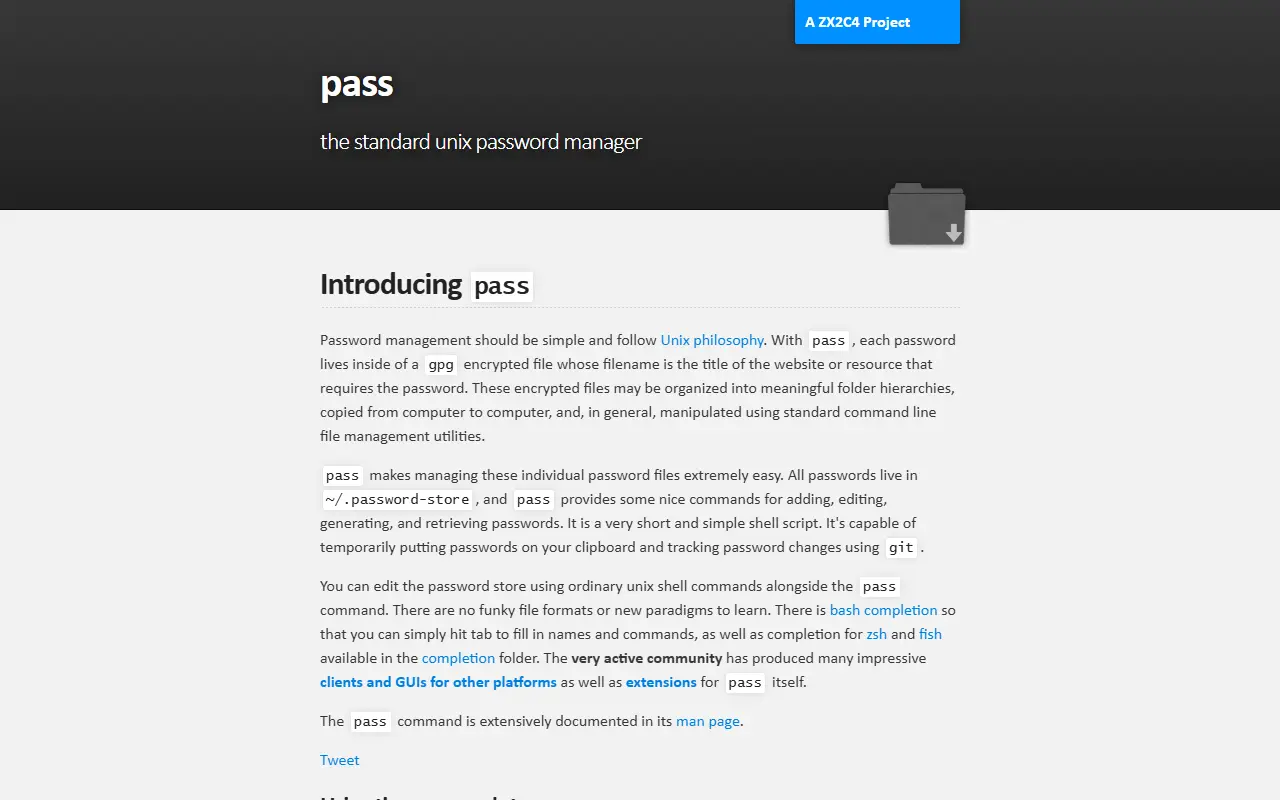
pass import is an extension for pass, the standard Unix password manager, that makes it easy to move an existing password database into a password store. The README says it natively supports importing from 63 password managers, with more easily added. It is aimed at people switching to pass from tools such as 1Password, Aegis, andOTP and many others, with documentation of the formats and how to export from each source.
Entries are imported into the existing default store, which must already be initialized with pass init. By default only the main data is kept, such as password, login, email, URL and group, and options change that behavior. It handles duplicates, works with browserpass, and imports OTP secrets in a way compatible with pass-otp. A companion pimport script goes the other way, exporting passwords to other managers, for example from LastPass into a KeePass database, and currently supports eight managers.
The extension is written in Python and licensed under GPL-3.0. It runs locally on your machine alongside pass and GnuPG, so no passwords pass through a hosted service.
Key features
- Imports from 63 password managers
- Handles duplicate entries
- Compatible with browserpass and pass-otp
- Configurable fields to keep
- pimport script for exporting to other managers
- Runs locally with pass
Good fit for
- →Migrating from a commercial password manager to pass
- →Moving passwords from LastPass into KeePass
- Built with
- Python
- Tags
- password-manager
- pass
- import
- migration
- gnupg
- python
- otp
- security
pass-import: questions and answers
- What is pass-import used for?
- pass-import is an extension for the pass password store that imports entries from dozens of other password managers and can export to several of them. It is a good fit for migrating from a commercial password manager to pass and moving passwords from LastPass into KeePass.
- Is pass-import open source?
- Yes. pass-import is open source under the GPL-3.0 licence. Its source code is on GitHub at roddhjav/pass-import and is written mainly in Python.
- Is pass-import free?
- Yes. pass-import is open source, so the software itself is free to use.
- What are some alternatives to pass-import?
- Similar open-source tools in the Password Management category include Gopass, pwd.sh and Purse. SaaS products in the same category include 1Password, Avira Password Manager and Bitdefender SecurePass.
- Is pass-import actively maintained?
- The most recent commit to pass-import was on 7 June 2026, and the latest release is v3.5, published on 25 February 2024. The project has 917 stars on GitHub.
Open-source alternatives to pass-import
See all
Gopass
Password Management
The slightly more awesome standard unix password manager for teams
MITvs Keeper★ 7.2kpwd.sh
Password Management
Manage secrets with Bash and GnuPG symmetric encryption
MIT★ 1.6kPurse
Password Management
Manage secrets with Bash and GnuPG asymmetric encryption (YubiKey)
MIT★ 615Vaultwarden
Password Management
Unofficial Bitwarden compatible server written in Rust, formerly known as bitwarden_rs
AGPL-3.0vs 1Password★ 68k
KeePassXC
Password Management
KeePassXC is a cross-platform community-driven port of the Windows application “KeePass Pa
OSSvs Dashlane★ 29k
Bitwarden
Password Management
Bitwarden infrastructure/backend (API, database, Docker, etc).
OSSvs 1Password★ 20k
SaaS alternatives to pass-import
See all
1Password
Password Management
Password manager for individuals, families and teams with shared vaults and passkeys
SaaS
Avira Password Manager
Password Management
Password manager from Avira with a free version and paid Pro features
SaaS
Bitdefender SecurePass
Password Management
Password manager from Bitdefender with passkey support and a digital wallet
SaaS
Codebook
Password Management
Secure password and data vault for Apple and Android devices by Zetetic
SaaS
Dashlane
Password Management
Password manager with autofill, passkey support, dark web monitoring and a built-in VPN
SaaS
Delinea Secret Server
Password Management
Privileged access and credential vault for storing and rotating enterprise secrets
SaaS