7,363 open-source and SaaS tools, with GitHub stats refreshed every day.

5 alternatives ranked by real activity

Open-source Twilio alternatives

A curated, ranked list of the 5 best open-source alternatives to Twilio.

The best open-source alternative to Twilio is LiveKit. If that doesn't suit you, other good options are OpenWA, Fonoster, FreeSWITCH and CodeChat.

Twilio alternatives are mainly backend-as-a-service tools, but some are also API tools and video conferencing tools. 4 of them shipped code in the last 30 days, 5 can be self-hosted, and 4 use a permissive licence.

Last updated October 2, 2026 · ranked by GitHub stars, growth and recent commits

LiveKit

LiveKit is an open-source realtime server and SDK platform for building voice, video and AI-agent applications on WebRTC.

GitHub stars
21k
Last commit
yesterday
Latest release
v1.13.7
Licence
Apache-2.0
Self-hosted
Yes
Hosted version
Available
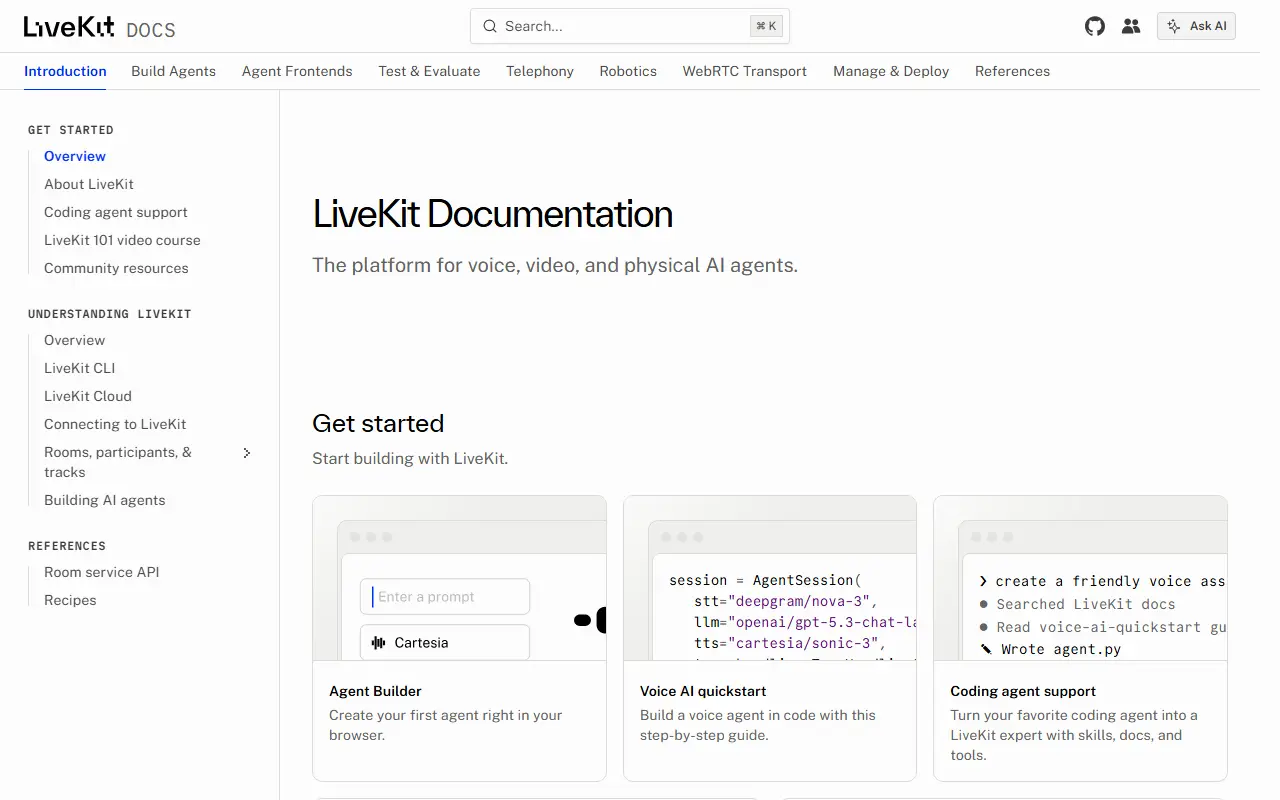
docs.livekit.ioLiveKit homepage screenshot

LiveKit is an open-source platform for realtime audio, video and data, aimed at developers building voice, video and AI agent applications. This repository holds the LiveKit server, a distributed WebRTC selective forwarding unit (SFU) written in Go on top of the Pion WebRTC implementation.

People, devices and AI agents join the same room as participants, and agents can be dispatched into rooms automatically or on demand. The server offers speaker detection, simulcast and selective subscription, uses JWT for authentication, and handles UDP, TCP and TURN connectivity. SDKs cover web, mobile, desktop, embedded and server environments, and a separate Agents framework in Python and Node.js supports code-first voice agents.

The server ships as a single binary and can be deployed with Docker or Kubernetes on your own infrastructure under the Apache 2.0 license. The vendor also runs LiveKit Cloud, a managed service that handles deployment and observability.

Key features

  • Distributed WebRTC SFU server written in Go
  • Rooms where people and AI agents meet
  • Simulcast and speaker detection
  • JWT authentication for participants
  • SDKs for web, mobile, desktop and server
  • Single binary, Docker or Kubernetes deployment

Pricing: The server is free and open source under Apache 2.0; LiveKit Cloud is offered as a managed option by the vendor.

OpenWA

A free, self-hosted WhatsApp API gateway with a pluggable architecture, multi-session support, webhooks and a React dashboard for sessions and API keys.

GitHub stars
15k
Last commit
2 days ago
Latest release
v0.23.7
Licence
MIT
Self-hosted
Yes
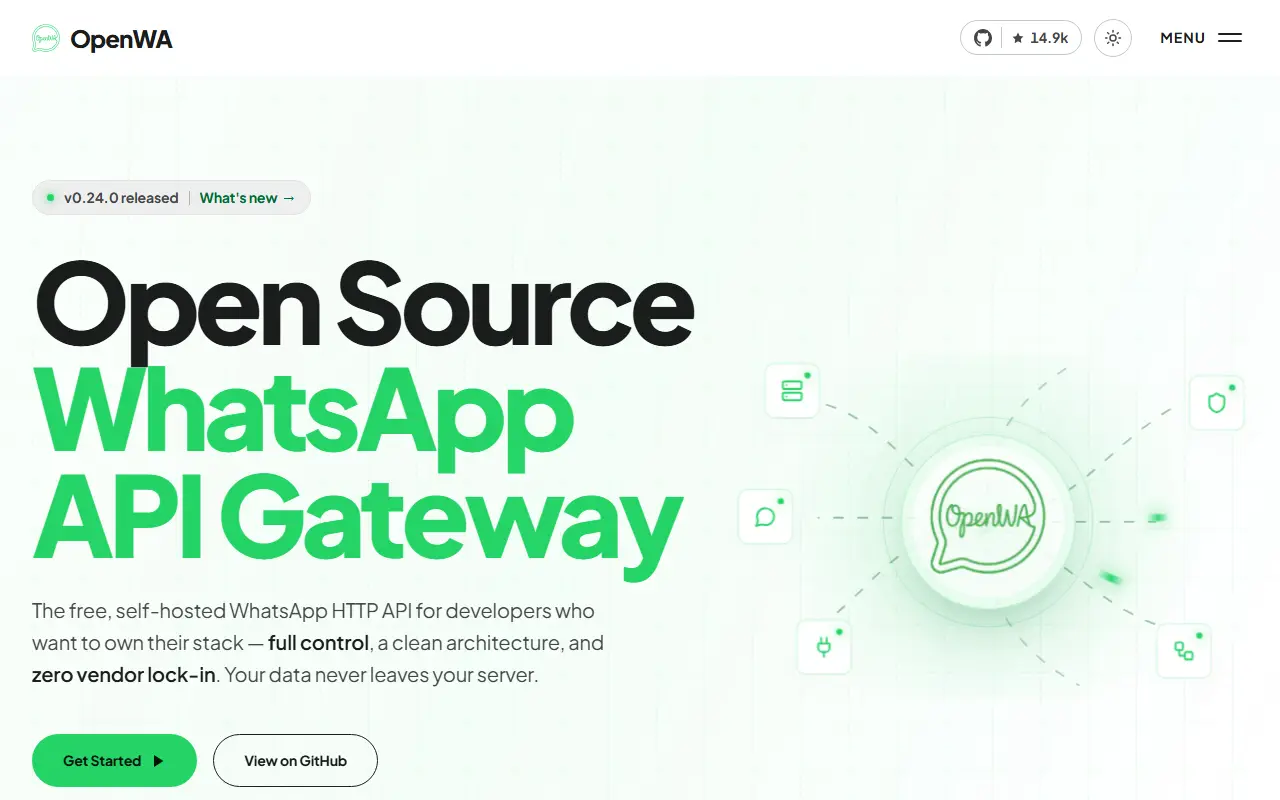
open-wa.orgOpenWA homepage screenshot

OpenWA is an open-source WhatsApp API gateway for developers who want to own their messaging stack, with no lock-in to a vendor and no hidden paywalls. It exposes WhatsApp sessions through an API and webhooks so you can build bots, notifications and automation, and topics reference WhatsApp Web, indicating it works through that interface.

Its pluggable architecture lets you pick the database engine (SQLite or PostgreSQL), the storage backend for backups and migrations (local or S3) and the cache layer (disabled or Redis) through configuration rather than code changes. Message media is returned inline to API and webhook consumers and is not automatically stored in the backend. A React dashboard manages sessions, webhooks and API keys, and it can run multiple sessions at once.

OpenWA is written in TypeScript and licensed under MIT, with documentation and an API reference. Because it automates WhatsApp through an unofficial route, users should review WhatsApp's terms of service and the risk of account restrictions before relying on it for important accounts. It suits developers prototyping WhatsApp integrations and small-scale automation.

Key features

  • Self-hosted WhatsApp API gateway
  • Webhooks for incoming events
  • Runs multiple sessions at once
  • React dashboard for sessions and API keys
  • SQLite or PostgreSQL storage
  • Optional Redis cache and S3 backups

Pricing: Free and open source under the MIT license.

Fonoster

An open-source programmable telecommunications stack, positioned as an alternative to Twilio, for building voice applications, PBX features and cloud telephony.

GitHub stars
8.1k
Last commit
15 days ago
Latest release
v0.22.14
Licence
MIT
Self-hosted
Yes
fonoster.comFonoster homepage screenshot

Fonoster is an open-source cloud communications platform presented as an alternative to Twilio. Its stated aim is a programmable telecommunications stack that lets businesses connect telephony services with the internet through a cloud-based utility, and the topics mention VoIP, WebRTC, UCaaS and CPaaS.

Main features include multitenancy, easy deployment of PBX functionality, programmable voice applications, a Node.js SDK, support for Amazon S3, secured API endpoints with Let's Encrypt, OAuth2 and JWT authentication, role-based access control, a plugin-based CLI and Google speech APIs. A voice application is a server process that drives a call using verbs such as Answer, Hangup, Play, Say, Gather, Stream, Dial, Record, Mute and Unmute, and everything in Fonoster is API first, including starting a call with the SDK.

Fonoster is written in TypeScript on Node.js and designed for Kubernetes deployments. It is licensed under MIT and aimed at developers and companies building voice bots, IVR systems and cloud phone features that they can run on their own infrastructure.

Key features

  • Programmable voice applications
  • PBX functionality deployment
  • SDK for Node.js developers
  • Multitenancy with role-based access control
  • OAuth2 and JWT authentication
  • Speech recognition and synthesis hooks
  • Plugin-based command-line tool

Pricing: Free and open source under the MIT licence.

FreeSWITCH

An open-source software-defined telecom stack that turns commodity hardware into a telephony platform for VoIP, SIP and WebRTC applications.

GitHub stars
5.2k
Last commit
today
Latest release
v1.11.3
Self-hosted
Yes
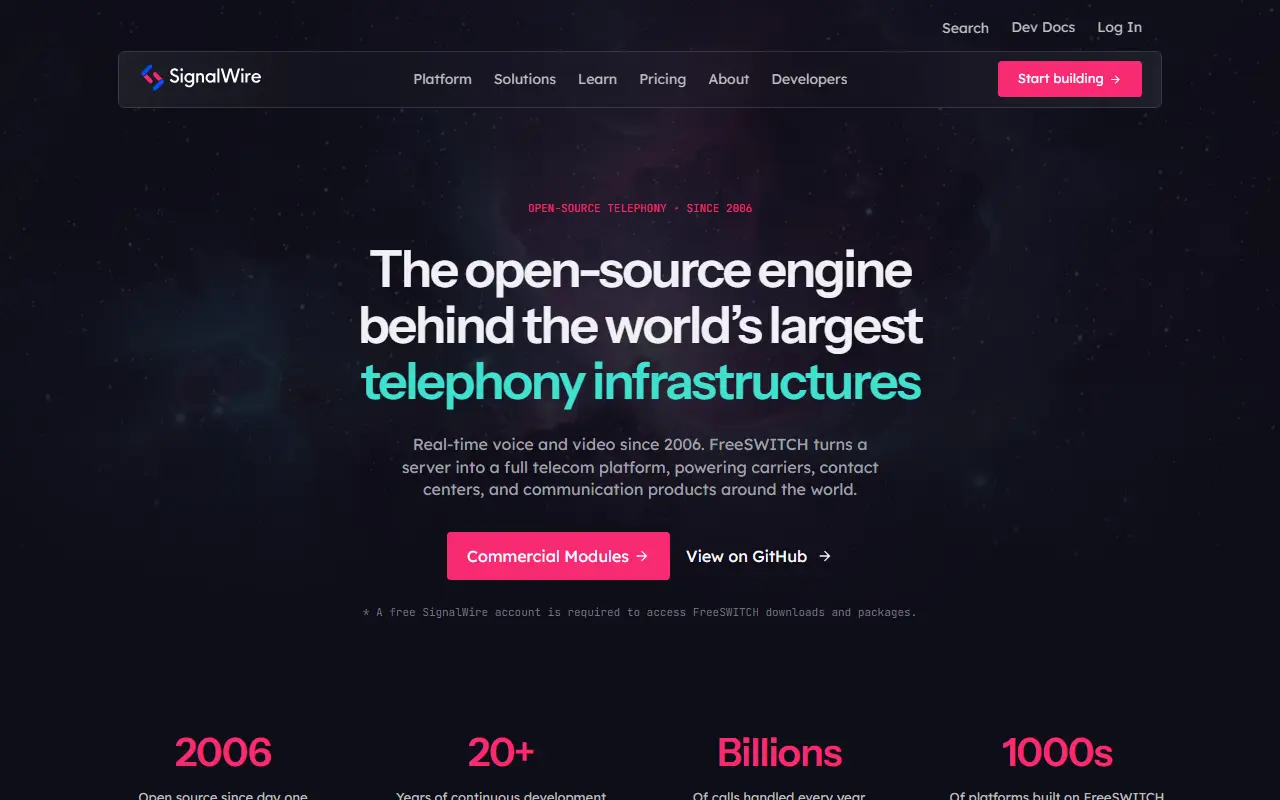
freeswitch.comFreeSWITCH homepage screenshot

FreeSWITCH is a software-defined telecom stack that replaces proprietary telecom switches with software running on ordinary hardware, from a Raspberry Pi to a multi-core server. It is used to build voice and communications systems around standards such as SIP, WebRTC and VoIP.

The source code is available on GitHub and can be built for Linux, Windows, macOS and BSD, with an issue tracker and pull request workflow in the repository. Documentation, release notes and step-by-step installation tutorials from packages are published online. A mod_signalwire module included in the codebase links a FreeSWITCH instance to the SignalWire cloud platform.

SignalWire, founded by FreeSWITCH's original developers, is the primary sponsor and offers services such as SMS, SIP and programmable telecom that can extend a deployment. Teams that need commercially supported builds can contact the core team about professional services. The project is written in C.

Key features

  • SIP and VoIP call handling
  • WebRTC support
  • Builds for Linux, Windows, macOS and BSD
  • Scales from Raspberry Pi to multi-core servers
  • mod_signalwire cloud integration
  • Professional support available

CodeChat

Self-hosted REST API server in Node.js and TypeScript for building WhatsApp chat services, bots and automations without writing Node code yourself.

GitHub stars
1.3k
Last commit
2 mo ago
Latest release
v1.3.7
Licence
Apache-2.0
Self-hosted
Yes
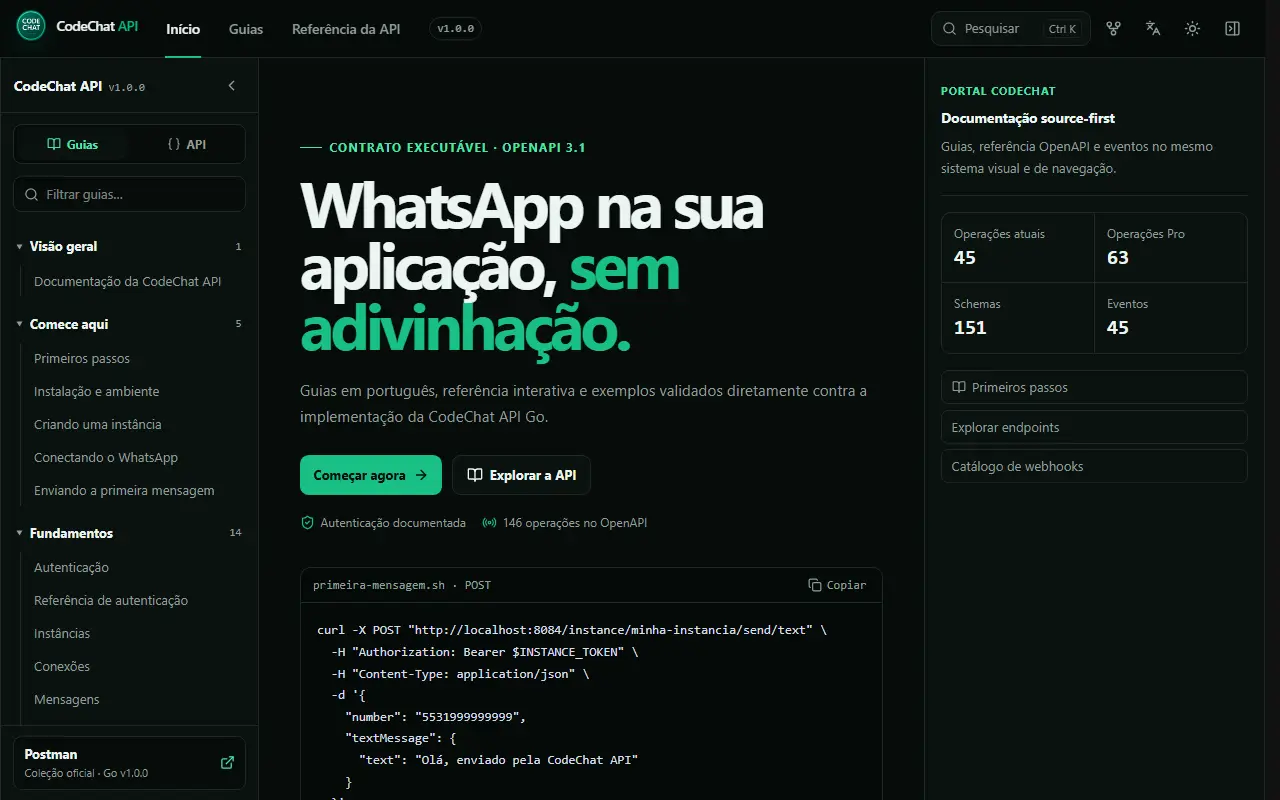
docs.codechat.devCodeChat homepage screenshot

CodeChat WhatsApp API is a server you run yourself that exposes WhatsApp messaging functions over a REST API. It is meant for building multi-service chats, support bots and other systems that use WhatsApp, and callers can work in any programming language because they only make HTTP requests.

The setup guide uses Docker for infrastructure, with PostgreSQL as a required database managed through Prisma migrations, Node.js installed through NVM and the process kept running with pm2. Configuration comes from an environment file copied from the provided development example. The project is written in TypeScript, released under the Apache-2.0 licence and documented on its own docs site.

Key features

  • REST API for WhatsApp chats and bots
  • Language-agnostic HTTP interface
  • PostgreSQL storage with Prisma migrations
  • Docker-based infrastructure setup
  • Process management with pm2

Pricing: Free and open source under the Apache-2.0 licence.

Twilio alternatives: questions

What is the best open-source alternative to Twilio?
LiveKit is the top-ranked open-source alternative to Twilio on Enlisted: LiveKit is an open-source realtime server and SDK platform for building voice, video and AI-agent applications on WebRTC. Other strong options are OpenWA, Fonoster, FreeSWITCH and CodeChat.
Are these Twilio alternatives free?
All 5 are open source, so the code is free to use under its licence, and all of them can be self-hosted on your own server or computer. 1 also offers a paid or managed cloud version if you'd rather not host it yourself.
How is this list of Twilio alternatives ranked?
By a score built from GitHub stars, star growth over the last 30 days and how recently the code changed. 4 of these projects shipped code in the last 30 days. Data is refreshed daily, and nobody can pay to move up.

People also look for alternatives to…

View all