7,363 open-source and SaaS tools, with GitHub stats refreshed every day.

6 alternatives ranked by real activity

Open-source TigerGraph alternatives

A curated, ranked list of the 6 best open-source alternatives to TigerGraph.

The best open-source alternative to TigerGraph is Dgraph. If that doesn't suit you, other good options are Neo4j, ArangoDB, NebulaGraph and FalkorDB.

TigerGraph alternatives are mainly databases, but some are also data pipeline & ETL tools. 6 of them shipped code in the last 30 days, 6 can be self-hosted, and 3 use a permissive licence.

Last updated October 3, 2026 · ranked by GitHub stars, growth and recent commits

Dgraph

A horizontally scalable, distributed graph database with native GraphQL support, ACID transactions and consistent replication, written in Go.

GitHub stars
22k
Last commit
yesterday
Latest release
v25.4.1
Licence
Apache-2.0
Self-hosted
Yes
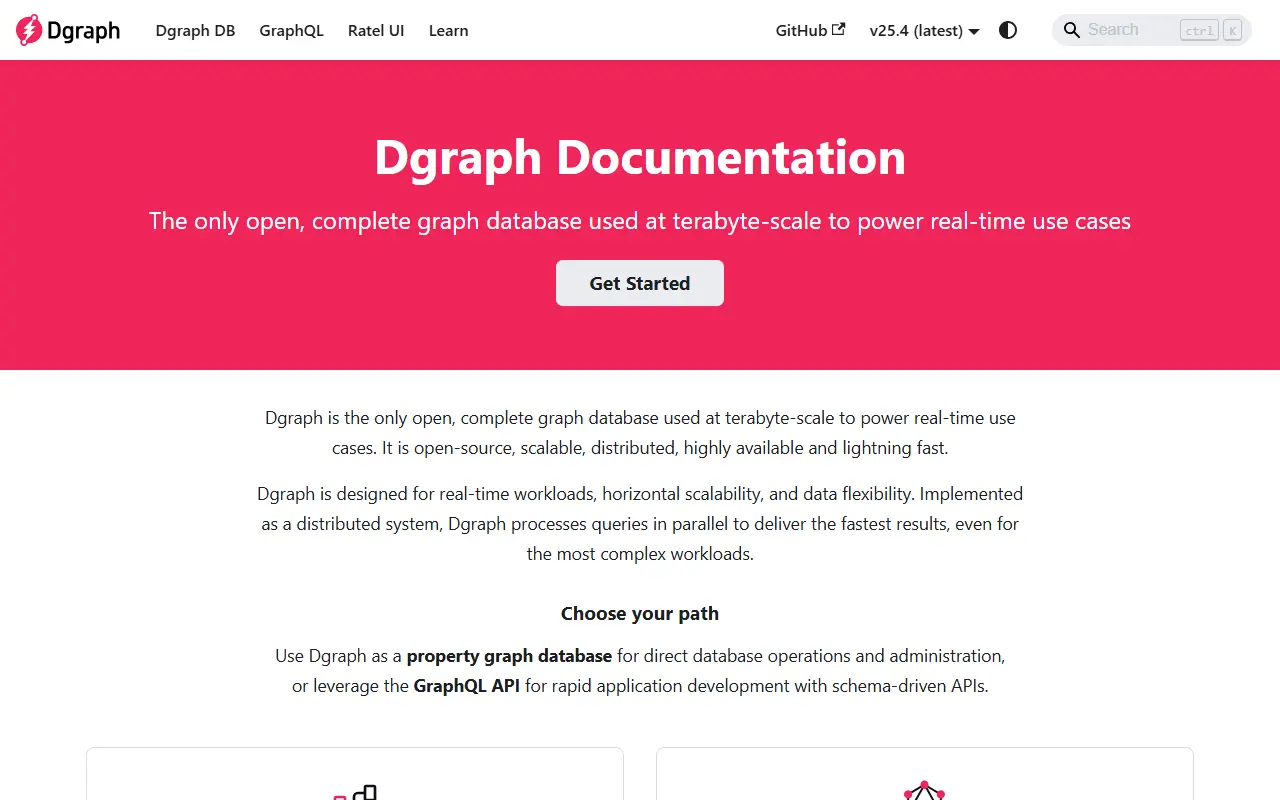
dgraph.ioDgraph homepage screenshot

Dgraph is a distributed database that stores data as a graph while exposing it through GraphQL. It scales horizontally across machines and offers ACID transactions, consistent replication and linearizable reads, so a cluster behaves predictably even as it grows.

The project was built from scratch around the way graph data is laid out on disk, which it says reduces disk seeks and network calls in a cluster and improves query performance and throughput. The stated aim is production-level scale with latency low enough to answer live user queries across terabytes of structured data. Clients send queries in GraphQL syntax and receive JSON or Protocol Buffers over gRPC and HTTP. Topics point to uses such as knowledge graphs.

Dgraph is written in Go and licensed under Apache-2.0. The README describes it as production-ready at version 25 and in use at multiple large companies, and it officially supports Linux on amd64 and arm64 architectures. It is a fit for teams modeling highly connected data, such as social graphs, recommendations or knowledge bases, who also want a GraphQL API.

Key features

  • Native GraphQL database with graph backend
  • ACID transactions across a cluster
  • Consistent replication and linearizable reads
  • Horizontal scaling and distribution
  • JSON and Protocol Buffers responses
  • gRPC and HTTP APIs

Pricing: Free and open source under the Apache-2.0 license.

Read more about DgraphWebsite GitHub

Neo4j

A graph database that stores data as connected nodes and relationships and is queried with the Cypher language, widely used for highly connected data.

GitHub stars
17k
Last commit
11 days ago
Latest release
3.2.0-alpha08
Licence
GPL-3.0
Self-hosted
Yes
Hosted version
Available
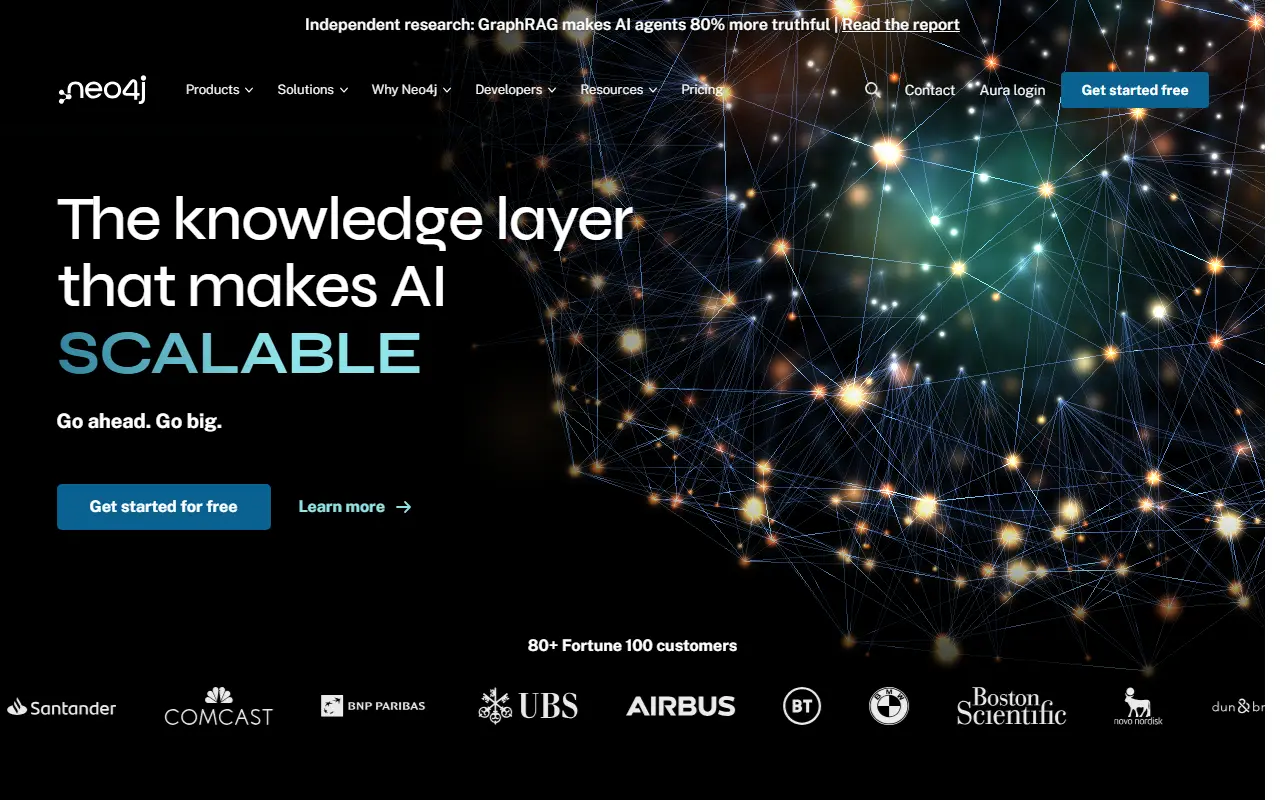
neo4j.comNeo4j homepage screenshot

Neo4j is a graph database written in Java. Instead of tables, it stores data as nodes and relationships, which makes it a good fit for problems where the connections between records matter, such as social networks, fraud detection, recommendations and knowledge graphs. Data is queried with Cypher, the graph query language associated with the project.

The repository contains the open-source community edition of the database engine. Topics tag it as a NoSQL graph database and graphdb, and the project's tagline is simply that graphs are for everyone. The repository's homepage could not be fetched while preparing this entry, so details here are limited to the repository description and widely known facts about the product.

The community edition is licensed under GPL-3.0, while commercial editions with additional enterprise features and a managed cloud service are sold by Neo4j, Inc. You can run the database on your own servers or use the hosted service. It is aimed at developers and data teams modeling relationship-heavy data.

Key features

  • Native graph storage with nodes and relationships
  • Cypher query language
  • NoSQL graph database engine
  • Community edition source code
  • Suited to connected-data problems

Pricing: A free AuraDB tier exists. Professional starts at $0.09 per GB per hour and Business Critical at $0.20 per GB per hour; Virtual Dedicated Cloud is quoted on request.

Read more about Neo4jWebsite GitHub

ArangoDB

A native multi-model database for documents, graphs and key-values, queried with an SQL-like language and including built-in search, available self-managed or as a cloud service.

GitHub stars
14k
Last commit
today
Self-hosted
Yes
Hosted version
Available
arangodb.comArangoDB homepage screenshot

ArangoDB is a multi-model database that stores documents, graphs and key-value data in a single engine. Instead of running separate systems for each data model, applications query connected data through one SQL-like language, with JavaScript extensions available for custom logic.

Every node in a graph is a JSON document, so existing document data can be imported and relationships can be queried across multiple levels of joins. ArangoSearch, an integrated search engine, adds text search and ranking. For scale and resilience the database can shard data horizontally across machines and replicate it to cluster nodes with automatic failover.

ArangoDB can be installed from a download or started in Docker, and runs on-premises or in any cloud. The Arango Managed Platform (AMP) creates deployments on major cloud providers and can be tried for free. A free Community Edition and a commercial Enterprise Edition without a dataset size limit are offered; the repository lists its license simply as Other, so check the terms before production use.

Key features

  • Document, graph and key-value data models
  • SQL-like query language
  • JavaScript extensions for custom logic
  • ArangoSearch full-text search and ranking
  • Horizontal scaling through sharding
  • Replication with automatic failover
  • Managed cloud deployments via AMP

Pricing: The Community Edition is open source and free for evaluation and non-commercial use. Enterprise Edition, the platform suites and the managed cloud are priced on request.

NebulaGraph

NebulaGraph is a distributed, horizontally scalable open-source graph database with an OpenCypher-compatible query language and Raft-based consistency.

GitHub stars
12k
Last commit
25 days ago
Latest release
v3.8.0
Licence
Apache-2.0
Self-hosted
Yes
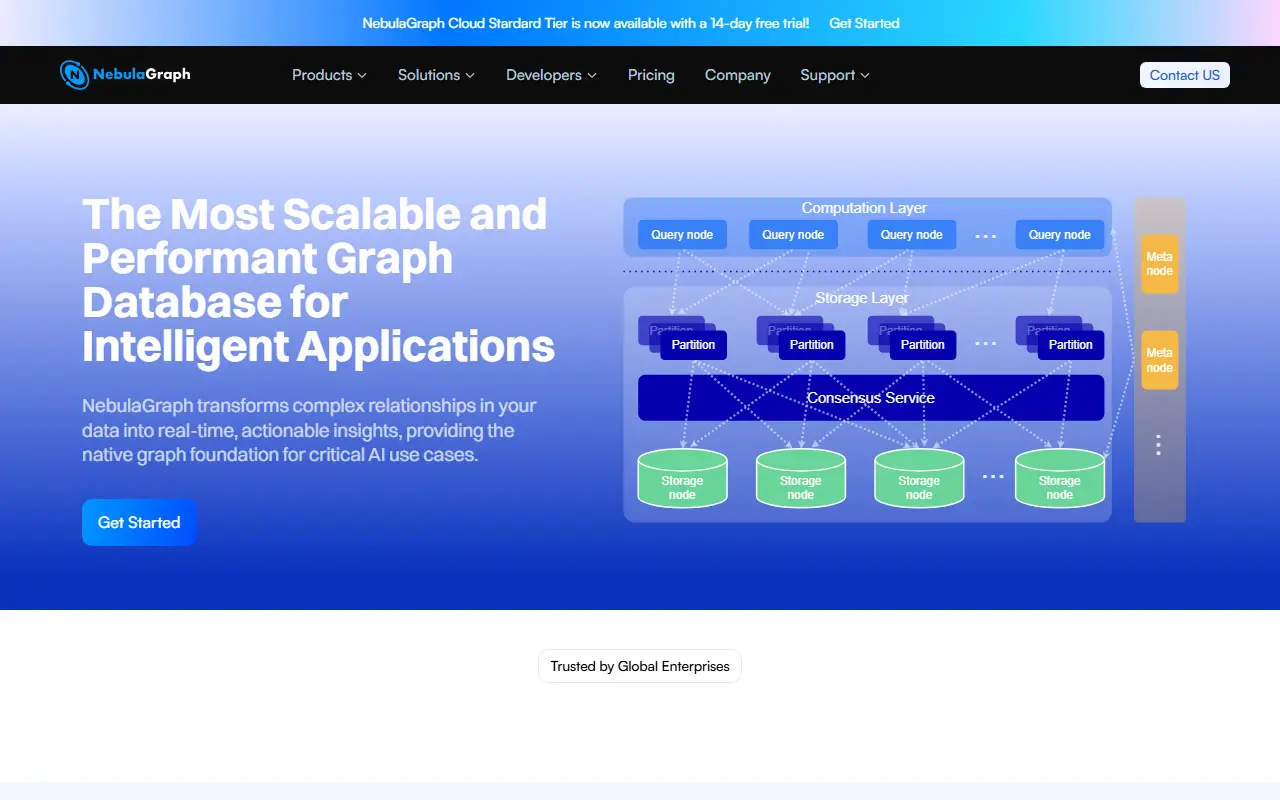
nebula-graph.ioNebulaGraph homepage screenshot

NebulaGraph, shown here as Nebula, is an open-source graph database designed to handle large volumes of connected data with low latency. It is distributed and scales out horizontally, and it is used for areas such as social networks, recommendation systems, knowledge graphs, security and fraud scenarios and AI.

Its architecture is symmetrically distributed with storage and computing separated, and it uses the Raft protocol for strong data consistency. Queries are written in a language compatible with openCypher, and role-based access control adds security. The project also provides different graph analytics algorithms, a set of tools for managing and monitoring a deployment, and topics that reference GraphRAG and knowledge graphs for AI.

NebulaGraph is written in C++ under the Apache 2.0 licence, so the source can be downloaded, modified and deployed as a back-end service. It can be built from source or tried in the cloud on AWS, and there is documentation, an FAQ and community discussions. It is part of the CNCF database landscape.

Key features

  • Distributed graph storage and querying
  • OpenCypher-compatible query language
  • Raft-based strong consistency
  • Storage and computing separation
  • Horizontal scalability across nodes
  • Role-based access control
  • Built-in graph analytics algorithms

Pricing: The open-source edition is the free tier. Enterprise Edition and the pay-as-you-go NebulaGraph Cloud list no prices in the page text; the cloud offers a 14-day free trial.

FalkorDB

FalkorDB is a low-latency graph database built on sparse matrices and linear algebra, aimed at knowledge graphs and GraphRAG for LLM applications.

GitHub stars
6.6k
Last commit
yesterday
Latest release
v6.0.1
Self-hosted
Yes
Hosted version
Available
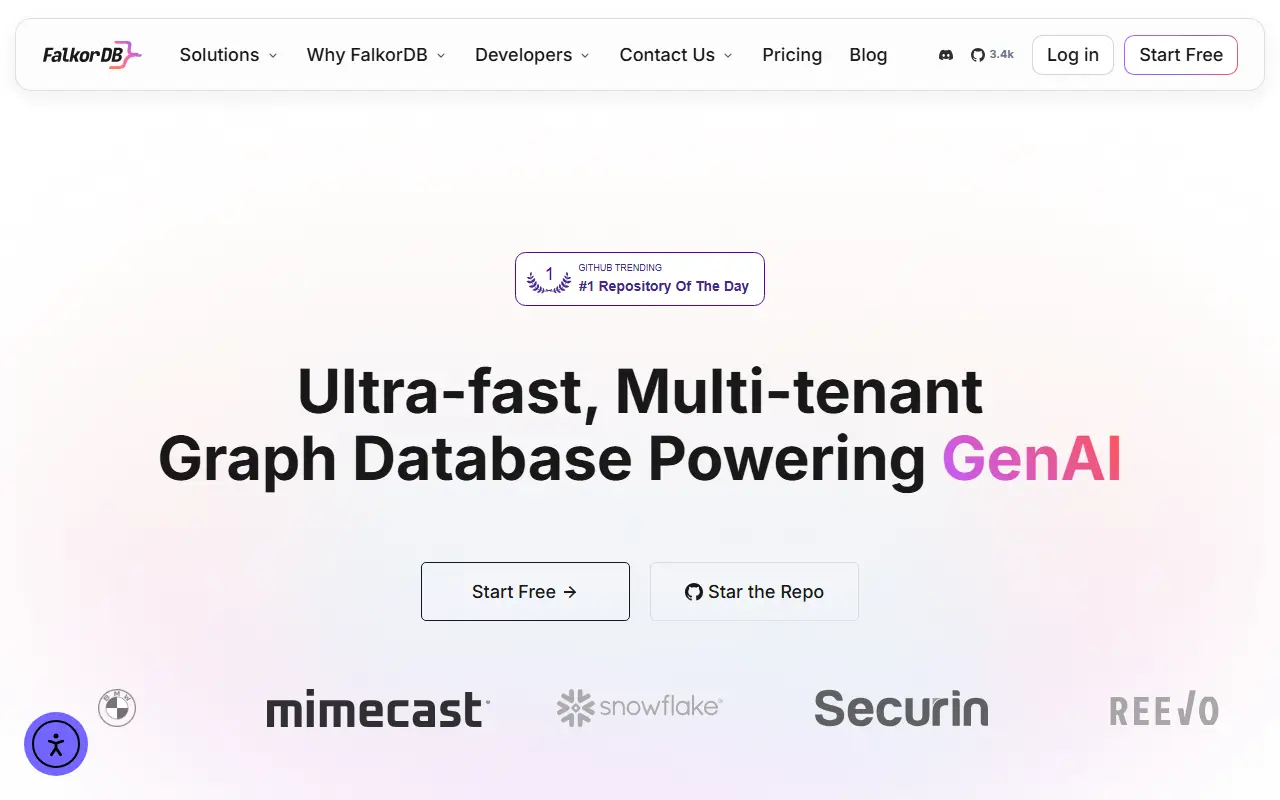
falkordb.comFalkorDB homepage screenshot

FalkorDB is a graph database built for low-latency queries, with a particular focus on supplying knowledge graphs to large language models in GraphRAG setups. It stores data as property graphs and represents connections with sparse adjacency matrices, which the authors say keeps storage compact and traversal fast.

Instead of walking edges one at a time, queries are executed through linear algebra operations built on GraphBLAS. The project lists generative AI applications, agent memory, fraud detection and cloud security as target uses, and it is multi-tenant, so many separate graphs can share one deployment. Graphs are queried with Cypher-style statements, and repository topics also point to developer tooling and real-time use.

The code is published on GitHub under a license that GitHub classifies as 'Other', so check the repository's license terms before commercial use. You can run FalkorDB yourself, commonly as a container, or use the vendor's hosted cloud database service.

Key features

  • Property graph storage with sparse adjacency matrices
  • Linear algebra query execution via GraphBLAS
  • Cypher-style graph queries
  • Multi-tenant graph hosting
  • Knowledge graph support for GraphRAG
  • Low-latency retrieval for LLM applications

Pricing: Free cloud tier for MVPs. Startup starts at $73 per GB per month and Pro at $350 per month for 8GB; Enterprise pricing is tailored.

GraphScope

GraphScope is Alibaba's open-source system for large-scale graph analytics, interactive queries and graph neural networks, driven from Python.

GitHub stars
3.6k
Last commit
10 days ago
Latest release
v0.31.0
Licence
Apache-2.0
Self-hosted
Yes
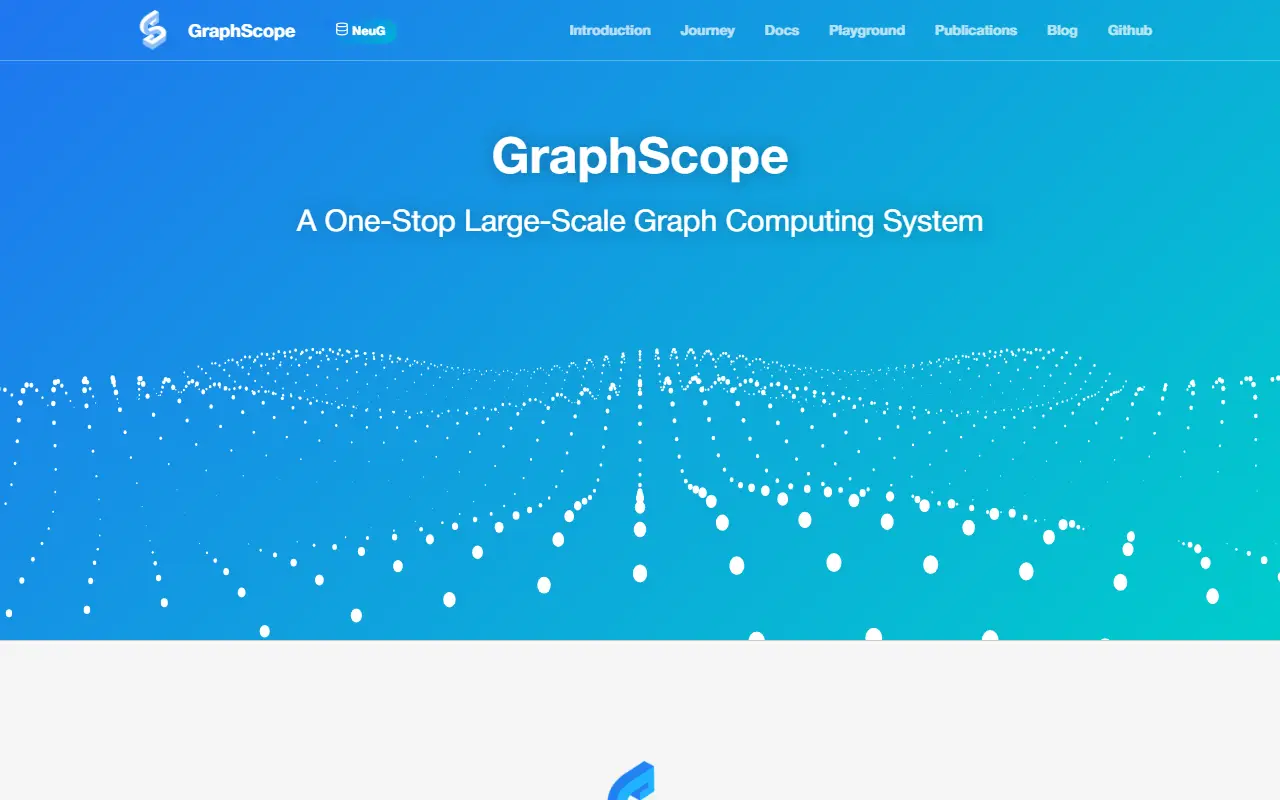
graphscope.ioGraphScope homepage screenshot

GraphScope is a unified distributed graph computing platform from Alibaba. It offers a single environment where many kinds of graph workloads run across a computer cluster, controlled from Python, so data scientists do not have to stitch several graph engines together.

It combines several Alibaba technologies: GRAPE for analytics, MaxGraph for interactive queries and Graph-Learn for graph neural network computation. The project also points to GraphScope Flex, a modular evolution described as LEGO-inspired. Repository topics list Gremlin, graph analytics, big data and data science. The engine is written in C++.

GraphScope is licensed under Apache-2.0 and is deployed on your own cluster, for example on Kubernetes. It suits teams working with very large graphs, such as social networks, knowledge graphs and fraud detection, who want analytics and machine learning in one system.

Key features

  • Distributed graph analytics
  • Interactive graph queries with Gremlin
  • Graph neural network training
  • Python interface for clusters
  • Built on GRAPE, MaxGraph and Graph-Learn
  • Modular GraphScope Flex variant

Pricing: Free and open source under the Apache-2.0 license.
TigerGraph alternatives: questions

What is the best open-source alternative to TigerGraph?
Dgraph is the top-ranked open-source alternative to TigerGraph on Enlisted: A horizontally scalable, distributed graph database with native GraphQL support, ACID transactions and consistent replication, written in Go. Other strong options are Neo4j, ArangoDB, NebulaGraph and FalkorDB.
Are these TigerGraph alternatives free?
All 6 are open source, so the code is free to use under its licence, and all of them can be self-hosted on your own server or computer. 3 also offer a paid or managed cloud version if you'd rather not host it yourself.
How is this list of TigerGraph alternatives ranked?
By a score built from GitHub stars, star growth over the last 30 days and how recently the code changed. 6 of these projects shipped code in the last 30 days. Data is refreshed daily, and nobody can pay to move up.

People also look for alternatives to…

View all