7,363 open-source and SaaS tools, with GitHub stats refreshed every day.

11 alternatives ranked by real activity

Open-source Telegram alternatives

A curated, ranked list of the 11 best open-source alternatives to Telegram.

The best open-source alternative to Telegram is Signal Android. If that doesn't suit you, other good options are SimpleX Chat, Signal Desktop, Element and Signal iOS.

Telegram alternatives are mainly team chat tools. 10 of them shipped code in the last 30 days, 9 can be self-hosted, and 1 uses a permissive licence.

Last updated October 2, 2026 · ranked by GitHub stars, growth and recent commits

Signal Android

Signal Android is the open-source Android client of the Signal private messenger, offering encrypted messages and voice or video calls.

GitHub stars
29k
Last commit
today
Latest release
v8.28.4
Licence
AGPL-3.0
Self-hosted
No
Hosted version
Available
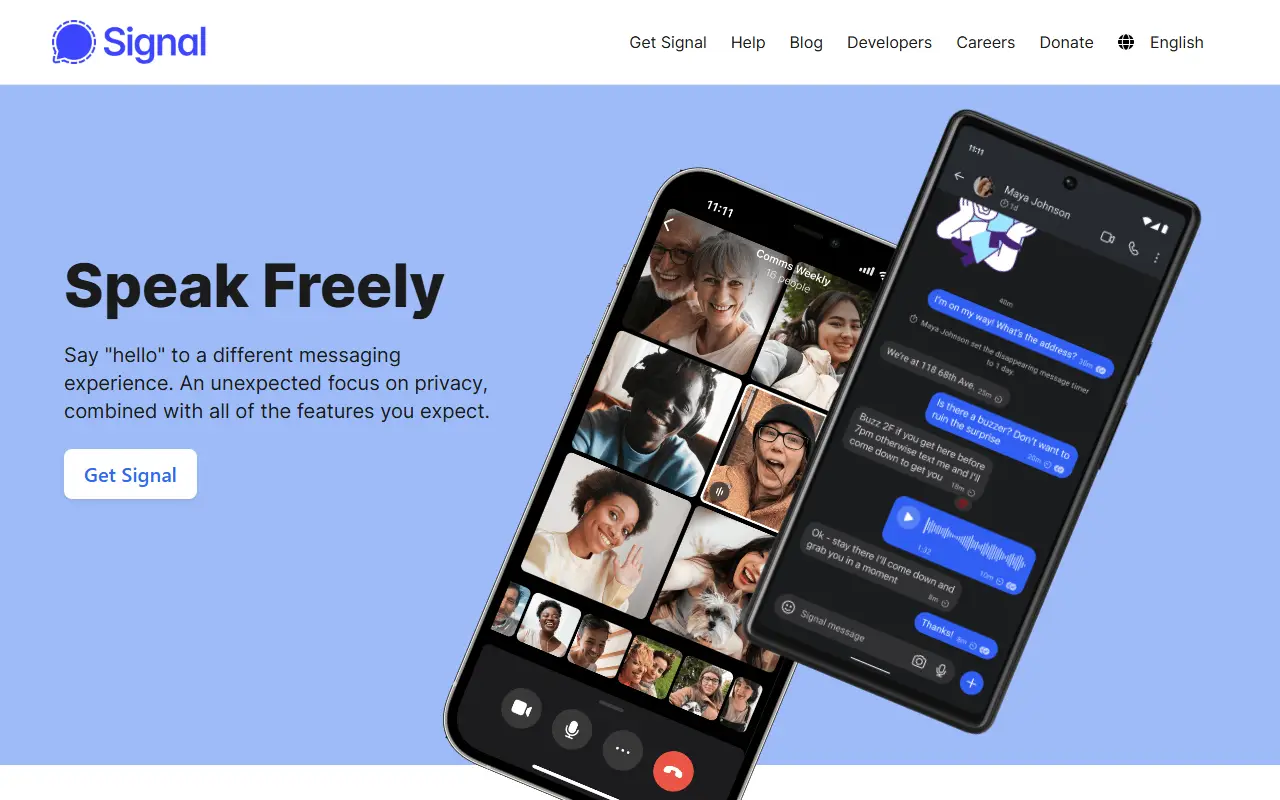
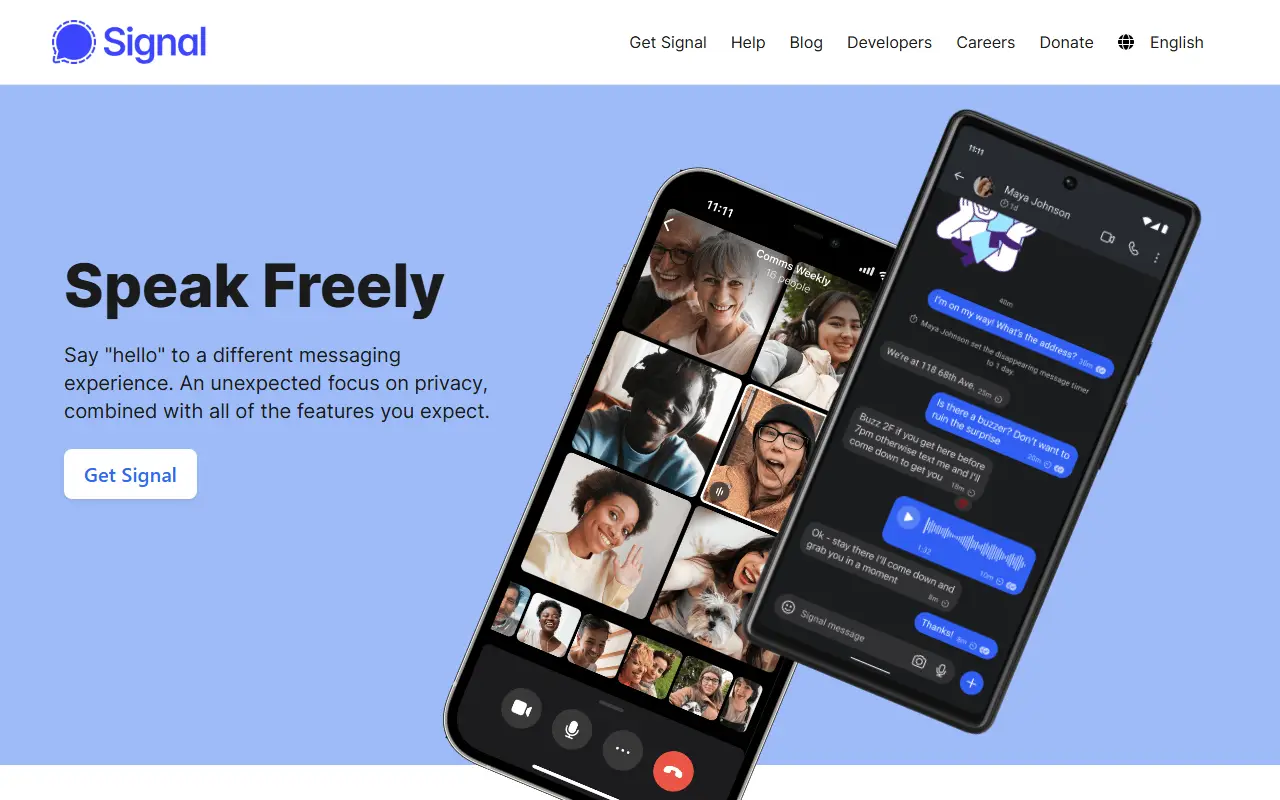
signal.orgSignal Android homepage screenshot

Signal Android is the source code of the Signal private messenger for Android. Signal describes itself as a simple and secure messenger that sends messages and places voice and video calls over WiFi or a mobile data connection, with privacy protections always switched on. The app is written in Kotlin and released under the AGPL-3.0 license, and it is free to use.

The app is available from the Play Store and signal.org, with versions for iOS and desktop as well. The repository explains how to report bugs on GitHub, join the beta channel on Google Play, contribute translations through the community forum, and submit code. New contributors are encouraged to start with small bug fixes, and larger ideas should be discussed on the community forum first. The client depends on Signal's own hosted service, so there is no self-hosted server option here.

Key features

  • Encrypted one-to-one and group messaging
  • Voice and video calls
  • Privacy features that are always enabled
  • Android app distributed via Play Store and signal.org
  • Open Kotlin source under AGPL-3.0
  • Beta program and translation contributions

Pricing: Free to use; the README describes Signal as free of charge.

SimpleX Chat

A private messenger and protocol that works without any user identifiers, with end-to-end encryption, mobile apps and a terminal client.

GitHub stars
20k
Last commit
today
Latest release
v7.0.3
Licence
AGPL-3.0
Self-hosted
Yes
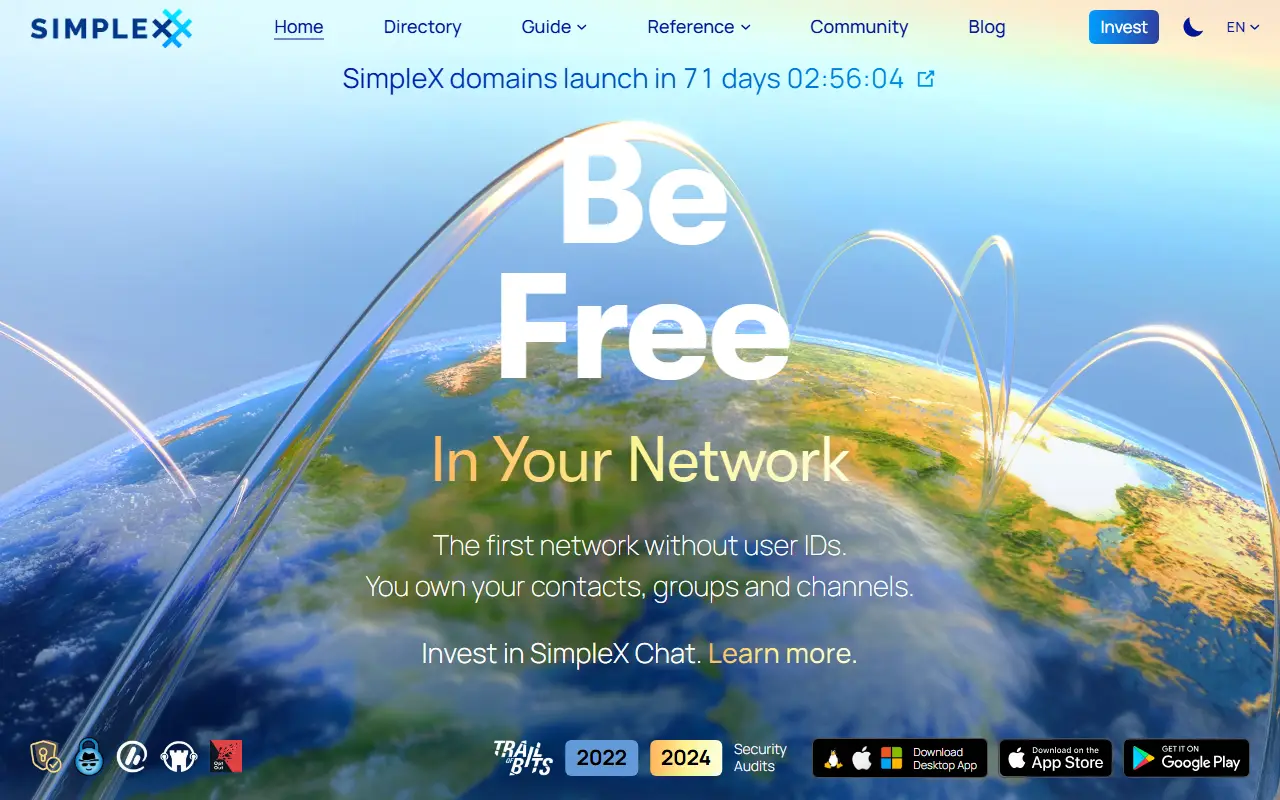
simplex.chatSimpleX Chat homepage screenshot

SimpleX is a messaging network built around the idea that it should not assign identifiers of any kind to its users, not even random IDs, which the project says makes it private by design. The goal is to protect not just message content but also metadata, meaning who talks to whom and when.

Messages use double-ratchet end-to-end encryption with an additional encryption layer. Apps are available for Android and iOS, with an iOS TestFlight preview that gets new features a week or two earlier but is limited in the number of users, and a terminal client runs on Linux, macOS and Windows. The README invites readers to install the app, connect to the team and user groups, make a private connection with a friend, help with translations and donate. The core is written in Haskell.

SimpleX Chat is licensed under AGPL-3.0, and its protocol and server software are open so that others can host relays. It is aimed at people who need stronger privacy guarantees than mainstream messengers provide, such as journalists, activists and privacy-conscious individuals.

Key features

  • No user identifiers of any kind
  • Protects message metadata
  • Double ratchet end-to-end encryption
  • Android and iOS apps
  • Terminal client for Linux, macOS and Windows
  • Open protocol and server software

Pricing: Free and open source under the AGPL-3.0 license.

Signal Desktop

Signal Desktop is the open-source desktop client that links with Signal on Android or iOS so you can message from Windows, macOS and Linux.

GitHub stars
17k
Last commit
yesterday
Latest release
v8.29.0
Licence
AGPL-3.0
Self-hosted
No
Hosted version
Available
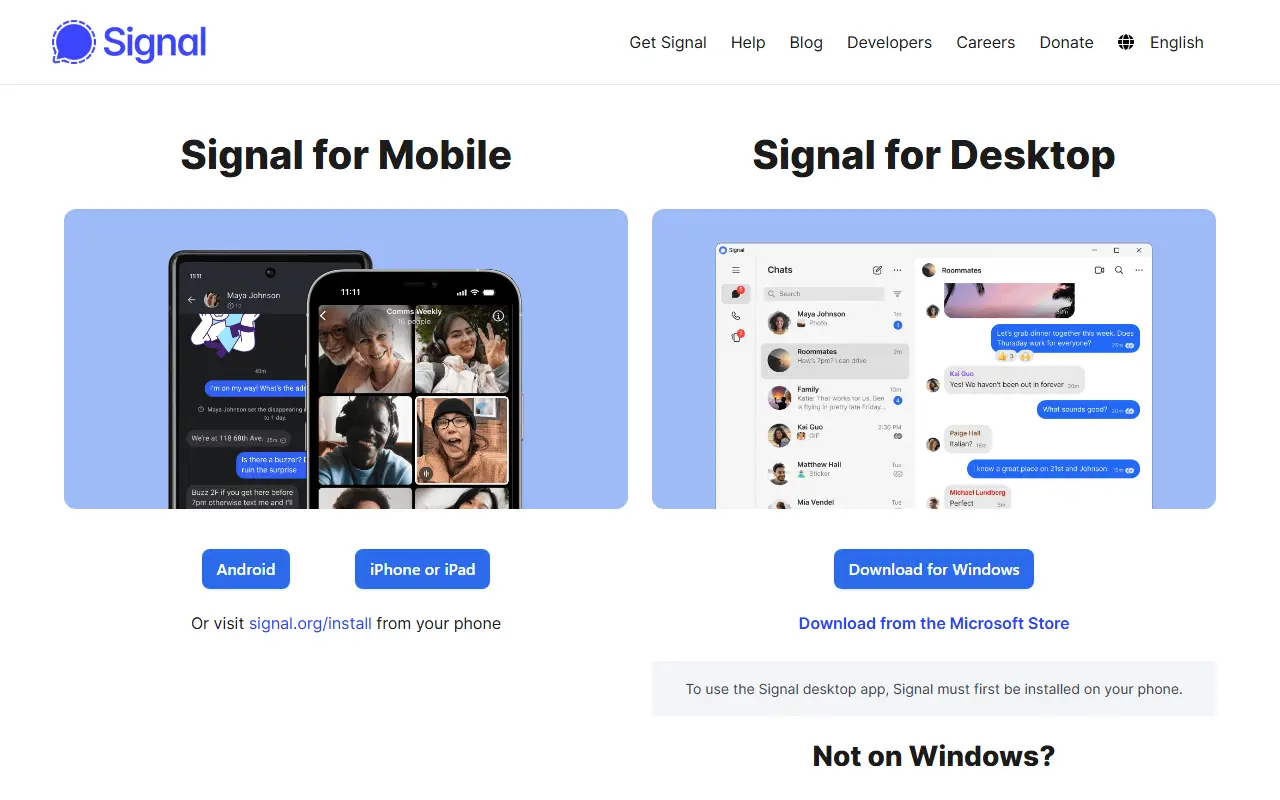
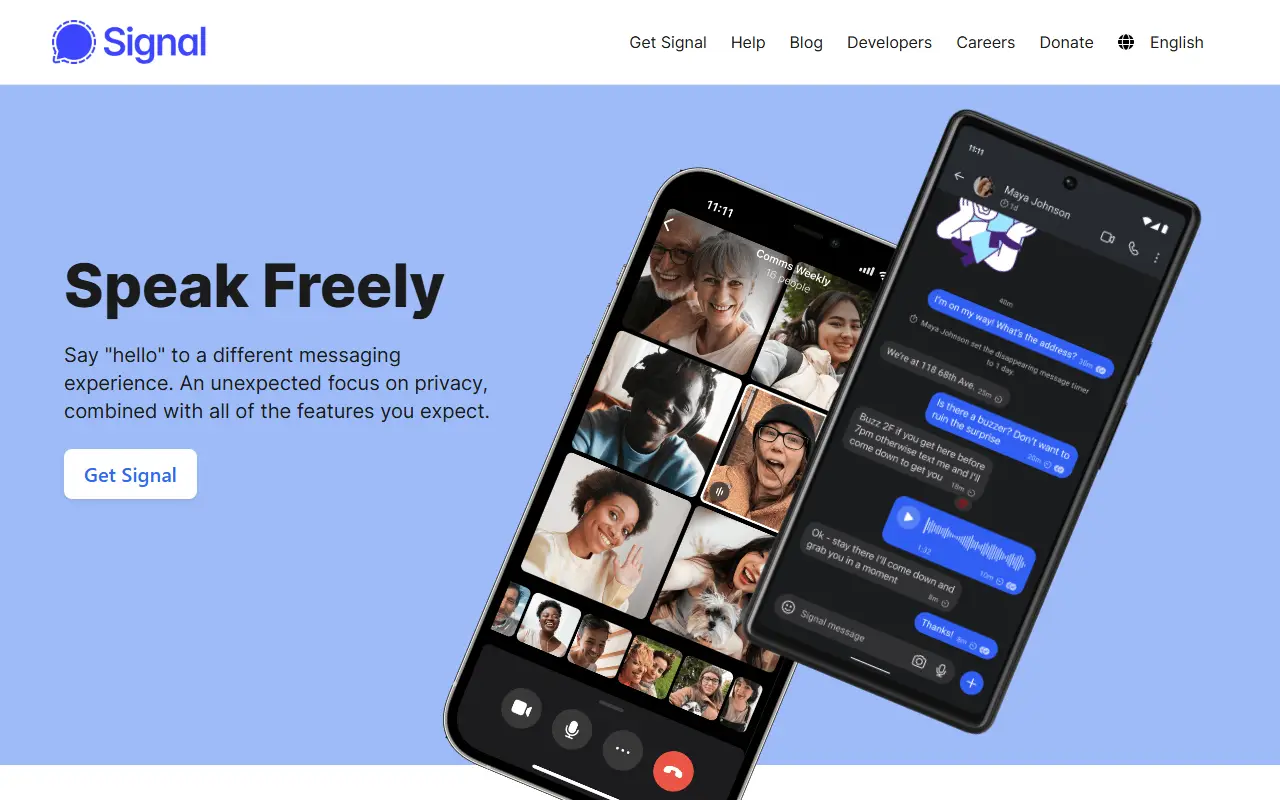
signal.orgSignal Desktop homepage screenshot

Signal Desktop is the desktop version of the Signal private messenger for Windows, macOS and Linux. It links to the Signal app on an Android or iOS phone, which lets you send and read messages from your computer. It is written in TypeScript and released under the AGPL-3.0 license.

Both a production version and a beta version can be installed. Support is provided through a support site with answers to common questions and a community forum, which is also where feature requests and questions go, while bugs are reported as GitHub issues. Contributions are welcome, including non-code ones, and the repository has a contributing guide.

Signal is run by an independent 501(c)(3) nonprofit, the Signal Technology Foundation, and donations can be made from inside the apps or on the web. The repository includes a cryptography notice explaining that the software contains encryption and may be subject to import, possession and export rules in some countries.

Key features

  • Links with Signal on Android or iOS
  • Messaging from Windows, macOS and Linux
  • Production and beta release channels
  • Open-source TypeScript codebase
  • Support site and community forum

Pricing: Run by an independent nonprofit and funded by donations, which can be made from inside the apps.

Element

Web and desktop client for the Matrix network, offering encrypted chat, rooms and collaboration built on the Matrix JS SDK.

GitHub stars
14k
Last commit
today
Latest release
v1.12.30
Licence
AGPL-3.0
Self-hosted
Yes
Hosted version
Available
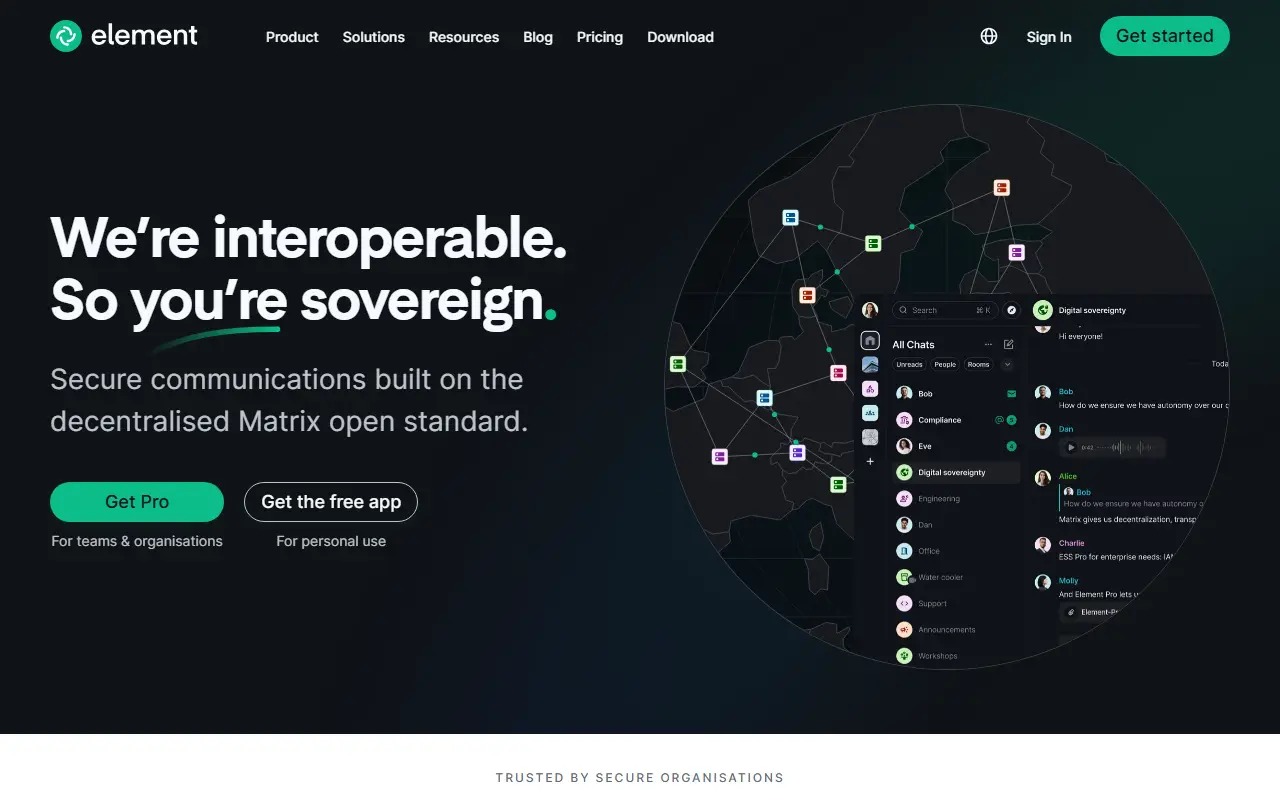
element.ioElement homepage screenshot

Element Web is a client for Matrix, the open protocol for decentralized messaging. It is the web and desktop application formerly known as Vector and Riot, and it lets people join rooms, chat in teams and communities, and collaborate across Matrix servers rather than inside a single vendor's network.

The client is built with TypeScript on top of the Matrix JS SDK. The README defines support tiers for browsers, covering recent versions of Chrome, Firefox, Edge and Safari on desktop, best-effort handling for ESR and extended-stable releases, and community support for mobile web. For phones and tablets the maintainers recommend the native Element X apps for Android and iOS.

It is released under the AGPL-3.0 license and is typically served from your own web host or used through the hosted app from the vendor, Element. Related products such as Element Call and the Enterprise Server Suite are mentioned as part of the wider Element offering. Changes are tracked on GitHub with regular release cycles.

Key features

  • Matrix web client for rooms and chat
  • Desktop app built from the same code
  • Built on the Matrix JS SDK
  • Documented browser support tiers
  • Works alongside Element X mobile apps

Pricing: Element Enterprise is priced per seat per month and Sovereign per deployment, but no prices are published; buyers are directed to talk to an expert.

Signal iOS

Free, open-source Signal messaging app for iPhone and iPad, built for private communication with friends and without analytics.

GitHub stars
12k
Last commit
yesterday
Latest release
8.30.0.1882
Licence
AGPL-3.0
Hosted version
Available
signal.orgSignal iOS homepage screenshot

Signal iOS is the iPhone and iPad client of Signal, a free and open-source messaging app made for simple, private communication with friends. The same service is also available on Android and as a desktop application, so conversations are not tied to a single platform.

The app is written in Swift. The maintainers state that it collects no analytics or telemetry, which is why they rely on bug reports sent through the Support Center to troubleshoot problems. Developers can follow BUILDING.md to set up a build environment and read the contribution guidelines, while ideas and discussion go through the community forum run for Signal Foundation projects.

The repository is released under the AGPL-3.0 license. Because the software includes cryptographic functionality, the README carries a cryptography notice reminding users to check their country's rules on encryption software and documents its export classification. Signal itself operates as a hosted messaging service rather than something you run on your own server.

Key features

  • Private messaging for iPhone and iPad
  • No analytics or telemetry collection
  • Open Swift source code
  • Companion apps for Android and desktop
  • Build instructions in BUILDING.md

Pricing: Free to use; the app is open source under the AGPL-3.0 license.

Signal Server

Server-side code that supports the Signal Private Messenger apps on Android, iOS and desktop, written in Java.

GitHub stars
11k
Last commit
today
Licence
AGPL-3.0
Self-hosted
Yes
signal.orgSignal Server homepage screenshot

Signal-Server is the backend that supports the Signal Private Messenger applications on Android, Desktop and iOS. It is the server counterpart to the open-source Signal clients and is published so the way the service works can be inspected.

The project is written in Java and uses FoundationDB, so building it requires the FoundationDB client library to be installed on the host. Protocol documentation lives on signal.org/docs, and security issues are reported privately by email to the Signal security address. The maintainers say they cannot provide direct technical support, but an unofficial community forum helps people run the software in their own environment.

The code is licensed under the GNU AGPLv3 and carries a cryptography notice reminding users to check their country's rules on encryption software, along with the export classification. It is mainly of interest to developers, researchers and anyone who wants to review or experiment with the server behind Signal.

Key features

  • Server backend for Signal messenger apps
  • Written in Java
  • Uses FoundationDB for storage
  • Protocol documentation published online
  • Private channel for security reports

Pricing: Free and open source under the AGPL-3.0 license.

Cinny

A Matrix client with a simple, elegant interface, available as a web app and desktop app and self-hostable via a tarball or Docker image.

GitHub stars
3.9k
Last commit
4 days ago
Latest release
v4.12.7
Licence
AGPL-3.0
Self-hosted
Yes
Hosted version
Available
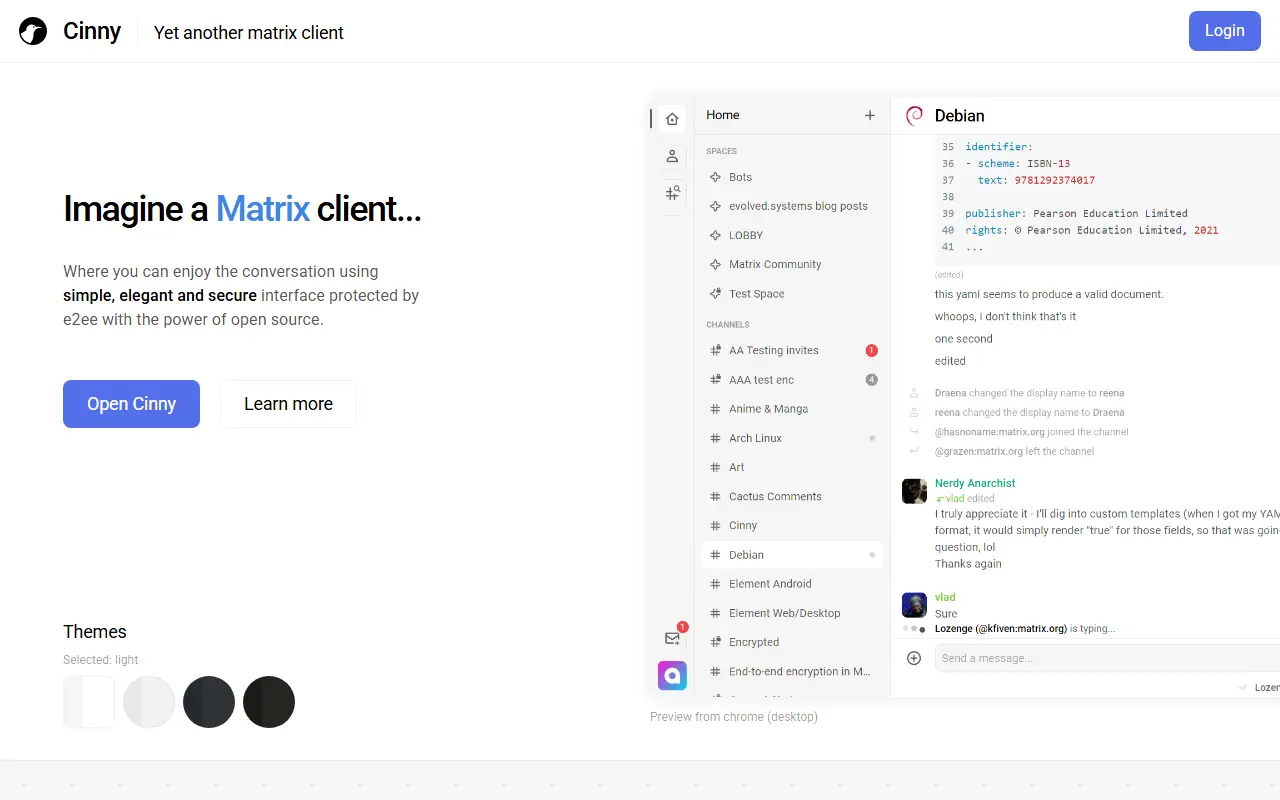
cinny.inCinny homepage screenshot

Cinny is a client for the Matrix chat network that focuses on a simple, elegant and secure interface. The stated aim is an instant messaging application that is easy on people and has a modern look.

The web app is available at app.cinny.in and is updated on every release, while the dev branch is continuously deployed to a separate address that may be unstable. A desktop app is distributed from the cinny-desktop repository. The maintainers are currently replacing matrix-js-sdk with their own SDK and are not accepting pull requests until further notice.

To self-host Cinny, download the release tarball and serve the dist directory with any web server, or pull the Docker image from Docker Hub or the GitHub Container Registry. Default homeservers and explore pages are set in config.json, redirects need to be configured for assets, and hash routing is available as a fallback. Cinny is written in TypeScript and licensed under AGPL-3.0.

Key features

  • Matrix chat client
  • Web app and desktop app
  • Self-hosting via tarball or Docker
  • Configurable default homeservers
  • Hash routing option for easy hosting

Pricing: Free and open source under the AGPL-3.0 licence.

FluffyChat

FluffyChat is an open-source Matrix client written in Flutter, offering encrypted chats, group rooms, calls and spaces on many platforms.

GitHub stars
3.2k
Last commit
today
Latest release
v2.10.0
Licence
AGPL-3.0
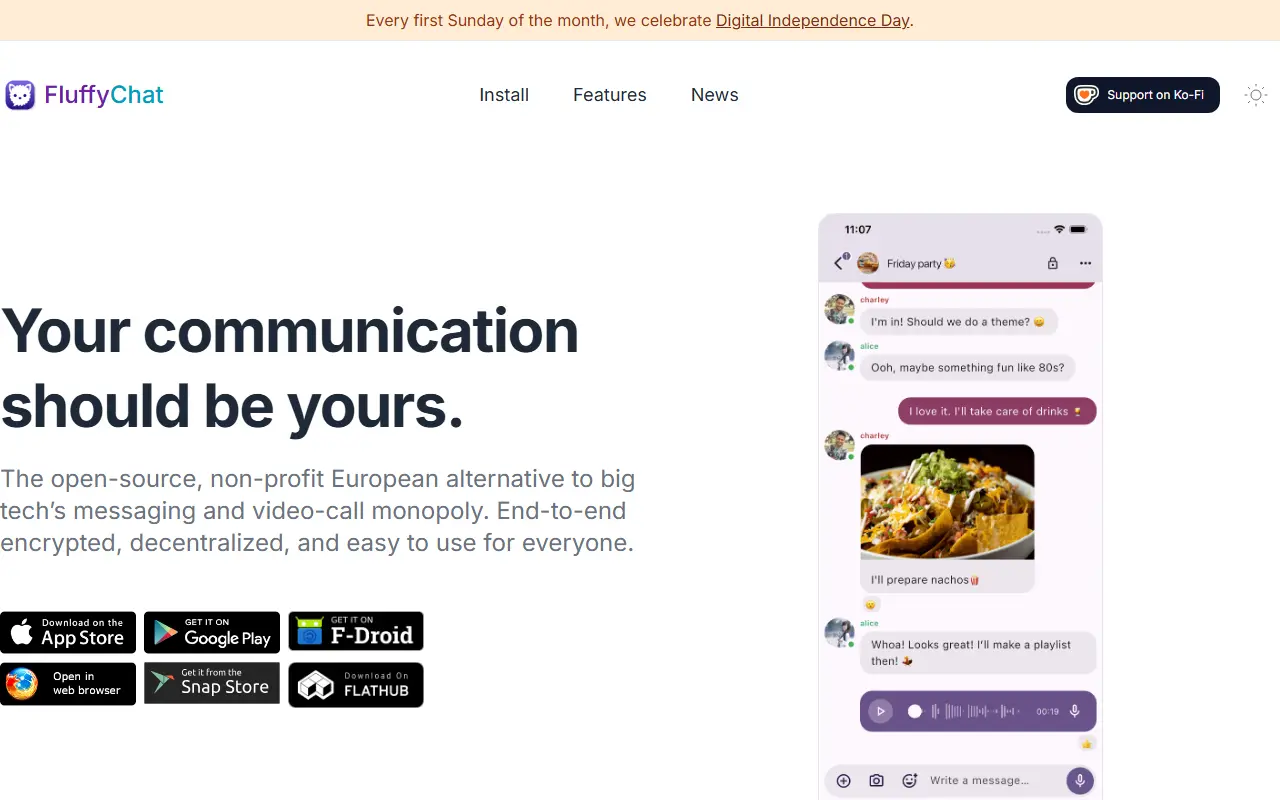
fluffychat.imFluffyChat homepage screenshot

FluffyChat is a nonprofit, open-source client for the Matrix network, written in Flutter. Its goal is to be an easy-to-use instant messenger that is open source and accessible to everyone. Because it speaks the Matrix protocol, it works with Matrix accounts and servers rather than a proprietary service of its own.

Users can send all kinds of messages, images and files, record voice messages, share locations and take part in video calls with Matrix RTC. It supports push notifications, unlimited private and public group chats, public channels, spaces, custom emotes and stickers, and moderation tools covering the Matrix feature set. Privacy features include end-to-end encryption, encrypted chat backup, emoji verification and cross-signing, and it follows Material You design.

For organizations, configuration can be pushed to Android and iOS devices through mobile device management since version 2.10.0, and on the web through a config.json file. Building from source requires Flutter and Rust. It is licensed under AGPL-3.0, with translations handled through Weblate and installation instructions on the project website.

Key features

  • Matrix client with end-to-end encryption
  • Video calls using Matrix RTC
  • Voice messages and location sharing
  • Group chats, public channels and spaces
  • Custom emotes and stickers
  • MDM configuration on Android and iOS
  • Encrypted chat backup and cross-signing

Pricing: Free and open source under AGPL-3.0; development is funded by donations.

Delta Chat

Delta Chat Desktop is the desktop app for Delta Chat, a decentralized messenger that sends encrypted chats over ordinary email servers.

GitHub stars
1.6k
Last commit
today
Latest release
v2.59.1
Licence
GPL-3.0

Delta Chat Desktop is the desktop application for Delta Chat, described as a decentralized private messenger with chat-shared tools and games. Project topics show that it works over standard email protocols, IMAP and SMTP, and supports Autocrypt-based end-to-end encryption, so conversations can run over existing email accounts instead of a single central service.

The default edition is built on Electron and is the version deployed in app stores and used by most people. A highly experimental browser edition with a web server component is meant only for developers and automated testing, and a work-in-progress edition based on Tauri lives in a separate repository. The code is written in TypeScript and licensed under GPL-3.0.

Binary releases are published for supported platforms, with Flatpak and Arch Linux options on Linux, Homebrew or a DMG on macOS and installers for Windows. User documentation covers troubleshooting, command-line flags, keybindings and creating custom themes, while developer documentation explains logging, styling, updating the core, end-to-end tests and the release process.

Key features

  • Chat over email servers using IMAP and SMTP
  • End-to-end encryption with Autocrypt
  • Electron desktop app
  • Custom themes and keybindings
  • Experimental browser and Tauri editions

Pricing: Free and open source under the GPL-3.0 license.

Read more about Delta ChatGitHub

Teamgram

Teamgram Server is an unofficial open-source MTProto server written in Go that works with Telegram-compatible clients and can be self-hosted.

GitHub stars
2.3k
Last commit
2 mo ago
Latest release
v0.90.4
Licence
Apache-2.0
Self-hosted
Yes
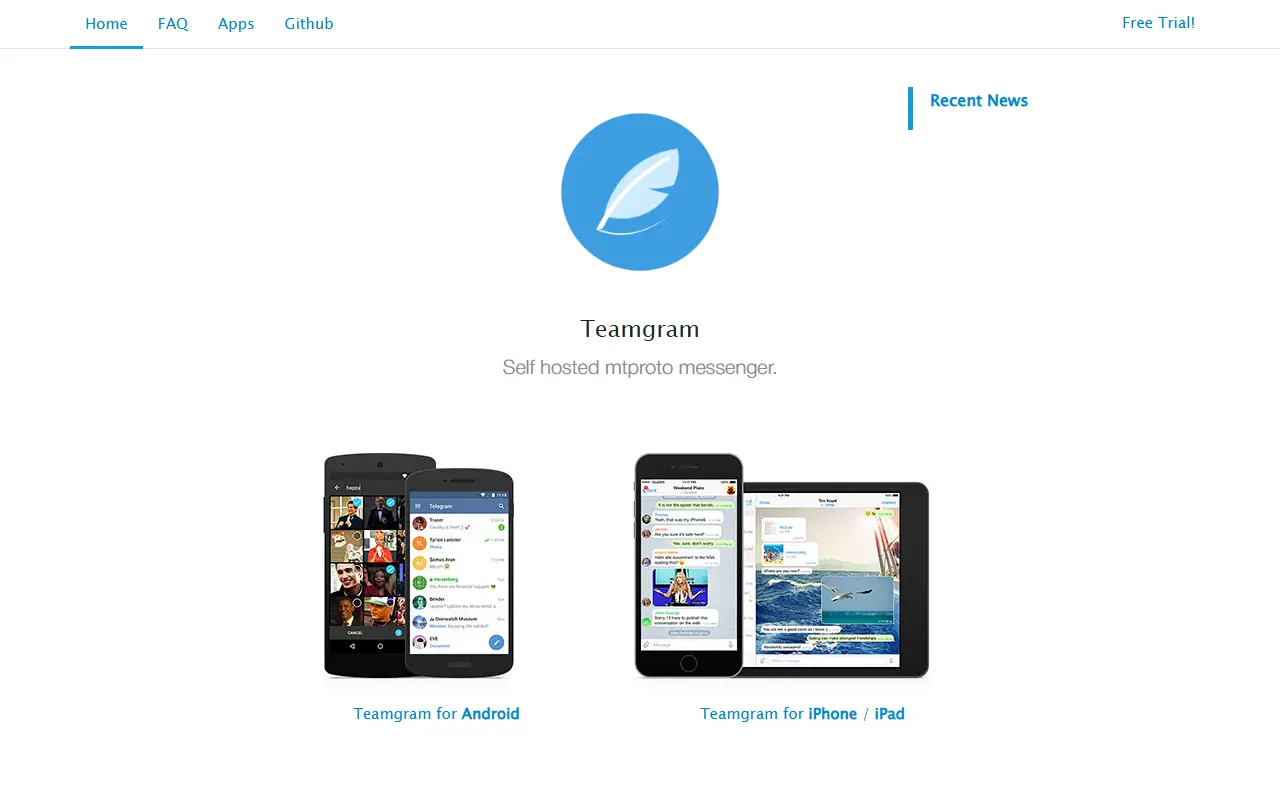
teamgram.netTeamgram homepage screenshot

Teamgram Server is an unofficial implementation of the Telegram MTProto server protocol, written in Go. It is designed to work with Telegram-compatible clients, so an organization or community can run its own messaging backend instead of relying on a third-party service.

The server implements MTProto 2.0 transports and API layer 228, with core features including private chats, basic groups, contacts and a web client. It is built as several services that depend on MySQL, Redis, etcd, Kafka, MinIO and FFmpeg for storage, caching, service discovery, event pipelines, object storage and media transcoding. Documentation covers the architecture, service topology and ports.

It can be installed manually from source on Linux or macOS with Go 1.21 or newer, or through a Docker setup that starts the dependency stack and initializes the database and storage buckets automatically. The project is licensed under Apache-2.0, is described as unofficial, and provides logging, monitoring and tracing options.

Key features

  • MTProto 2.0 server implementation
  • Compatible with Telegram clients
  • Private chats and basic groups
  • Contacts and web client support
  • Docker-based full-stack installation
  • Logging, monitoring and tracing options

Pricing: Free and open source under the Apache-2.0 license.

1 more Telegram alternative

Telegram alternatives: questions

What is the best open-source alternative to Telegram?
Signal Android is the top-ranked open-source alternative to Telegram on Enlisted: Signal Android is the open-source Android client of the Signal private messenger, offering encrypted messages and voice or video calls. Other strong options are SimpleX Chat, Signal Desktop, Element and Signal iOS.
Are these Telegram alternatives free?
All 11 are open source, so the code is free to use under its licence, and 9 of them can be self-hosted on your own server or computer. 5 also offer a paid or managed cloud version if you'd rather not host it yourself.
How is this list of Telegram alternatives ranked?
By a score built from GitHub stars, star growth over the last 30 days and how recently the code changed. 10 of these projects shipped code in the last 30 days. Data is refreshed daily, and nobody can pay to move up.

People also look for alternatives to…

View all