7,363 open-source and SaaS tools, with GitHub stats refreshed every day.

3 alternatives ranked by real activity

Open-source Shopee alternatives

A curated, ranked list of the 3 best open-source alternatives to Shopee.

The best open-source alternative to Shopee is Mercur. If that doesn't suit you, other good options are GrandNode 2 and Shuup.

Shopee alternatives are mainly e-commerce tools. 2 of them shipped code in the last 30 days, 3 can be self-hosted, and 1 uses a permissive licence.

Last updated October 3, 2026 · ranked by GitHub stars, growth and recent commits

Mercur

Open-source headless platform for building multi-vendor marketplaces with vendor onboarding, commissions, payouts, a storefront, and an admin console, built on Medusa.

GitHub stars
1.8k
Last commit
today
Latest release
v2.3.5
Licence
MIT
Self-hosted
Yes
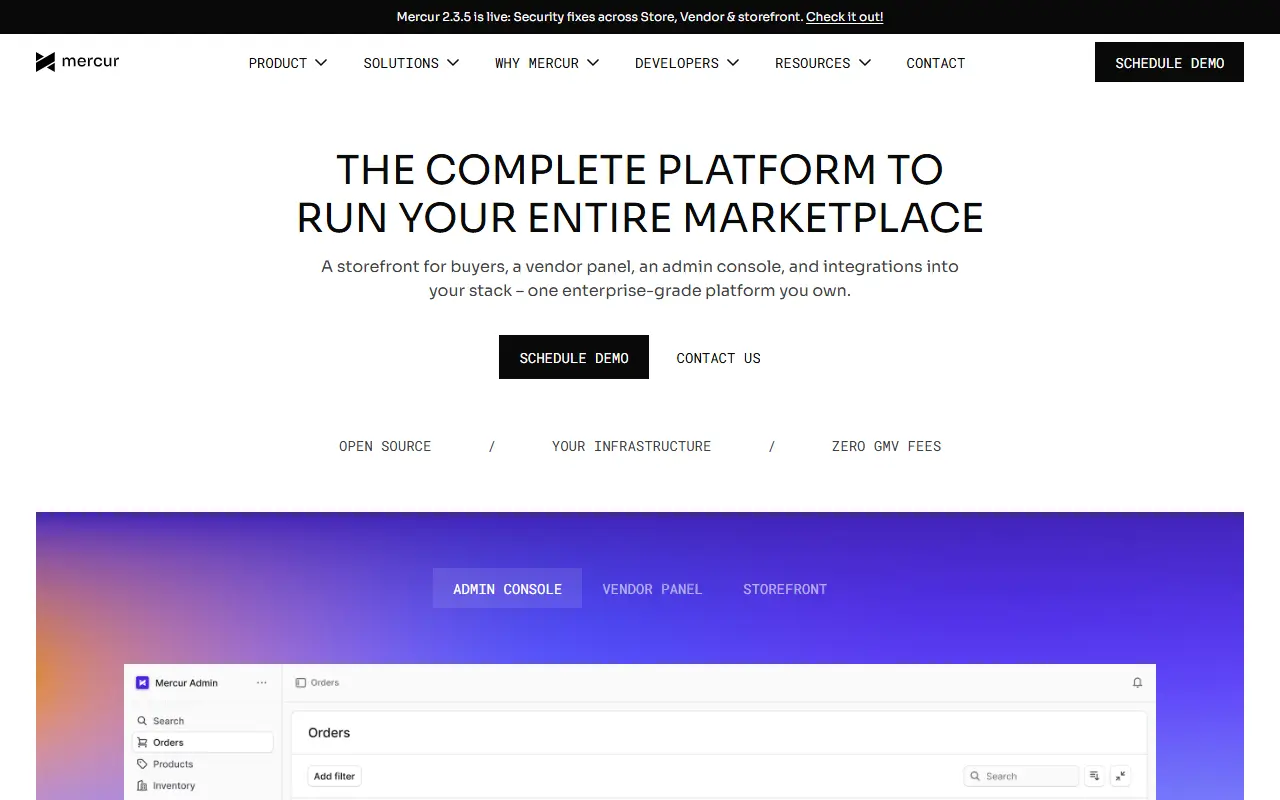
mercurjs.comMercur homepage screenshot

Mercur is an open-source, headless platform for building multi-vendor marketplaces and is presented as an alternative to Mirakl. It adds vendor onboarding, multi-vendor catalogs, offers, commissions, and automated payouts on top of a commerce core. The topics point to Medusa as that core. It is written in TypeScript and released under the MIT license.

The platform supports B2C, B2B, and hybrid marketplaces and includes a storefront, a vendor panel, an admin console, and integrations. The README stresses ownership: you self-host on your own infrastructure with full source access, and there is no percentage of gross merchandise value, no per-transaction fee, and no vendor lock-in.

Documentation, a live demo, and a Discord community are available. Mercur suits teams launching a marketplace who want to avoid both a revenue-sharing SaaS platform and a from-scratch build, and who have the engineering capacity to operate and customize the system.

Key features

  • Vendor onboarding and management
  • Multi-vendor catalogs and offers
  • Commission rules and automated payouts
  • Storefront, vendor panel, and admin console
  • B2C, B2B, and hybrid marketplace support
  • Built on Medusa commerce core

Pricing: Free and open source under the MIT license, with no fees on transactions according to the README.

GrandNode 2

An open-source e-commerce platform built on ASP.NET Core and MongoDB, supporting multi-store, multi-vendor, B2B and B2C selling.

GitHub stars
1.3k
Last commit
yesterday
Latest release
2.3.0
Licence
GPL-3.0
Self-hosted
Yes
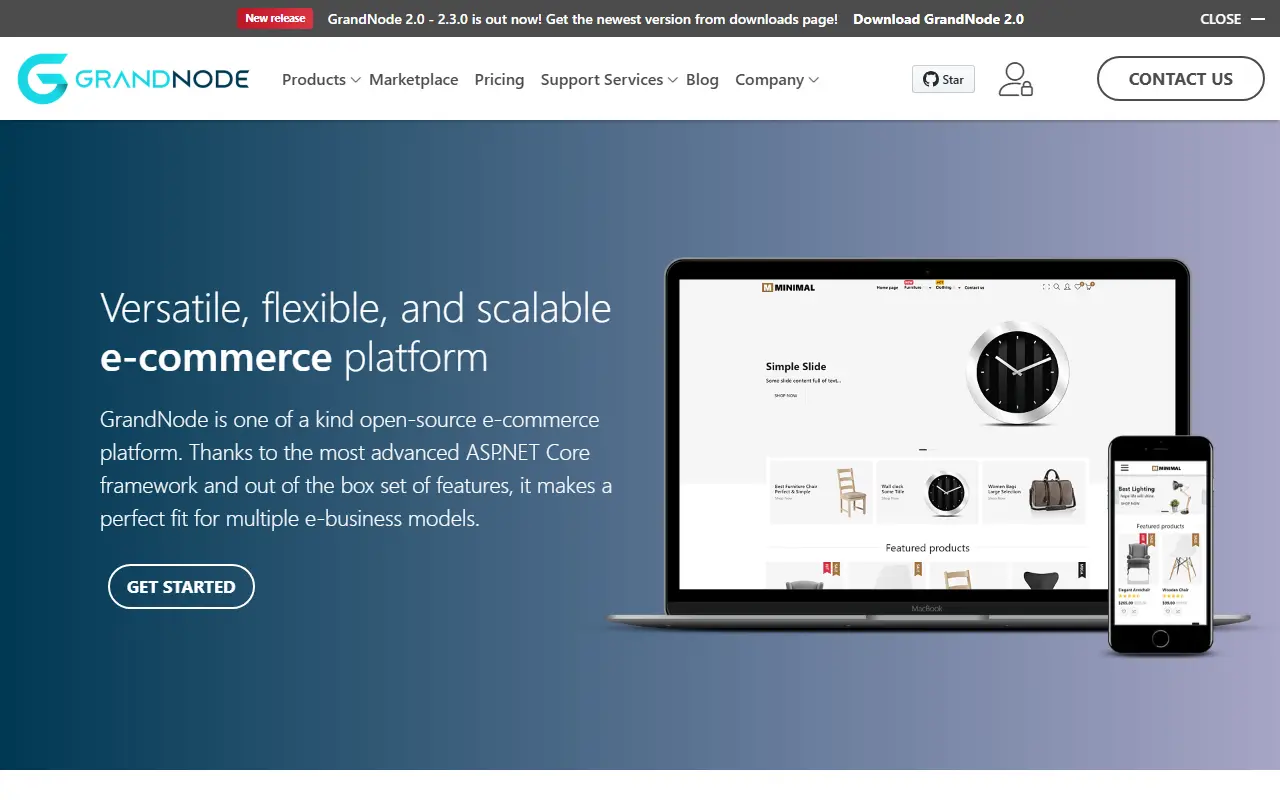
grandnode.comGrandNode 2 homepage screenshot

GrandNode is an open-source e-commerce platform built with ASP.NET Core and MongoDB. Its use of a NoSQL database is the main design choice, aimed at fast page rendering and the ability to handle traffic spikes, and it targets businesses that want a customizable shop with room to grow.

The platform supports several business models, including B2B, B2C, multi-store, multi-vendor, multi-tenant, multi-language and multi-currency setups, so one installation can run several storefronts. It is designed to integrate with existing third-party software, and the project provides themes, plugins and integrations, a forum and a demo store. Premium support is offered separately by the maintainers.

GrandNode is written in C# on .NET and released under the GPL-3.0 licence. You can install it from the documented steps, build from source or run it locally, and host it on your own servers. It suits development teams and merchants in the .NET ecosystem who prefer MongoDB over a relational database for their store.

Key features

  • ASP.NET Core application with MongoDB storage
  • Multi-store and multi-vendor support
  • B2B and B2C selling
  • Multi-language and multi-currency
  • Themes, plugins, and integrations
  • Multi-tenant architecture

Pricing: The platform is open source under the GPL-3.0 licence; premium support is offered separately.

Shuup

Shuup is a free, open-source, Django-based e-commerce platform designed to support both single-vendor and multivendor online stores.

GitHub stars
2.4k
Last commit
2 yr ago
Latest release
v3.1.0
Self-hosted
Yes

Shuup is an e-commerce platform built in Python on the Django framework, aimed at businesses that need either a conventional single-vendor online store or a multivendor marketplace where several sellers operate on the same storefront. It is positioned as a flexible, customizable foundation rather than a fixed, one-size-fits-all storefront.

Being built on Django, it benefits from Django's mature ecosystem for authentication, admin tooling and database management, and its topics indicate dedicated support for multivendor commerce scenarios, where a single platform instance can host multiple independent sellers. Further feature specifics were not available from the project's homepage at the time of this summary, so refer to the GitHub repository and documentation for details.

Shuup is written in Python with Django and the repository metadata lists its license as Other, so check the license file before relying on it for a commercial deployment. As a self-hosted Django application, it is deployed on infrastructure the operator controls.

Key features

  • Single-vendor and multivendor store support
  • Built on the Django framework
  • Customizable e-commerce platform architecture

Pricing: Open source; the repository lists its license as Other, so check the license file for exact terms.

Shopee alternatives: questions

What is the best open-source alternative to Shopee?
Mercur is the top-ranked open-source alternative to Shopee on Enlisted: Open-source headless platform for building multi-vendor marketplaces with vendor onboarding, commissions, payouts, a storefront, and an admin console, built on Medusa. Other strong options are GrandNode 2 and Shuup.
Are these Shopee alternatives free?
All 3 are open source, so the code is free to use under its licence, and all of them can be self-hosted on your own server or computer.
How is this list of Shopee alternatives ranked?
By a score built from GitHub stars, star growth over the last 30 days and how recently the code changed. 2 of these projects shipped code in the last 30 days. Data is refreshed daily, and nobody can pay to move up.

People also look for alternatives to…

View all