5 open-source alternatives ranked by real activity

Open-source Mosyle alternatives

A curated, ranked list of the 5 best open-source alternatives to Mosyle.

The best open-source alternative to Mosyle is Ansible. If that doesn't suit you, other good options are Fleet, Salt Project, Chef and Zentral.

Commercial alternatives to Mosyle include Microsoft Intune, Iru, Jamf and JumpCloud. See all 14.

Mosyle alternatives are mainly CI/CD & DevOps tools, but some are also security tools. 5 of them shipped code in the last 30 days, 5 can be self-hosted, and 2 use a permissive licence.

Last updated November 13, 2026 · ranked by GitHub stars, growth and recent commits

Ansible

An agentless IT automation platform for configuration management, application deployment, cloud provisioning and network automation over SSH.

GitHub stars
71k
Last commit
2 days ago
Latest release
v2.22.0
Licence
GPL-3.0
Self-hosted
Yes
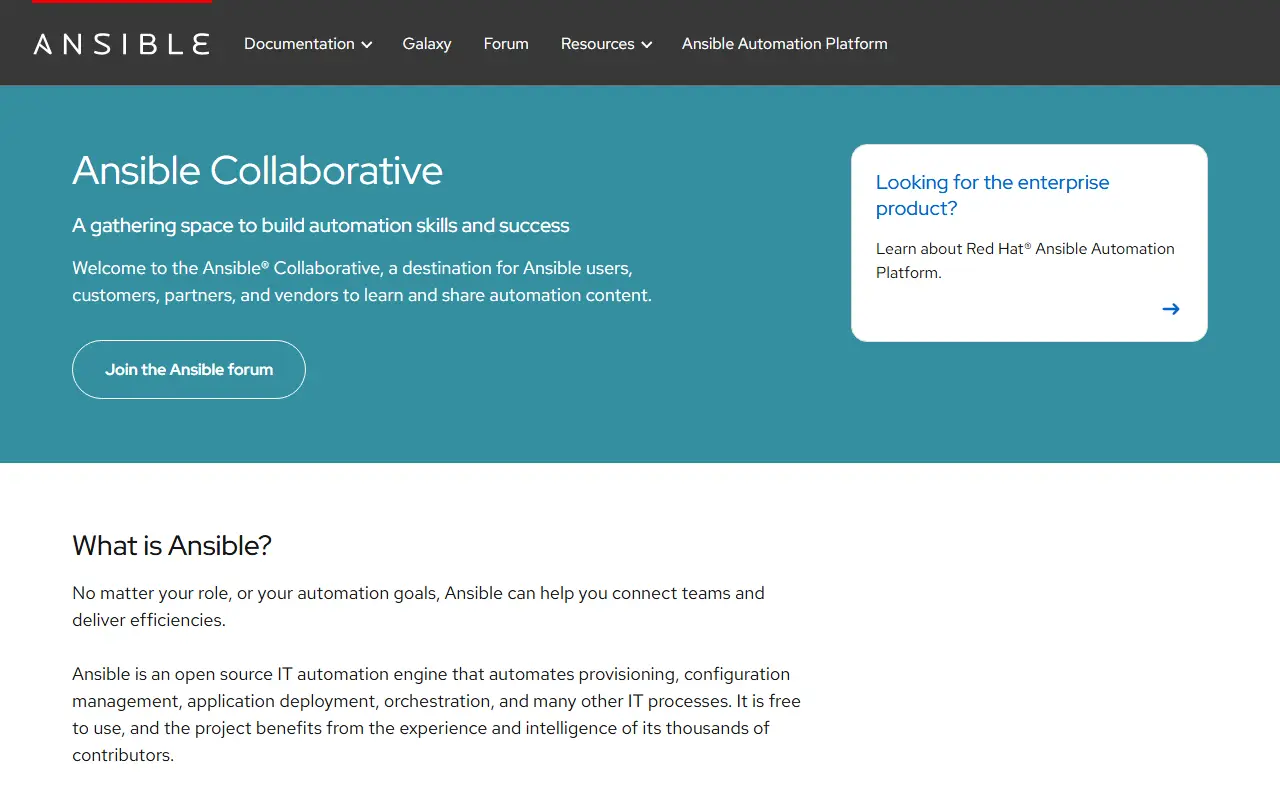
ansible.comAnsible homepage screenshot

Ansible is an open-source IT automation system written in Python and released under the GPL-3.0 license. It covers configuration management and application deployment, provisioning of cloud resources, one-off ad-hoc commands, network automation and orchestration across many nodes, and it can carry out complex changes such as zero-downtime rolling updates with load balancers.

Its design principles favor a simple setup with a gentle learning curve, managing machines quickly and in parallel, and avoiding custom agents and extra open ports by relying on the existing SSH daemon. Infrastructure is described in a language that is readable by both people and machines, with a focus on security and easy auditing and review. New remote machines can be managed immediately without bootstrapping software, and modules can be written in any dynamic language.

Released versions install with pip or a package manager, while power users can run the development branch for the latest features at the risk of breaking changes. Ansible can be used without root access. It suits system administrators, DevOps and network engineers who want repeatable, version-controlled automation without agents on their servers.

Key features

  • Agentless automation over SSH
  • Configuration management and application deployment
  • Cloud provisioning and network automation
  • Parallel management of many machines
  • Zero-downtime rolling updates
  • Modules in any dynamic language
  • Human-readable infrastructure descriptions

Pricing: Free and open source under the GPL-3.0 license.

Fleet

Fleet is an open-source device management platform for IT and security teams, combining MDM, patching, software deployment and osquery-based visibility.

GitHub stars
7.2k
Last commit
yesterday
Latest release
fleet-v4.94.1
Self-hosted
Yes
Hosted version
Available
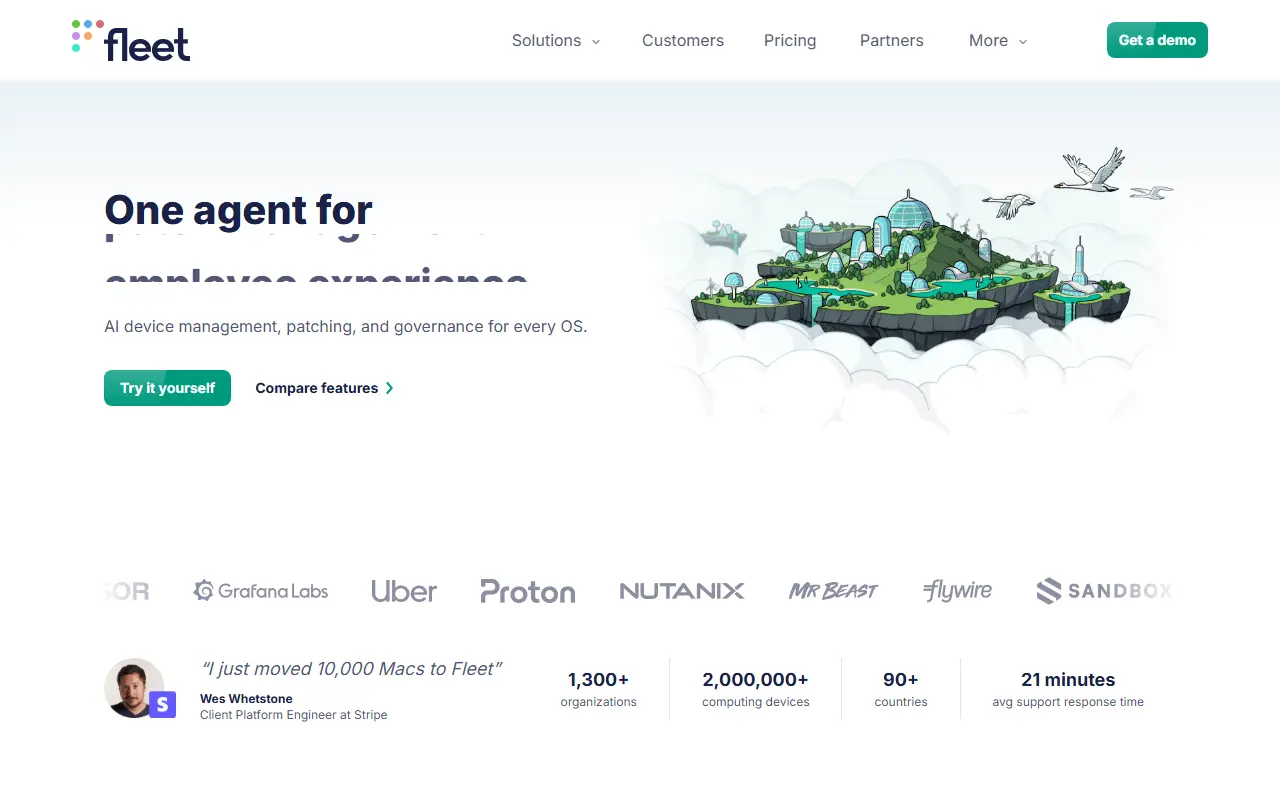
fleetdm.comFleet homepage screenshot

Fleet is an open-source platform for IT and security teams that manage large numbers of computers. It gives a single system to secure and maintain devices over the air, covering mobile device management, patching, software deployment and verification across all the operating systems an organization uses.

It gathers data and events straight from each device's operating system using osquery, and can report on hundreds of device attributes. It ships with CIS benchmarks for macOS and Windows. Platforms include Linux, macOS, Windows, Chromebooks, iOS and Android, as well as cloud and container environments. Fleet is built for infrastructure as code, so it can be managed with GitOps, a graphical interface, a REST API, webhook events or the fleetctl command-line tool.

Fleet is written in Go. The repository lists its licence as other, so check the project for the exact terms of its open-source and commercial components. Documentation, a demo and the option to talk to maintainers are linked from the README.

Key features

  • Mobile device management
  • Patching and software deployment
  • osquery-based device visibility
  • CIS benchmarks for macOS and Windows
  • GitOps, REST API and webhooks
  • Linux, macOS, Windows and mobile support

Pricing: Free tier at $0 per host per month with basic features and no support. Premium costs $7.00 per host per month; large deployments are quoted through sales.

Salt Project

Salt automates infrastructure management and configuration at scale, with remote execution, event-driven automation and cloud provisioning.

GitHub stars
16k
Last commit
yesterday
Latest release
v3007.17
Licence
Apache-2.0
Self-hosted
Yes
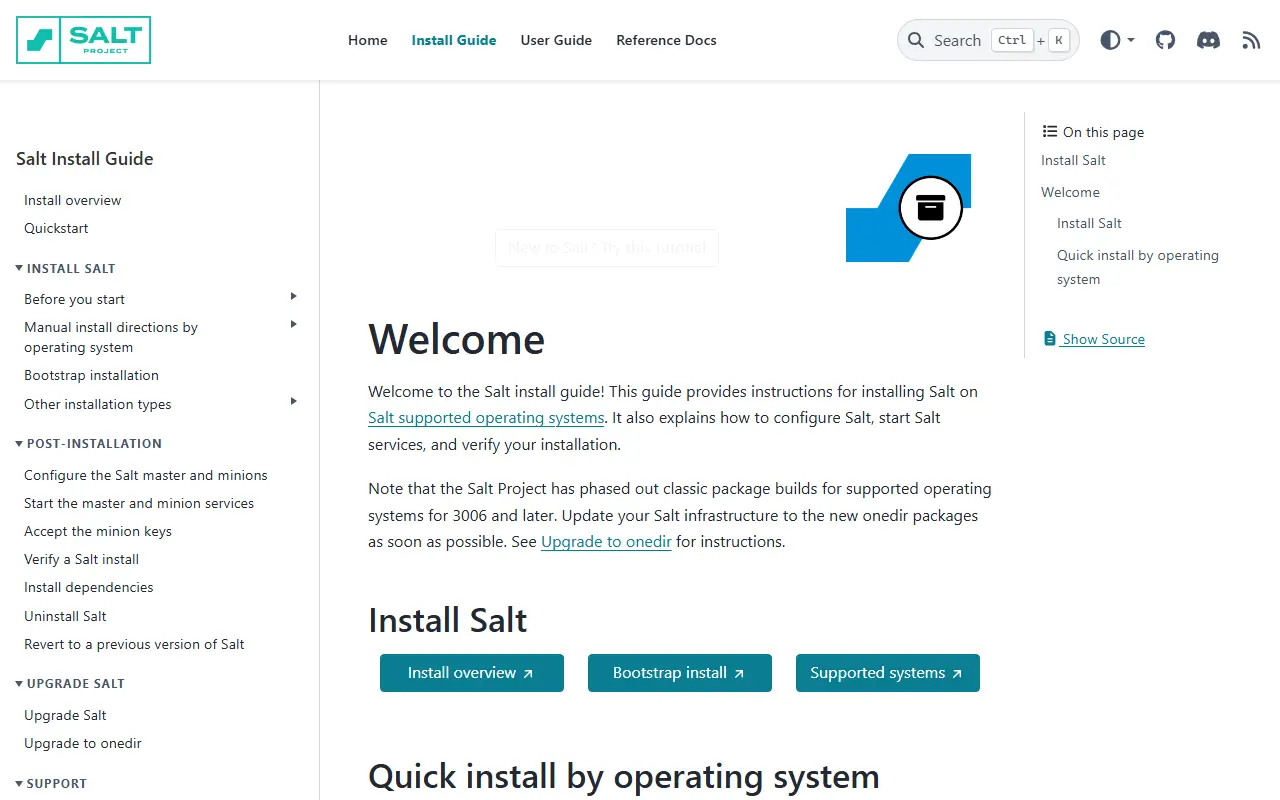
docs.saltproject.ioSalt Project homepage screenshot

Salt is software for automating the management and configuration of infrastructure and applications at scale. It is written in Python and released under the Apache 2.0 license, and it is used for configuration management, remote execution and infrastructure-as-code across servers, cloud resources and edge or IoT devices.

Salt uses a master and minion model: a Salt master controls agents, called minions, whose keys the administrator accepts. Repository topics point to ZeroMQ messaging, an event stream and event management, along with cloud provider and cloud provisioning support. The install guide covers a quickstart script, bootstrap installation, manual installation by operating system, upgrades and a version support lifecycle.

The install documentation lists supported operating systems and Python versions, and describes a onedir packaging format. Salt is typically self-run on your own infrastructure, with the master and minion services configured and started by the operator, and community support through GitHub and Discord.

Key features

  • Configuration management for servers
  • Remote execution across many machines
  • Event stream and event-driven automation
  • Cloud provider provisioning support
  • Master and minion architecture
  • Quickstart and bootstrap install scripts

Pricing: Free and open source under the Apache 2.0 license.

Chef

Chef Infra is a configuration management tool that automates how infrastructure is configured, deployed and managed, using code written in Ruby.

GitHub stars
8.3k
Last commit
today
Latest release
v15.8.23
Licence
Apache-2.0
Self-hosted
Yes
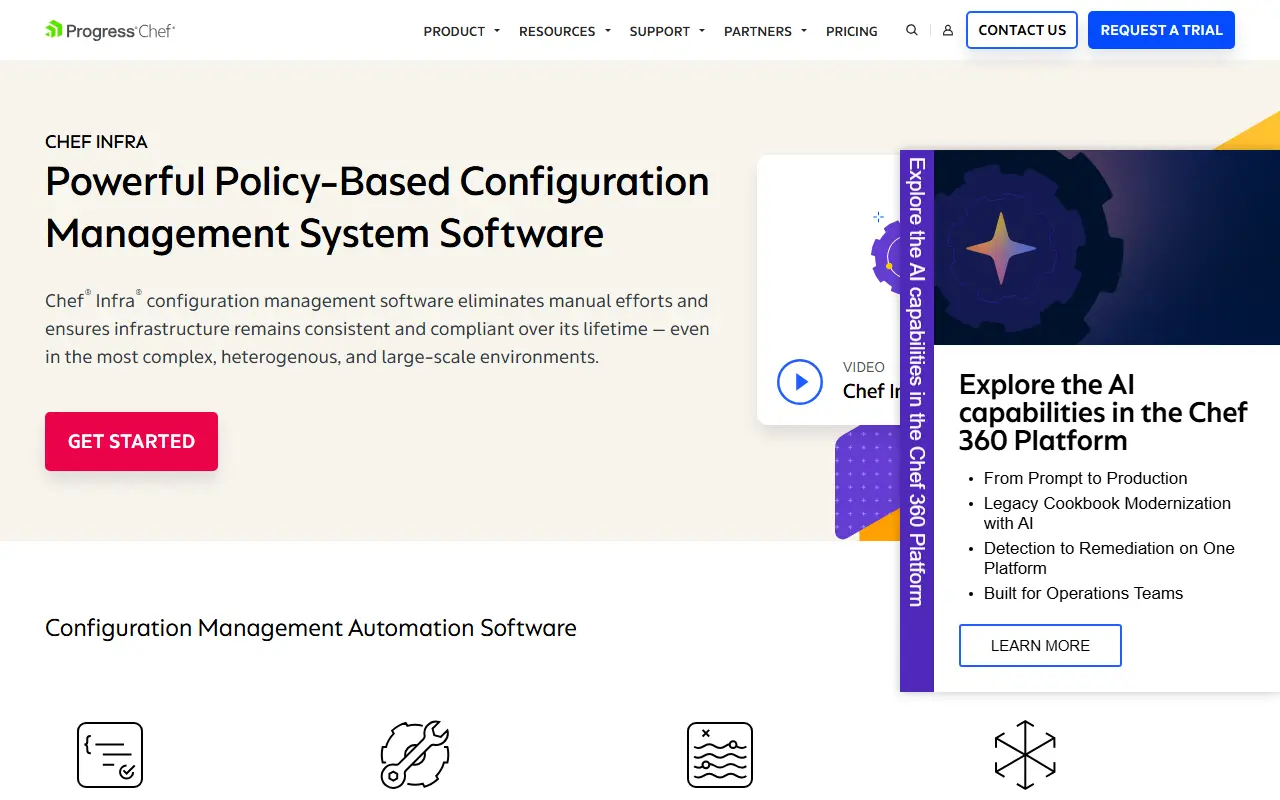
chef.ioChef homepage screenshot

Chef Infra is a configuration management tool that brings automation to an organization's infrastructure by describing it as code. Servers, containers and cloud resources are configured and kept in the desired state through repeatable recipes, across any environment and at any scale.

The Chef ecosystem includes related products such as Chef Automate, Chef Habitat and Chef InSpec, and the project provides Learn Chef, a free self-paced learning platform with module-based training. The repository mainly serves the chef-client itself, so issues for other Chef projects belong in their own repositories. The project publishes monthly feature releases and yearly major releases with a documented support schedule, and states response-time targets for issues and pull requests.

Chef Infra is written in Ruby and licensed under Apache-2.0, with documentation, a community Slack and a mailing list. It is run by operations teams on their own servers, often together with a central Chef server, and suits sysadmins and DevOps engineers managing fleets of machines through infrastructure as code.

Key features

  • Infrastructure defined as code in Ruby
  • Configuration management for any environment
  • Free Learn Chef training platform
  • Related Automate, Habitat and InSpec tools
  • Monthly feature releases
  • Community Slack and forums

Pricing: Priced per node: Business is $59 and Enterprise $189 per node per year; Enterprise Plus is quoted. Available as SaaS or self-managed, and a Business trial can be requested.

Zentral

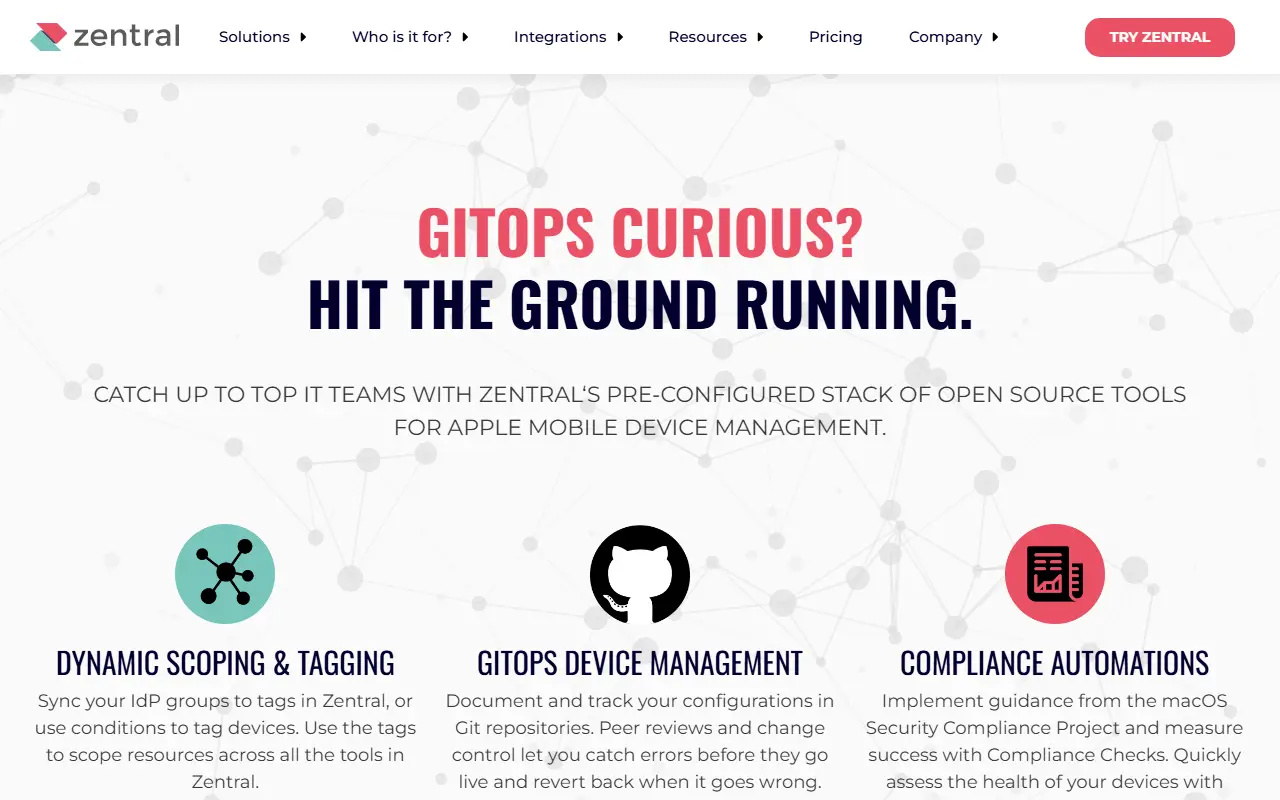
Zentral is a platform that bundles Apple MDM, Santa, Osquery and Munki with GitOps-style configuration and a unified device inventory.

GitHub stars
890
Last commit
2 days ago
Latest release
v2026.5
Hosted version
Available
zentral.comZentral homepage screenshot

Zentral is aimed at teams that manage Apple devices. It brings together a set of open source tools, including its own Apple MDM, the Santa binary authorization system, Osquery and Munki, behind one core with a unified, source-agnostic asset inventory.

Configuration is meant to be defined as code. Settings can be tracked in Git repositories with peer review and change control, an official Terraform provider exports a Zentral setup, and devices are scoped through tags that can be synced from identity provider groups or set by conditions. Compliance checks draw on the macOS Security Compliance Project, and Jamf is listed as an integration.

The commercial offering is SaaS or a private cloud, sold as Zentral Santa, Zentral MDM or a custom module mix. The repository is open source, though the licence is listed only as Other.

Key features

  • GitOps approach to Apple MDM
  • Application allowlisting through Santa
  • Tags synced from IdP groups or conditions
  • Compliance checks from the macOS Security Compliance Project
  • Configurations tracked in Git with peer review
  • Official Terraform provider

Pricing: Zentral Santa is 3€ per device per month and Zentral MDM is 5€ per device per month, both SaaS; Zentral Custom is custom-priced as SaaS or private cloud.

Commercial Mosyle alternatives

Hosted, closed-source products that compete with Mosyle. Showing 12 of 14.

See every Mosyle alternative on its tool page

Mosyle alternatives: questions

What is the best open-source alternative to Mosyle?
Ansible is the top-ranked open-source alternative to Mosyle on Enlisted: An agentless IT automation platform for configuration management, application deployment, cloud provisioning and network automation over SSH. Other strong options are Fleet, Salt Project, Chef and Zentral.
What are the best commercial alternatives to Mosyle?
Microsoft Intune, Iru, Jamf, JumpCloud and Puppet Enterprise are among the hosted, closed-source alternatives to Mosyle listed on Enlisted, which lists 14 in total. Compare their pricing and features on each tool page.
Are these Mosyle alternatives free?
All 5 are open source, so the code is free to use under its licence, and all of them can be self-hosted on your own server or computer. 2 also offer a paid or managed cloud version if you'd rather not host it yourself.
How is this list of Mosyle alternatives ranked?
By a score built from GitHub stars, star growth over the last 30 days and how recently the code changed. 5 of these projects shipped code in the last 30 days. Data is refreshed daily, and nobody can pay to move up.

People also look for alternatives to…

View all