7,363 open-source and SaaS tools, with GitHub stats refreshed every day.

4 alternatives ranked by real activity

Open-source Micro.blog alternatives

A curated, ranked list of the 4 best open-source alternatives to Micro.blog.

The best open-source alternative to Micro.blog is Ghost. If that doesn't suit you, other good options are WriteFreely, Microfeed and Known.

Micro.blog alternatives are mainly CMS tools. 4 of them shipped code in the last 30 days, 4 can be self-hosted, and 1 uses a permissive licence.

Last updated October 3, 2026 · ranked by GitHub stars, growth and recent commits

Ghost

An open-source publishing platform for blogs, newsletters, memberships and paid subscriptions, available as the Ghost(Pro) managed service or self-hosted on Node.js.

GitHub stars
55k
Last commit
today
Latest release
v6.67.0
Licence
MIT
Self-hosted
Yes
Hosted version
Available
ghost.orgGhost homepage screenshot

Ghost is a publishing platform for independent writers and media businesses. It handles blogging, newsletters, memberships and subscriptions in one product, so a creator can publish articles, email them to subscribers and charge for access without stitching several tools together.

The project is written in JavaScript and TypeScript on Node.js. The official way to get a production site running is the Ghost(Pro) managed service, which launches a site with a worldwide CDN, backups, security and maintenance handled for you, and the maintainers state that all revenue from it funds the nonprofit Ghost Foundation. If you prefer to run your own instance, a CLI tool installs Ghost locally in about a minute or on a server with automatic SSL through Let's Encrypt.

Ghost is MIT licensed and comes with official documentation, a forum and an active contributor community. It suits journalists, bloggers and publishers who want a focused publishing and membership tool rather than a general-purpose CMS.

Key features

  • Publishing editor for blogs and articles
  • Built-in newsletters sent to subscribers
  • Memberships and paid subscriptions
  • CLI installer with automatic SSL
  • Managed hosting with CDN and backups
  • Extensible through documented APIs and themes

Pricing: Ghost(Pro) managed hosting starts at $18 per month billed yearly for Starter, then $29 for Publisher and $199 for Business; Custom is quoted. Plans can be tried free.

Read more about GhostWebsite GitHub

WriteFreely

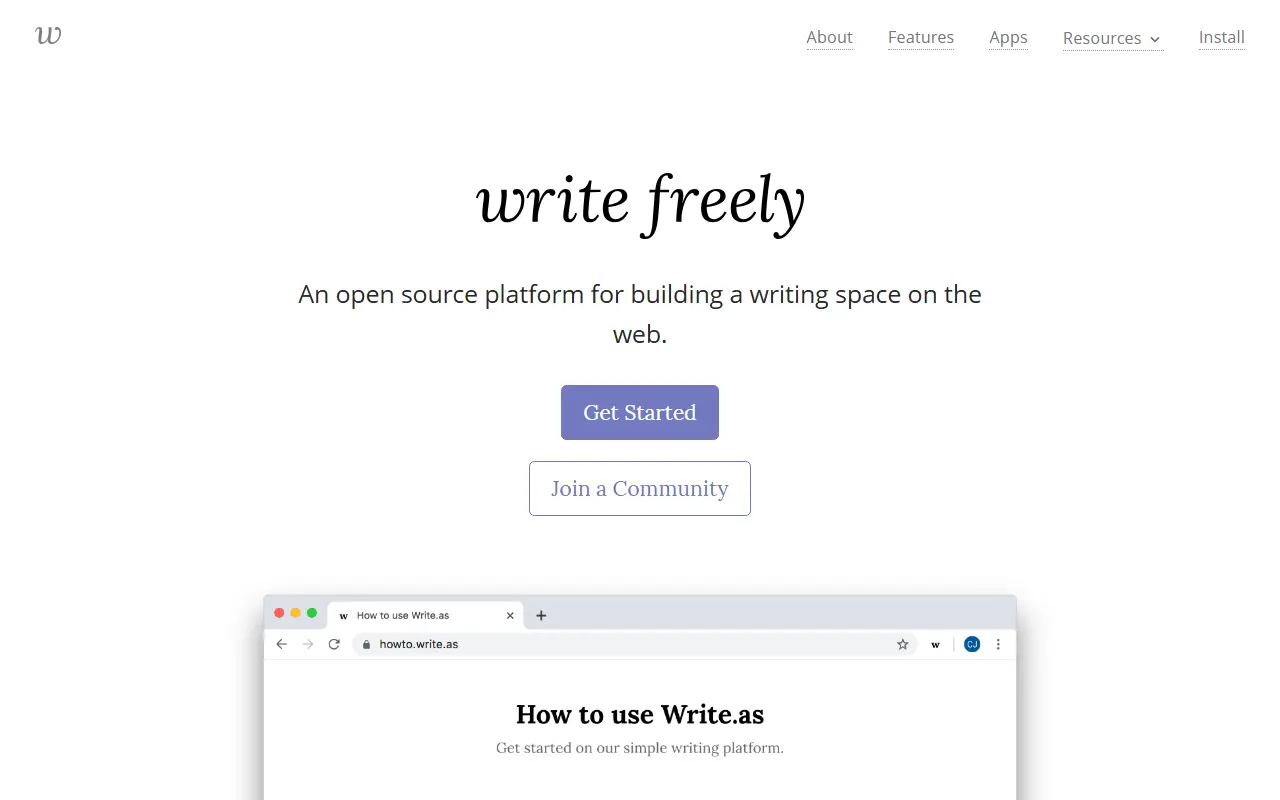
A clean, Markdown-based publishing platform for blogs and writing communities, with ActivityPub federation, written in Go.

GitHub stars
5.3k
Last commit
yesterday
Latest release
v0.17.2
Licence
AGPL-3.0
Self-hosted
Yes
Hosted version
Available
writefreely.orgWriteFreely homepage screenshot

WriteFreely is a publishing platform for writers, kept deliberately minimal. It can be used to start a blog, share knowledge inside an organization, or build a community around writing, with a plain, auto-saving editor that keeps the focus on the text and a clean reading layout once posts are published.

Posts are written in Markdown, organized with hashtags, and can be saved as drafts. A single account can publish to multiple blogs, which lets writers keep separate pen names without publicly revealing the link between them, and normal posts can be pinned to become static pages. Blogs federate through ActivityPub with other WriteFreely, Plume and compatible servers, OAuth 2.0 helps bring members from existing platforms, and the interface is localized in over 20 languages including right-to-left scripts.

WriteFreely deploys as a static binary on any platform that Go supports, using built-in SQLite or an external MySQL or MariaDB database, and is licensed under AGPL-3.0. People who prefer not to run it can use Write.as, the hosted service from the team behind the project, which handles installation, backups and upgrades.

Key features

  • Distraction-free auto-saving editor
  • Markdown posts with hashtags
  • Multiple blogs per account
  • ActivityPub federation
  • OAuth 2.0 sign-in
  • Localized in 20+ languages
  • Single static binary with SQLite

Pricing: Free and open source under AGPL-3.0; the Write.as service offers managed hosting.

Microfeed

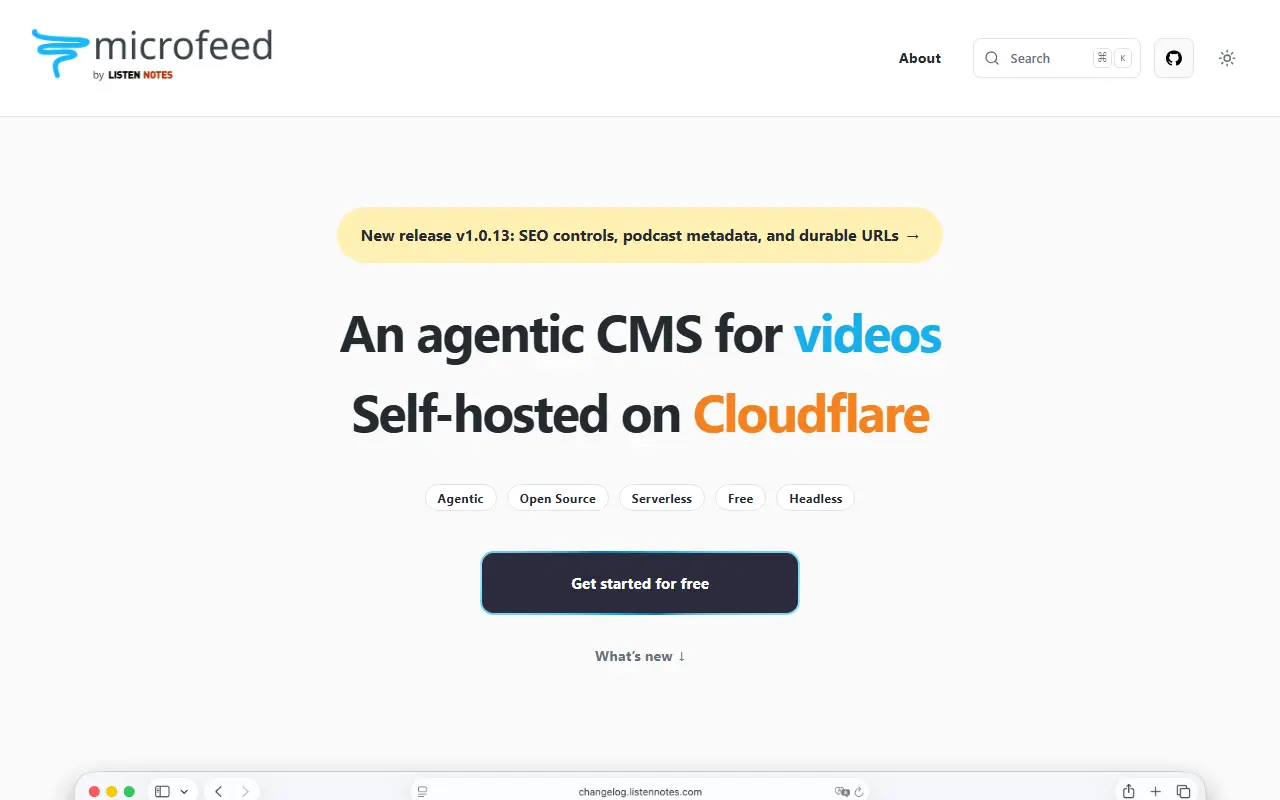
microfeed is a lightweight CMS you host on your own Cloudflare account to publish podcasts, blogs, photos, videos and documents as web, RSS and JSON feeds.

GitHub stars
4.1k
Last commit
8 days ago
Latest release
v1.0.13
Licence
AGPL-3.0
Self-hosted
Yes
microfeed.orgMicrofeed homepage screenshot

microfeed is a lightweight content management system that runs on Cloudflare, aimed at technical individuals who want their own CMS without operating servers. You can publish audio, video, photos, documents, blog posts and external links to a feed that is available as a web page, RSS and JSON, so it also works as a podcast host.

Content can be managed in the built-in admin dashboard or by an AI agent through the official @microfeed/cli, which is why it describes itself as an agentic CMS. It is built on Cloudflare services including Workers, D1, R2, Queues and Zero Trust, according to the repository topics, and also functions as a headless CMS with an API. The code is TypeScript.

microfeed is licensed under AGPL-3.0 and deployed to your own Cloudflare account, so there is no separate vendor-hosted version. It suits creators, podcasters and developers who want a serverless, low-maintenance place to publish content.

Key features

  • Publish audio, video, photos and documents
  • Web, RSS and JSON feeds
  • Built-in admin dashboard
  • CLI for AI agent management
  • Runs serverless on Cloudflare
  • Headless API access

Pricing: Free and open source under AGPL-3.0; you pay for your own Cloudflare usage.

Known

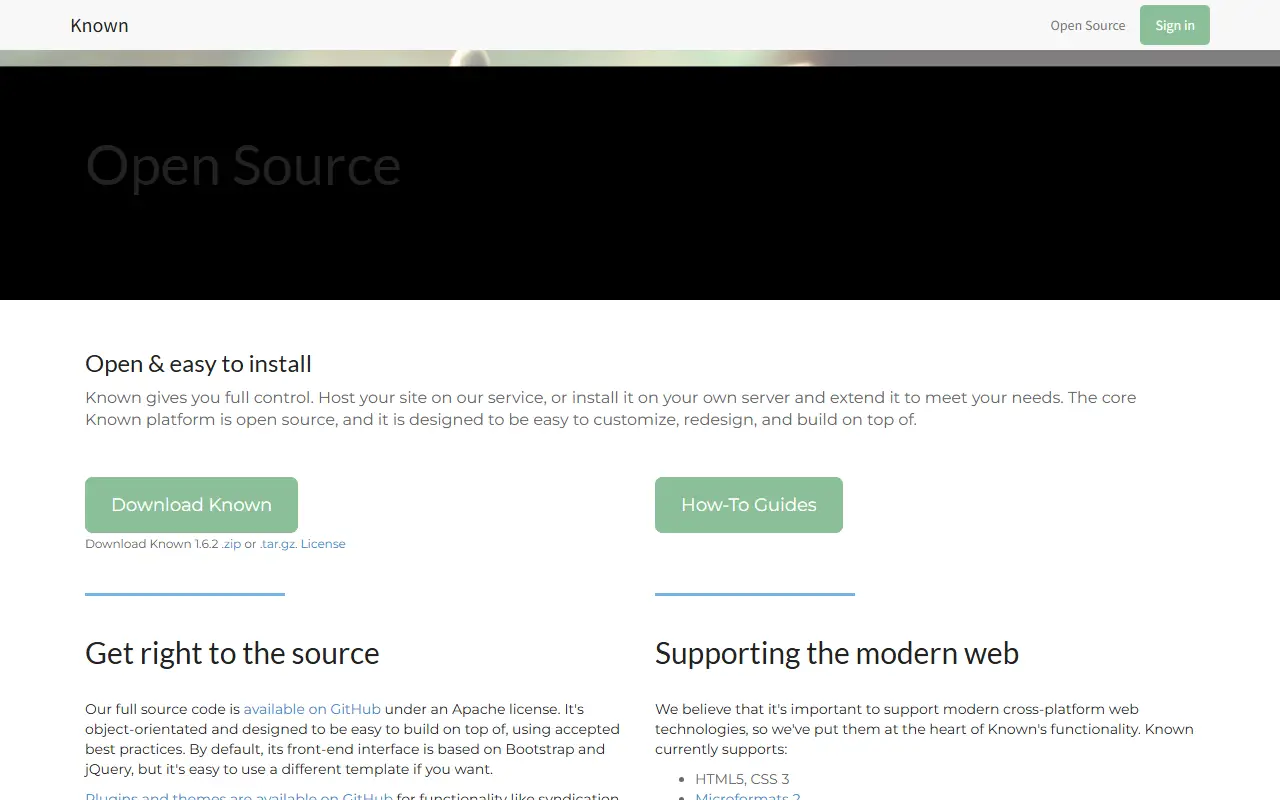
Idno, also known as Known, is a PHP social publishing platform for IndieWeb sites with Webmention, syndication and ActivityPub support.

GitHub stars
1.1k
Last commit
23 days ago
Latest release
1.6.4
Self-hosted
Yes
withknown.comKnown homepage screenshot

Idno is a social publishing platform written in PHP, associated with the Known project and the IndieWeb movement. It lets people publish posts of different types on a site they own, and connect those posts to other services and sites, rather than posting only inside a third-party social network.

The README describes installation from packages, from Git or with Composer, and requires PHP 8.3 or newer with selected extensions and a supported database. By default events such as Webmention pings, syndication and ActivityPub delivery run inside the web request, but an asynchronous queue with a background worker can be enabled, and it is required for ActivityPub so that follow acceptance, post distribution and updates reach remote servers.

Idno is under active development, is self-hosted, and its repository lists the licence as other. Its topics tag it as both a CMS framework and a social network tool. It suits individuals and communities who want to own their publishing platform and take part in federated and IndieWeb protocols.

Key features

  • Social publishing of multiple post types
  • Webmention support
  • Syndication to other services
  • ActivityPub delivery
  • Optional asynchronous event queue
  • Install via Composer, Git, or packages
Read more about KnownWebsite GitHub

Micro.blog alternatives: questions

What is the best open-source alternative to Micro.blog?
Ghost is the top-ranked open-source alternative to Micro.blog on Enlisted: An open-source publishing platform for blogs, newsletters, memberships and paid subscriptions, available as the Ghost(Pro) managed service or self-hosted on Node.js. Other strong options are WriteFreely, Microfeed and Known.
Are these Micro.blog alternatives free?
All 4 are open source, so the code is free to use under its licence, and all of them can be self-hosted on your own server or computer. 2 also offer a paid or managed cloud version if you'd rather not host it yourself.
How is this list of Micro.blog alternatives ranked?
By a score built from GitHub stars, star growth over the last 30 days and how recently the code changed. 4 of these projects shipped code in the last 30 days. Data is refreshed daily, and nobody can pay to move up.

People also look for alternatives to…

View all