#1
A customizable team communications platform with real-time chat and video, aimed at organizations with strict data protection needs and offered self-hosted, cloud or air-gapped.
- GitHub stars
- 46k
- Last commit
- today
- Latest release
- 9.0.0
- Self-hosted
- Yes
- Hosted version
- Available
rocket.chat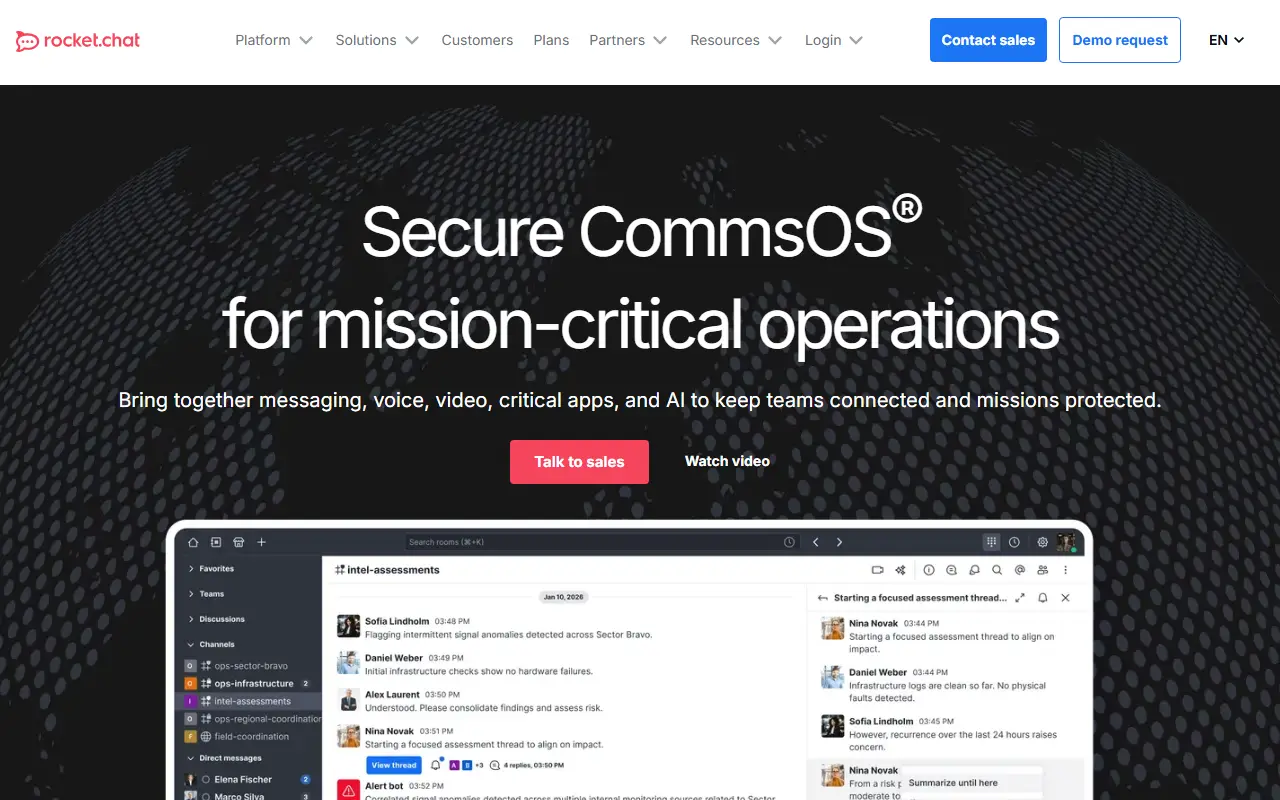
Rocket.Chat is a communications platform written in TypeScript for teams and organizations that care about data protection. It supports real-time conversations between colleagues, with partner companies, and with customers or citizens, and its topics place it in the same space as Slack, with WebRTC for calls and meetings.
The product emphasizes control over where and how it runs. Deployment options include self-hosted servers, a managed cloud and fully air-gapped environments, with a scalable architecture and performance monitoring for workspace administration. Security and sovereignty features, including identity management, are a core part of the pitch, and the platform is built to be highly customizable, so organizations can adapt it to their own workflows and integrations.
The repository's license is listed as 'Other' on GitHub, although the topics reference an MIT-licensed community core, so confirm which components fall under which terms before relying on it commercially. It suits government bodies, enterprises and regulated industries that want a Slack-style tool they can host themselves.
Key features
- Real-time team messaging and channels
- Video conferencing built on WebRTC
- Self-hosted, cloud and air-gapped deployment
- Scalable architecture with performance monitoring
- Identity and security controls for data sovereignty
- Highly customizable platform
Pricing: Rocket.Chat does not publish prices. Commercial, Government and Defense plans are quoted through its sales team, with on-premise and air-gapped deployment options.
#2
A self-hosted, open-core collaboration platform combining team chat, automated workflows, voice calls, screen sharing and AI integrations.
- GitHub stars
- 40k
- Last commit
- yesterday
- Latest release
- v12.0.2
- Self-hosted
- Yes
- Hosted version
- Available
mattermost.com
Mattermost is an open-core collaboration platform you host yourself, covering team chat, workflow automation, voice calls, screen sharing and AI integrations. This repository is the primary source for core development of the platform. The server is built with Go and React, ships as one Linux binary and depends on PostgreSQL. GitHub lists the license as 'Other'.
Each month, on the 16th, a newly compiled release is published under the MIT license. You can deploy Mattermost on-premises or try it in the cloud. The project highlights use cases such as DevSecOps, incident resolution and IT service desk, and it offers native clients for Android, iOS, Windows, macOS and Linux in addition to the web interface.
Installation options include Docker, Ubuntu, a tar archive, Kubernetes, Helm and an Omnibus package. Developers can build integrations through APIs, webhooks, slash commands, Apps and plugins, and the repository links product and developer documentation, security bulletins and contribution guides. It suits engineering, security and operations teams that want controlled, self-managed team messaging.
Key features
- Team chat with channels and threads
- Built-in workflow automation
- Voice calling and screen sharing
- Integration with AI tools
- Single Linux binary with PostgreSQL
- Native mobile and desktop apps
- APIs, webhooks, slash commands and plugins
Pricing: Mattermost does not publish prices. Professional, Enterprise and Enterprise Advanced are quoted through sales; a limited-use edition and a 1-hour trial environment are offered for evaluation.
#3
Telegram Desktop is the official open-source desktop client for the Telegram messenger, available for Windows, macOS and Linux.
- GitHub stars
- 34k
- Last commit
- yesterday
- Latest release
- v7.4.2
- Licence
- GPL-3.0
- Self-hosted
- No
- Hosted version
- Available
desktop.telegram.org
Telegram Desktop is the official desktop client for the Telegram messaging service. The repository holds the complete source code and build instructions for an app built on the Telegram API and the MTProto secure protocol. It is written in C++, and the license is GPLv3 with an OpenSSL exception.
Builds are published for 64-bit and 32-bit Windows 7 and above, including portable versions, for macOS 10.13 and above, and for Linux as a static 64-bit build, a Snap and a Flatpak. Older systems are served by version 4.9.9, the last release that supports macOS 10.12 and older Linux with glibc. The client connects to Telegram's hosted service rather than a server you run yourself, so using it means having a Telegram account.
Key features
- Official Telegram desktop messenger
- Built on the Telegram API and MTProto
- Portable Windows builds
- macOS and Linux static, Snap and Flatpak packages
- Full source code and build instructions
- GPLv3 with OpenSSL exception
The official GPL-2.0 Java source code of the Telegram messaging app for Android, with build instructions and links to the API and MTProto manuals.
- GitHub stars
- 30k
- Last commit
- 6 days ago
- Latest release
- release-11.4.2-5469
- Licence
- GPL-2.0
This repository contains the official source code of the Telegram app for Android. Telegram is described there as a messaging app with a focus on speed and security. The code is written in Java and released under the GNU General Public License v2.0.
The README invites developers to use Telegram's API and source code for their own applications, with conditions. You must obtain your own api_id, avoid using the Telegram name or its paper-plane logo unless users understand the app is unofficial, follow the security guidelines and publish your code to comply with the licences. API and MTProto protocol manuals are linked.
A compilation guide lists the tools needed: Android Studio 2025.1.4, Android NDK 27.2.12479018 and Android SDK 36. You clone with submodules, supply your own release keystore, create Firebase apps for the two application IDs, fill in BuildVars.java and then compile. Dummy keystore and Firebase files are included to support reproducible builds, and translations are managed at translations.telegram.org.
Key features
- Official source of the Telegram Android app
- Messaging app focused on speed and security
- Links to API and MTProto protocol manuals
- Step-by-step compilation guide
- Reproducible build support with dummy signing files
- Translations managed on a dedicated site

Signal Android is the open-source Android client of the Signal private messenger, offering encrypted messages and voice or video calls.
- GitHub stars
- 30k
- Last commit
- yesterday
- Latest release
- v8.34.2
- Licence
- AGPL-3.0
- Self-hosted
- No
- Hosted version
- Available
signal.org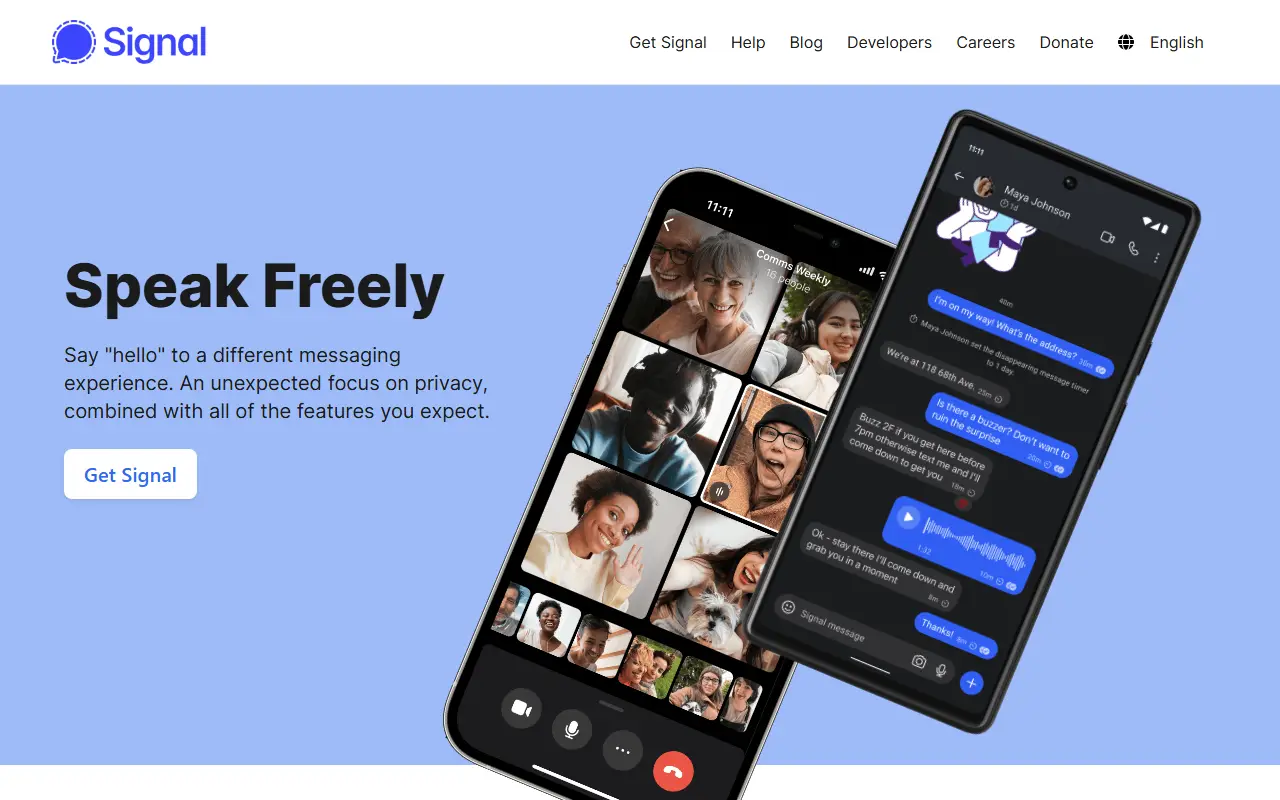
Signal Android is the source code of the Signal private messenger for Android. Signal describes itself as a simple and secure messenger that sends messages and places voice and video calls over WiFi or a mobile data connection, with privacy protections always switched on. The app is written in Kotlin and released under the AGPL-3.0 license, and it is free to use.
The app is available from the Play Store and signal.org, with versions for iOS and desktop as well. The repository explains how to report bugs on GitHub, join the beta channel on Google Play, contribute translations through the community forum, and submit code. New contributors are encouraged to start with small bug fixes, and larger ideas should be discussed on the community forum first. The client depends on Signal's own hosted service, so there is no self-hosted server option here.
Key features
- Encrypted one-to-one and group messaging
- Voice and video calls
- Privacy features that are always enabled
- Android app distributed via Play Store and signal.org
- Open Kotlin source under AGPL-3.0
- Beta program and translation contributions
Pricing: Free to use; the README describes Signal as free of charge.
#6
An open-source team chat app that organizes conversations into topic-based threads, designed for both live and asynchronous discussion, available hosted or self-hosted.
- GitHub stars
- 26k
- Last commit
- today
- Latest release
- 13.0
- Licence
- Apache-2.0
- Self-hosted
- Yes
- Hosted version
- Available
zulip.com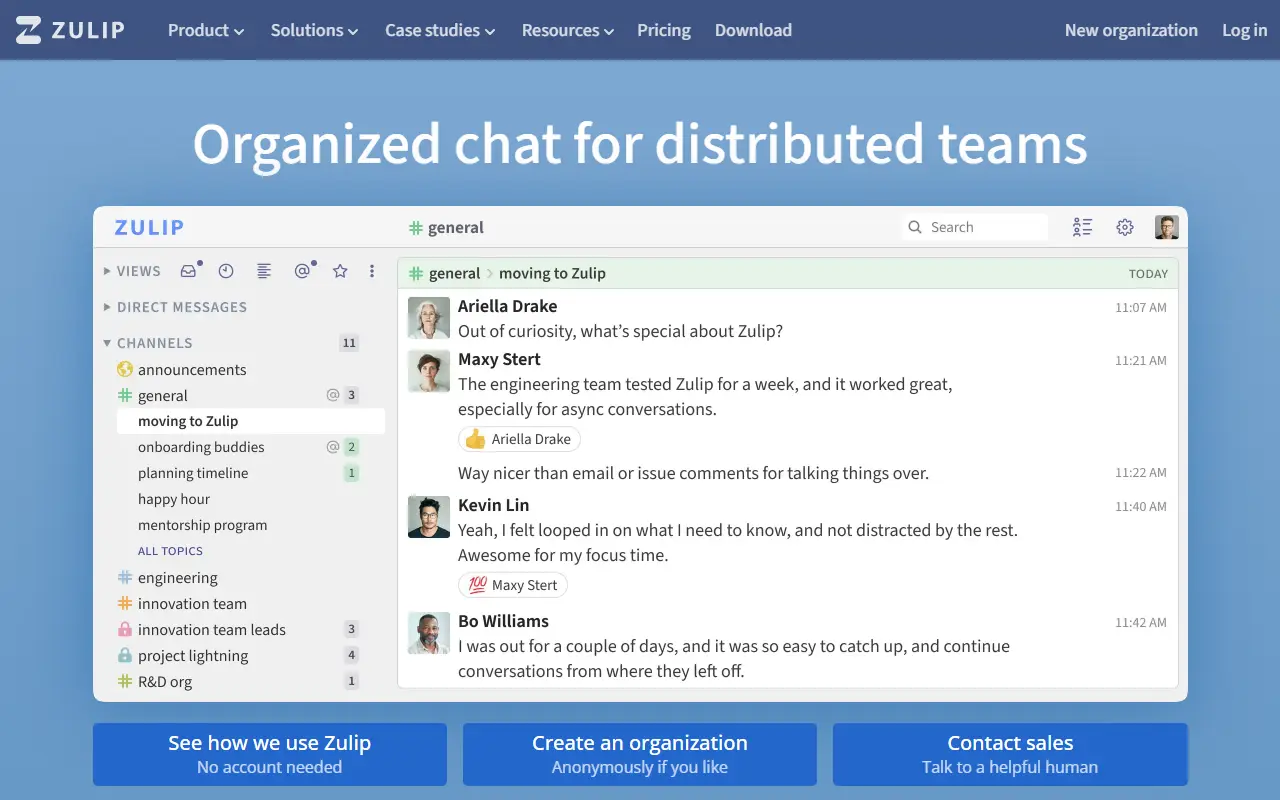
Zulip is an open-source team chat application whose defining feature is topic-based threading within channels. The idea is to blend the strengths of email and chat, so that remote and distributed teams can follow several conversations at once and catch up later without losing context. Its topics tag it as a Slack alternative.
The project is developed by a distributed community, with more than a thousand contributors and a steady flow of commits each month, and it says it has put effort into readable, tested code and extensive contributor documentation. The server is a Python web application, and there are web, desktop, built on Electron, and mobile clients, built with React Native. Zulip is used by companies and open-source projects alike, and the README says it is designed for both live and asynchronous communication.
Zulip is licensed under Apache-2.0. You can run the server on your own infrastructure, which gives full control over data, or use the hosted service operated by the project's company. It suits teams that find flat channel-based chat chaotic and want a more structured way to keep discussions organized.
Key features
- Topic-based threading in channels
- Live and asynchronous conversations
- Web, desktop and mobile clients
- Self-hosted server or hosted service
- Extensive contributor documentation
- Python and JavaScript codebase
Pricing: Cloud has a free plan, with Standard at $8 and Plus at $12 per user per month ($6.67 and $10 billed annually). Self-hosted is free, with Basic at $3.50 and Business at $8 per user per month; Enterprise is by contact.
#7
A private messenger and protocol that works without any user identifiers, with end-to-end encryption, mobile apps and a terminal client.
- GitHub stars
- 20k
- Last commit
- yesterday
- Latest release
- v7.1.2
- Licence
- AGPL-3.0
- Self-hosted
- Yes
simplex.chat
SimpleX is a messaging network built around the idea that it should not assign identifiers of any kind to its users, not even random IDs, which the project says makes it private by design. The goal is to protect not just message content but also metadata, meaning who talks to whom and when.
Messages use double-ratchet end-to-end encryption with an additional encryption layer. Apps are available for Android and iOS, with an iOS TestFlight preview that gets new features a week or two earlier but is limited in the number of users, and a terminal client runs on Linux, macOS and Windows. The README invites readers to install the app, connect to the team and user groups, make a private connection with a friend, help with translations and donate. The core is written in Haskell.
SimpleX Chat is licensed under AGPL-3.0, and its protocol and server software are open so that others can host relays. It is aimed at people who need stronger privacy guarantees than mainstream messengers provide, such as journalists, activists and privacy-conscious individuals.
Key features
- No user identifiers of any kind
- Protects message metadata
- Double ratchet end-to-end encryption
- Android and iOS apps
- Terminal client for Linux, macOS and Windows
- Open protocol and server software
Pricing: Free and open source under the AGPL-3.0 license.
#8
Signal Desktop is the open-source desktop client that links with Signal on Android or iOS so you can message from Windows, macOS and Linux.
- GitHub stars
- 17k
- Last commit
- yesterday
- Latest release
- v8.35.0
- Licence
- AGPL-3.0
- Self-hosted
- No
- Hosted version
- Available
signal.org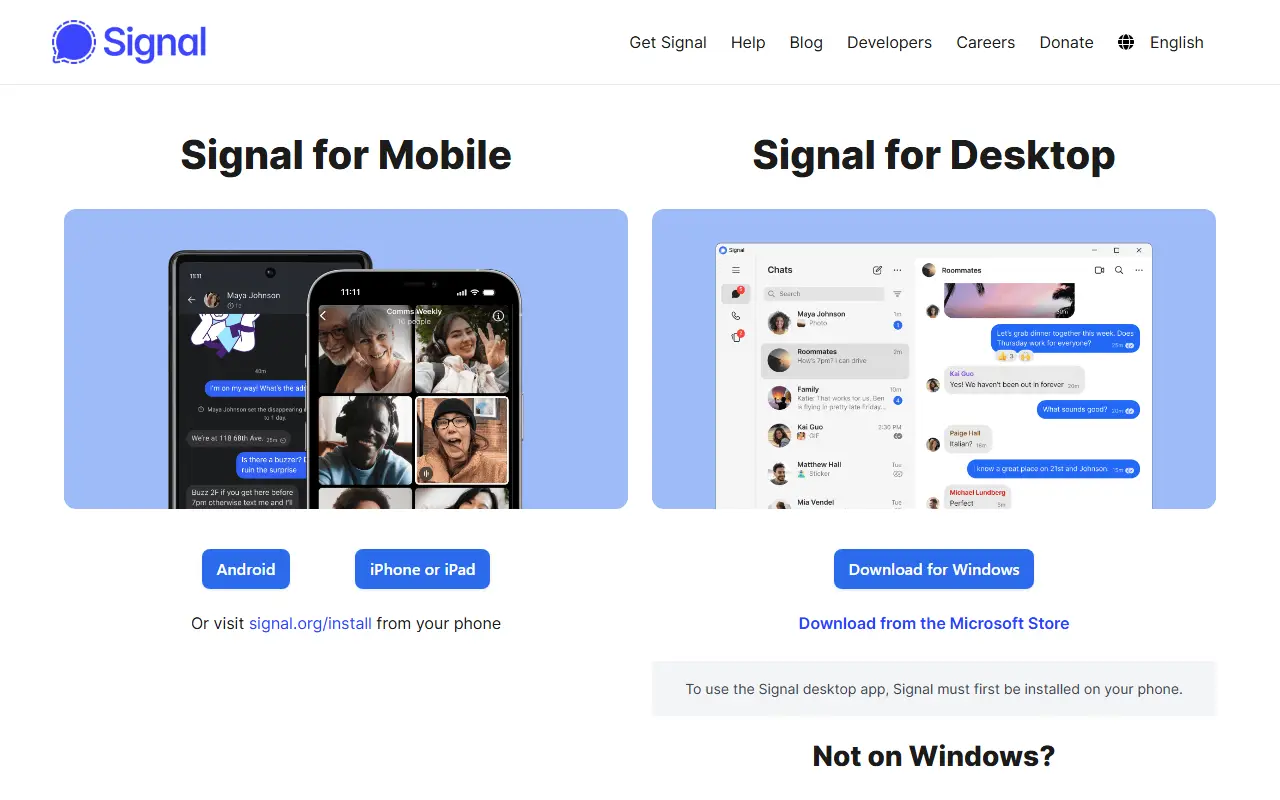
Signal Desktop is the desktop version of the Signal private messenger for Windows, macOS and Linux. It links to the Signal app on an Android or iOS phone, which lets you send and read messages from your computer. It is written in TypeScript and released under the AGPL-3.0 license.
Both a production version and a beta version can be installed. Support is provided through a support site with answers to common questions and a community forum, which is also where feature requests and questions go, while bugs are reported as GitHub issues. Contributions are welcome, including non-code ones, and the repository has a contributing guide.
Signal is run by an independent 501(c)(3) nonprofit, the Signal Technology Foundation, and donations can be made from inside the apps or on the web. The repository includes a cryptography notice explaining that the software contains encryption and may be subject to import, possession and export rules in some countries.
Key features
- Links with Signal on Android or iOS
- Messaging from Windows, macOS and Linux
- Production and beta release channels
- Open-source TypeScript codebase
- Support site and community forum
Pricing: Run by an independent nonprofit and funded by donations, which can be made from inside the apps.
#9
Web and desktop client for the Matrix network, offering encrypted chat, rooms and collaboration built on the Matrix JS SDK.
- GitHub stars
- 14k
- Last commit
- 2 days ago
- Latest release
- v1.12.34
- Licence
- AGPL-3.0
- Self-hosted
- Yes
- Hosted version
- Available
element.io
Element Web is a client for Matrix, the open protocol for decentralized messaging. It is the web and desktop application formerly known as Vector and Riot, and it lets people join rooms, chat in teams and communities, and collaborate across Matrix servers rather than inside a single vendor's network.
The client is built with TypeScript on top of the Matrix JS SDK. The README defines support tiers for browsers, covering recent versions of Chrome, Firefox, Edge and Safari on desktop, best-effort handling for ESR and extended-stable releases, and community support for mobile web. For phones and tablets the maintainers recommend the native Element X apps for Android and iOS.
It is released under the AGPL-3.0 license and is typically served from your own web host or used through the hosted app from the vendor, Element. Related products such as Element Call and the Enterprise Server Suite are mentioned as part of the wider Element offering. Changes are tracked on GitHub with regular release cycles.
Key features
- Matrix web client for rooms and chat
- Desktop app built from the same code
- Built on the Matrix JS SDK
- Documented browser support tiers
- Works alongside Element X mobile apps
Pricing: Element Enterprise is priced per seat per month and Sovereign per deployment, but no prices are published; buyers are directed to talk to an expert.
#10
Free, open-source Signal messaging app for iPhone and iPad, built for private communication with friends and without analytics.
- GitHub stars
- 12k
- Last commit
- 3 days ago
- Latest release
- 8.36.1.1988
- Licence
- AGPL-3.0
- Hosted version
- Available
signal.org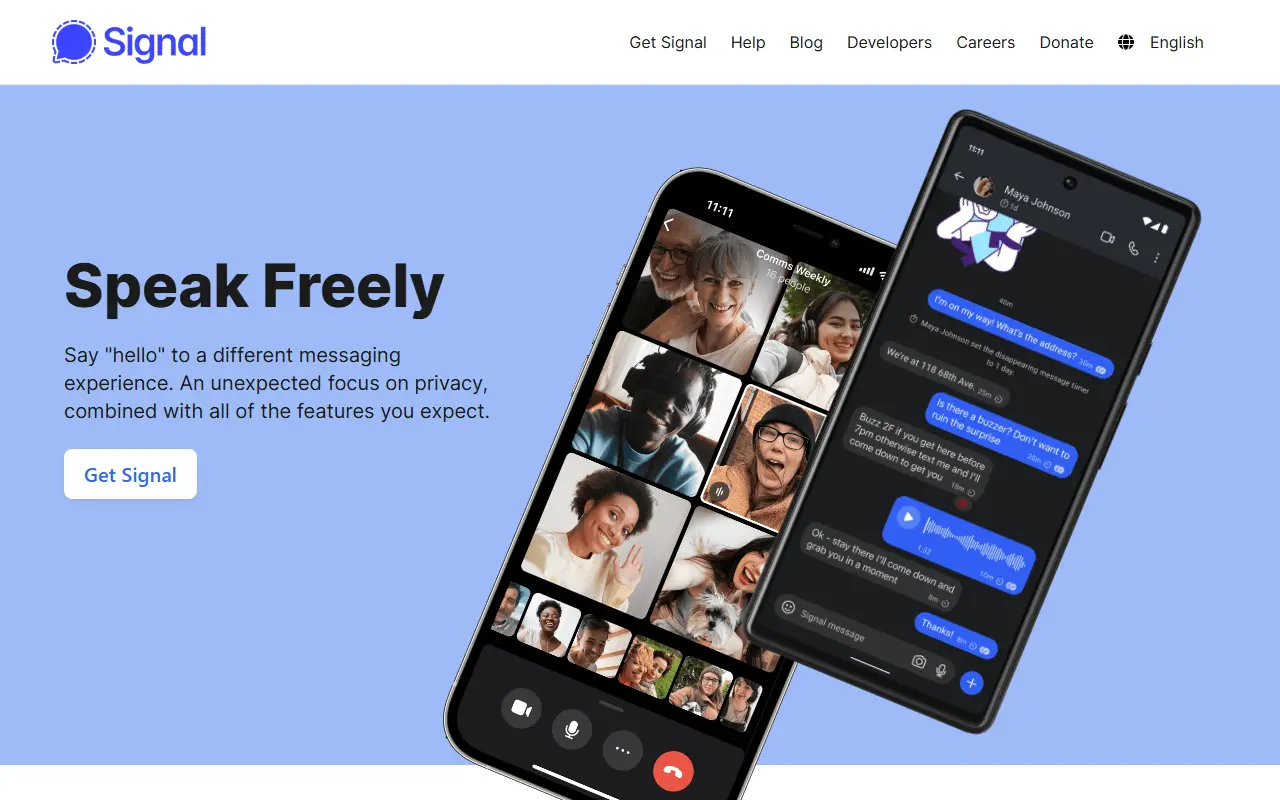
Signal iOS is the iPhone and iPad client of Signal, a free and open-source messaging app made for simple, private communication with friends. The same service is also available on Android and as a desktop application, so conversations are not tied to a single platform.
The app is written in Swift. The maintainers state that it collects no analytics or telemetry, which is why they rely on bug reports sent through the Support Center to troubleshoot problems. Developers can follow BUILDING.md to set up a build environment and read the contribution guidelines, while ideas and discussion go through the community forum run for Signal Foundation projects.
The repository is released under the AGPL-3.0 license. Because the software includes cryptographic functionality, the README carries a cryptography notice reminding users to check their country's rules on encryption software and documents its export classification. Signal itself operates as a hosted messaging service rather than something you run on your own server.
Key features
- Private messaging for iPhone and iPad
- No analytics or telemetry collection
- Open Swift source code
- Companion apps for Android and desktop
- Build instructions in BUILDING.md
Pricing: Free to use; the app is open source under the AGPL-3.0 license.
7 more Messenger alternatives
Messenger alternatives: questions
- What is the best open-source alternative to Messenger?
- Rocket.Chat is the top-ranked open-source alternative to Messenger on Enlisted: A customizable team communications platform with real-time chat and video, aimed at organizations with strict data protection needs and offered self-hosted, cloud or air-gapped. Other strong options are Mattermost, Telegram Desktop, Telegram for Android and Signal Android.
- What are the best commercial alternatives to Messenger?
- WeChat, LINE, Zalo, Viber and WhatsApp are among the hosted, closed-source alternatives to Messenger listed on Enlisted, which lists 15 in total. Compare their pricing and features on each tool page.
- Are these Messenger alternatives free?
- All 17 are open source, so the code is free to use under its licence, and 14 of them can be self-hosted on your own server or computer. 9 also offer a paid or managed cloud version if you'd rather not host it yourself.
- How is this list of Messenger alternatives ranked?
- By a score built from GitHub stars, star growth over the last 30 days and how recently the code changed. 16 of these projects shipped code in the last 30 days. Data is refreshed daily, and nobody can pay to move up.
 TrackMedia
 TrackRev