6,598 open-source and SaaS tools, with GitHub stats refreshed every day.

10 alternatives ranked by real activity

Open-source Jottacloud alternatives

A curated, ranked list of the 10 best open-source alternatives to Jottacloud.

The best open-source alternative to Jottacloud is Nextcloud. If that doesn't suit you, other good options are restic, Seafile, Duplicati and Kopia.

Jottacloud alternatives are mainly File Storage & Sharing tools. 10 of them shipped code in the last 30 days, 10 can be self-hosted, and 3 use a permissive licence.

Last updated October 2, 2026 · ranked by GitHub stars, growth and recent commits

Nextcloud

A self-hosted file sync, sharing and collaboration platform that stores files, contacts and calendars on a server you choose, extensible with hundreds of apps.

GitHub stars
37k
Last commit
today
Latest release
v35.0.1
Licence
AGPL-3.0
Self-hosted
Yes
Hosted version
Available
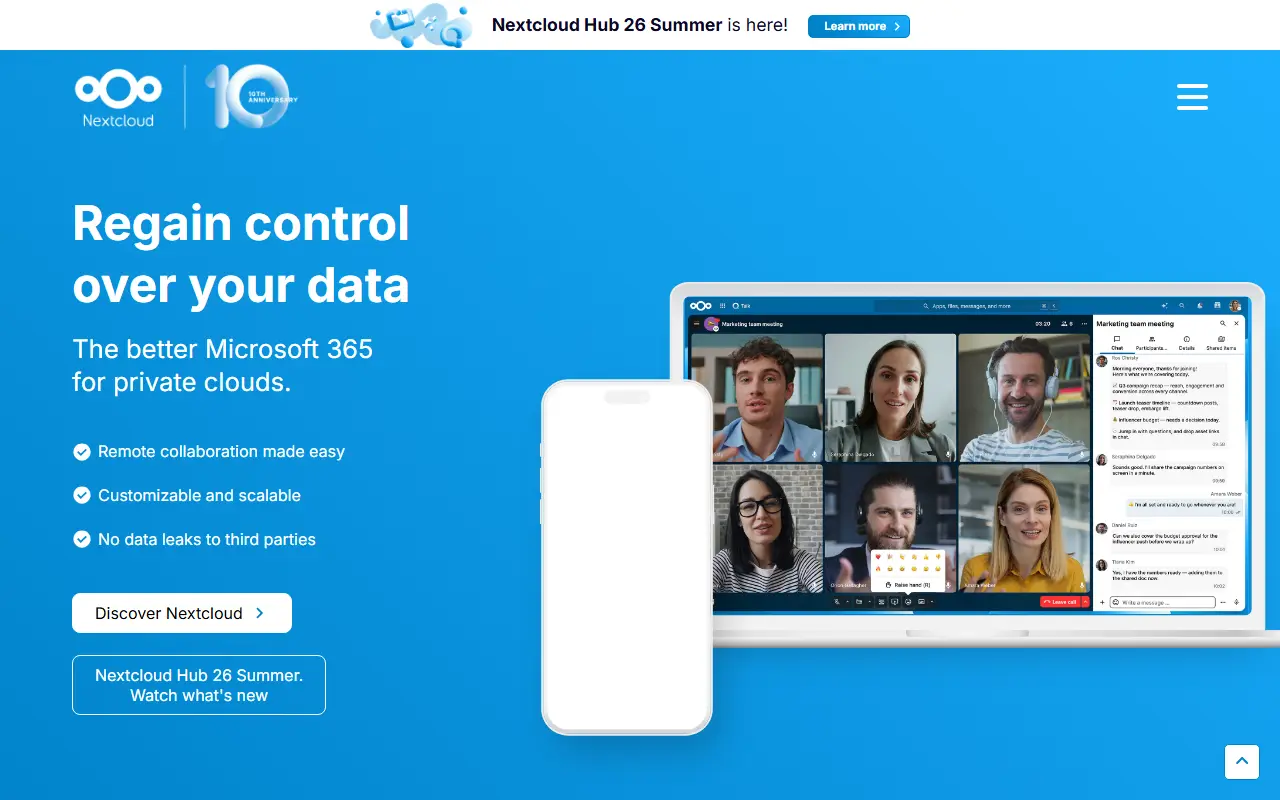
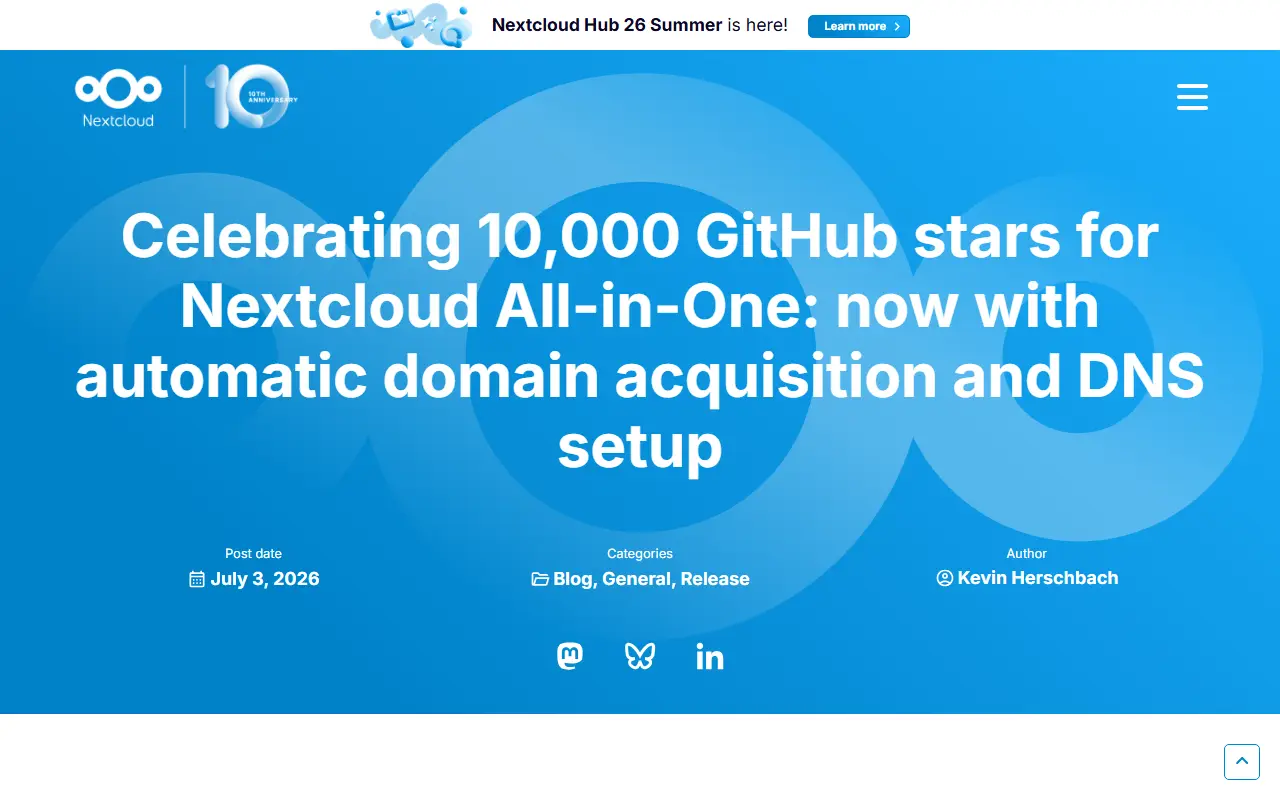
nextcloud.comNextcloud homepage screenshot

Nextcloud Server is a platform for keeping your files, contacts, calendars and other data on a server of your choosing. Content is synchronized across your devices, can be shared with other people for viewing or collaboration, and stays under your control rather than with a large cloud provider. It grew out of the ownCloud lineage.

Functionality can be expanded through hundreds of apps in its App Store, including Calendar, Contacts, Mail and Video Chat. Security measures include encryption mechanisms, a public bug bounty program and two-factor authentication. There are several ways to get a Nextcloud: sign up with a provider, install the server yourself on your own hardware or with a ready-to-use appliance, buy a device that comes with it preinstalled, or find a service provider to host it for you.

The server is written in PHP and JavaScript under the AGPL-3.0 license. Nextcloud GmbH also offers an Enterprise edition aimed at public sector, education and company users. It suits households, schools and organizations that want to replace commercial cloud storage and office suites with something they run themselves.

Key features

  • File storage and sync across devices
  • Contacts and calendar hosting
  • Sharing and collaboration controls
  • App Store with hundreds of apps
  • Two-factor authentication and encryption
  • Self-install, appliance or provider-hosted options

Pricing: Nextcloud Enterprise Standard starts at 42€ per user per year, with subscriptions from 100 users and 31.50€ from 250 users. Nextcloud One managed hosting is offered for smaller teams.

restic

Restic is a cross-platform command-line backup program that stores deduplicated, encrypted snapshots in local or cloud storage backends.

GitHub stars
36k
Last commit
2 days ago
Latest release
v0.19.1
Licence
BSD-2-Clause
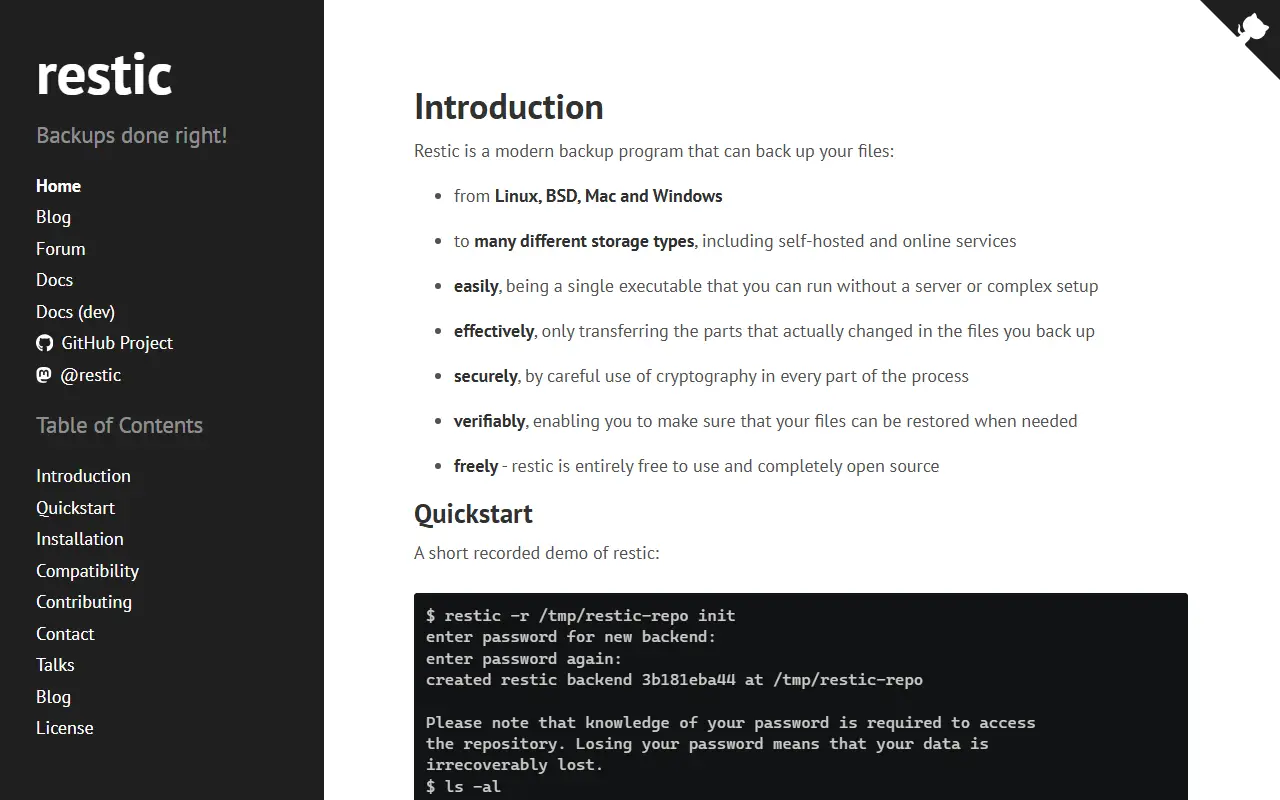
restic.netrestic homepage screenshot

Restic is a backup program designed to be fast, efficient and secure. It runs on Linux, macOS and Windows, with support for FreeBSD and OpenBSD, and ships as a single command-line tool written in Go. It is released under the BSD-2-Clause license, and the project keeps documentation and a Discourse forum for questions.

Backups are stored in a repository that you create with an init command and protect with a password, and the README warns that losing the password means losing the data. Each run saves a snapshot, and deduplication keeps repeated data from using extra space. Files can be restored with a restore command, or the repository can be mounted through FUSE so past snapshots can be browsed. Restic can store backups in a local directory, over SFTP, on an HTTP REST server, in Amazon S3 or S3-compatible storage, OpenStack Swift, Backblaze B2, Azure Blob Storage, Google Cloud Storage, or through rclone.

Key features

  • Encrypted, deduplicated backup snapshots
  • Backends for S3, B2, Azure, GCS and SFTP
  • Any rclone remote supported as a backend
  • Restore command and FUSE mount for browsing
  • Runs on Linux, macOS, Windows and BSD
  • Single Go binary with password-protected repositories

Pricing: Free and open source under the BSD-2-Clause license.

Read more about resticWebsite GitHub

Seafile

A file sync and sharing platform with desktop and mobile clients that also lets teams organize files with extensible properties and flexible views.

GitHub stars
15k
Last commit
14 days ago
Latest release
v9.0.5
Self-hosted
Yes
Hosted version
Available
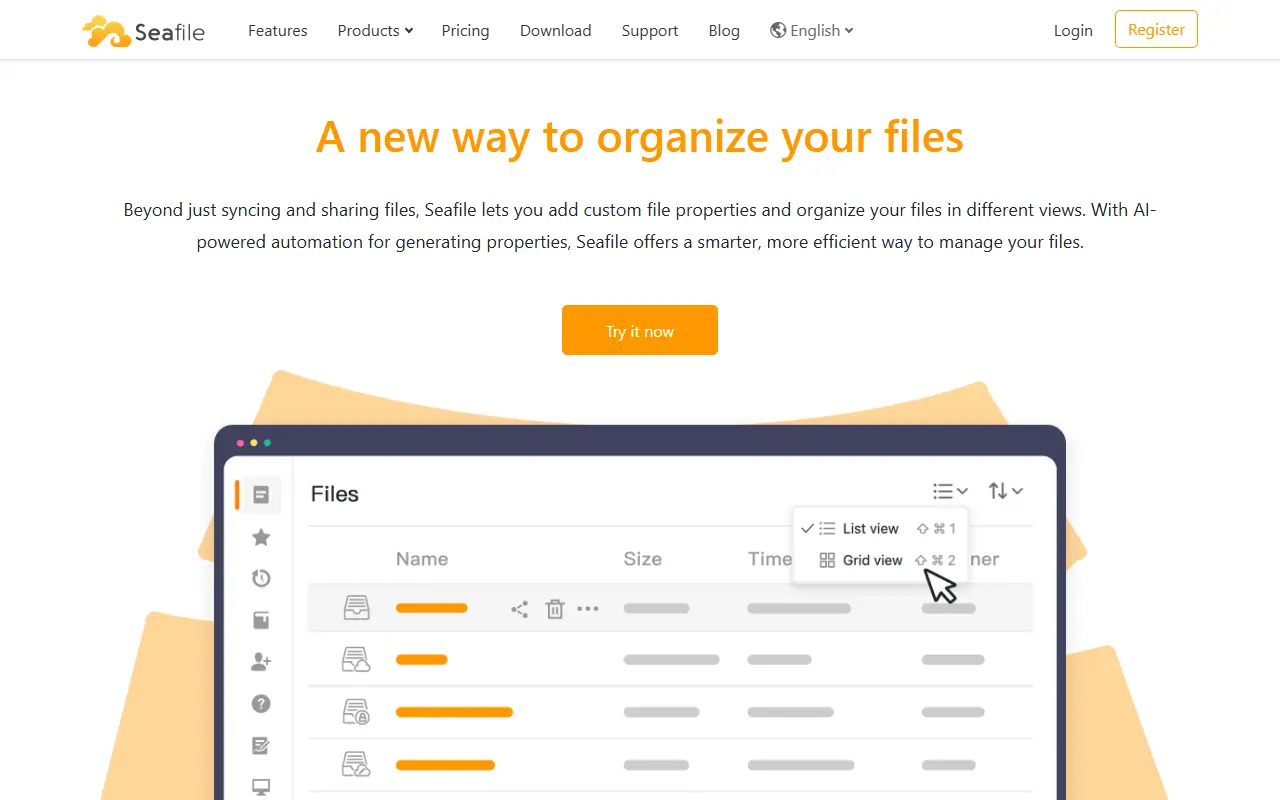
seafile.comSeafile homepage screenshot

Seafile is a file synchronization and sharing platform written mainly in C. Beyond keeping folders in sync across devices and sharing them with others, it describes a newer way of organizing files using extensible file properties and flexible views. Topics also tie it to wikis, Markdown, knowledge management and document management.

The project's homepage could not be fetched while preparing this entry, so the details here come from the repository description, its topics and general knowledge of the product. Seafile is known for client apps on desktop and mobile, libraries as the unit of syncing and sharing, and an emphasis on reliable syncing of large numbers of files.

The core server is open source, with its license listed as 'Other' on GitHub, and the vendor also sells a professional edition and offers hosted service. You can run it on your own servers, which suits teams and organizations that want private cloud storage under their control.

Key features

  • File synchronization across devices
  • File and folder sharing
  • Extensible file properties
  • Flexible views for organizing files
  • Wiki and Markdown document features

Pricing: The Community Edition is free to self-host. Pro Edition is $48 per user per year (free for 3 users); the hosted Plus Team plan is $8 per user per month with a 30-day trial.

Duplicati

Duplicati is a free, open-source backup client that stores encrypted, incremental, compressed backups on cloud storage and remote servers.

GitHub stars
15k
Last commit
today
Latest release
v2.4.0.0_stable_2026-09-03
Self-hosted
Yes

Duplicati is a free, open-source backup client that securely stores encrypted, incremental and compressed backups on cloud storage services and remote file servers. According to its README it is licensed under the MIT license and available for Windows, macOS and Linux, and it is written in C#.

Data is encrypted with AES-256 or GNU Privacy Guard before it is uploaded. Only the first backup is a full copy, and later backups are differential to save bandwidth and storage. A built-in scheduler keeps backups current, and an integrated updater announces new releases. Supported destinations include Amazon S3, Backblaze B2, Box, Dropbox, FTP, Google Cloud and Drive, MEGA, Microsoft Azure and OneDrive, Storj, SFTP, WebDAV and others.

Releases are GPG-signed, and the project offers a forum, an online manual and several update channels from stable to more experimental builds. Because the backup client runs on your own machines and sends data to storage you choose, it suits individuals and small teams who want client-side encrypted backups without a vendor-hosted service.

Key features

  • AES-256 or GPG encryption before upload
  • Incremental and compressed backups
  • Built-in backup scheduler
  • Many cloud and remote destinations
  • Integrated updater with signed releases
  • Windows, macOS and Linux support

Pricing: Free and open source; the README states it is licensed under the MIT license.

Read more about DuplicatiGitHub

Kopia

Cross-platform backup tool with encrypted, deduplicated snapshots sent to cloud storage, a NAS or local disks, with both CLI and GUI.

GitHub stars
14k
Last commit
yesterday
Latest release
v0.23.1
Licence
Apache-2.0
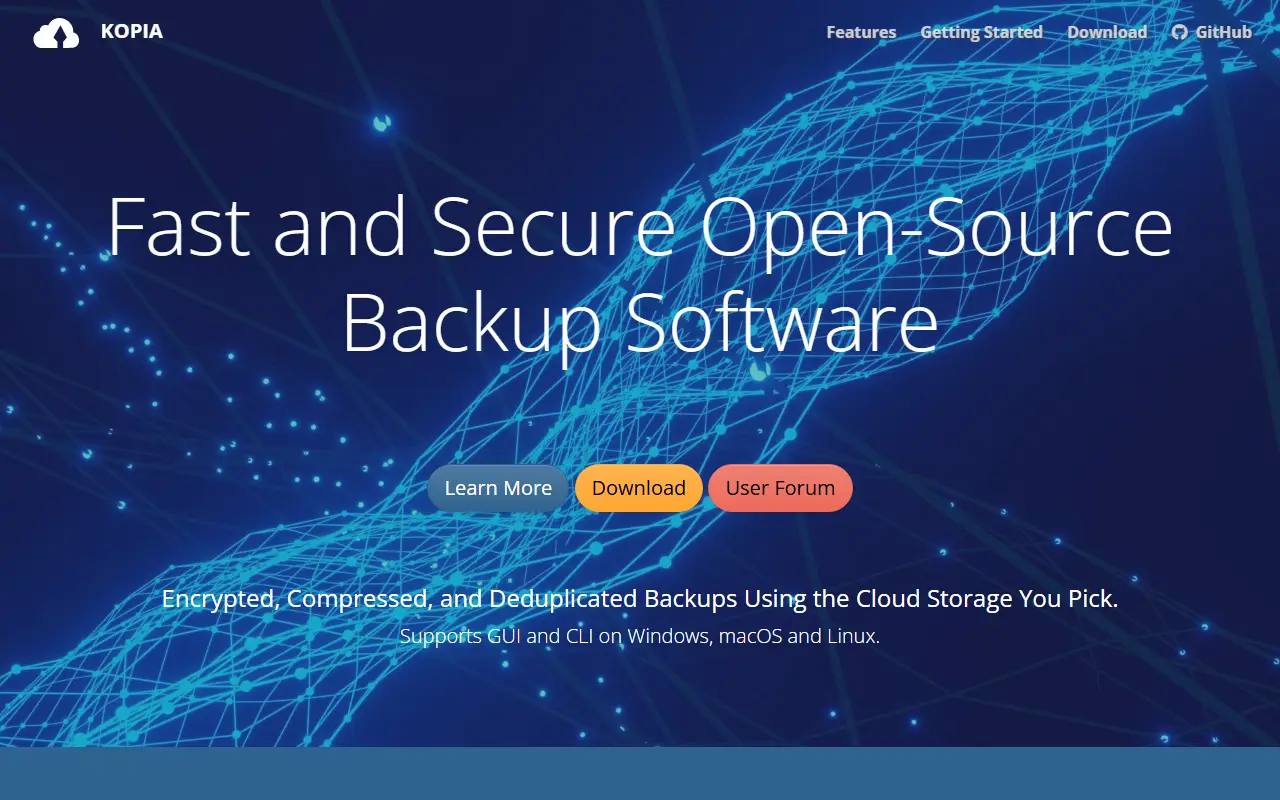
kopia.ioKopia homepage screenshot

Kopia is an open-source backup and restore tool that creates encrypted snapshots of selected files and directories. It does not image a whole machine; instead you choose the folders that matter and Kopia stores the snapshots in the location you pick, whether that is cloud storage, a network server or a local disk.

Compression, deduplication, error correction and end-to-end encryption controlled by the user are built in, so repeated backups stay small and the storage provider never sees readable data. Supported destinations include Amazon S3 and S3-compatible services, Azure Blob Storage, Backblaze B2, Google Cloud Storage, WebDAV, SFTP and, experimentally, a subset of Rclone backends.

Both a command-line interface and a graphical interface are included, so the tool suits advanced users and people who prefer a GUI. It runs on Windows, macOS and Linux, is written in Go and is licensed under Apache-2.0. The project site offers installation instructions and a step-by-step getting started guide.

Key features

  • Encrypted snapshots with client-side encryption
  • Incremental backups with data deduplication
  • Compression and error correction
  • S3, Azure, B2, Google Cloud, WebDAV and SFTP targets
  • Command-line and graphical interfaces
  • Runs on Windows, macOS and Linux

Pricing: Free and open source under the Apache-2.0 license.

Read more about KopiaWebsite GitHub

BorgBackup

Command-line backup program that deduplicates data, compresses it and encrypts it with authentication, built for efficient repeated backups.

GitHub stars
14k
Last commit
3 days ago
Latest release
1.4.5
borgbackup.orgBorgBackup homepage screenshot

BorgBackup, usually called Borg, is a backup program that stores files as content-defined chunks. Identical chunks are kept only once across files, machines and years of history, so a daily full backup costs little more than the changes made since the previous run. This makes long retention periods practical on modest storage.

Repositories are protected with authenticated AES encryption, which means a backup server only ever sees ciphertext and does not need to be trusted. Compression is configurable, with options such as lz4 for speed, zstd as a balance and zlib or lzma for smaller output. Archives can be mounted as an ordinary filesystem through FUSE so earlier versions of files can be browsed like folders.

Borg is written in Python, has been developed since 2015, and is free software under a BSD license. It installs on Linux, macOS, BSD and other systems from distribution packages, single-file binaries or pip. The project site provides a demo, documentation, a community page and commercial support services.

Key features

  • Content-defined chunking for deduplicated backups
  • Authenticated AES encryption of repositories
  • Selectable compression: lz4, zstd, zlib, lzma
  • Mount archives as a filesystem via FUSE
  • Installs on Linux, macOS and BSD
  • Backs up over SSH to remote servers

Pricing: Free software under a BSD license.

Nextcloud All-in-One

Official Docker-based installer for Nextcloud that bundles the server, database, caching, backups and optional extras behind one admin interface.

GitHub stars
11k
Last commit
today
Latest release
v14.2.0
Licence
AGPL-3.0
Self-hosted
Yes
nextcloud.comNextcloud All-in-One homepage screenshot

Nextcloud All-in-One, often shortened to AIO, is the official installation method for Nextcloud. It provides easy deployment and maintenance, packaging most of what an instance needs into a set of containers that are managed from a simple web interface.

The bundle includes Nextcloud itself, a high-performance backend for Files, Redis and APCu caching, PostgreSQL as the database, and optional components such as Nextcloud Office, Talk with its TURN server, a recording server, ClamAV antivirus, full-text search, a whiteboard, Imaginary for previews, and a backup solution based on BorgBackup. Updates, daily backups and restore from an archive are handled from the AIO interface.

It is designed to work behind existing reverse proxies, Cloudflare Tunnel or Tailscale. The project is written in PHP, licensed under AGPL-3.0, and runs on your own hardware with Docker. The maintainers are actively looking for contributors to help with development.

Key features

  • One-container-set Nextcloud installation
  • Web interface for installation and updates
  • Daily backups and restore from archive
  • Redis, APCu and PostgreSQL included
  • Optional Office, Talk, ClamAV and search
  • Works behind reverse proxies or Tailscale

Pricing: Enterprise support subscription for self-hosted Nextcloud: Standard starts at €42 per user per year with a 100-user minimum. Other enterprise tiers are quoted on request.

ownCloud

The server core of ownCloud Classic, a self-hosted platform for file storage, sync and sharing with WebDAV, CalDAV and CardDAV support.

GitHub stars
8.8k
Last commit
5 days ago
Latest release
v11.0.1
Licence
AGPL-3.0
Self-hosted
Yes
owncloud.comownCloud homepage screenshot

ownCloud Core is the server component of ownCloud Classic, a self-hosted platform for file storage, synchronization and sharing. It is the foundation on which apps such as Activity, Calendar and Contacts are built, and is written in PHP and JavaScript.

It ships with servers for WebDAV, CalDAV and CardDAV, an app plugin architecture, backends for external storage, support for encryption, user and group management, and a REST API. The server runs on PHP with MySQL, MariaDB, PostgreSQL or SQLite, and is also available as a Docker image on Docker Hub. Its topics point to federated sharing and enterprise use.

ownCloud Classic is licensed under AGPL-3.0, and installation is covered by the official manual. For the next-generation platform, the project points to ownCloud Infinite Scale. Contributors follow a rebase workflow with signed commits and DCO sign-off, and enterprise support is available from the vendor. It suits organizations and individuals who want to keep files on their own servers instead of a public cloud.

Key features

  • File storage, sync and sharing
  • WebDAV, CalDAV and CardDAV servers
  • Plugin architecture for apps
  • User and group management
  • Encryption and external storage support
  • REST API for integrations
  • Docker image available

Pricing: Free and open source under AGPL-3.0; enterprise support is available from the vendor.

Backrest

Backrest is a web UI and scheduler for restic backups that lets you create repos, browse snapshots and restore files from a single lightweight binary.

GitHub stars
7.4k
Last commit
11 days ago
Latest release
v1.14.1
Licence
GPL-3.0
Self-hosted
Yes
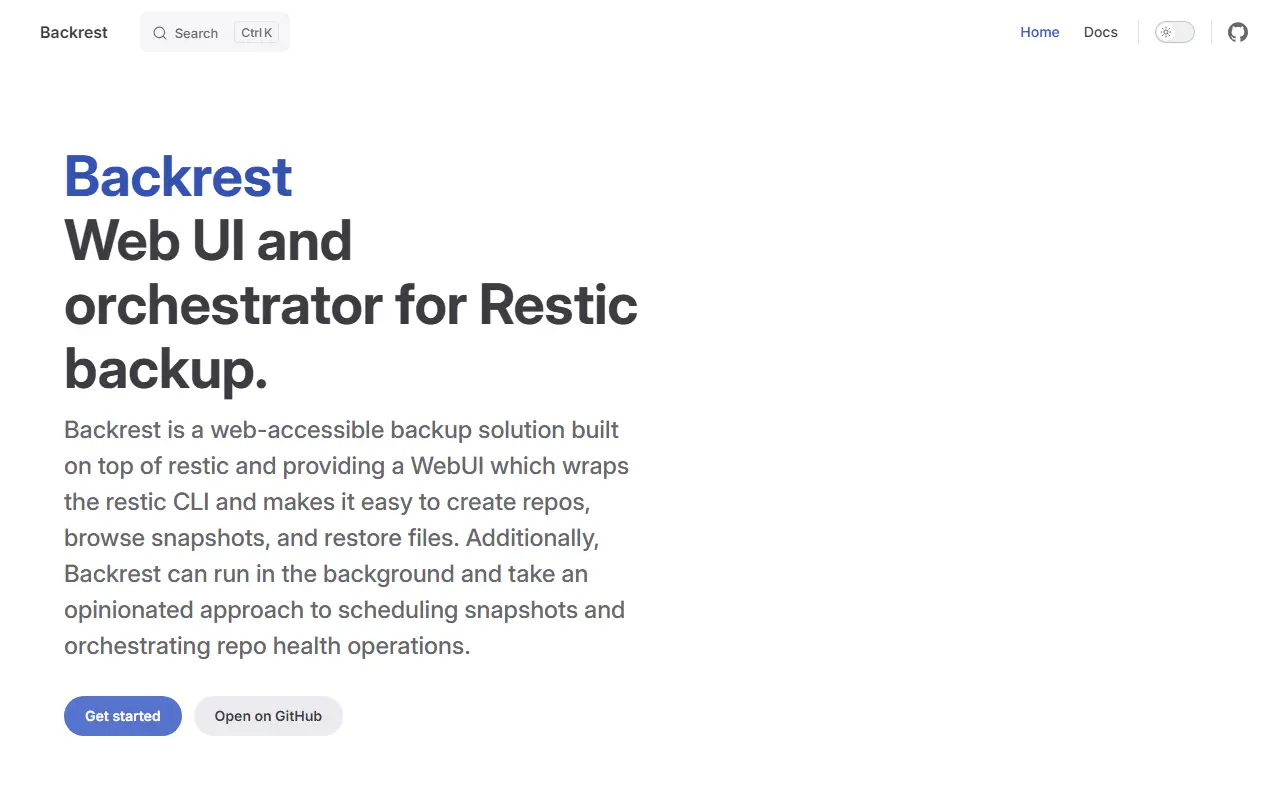
garethgeorge.github.ioBackrest homepage screenshot

Backrest is a backup tool you reach through a web browser, built on restic. Its web interface wraps the restic command-line tool so you can create repositories, browse snapshots and restore files, and it can run in the background to schedule snapshots and orchestrate repository health tasks.

It supports importing existing restic repositories and cron-scheduled backups and maintenance such as prune, check and forget. Notifications can be sent through Discord, Slack, Shoutrrr, Gotify or Healthchecks, and pre and post backup hooks can run shell scripts. All restic storage backends are supported, including S3, B2, Azure, GCS, local and SFTP, along with rclone remotes. The interface can be reached locally or remotely, which suits NAS deployments, and the restic CLI remains available for advanced operations.

Backrest is written in Go with a TypeScript interface, licensed under GPL-3.0 and distributed as a standalone binary whose only dependency is restic, downloaded on first run. It runs on Linux, macOS, Windows, FreeBSD and Docker.

Key features

  • Web UI wrapping the restic CLI
  • Browse snapshots and restore files
  • Cron-scheduled backups and maintenance
  • Notifications via Discord, Slack and Gotify
  • Pre and post backup command hooks
  • Supports S3, B2, SFTP and rclone remotes

Pricing: Free and open source under the GPL-3.0 licence.

ownCloud Infinite Scale

ownCloud Infinite Scale, a Go-based file sync and share platform designed as the foundation of a data management system.

GitHub stars
2.1k
Last commit
today
Latest release
v8.2.0
Licence
Apache-2.0
Self-hosted
Yes
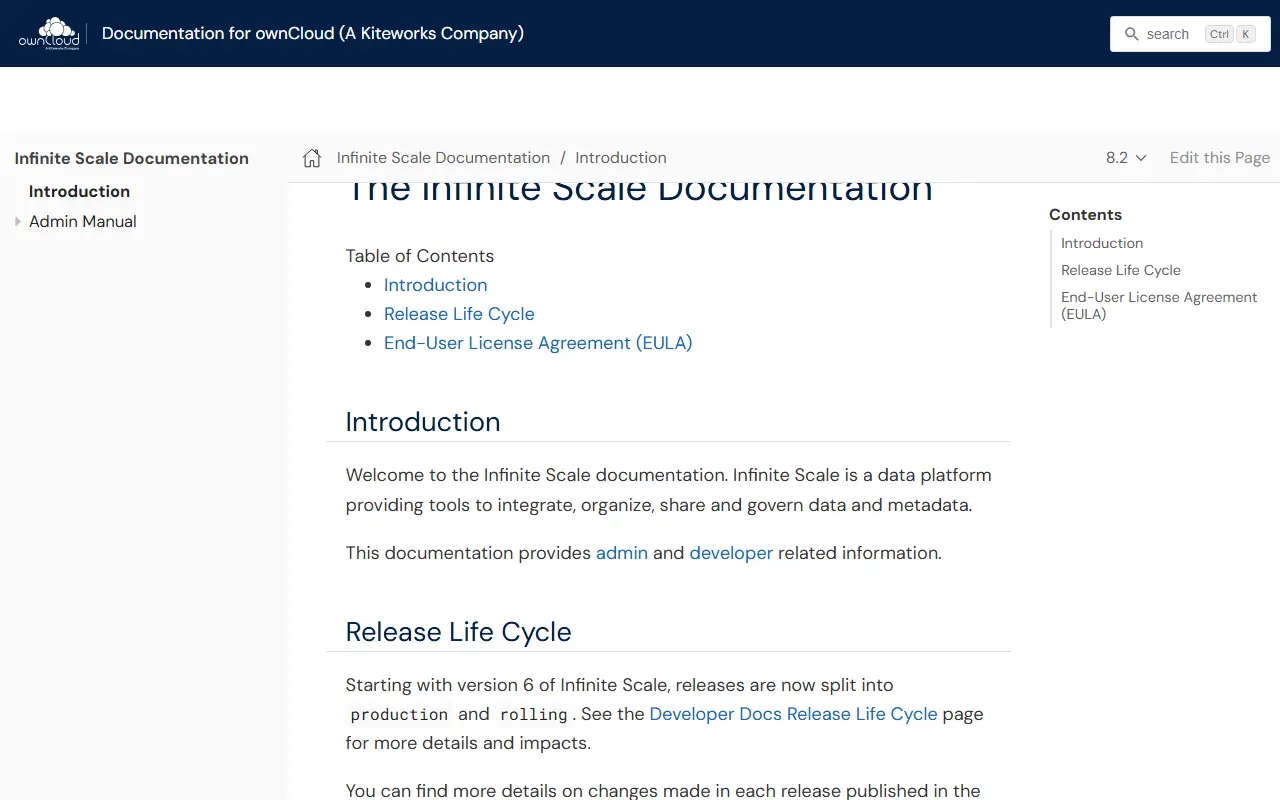
doc.owncloud.comownCloud Infinite Scale homepage screenshot

ownCloud Infinite Scale, or oCIS, is a file sync and share platform written in Go and built on Reva. It is the successor architecture to the original ownCloud and is presented as the foundation of a broader data management platform. The code is released under the Apache-2.0 license, while the README also mentions an end user license agreement for released builds.

The documentation covers an overview, clients, web office applications, authentication, installation, and important readings. A quickstart uses Docker to run a minimal evaluation instance reachable at localhost on port 9200, and the project explains how to run it from the official documentation or from the repository source. Separate admin and development documentation are maintained.

oCIS suits organizations and individuals that want to host their own file storage and sharing, with desktop and mobile clients, rather than using a public cloud drive. As a self-hosted server, it requires administration of storage, identity, and updates.

Key features

  • File sync and sharing server
  • Written in Go on the Reva framework
  • Docker quickstart for evaluation
  • Desktop and mobile clients
  • Web office application integration
  • Admin and development documentation

Pricing: Source code is free under the Apache-2.0 license; see the project for the end user license of official builds.

Jottacloud alternatives: questions

What is the best open-source alternative to Jottacloud?
Nextcloud is the top-ranked open-source alternative to Jottacloud on Enlisted: A self-hosted file sync, sharing and collaboration platform that stores files, contacts and calendars on a server you choose, extensible with hundreds of apps. Other strong options are restic, Seafile, Duplicati and Kopia.
Are these Jottacloud alternatives free?
All 10 are open source, so the code is free to use under its licence, and 10 of them can be self-hosted on your own server. 2 also offer a paid or managed cloud version if you'd rather not host it yourself.
How is this list of Jottacloud alternatives ranked?
By a score built from GitHub stars, star growth over the last 30 days and how recently the code changed. 10 of these projects shipped code in the last 30 days. Data is refreshed daily, and nobody can pay to move up.

People also look for alternatives to…

View all