7 open-source alternatives ranked by real activity

Open-source Hubitat Elevation alternatives

A curated, ranked list of the 7 best open-source alternatives to Hubitat Elevation.

The best open-source alternative to Hubitat Elevation is OpenRemote. If that doesn't suit you, other good options are Home Assistant, ESPHome, Node-RED and Gladys Assistant.

Commercial alternatives to Hubitat Elevation include Indigo, Homey, Aqara Home and Control4. See all 12.

Hubitat Elevation alternatives are mainly home automation & IoT tools, but some are also workflow automation tools. 7 of them shipped code in the last 30 days, 7 can be self-hosted, and 3 use a permissive licence.

Last updated November 13, 2026 · ranked by GitHub stars, growth and recent commits

OpenRemote

OpenRemote is an open source IoT platform for managing devices, automating rules and building dashboards and maps.

GitHub stars
2.1k
Last commit
yesterday
Latest release
1.34.0
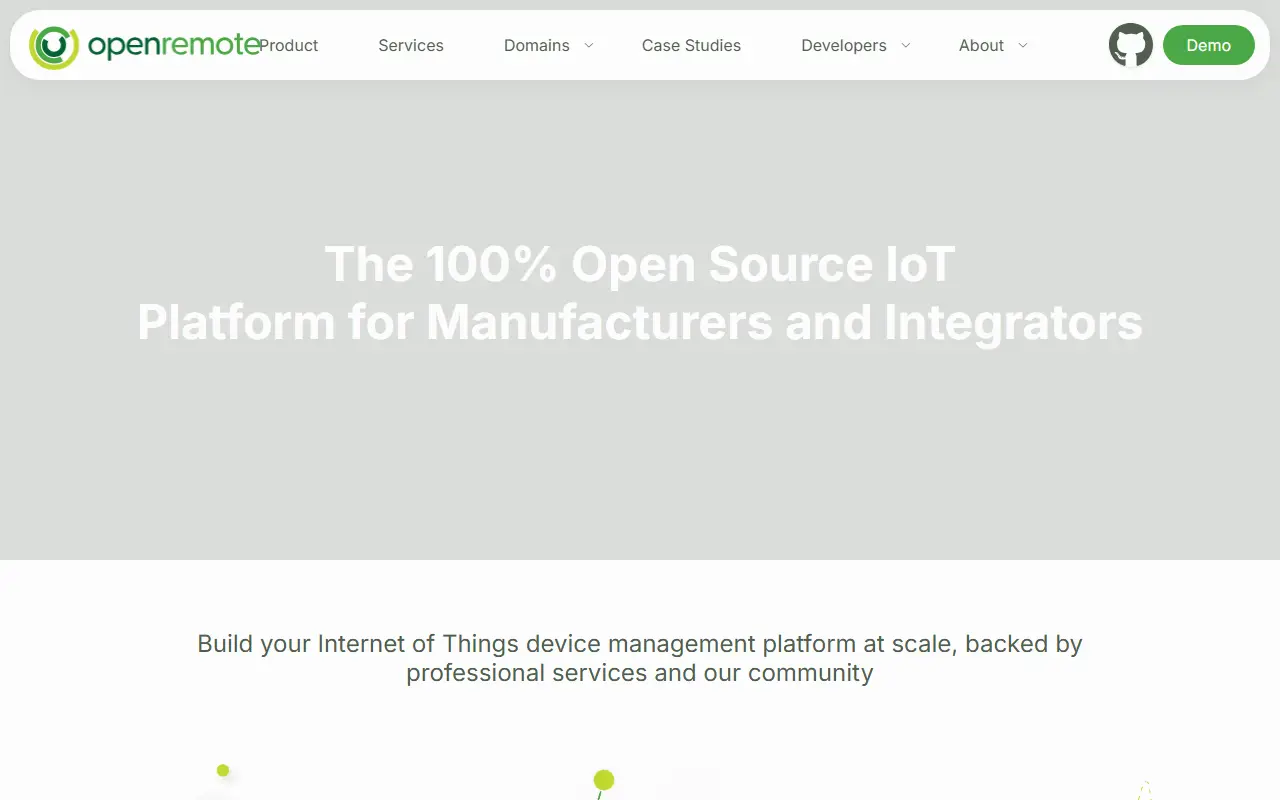
openremote.ioOpenRemote homepage screenshot

OpenRemote is an open source IoT device management platform aimed at manufacturers and integrators. The pitch is to build an Internet of Things platform at scale, backed by professional services and a community. Source code is on GitHub, and documentation, a community forum and a demo are linked from the site.

The Manager UI is the main interface. It is used to map and configure assets, script automation and build real-time dashboards, with integrations for external services such as Mapbox or enterprise APIs. The site lists solution areas including energy management, industrial IoT, fleet telematics, building management, smart city and agriculture.

The developer section of the site links to documentation covering API references, configuration schemas and deployment guides, a community forum where engineers troubleshoot with users, and open source licence terms.

Key features

  • Link any device or data source in one manager
  • Rules, flows and scripts for automation
  • Real-time dashboards and geographic maps
  • Vehicle tracking with Teltonika hardware recognition
  • External integrations such as Mapbox or enterprise APIs
Read more about OpenRemoteWebsiteGitHub#1 Hubitat Elevation alternative

Home Assistant

Open-source home automation software built around local control and privacy, with automations, dashboards, voice assistants and over 1,500 integrations.

GitHub stars
92k
Last commit
yesterday
Latest release
2026.11.1
Licence
Apache-2.0
Self-hosted
Yes
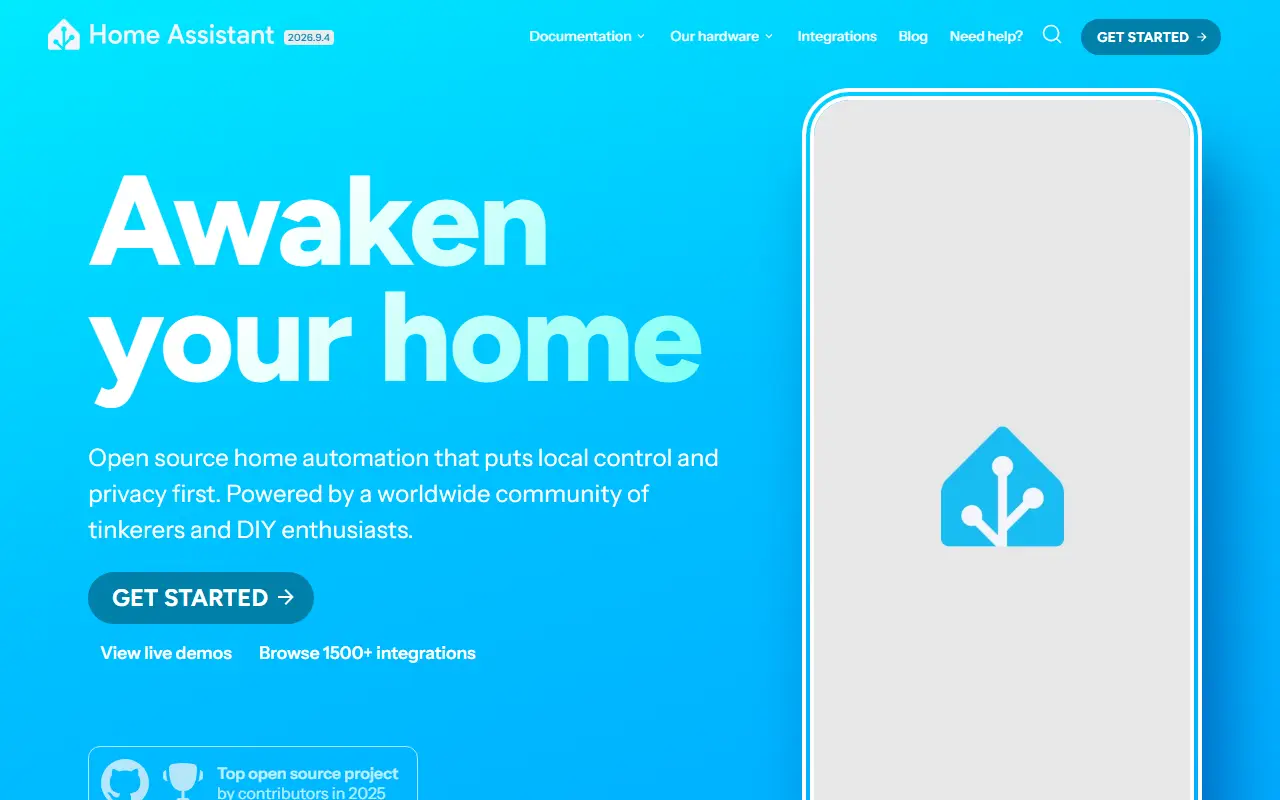
home-assistant.ioHome Assistant homepage screenshot

Home Assistant is open-source home automation software built around local control and privacy. It runs on hardware you own, such as a Raspberry Pi or a small home server, and brings smart lights, sensors, switches, thermostats and other devices together in one place. The core is written in Python and released under the Apache-2.0 license.

The documentation is organized around automations and dashboards, voice control, grouping devices by area, tracking energy use and templating, with configuration through the interface or YAML files. The project lists more than 1,500 integrations, and it can be controlled through assistants such as Alexa and Google Assistant. Companion hardware, including Home Assistant Green and the Voice Preview Edition, makes first-time setup simpler.

Home Assistant is a project of the Open Home Foundation, a non-profit that states the project cannot be sold or acquired. It suits tinkerers and DIY enthusiasts who want a home automation hub that does not depend on a single vendor's cloud, as well as people who want to unify devices from many brands under one dashboard.

Key features

  • Automations for lights, sensors and other devices
  • Customizable dashboards for your home
  • Voice assistant support
  • Energy management tools
  • Templating and YAML-based configuration
  • 1,500+ device and service integrations

Pricing: Free and open source under the Apache-2.0 license; the project also sells optional hardware.

Read more about Home AssistantWebsiteGitHub#2 Hubitat Elevation alternative

ESPHome

Framework that turns ESP32, ESP8266 and RP2040 microcontrollers into smart home devices using YAML configuration, tied closely to Home Assistant.

GitHub stars
12k
Last commit
yesterday
Latest release
2026.10.2
Self-hosted
Yes
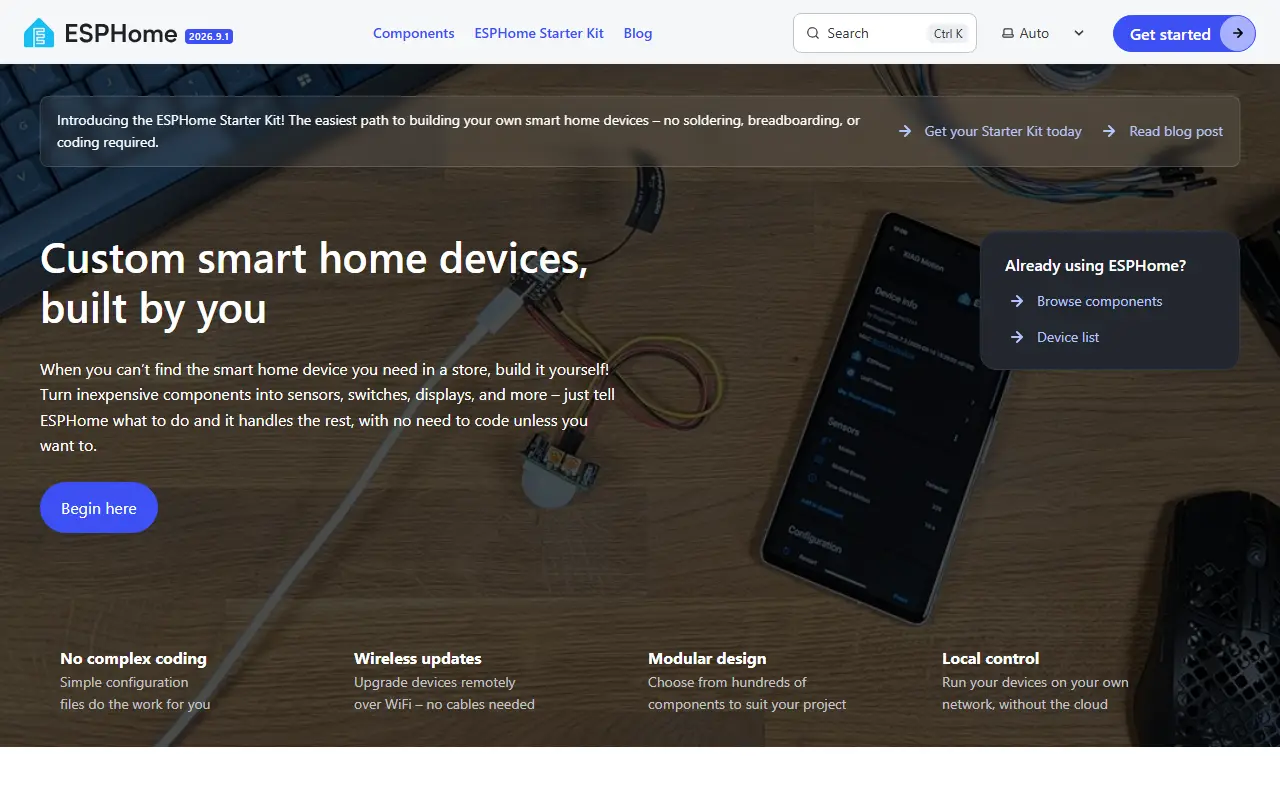
esphome.ioESPHome homepage screenshot

ESPHome is a system for creating custom smart home devices from inexpensive microcontrollers such as the ESP32, ESP8266, BK72xx and RP2040 chips. Instead of writing firmware by hand, you describe the device in a simple configuration file, and ESPHome generates and builds the firmware for sensors, switches, displays and similar hardware.

A visual Device Builder lets beginners set up devices without a command line, while experienced users can edit YAML directly. Devices can be updated wirelessly over WiFi, choose from hundreds of modular components, and run under local control on your own network without the cloud. They integrate with Home Assistant out of the box and can also report over MQTT. PlatformIO is used under the hood.

The project is written in C++ and Python, and its code is covered by licenses listed in the repository. The site offers documentation, a component list, a device list, a blog and an ESPHome Starter Kit for people who want to start building without soldering. Releases follow a year and month version scheme.

Key features

  • YAML configuration instead of hand-written firmware
  • Visual Device Builder for beginners
  • Wireless firmware updates over WiFi
  • Hundreds of modular components
  • Local control without the cloud
  • Native Home Assistant integration

Pricing: Free and open source; hardware such as the ESPHome Starter Kit is sold separately.

Read more about ESPHomeWebsiteGitHub#3 Hubitat Elevation alternative

Node-RED

A low-code, flow-based programming tool for event-driven applications, where you wire together devices, APIs and services in a browser-based editor.

GitHub stars
24k
Last commit
yesterday
Latest release
5.0.9
Licence
Apache-2.0
Self-hosted
Yes
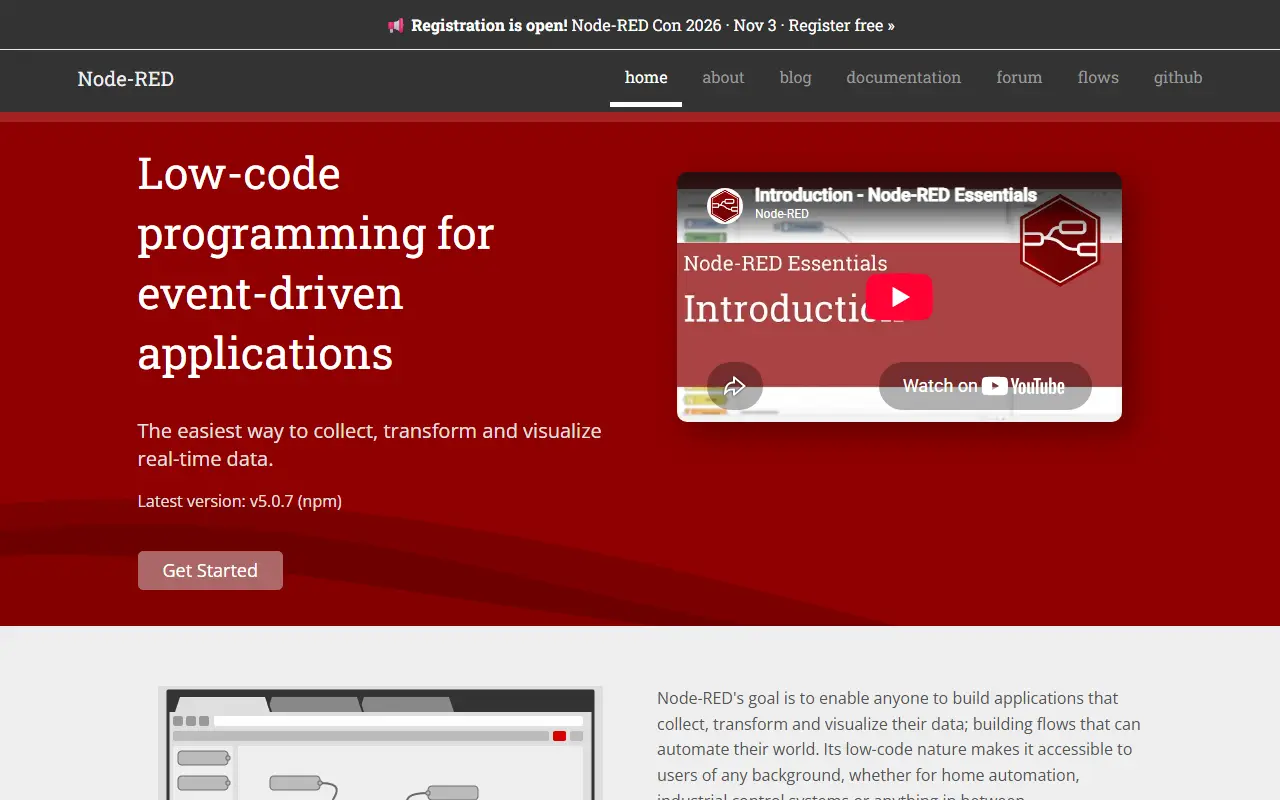
nodered.orgNode-RED homepage screenshot

Node-RED is a low-code programming tool for event-driven applications built on flow-based, visual programming. Instead of writing everything as code, you connect nodes that represent inputs, processing steps and outputs, which makes it popular for IoT projects, home automation and wiring together APIs and online services. It is a project of the OpenJS Foundation.

Getting started takes a couple of commands: install it globally with npm, start it with the node-red command, and open it in your browser. A large ecosystem sits around it, with a library of custom nodes and integrations, shared flows and node collections, plus documentation, a forum and a Slack community. Developers can also run the latest code from git by cloning the repository, installing dependencies and building it.

Node-RED is written in JavaScript on Node.js and licensed under Apache-2.0. You run it on your own computer, a Raspberry Pi, a server or in a container, so there is no hosted service to depend on. It suits makers, integrators and engineers who want to prototype and automate event-driven logic quickly.

Key features

  • Flow-based visual programming
  • Browser-based visual editor
  • Large library of community nodes
  • Shareable flows and node collections
  • Install with npm in one command
  • Runs on small devices and servers

Pricing: Free and open source under the Apache-2.0 license.

Read more about Node-REDWebsiteGitHub#4 Hubitat Elevation alternative

Gladys Assistant

Privacy-focused open-source smart home assistant that runs on your own hardware, such as a Raspberry Pi, mini-PC, or NAS, to automate home devices.

GitHub stars
3.3k
Last commit
today
Latest release
v5.3.2
Licence
Apache-2.0
Self-hosted
Yes
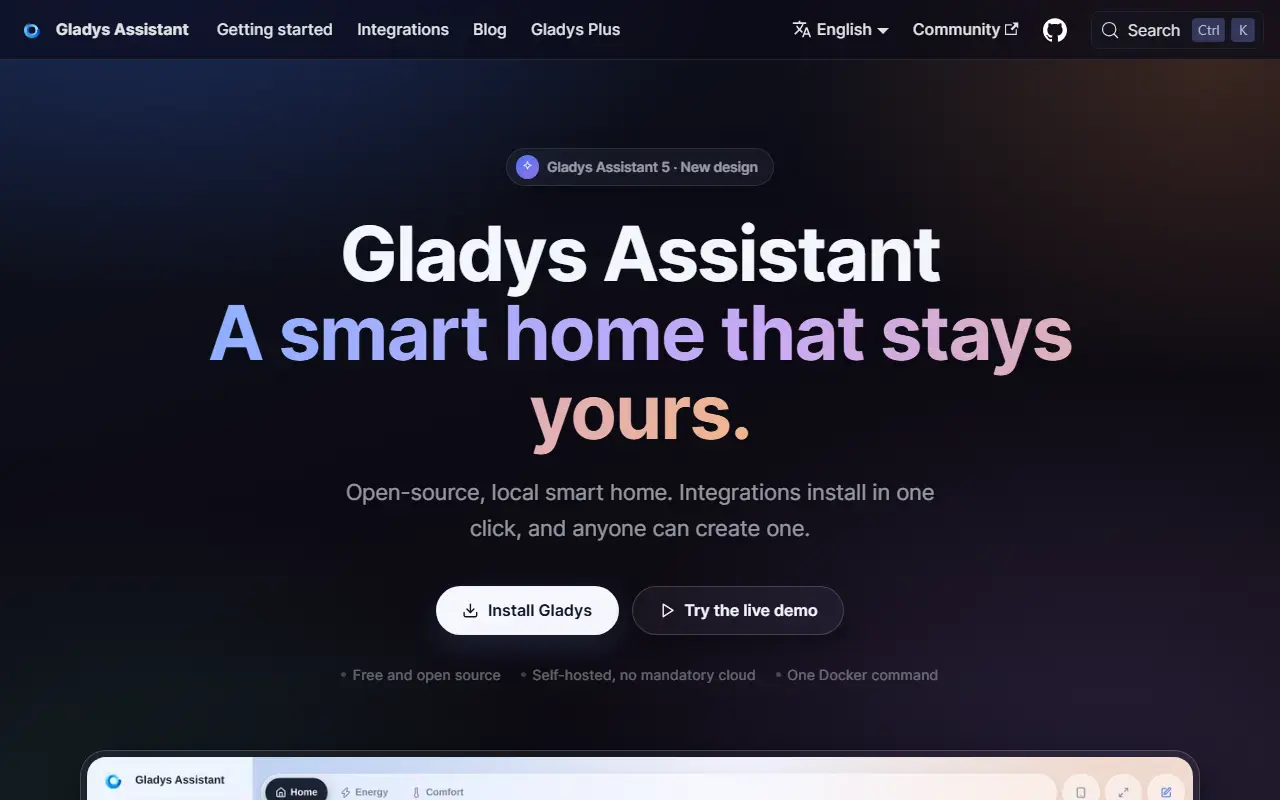
gladysassistant.comGladys Assistant homepage screenshot

Gladys Assistant is an open-source home assistant that puts privacy first: it runs on a machine in your home and keeps your smart home data local. It has been developed since 2015 and is written in JavaScript on Node.js. The code is released under the Apache-2.0 license.

It is aimed at home automation and IoT setups, where you connect devices and build automations around them from one place. A local instance can be started quickly with Docker or Docker Compose, and the project provides step-by-step installation guides for a mini-PC, a NAS, or a Raspberry Pi, which makes it practical to run on small, always-on hardware.

Gladys is developed by a community that welcomes code, documentation, translations, and feature ideas, and the repository includes guides for contributors. It suits people who want to control a smart home without sending data to a cloud service, and who are comfortable running a small server at home.

Key features

  • Runs locally with a privacy-first design
  • Docker and Docker Compose installation
  • Works on Raspberry Pi, mini-PCs, and NAS devices
  • Home automation and IoT device control
  • Built on Node.js with community contributions

Pricing: Gladys Assistant itself is free and open source. The optional Gladys Plus cloud service costs €6.99 (Lite) or €9.99 (Plus) per month, cheaper billed yearly, with a one-month free trial.

Read more about Gladys AssistantWebsiteGitHub#5 Hubitat Elevation alternative

Domoticz

Domoticz is a free, open source home automation system that lets you monitor and control lights, switches, sensors, and smart devices.

GitHub stars
3.8k
Last commit
2 days ago
Latest release
2026.4
Licence
GPL-3.0
Self-hosted
Yes
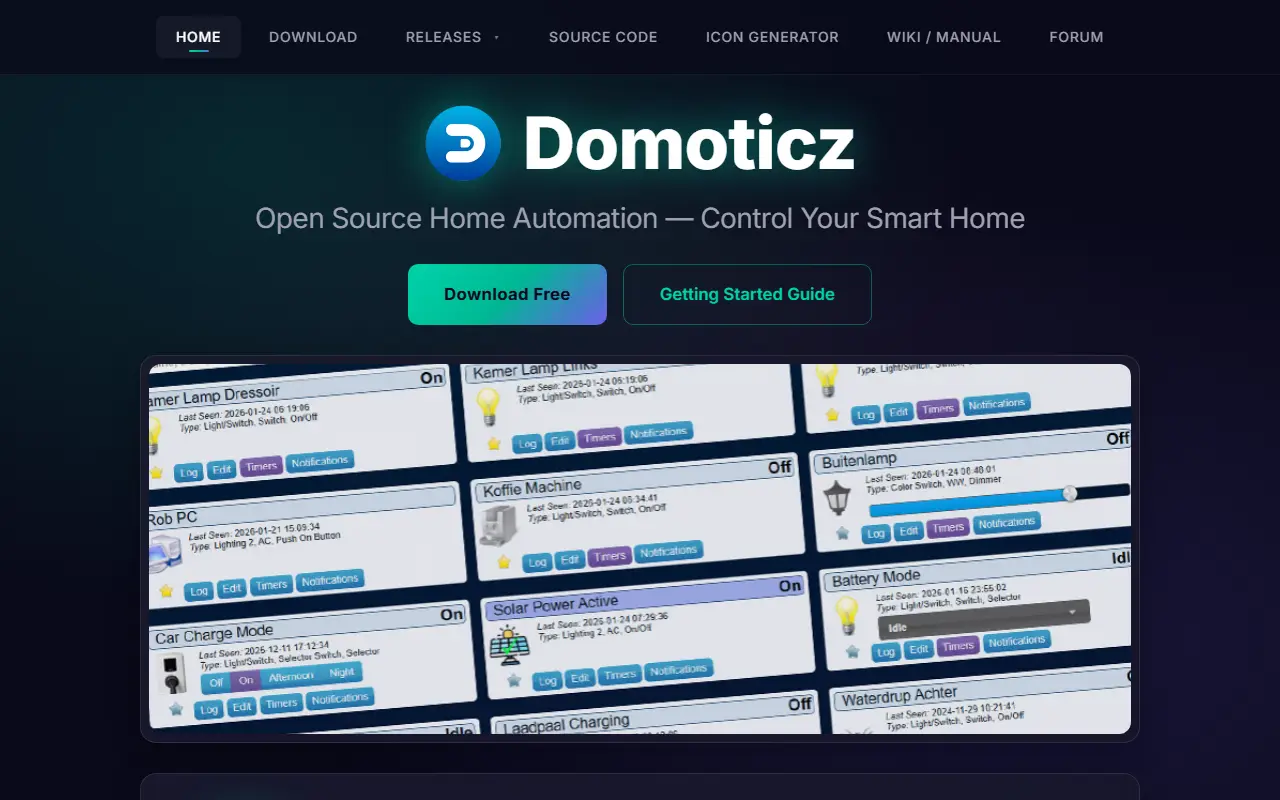
domoticz.comDomoticz homepage screenshot

Domoticz is a home automation system that lets users monitor and configure devices such as lights, switches, and various sensors including temperature, rain, wind, UV, electra, gas, and water. Notifications and alerts can be sent to any mobile device. It is designed to be lightweight and runs on a Raspberry Pi Zero, using under 50 MB of RAM.

The system is 100% local and private, with all data staying on the user's hardware and automations running locally without cloud dependency. It has been in development since 2012 and supports over 150 devices including RFXCOM transceivers, Z-Wave, Zigbee, MQTT, P1 smart meters, YouLess meters, Philips Hue, 1-Wire, and EnOcean.

Key features

  • Supports Z-Wave, Zigbee, MQTT, and 150+ devices
  • Runs on Linux, Windows, Raspberry Pi, and Docker
  • HTML5 web frontend adapted for desktop and mobile
  • Automation and scripting with dzVents, Lua, Python, and Blockly
  • Energy monitoring and smart meter support
  • iPhone and Android push notifications
Read more about DomoticzWebsiteGitHub#6 Hubitat Elevation alternative

openHAB

openHAB Core is the Java framework of core bundles that underpins the openHAB smart home and IoT automation runtime.

GitHub stars
1.2k
Last commit
yesterday
Licence
EPL-2.0
Self-hosted
Yes
openhab.orgopenHAB homepage screenshot

openHAB Core contains the core bundles of the openHAB runtime, an open-source platform for home automation and the Internet of Things. The README is explicit that Core is not a product by itself but a framework for building solutions on top of it. The repository is mainly an artifact repository of OSGi bundles that the main openHAB distribution picks up and that can be used within smart home products.

Building it uses Maven and a Java SE Development Kit 21. The README walks through checking out the source, setting Maven options, and running a clean install with the spotless formatter, with quicker variants that skip tests or checks for faster local builds. The code is Java and licensed under EPL-2.0.

People who want to run openHAB at home normally install the main distribution instead of building Core. The repository itself is aimed at developers and contributors, and it points to contribution guidelines. Topics mention home automation, the Internet of Things and Java.

Key features

  • OSGi bundles for the openHAB runtime
  • Framework for smart home solutions
  • Maven-based build
  • Picked up by the main openHAB distribution
  • Contribution guidelines for developers

Pricing: Free and open source under the EPL-2.0 license.

Read more about openHABWebsiteGitHub#7 Hubitat Elevation alternative

Commercial Hubitat Elevation alternatives

Hosted, closed-source products that compete with Hubitat Elevation.

Hubitat Elevation alternatives: questions

What is the best open-source alternative to Hubitat Elevation?
OpenRemote is the top-ranked open-source alternative to Hubitat Elevation on Enlisted: OpenRemote is an open source IoT platform for managing devices, automating rules and building dashboards and maps. Other strong options are Home Assistant, ESPHome, Node-RED and Gladys Assistant.
What are the best commercial alternatives to Hubitat Elevation?
Indigo, Homey, Aqara Home, Control4 and Savant are among the hosted, closed-source alternatives to Hubitat Elevation listed on Enlisted, which lists 12 in total. Compare their pricing and features on each tool page.
Are these Hubitat Elevation alternatives free?
All 7 are open source, so the code is free to use under its licence, and all of them can be self-hosted on your own server or computer.
How is this list of Hubitat Elevation alternatives ranked?
By a score built from GitHub stars, star growth over the last 30 days and how recently the code changed. 7 of these projects shipped code in the last 30 days. Data is refreshed daily, and nobody can pay to move up.

People also look for alternatives to…

View all