7,363 open-source and SaaS tools, with GitHub stats refreshed every day.

8 alternatives ranked by real activity

Open-source Fastmail alternatives

A curated, ranked list of the 8 best open-source alternatives to Fastmail.

The best open-source alternative to Fastmail is docker-mailserver. If that doesn't suit you, other good options are Mail-in-a-Box, Stalwart, Mailcow and Mailu.

Fastmail alternatives are mainly email clients & servers. 8 of them shipped code in the last 30 days, 8 can be self-hosted, and 2 use a permissive licence.

Last updated October 2, 2026 · ranked by GitHub stars, growth and recent commits

docker-mailserver

Docker Mailserver is a containerized, configuration-file-based mail server bundling SMTP, IMAP, LDAP support, anti-spam and anti-virus.

GitHub stars
19k
Last commit
2 days ago
Latest release
v16.0.1
Licence
MIT
Self-hosted
Yes
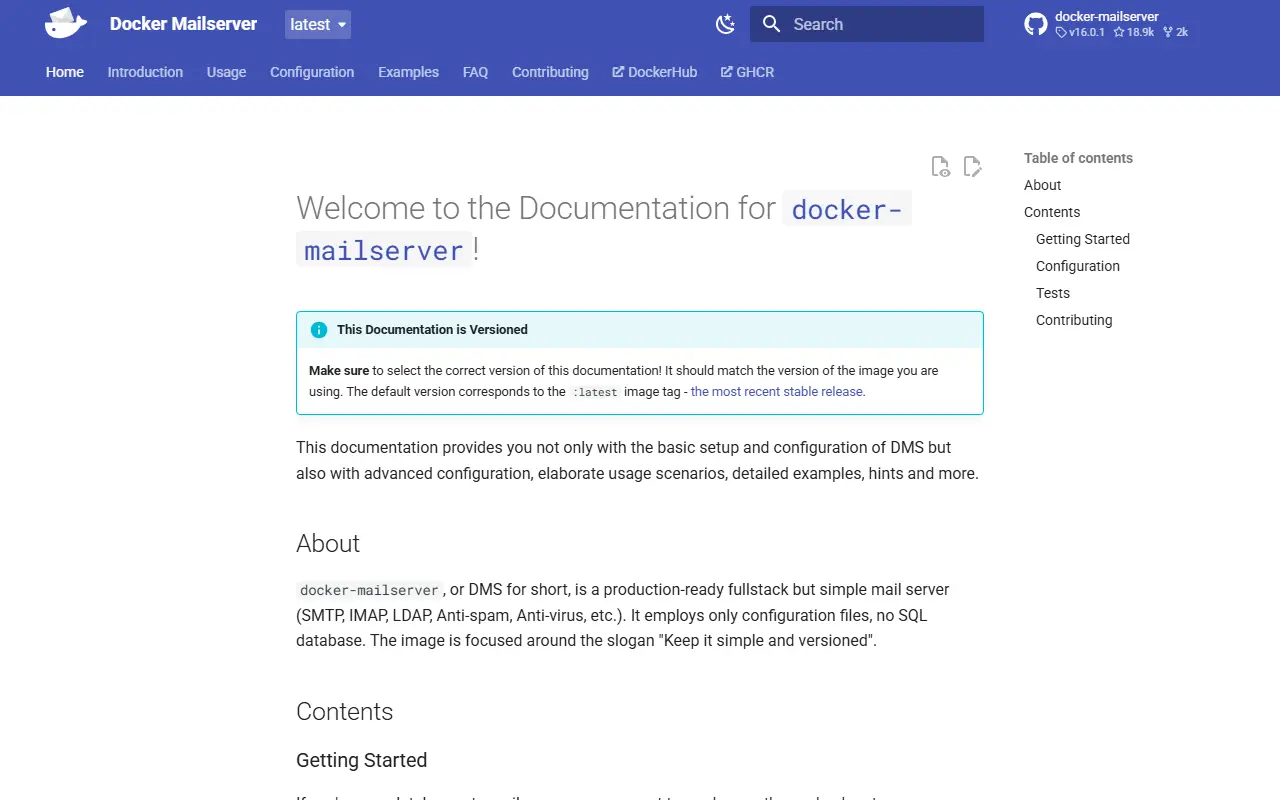
docker-mailserver.github.iodocker-mailserver homepage screenshot

Docker Mailserver runs a complete mail server inside a container. It bundles SMTP and IMAP services (Postfix and Dovecot, according to the project topics), optional LDAP authentication, and anti-spam and anti-virus tooling, so a self-hoster does not have to assemble each piece separately.

The design is deliberately simple: it uses configuration files only, with no SQL database, which keeps setups easy to version, deploy and upgrade. Related topics include fail2ban and Rspamd. The documentation covers initial setup, environment variables, updating and an FAQ, and the project asks users to match the documentation version to the image version they run.

Docker Mailserver is released under the MIT license and has been maintained by volunteers since January 2021. It is a self-hosting project with no hosted offering, suited to administrators who want to run their own mail on a server they control.

Key features

  • Postfix SMTP and Dovecot IMAP in one container
  • Optional LDAP authentication
  • Anti-spam and anti-virus included
  • Fail2ban protection against brute-force logins
  • Configuration files only, no SQL database
  • Simple versioning and upgrades

Pricing: Free and open source under the MIT license.

Mail-in-a-Box

Mail-in-a-Box turns a fresh Ubuntu server into a complete self-hosted mail server with webmail, DNS, spam filtering and automatic TLS.

GitHub stars
15k
Last commit
6 days ago
Latest release
v77
Licence
CC0-1.0
Self-hosted
Yes
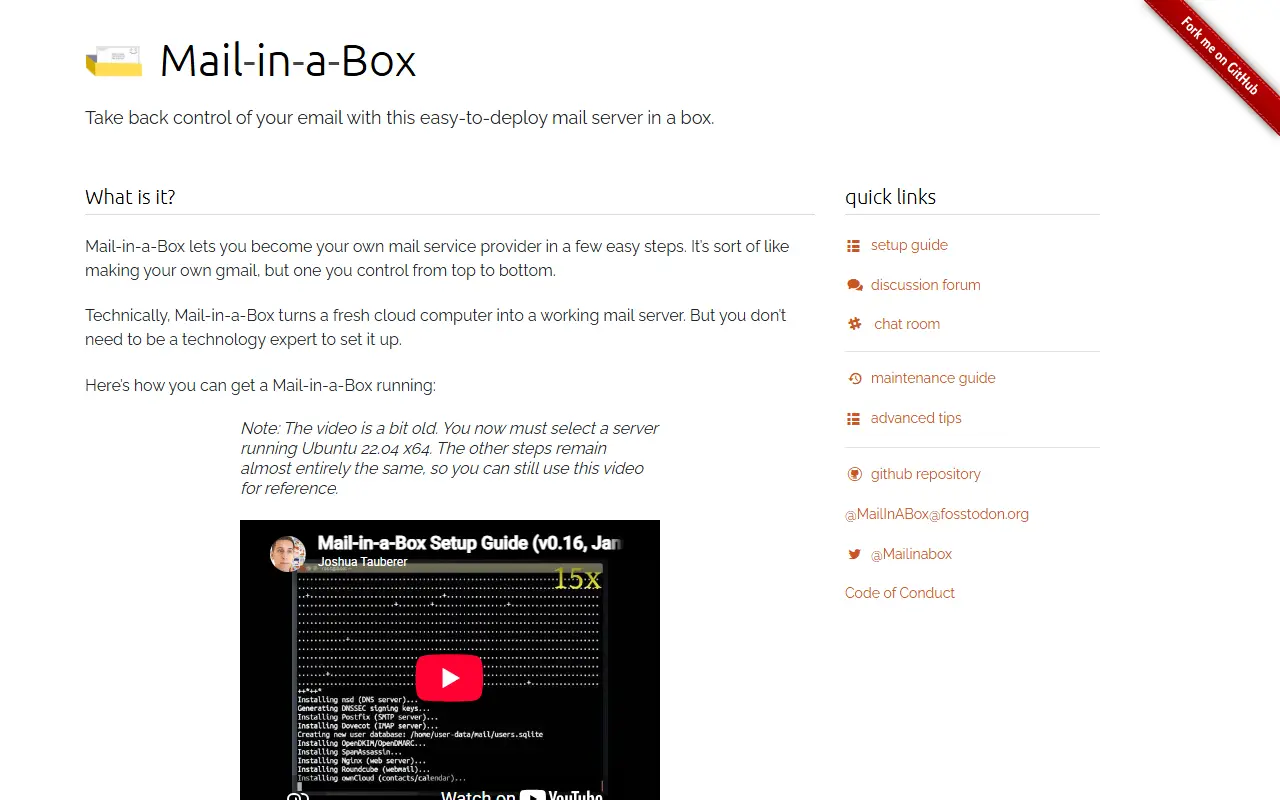
mailinabox.emailMail-in-a-Box homepage screenshot

Mail-in-a-Box helps individuals take back control of their email by providing a one-click, easy-to-deploy mail server in a box. It turns a fresh Ubuntu 22.04 LTS 64-bit machine into a working mail server by installing and configuring the required components. There are no user-configurable setup options, so it is designed to just work.

The installed components include Postfix for SMTP, Dovecot for IMAP, Nextcloud for CardDAV and CalDAV, z-push for Exchange ActiveSync, and Roundcube webmail. It adds spam filtering with SpamAssassin and greylisting with Postgrey, DNS with SPF, DKIM, DMARC, DNSSEC, DANE TLSA, MTA-STS and SSHFP records set automatically, and TLS certificates from Let's Encrypt. Backups use duplicity, with ufw, fail2ban and munin for protection and monitoring.

Project goals include making a good mail server easy to deploy, promoting decentralization and privacy, and keeping configuration automated, auditable and idempotent. It deliberately does not aim to be customizable by power users. Mail-in-a-Box is written in Python, released into the public domain under CC0-1.0, and has a Code of Conduct for contributors.

Key features

  • One-click mail server on Ubuntu 22.04
  • Postfix SMTP and Dovecot IMAP
  • Roundcube webmail and Nextcloud contacts
  • Automatic SPF, DKIM, DMARC and DNSSEC setup
  • Let's Encrypt TLS certificate provisioning
  • Backups, fail2ban and health monitoring

Pricing: Free and open source, released under CC0-1.0.

Stalwart

Stalwart is an all-in-one mail and collaboration server written in Rust that speaks JMAP, IMAP, POP3, SMTP, CalDAV, CardDAV and WebDAV.

GitHub stars
15k
Last commit
today
Latest release
v0.16.24
Self-hosted
Yes
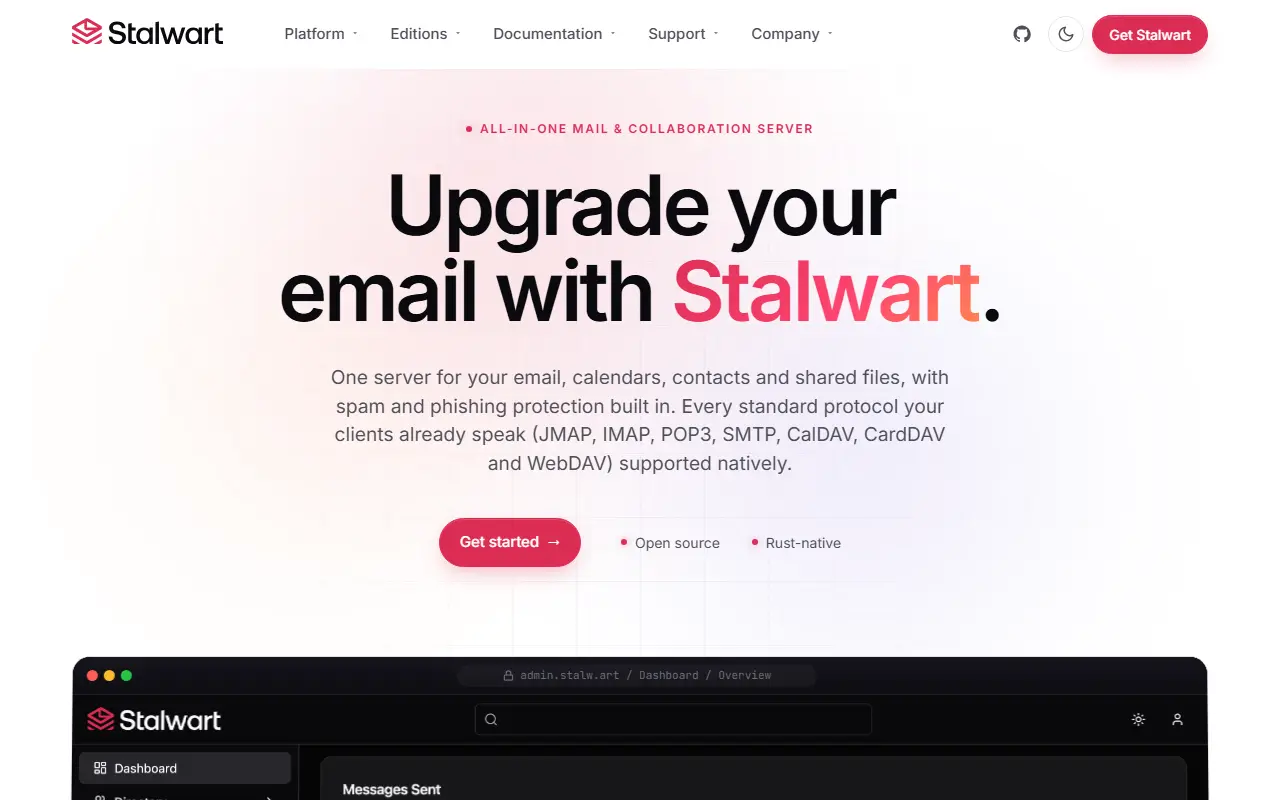
stalw.artStalwart homepage screenshot

Stalwart is an open-source mail and collaboration server written in Rust and designed to be secure, fast, robust and scalable. It supports JMAP, IMAP4, POP3, SMTP, CalDAV, CardDAV and WebDAV, so a single server can handle email, calendars, contacts and file storage.

On the email side it offers JMAP for Mail and Sieve, IMAP4rev2 and IMAP4rev1 with ManageSieve, and POP3. The SMTP server includes DMARC, DKIM, SPF and ARC for message authentication, transport security through DANE, MTA-STS and TLS reporting, automated DKIM key rotation, throttling and filtering rules, sieve scripting and milter integration, and distributed virtual queues.

The collaboration features cover CalDAV and JMAP for Calendars, CardDAV and JMAP for Contacts, and WebDAV and JMAP for File Storage, with fine-grained sharing through WebDAV ACL and JMAP Sharing. A built-in spam and phishing filter includes a rule set and LLM-driven message analysis. It is self-hosted software that administrators run on their own servers.

Key features

  • JMAP, IMAP4, POP3 and SMTP servers
  • Calendars, contacts and file storage
  • DMARC, DKIM, SPF and ARC support
  • Built-in spam and phishing filter
  • Fine-grained sharing and access controls
  • Written in Rust for speed and safety

Pricing: The Community edition is free. Enterprise is priced per mailbox per year from $2.40 (25 to 499 mailboxes) with lower rates at volume, plus a 30-day trial.

Mailcow

Dockerized mail server suite combining SMTP, IMAP, spam filtering and webmail so you can host your own email and groupware.

GitHub stars
14k
Last commit
2 days ago
Latest release
2026-09
Licence
GPL-3.0
Self-hosted
Yes
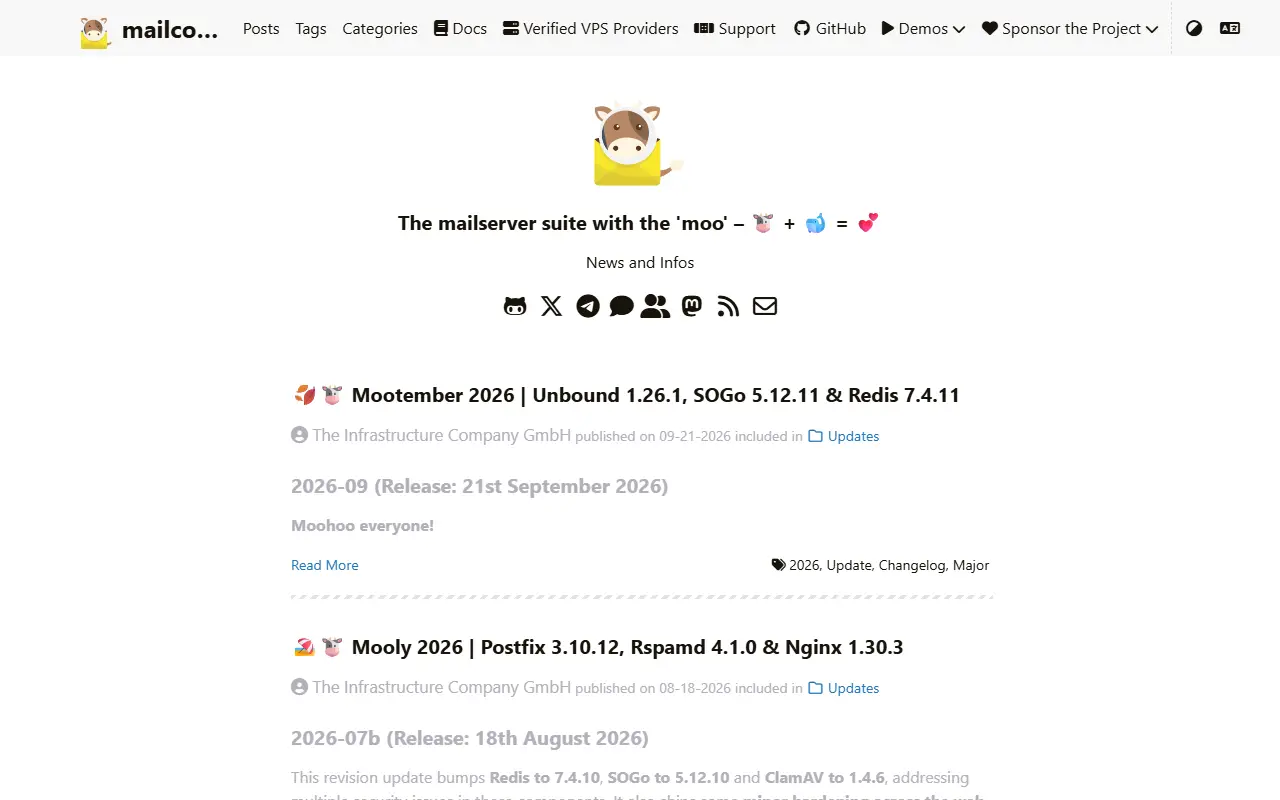
mailcow.emailMailcow homepage screenshot

mailcow: dockerized is an open-source mail server package that runs as a set of Docker containers managed with Docker Compose. It bundles the pieces needed to run your own email, so administrators do not have to assemble and configure each component separately.

The stack is built around established open-source software: Postfix for SMTP, Dovecot for IMAP, Rspamd for spam filtering, ClamAV for antivirus scanning, SOGo for groupware and webmail, and ACME support for certificates. A web administration interface sits on top. Topics in the repository also mention the Olefy component for document scanning.

mailcow is released under the GNU General Public License v3 and installed on your own server following the official documentation. It is managed and maintained by The Infrastructure Company GmbH, and the project offers support contracts through Servercow as well as a one-time support payment option. The community gathers on Telegram, Mastodon and GitHub Sponsors.

Key features

  • Complete mail server in Docker containers
  • Postfix and Dovecot for SMTP and IMAP
  • Rspamd spam filtering and ClamAV scanning
  • SOGo webmail and groupware
  • Automatic certificates through ACME
  • Web interface for administration

Pricing: Free and open source under GPL-3.0; paid support contracts are offered through Servercow.

Mailu

Mailu is a free mail server packaged as Docker images, bundling SMTP, IMAP, webmail, spam filtering and an admin interface for self-hosters.

GitHub stars
7.5k
Last commit
yesterday
Latest release
2024.06.61
Self-hosted
Yes
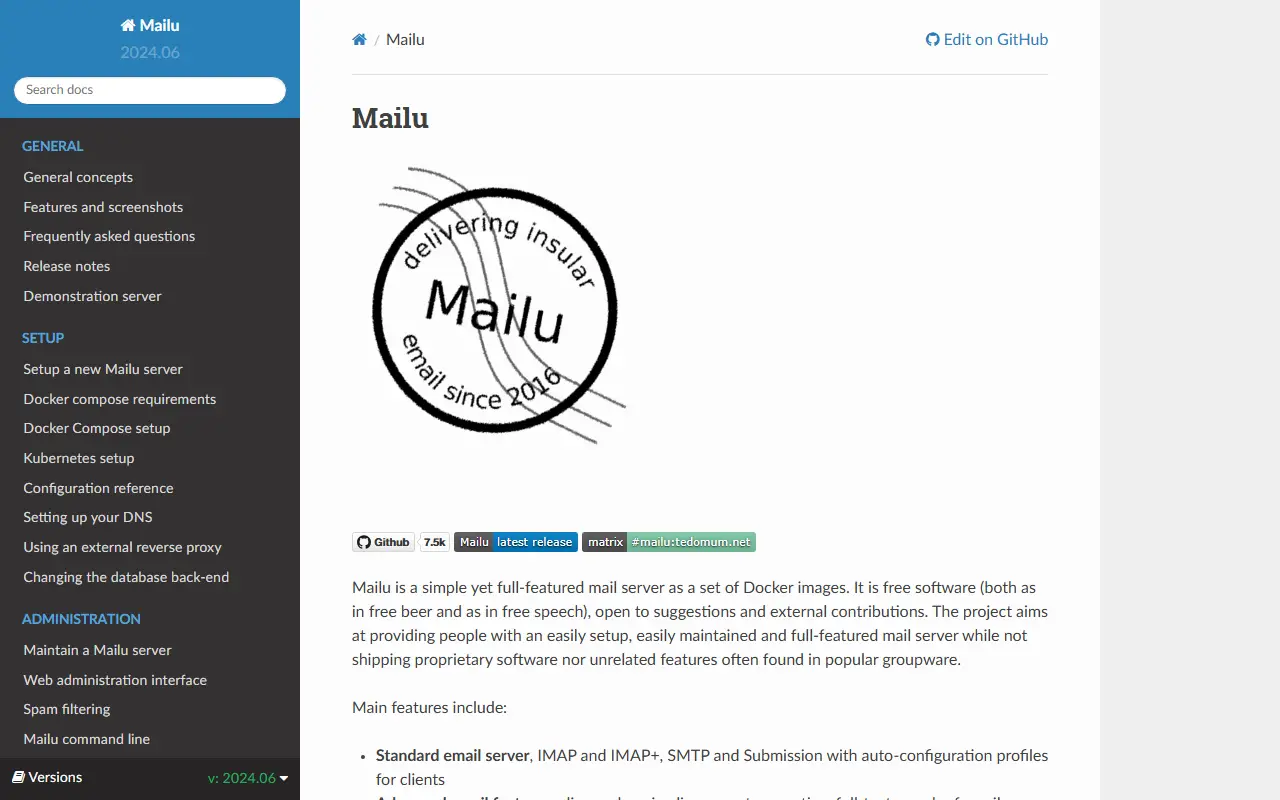
mailu.ioMailu homepage screenshot

Mailu is a full-featured mail server delivered as a set of Docker images. The project aims to give people an easily set up and maintained mail server made entirely of free software, without proprietary components or unrelated groupware features and without trackers.

It covers the standard email server functions, IMAP and SMTP with client auto-configuration profiles, along with aliases, domain aliases, custom routing and full-text search of attachments. Users get webmail, auto-reply, auto-forward and managesieve, while admins get global admin roles, per-domain delegation, announcements and quotas. Security features include enforced TLS, DANE, MTA-STS, Let's Encrypt certificates, outgoing DKIM and an antivirus scanner, and antispam features include greylisting, auto-learning, DMARC, SPF and anti-spoofing checks.

Mailu is written in Python and deployed with Docker or Docker Compose. The project's own configuration files, Dockerfiles and code are MIT-licensed, and all bundled components are free software compatible with it. A demo server and website documentation are provided.

Key features

  • IMAP and SMTP mail server in Docker
  • Webmail and admin interface
  • Aliases, domain aliases and custom routing
  • Enforced TLS, DKIM, DANE and MTA-STS
  • Spam filtering with greylisting and SPF
  • Per-domain admin delegation and quotas

Pricing: Free and open source; the project's own code and configuration are MIT-licensed.

Maddy

Maddy is a composable all-in-one mail server written in Go that handles SMTP, IMAP and email authentication in a single daemon.

GitHub stars
6.1k
Last commit
16 days ago
Latest release
v0.9.5
Licence
GPL-3.0
Self-hosted
Yes
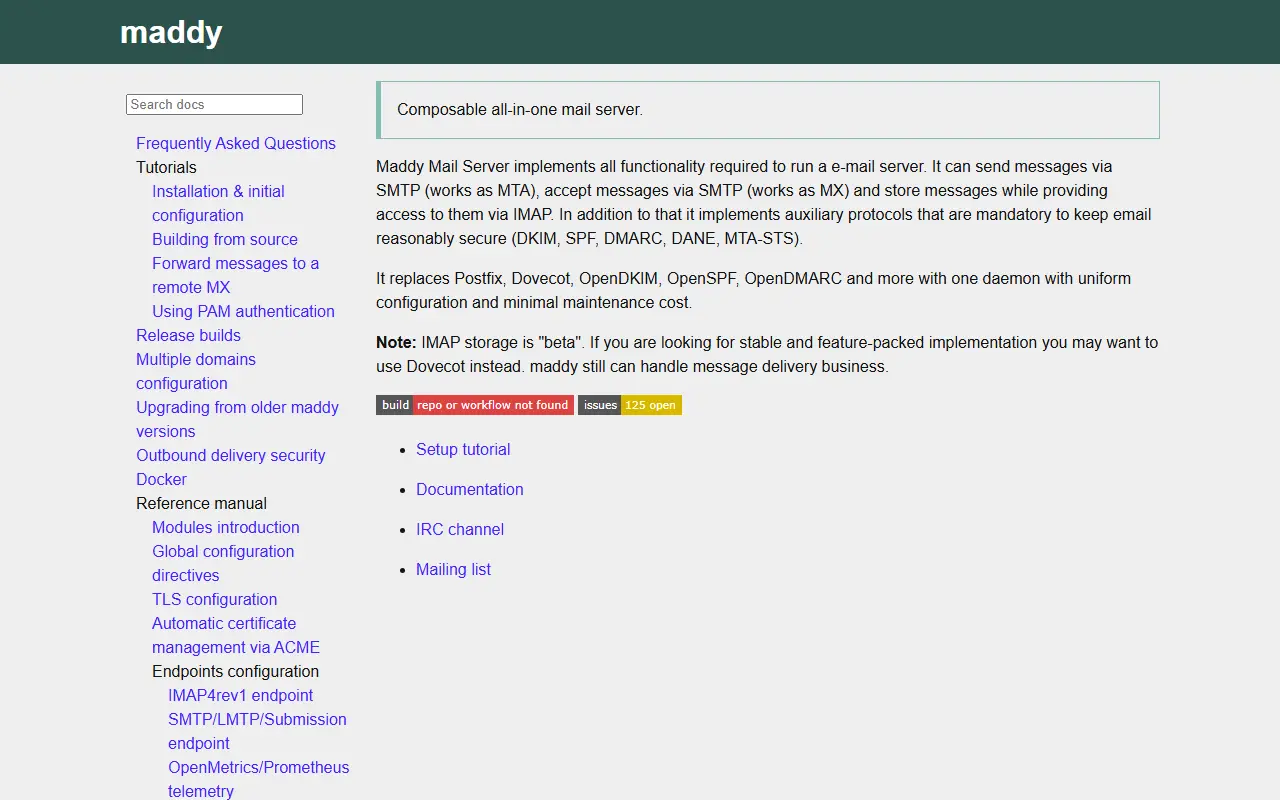
maddy.emailMaddy homepage screenshot

Maddy Mail Server is a composable all-in-one mail server written in Go. It implements the functions needed to run an email server: it sends messages over SMTP as an MTA, accepts messages over SMTP as an MX and stores messages while providing access to them over IMAP.

It also implements the auxiliary protocols needed to keep email reasonably secure, including DKIM, SPF, DMARC, DANE and MTA-STS. The project positions itself as a replacement for a stack made of Postfix, Dovecot, OpenDKIM, OpenSPF, OpenDMARC and similar tools, using one daemon with a uniform configuration and low maintenance cost.

The README is candid that IMAP storage is still in beta. For a stable and feature-rich implementation of that part, the maintainers suggest using Dovecot instead, and Maddy can still handle message delivery. Maddy is licensed under GPL-3.0, and a setup tutorial, documentation, an IRC channel and a mailing list are available.

Key features

  • SMTP sending and receiving
  • IMAP message storage (beta)
  • DKIM, SPF and DMARC support
  • DANE and MTA-STS support
  • Single daemon with uniform configuration

Pricing: Free and open source under the GPL-3.0 licence.

Mox

Mox is a modern, full-featured open-source mail server for low-maintenance self-hosted email, with SMTP, IMAP, webmail and spam filtering.

GitHub stars
5.9k
Last commit
19 days ago
Latest release
v0.0.17
Licence
MIT
Self-hosted
Yes
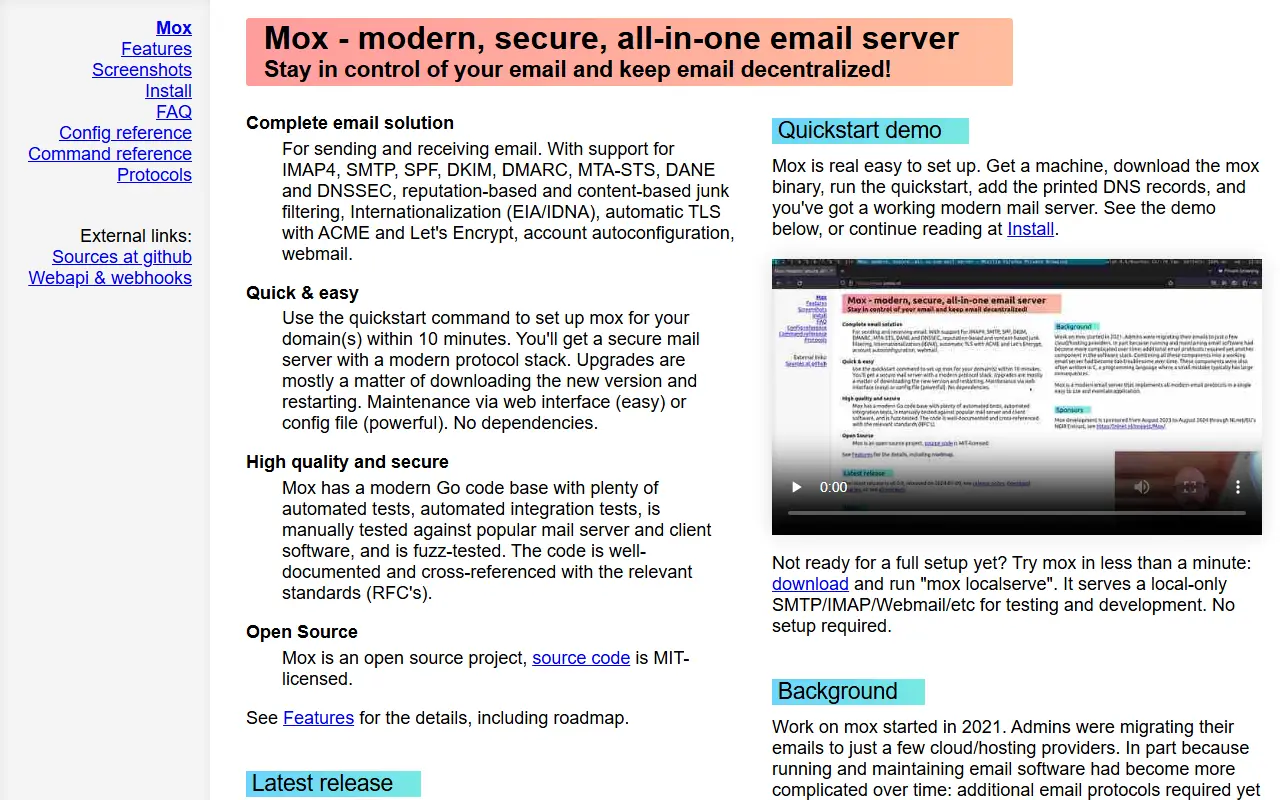
xmox.nlMox homepage screenshot

Mox is a mail server for people who want to run email for their own domains with little ongoing effort. It aims to be quick to start and to maintain, and it bundles the pieces of an email stack in one program.

Features include SMTP for receiving, submitting and delivering mail, IMAP4 for client access, and webmail in the browser. Authentication covers SPF, DKIM and DMARC, including DMARC aggregate reports. Spam handling is based on per-user reputation tracking and Bayesian filtering, and senders with low reputation can be slowed down, similar to greylisting. It supports internationalized email, automatic TLS via ACME for Let's Encrypt, DANE and MTA-STS with TLSRPT reporting, and account autodiscovery. A web admin interface helps set up domains, accounts and aliases and shows the DNS records to create.

Mox is written in Go and licensed under MIT. It is self-hosted software, and the project website provides details and a quickstart.

Key features

  • SMTP, IMAP4 and built-in webmail
  • SPF, DKIM and DMARC authentication
  • Per-user Bayesian spam filtering
  • Reputation tracking for senders
  • Automatic TLS with ACME
  • DANE and MTA-STS support
  • Web admin interface for domains and accounts

Pricing: Free and open source under the MIT licence.

Read more about MoxWebsite GitHub

Forward Email

An open-source, privacy-focused email service offering encrypted mailboxes, custom-domain forwarding and sending, positioned against Gmail and Mailchimp.

GitHub stars
1.7k
Last commit
today
Latest release
v2.17.0
Self-hosted
Yes
Hosted version
Available
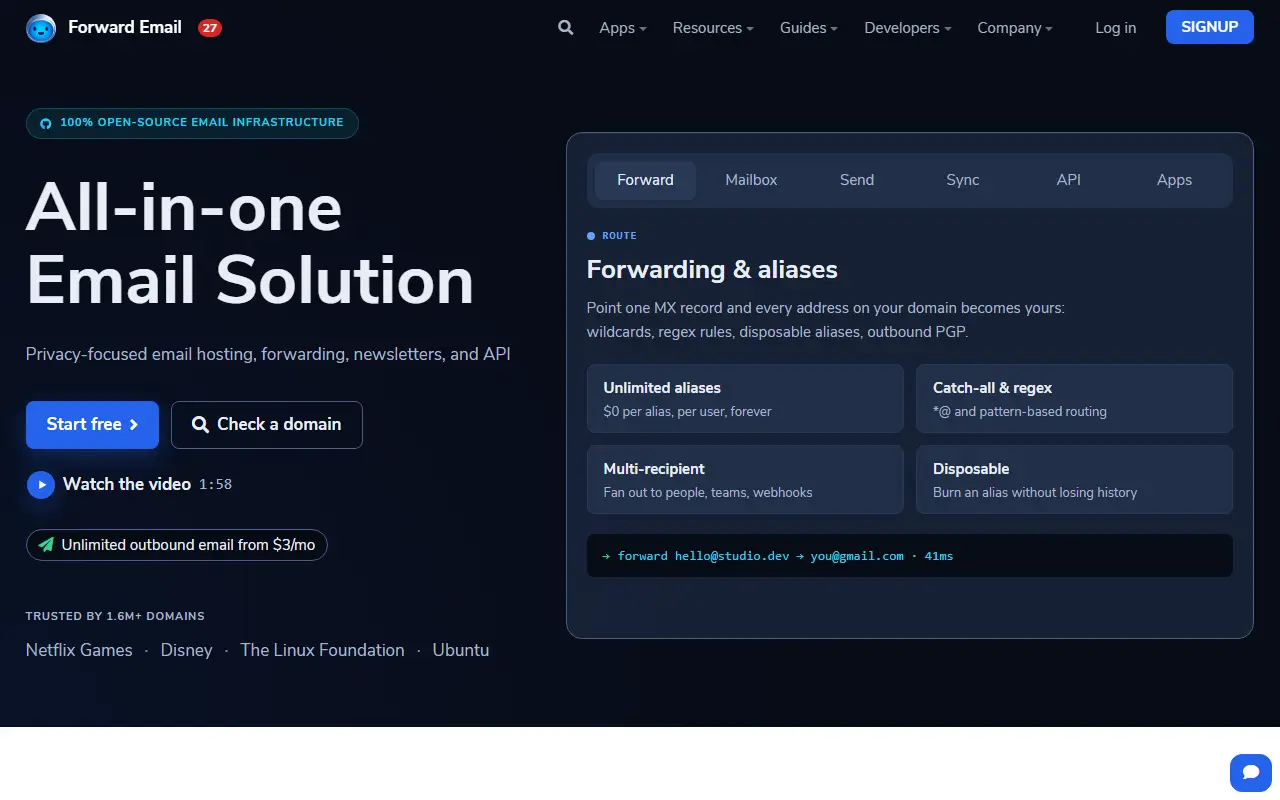
forwardemail.netForward Email homepage screenshot

Forward Email is an open-source email service focused on privacy. It handles custom-domain email forwarding and also provides mailboxes accessible over IMAP, POP and SMTP, with encryption using algorithms such as AES-256 and ChaCha20, and it positions itself as an all-in-one alternative to Gmail, Mailchimp and Sendgrid.

Its topics and documentation point to features such as sending mail, newsletters, SQLite-based storage, push notifications, and calendar and contact support through CalDAV and CardDAV, plus autodiscovery records and Domain Connect integration for setting up DNS. The README includes a local development guide and detailed notes on server infrastructure, load balancing, provisioning and deployment, including automated setup with Ansible.

The code is JavaScript and the project says it is fully open source, so the service can be inspected and, with the published infrastructure guidance, run on your own servers. Most consumers simply use the hosted service at forwardemail.net. It suits individuals and small organizations that want private email on their own domain and developers interested in how such a stack is built.

Key features

  • Custom-domain email forwarding
  • Encrypted mailboxes over IMAP, POP, and SMTP
  • Outbound sending and newsletter support
  • CalDAV and CardDAV support
  • Email autodiscovery and Domain Connect setup
  • Ansible-based deployment guidance

Pricing: Free email forwarding for unlimited domains. Enhanced Protection costs $3, Team $9 and Enterprise $250 per month for unlimited domains; extra storage is $3 per month per 10 GB.

Fastmail alternatives: questions

What is the best open-source alternative to Fastmail?
docker-mailserver is the top-ranked open-source alternative to Fastmail on Enlisted: Docker Mailserver is a containerized, configuration-file-based mail server bundling SMTP, IMAP, LDAP support, anti-spam and anti-virus. Other strong options are Mail-in-a-Box, Stalwart, Mailcow and Mailu.
Are these Fastmail alternatives free?
All 8 are open source, so the code is free to use under its licence, and all of them can be self-hosted on your own server or computer. 1 also offers a paid or managed cloud version if you'd rather not host it yourself.
How is this list of Fastmail alternatives ranked?
By a score built from GitHub stars, star growth over the last 30 days and how recently the code changed. 8 of these projects shipped code in the last 30 days. Data is refreshed daily, and nobody can pay to move up.

People also look for alternatives to…

View all