7 open-source alternatives ranked by real activity

Open-source CoreWeave alternatives

A curated, ranked list of the 7 best open-source alternatives to CoreWeave.

The best open-source alternative to CoreWeave is Kubernetes. If that doesn't suit you, other good options are Ray, Slurm, Volcano and Kubeflow.

Commercial alternatives to CoreWeave include Lambda, Crusoe, Nebius and Vast.ai. See all 23.

CoreWeave alternatives are mainly AI tools, but some are also AI infrastructure tools and infrastructure & container tools. 6 of them shipped code in the last 30 days, 7 can be self-hosted, and 4 use a permissive licence.

Last updated November 13, 2026 · ranked by GitHub stars, growth and recent commits

Kubernetes

An open-source system for deploying, scaling and managing containerized applications across clusters of hosts, hosted by the CNCF.

GitHub stars
129k
Last commit
yesterday
Latest release
v1.37.2
Licence
Apache-2.0
Self-hosted
Yes
Hosted version
Available
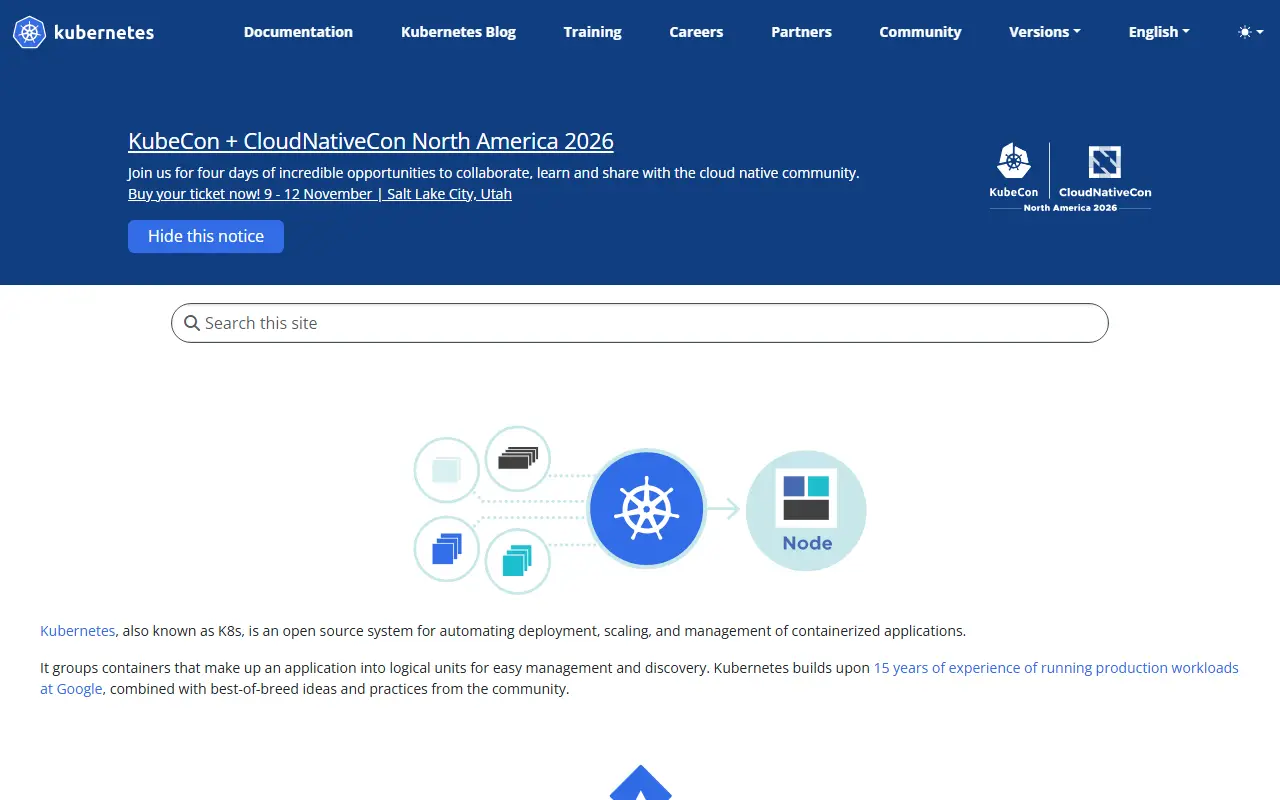
kubernetes.ioKubernetes homepage screenshot

Kubernetes, also written K8s, is an open-source system that manages containerized applications across multiple hosts. It provides the basic mechanisms for deploying, maintaining and scaling applications, so teams can run containers reliably without scheduling each one by hand. It is written in Go and released under the Apache-2.0 license.

The project builds on years of experience running production workloads at Google with an internal system called Borg, combined with practices from the wider community. The Cloud Native Computing Foundation hosts the project. Users interact with it through declarative configuration and the documentation on kubernetes.io, which includes tutorials and a free course on scalable microservices.

Kubernetes can be run on your own infrastructure, and major cloud providers also offer managed Kubernetes services. The README adds that the k8s.io/kubernetes module is not supported for use as a library. It suits platform and DevOps teams running microservices that need scheduling, scaling and automatic recovery.

Key features

  • Container scheduling across multiple hosts
  • Automated application deployment and rollouts
  • Scaling of containerized workloads
  • Maintenance and self-healing of applications
  • Declarative configuration of desired state
  • CNCF-hosted with extensive documentation

Pricing: Free and open source under the Apache-2.0 license; cloud providers sell managed services built on it.

Ray

Ray is an open source framework for managing, executing, and optimizing compute needs, designed to support any AI or ML workload.

GitHub stars
44k
Last commit
yesterday
Latest release
ray-2.60.0
Licence
Apache-2.0
Self-hosted
Yes
Hosted version
Available
ray.ioRay homepage screenshot

Ray is an AI compute engine that consists of a core distributed runtime and a set of AI Libraries for accelerating ML workloads. It is Python-native and built by developers for developers, designed to orchestrate infrastructure for distributed workloads on any accelerator at any scale.

The platform aims to address the AI Complexity Wall by supporting any AI or ML workload, any data types and model architectures, and heterogeneous GPUs and CPUs with fine-grained scaling. It can scale from a laptop to thousands of GPUs.

Key features

  • Supports any AI or ML workload
  • Handles multi-modal data processing including images, videos, audio
  • Runs distributed training for Gen AI foundation models, time series models, and traditional AI/ML models
  • Offers model serving with independent scaling and fractional resources via Ray Serve
  • Supports batch inference with heterogeneous compute using CPUs and GPUs
Read more about RayWebsiteGitHub#2 CoreWeave alternative

Slurm

Slurm is a workload manager from SchedMD with documentation covering job scheduling, accounting, resource limits and cloud deployment.

GitHub stars
4.5k
Last commit
yesterday
Latest release
slurm-26-05-6-1
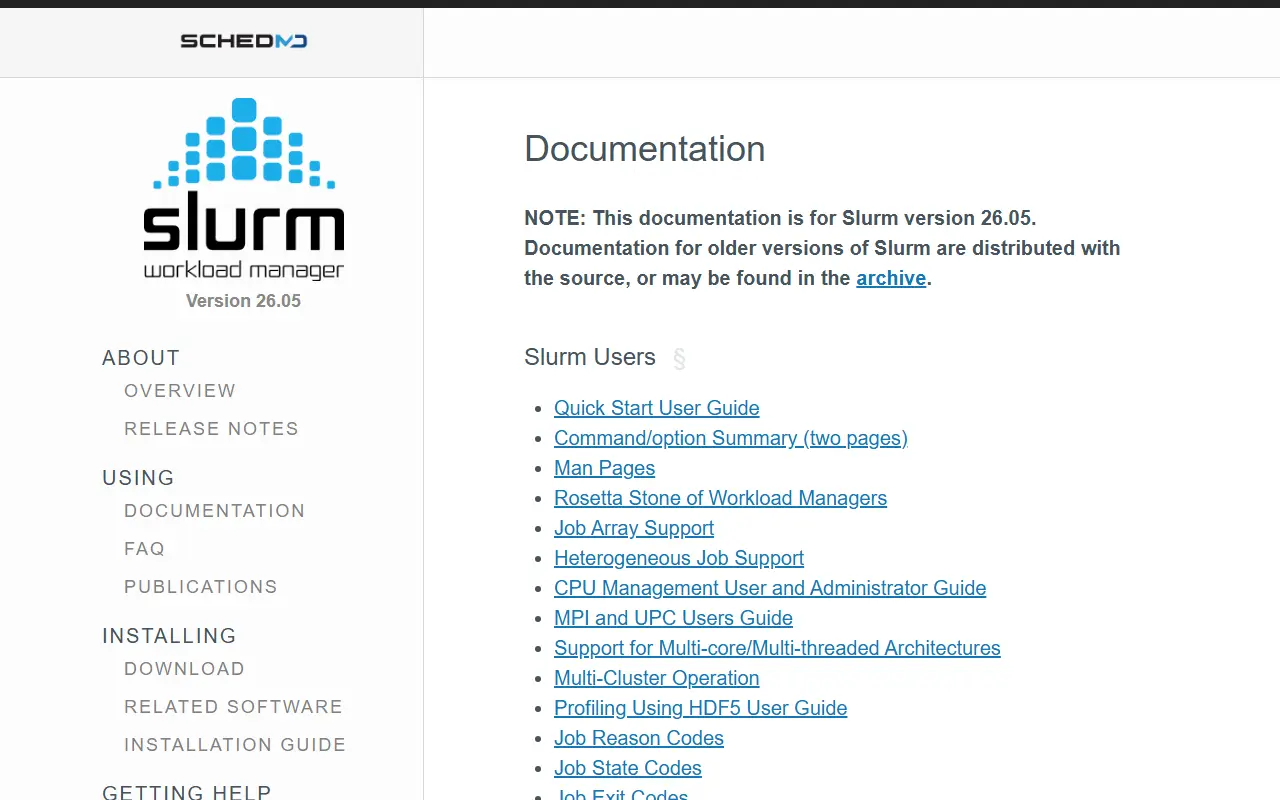
slurm.schedmd.comSlurm homepage screenshot

Slurm Workload Manager is published by SchedMD, and the documentation on its site is for version 26.05. Older versions' documentation ships with the source or can be found in the archive. The site offers an overview, release notes, downloads, an installation guide, mailing lists, support and training.

The documentation is split by audience. Users get a quick start guide, a command summary, man pages and guides to job arrays, heterogeneous jobs, multi-cluster operation and MPI. Administrators get guides on accounting, authentication plugins, cgroups, containers, federated scheduling, power saving and the Slurm REST API.

Scheduling topics include multifactor job priority, fair-share algorithms, gang scheduling, preemption, quality of service, resource limits and reservations, and generic resource scheduling. Cloud guides cover Google Cloud Platform, AWS Parallel Computing Service, and Microsoft Azure with CycleCloud.

Key features

  • Job array and heterogeneous job support
  • Multi-cluster operation and federated scheduling
  • Fair-share and multifactor job priority algorithms
  • Gang scheduling, preemption and quality of service
  • REST API for interacting with Slurm
  • Guides for running on Google Cloud, AWS and Azure
Read more about SlurmWebsiteGitHub#3 CoreWeave alternative

Volcano

Volcano is a cloud native batch scheduling system for compute-intensive workloads, supporting Kubernetes and mainstream computing frameworks.

GitHub stars
6.1k
Last commit
yesterday
Latest release
v1.16.0
Licence
Apache-2.0
Self-hosted
Yes
volcano.shVolcano homepage screenshot

Volcano is a cloud native batch scheduling system designed for compute-intensive workloads such as AI, big data, and scientific computing. It provides unified scheduling for Kubernetes native workloads and mainstream computing frameworks including TensorFlow, Spark, PyTorch, Ray, and Flink.

The system offers multi-level queue management for resource quota control and task priority scheduling, supports heterogeneous devices like GPU and NPU, and includes features such as network topology aware scheduling, multi-cluster scheduling, and online/offline workload colocation. It also provides multiple scheduling policies including Gang scheduling, Fair-Share, Binpack, DeviceShare, NUMA-aware scheduling, and Task Topology.

Key features

  • Unified scheduling for Kubernetes native workloads and mainstream computing frameworks
  • Multi-level queue management with fine-grained resource quota control and task priority scheduling
  • Heterogeneous device support for GPU and NPU
  • Network topology aware scheduling for AI distributed training
  • Multi-cluster job scheduling for resource pool management and load balancing
  • Online and offline workload colocation to improve cluster resource utilization
Read more about VolcanoWebsiteGitHub#4 CoreWeave alternative

Kubeflow

Kubeflow is an open source platform for deploying ML workflows on Kubernetes.

GitHub stars
16k
Last commit
1 mo ago
Latest release
redirect
Licence
Apache-2.0
Self-hosted
Yes
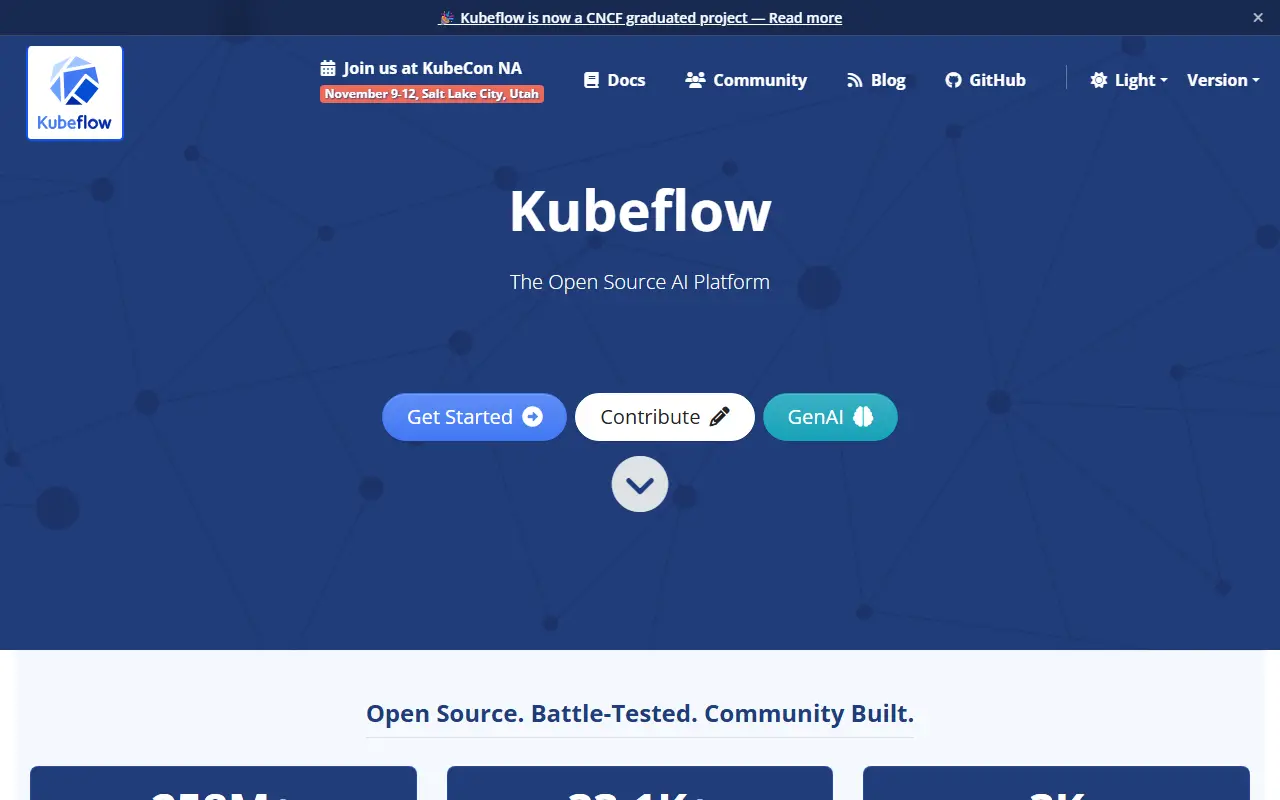
kubeflow.orgKubeflow homepage screenshot

Kubeflow is the Cloud Native AI platform composed of modular, open source projects that form a Kubernetes-native stack for data and AI workloads. It is designed for AI practitioners, platform administrators, and decision-makers who need modular, scalable, and extensible tools for data, AI/ML, and HPC use-cases.

The platform's mission is to bridge the Data, AI, and Cloud Native ecosystems, enabling teams to deliver more models, agents, and AI applications into production across the AI lifecycle. It is built by an open global community and aims to be the standard for Data & AI workloads on Kubernetes.

Key features

  • Runs workloads at any scale without requiring Kubernetes expertise
  • Portable across local laptops, on-premises, and any cloud
  • Manages hyperscale training jobs and high-throughput AI agents
  • Composable tools that can be mixed and matched across the AI lifecycle
  • Includes subprojects: Spark Operator, Notebooks, Trainer, Katib, and Hub

beta9

Open-source runtime for serverless AI workloads that deploys and scales GPU inference, sandboxes, and background jobs from a Python interface.

GitHub stars
1.9k
Last commit
yesterday
Latest release
worker-0.1.834
Licence
AGPL-3.0
Self-hosted
Yes
Hosted version
Available
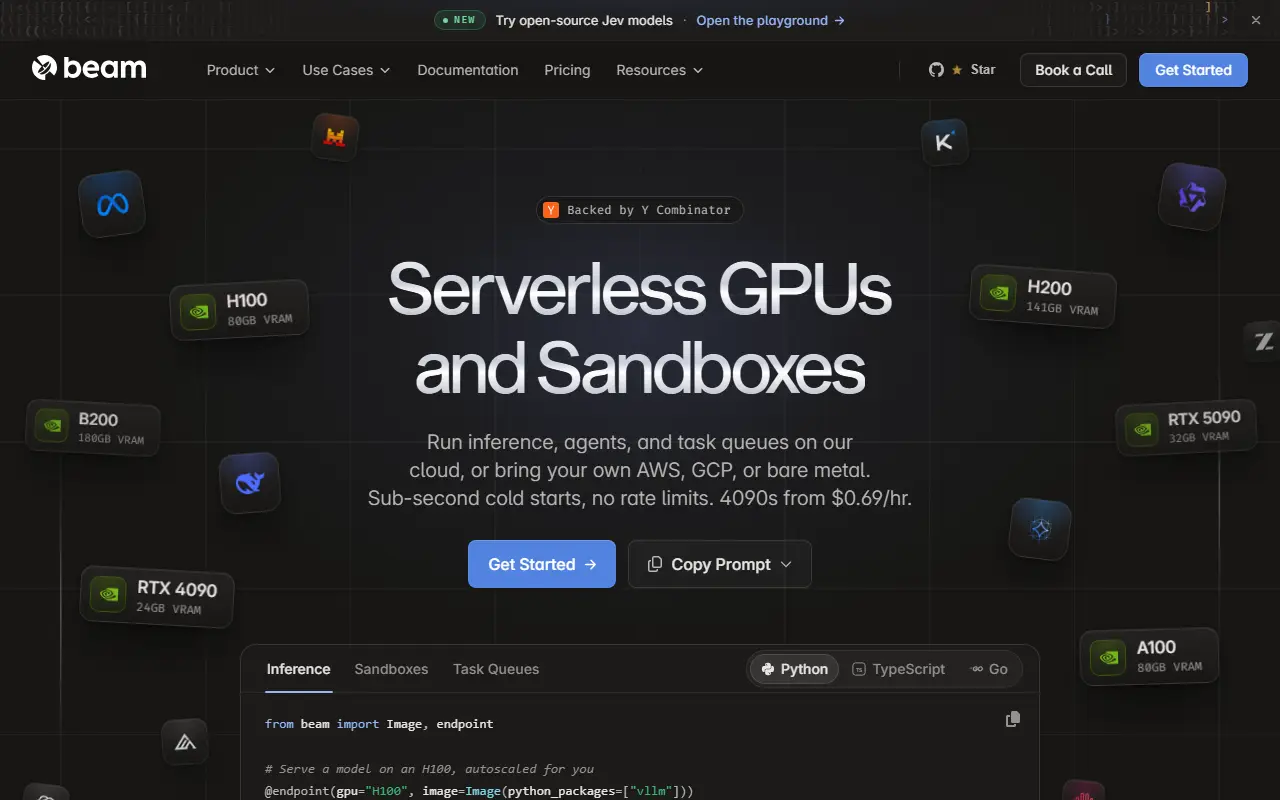
beam.cloudbeta9 homepage screenshot

Beam, whose open-source engine lives in the beta9 repository, is a fast runtime for serverless AI workloads. It gives developers a Pythonic interface to deploy and scale AI applications without managing infrastructure. The code is written in Go and released under the AGPL-3.0 license, and topics include GPU, LLM inference, autoscaling, and functions as a service.

Features include sub-second container cold starts using a custom runtime, scheduler, and embedded caching, parallel fan-out to hundreds of containers, hot reloading, webhooks and scheduled jobs, scale-to-zero by default, and mounted distributed storage volumes. GPU support runs on the Beam cloud, with cards such as the RTX 4090 and H100 mentioned, or on your own GPUs.

The project can be self-hosted or used through the hosted platform, which requires creating an account. Beam suits machine learning engineers and startups that want to serve models, run batch jobs, or sandbox untrusted code without operating a Kubernetes GPU cluster themselves.

Key features

  • Serverless GPU inference
  • Sub-second container cold starts
  • Scale-to-zero workloads
  • Parallel fan-out to many containers
  • Webhooks and scheduled jobs
  • Volume storage and bring-your-own GPUs

Pricing: The Developer plan is $0 per month plus usage and Team is $89 per month plus usage; Growth is custom. Usage is billed by the millisecond, with H100 machines from $1.83 per hour.

Read more about beta9WebsiteGitHub#6 CoreWeave alternative

Backend.AI

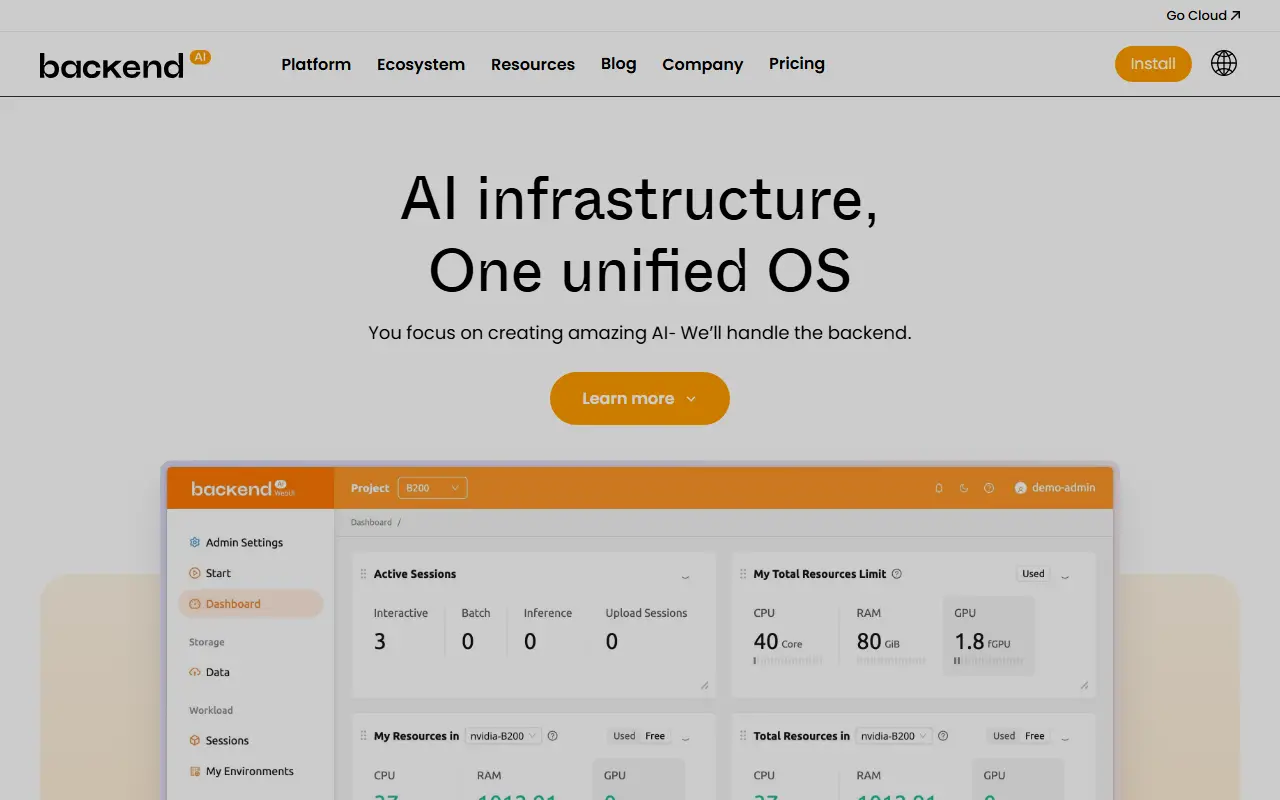
Backend.AI is a container-based computing cluster platform that allocates GPUs and other accelerators for multi-tenant ML sessions through REST and GraphQL APIs.

GitHub stars
680
Last commit
2 days ago
Latest release
26.4.19
Licence
LGPL-3.0
Self-hosted
Yes
backend.aiBackend.AI homepage screenshot

Backend.AI, from Lablup, is a streamlined, container-based computing cluster platform that hosts popular machine learning frameworks and many programming languages. Its distinguishing feature is pluggable support for heterogeneous accelerators, including CUDA and ROCm GPUs, Intel Gaudi, Google TPU, Graphcore IPU and NPUs from vendors such as Rebellions, FuriosaAI, HyperAccel and Tenstorrent.

It allocates and isolates computing resources for multi-tenant sessions on demand or in batches, using customizable job schedulers and its own orchestrator named Sokovan. All functions are exposed through REST and GraphQL APIs. The README lists requirements including Python 3.13 with Pantsbuild, Docker 20.10 or newer or Podman 5.4 or newer, Docker Compose v2, PostgreSQL 16 or newer, Valkey (Redis-compatible), etcd and Prometheus, with Grafana recommended for observability.

Backend.AI is written in Python and licensed under LGPL-3.0. It is aimed at organizations running shared GPU or accelerator clusters for research and ML workloads, and you operate it on your own infrastructure.

Key features

  • Container-based compute sessions
  • Support for many accelerator types
  • Multi-tenant resource isolation
  • Sokovan job scheduler and orchestrator
  • REST and GraphQL APIs
  • Docker and Podman container engines

Pricing: The open-source version is free to install. On-premise and cloud Enterprise editions are priced by quote, and a limited-time cloud try-out can be requested.

Commercial CoreWeave alternatives

Hosted, closed-source products that compete with CoreWeave. Showing 12 of 23.

See every CoreWeave alternative on its tool page

CoreWeave alternatives: questions

What is the best open-source alternative to CoreWeave?
Kubernetes is the top-ranked open-source alternative to CoreWeave on Enlisted: An open-source system for deploying, scaling and managing containerized applications across clusters of hosts, hosted by the CNCF. Other strong options are Ray, Slurm, Volcano and Kubeflow.
What are the best commercial alternatives to CoreWeave?
Lambda, Crusoe, Nebius, Vast.ai and Vultr are among the hosted, closed-source alternatives to CoreWeave listed on Enlisted, which lists 23 in total. Compare their pricing and features on each tool page.
Are these CoreWeave alternatives free?
All 7 are open source, so the code is free to use under its licence, and all of them can be self-hosted on your own server or computer. 3 also offer a paid or managed cloud version if you'd rather not host it yourself.
How is this list of CoreWeave alternatives ranked?
By a score built from GitHub stars, star growth over the last 30 days and how recently the code changed. 6 of these projects shipped code in the last 30 days. Data is refreshed daily, and nobody can pay to move up.

People also look for alternatives to…

View all