7,363 open-source and SaaS tools, with GitHub stats refreshed every day.

5 alternatives ranked by real activity

Open-source Cloudera alternatives

A curated, ranked list of the 5 best open-source alternatives to Cloudera.

The best open-source alternative to Cloudera is Trino. If that doesn't suit you, other good options are Apache Hive, Apache HBase, Apache Cloudberry and Dremio OSS.

Cloudera alternatives are mainly databases, but some are also data pipeline & ETL tools. 4 of them shipped code in the last 30 days, 5 can be self-hosted, and 5 use a permissive licence.

Last updated October 3, 2026 · ranked by GitHub stars, growth and recent commits

Trino

A distributed SQL query engine for big data analytics that runs fast queries across many data sources, formerly known as PrestoSQL.

GitHub stars
13k
Last commit
today
Latest release
483
Licence
Apache-2.0
Self-hosted
Yes
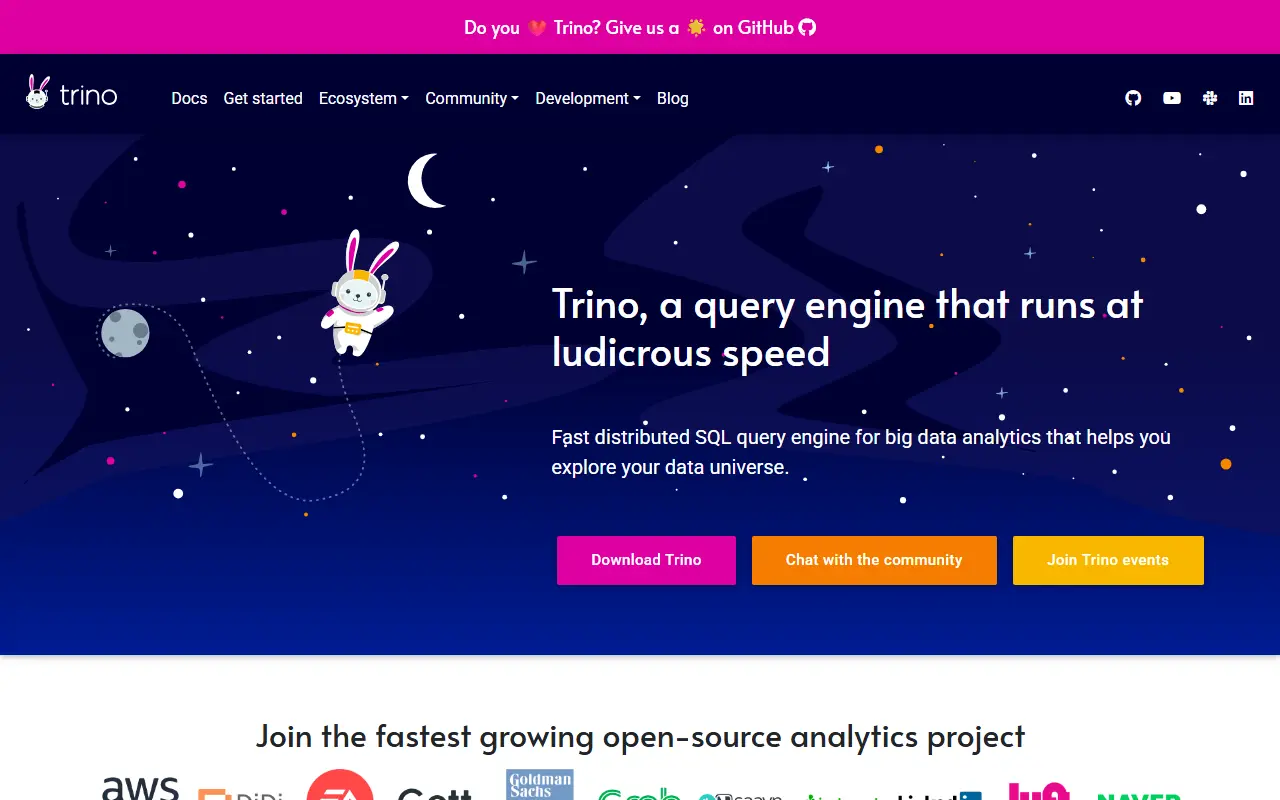
trino.ioTrino homepage screenshot

Trino is a distributed SQL query engine built for analytics on large data sets. It was formerly called PrestoSQL, and it lets analysts and engineers run interactive SQL against data wherever it lives rather than first moving it into a single warehouse.

The project's topics point to its role in the data lake ecosystem, with connectors and integrations for systems such as Hive, Hadoop, Iceberg and Delta Lake, and a JDBC driver for applications. Trino is a Maven project written in Java, and its repository covers development guidelines, plugin implementors, a security policy and reproducible builds. It runs as a cluster of servers and has a web UI.

Trino is released under the Apache-2.0 licence and is deployed and operated by the user, with deployment instructions and end-user documentation in the project's user manual. It is a fit for data platform teams that need fast, standards-based SQL over many sources, rather than for individual analysts looking for a point-and-click tool.

Key features

  • Distributed SQL query engine
  • Fast analytics on big data
  • Connectors for data lake formats like Iceberg
  • JDBC access for applications
  • Plugin architecture for custom connectors
  • Reproducible builds since version 449

Pricing: Free and open source under the Apache-2.0 licence.

Apache Hive

Apache Hive is data warehouse software that lets you read, write and manage large datasets in distributed storage using SQL on top of Hadoop.

GitHub stars
6k
Last commit
yesterday
Licence
Apache-2.0
Self-hosted
Yes
hive.apache.orgApache Hive homepage screenshot

Apache Hive is data warehouse software built on Apache Hadoop. It makes it possible to read, write and manage very large datasets in distributed storage using SQL, so analysts can run extract-transform-load jobs, reports and data analysis without writing low-level processing code.

Hive provides tools for accessing data through SQL, a way of imposing structure on a variety of data formats, and access to files stored in Apache HDFS or other systems such as Apache HBase. Queries can run on the Apache Tez framework, which is designed for interactive queries and has far lower overhead than MapReduce. It supports much standard SQL functionality, including many analytics features from the 2003 and 2011 SQL standards.

Hive is an Apache Software Foundation project written in Java and licensed under Apache-2.0. You deploy it on your own Hadoop-based clusters, though hosted big data platforms from cloud providers also bundle it. It suits data engineering teams maintaining batch analytics on large distributed data.

Key features

  • SQL access to distributed datasets
  • Built on Apache Hadoop
  • Reads data from HDFS and HBase
  • Query execution on Apache Tez
  • ETL, reporting and analysis workloads
  • Standard SQL analytics functions

Pricing: Free and open source under the Apache-2.0 license.

Apache HBase

Apache HBase is a distributed, versioned, column-oriented database modeled on Google's Bigtable and built on top of Apache Hadoop.

GitHub stars
5.6k
Last commit
today
Latest release
rel/3.0.0
Licence
Apache-2.0
Self-hosted
Yes
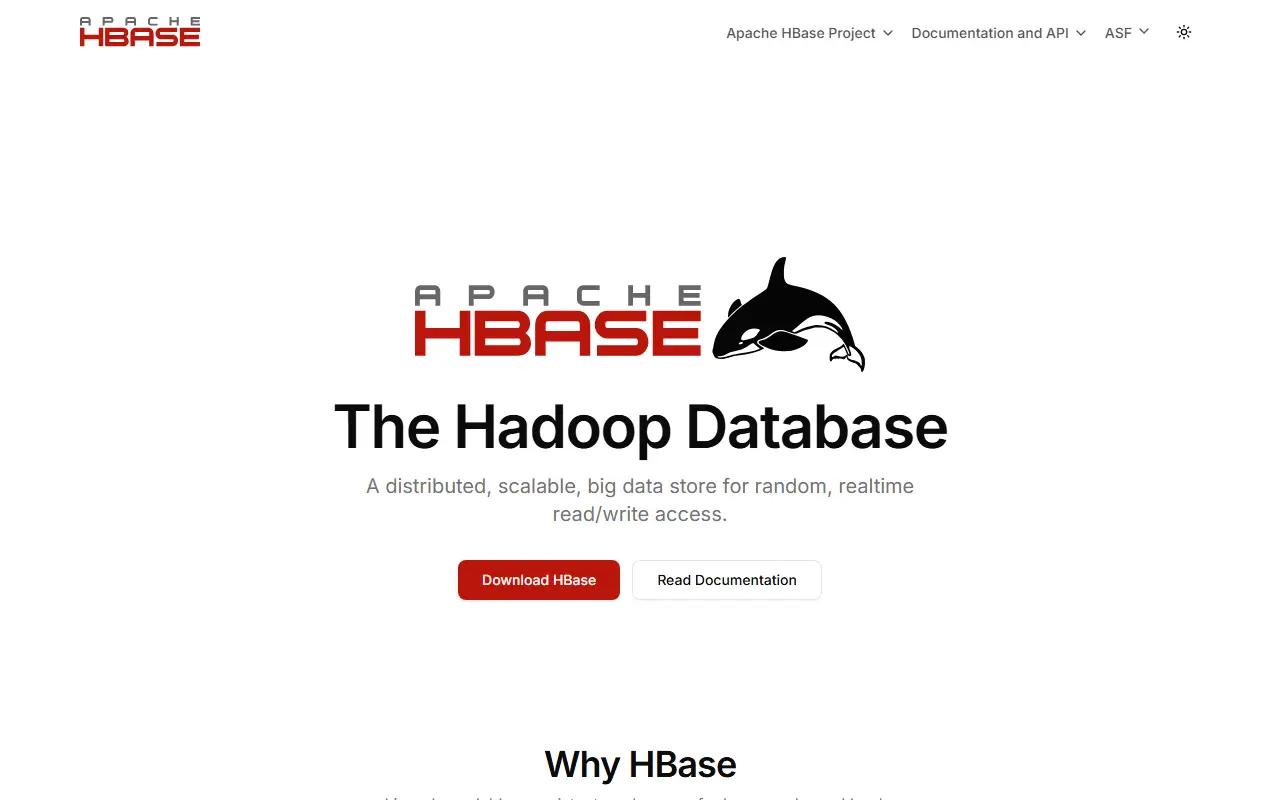
hbase.apache.orgApache HBase homepage screenshot

Apache HBase is an open-source database that is distributed, versioned and column-oriented, modeled on the Bigtable design described in a paper by Chang and colleagues at Google. Bigtable relies on the Google File System, and in the same way HBase delivers comparable capabilities on top of Apache Hadoop and its distributed file system.

It is intended for storing very large tables across a cluster, with rows indexed by key and columns grouped into families. The project documentation includes a Reference Guide with a quick start section, downloads on the project site, and mailing lists plus a Slack channel for discussion. The code is written in Java.

HBase is an Apache Software Foundation project under the Apache-2.0 license and is deployed on your own Hadoop-based clusters, though several cloud providers also bundle it in managed big data offerings. It suits data engineering teams that need low-latency random access to large datasets.

Key features

  • Distributed column-oriented storage
  • Bigtable-style data model
  • Runs on top of Hadoop
  • Versioned cell data
  • Reference guide with quick start
  • Written in Java

Pricing: Free and open source under the Apache-2.0 license.

Apache Cloudberry

Apache Cloudberry is an open-source MPP database based on PostgreSQL for data warehousing and large-scale analytics, positioned as a Greenplum alternative.

GitHub stars
1.4k
Last commit
today
Latest release
2.1.0-incubating
Licence
Apache-2.0
Self-hosted
Yes
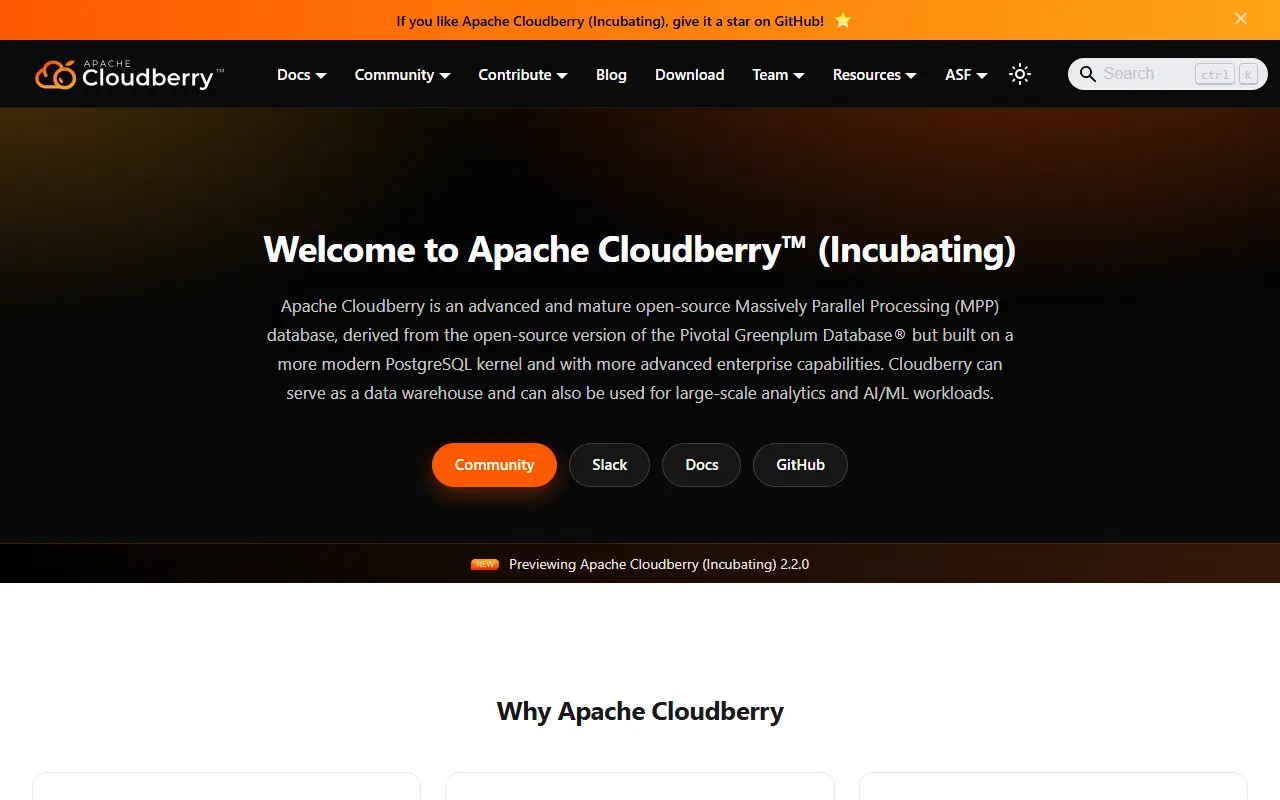
cloudberry.apache.orgApache Cloudberry homepage screenshot

Apache Cloudberry, currently in the Apache incubator, is an open-source massively parallel processing database. It was created by original developers of Greenplum Database and evolves from the open-source version of Pivotal Greenplum, but uses a newer PostgreSQL kernel and adds enterprise capabilities. It is described as an open-source alternative to Greenplum Database.

It can serve as a data warehouse and is also intended for large-scale analytics and AI or machine learning workloads, distributing queries across many nodes. Because it is based on PostgreSQL, it uses familiar SQL. The main repository sits alongside ecosystem repositories for the website, a backup utility, Go libraries and the Platform Extension Framework (PXF) for connecting to external data.

Cloudberry is written in C and licensed under Apache-2.0. You can build it from source on Linux, including RHEL, Rocky Linux and Ubuntu, and macOS, or try it quickly through a Docker-based sandbox. Community help is available through Slack and GitHub Discussions. It suits data engineering teams running large analytical workloads that want an open-source MPP engine they can operate themselves.

Key features

  • Massively parallel processing SQL engine
  • PostgreSQL-based kernel
  • Data warehouse and analytics workloads
  • Backup utility and PXF connectors
  • Docker sandbox for trying it out
  • Builds on Linux and macOS

Pricing: Free and open source under the Apache-2.0 licence.
Dremio OSS

Dremio OSS is a free, Apache-licensed, open-source data lakehouse platform in Java that provides fast SQL analytics directly on data stored in warehouses and lakes.

GitHub stars
1.5k
Last commit
1 yr ago
Licence
Apache-2.0
Self-hosted
Yes
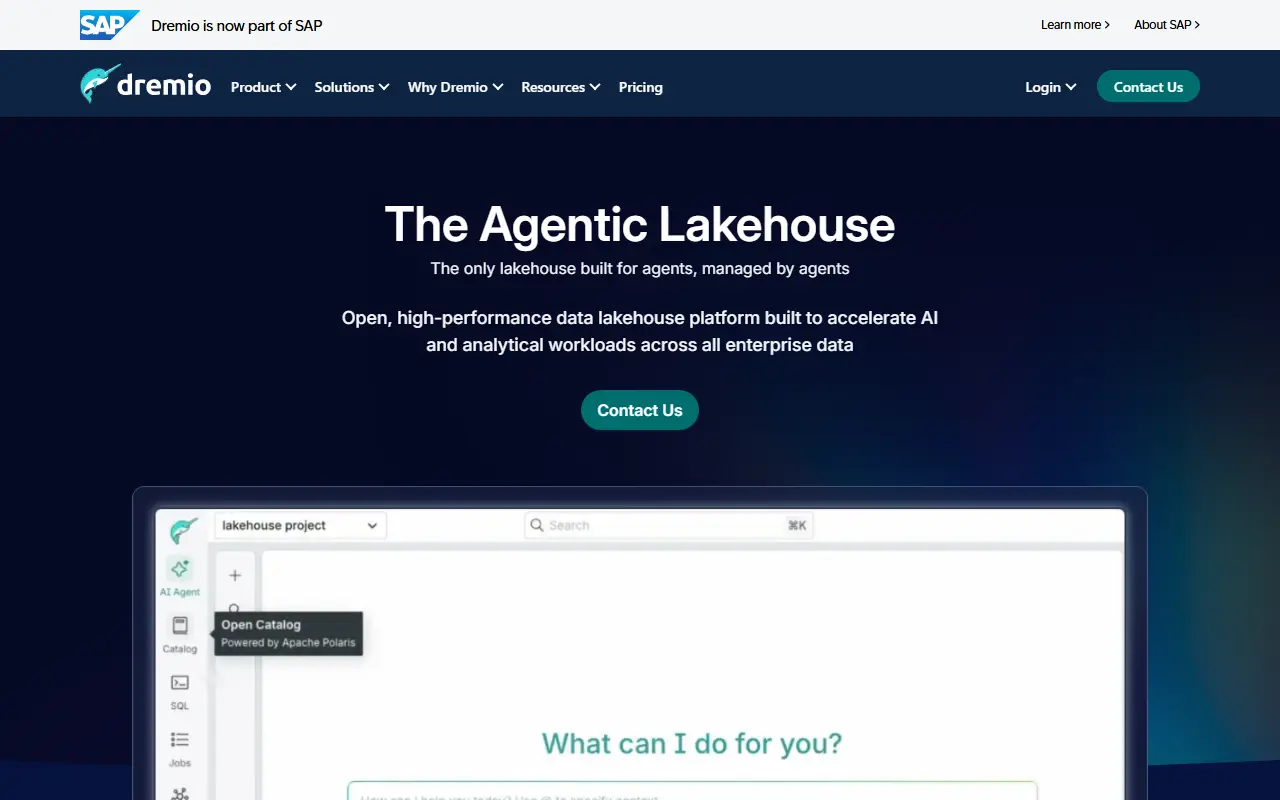
dremio.comDremio OSS homepage screenshot

Dremio is a data analytics platform aimed at organizations that want to query and analyze large volumes of data without first moving or copying it into a separate, dedicated analytics database. It positions itself as filling a gap between raw data storage and the tools people need to get value out of that data.

The open-source edition can be built and run locally, exposing a web UI at localhost:9047 once started, or installed as a production tarball for server deployment, with an embedded mode also available. Building it requires a specific combination of JDK versions (21 as default, with 17 and 11 configured in the Maven toolchain for certain tests) plus Maven, reflecting a substantial, enterprise-grade Java codebase.

The README notes that to provide the best possible experience, the build includes some dependencies distributed under non-open-source licenses, so the fully open-source experience may differ slightly depending on build configuration. Dremio is written in Java and the open-source edition is released under the Apache-2.0 license, with full documentation hosted separately.

Key features

  • SQL analytics directly on lake and warehouse data
  • Web-based query interface
  • Local and production deployment modes
  • Built on a Java codebase with Maven tooling
  • No data duplication required for analytics

Pricing: Dremio Cloud is pay-as-you-go at $0.20 per compute unit, with a 30-day trial that includes $400 in credit. Dremio Enterprise, which can be self-hosted, is priced through sales.

Cloudera alternatives: questions

What is the best open-source alternative to Cloudera?
Trino is the top-ranked open-source alternative to Cloudera on Enlisted: A distributed SQL query engine for big data analytics that runs fast queries across many data sources, formerly known as PrestoSQL. Other strong options are Apache Hive, Apache HBase, Apache Cloudberry and Dremio OSS.
Are these Cloudera alternatives free?
All 5 are open source, so the code is free to use under its licence, and all of them can be self-hosted on your own server or computer.
How is this list of Cloudera alternatives ranked?
By a score built from GitHub stars, star growth over the last 30 days and how recently the code changed. 4 of these projects shipped code in the last 30 days. Data is refreshed daily, and nobody can pay to move up.

People also look for alternatives to…

View all