7,363 open-source and SaaS tools, with GitHub stats refreshed every day.

4 alternatives ranked by real activity

Open-source Azure Container Apps alternatives

A curated, ranked list of the 4 best open-source alternatives to Azure Container Apps.

The best open-source alternative to Azure Container Apps is Sealos. If that doesn't suit you, other good options are Rainbond, OpenFaaS and Epinio.

Azure Container Apps alternatives are mainly hosting & PaaS tools. 3 of them shipped code in the last 30 days, 4 can be self-hosted, and 1 uses a permissive licence.

Last updated October 3, 2026 · ranked by GitHub stars, growth and recent commits

Sealos

Sealos is an open-source, Kubernetes-based cloud operating system for developing, deploying and running apps, databases and cloud IDEs.

GitHub stars
18k
Last commit
2 days ago
Latest release
v5.1.1
Self-hosted
Yes
Hosted version
Available
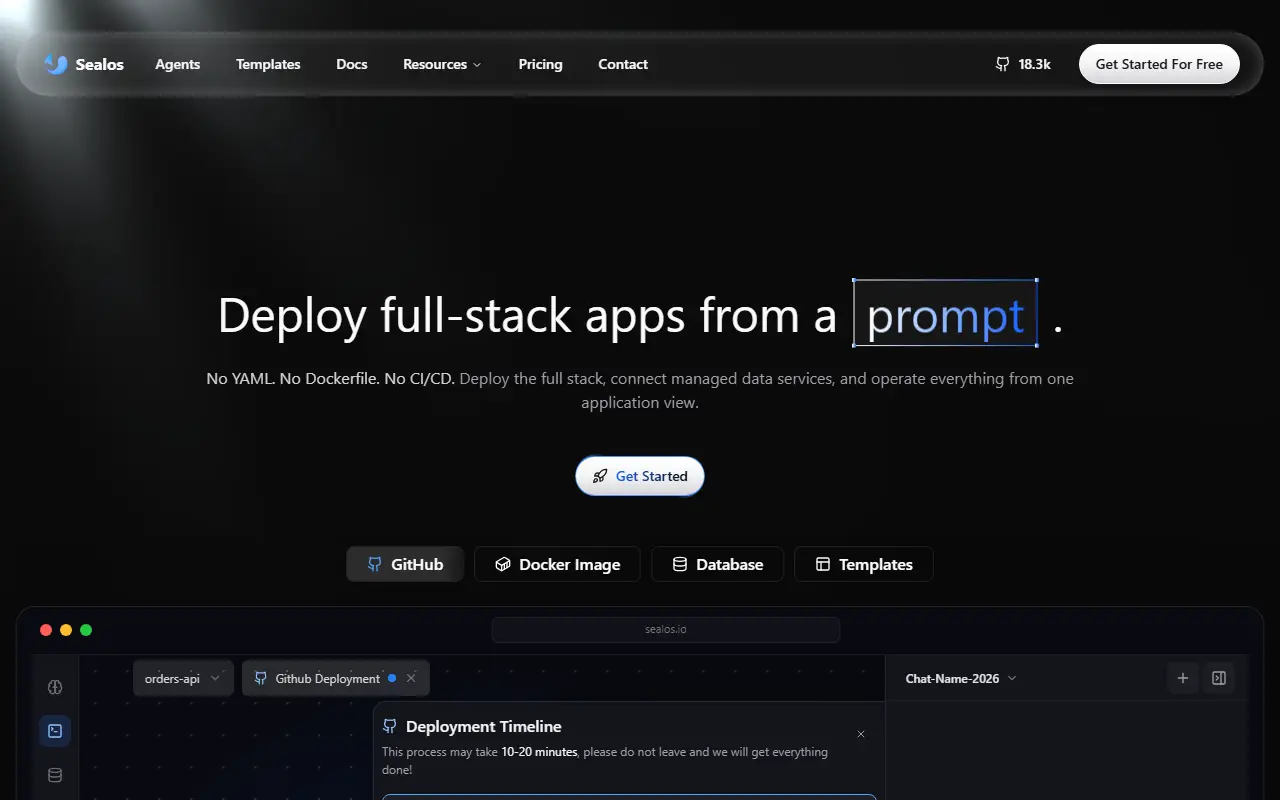
sealos.ioSealos homepage screenshot

Sealos describes itself as an AI-native cloud operating system built on Kubernetes. It aims to cover the whole application lifecycle in one platform, from development in cloud IDEs to production deployment and day-to-day management, and it targets teams building AI applications, SaaS platforms, managed databases and microservice architectures.

Core pieces include Devbox cloud development environments that can be opened from editors such as VS Code and Cursor, managed MySQL, PostgreSQL, MongoDB and Redis databases, S3-compatible object storage, and an App Launchpad for deploying Docker images. An app store offers one-click deployment of larger applications, and workspace-based multi-tenancy supports enterprise use. Full Kubernetes remains accessible underneath.

Sealos is written mainly in TypeScript and Go and runs on Kubernetes. Repository topics point to cluster installation features such as high-availability Kubernetes through kubeadm, and the project offers a hosted cloud at sealos.io. The repository lists the license as 'Other', so check the license file for the exact terms.

Key features

  • Cloud IDE environments through Devbox
  • Managed PostgreSQL, MySQL, MongoDB and Redis
  • S3-compatible object storage
  • App store with one-click deployment
  • Docker image deployment via App Launchpad
  • Workspace-based multi-tenancy

Pricing: A 7-day free trial, then fixed monthly resource packages: Starter $34, Hobby $70, Standard $128, scaling up to $12,451 for Enterprise. New users get a lower first-plan price; custom plans via sales.

Read more about SealosWebsite GitHub

Rainbond

Rainbond is an open-source container platform with a graphical interface that deploys and manages applications on Kubernetes without needing K8s expertise.

GitHub stars
6.3k
Last commit
2 days ago
Latest release
v6.9.10-release
Self-hosted
Yes
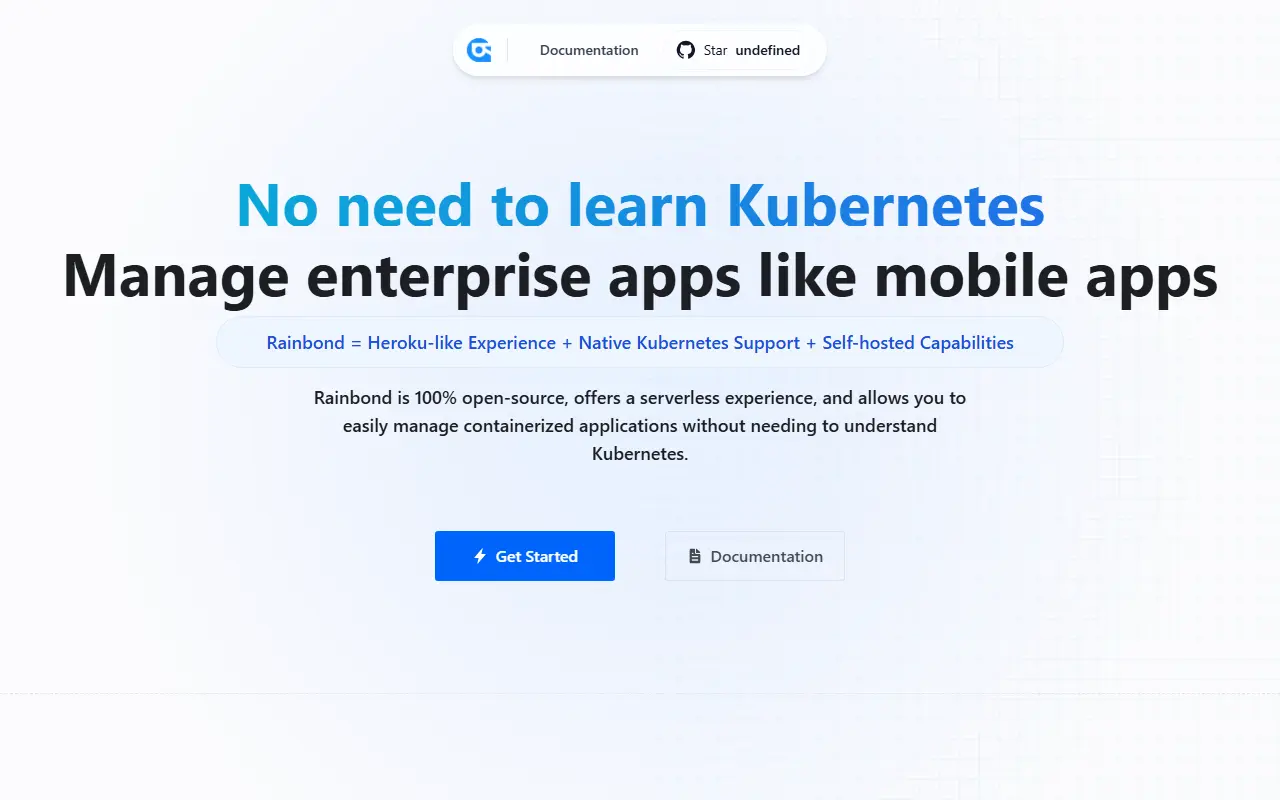
rainbond.ioRainbond homepage screenshot

Rainbond is an open-source application platform that sits on top of Kubernetes and hides most of its complexity. Teams use a graphical interface to build, deploy, assemble and manage applications, so developers and operators without Kubernetes expertise can still run workloads on clusters.

The project describes a unified way to deploy ordinary business applications, projects generated by AI, open-source AI tools and LLM services, with AI assisting in deployment and operation. It targets private, self-hosted deployments on your own servers or Kubernetes clusters, and its README states that the core capabilities are fully open source.

The code is written in Go and published under a license that GitHub lists as 'Other', so review its terms before adopting it. Documentation and a Chinese-language README are provided, and the platform suits teams that want an internal PaaS and application delivery layer over Kubernetes.

Key features

  • Graphical build and deploy workflow
  • Application management on Kubernetes
  • No Kubernetes expertise required
  • Deployment of AI software and LLM services
  • Runs on your own servers or clusters
  • Application assembly from components
Read more about RainbondWebsite GitHub

OpenFaaS

OpenFaaS is a serverless framework for running event-driven functions and microservices on Kubernetes, with auto-scaling, metrics and a UI portal.

GitHub stars
26k
Last commit
3 mo ago
Latest release
0.27.13
Self-hosted
Yes
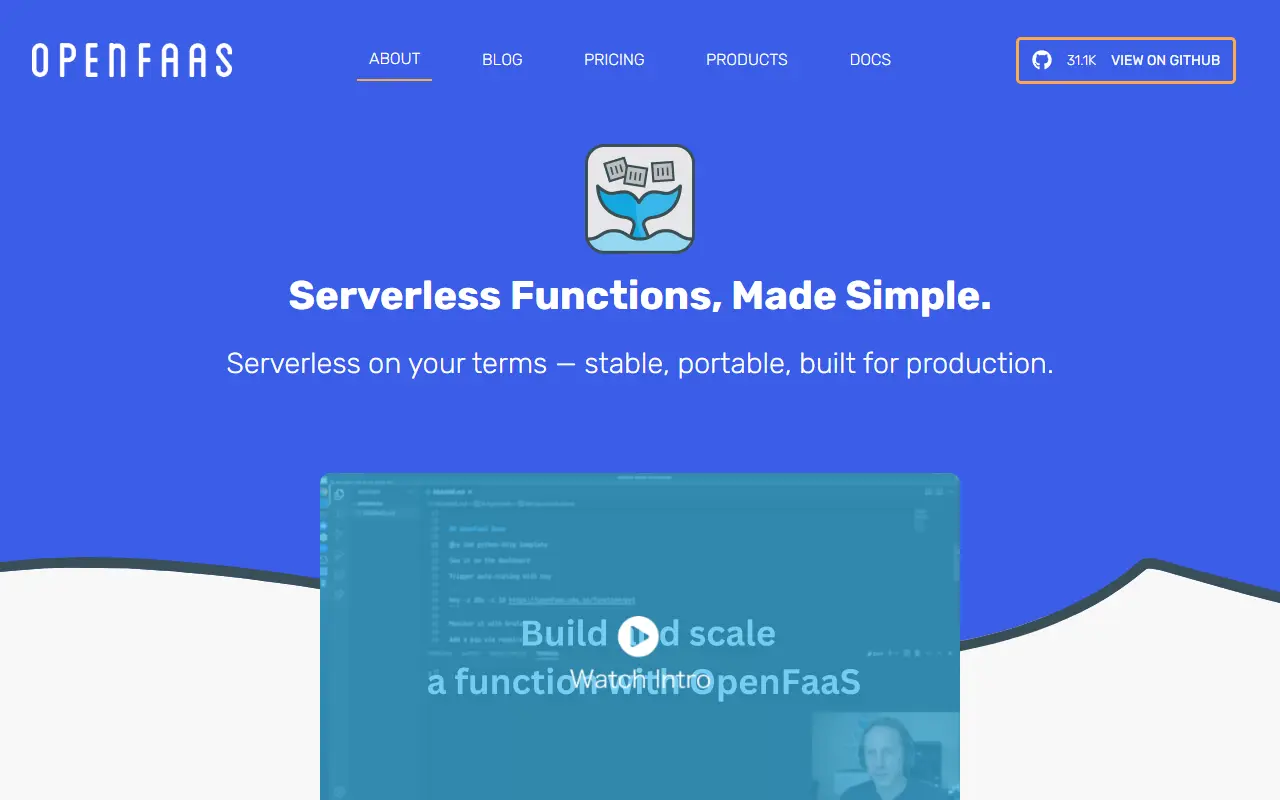
openfaas.comOpenFaaS homepage screenshot

OpenFaaS is a serverless platform that lets developers run event-driven functions and microservices on Kubernetes with little boilerplate code. Your code or a ready-made binary goes into an OCI-compatible container image, and you receive a scalable HTTP endpoint that auto-scales and exposes metrics.

Highlights include ease of use through a UI portal and a one-click install, and the ability to write services and functions in many languages. The project integrates with Prometheus for metrics and with GitOps workflows, and its topics place it in the functions-as-a-service and PaaS categories. The gateway and tooling are written in Go.

Licensing needs attention. The README states that the Community Edition is licensed for individual exploration and hobbyist use, with a 60-day limit for commercial proofs of concept, and that commercial and production use calls for the paid OpenFaaS Standard or Enterprise editions. GitHub reports the license as 'Other'. You run it on your own Kubernetes cluster.

Key features

  • Deploy functions and microservices to Kubernetes
  • OCI image-based packaging
  • Endpoints that scale automatically
  • Built-in Prometheus metrics
  • UI portal and one-click install
  • Functions in many languages

Pricing: Community Edition is free for personal use, with a 60-day limit on commercial use. Standard costs $1250 per month; Enterprise is custom. A 14-day trial is offered, subject to approval.

Read more about OpenFaaSWebsite GitHub

Epinio

Epinio is an opinionated PaaS that runs on Kubernetes and takes an application from code to a running URL in one step, without Kubernetes expertise.

GitHub stars
611
Last commit
yesterday
Latest release
v1.14.2
Licence
Apache-2.0
Self-hosted
Yes
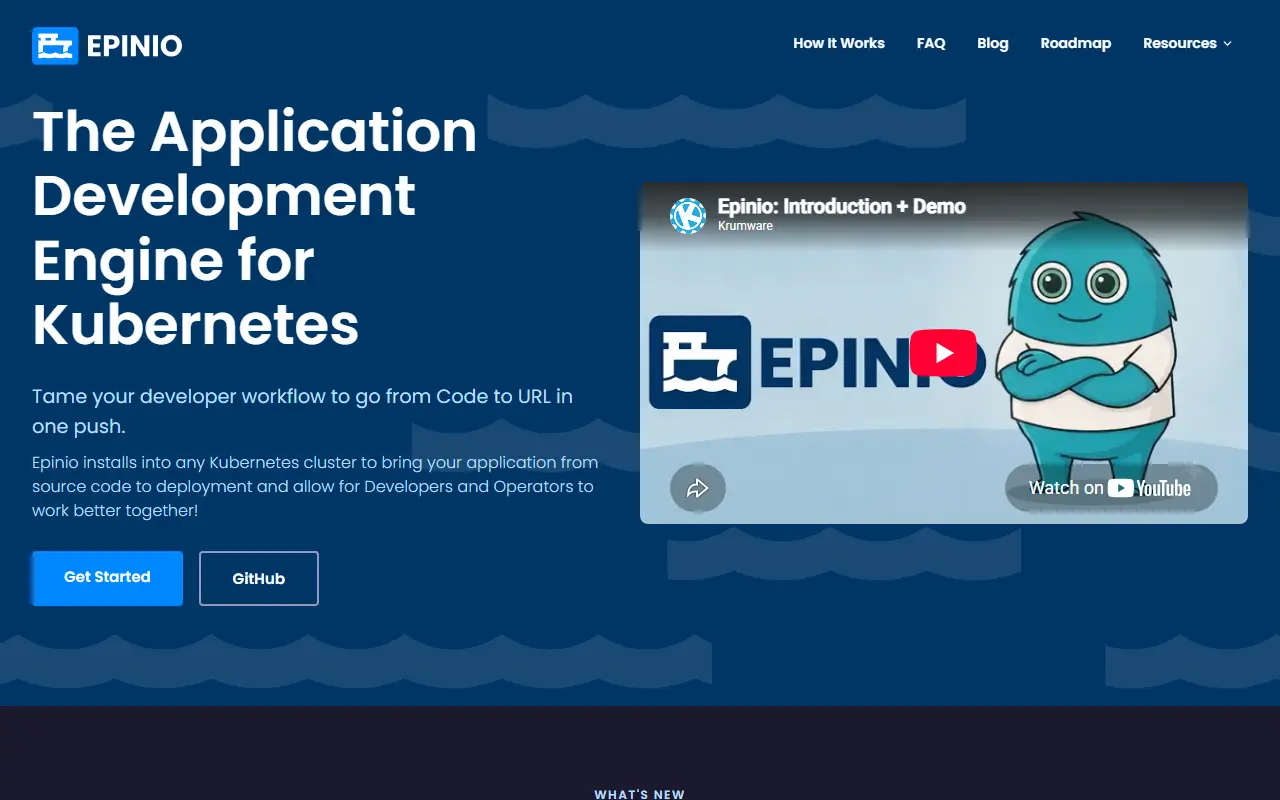
epinio.ioEpinio homepage screenshot

Epinio is an opinionated platform that runs on Kubernetes and takes developers from code to a URL in one step. It exists because Kubernetes has a steep learning curve and operating it well can be a full-time job, while developers would rather spend time on their applications; Epinio adds abstractions and tools so Kubernetes can be used like a PaaS.

The goals are that no Kubernetes experience is needed, there is no steep learning curve, local setup is quick with minimal configuration, and deploying to production works the same as deploying in development. It requires a Kubernetes cluster with an Ingress Controller and cert-manager, after which installation is a short step. The Epinio CLI is installed from a release binary or Homebrew, and a quick-start tutorial walks through creating a namespace and pushing an application. Security features include a TLS-secured API server and basic authentication.

Epinio is written in Go, licensed under Apache-2.0, documented at docs.epinio.io and discussed on the Rancher Users Slack. You run it on your own cluster.

Key features

  • Push code to a URL in one step
  • PaaS workflow on any Kubernetes cluster
  • No Kubernetes expertise required
  • Same deployment flow for dev and production
  • CLI installable by binary or Homebrew
  • TLS-secured API server

Pricing: Free and open source under the Apache-2.0 license.

Read more about EpinioWebsite GitHub

Azure Container Apps alternatives: questions

What is the best open-source alternative to Azure Container Apps?
Sealos is the top-ranked open-source alternative to Azure Container Apps on Enlisted: Sealos is an open-source, Kubernetes-based cloud operating system for developing, deploying and running apps, databases and cloud IDEs. Other strong options are Rainbond, OpenFaaS and Epinio.
Are these Azure Container Apps alternatives free?
All 4 are open source, so the code is free to use under its licence, and all of them can be self-hosted on your own server or computer. 1 also offers a paid or managed cloud version if you'd rather not host it yourself.
How is this list of Azure Container Apps alternatives ranked?
By a score built from GitHub stars, star growth over the last 30 days and how recently the code changed. 3 of these projects shipped code in the last 30 days. Data is refreshed daily, and nobody can pay to move up.

People also look for alternatives to…

View all