7,363 open-source and SaaS tools, with GitHub stats refreshed every day.

8 alternatives ranked by real activity

Open-source AWS CodeDeploy alternatives

A curated, ranked list of the 8 best open-source alternatives to AWS CodeDeploy.

The best open-source alternative to AWS CodeDeploy is Ansible. If that doesn't suit you, other good options are Harness, Argo CD, Kamal and Komodo.

AWS CodeDeploy alternatives are mainly CI/CD & DevOps tools, but some are also infrastructure & container tools. 8 of them shipped code in the last 30 days, 8 can be self-hosted, and 5 use a permissive licence.

Last updated October 3, 2026 · ranked by GitHub stars, growth and recent commits

Ansible

An agentless IT automation platform for configuration management, application deployment, cloud provisioning and network automation over SSH.

GitHub stars
71k
Last commit
2 days ago
Latest release
v2.21.4
Licence
GPL-3.0
Self-hosted
Yes
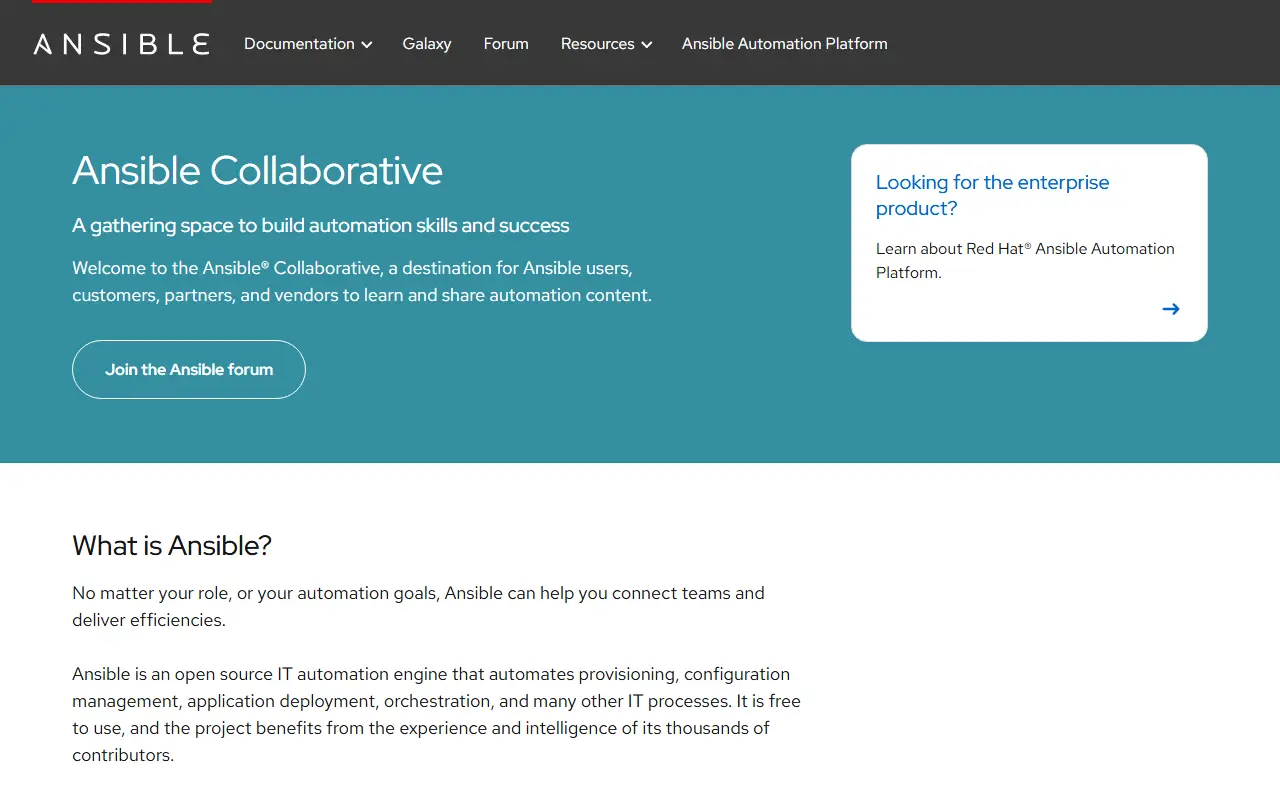
ansible.comAnsible homepage screenshot

Ansible is an open-source IT automation system written in Python and released under the GPL-3.0 license. It covers configuration management and application deployment, provisioning of cloud resources, one-off ad-hoc commands, network automation and orchestration across many nodes, and it can carry out complex changes such as zero-downtime rolling updates with load balancers.

Its design principles favor a simple setup with a gentle learning curve, managing machines quickly and in parallel, and avoiding custom agents and extra open ports by relying on the existing SSH daemon. Infrastructure is described in a language that is readable by both people and machines, with a focus on security and easy auditing and review. New remote machines can be managed immediately without bootstrapping software, and modules can be written in any dynamic language.

Released versions install with pip or a package manager, while power users can run the development branch for the latest features at the risk of breaking changes. Ansible can be used without root access. It suits system administrators, DevOps and network engineers who want repeatable, version-controlled automation without agents on their servers.

Key features

  • Agentless automation over SSH
  • Configuration management and application deployment
  • Cloud provisioning and network automation
  • Parallel management of many machines
  • Zero-downtime rolling updates
  • Modules in any dynamic language
  • Human-readable infrastructure descriptions

Pricing: Free and open source under the GPL-3.0 license.

Read more about AnsibleWebsite GitHub

Harness

An open-source developer platform combining Git hosting, CI/CD pipelines, cloud development environments called Gitspaces and artifact registries, the successor to Drone.

GitHub stars
38k
Last commit
yesterday
Latest release
v2.28.2
Licence
Apache-2.0
Self-hosted
Yes
harness.ioHarness homepage screenshot

Harness Open Source is a developer platform written in Go that bundles source code hosting, automated pipelines, hosted development environments and artifact registries in one product. The idea is to give a team a complete, self-run DevOps toolchain rather than separate services for repositories, builds and package storage.

Its hosted development environments are called Gitspaces, and the platform also includes registries for build artifacts. Harness is presented as the next generation of Drone: Drone focused only on continuous integration, whereas Harness adds code hosting and developer environments. The maintainers say the goal is eventual parity with Drone's pipeline capabilities so users can migrate, and a snapshot of Drone lives on a separate branch so it can keep developing.

You can run Harness locally from the published Docker image and open it on port 3000. The image stores its database and repositories in a volume, so a bind mount or named volume is strongly recommended to avoid losing data when the container stops. The project is Apache-2.0 licensed, with documentation at developer.harness.io.

Key features

  • Git repository hosting
  • CI/CD pipelines for build automation
  • Gitspaces hosted development environments
  • Artifact registries for build outputs
  • Docker image for quick local setup
  • Migration path from Drone

Pricing: A free plan covers individual developers and small teams. The Essentials bundle and the modular Enterprise plan have no published prices and are quoted through sales.

Read more about HarnessWebsite GitHub

Argo CD

Argo CD is a Kubernetes continuous delivery tool built on GitOps, syncing applications from Git to clusters declaratively.

GitHub stars
24k
Last commit
today
Latest release
v3.5.3
Licence
Apache-2.0
Self-hosted
Yes
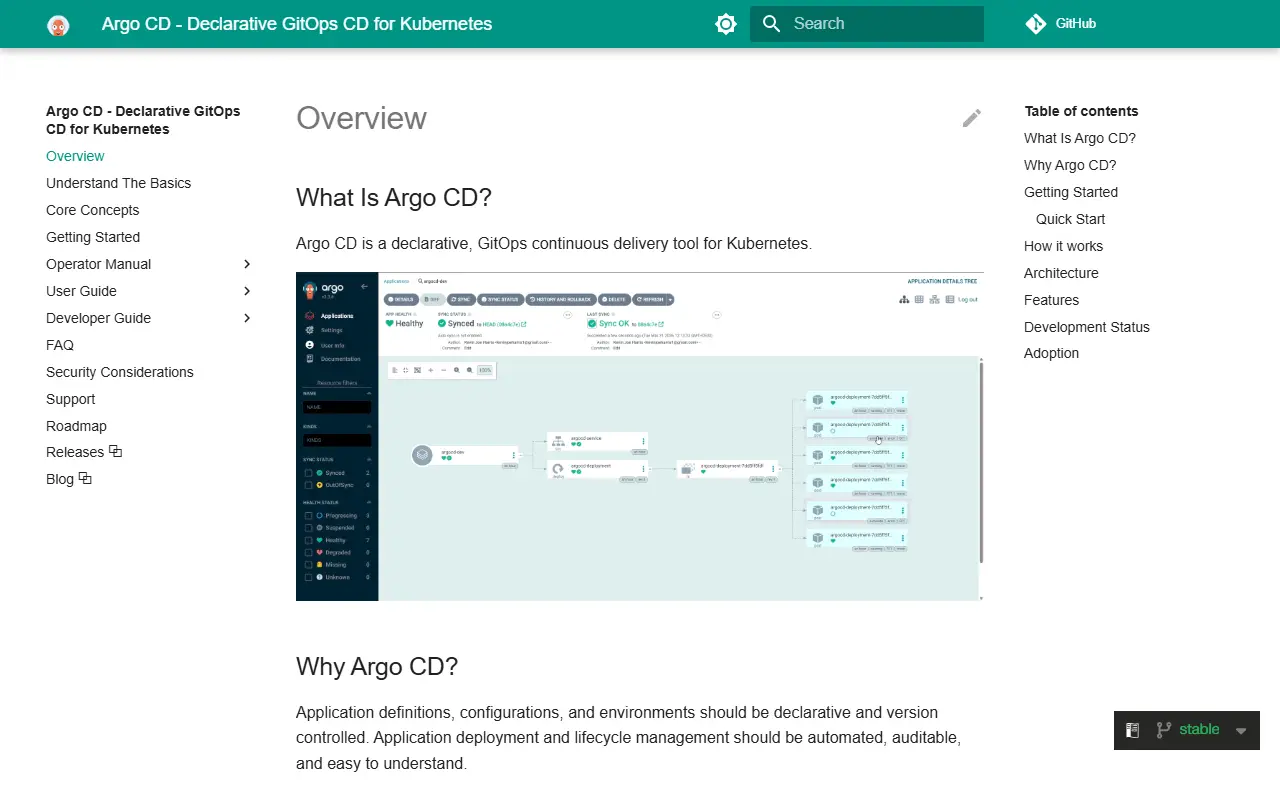
argo-cd.readthedocs.ioArgo CD homepage screenshot

Argo CD applies GitOps principles to continuous delivery on Kubernetes, in a declarative way. Its premise is that application definitions, configuration and environments should be declarative and version controlled, and that rolling out and managing applications should be automated, traceable and straightforward. It is written in Go, is part of the Argo project under the CNCF, and is released under the Apache-2.0 license.

Repository topics show support for Helm, Kustomize and Jsonnet as ways to describe applications, alongside a focus on continuous deployment pipelines. The project offers complete documentation and a live demo, and the community can be reached through GitHub Discussions, a Slack channel, contributor office hours and monthly user community meetings. Its README links to many blog posts and talks on combining Argo CD with tools such as Crossplane, Argo Workflows and preview environments for pull requests.

Key features

  • GitOps-based continuous delivery for Kubernetes
  • Declarative, version-controlled application definitions
  • Helm, Kustomize and Jsonnet support
  • Automated and auditable deployments
  • Live demo and complete documentation
  • CNCF-governed open community

Pricing: Free and open source under the Apache-2.0 license.

Read more about Argo CDWebsite GitHub

Kamal

Kamal deploys containerized web apps to bare metal or cloud servers over SSH with zero-downtime switching between containers.

GitHub stars
15k
Last commit
2 days ago
Latest release
v2.12.0
Licence
MIT
Self-hosted
Yes
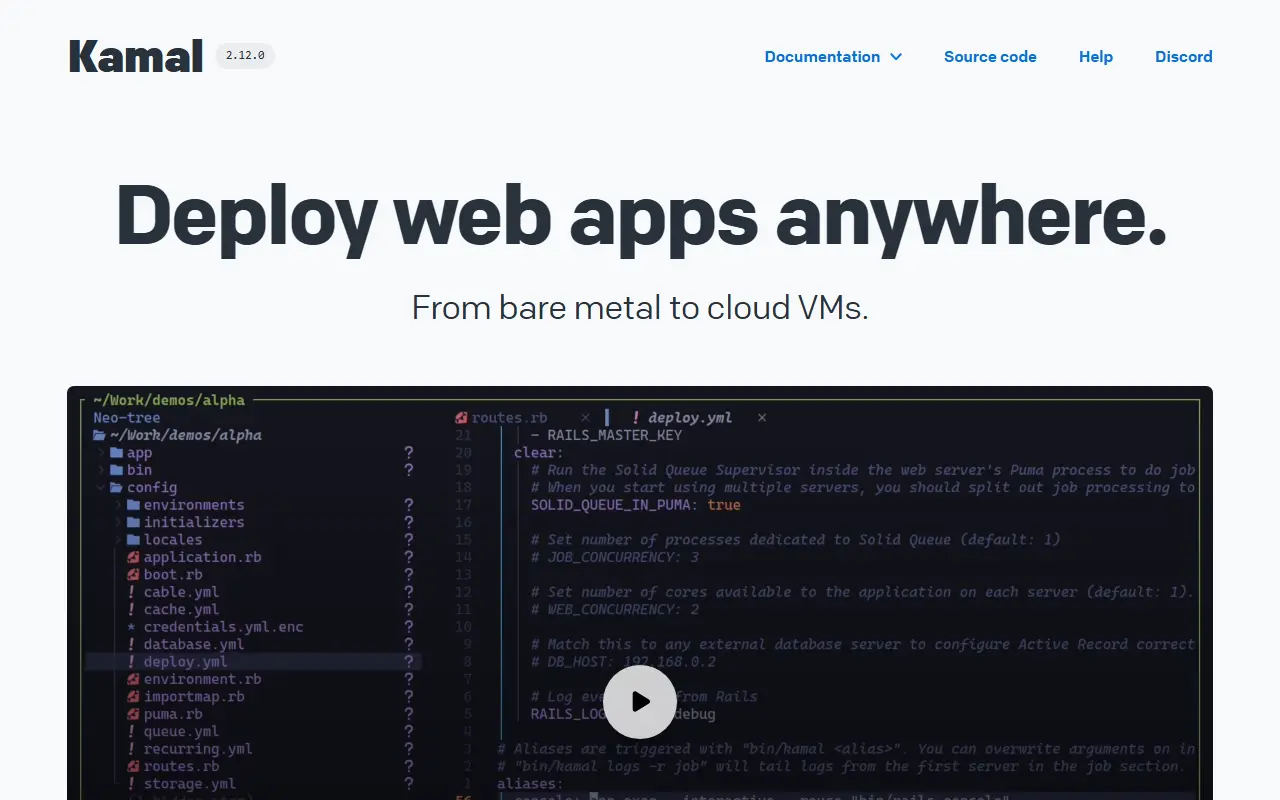
kamal-deploy.orgKamal homepage screenshot

Kamal is a deployment tool for web applications that can run anywhere, from bare metal servers to cloud virtual machines. It uses a proxy component called kamal-proxy to switch requests between containers without downtime, and it works across multiple servers by running commands over SSH using SSHKit.

Originally built for Rails applications, Kamal works with any web app that can be packaged in a Docker container. Documentation on installation, configuration and commands is on kamal-deploy.org, and the documentation itself lives in a separate repository where improvements are welcome.

Kamal is written in Ruby, developed by Basecamp, and released under the MIT license. Because it deploys to servers you control, it suits teams who want a simple alternative to hosted platforms while still getting rolling, zero-downtime releases.

Key features

  • Zero-downtime container switching
  • Deploys to bare metal or cloud VMs
  • Multi-server deployments over SSH
  • Works with any Dockerized web app
  • kamal-proxy request routing

Pricing: Free and open source under the MIT license.

Read more about KamalWebsite GitHub

Komodo

Open-source tool for building and deploying software across many servers, with an API for automation and no cap on connected servers.

GitHub stars
13k
Last commit
12 days ago
Latest release
v2.3.3
Licence
GPL-3.0
Self-hosted
Yes
komo.doKomodo homepage screenshot

Komodo is an open-source tool for building and deploying software across many servers. It is intended for people who run their own infrastructure and want a single place to manage builds and deployments on all of their machines, rather than logging in to each one separately.

The project states that there is no limit on the number of servers that can be connected and no restriction on the API available for automation. Servers are connected through a component called Periphery, which has its own setup guide, and the maintainers publish a roadmap, a public demo and a build server for people who want to look around. Screenshots show both light and dark themes.

Komodo is written in Rust and released under GPL-3.0. The maintainers warn that, although they try to keep releases stable, the software comes with no warranty, so it should be used at your own risk. Documentation is available on the project site and community discussion happens on Discord.

Key features

  • Build and deploy software across many servers
  • No limit on connected servers
  • Unrestricted API for automation
  • Periphery setup for connecting servers
  • Light and dark interface themes

Pricing: Free and open source under the GPL-3.0 license.

Read more about KomodoWebsite GitHub

Spug

A lightweight, agent-free operations and maintenance platform for small and medium businesses, covering host management, deployment, pipelines, scheduled tasks and monitoring.

GitHub stars
11k
Last commit
4 days ago
Latest release
v3.4.0
Licence
AGPL-3.0
Self-hosted
Yes
ops.spug.ccSpug homepage screenshot

Spug is an open-source operations and maintenance platform aimed at small and medium-sized enterprises. It does not require agents on the managed servers, and brings together host management, batch command execution, a browser-based terminal, file handling, releases and deployments, pipelines, task scheduling, a configuration center, monitoring and alarms.

Hosts can be grouped, imported from cloud providers or an Excel file and checked for connectivity in bulk. Commands can be parameterized and reused with execution history, files can be uploaded, downloaded and distributed to many hosts, and builds can be deployed with a review flow, canary release and rollback. Pipelines chain build, remote command and data transfer steps with notifications and conditional branches. Scheduled tasks are configured online in crontab style.

The same project offers Push Assistant, a message platform that sends alarms by phone, SMS, email, Feishu, DingTalk and WeChat from monitoring systems such as Zabbix and Prometheus. Spug is licensed under AGPL-3.0, is written mainly in JavaScript with Django on the backend per its topics, and has a demo whose data resets hourly, with English and Simplified Chinese interfaces.

Key features

  • Agent-free host management
  • Batch command execution with history
  • Browser-based online terminal
  • File upload, download and distribution
  • Deployments with review, canary and rollback
  • Pipelines with conditional branches
  • Online crontab-style task planning
  • Monitoring and alarm notifications

Pricing: Free and open source under the AGPL-3.0 licence.

Read more about SpugWebsite GitHub

Flux

Flux is a CNCF graduated GitOps tool that keeps Kubernetes clusters in sync with Git repositories and OCI artifacts and automates configuration updates.

GitHub stars
8.4k
Last commit
today
Latest release
v2.9.6
Licence
Apache-2.0
Self-hosted
Yes
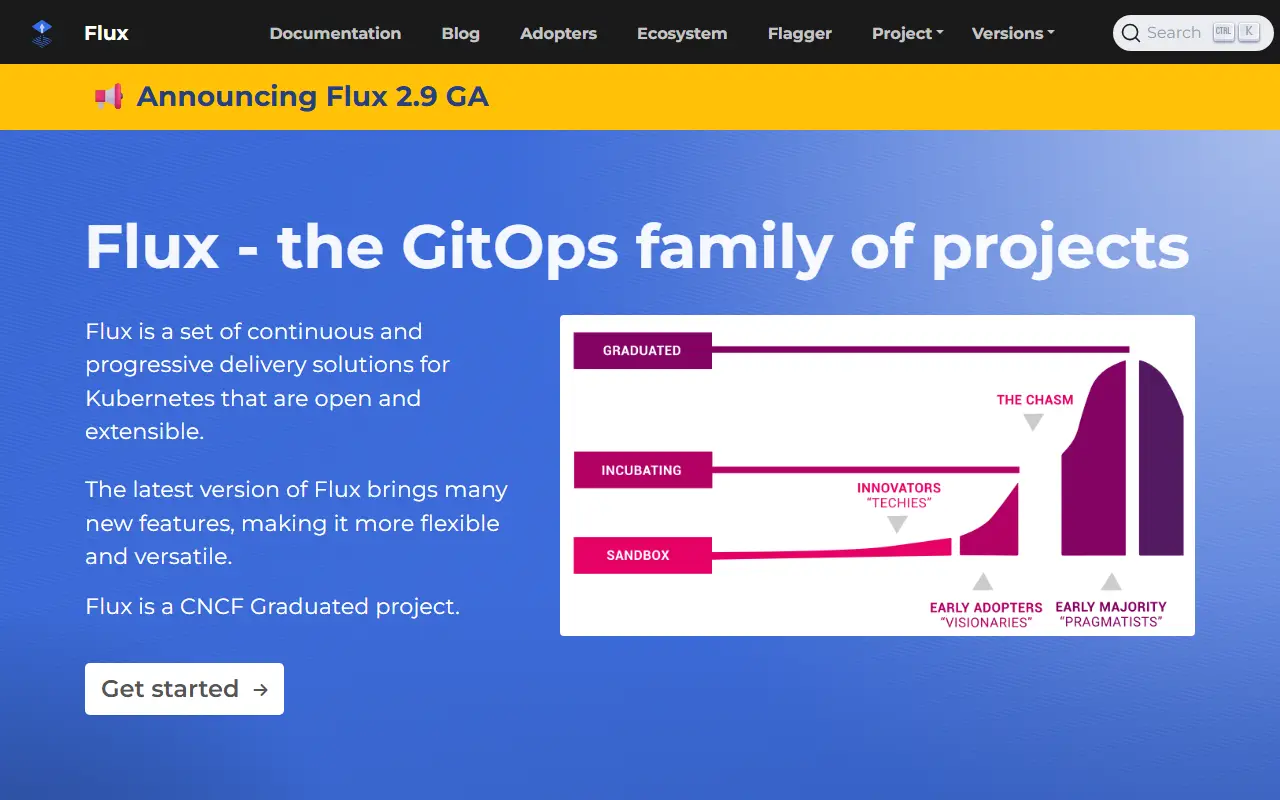
fluxcd.ioFlux homepage screenshot

Flux version 2 is a continuous delivery tool for Kubernetes. It keeps clusters in sync with sources of configuration, such as Git repositories and OCI artifacts, and automates updates to that configuration when new code is ready to deploy.

Flux v2 is built on Kubernetes' API extension system and the GitOps Toolkit, which bundles composable APIs with specialized controllers. Source controllers handle resources such as GitRepository, OCIRepository, HelmRepository, HelmChart and Bucket, and a Kustomize controller applies the configuration. It supports multi-tenancy, syncing multiple Git repositories, managing Helm releases, automating image updates back to Git and handling secrets with SOPS. It also integrates with Prometheus.

Flux is written in Go, licensed under Apache-2.0 and is a graduated project of the Cloud Native Computing Foundation. The documentation includes a bootstrap guide for installing it on a cluster and deploying a sample app in a GitOps manner, and teams can extend it with the toolkit to build their own delivery systems.

Key features

  • GitOps sync from Git and OCI sources
  • Helm release management
  • Automated image updates written back to Git
  • Multi-tenancy support
  • Secrets management with SOPS
  • Prometheus integration

Pricing: Free and open source under the Apache-2.0 licence.

Read more about FluxWebsite GitHub

GoCD

GoCD is a continuous delivery server that models build, test and release pipelines, sponsored by Thoughtworks and written mainly in Java and TypeScript.

GitHub stars
7.4k
Last commit
today
Latest release
26.1.0
Licence
Apache-2.0
Self-hosted
Yes
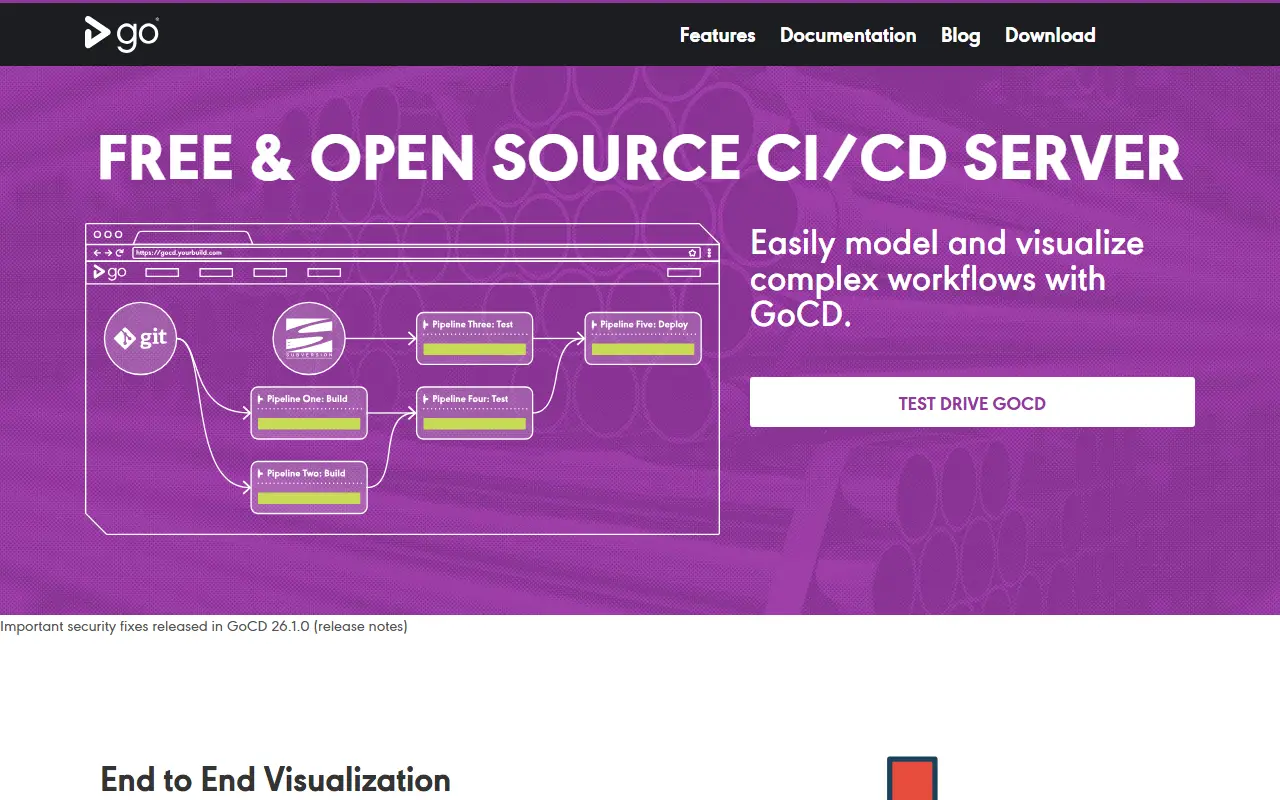
gocd.orgGoCD homepage screenshot

GoCD is a continuous delivery server that helps automate and streamline the build, test and release cycle so that software can be delivered continuously with fewer worries. The repository is the project's main code base, and the project is sponsored by Thoughtworks.

Newcomers can use the Test Drive GoCD page to build a first pipeline while learning the key concepts, download releases from the website and read the documentation for detailed help. It is predominantly a Java and TypeScript project that uses the Spring Framework, SparkJava and MithrilJS, is built with Gradle and Webpack and runs inside Eclipse Jetty, with a few older parts rendered server-side in JRuby on Rails. GoCD itself is built with GoCD.

The security policy explains how issues are reported, and contributing guides cover the development environment. GoCD is licensed under Apache-2.0 and is hosted by you. It suits teams that model deployment pipelines with explicit stages and dependencies across several services.

Key features

  • Pipelines for build, test and release
  • Test drive guide for first pipelines
  • Continuous delivery server
  • Java and TypeScript code base
  • Security policy and responsible disclosure
  • Built and released using GoCD itself

Pricing: Free and open source under the Apache-2.0 licence.

Read more about GoCDWebsite GitHub

AWS CodeDeploy alternatives: questions

What is the best open-source alternative to AWS CodeDeploy?
Ansible is the top-ranked open-source alternative to AWS CodeDeploy on Enlisted: An agentless IT automation platform for configuration management, application deployment, cloud provisioning and network automation over SSH. Other strong options are Harness, Argo CD, Kamal and Komodo.
Are these AWS CodeDeploy alternatives free?
All 8 are open source, so the code is free to use under its licence, and all of them can be self-hosted on your own server or computer.
How is this list of AWS CodeDeploy alternatives ranked?
By a score built from GitHub stars, star growth over the last 30 days and how recently the code changed. 8 of these projects shipped code in the last 30 days. Data is refreshed daily, and nobody can pay to move up.

People also look for alternatives to…

View all