
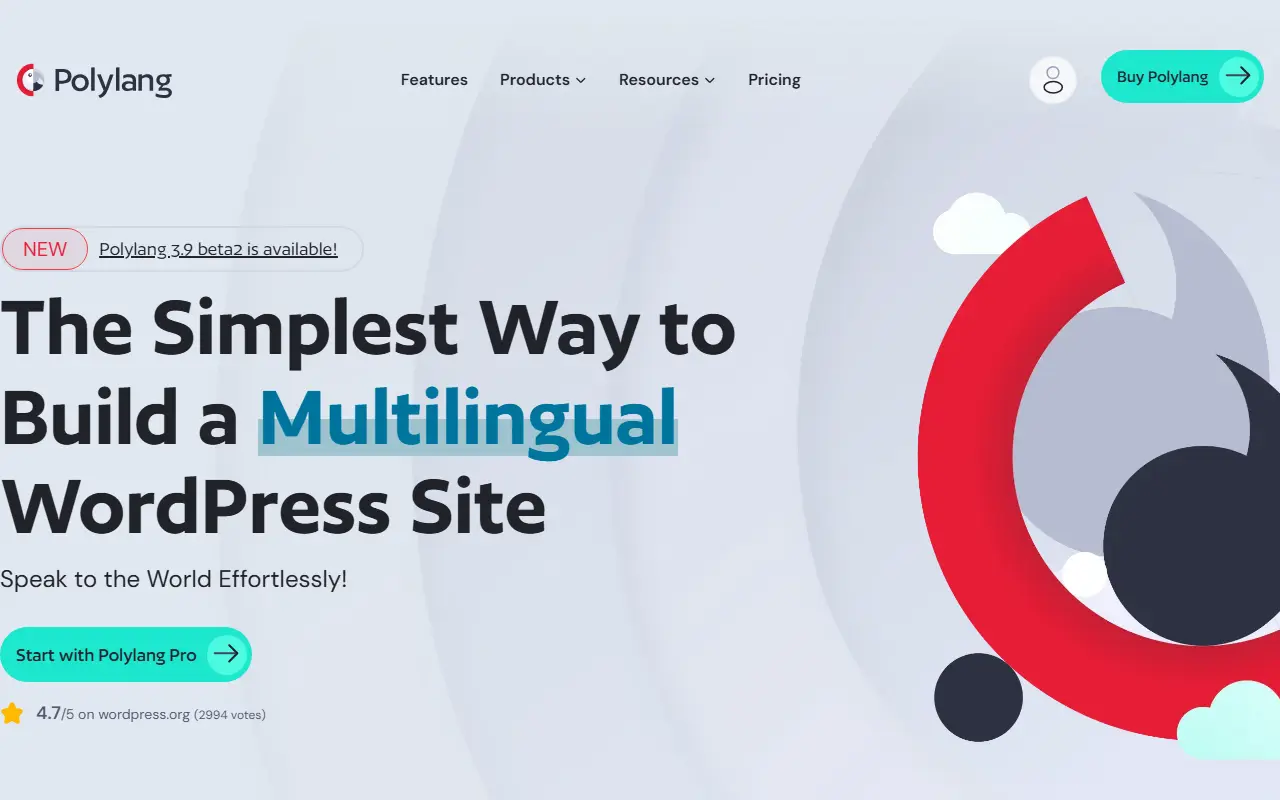
About Polylang
Polylang is a WordPress plugin for building multilingual sites. It lets site owners translate content including posts, pages and media files, categories and tags, custom post types, widgets, navigation menus, products and URLs, using manual or machine translation.
Setup follows an installation wizard where you add languages and a language switcher, and translation takes place inside the WordPress admin with an interface designed to follow WordPress conventions. Polylang for WooCommerce translates products, pages, categories, emails, tags and attributes in the WooCommerce interface and keeps stock and prices synchronized across translations. The vendor stresses performance, saying it adds no extra database tables or shortcodes.
The product line includes Polylang Pro, Polylang for WooCommerce and a Business Pack, sold with a pricing page. It runs on your own WordPress site rather than as a hosted service, and the vendor also publishes support pages, a list of integrations and a blog.
Key features
- Translation of posts, pages and media
- Manual and machine translation
- Setup wizard and language switcher
- WooCommerce product translation add-on
- Stock and price sync across translations
- No extra database tables
Good fit for
- →Small business sites needing a simple language switcher
- →WooCommerce shops selling internationally
- Tags
- wordpress
- multilingual
- translation-plugin
- woocommerce
- localization
- cms
- plugin
Polylang: questions and answers
- What is Polylang used for?
- Polylang is a multilingual plugin for WordPress, with a free core, paid add-ons and support for translating posts, pages, menus and WooCommerce products. It is a good fit for small business sites needing a simple language switcher and WooCommerce shops selling internationally.
- Is Polylang free?
- Yes. Polylang has a free plan, and paid plans start at €99 per year.
- Is Polylang open source?
- No. Polylang is proprietary (closed-source) software. In the Localization category, open-source options include Intlayer, LibreTranslate and Weblate.
- Can I self-host Polylang?
- Yes. Although Polylang is closed source, it can be self-hosted on your own servers.
- What are some alternatives to Polylang?
- Polylang competes with WPML, TranslatePress and Weglot.
Open-source alternatives to Polylang
See all
Intlayer
Localization
Per-component Internationalisation solution for JS application. Type-Safe. Translate with
Apache-2.0vs Locize★ 844
LibreTranslate
Localization
Free and Open Source Machine Translation API. Self-hosted, offline capable and easy to set
AGPL-3.0vs Google Translate★ 17k
Weblate
Localization
Web based localization tool with tight version control integration.
GPL-3.0vs Crowdin★ 6.1k
Lingo.dev
Localization
Open-source localization engineering tools. Connects to Lingo.dev localization engineering
Apache-2.0vs Lokalise★ 5.4k
Tolgee
Localization
Developer & translator friendly web-based localization platform
OSSvs Crowdin★ 4.1k
Pontoon
Localization
Mozilla's Localization Platform
BSD-3-Clausevs Transifex★ 1.7k
SaaS alternatives to Polylang
See all
WPML
Localization
WordPress plugin for building multilingual sites
SaaS
TranslatePress
Localization
WordPress translation plugin with a visual front-end editor
SaaS
Weglot
Localization
Website translation plugin that serves multilingual versions of a site
SaaS
GTranslate
Localization
Website translation widget and plugin for WordPress and other CMSs
SaaS
ConveyThis
Localization
Website translation plugin with machine translation and manual editing
SaaS
Langify
Localization
Shopify app for translating online stores
SaaS