7,363 open-source and SaaS tools, with GitHub stats refreshed every day.

6 alternatives ranked by real activity

Open-source Pexip alternatives

A curated, ranked list of the 6 best open-source alternatives to Pexip.

The best open-source alternative to Pexip is Jitsi Meet. If that doesn't suit you, other good options are BigBlueButton, La Suite Meet, OpenVidu and Galène.

Pexip alternatives are mainly video conferencing tools. 6 of them shipped code in the last 30 days, 6 can be self-hosted, and 5 use a permissive licence.

Last updated October 2, 2026 · ranked by GitHub stars, growth and recent commits

Jitsi Meet

An open-source video conferencing platform that runs in the browser and mobile apps, usable as a standalone service or embedded in your own web application.

GitHub stars
30k
Last commit
yesterday
Latest release
stable/jitsi-meet_11248
Licence
Apache-2.0
Self-hosted
Yes
Hosted version
Available
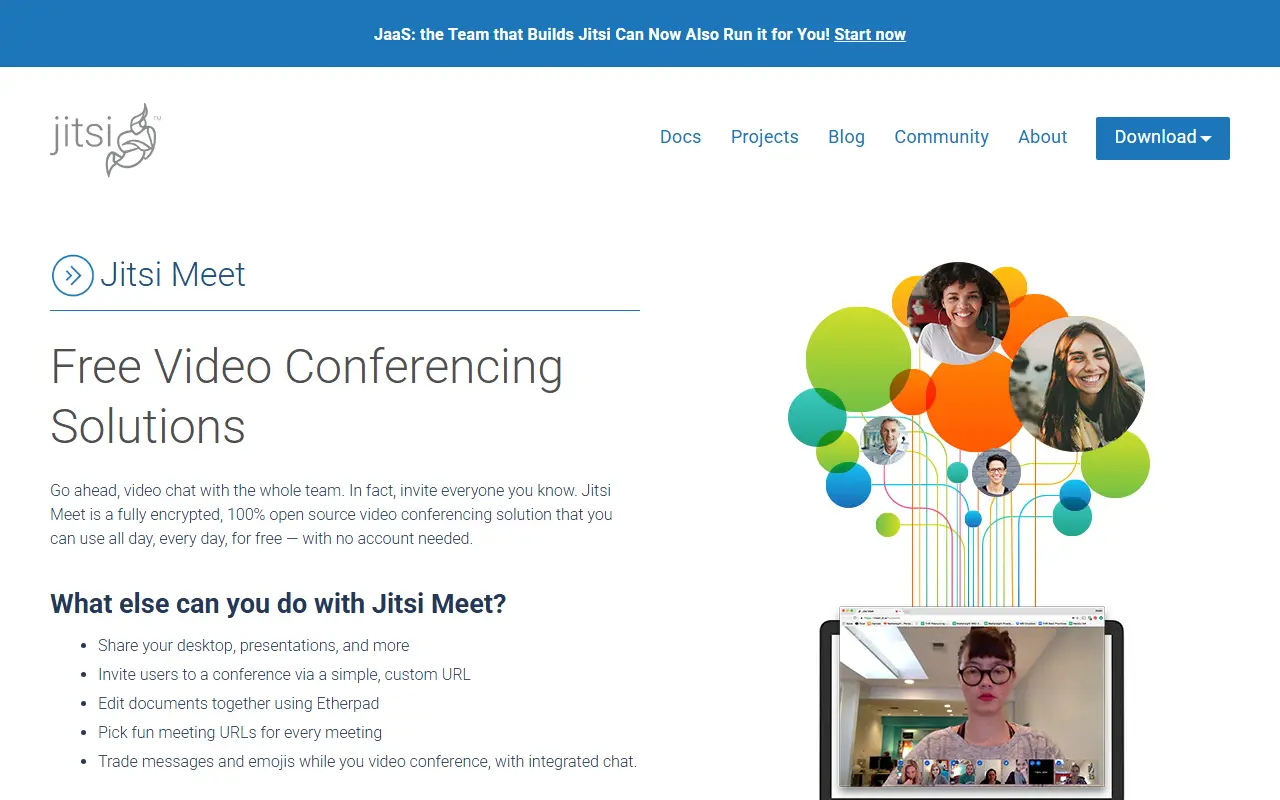
jitsi.orgJitsi Meet homepage screenshot

Jitsi Meet is a collection of open-source projects for hosting video conferences. It works in all current browsers and has Android and iOS apps, and it can be used as a ready-made service or embedded into other web applications through web and native SDKs. It is built on WebRTC with a selective forwarding unit to scale to larger meetings.

Meetings offer HD audio and video, content sharing, raised hands and reactions, chat with private conversations, polls and virtual backgrounds. The hosted service at meet.jit.si is free to use, and the README says you can start a meeting after signing in with an account from a major provider. Mobile users can use the browser or the full-featured apps, which are also available from F-Droid, and open beta programs let early adopters test features.

If you prefer control over your data, Jitsi can be deployed on your own infrastructure, with documentation for running your own instance. Jitsi Meet is Apache-2.0 licensed and written in TypeScript. It suits organizations, schools and communities that want an alternative to proprietary meeting software.

Key features

  • Browser-based meetings with no install
  • Android and iOS apps
  • Screen and content sharing
  • Chat, polls, reactions and raised hands
  • Virtual background support
  • Web and native SDKs for embedding

Pricing: Free and open source under Apache-2.0; the public meet.jit.si service is free to use.

BigBlueButton

An open-source virtual classroom and web conferencing system with real-time audio, video, slides, whiteboard, chat, polling and breakout rooms for online teaching.

GitHub stars
9.2k
Last commit
yesterday
Latest release
v3.0.38
Licence
LGPL-3.0
Self-hosted
Yes
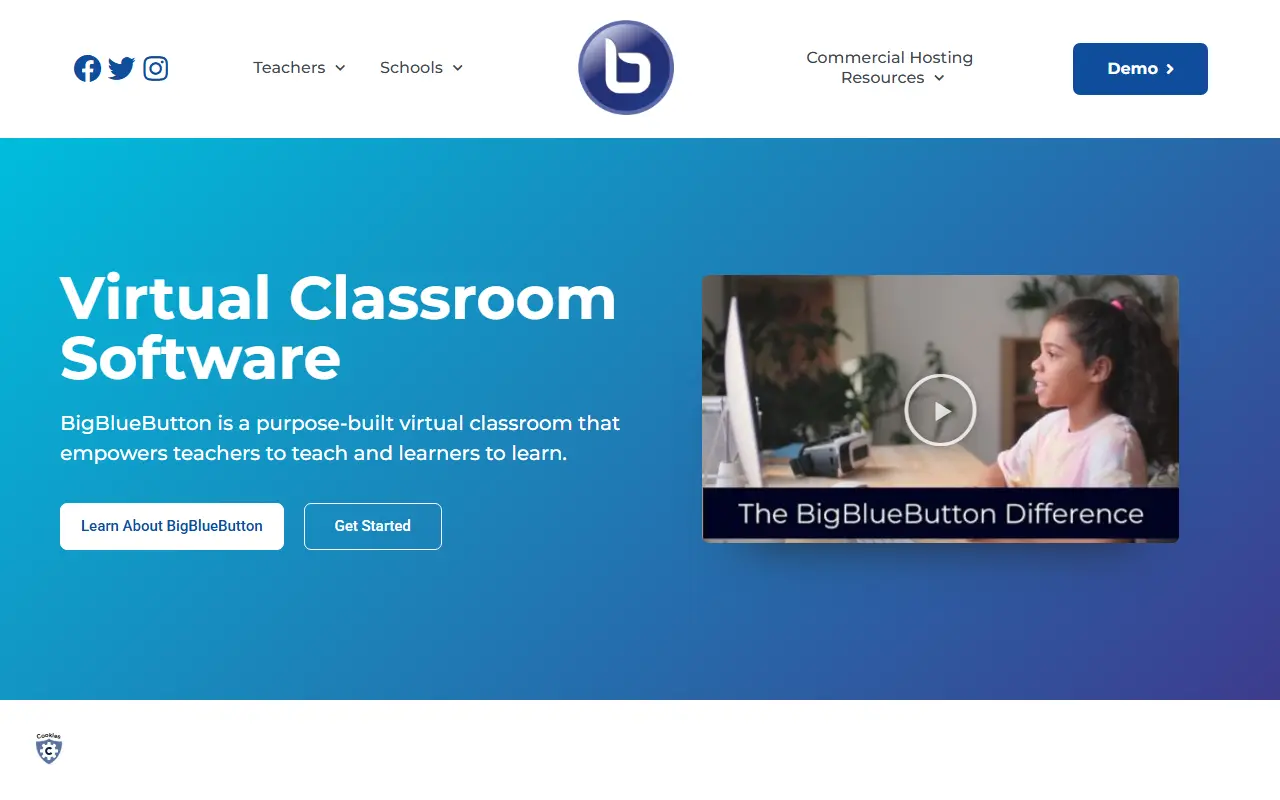
bigbluebutton.orgBigBlueButton homepage screenshot

BigBlueButton is an open-source web conferencing system designed for online learning, intended to help teachers teach and learners learn. Participants can share audio, video, slides (with whiteboard annotations), chat messages and their screen in real time, and can also be used for many other meeting types beyond education.

To keep remote students involved, instructors can use polls, emoji reactions, whiteboards that several people can draw on, shared notes and breakout rooms. During a session it generates analytics shown to moderators on a Learning Analytics Dashboard, and presenters can record sessions for later playback and sharing. The README lists online tutoring, flipped classrooms, group collaboration and online classes as the educational scenarios it was built for. Its topics reference WebRTC.

The current major release is BigBlueButton 3.0, which can be installed on Ubuntu 22.04 with the bbb-install.sh script, and full documentation covers architecture, features, the API and GreenLight, the default front end. The software is licensed under LGPL-3.0, while the name and logo are trademarks of BigBlueButton Inc. It suits schools, universities and training providers that want to host their own conferencing.

Key features

  • Real-time audio, video and screen sharing
  • Slides with whiteboard annotations
  • Polling, emojis and breakout rooms
  • Multi-user whiteboard and shared notes
  • Learning Analytics Dashboard
  • Session recording and playback
  • GreenLight default front end

Pricing: Free and open source under the LGPL-3.0 licence.

La Suite Meet

Open-source video conferencing app from France's La Suite numerique, built with Django and React on LiveKit and runnable entirely on your own infrastructure.

GitHub stars
2.4k
Last commit
yesterday
Latest release
v1.32.1
Licence
MIT
Self-hosted
Yes

La Suite Meet is an open-source video conferencing application built with Django and React and powered by LiveKit. It runs in the browser, so participants join calls without installing anything. The code is released under the MIT license and is fully self-hostable. It comes from the French government's digital suite project, and a public instance runs at visio.numerique.gouv.fr.

Features include stability tuned for large meetings, multiple screen sharing streams, a non-persistent secure chat, meeting recording, transcription and summaries (currently in beta), telephony integration, authentication and access control, and a customizable front end. End-to-end encryption is listed as coming soon. LiveKit contributes speaker detection, simulcast, selective subscription, and SVC codecs.

The project has a Matrix channel where the team answers questions and helps with deployment. It suits public institutions, companies, and communities that want a sovereign, self-hosted alternative to commercial conferencing services and are prepared to operate the media infrastructure.

Key features

  • Browser-based video calls with no installation
  • Support for large meetings
  • Multiple screen sharing streams
  • Meeting recording and beta transcription
  • Non-persistent secure chat
  • Authentication and access controls
  • Customizable front end

Pricing: Free and open source under the MIT license.

OpenVidu

Self-hosted real-time video stack built on LiveKit and mediasoup, offering a ready-made conferencing app and SDKs for building custom WebRTC applications.

GitHub stars
2.1k
Last commit
yesterday
Latest release
v3.9.0
Licence
Apache-2.0
Self-hosted
Yes
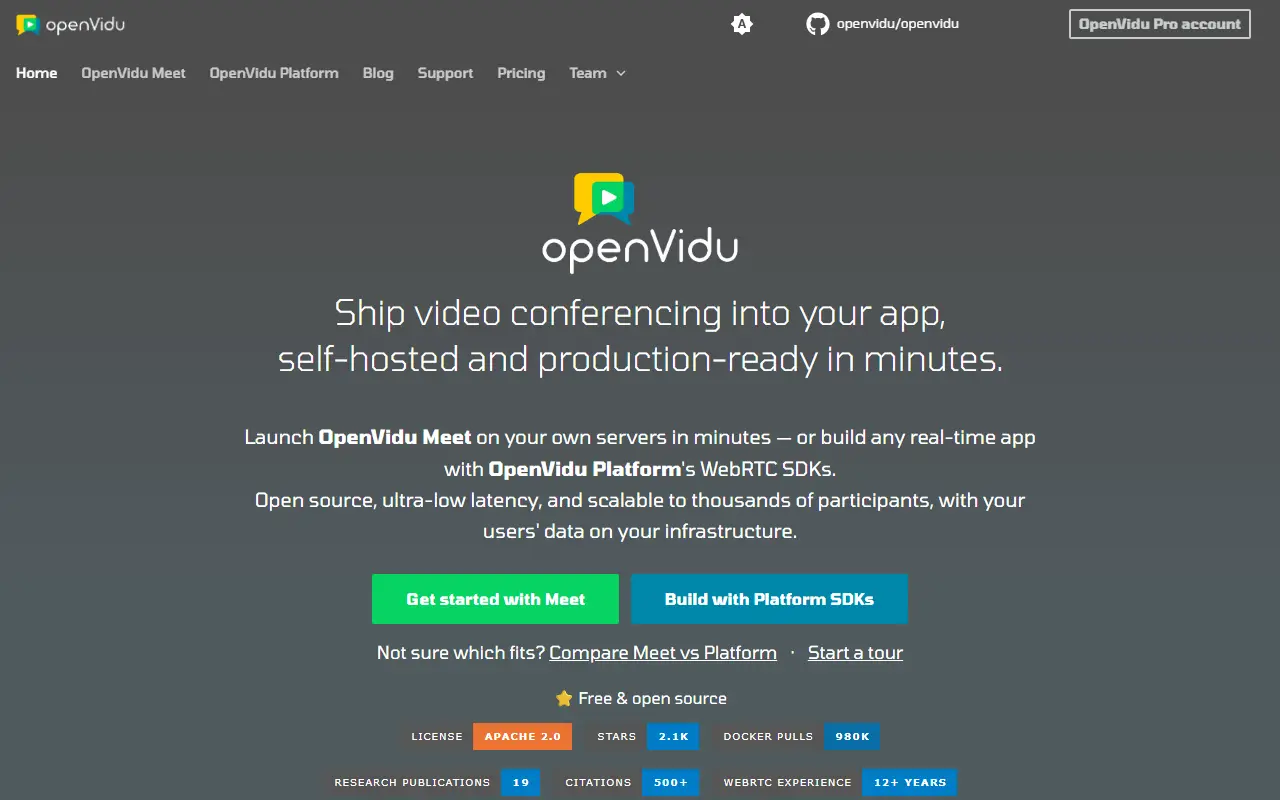
openvidu.ioOpenVidu homepage screenshot

OpenVidu is a self-hosted real-time video and audio stack built on LiveKit and mediasoup by a team with long experience in WebRTC. It ships as two products. OpenVidu Meet is a ready-to-use video conferencing application and an open-source alternative to Zoom, Google Meet, and Jitsi Meet, with rooms, recordings, chat, screen sharing, and moderation. The code is released under the Apache-2.0 license.

OpenVidu Meet can be branded with your own name, logo, and colors, with per-participant feature choices, and embedded into your own application through a web component, driven from your backend with a REST API and webhooks. OpenVidu Platform provides programmable client and server SDKs for custom WebRTC apps with low-level media control, and it is API-compatible with LiveKit, so LiveKit SDKs work unchanged.

Both products are self-hosted only, deployable on AWS, GCP, Azure, Oracle, DigitalOcean, or on-premises, with no hosted SaaS tier. OpenVidu PRO is a paid self-hosted edition, and the team offers support and consultancy. Advanced features include recording, RTMP streaming egress, AI agents for transcription and translation, and virtual backgrounds.

Key features

  • Ready-made video conferencing app (OpenVidu Meet)
  • Rooms, recordings, chat, and moderation
  • Embeddable web component and REST API
  • SDKs compatible with LiveKit
  • RTMP egress and AI agent support
  • Branding and per-participant feature control

Pricing: OpenVidu Community is free and open source. Pro is self-hosted and billed per core per minute of cluster running time, with a 15-day free trial.

Galène

Galene is a lightweight videoconferencing server written in Go that is easy to deploy and needs only modest server resources.

GitHub stars
1.4k
Last commit
7 days ago
Licence
MIT
Self-hosted
Yes
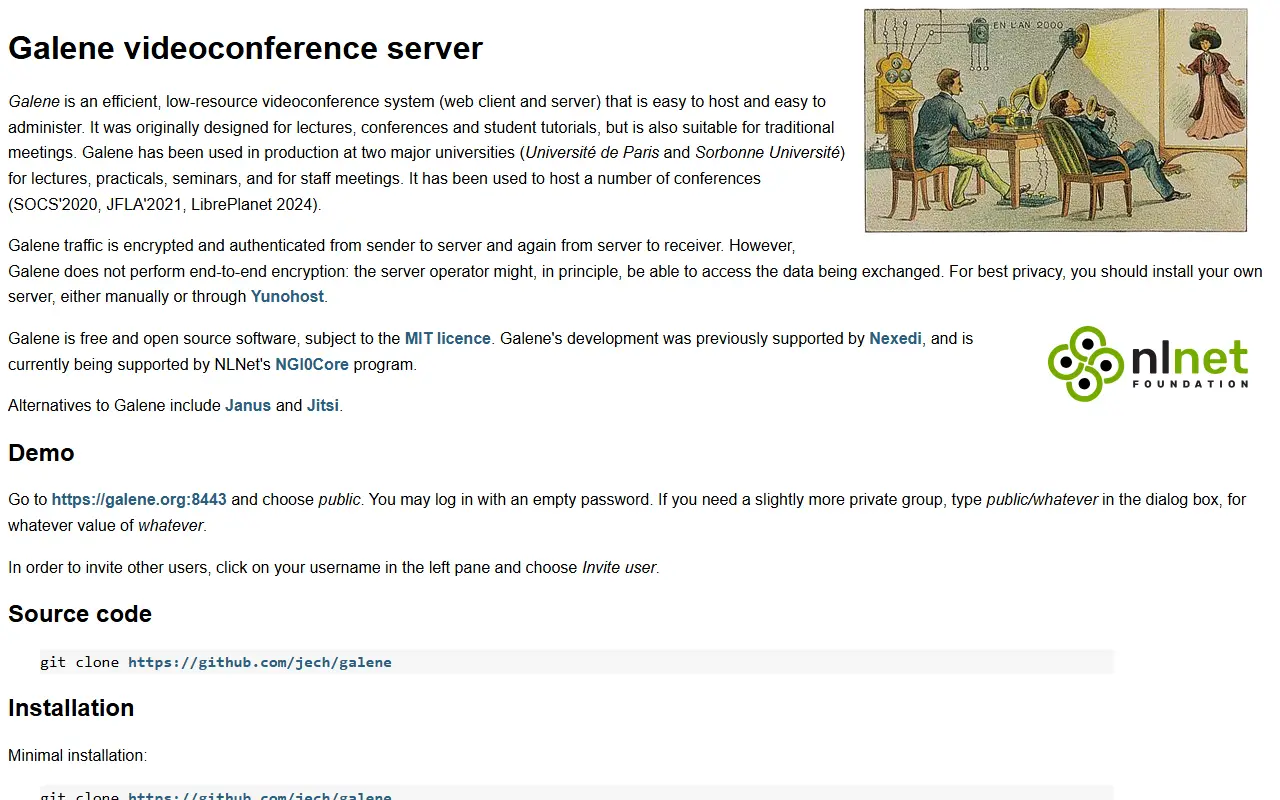
galene.orgGalène homepage screenshot

Galene is a videoconferencing system that aims to be easy to deploy and to run on very moderate server resources. It is a WebRTC-based SFU, meaning the server forwards participants' media streams to each other instead of mixing them, which keeps CPU use low while supporting group calls from a web browser.

Beyond video calls it supports file sharing, as its topics indicate, and ships with documentation covering installation, usage and administration, writing clients, the client protocol and an administrative API. People join through a browser, and the quick start explains how to try it locally with a self-signed certificate. Questions and common issues are answered on the project website.

Galene is written in Go by Juliusz Chroboczek and is licensed under MIT. You run it on your own server, which suits universities, small organizations and groups that want a private conferencing system without a large infrastructure. Discussion and patches go through a mailing list, though pull requests on GitHub are also accepted.

Key features

  • Browser-based group video calls
  • WebRTC selective forwarding unit
  • Low server resource requirements
  • File sharing between participants
  • Administrative API
  • Documentation for custom clients

Pricing: Free and open source under the MIT licence.

plugNmeet

Plug-N-Meet is a self-hosted, LiveKit-based web conferencing system with whiteboard, breakout rooms, SIP dial-in and an AI meeting agent.

GitHub stars
564
Last commit
2 days ago
Latest release
v2.5.1
Licence
MIT
Self-hosted
Yes
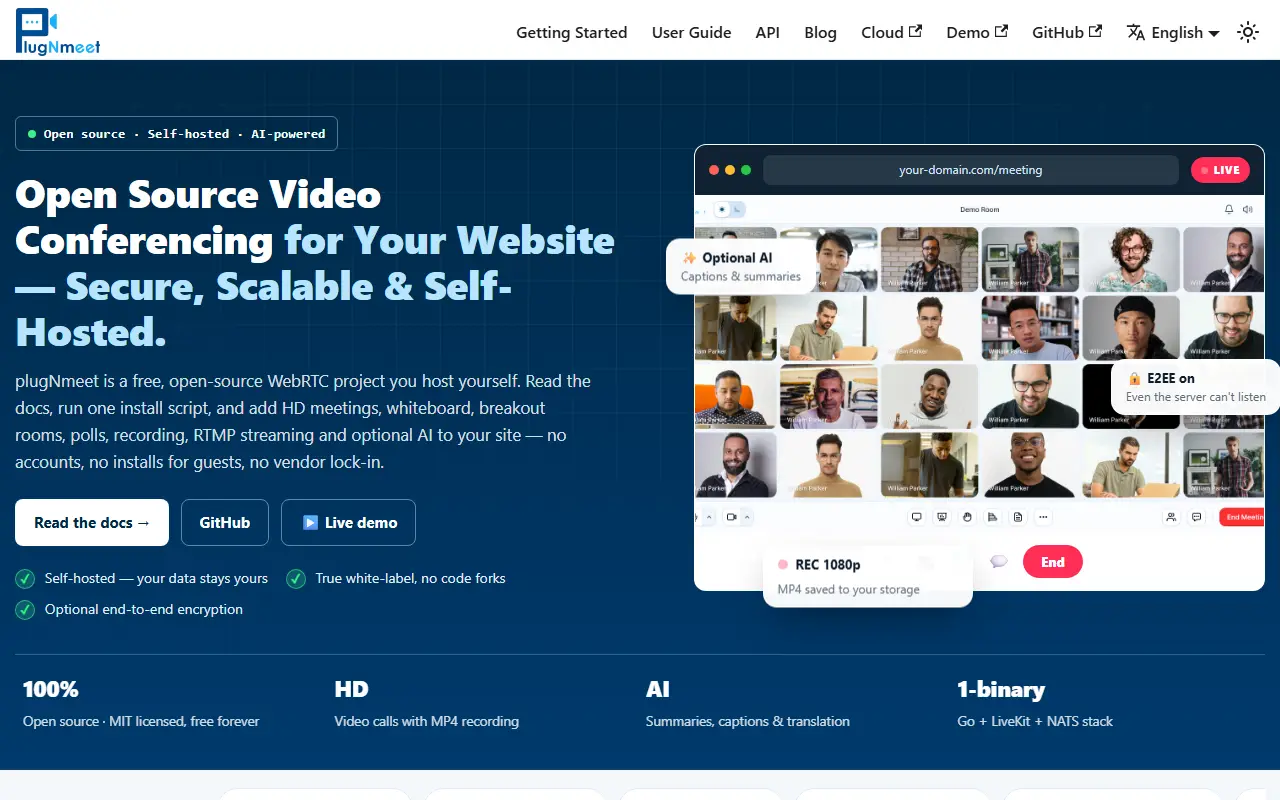
plugnmeet.orgplugNmeet homepage screenshot

Plug-N-Meet is an open-source web conferencing system built on the WebRTC infrastructure of LiveKit, written in Go. It is designed to be scalable and easy to customize so that a self-hosted video conferencing experience can be integrated into any existing website, application or system.

Collaboration tools include HD audio and video, screen sharing, virtual backgrounds, a collaborative whiteboard with office file support for PDF, DOCX and PPTX, a shared notepad, polls and breakout rooms. Adaptive streaming uses simulcast and dynacast with H264, VP8, VP9 and AV1 codecs to keep calls stable on poor networks. WebRTC encryption is on by default, with optional end-to-end encryption for media and data channels, and a SIP gateway lets participants join the audio by phone. An AI agent adds live spoken translation, real-time transcription and automated summaries with action items, available through an Artifacts API.

Integration is done through an API and SDKs, including one for PHP, and webhooks. Plug-N-Meet is licensed under MIT and has a developer community on Discord.

Key features

  • LiveKit-based video conferencing
  • Whiteboard with office file support
  • Breakout rooms and polls
  • Optional end-to-end encryption
  • SIP telephone dial-in
  • AI transcription, translation and summaries

Pricing: Free and open source under the MIT license.

Pexip alternatives: questions

What is the best open-source alternative to Pexip?
Jitsi Meet is the top-ranked open-source alternative to Pexip on Enlisted: An open-source video conferencing platform that runs in the browser and mobile apps, usable as a standalone service or embedded in your own web application. Other strong options are BigBlueButton, La Suite Meet, OpenVidu and Galène.
Are these Pexip alternatives free?
All 6 are open source, so the code is free to use under its licence, and all of them can be self-hosted on your own server or computer. 1 also offers a paid or managed cloud version if you'd rather not host it yourself.
How is this list of Pexip alternatives ranked?
By a score built from GitHub stars, star growth over the last 30 days and how recently the code changed. 6 of these projects shipped code in the last 30 days. Data is refreshed daily, and nobody can pay to move up.

People also look for alternatives to…

View all