4 open-source alternatives ranked by real activity

Open-source Particle alternatives

A curated, ranked list of the 4 best open-source alternatives to Particle.

The best open-source alternative to Particle is EMQX. If that doesn't suit you, other good options are VerneMQ, DGIoT and Kaa.

Commercial alternatives to Particle include Golioth, Blynk, SORACOM and AWS IoT Core. See all 18.

Particle alternatives are mainly team chat tools, but some are also customer support tools and home automation & IoT tools. 2 of them shipped code in the last 30 days, 4 can be self-hosted, and 2 use a permissive licence.

Last updated November 13, 2026 · ranked by GitHub stars, growth and recent commits

EMQX

EMQX is a unified MQTT platform that connects, processes, and streams real-time data from millions of devices to cloud, AI, and analytics systems.

GitHub stars
17k
Last commit
yesterday
Latest release
6.3.3
Self-hosted
Yes
Hosted version
Available
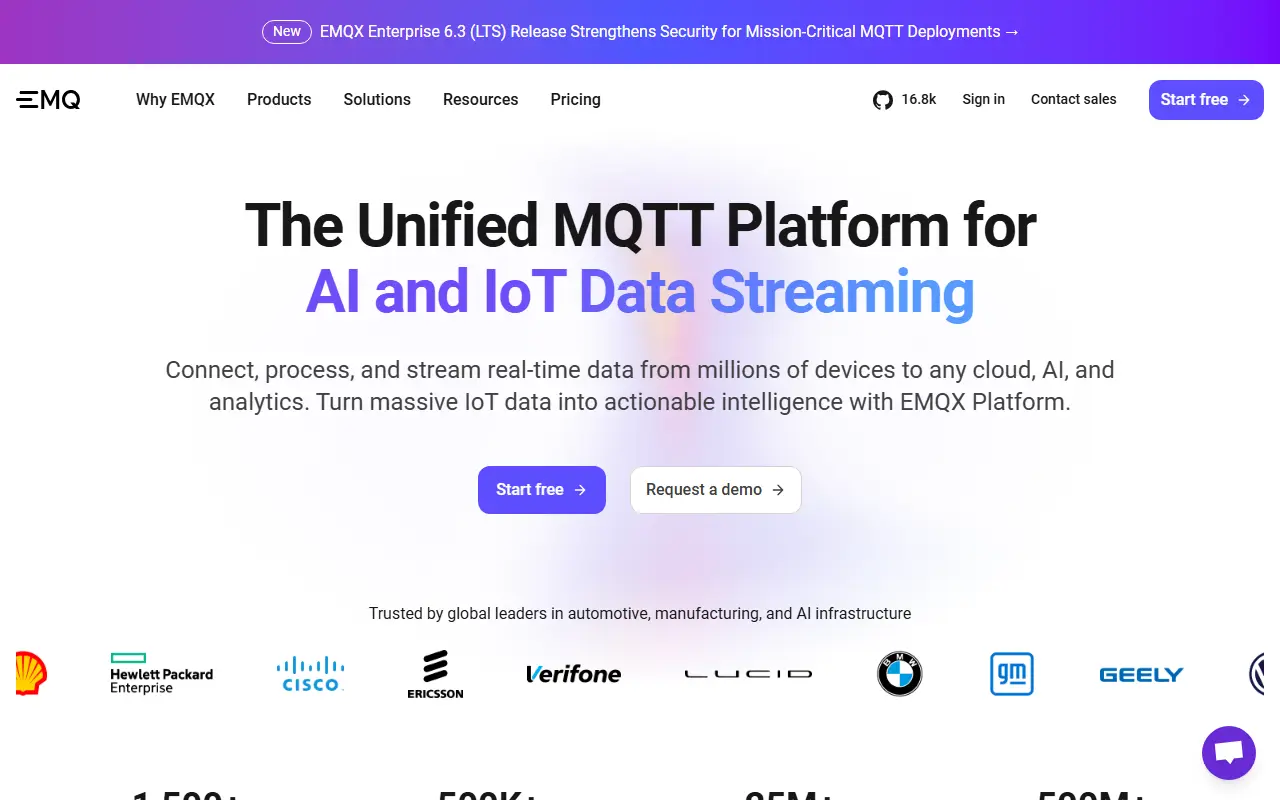
emqx.comEMQX homepage screenshot

EMQX is a unified MQTT platform designed for connecting, processing, and streaming real-time data from millions of devices to cloud, AI, and analytics systems. It combines an MQTT broker, SQL-based rules engine, and data integration into one platform, enabling users to turn IoT data into actionable intelligence. The platform is trusted by global leaders in automotive, manufacturing, and AI infrastructure.

Key features

  • Scales to 100M+ devices and millions of messages per second with sub-ms latency within a single cluster
  • Combines MQTT broker, SQL-based rules engine, and data integration into one platform
  • Empowers AI agents with real-time access to physical devices using built-in MCP support
  • Offers a portfolio including EMQX Cloud (fully managed), EMQX Enterprise (self-managed), EMQX Edge (lightweight edge), and EMQX Neuron
Read more about EMQXWebsiteGitHub#1 Particle alternative

VerneMQ

VerneMQ is a distributed MQTT broker written in Erlang, implementing MQTT 3.1, 3.1.1 and 5.0 under the Apache 2 licence.

GitHub stars
3.7k
Last commit
2 days ago
Latest release
2.2.1
Licence
Apache-2.0
Self-hosted
Yes
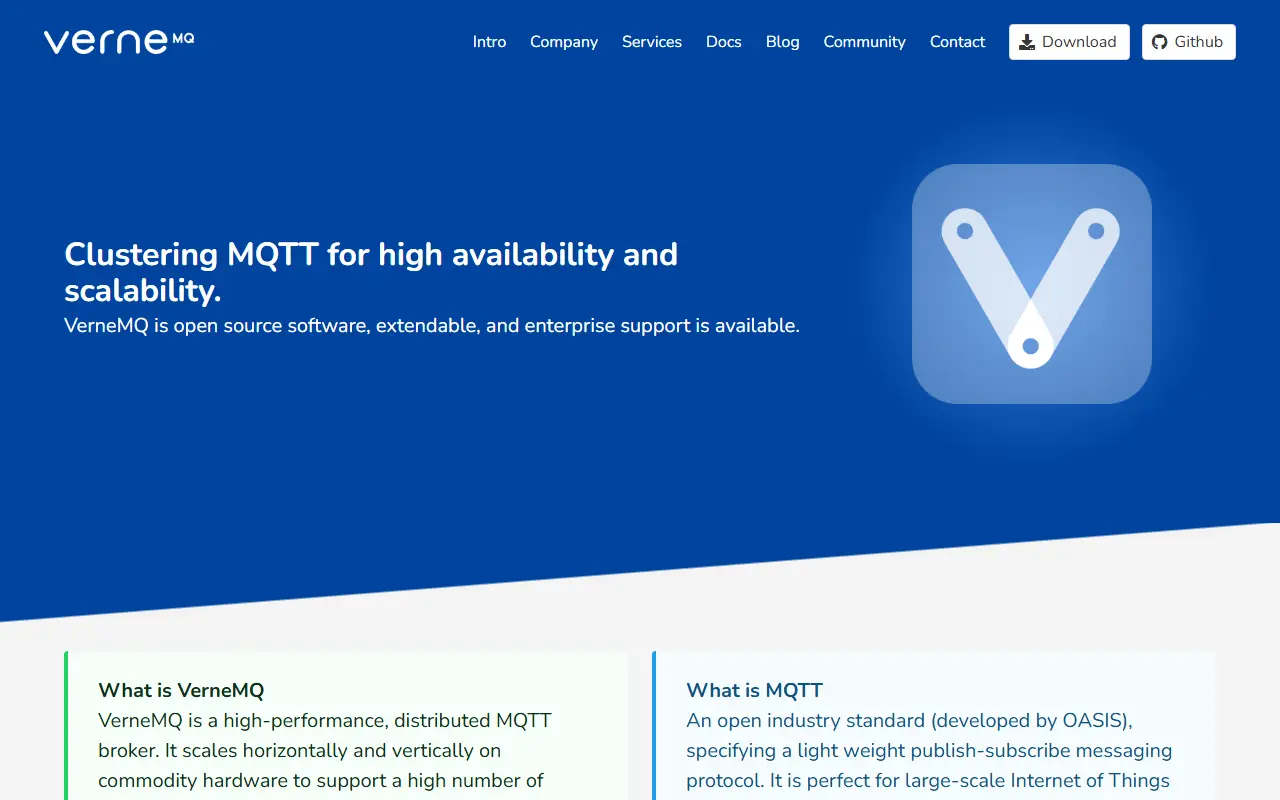
vernemq.comVerneMQ homepage screenshot

VerneMQ is a distributed MQTT message broker developed in Erlang and licensed under Apache 2. The README says it scales horizontally and vertically on commodity hardware to handle many concurrent publishers and consumers while keeping latency low and tolerating faults, and positions it as a message hub for IoT platforms and smart products. It implements the MQTT 3.1, 3.1.1 and 5.0 specifications.

The feature list covers QoS 0, 1 and 2, authentication and authorization, bridges, a $SYS tree, TLS, WebSockets, clustering and logging to console, files or syslog. It adds shared subscriptions, session balancing, load regulation and shedding, offline message storage on LevelDB, and auth and integration with MongoDB, Redis, MySQL, PostgreSQL and CockroachDB. HTTP webhooks, an administration HTTP API, real-time session tracing, multitenancy and a cluster status page are also named.

Building from source needs Erlang/OTP 27-29, libsnappy-dev and a C compiler for Eleveldb; make rel builds it and bin/vernemq start runs it, with a status page on port 8888. Binary packages and Docker images exist, and commercial support, including custom releases, is offered. The repository topics mention industrial IoT and manufacturing.

Key features

  • Implements MQTT 3.1, 3.1.1 and 5.0
  • Clustering for horizontal and vertical scaling
  • Shared subscriptions, session balancing and load shedding
  • Auth and integration with common databases
  • Offline message storage using LevelDB
  • Admin HTTP API and live session tracing
  • MQTT 5.0 enhanced authentication and topic aliases

DGIoT

DGIoT is an open-source industrial IoT platform written in Erlang that connects devices over Modbus, OPC UA and MQTT with digital twin and rules features.

GitHub stars
4.9k
Last commit
1 mo ago
Latest release
v4.9.3
Licence
Apache-2.0
Self-hosted
Yes
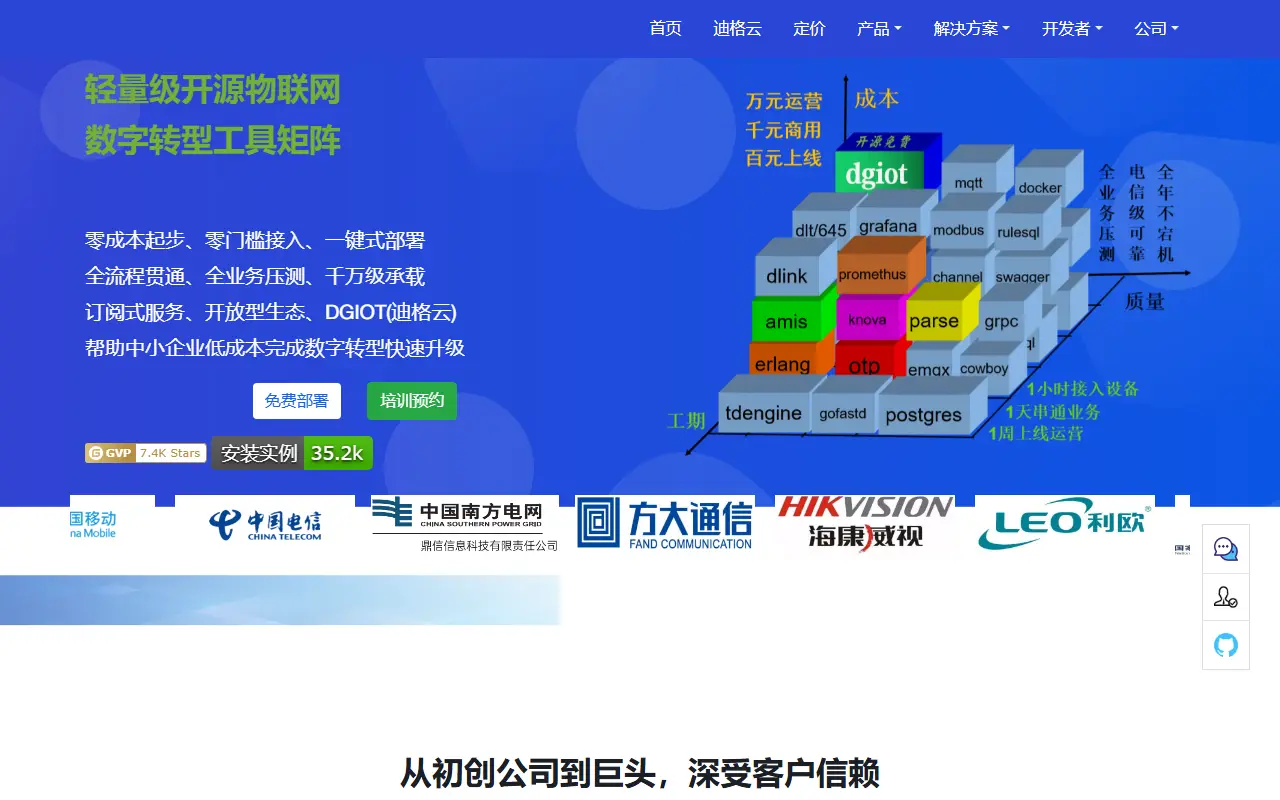
dgiotcloud.cnDGIoT homepage screenshot

DGIoT is an open-source industrial Internet of Things platform. It collects data from machines and sensors using industrial protocols such as Modbus, OPC UA and MQTT, with the project advertising support for more than 300 protocols, and it is aimed at factories, energy sites and system integrators building monitoring and control applications.

The README describes an aggregation engine built on Erlang/OTP in which every device gets its own process acting as a shadow, with an ontology layer that covers data, logic and action, and security with roles and access control. It stores time series data in TDengine, and topics reference digital twins, edge computing, SCADA and low-code configuration. Documentation includes architecture diagrams, storage design and station simulation.

DGIoT is licensed under Apache-2.0 and is deployed on your own servers, with a vendor website in Chinese. It suits industrial IoT teams who want an open platform for device connectivity, rules and visualization.

Key features

  • Industrial protocol support including Modbus and OPC UA
  • MQTT device connectivity
  • Per-device shadow processes
  • Ontology-based data and logic layers
  • Role-based access control
  • Time series storage with TDengine

Pricing: Free and open source under the Apache-2.0 license.

Read more about DGIoTWebsiteGitHub#3 Particle alternative

Kaa

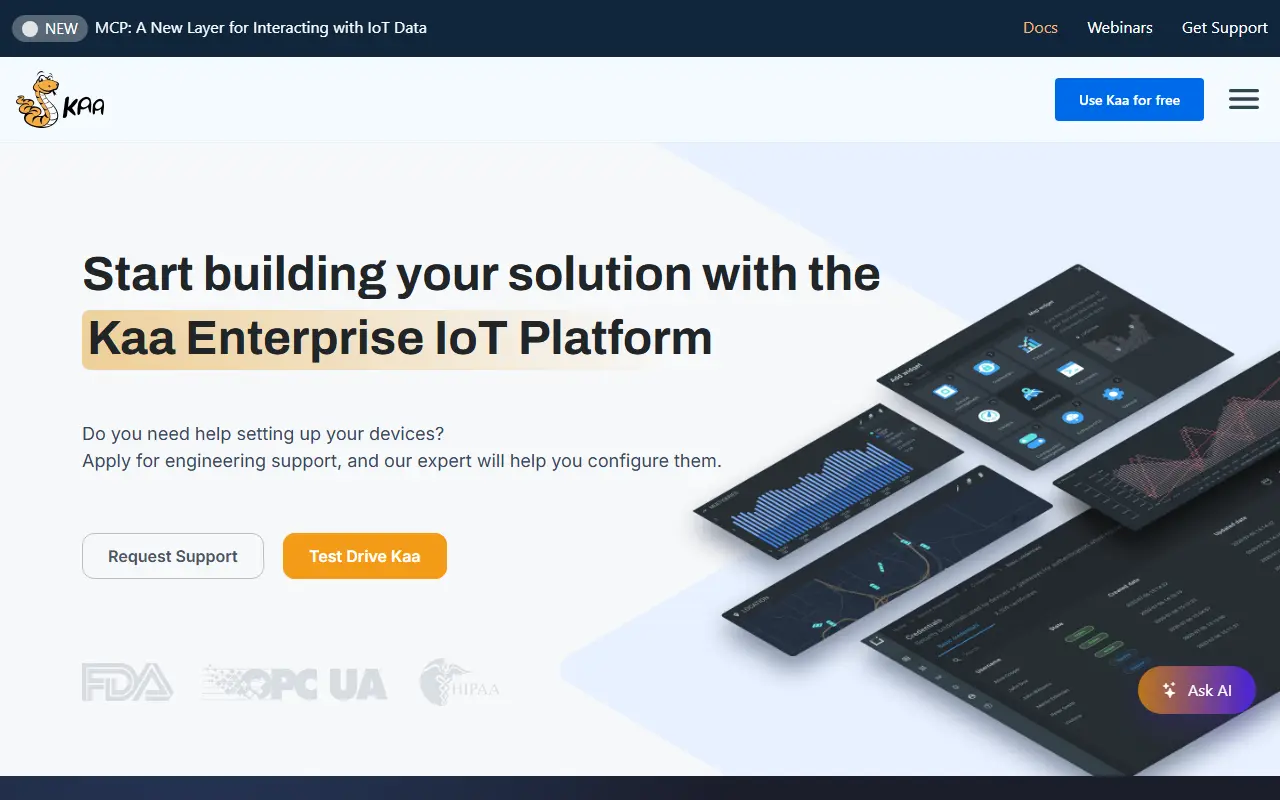
Kaa is an enterprise IoT platform from KaaIoT, offered as a subscription cloud, a KaaIoT-hosted private instance or a self-hosted install.

GitHub stars
1.4k
Last commit
2 yr ago
Self-hosted
Yes
Hosted version
Available
kaaiot.comKaa homepage screenshot

Kaa is an IoT platform sold by KaaIoT for building connected-device solutions. The product range on the vendor site includes the Kaa IoT Platform, Kaa Cloud, Kaa Next IoT Cloud, an IoT gateway, identity management, Node-RED hosting and a set of ready-made IoT dashboards for energy, farming, metering and fleet use.

It can be used in several ways. Kaa Cloud is described as a ready-to-go platform service, a private Kaa instance can be hosted by KaaIoT, and a self-hosted option allows unlimited Kaa instances hosted anywhere. Subscription pricing is based on the number of actively connected devices.

Beyond the core platform, the vendor lists a Universal Energy Controller edge gateway for Modbus-based inverters and a cloud backend aimed at connected medical device software. The Kaa Next cloud adds identity management, AI integration and reporting, with some features still in beta.

Key features

  • Edge gateway for vendor-neutral energy monitoring
  • Works with any Modbus-based inverter
  • Next cloud adds identity management, AI integration and reporting
  • Validatable backend for medical device software
  • Ready-made dashboards for IoT projects
  • Node-RED hosting on a small cloud server

Pricing: Kaa Cloud 100 is $ 99 / month for up to 100 devices, Kaa Cloud 250 is $ 175 / month for up to 250 devices and Kaa Cloud 500 is $ 325 / month for up to 500 devices. Node-RED Cloud (2 CPU, 2 GB RAM, 40Gb disk space) is $ 15 / month.

Read more about KaaWebsiteGitHub#4 Particle alternative

Commercial Particle alternatives

Hosted, closed-source products that compete with Particle. Showing 12 of 18.

See every Particle alternative on its tool page

Particle alternatives: questions

What is the best open-source alternative to Particle?
EMQX is the top-ranked open-source alternative to Particle on Enlisted: EMQX is a unified MQTT platform that connects, processes, and streams real-time data from millions of devices to cloud, AI, and analytics systems. Other strong options are VerneMQ, DGIoT and Kaa.
What are the best commercial alternatives to Particle?
Golioth, Blynk, SORACOM, AWS IoT Core and Azure IoT Hub are among the hosted, closed-source alternatives to Particle listed on Enlisted, which lists 18 in total. Compare their pricing and features on each tool page.
Are these Particle alternatives free?
All 4 are open source, so the code is free to use under its licence, and all of them can be self-hosted on your own server or computer. 2 also offer a paid or managed cloud version if you'd rather not host it yourself.
How is this list of Particle alternatives ranked?
By a score built from GitHub stars, star growth over the last 30 days and how recently the code changed. 2 of these projects shipped code in the last 30 days. Data is refreshed daily, and nobody can pay to move up.

People also look for alternatives to…

View all