7 open-source alternatives ranked by real activity

Open-source Oracle MySQL HeatWave alternatives

A curated, ranked list of the 7 best open-source alternatives to Oracle MySQL HeatWave.

The best open-source alternative to Oracle MySQL HeatWave is ClickHouse. If that doesn't suit you, other good options are TiDB, MariaDB, Vitess and MySQL.

Commercial alternatives to Oracle MySQL HeatWave include Amazon Aurora, DigitalOcean Managed Databases, Aiven and Amazon RDS. See all 15.

Oracle MySQL HeatWave alternatives are mainly databases, but some are also database tools. 7 of them shipped code in the last 30 days, 7 can be self-hosted, and 4 use a permissive licence.

Last updated November 13, 2026 · ranked by GitHub stars, growth and recent commits

ClickHouse

An open-source column-oriented database management system built for real-time analytical reports, available to self-host or as the managed ClickHouse Cloud service.

GitHub stars
51k
Last commit
today
Latest release
v26.10.2.103-stable
Licence
Apache-2.0
Self-hosted
Yes
Hosted version
Available
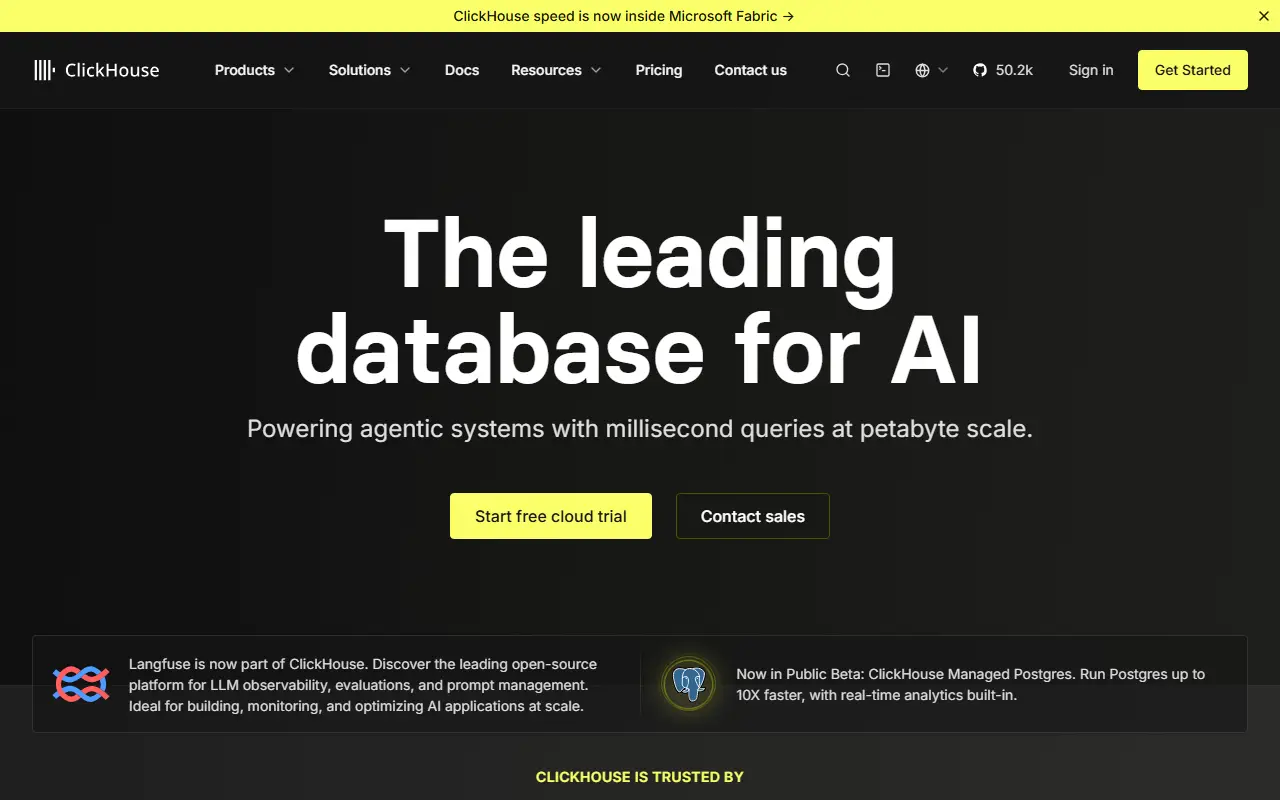
clickhouse.comClickHouse homepage screenshot

ClickHouse is an open-source database management system built to generate analytical reports in real time. Its column-oriented storage makes scans and aggregations over very large tables efficient, which is why it is widely used for event data, logs, metrics and product analytics. It is written in C++ and queried with SQL.

The project's topics describe it as an OLAP, massively parallel and distributed system, and it is used for big data workloads where query latency matters. You can install it on Linux, macOS or FreeBSD, follow a tutorial that sets up a small cluster, or skip installation by trying ClickHouse Cloud, a managed service built by its creators. Releases arrive monthly, with a community call for each one, and there are Slack and Telegram channels for help.

ClickHouse is Apache-2.0 licensed. It is a good fit for analytics engineers and platform teams who need fast aggregations over billions of rows and are comfortable operating a database, or who prefer to hand that operation to the vendor's cloud.

Key features

  • Column-oriented storage for analytics
  • SQL queries over large datasets
  • Distributed, massively parallel processing
  • Real-time analytical reporting
  • Install on Linux, macOS or FreeBSD
  • Managed ClickHouse Cloud option

Pricing: The open-source distribution is free. ClickHouse Cloud is usage-based, with plans from $53 (Basic), $437 (Scale) and $571 (Enterprise) per month and a 30-day trial with $300 in credits.

Read more about ClickHouseWebsiteGitHub#1 Oracle MySQL HeatWave alternative

TiDB

An open-source, MySQL-compatible distributed SQL database with horizontal scaling, ACID transactions, Raft-based high availability and support for analytics and vector search.

GitHub stars
41k
Last commit
today
Latest release
v7.5.8
Licence
Apache-2.0
Self-hosted
Yes
Hosted version
Available
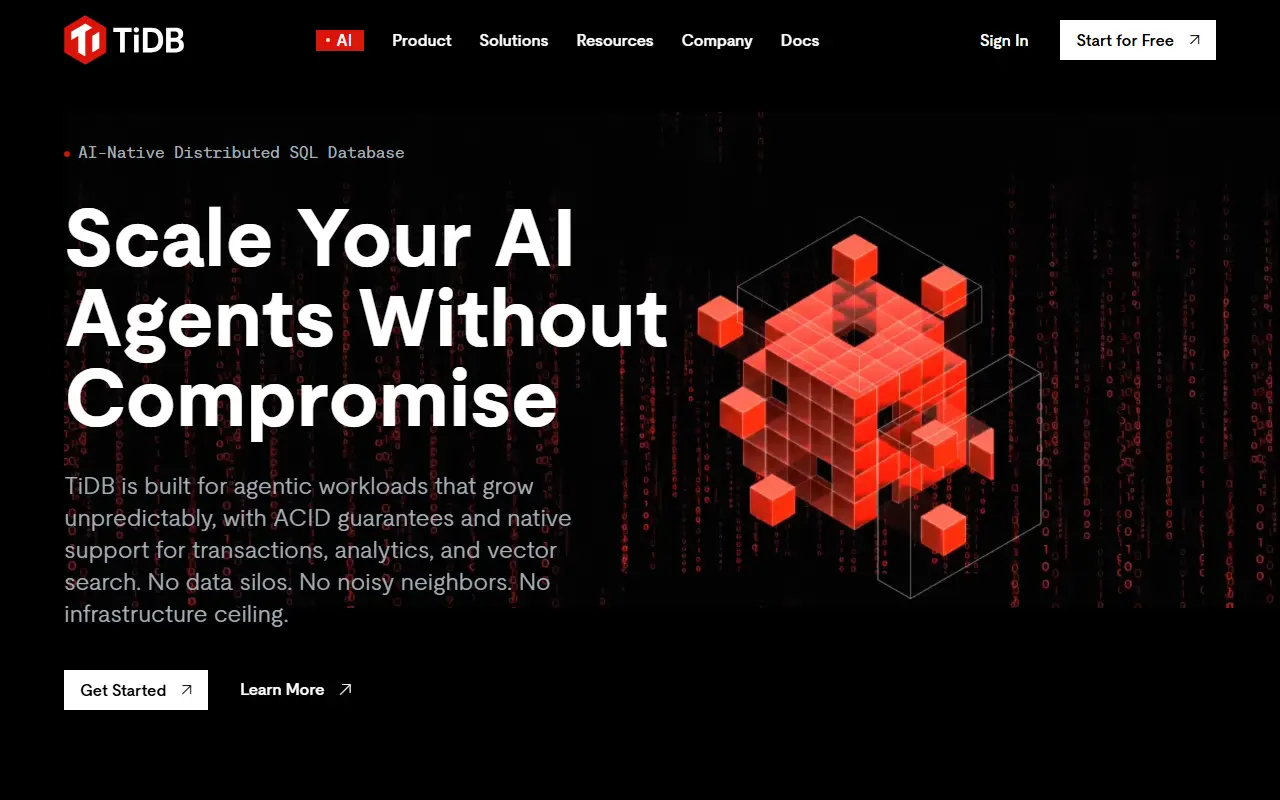
tidb.ioTiDB homepage screenshot

TiDB is a cloud-native, open-source distributed SQL database from PingCAP. The name's Ti stands for titanium, and it is built for high availability, strong consistency and the ability to scale out as data and traffic grow, while staying compatible with MySQL so existing applications and tools can connect with little change.

Distributed transactions use a two-phase commit protocol to keep ACID guarantees even across nodes, through network partitions or node failures. It scales horizontally by adding nodes or vertically by adding resources, without downtime, and its architecture separates compute from storage so each can be adjusted independently. Built-in Raft consensus keeps multiple replicas in sync and handles automated failover. Topics also mention HTAP workloads, analytics and native vector search.

TiDB is written in Go under the Apache-2.0 license. It can be deployed on your own infrastructure or consumed as a managed cloud service, and it suits teams that have outgrown a single MySQL server and want horizontal scale without sharding by hand.

Key features

  • MySQL-compatible distributed SQL
  • Distributed ACID transactions
  • Horizontal and vertical scaling without downtime
  • Separated compute and storage layers
  • Raft-based replication and automated failover
  • Analytics and vector search support

Pricing: TiDB Community is free and Cloud Starter has a monthly free quota. Cloud Premium starts from $1800 per month and Dedicated from $0.22 per hour; Self-Managed is priced on request.

Read more about TiDBWebsiteGitHub#2 Oracle MySQL HeatWave alternative

MariaDB

MariaDB Server is an open-source relational database that began as a fork of MySQL, with vector search, pluggable storage engines and Galera clustering.

GitHub stars
8.6k
Last commit
today
Latest release
mariadb-13.0.2
Licence
GPL-2.0
Self-hosted
Yes
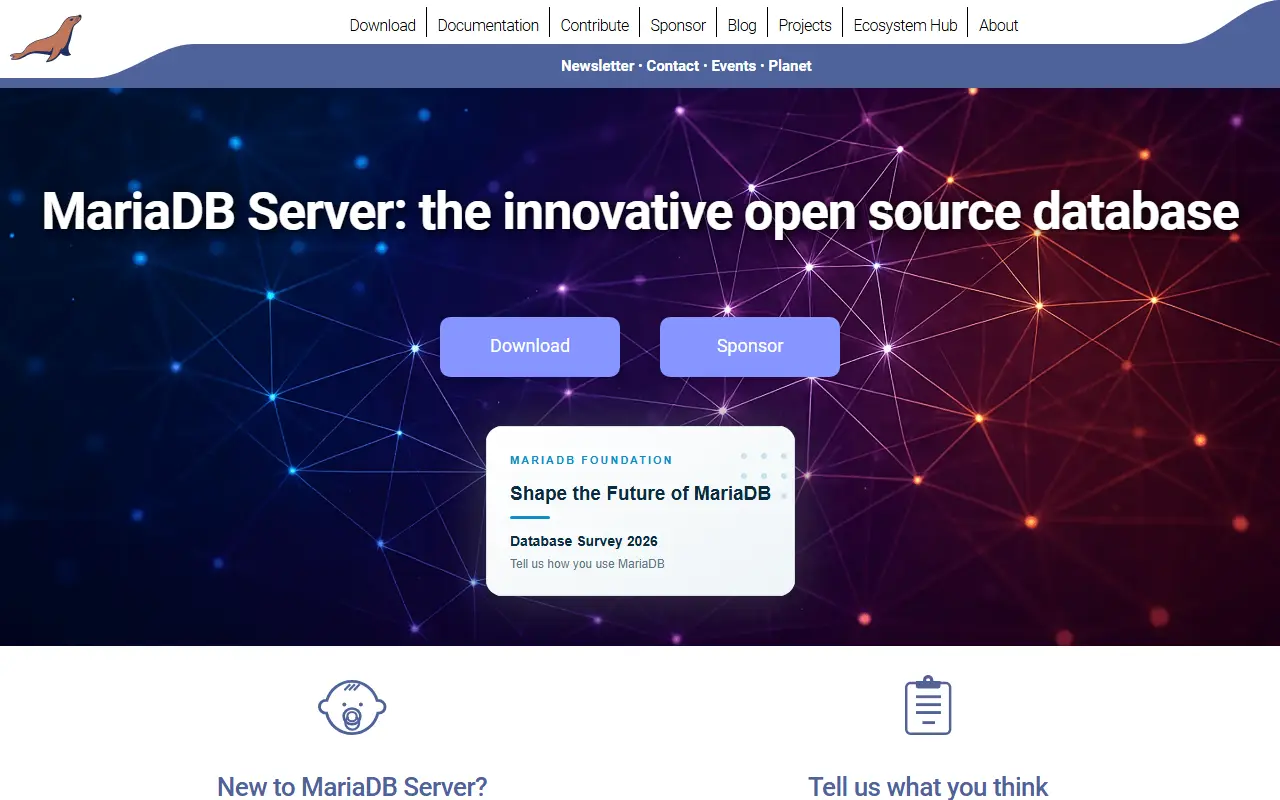
mariadb.orgMariaDB homepage screenshot

MariaDB Server is an open-source relational database built by a global community with the MariaDB Foundation and MariaDB plc. It started out as a MySQL fork driven by the people who created MySQL, keeps a high degree of MySQL compatibility, and is described as a straightforward migration target for existing MySQL deployments.

Since then it has gained its own capabilities. A native VECTOR data type with approximate nearest-neighbour HNSW indexing has been available since version 11.8. Pluggable storage engines include InnoDB, Aria and MyRocks, plus ColumnStore (analytics), Spider (sharding) and S3 (archiving). Replication options include async, semi-sync and parallel modes using global transaction IDs, and Galera provides synchronous multi-primary clustering. On the SQL side it offers common table expressions, window functions, temporal tables with system versioning, sequences and a range of JSON functions.

It also offers an Oracle SQL mode with PL/SQL-style routines, GIS data types and full-text indexing, and security features such as role-based access control, pluggable authentication, data-at-rest encryption and TLS. MariaDB is written in C++ and licensed under GPL-2.0, and you run it on your own servers or in the cloud.

Key features

  • Native vector search with HNSW indexing
  • Pluggable storage engines including InnoDB
  • Galera synchronous multi-primary clustering
  • Temporal tables and window functions
  • MySQL and Oracle compatibility modes
  • Spatial and full-text indexing
  • Role-based access and data-at-rest encryption

Pricing: Free and open source under the GPL-2.0 licence.

Read more about MariaDBWebsiteGitHub#3 Oracle MySQL HeatWave alternative

Vitess

Vitess is a cloud-native database system that adds sharding, connection pooling and schema management on top of MySQL.

GitHub stars
21k
Last commit
yesterday
Latest release
v24.0.5
Licence
Apache-2.0
Self-hosted
Yes
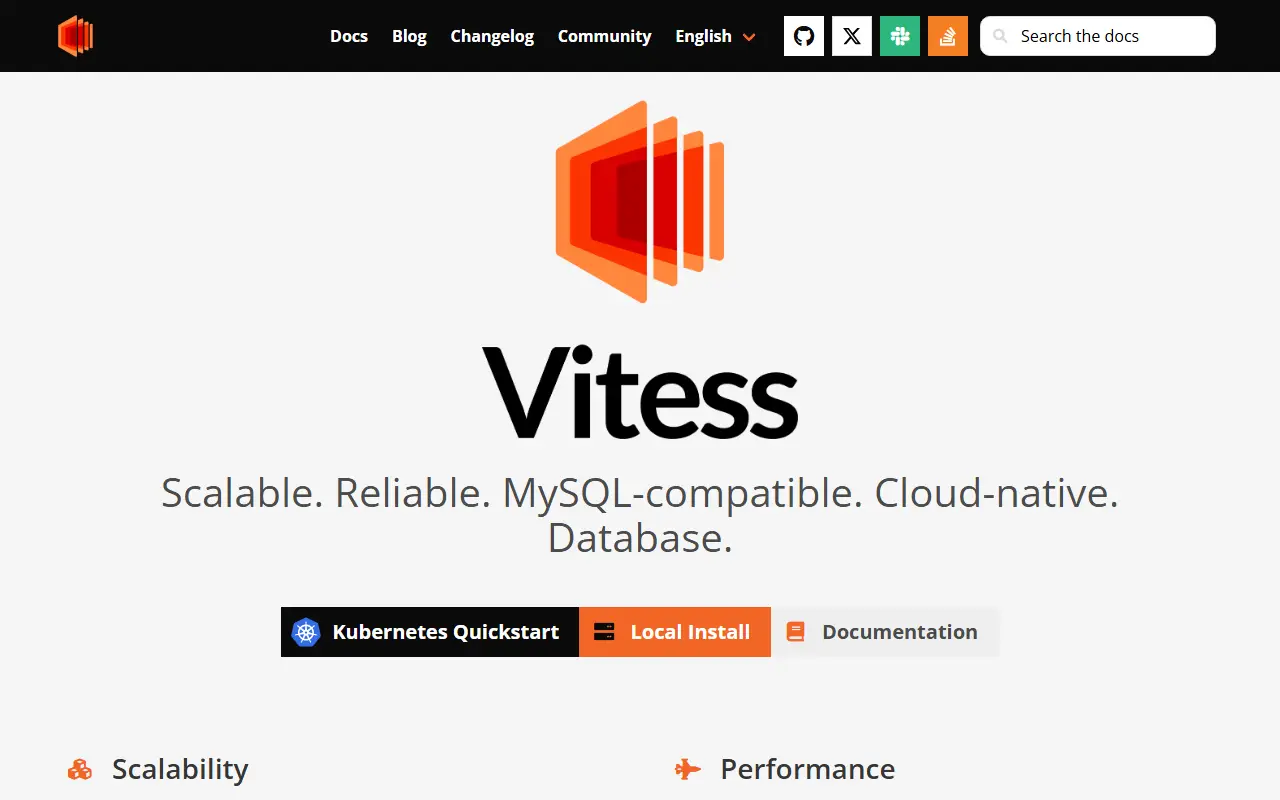
vitess.ioVitess homepage screenshot

Vitess is a MySQL-compatible, cloud-native database system. Its built-in sharding lets a database grow without adding sharding logic to the application, and the sharding schemes are described as transparent to the application.

For performance it rewrites queries, caches and pools connections, so the number of concurrent client connections can scale far beyond traditional MySQL. It detects and repairs primary failures automatically, and data migrations and resharding are done with near-zero downtime.

Schema changes happen in the background without disrupting running workloads, and materialized views and messaging work across shards. Vitess is a graduated project of the Cloud Native Computing Foundation, with quickstarts for Kubernetes and local installs.

Key features

  • Built-in sharding
  • Query rewriting, caching and connection pooling
  • Automatic detection and repair of primary failures
  • Live resharding with minimal read-only downtime
  • Background schema changes
  • Materialized views and messaging across shards
Read more about VitessWebsiteGitHub#4 Oracle MySQL HeatWave alternative

MySQL

Source repository of the MySQL relational database server, covering the open-source Community edition and the clustered MySQL Cluster variant.

GitHub stars
13k
Last commit
16 days ago
Self-hosted
Yes
Hosted version
Available
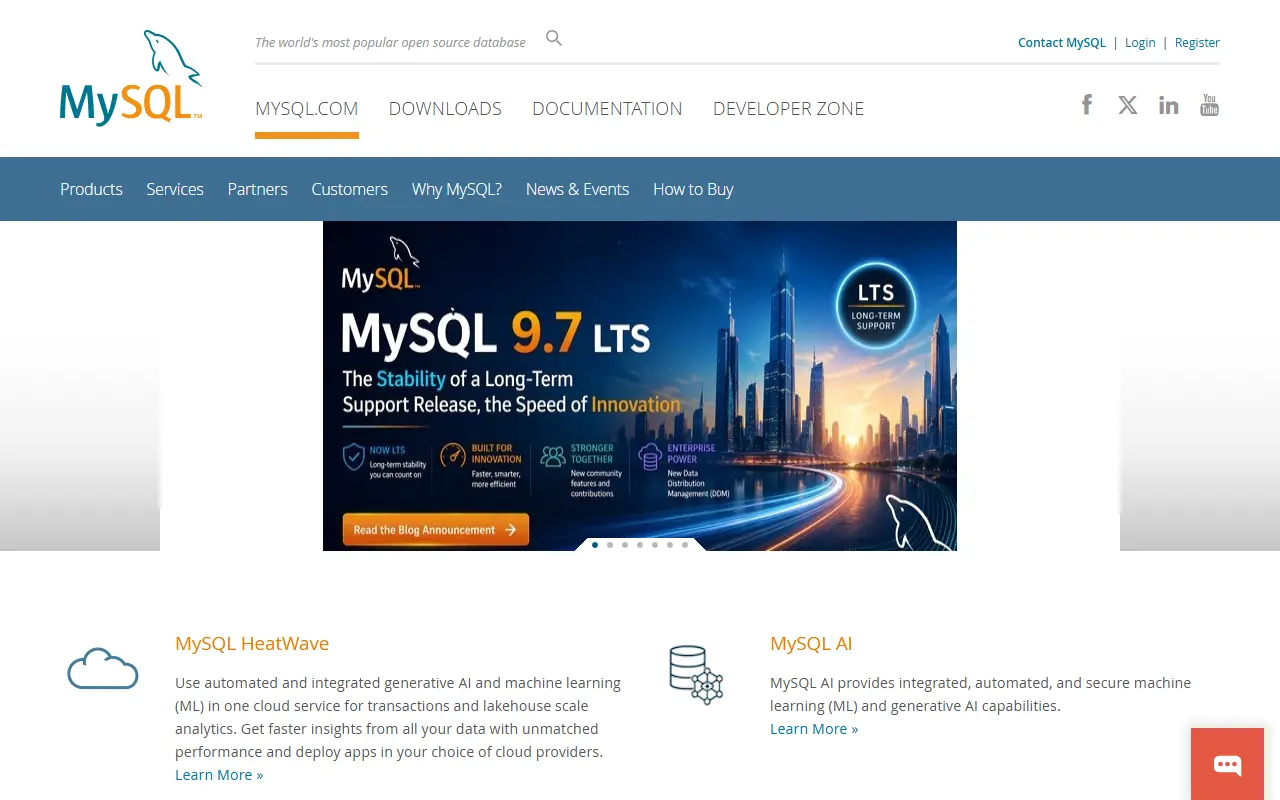
mysql.comMySQL homepage screenshot

MySQL is a widely used open-source relational database. This repository contains the MySQL Server source code along with MySQL Cluster, which the description presents as a real-time, open-source transactional database. Applications talk to it using SQL, and it is a common choice for web applications and embedded products.

The MySQL website describes several offerings built around the server: the Community Edition, with a published governance model and early access builds; MySQL Enterprise Edition for advanced features, management tools and technical support; MySQL HeatWave, a cloud service that combines transactions with analytics and machine learning; and MySQL Cluster CGE. A program for OEM and ISV vendors covers embedding the database in other products.

The server is written in C++ and distributed under licenses detailed in the repository. Organizations can run the Community Edition on their own infrastructure, buy a commercial edition from Oracle, which owns the project, or use a managed cloud offering. Documentation, downloads and a developer zone are available on mysql.com.

Key features

  • Open-source relational database server
  • SQL query interface
  • MySQL Cluster for transactional workloads
  • Community and Enterprise editions
  • HeatWave managed cloud option
  • Documentation and developer resources

Pricing: Community Edition is open source; Enterprise Edition and the HeatWave cloud service are commercial offerings.

Read more about MySQLWebsiteGitHub#5 Oracle MySQL HeatWave alternative

OceanBase

A distributed relational database developed by Ant Group, MySQL-compatible and built on Paxos, supporting transactional, analytical and vector workloads.

GitHub stars
10k
Last commit
yesterday
Latest release
v4.6.0_CE_BP1
Licence
Apache-2.0
Self-hosted
Yes
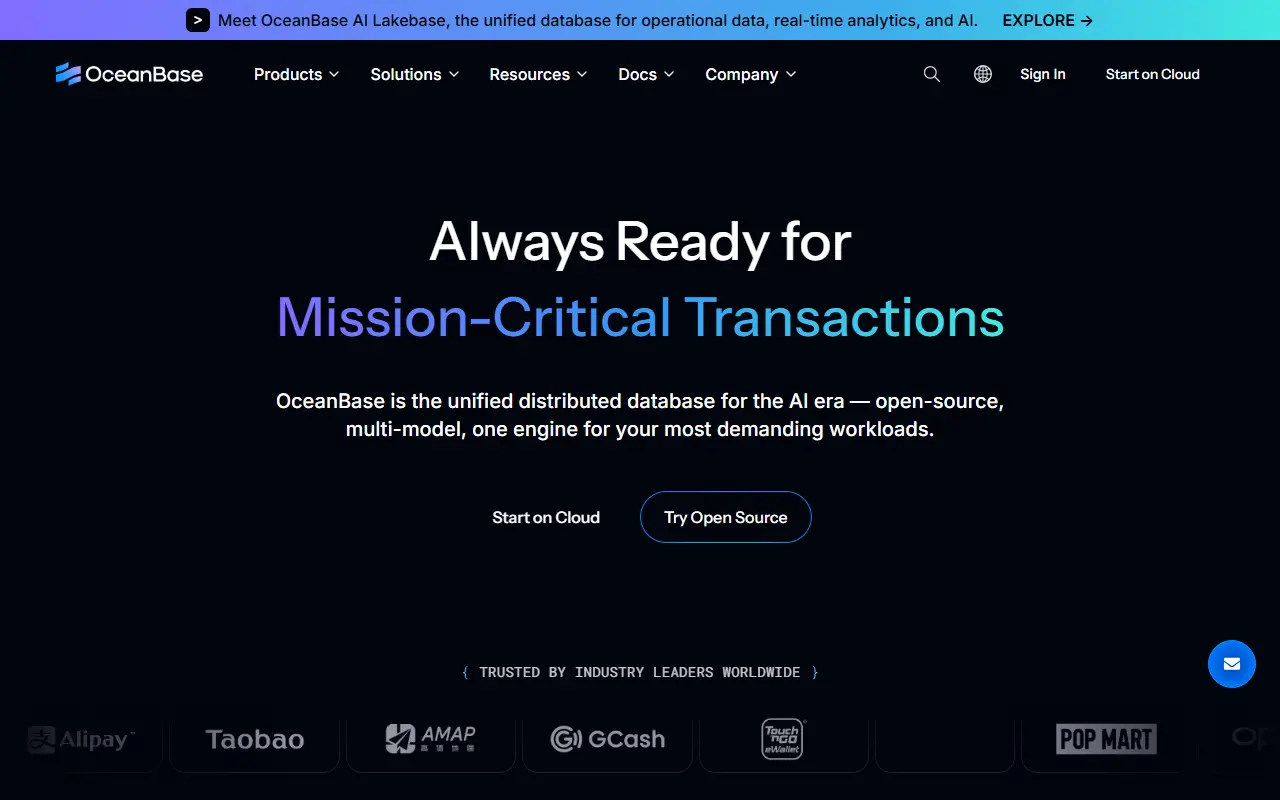
en.oceanbase.comOceanBase homepage screenshot

OceanBase is a distributed relational database developed by Ant Group. It runs on a cluster of commodity servers and uses the Paxos protocol and a distributed architecture to provide high availability and scalability, without depending on a specific hardware architecture.

It is compatible with MySQL, which eases migration from MySQL databases, and supports hybrid transactional and analytical processing, so one engine can serve both OLTP and OLAP workloads. The project now describes itself as a unified, multi-model database for the AI era, with topics that include vector search and full-text search. Cloud-native operation is supported through a Kubernetes operator.

You can try it by deploying a stand-alone instance with an all-in-one package on Linux, starting a Docker container from images on Docker Hub, quay.io or ghcr.io, or running it on Kubernetes with ob-operator. OceanBase is written in C++ and licensed under Apache-2.0, with a developer guide for compiling the observer yourself.

Key features

  • Distributed architecture on Paxos
  • Compatible with MySQL applications
  • Hybrid transactional and analytical processing
  • Vector and full-text search
  • Docker and Kubernetes deployment
  • All-in-one stand-alone installer

Pricing: Free and open source under the Apache-2.0 licence.

Read more about OceanBaseWebsiteGitHub#6 Oracle MySQL HeatWave alternative

Percona Server

Open-source, enhanced drop-in replacement for MySQL from Percona, installed from the Percona repository or built from source.

GitHub stars
1.3k
Last commit
3 days ago
Latest release
Percona-Server-5.5.55-38.8
Self-hosted
Yes
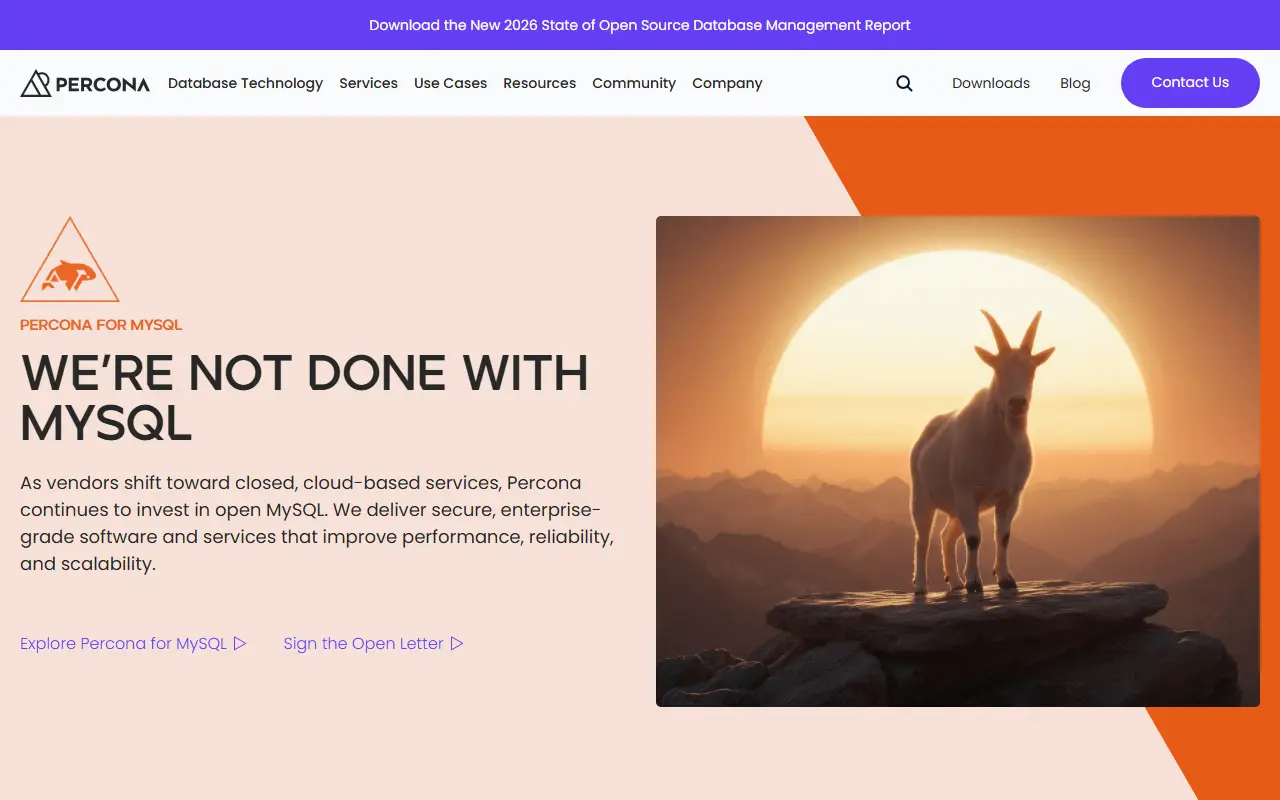
percona.comPercona Server homepage screenshot

Percona Server for MySQL is Percona's enhanced build of MySQL. The README describes it as free, fully compatible and open source, and as a drop-in replacement for any MySQL database. It is written mainly in C++ and licensed under version 2 of the GNU General Public License.

According to the README, it targets better performance and concurrency for demanding workloads, with optimized performance, greater scalability and availability, enhanced backups and increased visibility into the server. These claims are Percona's own and come with no benchmark numbers in the sources.

It can be installed from the Percona repository or built from the source code, and the official documentation covers the steps. Bugs and feature requests go to the project's Jira tracker, and Percona runs a community forum for questions. Percona itself is a company that has offered MySQL support since 2006.

Key features

  • Drop-in replacement for MySQL databases
  • Aims at scalability, availability and enhanced backups
  • Installable from the Percona repository
  • Can be built from source code
  • Bugs tracked in a public Jira project
Read more about Percona ServerWebsiteGitHub#7 Oracle MySQL HeatWave alternative

Commercial Oracle MySQL HeatWave alternatives

Hosted, closed-source products that compete with Oracle MySQL HeatWave. Showing 12 of 15.

See every Oracle MySQL HeatWave alternative on its tool page

Oracle MySQL HeatWave alternatives: questions

What is the best open-source alternative to Oracle MySQL HeatWave?
ClickHouse is the top-ranked open-source alternative to Oracle MySQL HeatWave on Enlisted: An open-source column-oriented database management system built for real-time analytical reports, available to self-host or as the managed ClickHouse Cloud service. Other strong options are TiDB, MariaDB, Vitess and MySQL.
What are the best commercial alternatives to Oracle MySQL HeatWave?
Amazon Aurora, DigitalOcean Managed Databases, Aiven, Amazon RDS and Amazon Redshift are among the hosted, closed-source alternatives to Oracle MySQL HeatWave listed on Enlisted, which lists 15 in total. Compare their pricing and features on each tool page.
Are these Oracle MySQL HeatWave alternatives free?
All 7 are open source, so the code is free to use under its licence, and all of them can be self-hosted on your own server or computer. 3 also offer a paid or managed cloud version if you'd rather not host it yourself.
How is this list of Oracle MySQL HeatWave alternatives ranked?
By a score built from GitHub stars, star growth over the last 30 days and how recently the code changed. 7 of these projects shipped code in the last 30 days. Data is refreshed daily, and nobody can pay to move up.

People also look for alternatives to…

View all