SRS
Simple Realtime Server is a high-performance media server supporting RTMP, WebRTC, HLS, SRT, MPEG-DASH and GB28181 for live streaming and low-latency video.
- GitHub stars
- 29k
- Last commit
- yesterday
- Latest release
- v6.0-r2
- Licence
- MIT
- Self-hosted
- Yes
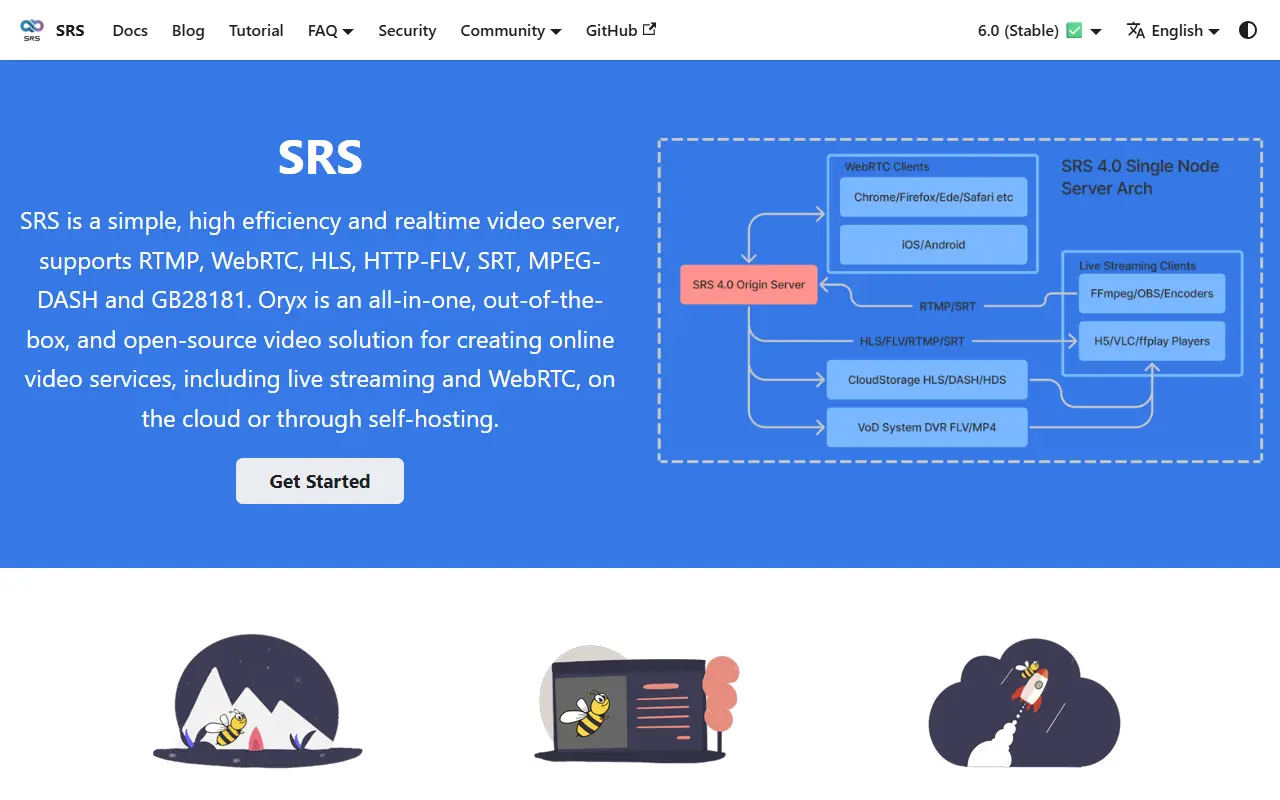
SRS, short for Simple Realtime Server, is an open-source real-time media server for live streaming and video communication. It handles many protocols in one product, among them RTMP, WebRTC, HLS, SRT, HTTP-FLV, MPEG-DASH and the GB28181 surveillance standard, and supports video codecs including H.264, H.265, AV1 and VP9 and audio codecs including AAC, Opus and G.711.
It runs on Linux and macOS across a wide range of processor architectures, from x86-64 and ARM variants to Apple M1, RISC-V, LoongArch and MIPS. The getting-started guide recommends running SRS in Docker, after which you open the local web console on port 8080 and push a stream with FFmpeg or OBS to an RTMP address, then play it back with common players using whichever protocol you prefer. A mirror registry is mentioned for users in China.
SRS is written in C++ and licensed under MIT, though some third-party libraries carry their own licenses. Topics point to low-latency streaming, live broadcasting and video conferencing. It suits teams building live video platforms, surveillance ingest or conferencing backends who want to run their own media server.
Key features
- RTMP, WebRTC, HLS, HTTP-FLV and SRT support
- MPEG-DASH and GB28181 support
- H.264, H.265, AV1 and VP9 codecs
- Runs on many CPU architectures
- Docker-based quick start
- Works with FFmpeg and OBS publishers
Pricing: Free and open source under the MIT license.