5,756 open-source and SaaS tools, with GitHub stats refreshed every day.

7 alternatives ranked by real activity

Open-source DBCode alternatives

A curated, ranked list of the 7 best open-source alternatives to DBCode.

The best open-source alternative to DBCode is DBeaver. If that doesn't suit you, other good options are Chat2DB, Dbx, Beekeeper Studio and DbGate.

DBCode alternatives are mainly Database Tools tools. 6 of them shipped code in the last 30 days, 7 can be self-hosted, and 3 use a permissive licence.

Last updated October 3, 2026 · ranked by GitHub stars, growth and recent commits

DBeaver

A free multi-platform desktop database tool and SQL client for developers, DBAs and analysts, supporting over 100 databases through JDBC and ODBC drivers.

GitHub stars
52k
Last commit
today
Latest release
26.2.1
Licence
Apache-2.0
Self-hosted
Yes
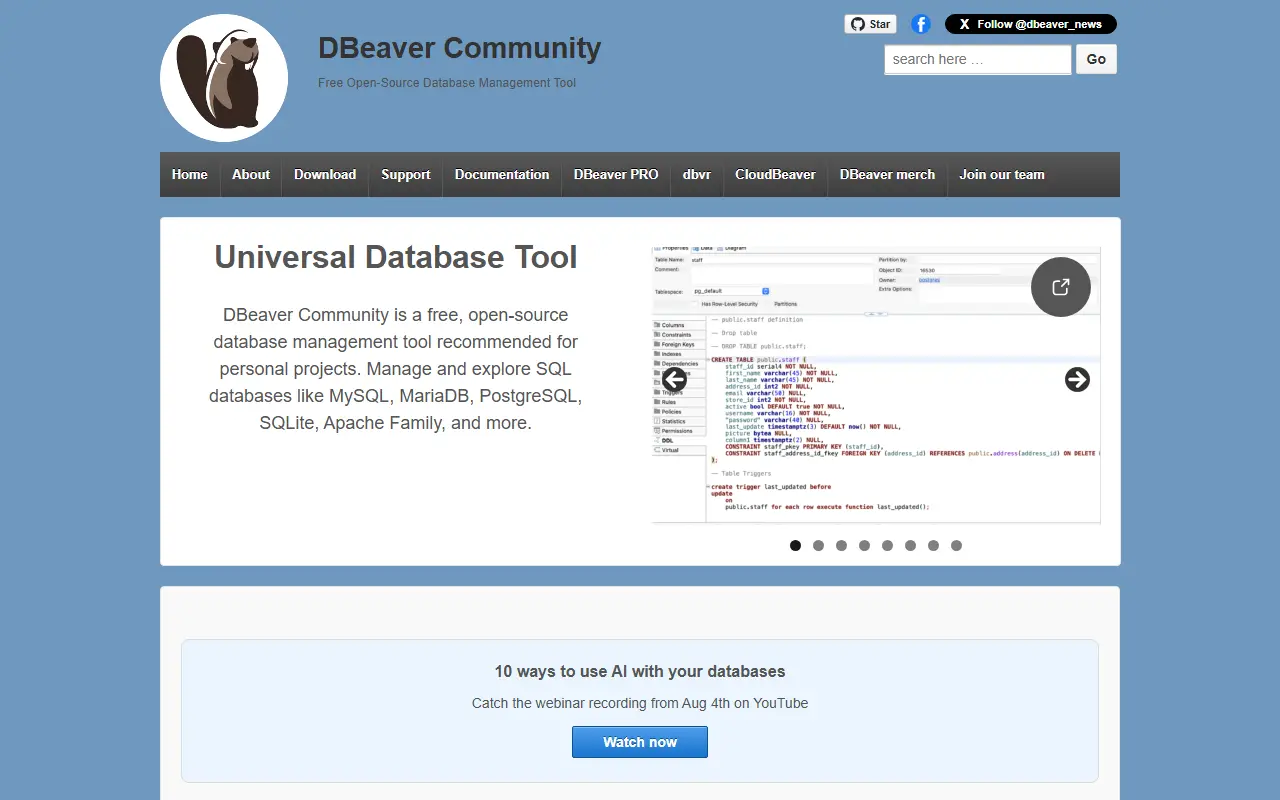
dbeaver.ioDBeaver homepage screenshot

DBeaver is a free, multi-platform database tool aimed at developers, SQL programmers, database administrators and analysts. A single desktop application lets you browse schemas, write and run SQL, edit data and administer many different database systems, instead of switching between vendor-specific clients.

Its feature set covers a schema editor, an SQL editor, a data editor, ER diagrams, data export, import and migration, SQL execution plans, administration tools, database dashboards, a spatial data viewer, proxy and SSH tunneling, and an editor for custom database drivers. An AI chat integrates AI tools for working with data, SQL and database structure. More than 100 drivers are supported out of the box, and anything with a JDBC or ODBC driver can be connected.

DBeaver is a Java application, with OpenJDK included in all distributions so no separate Java install is needed. It is Apache-2.0 licensed and can be downloaded as prebuilt binaries from the website or GitHub releases, with an Early Access build published daily. The vendor also sells paid editions with additional capabilities.

Key features

  • SQL editor with execution plans
  • Schema editor and ER diagrams
  • Data editor with export, import and migration
  • 100+ database drivers plus any JDBC or ODBC source
  • SSH tunneling and proxy support
  • Built-in AI chat for SQL and data
  • Database dashboards and spatial data viewer

Pricing: The Community Edition is free and open source under Apache-2.0; the vendor also sells paid editions.

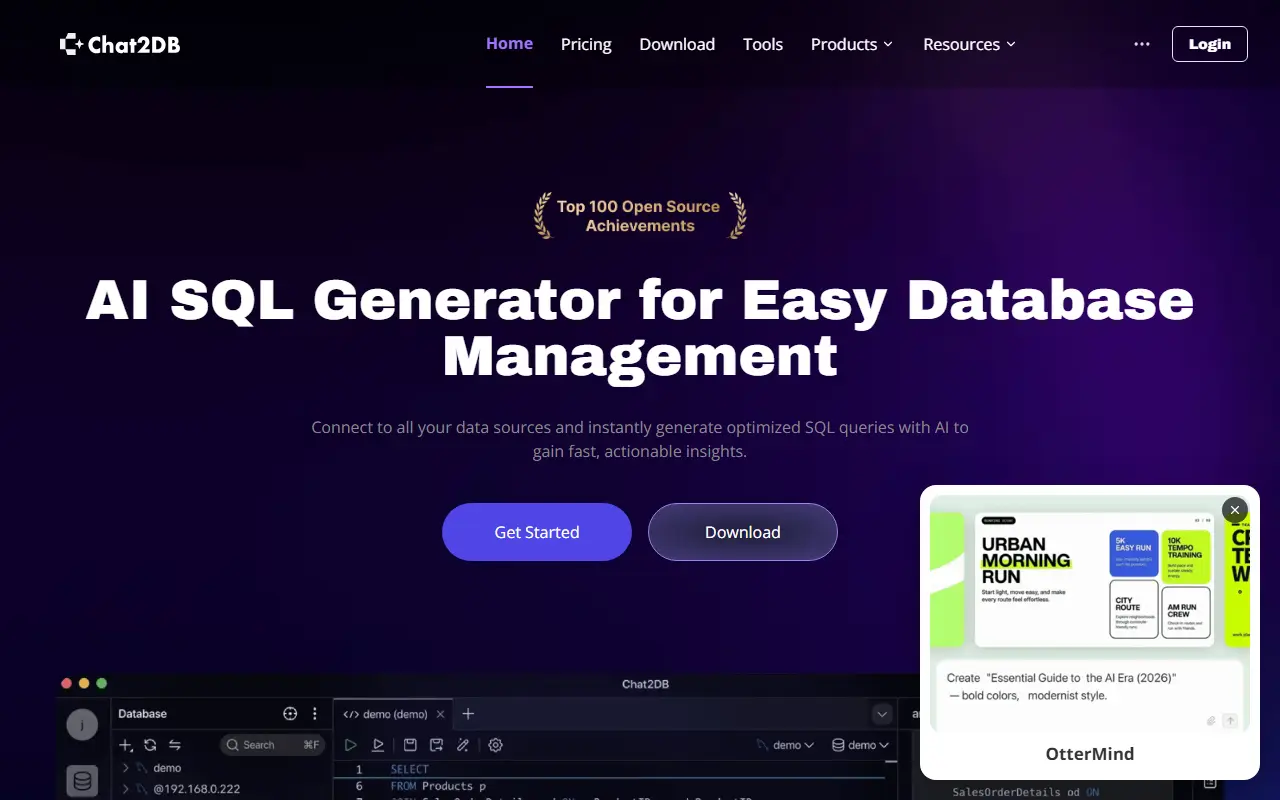
Chat2DB

A free, local-first desktop database client and SQL workspace that supports 40+ databases and lets you connect your own AI model to write, explain and optimize SQL.

GitHub stars
28k
Last commit
yesterday
Latest release
v5.3.7
Self-hosted
Yes
chat2db.aiChat2DB homepage screenshot

Chat2DB is a free desktop database client and SQL workspace aimed at developers, DBAs, analysts and data teams on any platform. The Community edition runs entirely on your own machine on Windows, macOS and Linux, and pairs a full SQL editor with an AI assistant that you connect to the model of your choice rather than one bundled with the app.

It connects to more than 40 databases, including MySQL, Oracle, PostgreSQL, SQL Server, MongoDB, Redis, ClickHouse, SQLite, MariaDB, TiDB, Snowflake and BigQuery, and new JDBC databases can be added through configuration alone. The SQL workspace covers editing, completion, formatting, execution, saved queries and history. Database management features let you browse metadata, manage tables and other objects and edit data in place, and there are tools for data import and export, dashboards and charts, plus a command line interface.

The AI assistant generates, explains and optimizes SQL from natural-language requests, and topics mention MCP support. Chat2DB is written in Java and powered by OtterMind, and its license is listed as 'Other' on GitHub, so check the terms before redistribution. It suits people who want one tool for many databases and would like to keep queries and credentials local.

Key features

  • Connects to 40+ databases via JDBC
  • SQL editor with completion and history
  • Bring-your-own-model AI for SQL generation
  • Table and object management with in-place editing
  • Data import, export, dashboards and charts
  • Runs locally on Windows, macOS and Linux

Pricing: A free Community edition is available and the Pro plan has a 30-day free trial. Local and Pro prices are not shown in the page text; Enterprise is by contact.

Dbx

A lightweight Rust and Tauri database client for 100+ databases with a built-in AI assistant, MCP server, CLI and Docker option, in roughly 25 MB.

GitHub stars
24k
Last commit
today
Latest release
v0.6.30
Licence
Apache-2.0
Self-hosted
Yes
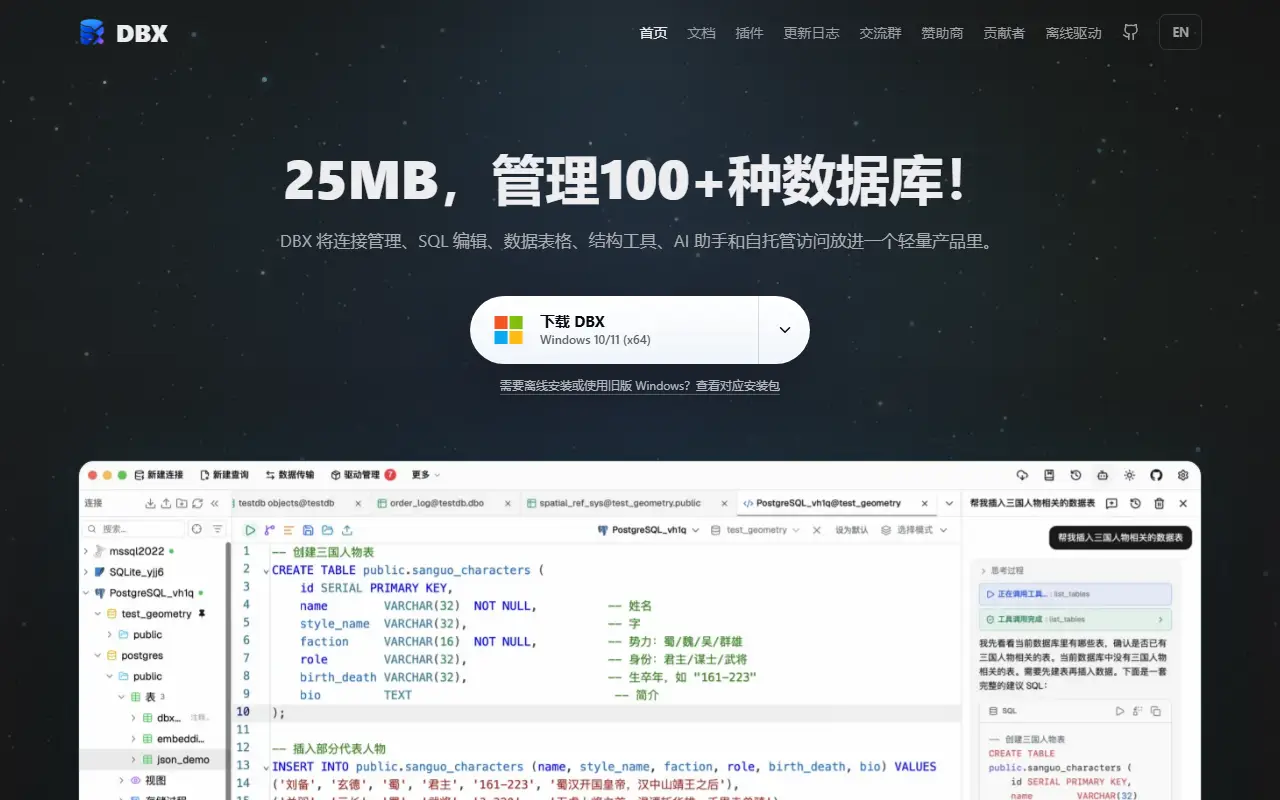
dbxio.comDbx homepage screenshot

DBX is a cross-platform database client built with Rust and Tauri, billed as lightweight at around 25 MB. It connects to more than a hundred databases, among them SQLite, MySQL, PostgreSQL, MongoDB, Redis, DuckDB, SQL Server and Dameng, and aims to cover many systems with one small application instead of several heavier tools.

Beyond the desktop app, it can be run through Docker and a command line interface, and it includes a built-in AI assistant and an MCP server, so AI tools can query and work with your databases through a standard protocol. The interface is built with Vue, and topics highlight support for ClickHouse, MySQL, MongoDB, PostgreSQL, Redis, SQL Server and SQLite along with general database management features. The project was created in 2026 and its documentation includes Chinese-language material.

DBX is Apache-2.0 licensed. It is meant for developers and administrators who want a fast, small client that works across relational and NoSQL systems, and who like the idea of connecting AI assistants to databases through MCP.

Key features

  • Supports 100+ databases
  • Lightweight Rust and Tauri desktop app
  • Built-in AI assistant
  • MCP server for AI tools
  • Command line interface
  • Docker deployment option

Pricing: Free and open source under the Apache-2.0 license.

Beekeeper Studio

A cross-platform SQL editor and database manager for Linux, macOS and Windows that supports PostgreSQL, MySQL, SQLite, SQL Server and many more databases.

GitHub stars
24k
Last commit
yesterday
Latest release
v6.1.4
Self-hosted
Yes
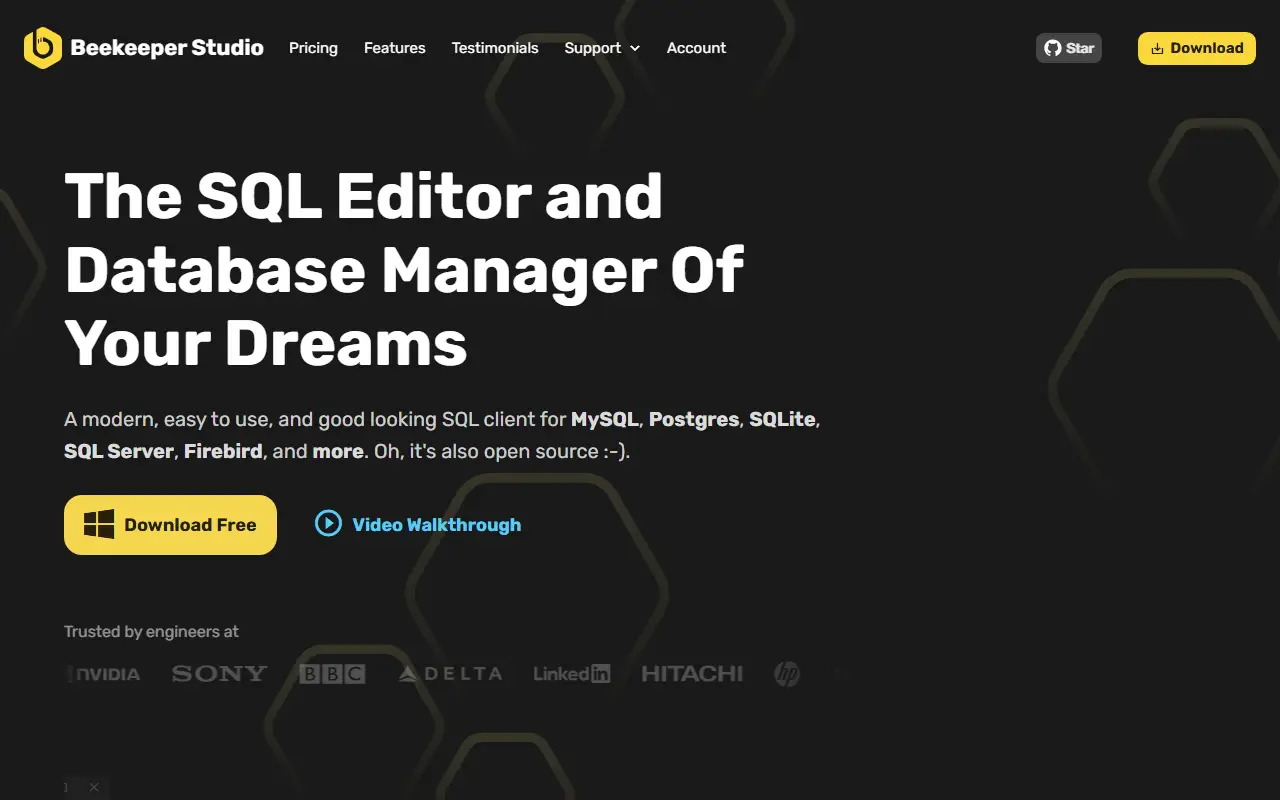
beekeeperstudio.ioBeekeeper Studio homepage screenshot

Beekeeper Studio is a modern, easy-to-use SQL editor and database manager for Linux, macOS and Windows. It supports a long list of databases, including PostgreSQL, MySQL, SQLite, SQL Server, Amazon Redshift, CockroachDB, BigQuery, Cassandra and Firebird, and is built with TypeScript and Electron.

It is free to download and offers many features at no cost, with no sign-up, registration or credit card required. Some premium features are sold under a paid license. The repository explains the arrangement: most of the code is open source under the GPLv3, while the paid features live in the same repository under a commercial source-available license. A table in the README shows which databases have full support in the community and paid editions.

The project welcomes community contributions and has translated READMEs in a dozen languages. Because its license is listed as 'Other' on GitHub, it is worth reading the terms to see which parts are free. It suits developers and analysts who want a clean, approachable client for everyday querying and schema browsing.

Key features

  • SQL editor and database manager
  • Supports PostgreSQL, MySQL, SQLite and SQL Server
  • Also supports Redshift, CockroachDB and BigQuery
  • Apps for Linux, macOS and Windows
  • No sign-up required for free use
  • Optional paid premium features

Pricing: The Community edition is free. Indie is $18, Professional $28 and Business $35 per user per month, or $9, $14 and $18 on yearly billing; paid features stay usable after 12 months of payments. Free trial available.

DbGate

DbGate is a cross-platform database manager for SQL and NoSQL systems, running as a desktop app or web application with query design and schema tools.

GitHub stars
7.3k
Last commit
today
Latest release
v7.3.1
Licence
GPL-3.0
Self-hosted
Yes
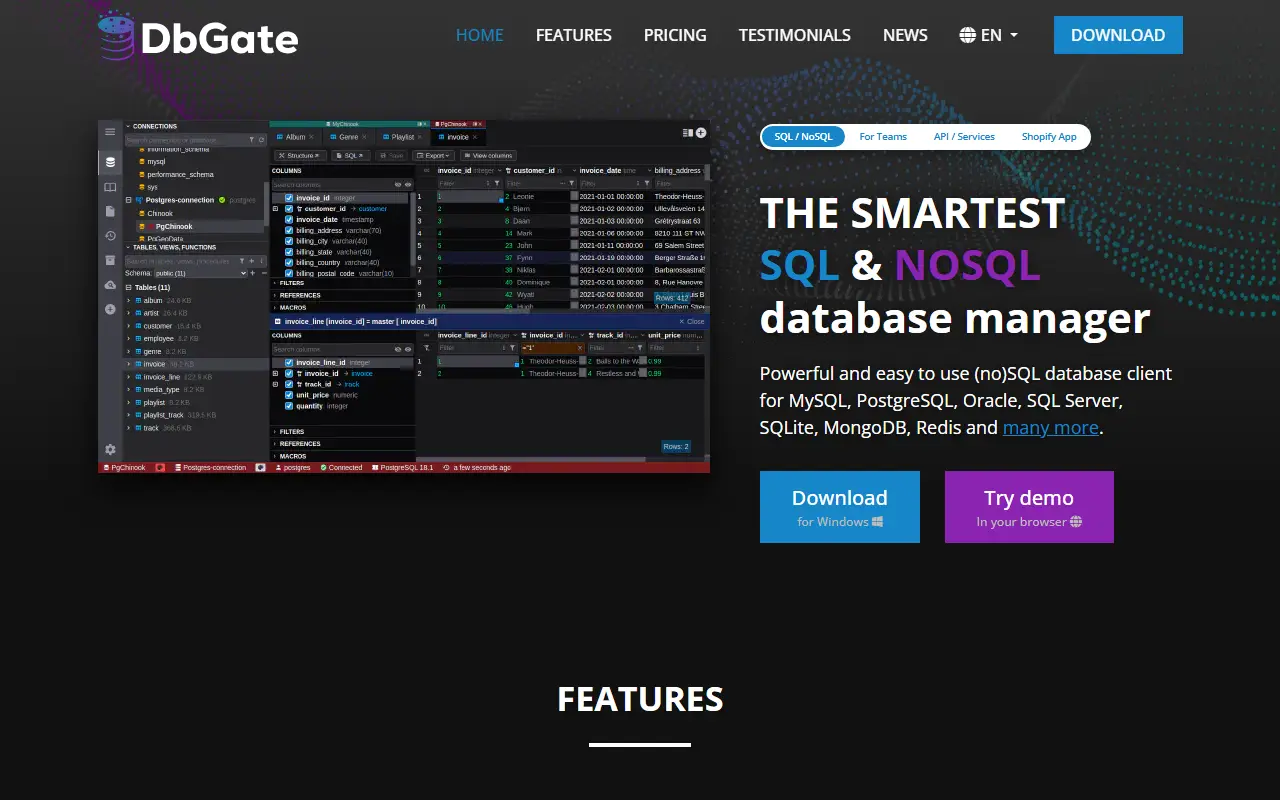
dbgate.ioDbGate homepage screenshot

DbGate is a cross-platform database client for working with several databases at once. It supports SQL and NoSQL systems including MySQL, PostgreSQL, SQL Server, Oracle, MongoDB, Redis, SQLite, MariaDB, CockroachDB, ClickHouse, Cassandra and DuckDB, and runs on Windows, Linux and macOS or as a web application.

Day-to-day tools include table browsing with Excel-like and multi-value filters, table data editing with a preview of the generated SQL change script, schema editing for indexes and keys, and an SQL editor. More advanced features include comparing and synchronizing database structure, ER diagrams, a visual query designer that builds queries without hand-written SQL, master/detail views, foreign key lookups, a JSON view for MongoDB collections, and batch export and import.

The Community edition is licensed under GPL-3.0 and is free to use for any purpose. The web version can be run as an NPM package or Docker image, a Node.js scripting interface is available, and an online demo lets you try it first. The README marks some database drivers, such as Amazon Redshift and CosmosDB, as Premium.

Key features

  • Client for SQL and NoSQL databases
  • Table data browsing with advanced filters
  • Visual query designer without writing SQL
  • Compare and synchronize database structure
  • ER diagrams and schema editing
  • Batch export and import
  • Desktop app or Docker web version

Pricing: Free open-source Community edition. Premium costs $12 per month for one user and Team Premium $15 per user per month, with $120 and $150 yearly options and a 30-day trial.

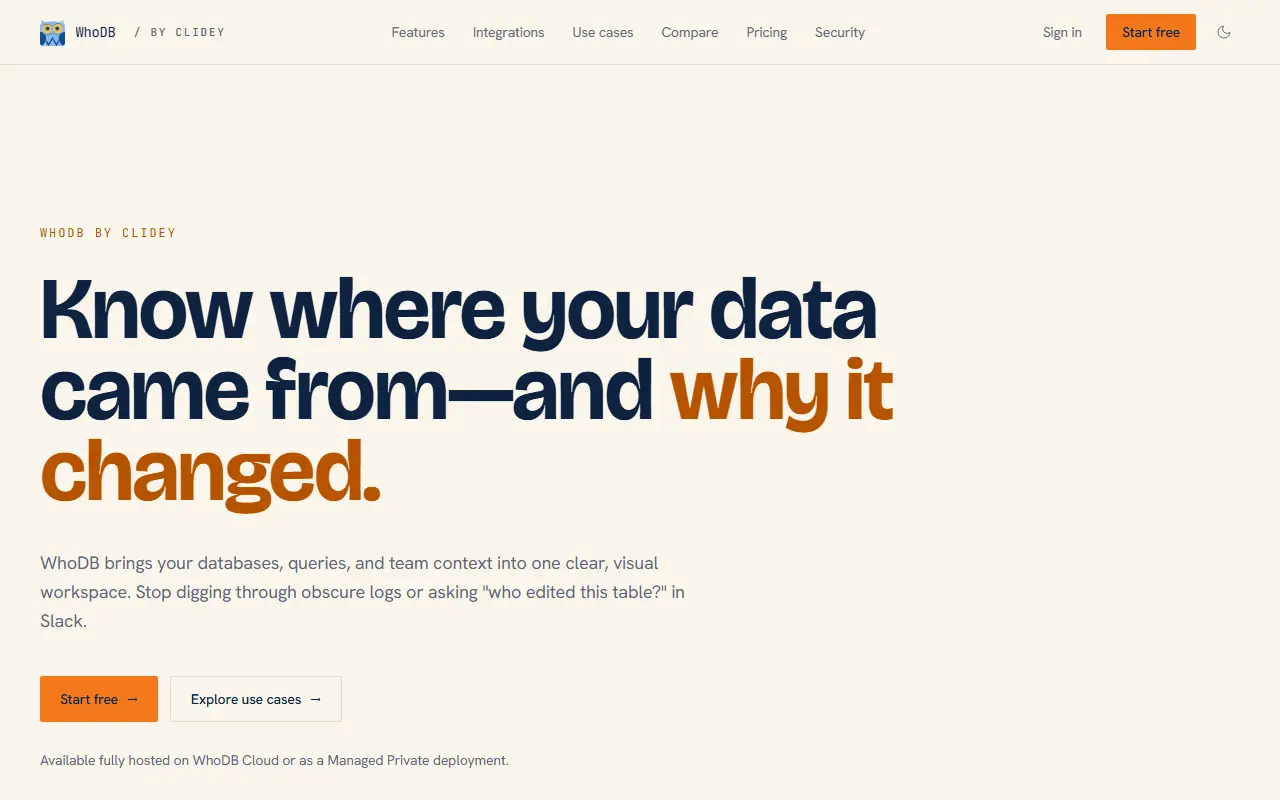
WhoDB

WhoDB is a lightweight, self-hosted workspace for exploring databases, editing data and running queries, with optional AI features in browser, desktop or CLI.

GitHub stars
5k
Last commit
today
Latest release
0.134.0
Licence
Apache-2.0
Self-hosted
Yes
whodb.comWhoDB homepage screenshot

WhoDB is a single workspace for browsing databases, changing rows, running queries and seeing how a schema is put together. It works in a browser, is straightforward to self-host, and is also available as a desktop app and a terminal CLI. The authors position it for inspecting a local database or helping a teammate explore unfamiliar data without a heavyweight client.

Optional AI features let you ask questions in plain English by hooking up a local or hosted model through Ollama, LM Studio, OpenAI, Anthropic or any compatible API. Repository topics also mention an SQL editor, a visual query builder, ER diagrams, text-to-SQL, data lineage and catalog features, and an MCP server. MySQL, PostgreSQL, SQL Server and Oracle are among the topics, and the backend is written in Go.

WhoDB is licensed under Apache-2.0 and offers a live demo and documentation. It suits developers, analysts and internal tool builders who want a simple database front end that they control, rather than a heavyweight client.

Key features

  • Browser, desktop and CLI database workspace
  • Data editing and SQL query execution
  • Visual query builder and ER diagrams
  • Optional plain-English AI queries
  • Works with Ollama and OpenAI-compatible APIs
  • MCP server for AI agents

Pricing: Free plan for 2 members. Start costs $20 and Pro $200 per member per month, with 20% off on annual billing; Enterprise and managed private deployments are quoted.

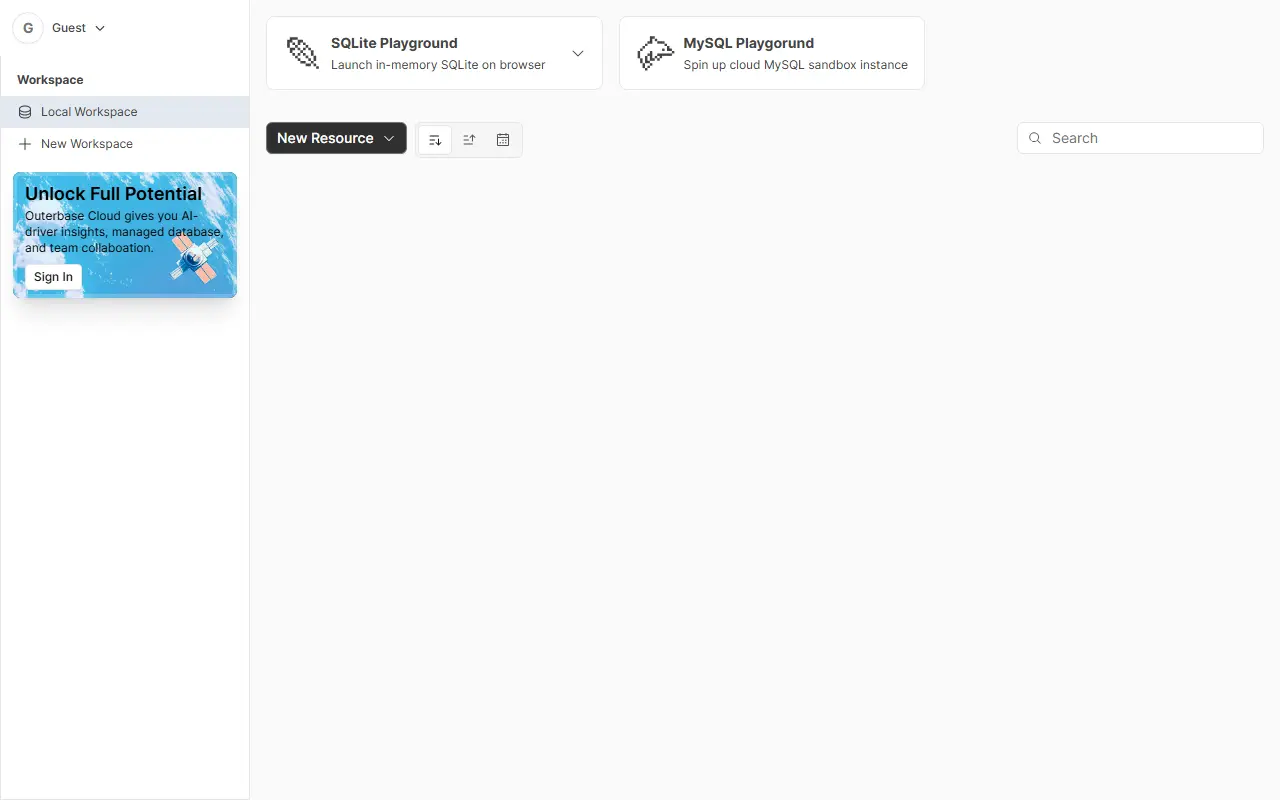
Outerbase Studio

Browser-based database GUI from Outerbase for SQLite-family databases, with beta support for MySQL and PostgreSQL.

GitHub stars
6k
Last commit
6 mo ago
Latest release
v0.10.2
Licence
AGPL-3.0
Hosted version
Available
studio.outerbase.comOuterbase Studio homepage screenshot

Outerbase Studio is a lightweight graphical client for SQL databases that runs in the browser. It started as a tool for LibSQL and SQLite and now covers several SQLite-based services, including Turso, local SQLite files, Cloudflare D1, rqlite, StarbaseDB and Val.town. MySQL and PostgreSQL are supported in beta with a reduced feature set.

The query editor offers auto-completion and function hints and can run several queries at once. The data editor lets you stage edits and preview them before committing, and its table view is built to handle thousands of rows and columns. A schema editor creates, changes and removes columns without hand-written SQL, and a connection manager stores connections in the browser or on a server so they can be shared across devices.

A desktop edition for Windows and Mac wraps the web app in Electron, which allows drivers that cannot run inside a browser, such as the MySQL and PostgreSQL ones. The code is TypeScript and licensed under AGPL-3.0, and a hosted version is available at studio.outerbase.com.

Key features

  • Query editor with auto-completion and hints
  • Data editor with staged, previewable changes
  • Schema editor for columns without SQL
  • Connection manager with local or server storage
  • Works with Turso, SQLite, Cloudflare D1 and rqlite
  • Desktop app for Windows and Mac

Pricing: Open source under the AGPL-3.0 license, available as a browser app and as desktop apps for Windows and Mac.

DBCode alternatives: questions

What is the best open-source alternative to DBCode?
DBeaver is the top-ranked open-source alternative to DBCode on Enlisted: A free multi-platform desktop database tool and SQL client for developers, DBAs and analysts, supporting over 100 databases through JDBC and ODBC drivers. Other strong options are Chat2DB, Dbx, Beekeeper Studio and DbGate.
Are these DBCode alternatives free?
All 7 are open source, so the code is free to use under its licence, and 7 of them can be self-hosted on your own server. 1 also offer a paid or managed cloud version if you'd rather not host it yourself.
How is this list of DBCode alternatives ranked?
By a score built from GitHub stars, star growth over the last 30 days and how recently the code changed. 6 of these projects shipped code in the last 30 days. Data is refreshed daily, and nobody can pay to move up.

People also look for alternatives to…

View all