7,363 open-source and SaaS tools, with GitHub stats refreshed every day.

2 alternatives ranked by real activity

Open-source CyberArk alternatives

A curated, ranked list of the 2 best open-source alternatives to CyberArk.

The best open-source alternative to CyberArk is Infisical. If that doesn't suit you, another good option is OpenBao.

CyberArk alternatives are mainly security tools. 2 of them shipped code in the last 30 days, 2 can be self-hosted, and 1 uses a permissive licence.

Last updated October 2, 2026 · ranked by GitHub stars, growth and recent commits

Infisical

Infisical is an open-source platform for managing secrets, certificates and privileged access, with syncing, rotation and leak prevention.

GitHub stars
30k
Last commit
today
Latest release
v0.165.16
Self-hosted
Yes
Hosted version
Available
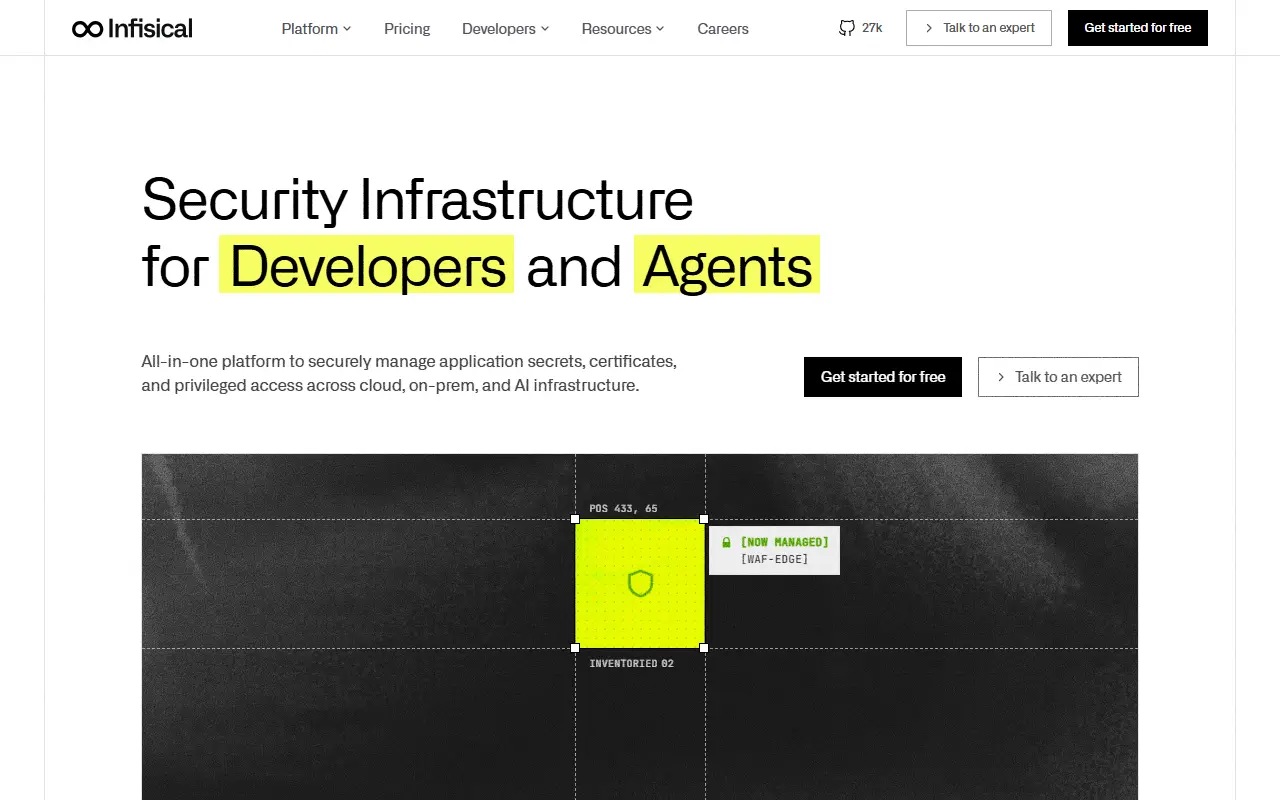
infisical.comInfisical homepage screenshot

Infisical is an open-source security infrastructure platform used by teams to manage application secrets, certificates and privileged access. It centralizes secrets and configuration across environments, with versioning, rotation and leak prevention. The stack is TypeScript and Go on PostgreSQL, and the project offers both a hosted Infisical Cloud and a self-hosting option.

Secrets are organized by project and environment, such as development and production, in a dashboard. Secret syncs push values to platforms like GitHub, Vercel and AWS and work with tools such as Terraform and Ansible. Further features include point-in-time recovery, scheduled rotation for databases and AWS IAM, ephemeral dynamic secrets, secret scanning that stops leaks into git, a Kubernetes operator, and an agent that injects secrets without code changes. It also offers honey tokens as decoy credentials and brokered access for AI agents. The repository metadata lists the license as Other, so check it for exact terms.

Key features

  • Secrets dashboard across projects and environments
  • Secret syncs to GitHub, Vercel and AWS
  • Versioning with point-in-time recovery
  • Automatic secret rotation and dynamic secrets
  • Secret scanning to prevent leaks into git
  • Kubernetes operator and injection agent

Pricing: Free for up to 5 identities. Pro is $23 and Advanced $46 per identity per month, or $20 and $40 billed annually; Enterprise is custom. Paid plans include a free trial.

OpenBao

OpenBao is an open-source, community-governed secrets manager that stores, encrypts and distributes secrets, certificates and keys for modern infrastructure.

GitHub stars
8.3k
Last commit
today
Latest release
v2.7.1
Licence
MPL-2.0
Self-hosted
Yes
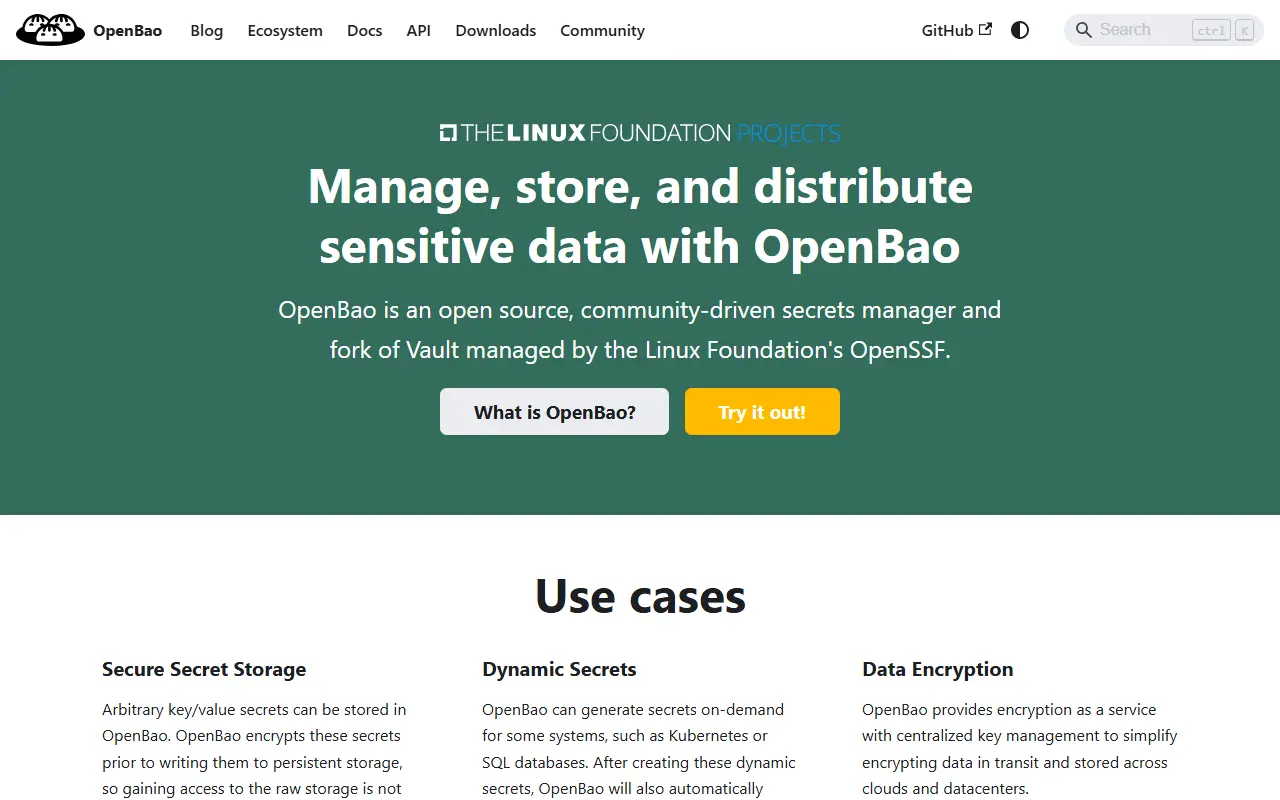
openbao.orgOpenBao homepage screenshot

OpenBao is a software solution for managing, storing and distributing sensitive data such as secrets, certificates and keys. It is a community-led project, run under open-governance principles, that intends to stay available under an OSI-approved open-source licence, currently MPL-2.0.

The README describes the problem it targets: modern systems need many secrets, including database credentials, API keys for external services and credentials for service-to-service communication, and tracking who accesses what is hard without a dedicated tool. OpenBao encrypts key/value secrets before they reach persistent storage, so access to the raw storage alone does not expose them. It can write to disk, PostgreSQL and other backends, and it can generate dynamic secrets on demand for systems such as AWS or SQL databases.

OpenBao is written in Go and is widely known as a fork of HashiCorp Vault, which makes it a candidate for teams looking for an open-governance alternative in that space. It runs on your own infrastructure, and the project coordinates through a mailing list, GitHub Discussions and chat channels, with working groups for areas such as namespaces and the UI.

Key features

  • Encrypted key/value secret storage
  • Dynamic secrets for AWS and SQL databases
  • Multiple storage backends including PostgreSQL
  • Certificate and key management
  • Audit logging of secret access
  • Open-governance community project

Pricing: Free and open source under the MPL-2.0 licence.

CyberArk alternatives: questions

What is the best open-source alternative to CyberArk?
Infisical is the top-ranked open-source alternative to CyberArk on Enlisted: Infisical is an open-source platform for managing secrets, certificates and privileged access, with syncing, rotation and leak prevention. Another strong option is OpenBao.
Are these CyberArk alternatives free?
Both are open source, so the code is free to use under its licence, and both can be self-hosted on your own server or computer. 1 also offers a paid or managed cloud version if you'd rather not host it yourself.
How is this list of CyberArk alternatives ranked?
By a score built from GitHub stars, star growth over the last 30 days and how recently the code changed. 2 of these projects shipped code in the last 30 days. Data is refreshed daily, and nobody can pay to move up.

People also look for alternatives to…

View all