#1
An open-source AI collaborative workspace for notes, wikis, tasks and projects, built as a Notion alternative that keeps you in control of your data.
- GitHub stars
- 79k
- Last commit
- 10 days ago
- Latest release
- 0.15.0
- Licence
- AGPL-3.0
- Self-hosted
- Yes
- Hosted version
- Available
appflowy.com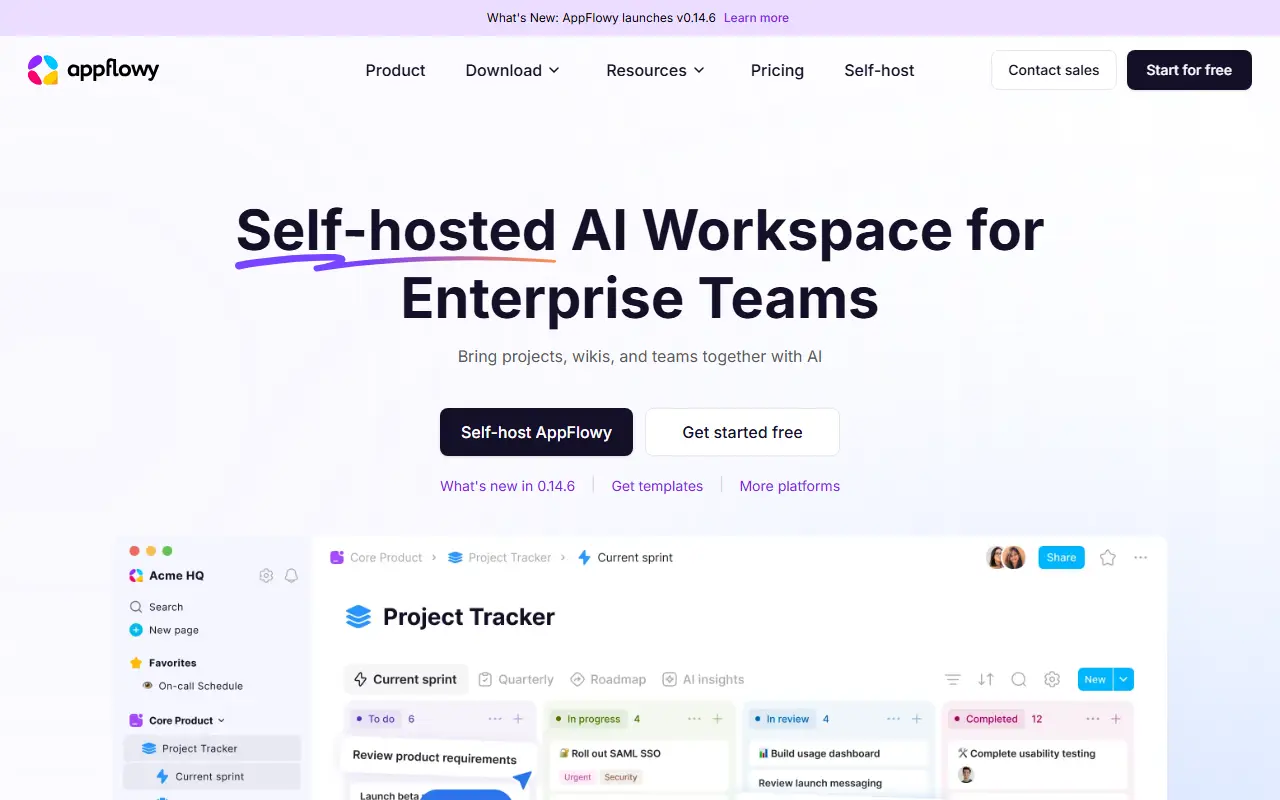
AppFlowy is an open-source workspace that brings documents, wikis, project and task management and team collaboration into one app. It is presented as an alternative to Notion, and its topics also tag it as a Confluence alternative, with the emphasis on keeping control of your own data.
The client is built with Flutter and a Rust core, giving apps for macOS, Windows and Linux plus iOS and Android versions. Desktop builds can be downloaded directly or from channels such as Flathub and Snapcraft. AI features are part of the workspace, and a public roadmap and active forum let users propose features. Translations are contributed through JSON files and tools such as inlang.
The project is AGPL-3.0 licensed and has documentation for self-hosting the server side, so organizations can keep content on their own infrastructure. A hosted version is available through appflowy.com for people who do not want to run servers. It suits teams looking for a Notion-style workspace with a privacy-first stance.
Key features
- Notes, wikis and documentation in one workspace
- Project and task management
- AI features built into the workspace
- Apps for desktop, iOS and Android
- Self-hosting option for your own data
- Public roadmap and community translations
Pricing: Free plan for up to 2 members. Pro costs $12.50 per user per month, or $10 billed annually. Self-hosted plans range from Free to Enterprise but their prices are not listed.
#2
A self-hostable no-code database platform that puts a spreadsheet-style interface and auto-generated APIs on top of SQL databases, positioned as an Airtable alternative.
- GitHub stars
- 66k
- Last commit
- yesterday
- Latest release
- 2026.10.1
- Self-hosted
- Yes
- Hosted version
- Available
nocodb.com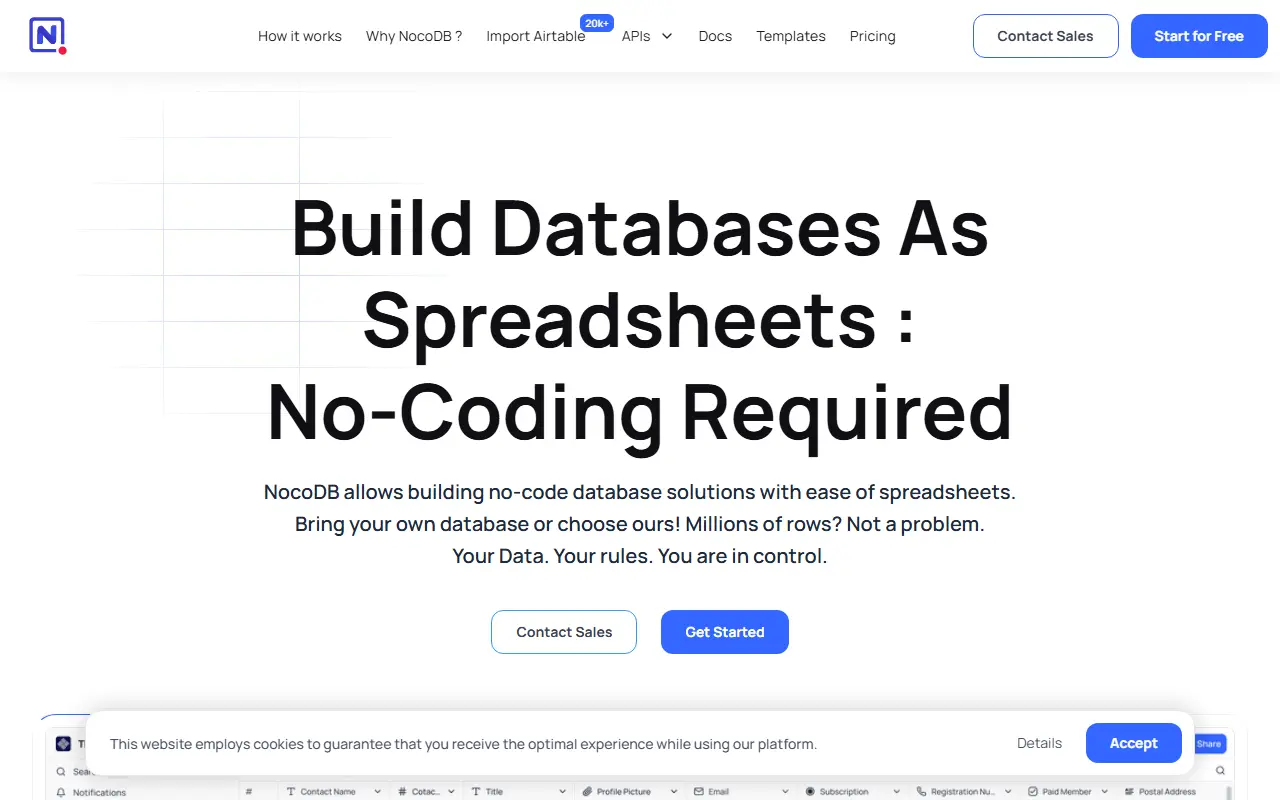
NocoDB is a no-code database platform presented as a free, self-hostable alternative to Airtable. It gives relational databases a spreadsheet-like interface, so people who do not write SQL can create tables, add records and build views, while developers keep a real database underneath.
Its topics point to automatically generated REST APIs documented with Swagger, with PostgreSQL and SQLite among the supported databases. Installation is flexible: you can run it with Docker backed by SQLite or PostgreSQL, or use the auto-upstall script, which sets up a production-style stack with PostgreSQL, Redis and a Traefik gateway through Docker Compose, handles SSL certificates and renewal, and upgrades the install when you run it again. Prebuilt binaries for macOS and Linux are meant only for quick local testing.
The license is listed as 'Other', so check the repository terms before commercial redistribution. NocoDB also runs a hosted service for teams that would rather not manage a server, and it suits groups who want Airtable-style workflows while keeping data in their own database.
Key features
- Spreadsheet-style interface over SQL databases
- Auto-generated REST APIs with Swagger docs
- Works with PostgreSQL and SQLite
- Docker and Docker Compose installation
- One-command production installer with SSL
- Prebuilt binaries for quick local testing
Pricing: Cloud Free covers up to 3 users. Paid plans start at $12 per seat per month billed annually (Plus), then Business $24 and Scale $45. Self-hosted Community is free; Enterprise is custom.
#3
A collaborative team knowledge base and wiki with realtime editing and Markdown compatibility, built with React and Node.js and available hosted or self-run.
- GitHub stars
- 41k
- Last commit
- today
- Latest release
- v1.12.0
- Self-hosted
- Yes
- Hosted version
- Available
getoutline.com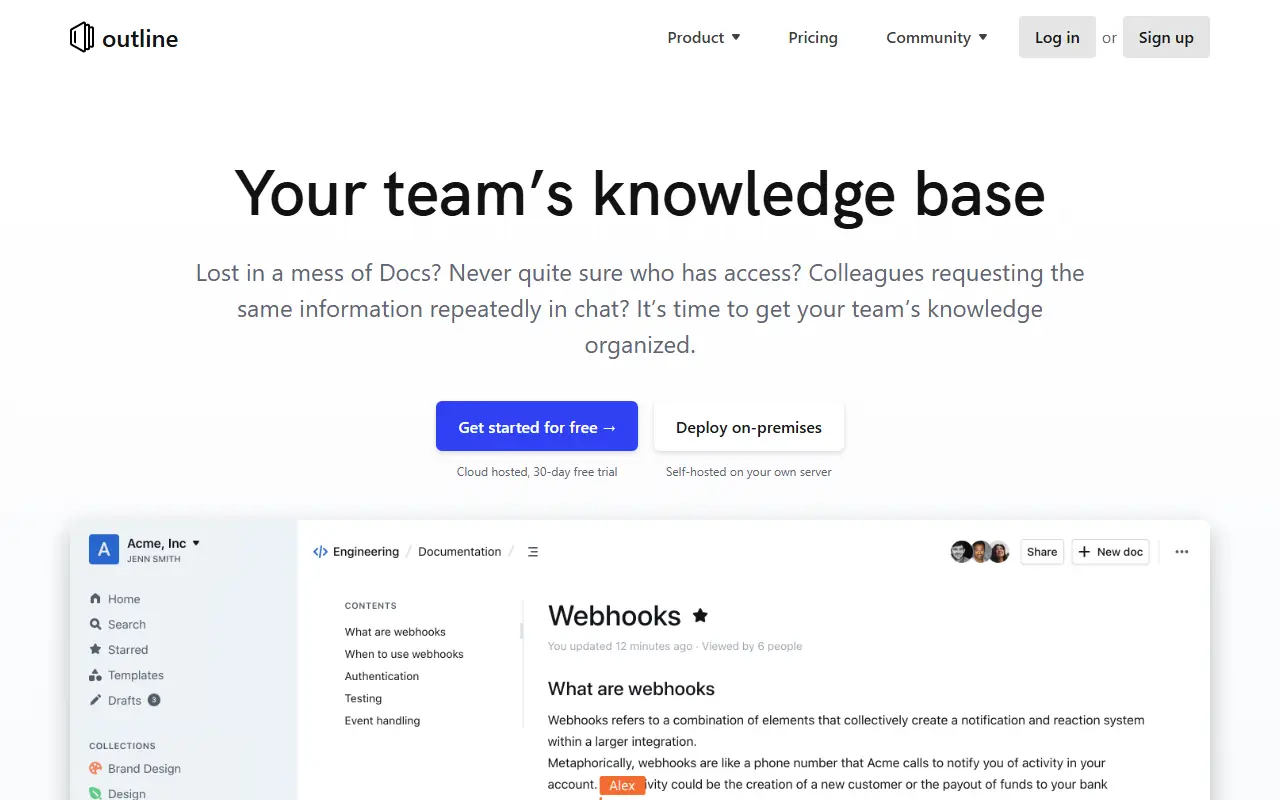
Outline is a knowledge base for teams, built with React and Node.js. It focuses on fast, collaborative writing: documents are edited together in realtime, stay compatible with Markdown, and are organized into collections so a growing team can find what it has written down.
The maintainers offer a hosted version at getoutline.com, and the repository contains the source that runs Outline and its associated services. If you only want to use Outline you do not need to run the code yourself, while teams that want their own copy can follow the documentation for a production configuration and use the published container images. Topics also mention a Slack integration.
The repository license is listed as 'Other', so review it before commercial redistribution. Outline suits teams looking for a wiki or internal documentation tool with a clean editor, as an alternative to products such as Confluence or Notion for company knowledge. The project does not accept AI-generated pull requests.
Key features
- Realtime collaborative editing
- Markdown-compatible document editing
- Collections for organizing a wiki
- Integration with Slack workspaces
- Hosted service at getoutline.com
- Container images for self-running
Pricing: Cloud pricing is by team size: $10 per month for 1-10 members, $79 for 11-100 and $249 for 101-200. The first 30 days are free; larger teams are quoted.
#4
Documenso is an open-source document signing platform positioned as a DocuSign alternative, available to self-host or use in the cloud.
- GitHub stars
- 16k
- Last commit
- today
- Latest release
- v2.21.1
- Licence
- AGPL-3.0
- Self-hosted
- Yes
- Hosted version
- Available
documenso.com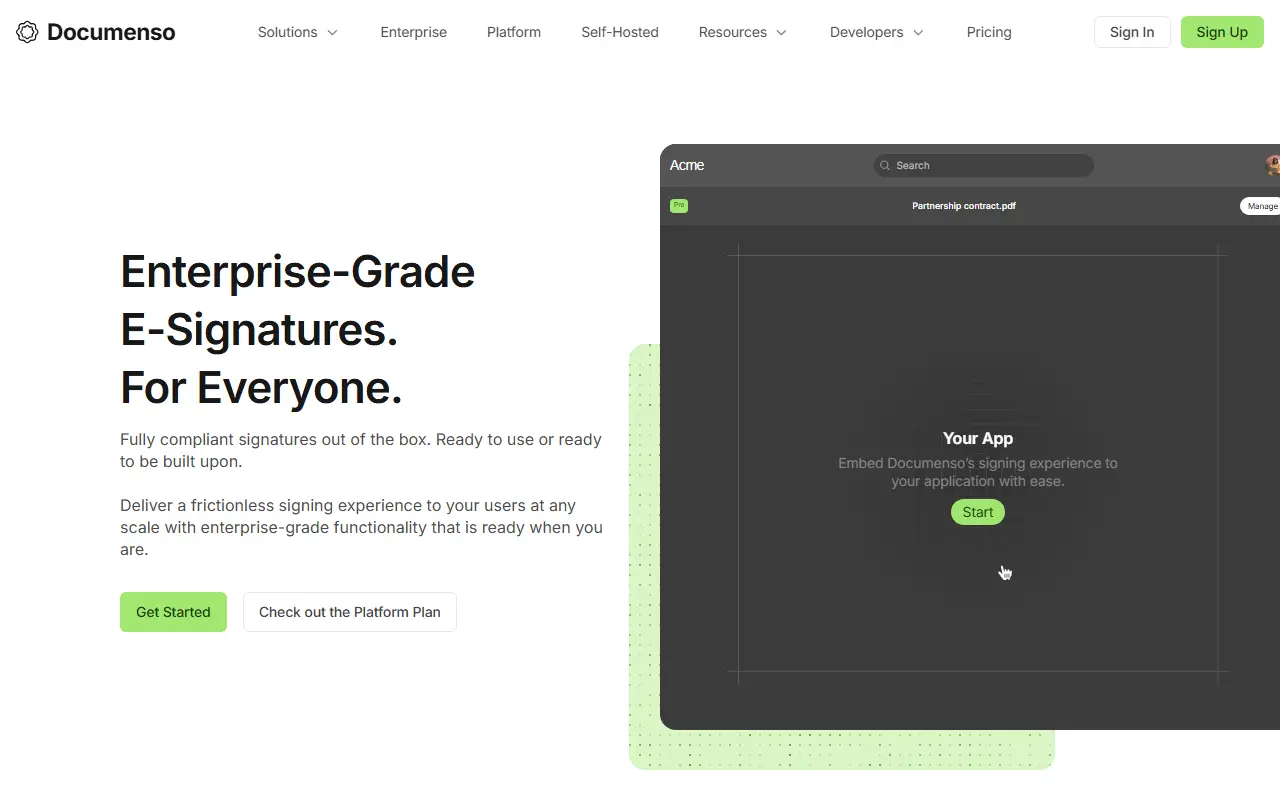
Documenso is an open-source alternative to DocuSign for signing documents digitally. Its stated aim is to build trust by letting people self-host the software and review how it works, rather than relying on a closed signing provider. It is released under the AGPL-3.0 license.
The product lets teams create templates, build signing workflows and integrate signing into other systems. Repository topics mention PDF signatures, digital signatures following the PAdES standard, e-signatures, PostgreSQL and Prisma. The README lists a stack of TypeScript, React Router v7, Hono, Prisma and Tailwind CSS with shadcn/ui and Radix UI components.
You can try it by self-hosting or by signing up on documenso.com, and an Enterprise plan is offered to large organizations that need extra flexibility and control. The maintainers have paused external pull requests apart from a small group of trusted contributors and ask for detailed issues instead, while keeping the code open to read, audit, run and fork.
Key features
- Digital document signing
- Reusable document templates
- Signing workflows and integrations
- PDF e-signatures with PAdES topic support
- Self-hosting with PostgreSQL
- Enterprise plan for large organizations
Pricing: Free plan with 5 documents a month. Individual is $25, Teams $40 and Platform $250 per month on yearly billing; Enterprise and self-hosted licences are quoted.
#5
Huly is an all-in-one platform with project management, chat, CRM, HR and recruiting, positioned as a Linear and Jira alternative; this repository is frozen and no longer maintained.
- GitHub stars
- 28k
- Last commit
- 4 days ago
- Latest release
- v0.7.426
- Licence
- EPL-2.0
- Self-hosted
- Yes
huly.io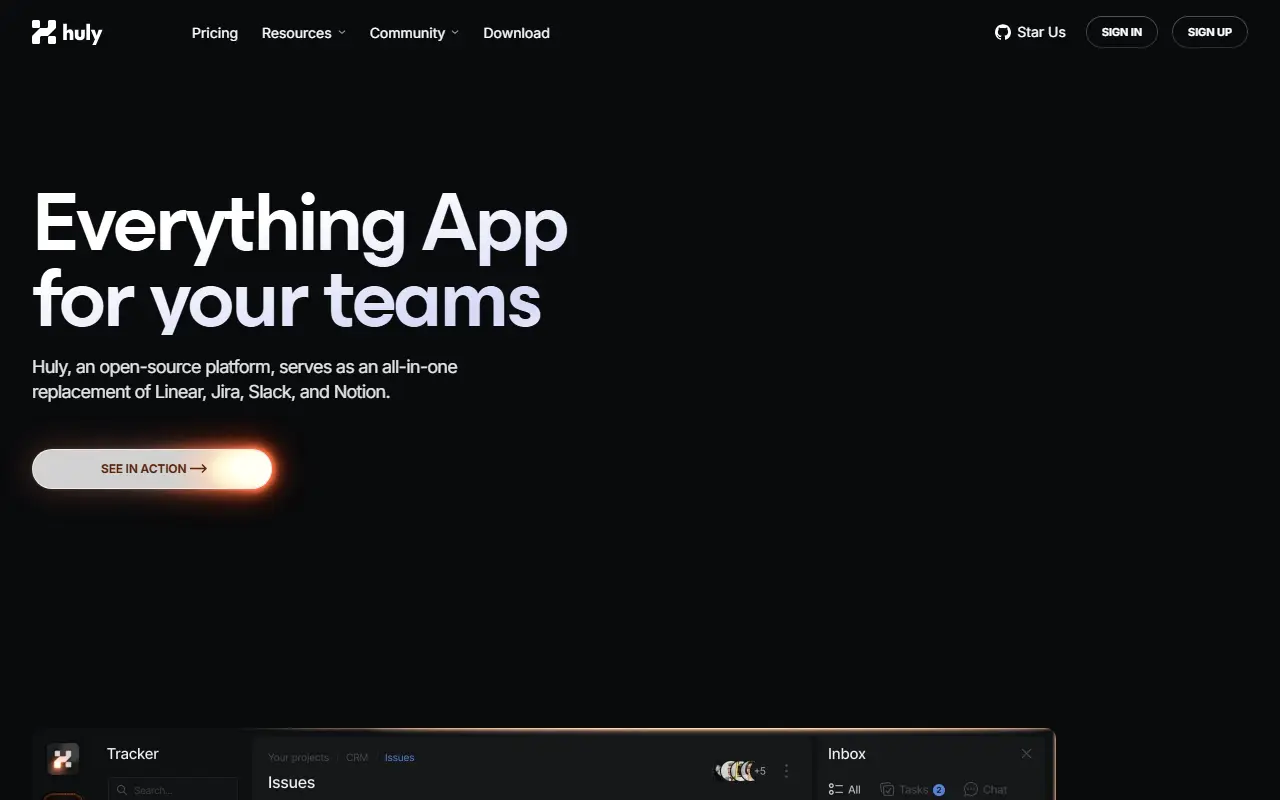
Huly is an open-source platform meant to replace several tools at once, including Linear, Jira, Slack, Notion and Motion. Under the hood the Huly Platform is a framework for developing business applications such as CRM systems, and this repository includes applications for chat, project management, CRM, HR management and applicant tracking, with team and issue management covered too.
There are two important notices. First, the repository is frozen and no longer actively maintained, with development continuing in the Platform-Collective/platform repository. Second, the managed Huly service was shut down since nobody is funding its hosting any more. The remaining option is to self-host Huly or use another hosted provider, and the README points to a backup and restore guide and a community for migration help.
The code is written in TypeScript and licensed under EPL-2.0. Other teams have built products on top of the platform. Anyone interested in Huly today should look at the successor repository for current source code, issues and releases rather than relying on this one.
Key features
- Project and issue management
- Built-in team chat
- Integrated CRM module
- HR management and applicant tracking
- Framework for building business apps
- Self-hosting with backup and restore guide
Pricing: Plans differ by storage and call traffic with unlimited users on every tier. Common is free; Rare, Epic and Legendary are paid monthly tiers with 100GB, 1TB and 10TB of storage, and a custom plan is available on request.
#6
A spreadsheet-style AI workspace backed by real PostgreSQL, where data, automated AI workflows and custom apps live together, hosted in the cloud or self-hosted.
- GitHub stars
- 22k
- Last commit
- yesterday
- Latest release
- release.2026-11-10T05-38-53Z.3830
- Self-hosted
- Yes
- Hosted version
- Available
teable.ai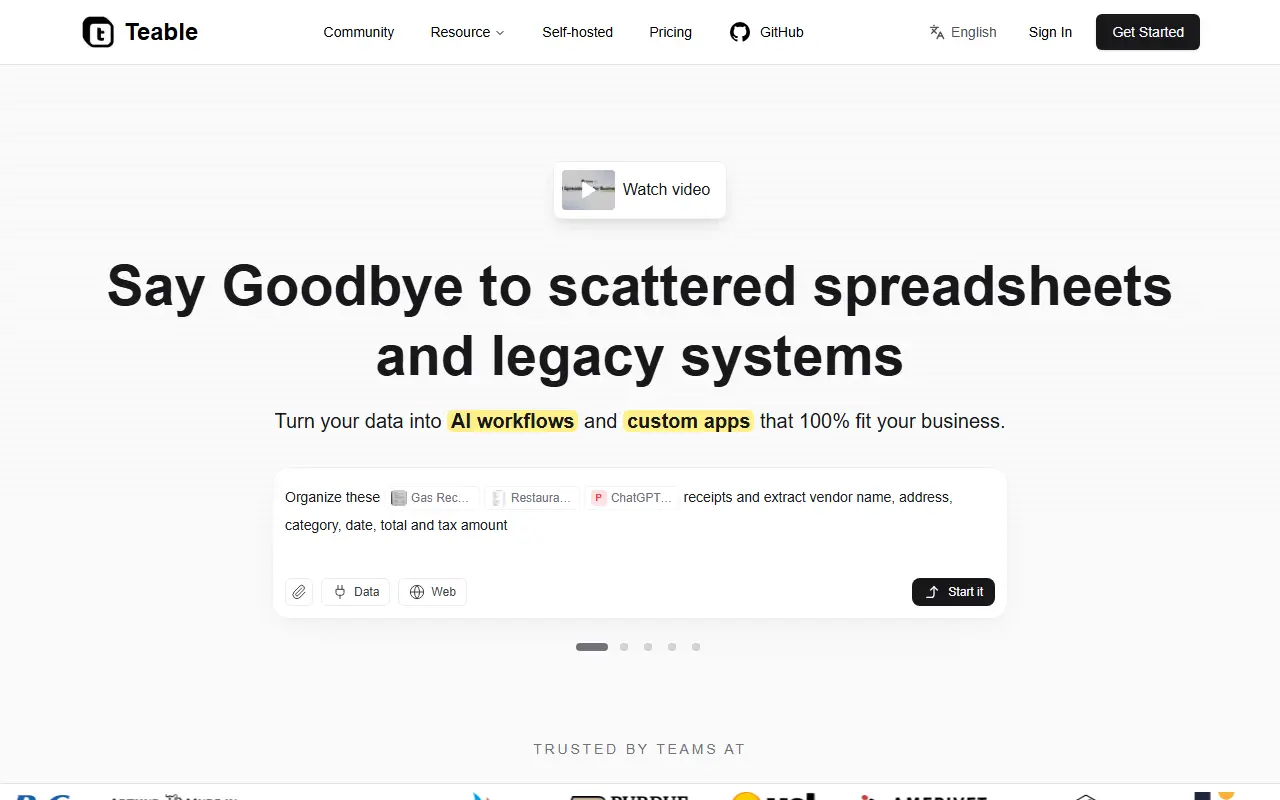
Teable pitches itself as an AI spreadsheet for business. On the surface it behaves like a simple spreadsheet, but underneath it stores data in real PostgreSQL, so teams get an Airtable-style experience on a database they can inspect. Topics tag it as an Airtable alternative, a no-code app builder and an internal tool platform.
The idea is to bring data management, AI workflows and app building into one place, with agents that work inside your live data and processes instead of on exported copies. The self-hosted distribution bundles several platforms together: a sandbox where each AI session runs in its own isolated container that exists only while the session lasts, a lightweight deployment platform for the apps your team builds, an AI chat and an App Builder.
You can try Teable on the hosted cloud at teable.ai, or follow the deployment guide to run a standalone install in minutes or the complete AI platform on your own machines. The code is written in TypeScript, and its license is listed as 'Other' on GitHub, so read the repository terms before commercial redistribution. It suits operations and business teams that want a spreadsheet front end with database-grade foundations.
Key features
- Spreadsheet interface over real PostgreSQL
- AI chat and agent workflows on live data
- Isolated container sandbox per AI session
- App Builder for custom internal apps
- App deployment platform for published apps
- Cloud-hosted or fully self-hosted
Pricing: Free plan for individuals. Pro costs $24 and Business $36 per seat per month, or $13 and $20 per seat per month when billed yearly.
#7
Baserow is a no-code platform for building databases, automations, apps and AI agents, positioned as an open-source Airtable alternative.
- GitHub stars
- 6.3k
- Last commit
- today
- Latest release
- 2.4.2
- Self-hosted
- Yes
- Hosted version
- Available
baserow.io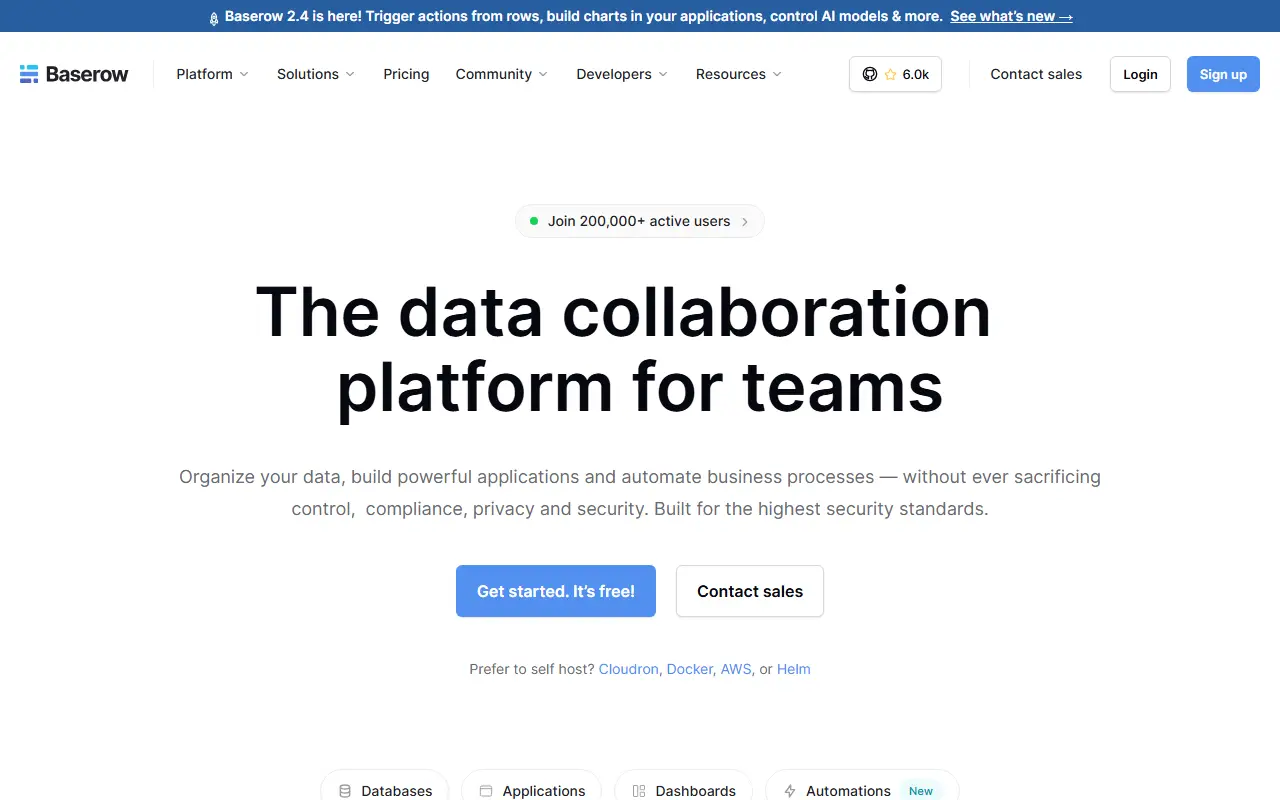
Baserow is an open-source, no-code platform that combines a spreadsheet-style database with automations, application building, dashboards and AI agents. It targets teams that want to structure data and build internal tools without writing code, and its repository is tagged as an Airtable alternative.
Capabilities include an AI Assistant that creates databases and workflows from natural-language instructions, an API-first design with a REST API, and extensibility for connecting to existing tools. The README states that the cloud service meets GDPR, HIPAA and SOC 2 Type II compliance requirements. The backend is written in Python and uses PostgreSQL for storage.
Baserow is available as a managed cloud service and as a self-hosted installation, which suits organizations that need to keep data on their own servers. The repository license is listed as 'Other' on GitHub, reflecting the open-source core alongside separately licensed premium and enterprise features, so check the terms for the features you need.
Key features
- Spreadsheet-style online database
- No-code app and automation builder
- AI Assistant for natural-language setup
- REST API with API-first design
- Dashboards over table data
- Cloud and self-hosted deployment
Pricing: Free plan with 3,000 rows per workspace. Premium costs $12 and Advanced $22 per user per month, or $10 and $18 billed yearly; Enterprise is on request.
#8
Anytype Desktop is the official client for Anytype, a local-first, end-to-end encrypted knowledge base for notes, tasks, wikis and custom data types.
- GitHub stars
- 9.1k
- Last commit
- 3 days ago
- Latest release
- v0.57.8-alpha
anytype.io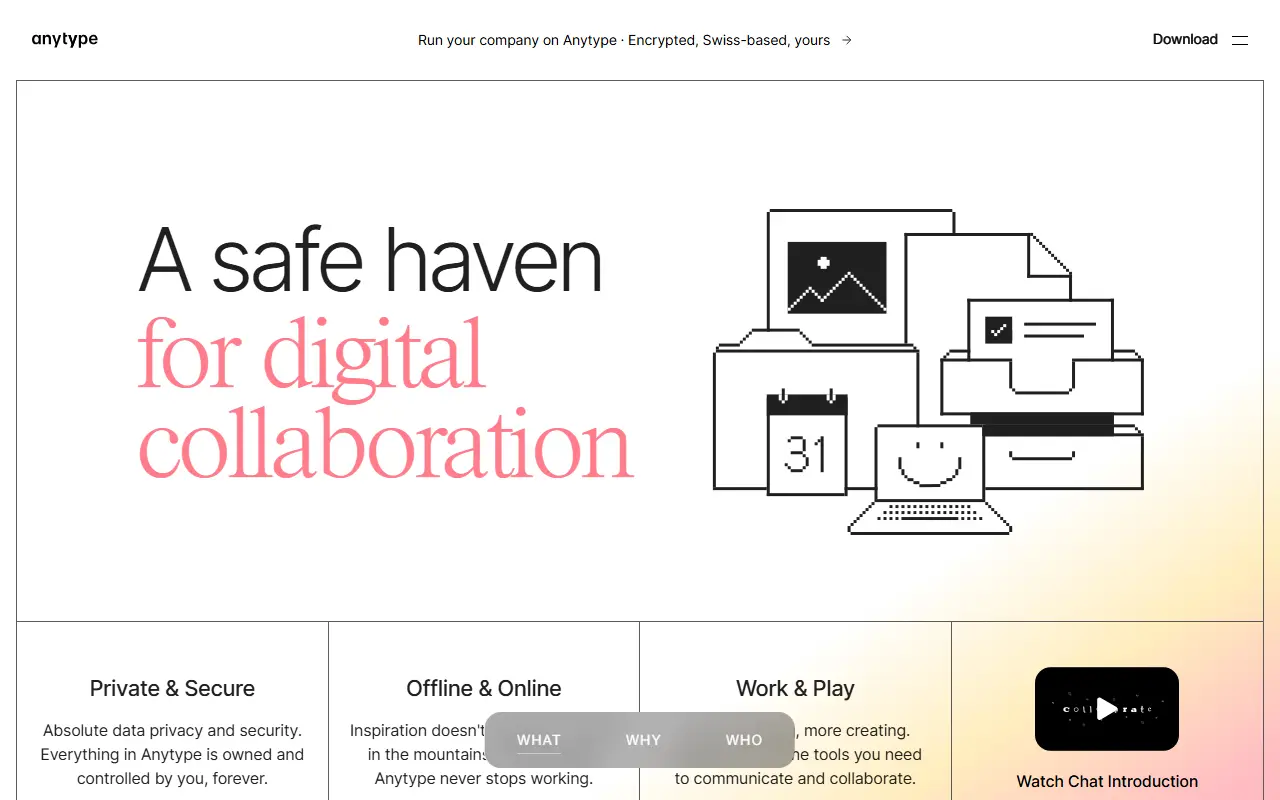
Anytype Desktop is the official desktop client for Anytype, a personal knowledge base for macOS, Windows and Linux. It lets you collect pages, tasks, wikis and journals and link them together, while keeping data stored locally and encrypted across your devices.
The client is built around composable blocks such as text, databases, kanban boards and calendars, and you can define your own Types to shape the data model. Storage is offline-first with optional peer-to-peer sync, and encryption relies on the any-sync protocol. It is an Electron application written in TypeScript, and it can be extended through a gRPC API and AI agents described in the repository.
Sign-in uses an Any-ID, and installers are published on the releases page and the download site. The code is published under the Any Source Available License 1.0 rather than a standard open-source licence, and the README includes instructions for building from source and updating the middleware.
Key features
- Offline-first local storage
- Optional peer-to-peer sync
- End-to-end encryption through any-sync
- Block-based pages, databases, kanban and calendar
- Custom Types for your own data model
- gRPC API for extensions

An open source, self-hosted project management tool with boards, offered as a desktop app or personal server, now listed as unmaintained.
- GitHub stars
- 27k
- Last commit
- 5 mo ago
- Latest release
- v8.0.0
- Self-hosted
- Yes
Focalboard is an open source, multilingual, self-hosted project management tool presented as an alternative to Trello, Notion and Asana. It is meant to define, organize, track and manage work across individuals and teams. The repository is tagged with kanban boards and goal tracking.
The standalone project has two editions. Personal Desktop is a single-user macOS, Windows or Linux desktop app for personal todos and projects. Personal Server is a multi-user server for development and personal use, with a compiled version that can be installed on Ubuntu. The Mattermost plugin version lives in a separate repository.
The README warns that the repository is currently not maintained, and asks for volunteers to become maintainers. Building from source needs Go and a web app build; the server is run locally and opened in a browser on port 8000, which is set in config.json. The desktop apps package the server to run against SQLite.
Key features
- Personal Desktop app for Windows, Mac and Linux
- Multi-user Personal Server edition
- Multilingual and self-hosted
- Boards API documentation
- Desktop apps package the server to run on SQLite

Colanode is an open-source, local-first workspace with chat, Notion-style pages, databases and files that you can self-host.
- GitHub stars
- 5.2k
- Last commit
- 7 mo ago
- Latest release
- v0.4.7
- Licence
- Apache-2.0
- Self-hosted
- Yes
colanode.com
Colanode is an all-in-one collaboration platform built around data privacy and control. It combines real-time chat, rich-text pages for documents, wikis and notes, customizable databases and file management in one workspace, positioned as an open-source alternative to Slack and Notion.
It has a client app, available on the web and as an Electron desktop app, and a self-hosted server. One app can connect to several servers, each holding one or more workspaces for different teams or projects. Databases support custom fields and table, kanban and calendar views. The local-first design writes every change to a local SQLite database first and syncs it in the background, so reads are immediate and people can keep working when offline.
The topics reference CRDTs and Yjs for real-time collaboration. Colanode is written in TypeScript and licensed under Apache-2.0, and because you run the server yourself you decide where the data is stored. It suits individuals, small projects and larger teams that want to avoid depending on a hosted vendor.
Key features
- Real-time team chat
- Rich-text pages and wikis
- Databases with table, kanban and calendar views
- File management in workspaces
- Local-first SQLite sync
- Web and desktop clients
Pricing: Cloud plans include unlimited users and scale by storage: free Seed (10GB), Forge $20, Scale $100 and Titan $500 per month. Enterprise and custom deployments are by contact.
Coda alternatives: questions
- What is the best open-source alternative to Coda?
- AppFlowy is the top-ranked open-source alternative to Coda on Enlisted: An open-source AI collaborative workspace for notes, wikis, tasks and projects, built as a Notion alternative that keeps you in control of your data. Other strong options are NocoDB, Outline, Documenso and Huly.
- What are the best commercial alternatives to Coda?
- Fibery, Nuclino, Airtable, SmartSuite and Notion are among the hosted, closed-source alternatives to Coda listed on Enlisted, which lists 55 in total. Compare their pricing and features on each tool page.
- Are these Coda alternatives free?
- All 11 are open source, so the code is free to use under its licence, and all of them can be self-hosted on your own server or computer. 6 also offer a paid or managed cloud version if you'd rather not host it yourself.
- How is this list of Coda alternatives ranked?
- By a score built from GitHub stars, star growth over the last 30 days and how recently the code changed. 8 of these projects shipped code in the last 30 days. Data is refreshed daily, and nobody can pay to move up.
 TrackMedia
 TrackRev