7,363 open-source and SaaS tools, with GitHub stats refreshed every day.

17 alternatives ranked by real activity

Open-source Claude alternatives

A curated, ranked list of the 17 best open-source alternatives to Claude.

The best open-source alternative to Claude is Ollama. If that doesn't suit you, other good options are Open WebUI, Jan, oh-my-claudecode and OpenWork.

Claude alternatives are mainly AI tools, but some are also AI infrastructure tools. 11 of them shipped code in the last 30 days, 17 can be self-hosted, and 11 use a permissive licence.

Last updated October 2, 2026 · ranked by GitHub stars, growth and recent commits

Ollama

A tool for downloading and running open large language models locally through a command line and REST API, with Docker support and many integrations.

GitHub stars
182k
Last commit
today
Latest release
v0.35.0
Licence
MIT
Self-hosted
Yes
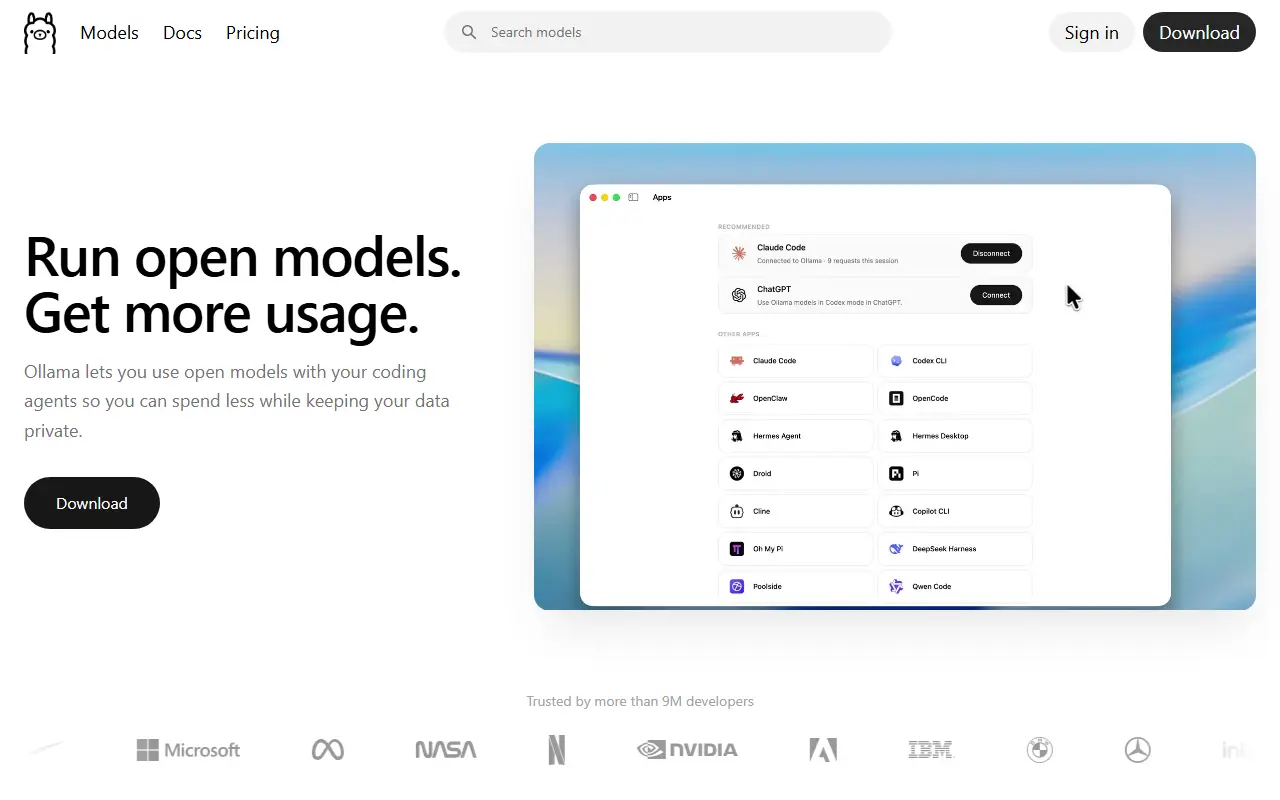
ollama.comOllama homepage screenshot

Ollama makes it straightforward to run open large language models on your own machine. You install it on macOS, Windows or Linux, or use the official Docker image, then pull a model and chat with it from the command line. It is written in Go and released under the MIT license, and it builds on the llama.cpp project for inference.

Besides the CLI, Ollama provides a REST API for managing and running models, with official Python and JavaScript client libraries. Models can be imported and customized through a Modelfile, and an online library lists what is available. It can be connected to coding agents and assistants such as Claude Code, OpenCode, Codex and OpenClaw, and many community chat interfaces, including Open WebUI and LibreChat, work with it.

Because models run on your own hardware, Ollama can serve as a self-hosted alternative to cloud assistants such as ChatGPT and Perplexity when privacy, offline use or cost control matter. It is aimed at developers and hobbyists experimenting with open models, and at teams that want to wire local models into their own applications.

Key features

  • Run open language models locally from the CLI
  • REST API for managing and running models
  • Official Python and JavaScript libraries
  • Modelfile for customizing and importing models
  • Official Docker image
  • Integrations with coding agents and chat interfaces

Pricing: Running models locally is free, and the Free plan includes starter cloud credits. Pro costs $20, Max $100 and Team $500 per month with included usage credits; Enterprise is custom.

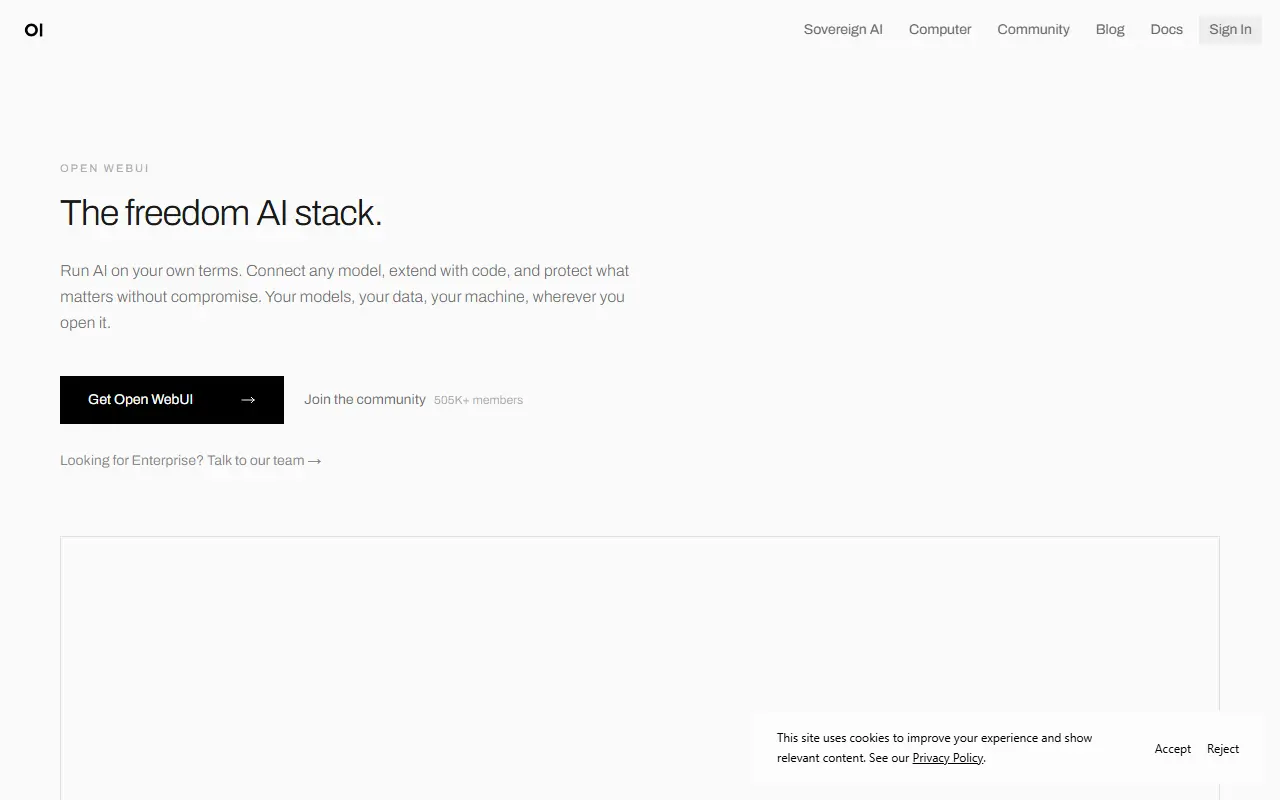
Open WebUI

A self-hosted chat interface for local and cloud language models, supporting Ollama and OpenAI-compatible APIs, with RAG, user roles and a plugin system.

GitHub stars
154k
Last commit
yesterday
Latest release
v0.11.4
Self-hosted
Yes
openwebui.comOpen WebUI homepage screenshot

Open WebUI is a self-hosted web interface for working with large language models. It connects to Ollama for local models and to any OpenAI-compatible endpoint, so one deployment can front LM Studio, Groq, Mistral, OpenRouter, vLLM and similar backends side by side. It is designed to keep working fully offline when you rely only on local models.

Administrators get role-based access control with user groups and per-group permissions, which suits shared team or household installs. Beyond chat there is retrieval-augmented generation over your documents, custom models that bundle instructions, tools and knowledge into agents, and an extension system made of filters, actions, pipes, tools and skills. External services attach through MCP, MCPO and OpenAPI tool servers, and an optional Open Terminal feature gives agents a filesystem to work in.

You can install it with pip, uv or Docker, or deploy it to Kubernetes using kubectl, kustomize or Helm, and container images are tagged for bundled Ollama and for CUDA. The project lists an enterprise plan for organizations that want vendor support. Its license is listed as custom rather than a standard one, so review the terms before reselling or rebranding it.

Key features

  • Connects to Ollama and OpenAI-compatible APIs
  • Role-based access control with user groups
  • Retrieval-augmented generation over your own documents
  • Plugin system with filters, tools and pipes
  • MCP and OpenAPI tool server support
  • Custom agents combining models, tools and knowledge
  • Install via pip, Docker or Kubernetes

Pricing: Free to self-host; an enterprise plan is available through the vendor's sales team.

Jan

An open-source desktop app that acts as a ChatGPT replacement, running local language models offline or connecting to cloud providers, with an OpenAI-compatible local server.

GitHub stars
45k
Last commit
yesterday
Latest release
v0.8.4
Self-hosted
Yes
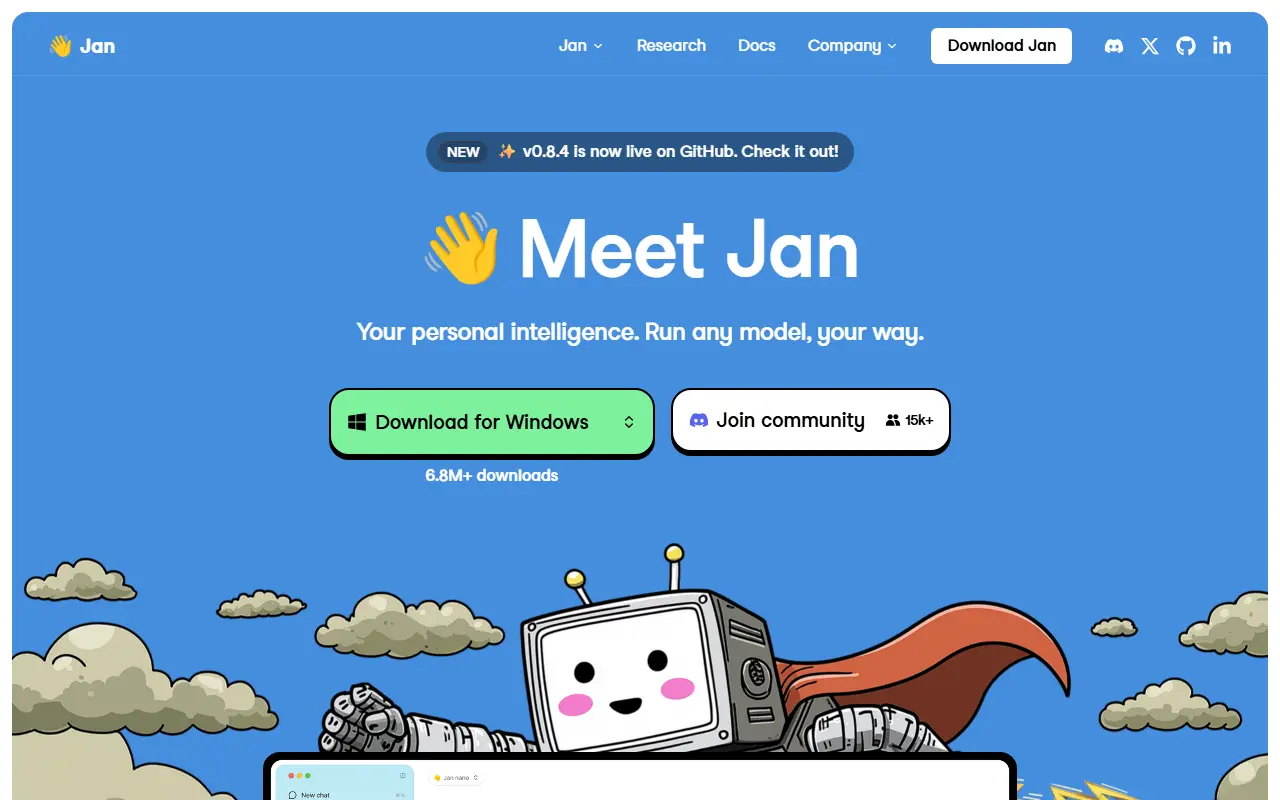
jan.aiJan homepage screenshot

Jan is an open-source desktop application that serves as a ChatGPT alternative you control. It can download and run language models such as Llama, Gemma, Qwen and GPT-oss from Hugging Face entirely on your own computer, so conversations stay private and work without an internet connection.

When you want more capability than local hardware allows, Jan can connect to cloud models from OpenAI, Anthropic, Mistral, Groq, MiniMax and others from the same interface. You can create custom assistants for specific tasks, and Model Context Protocol support adds agentic abilities. A built-in local server on localhost port 1337 exposes an OpenAI-compatible API, so other applications can use your local models as a drop-in backend.

Jan is built with Rust and Tauri and ships installers for Windows, macOS and Linux in deb and AppImage form. Its license is listed as 'Other' on GitHub, so check the repository terms before redistributing it. It is meant for people who want local AI with a polished interface rather than a command line.

Key features

  • Download and run local LLMs from Hugging Face
  • Connect to OpenAI, Anthropic, Mistral and Groq
  • Custom assistants for specific tasks
  • OpenAI-compatible local server
  • Model Context Protocol integration
  • Installers for Windows, macOS and Linux

Pricing: Free and open source; running local models costs nothing beyond your own hardware, and cloud providers bill you separately.

oh-my-claudecode

A multi-agent orchestration add-on for the Claude Code CLI that coordinates teams of AI agents with workflows and parallel execution, aimed at developers.

GitHub stars
40k
Last commit
yesterday
Latest release
v5.6.0
Licence
MIT
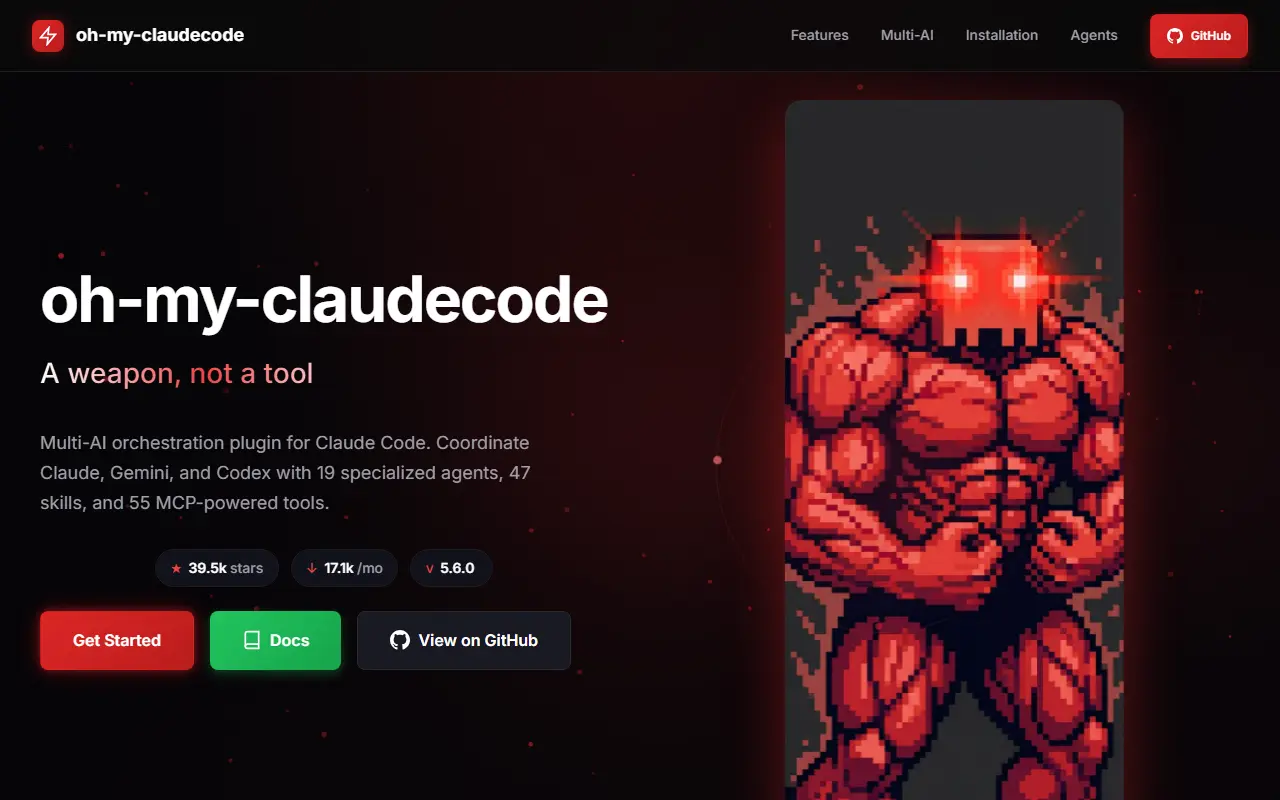
oh-my-claudecode.devoh-my-claudecode homepage screenshot

Oh My Claudecode, often shortened to OMC, is an open-source add-on for Claude Code, Anthropic's command line coding assistant. It is not a standalone application: it layers multi-agent orchestration on top of an existing Claude Code setup so that a team of AI agents can share and run work together.

The project advertises a zero learning curve, meaning developers can use its prepared workflows instead of learning every Claude Code feature themselves. Topics highlight agentic coding, multi-agent systems and parallel execution. The repository points to documentation, a CLI reference, workflows and a migration guide, and it has sibling projects for other tools, including oh-my-codex for the OpenAI Codex CLI and a lighter alternative called gajae-code.

It is MIT licensed and written in TypeScript, with translated READMEs in several languages. Because it runs locally alongside the Claude Code CLI, there is nothing to host. It is intended for developers who already use AI coding agents and want a structured way to coordinate several of them.

Key features

  • Multi-agent orchestration for Claude Code
  • Parallel agent execution
  • Prepared workflows and CLI reference
  • Migration guide between versions
  • Related variant for Codex CLI
  • Translated README files

Pricing: Free and open source under the MIT license.

OpenWork

A free, open-source desktop app where AI agents work on your files, built on OpenCode, compatible with 50+ model providers and shareable skills and MCP servers.

GitHub stars
24k
Last commit
yesterday
Latest release
v0.18.54
Self-hosted
Yes
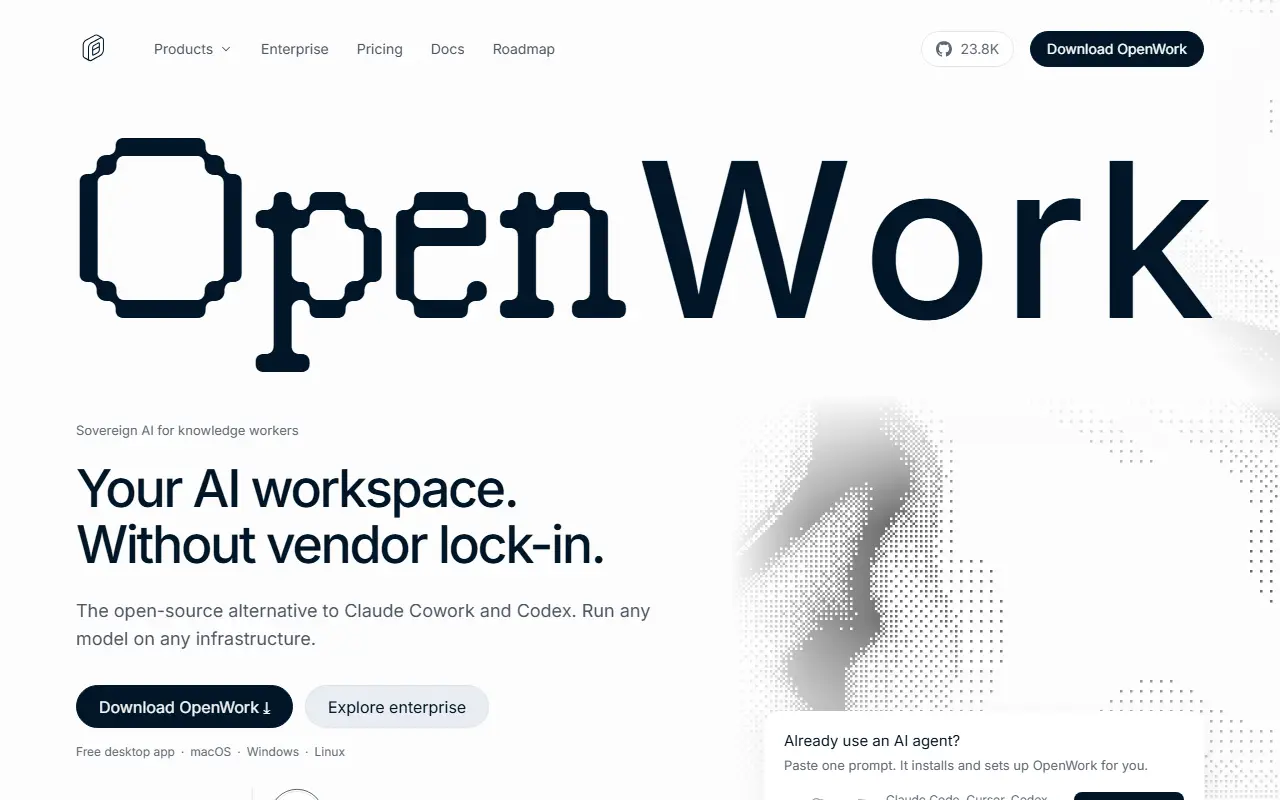
openworklabs.comOpenWork homepage screenshot

OpenWork is a free, open-source desktop application, available on macOS, Windows and Linux, in which AI agents work on your own files. It is presented as an alternative to Claude Cowork and Codex and is built on OpenCode. It is model-agnostic: connect more than fifty providers with your own API keys, or run local models through Ollama, and no OpenWork account is needed to use it locally.

A key idea is sharing: teams can distribute skills and MCP servers, and attaching one OpenWork MCP server to Codex, Claude Code, Cursor or a similar agent lets you carry the same skills, MCPs and connected services across tools, teammates and machines. The desktop app gives you a dedicated workspace but is optional, because the capabilities work from whichever agent you already use. For bigger organizations an admin interface lets administrators release capabilities, control who can use them and set up either shared or per-user connections.

The desktop app is MIT licensed according to the README, while the repository license is listed as 'Other' on GitHub, so confirm what applies to each component. It suits individuals and teams who want agentic automation of file-based work with control over models and data.

Key features

  • Desktop app for macOS, Windows and Linux
  • Agents working on your local files
  • Any model: 50+ providers or local via Ollama
  • Shareable skills and MCP servers
  • Single MCP to reuse skills across other agents
  • Admin interface for access and connections

Pricing: The first 5 cloud seats are free and self-hosting is free for up to 5 users. Team costs $10 per seat per month; Enterprise is custom, and self-hosting is free to evaluate for 30 days at any size.

Suna

Suna, published as Kortix, is an open-source platform for running AI agents that produce finished work, with any model and your own infrastructure.

GitHub stars
20k
Last commit
today
Latest release
v0.13.47
Self-hosted
Yes
Hosted version
Available

Suna is the repository of Kortix, which describes itself as an open-source AI Management System. Instead of a single chatbot, it organizes AI agents that carry out tasks and deliver finished work such as reports, code and replies. Agents, the skills they share, company memory and connectors to other services are all kept as files in a git repository, so configuration is versioned and can be reviewed like code.

Each agent session runs in an isolated cloud sandbox on its own branch, and the result lands as a change request that a human approves before it is merged. The platform works with any model provider using your own API keys, rather than being tied to a single model vendor.

The project positions itself as an open alternative to closed, hosted agent products such as ChatGPT, offering source access and the option to run on your own cloud or on-premise network. The repository lists its license as 'Other', so check the license file before commercial use. A managed cloud edition is also available.

Key features

  • AI agents that deliver finished work
  • Isolated cloud sandbox for each session
  • Agents, skills and memory stored in git
  • Human-approved change requests
  • Works with any model provider and your API keys
  • Self-host or use the managed cloud

Pricing: Self-hosting is described as free; the README lists the managed cloud at $40 per seat per month plus usage.

Hugging Face Chat UI

SvelteKit chat interface for large language models that connects to any OpenAI-compatible API and powers HuggingChat.

GitHub stars
11k
Last commit
yesterday
Latest release
v0.10.0
Licence
Apache-2.0
Self-hosted
Yes
Hosted version
Available
huggingface.coHugging Face Chat UI homepage screenshot

Chat UI is a chat interface for LLMs built as a SvelteKit application. It is the open source codebase behind HuggingChat on Hugging Face and lets you run a similar conversational front end against models you choose, whether hosted or running locally.

The current version speaks only to OpenAI-compatible APIs, configured through a base URL and a models endpoint. The README lists the Hugging Face Inference Providers router, a llama.cpp server, Ollama through its OpenAI-compatible bridge, OpenRouter and Poe as example backends. Older provider-specific integrations were removed from the main branch but remain available on a legacy branch.

Setup involves creating an .env.local file with the endpoint and key, choosing a database option, and launching the app, with an optional Docker image. The project is written in TypeScript with Tailwind CSS and is licensed under Apache-2.0, making it a base for self-hosted assistants.

Key features

  • Chat front end for any OpenAI-compatible API
  • Works with llama.cpp, Ollama and OpenRouter
  • Hugging Face Inference Providers support
  • Configured through a simple .env.local file
  • Optional Docker image
  • SvelteKit and Tailwind CSS codebase

Pricing: Free and open source under the Apache-2.0 license.

Enchanted

Enchanted is an open-source iOS and macOS app for chatting with language models you host yourself through Ollama.

GitHub stars
6k
Last commit
2 mo ago
Latest release
v1.8.2
Licence
Apache-2.0
Self-hosted
Yes

Enchanted is an open-source app for macOS, iOS and visionOS that provides a chat interface for privately hosted language models. It works with Ollama, so models such as Llama 2, Mistral and Vicuna run on a server you control while the app supplies the polished front end. The README describes it as essentially a ChatGPT-style interface that connects to your own models.

The feature list includes conversation history stored on the device, markdown rendering for tables, lists and code blocks, voice prompts, read-aloud text to speech, image attachments, a configurable system prompt, editing messages or resubmitting them with a different model, deleting conversations, light and dark modes and a Spotlight-style panel on macOS. The project notes that all features work offline against your own server.

You need to run your own Ollama server, version 0.1.14 or later, and point the app at it, either publicly or through your own network setup. The app is distributed through the App Store and licensed under Apache-2.0. The README mentions that a successor project called Jaz is the new iteration of this one.

Key features

  • Chat interface for Ollama-hosted models
  • Conversation history stored on the device
  • Markdown rendering for code and tables
  • Voice prompts and read-aloud
  • Image attachments for prompts
  • Custom system prompts
  • Spotlight-style panel on macOS

ChatMCP

ChatMCP is a cross-platform AI chat client written in Flutter that implements the Model Context Protocol to connect language models with tools.

GitHub stars
2.2k
Last commit
25 days ago
Latest release
v0.0.76
Licence
Apache-2.0

ChatMCP is an AI chat client that implements the Model Context Protocol, the standard used to connect language models to external tools and data. It is built with Flutter and Dart, so the same app runs on macOS, Windows, Linux, iOS, Android, and the web. It is released under the Apache-2.0 license.

Installers are provided through GitHub releases for desktop and Android, an iOS build through TestFlight, and a web version hosted on GitHub Pages. The README notes Linux runtime requirements for AppImage and DEB packages on Ubuntu 22.04 and 24.04, and mentions improvements such as better dark theme support and unified data storage in recent versions. Documentation is available in English, Chinese, and Turkish.

ChatMCP suits developers and enthusiasts who want a single graphical client for trying MCP servers with the language model of their choice, rather than using a command-line host. It is a client application, so there is no server component to host.

Key features

  • Implements the Model Context Protocol
  • Runs on desktop, mobile, and the web
  • Built with Flutter
  • Dark theme support
  • Releases for macOS, Windows, Linux, and Android
  • Multilingual documentation

Pricing: Free and open source under the Apache-2.0 license.

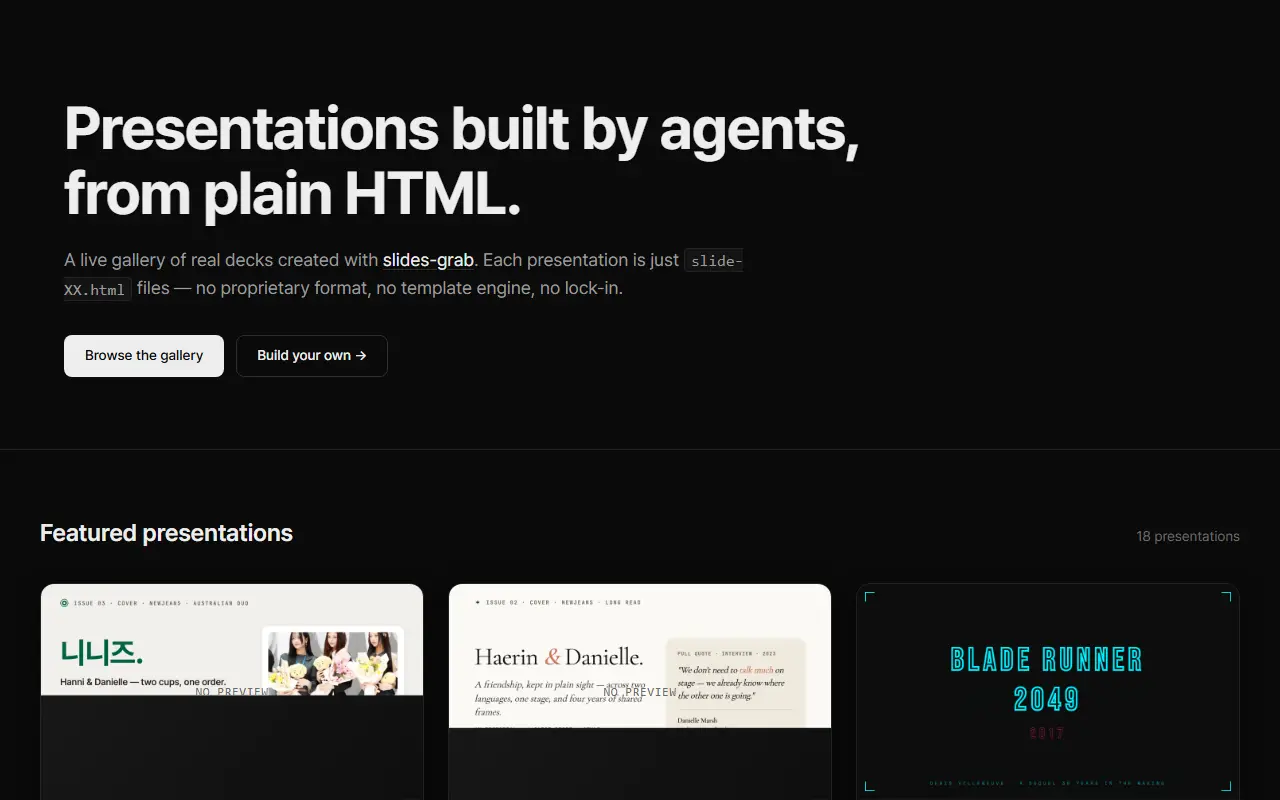
slides-grab

slides-grab is a toolkit that lets coding agents like Claude Code and Codex generate HTML slides, then edit, check and export them to PDF.

GitHub stars
1.2k
Last commit
yesterday
Latest release
v1.5.2
Licence
MIT
Self-hosted
Yes
nomadamas.github.ioslides-grab homepage screenshot

slides-grab is a harness, editor and linter for creating presentations with AI coding agents. Slides are generated as plain HTML and CSS, which agents handle well, and you can select an area on a slide and ask the agent to change it, while simple tweaks such as text, size or bold can still be done by hand.

The project supports Claude Code and Codex and describes itself as an open-source alternative to Claude Design. Decks can be converted to PDF or to an experimental PPTX format. There is also a build for a ChatGPT plugin ZIP containing the published skills, though export, visual validation, the local editor and image generation need the local Node.js and Playwright runtime. A gallery of example presentations is available online.

The editor is a single JavaScript file, so adding new coding agents or changing designs is straightforward. The project requires Node.js 20 or newer, uses main as its only integration branch, and is licensed under MIT. It runs locally on your own machine with your own agent subscription. It suits developers and technical presenters who want AI-assisted decks they can version and edit as code.

Key features

  • AI agents generate slides as HTML and CSS
  • Select an area on a slide to request edits
  • Manual editing of text, size, and bold
  • Export to PDF and experimental PPTX
  • Works with Claude Code and Codex
  • ChatGPT plugin package build

Pricing: Free and open source under the MIT licence.

7 more Claude alternatives

Claude alternatives: questions

What is the best open-source alternative to Claude?
Ollama is the top-ranked open-source alternative to Claude on Enlisted: A tool for downloading and running open large language models locally through a command line and REST API, with Docker support and many integrations. Other strong options are Open WebUI, Jan, oh-my-claudecode and OpenWork.
Are these Claude alternatives free?
All 17 are open source, so the code is free to use under its licence, and all of them can be self-hosted on your own server or computer. 4 also offer a paid or managed cloud version if you'd rather not host it yourself.
How is this list of Claude alternatives ranked?
By a score built from GitHub stars, star growth over the last 30 days and how recently the code changed. 11 of these projects shipped code in the last 30 days. Data is refreshed daily, and nobody can pay to move up.

People also look for alternatives to…

View all