7,363 open-source and SaaS tools, with GitHub stats refreshed every day.

6 alternatives ranked by real activity

Open-source Bamboo alternatives

A curated, ranked list of the 6 best open-source alternatives to Bamboo.

The best open-source alternative to Bamboo is Jenkins. If that doesn't suit you, other good options are Concourse CI, GoCD, Buildbot and PHP Censor.

Bamboo alternatives are mainly CI/CD & DevOps tools. 4 of them shipped code in the last 30 days, 6 can be self-hosted, and 5 use a permissive licence.

Last updated October 2, 2026 · ranked by GitHub stars, growth and recent commits

Jenkins

Jenkins is an open-source, Java-based automation server for building, testing and deploying software, extended through plugins.

GitHub stars
27k
Last commit
yesterday
Latest release
jenkins-2.584
Licence
MIT
Self-hosted
Yes
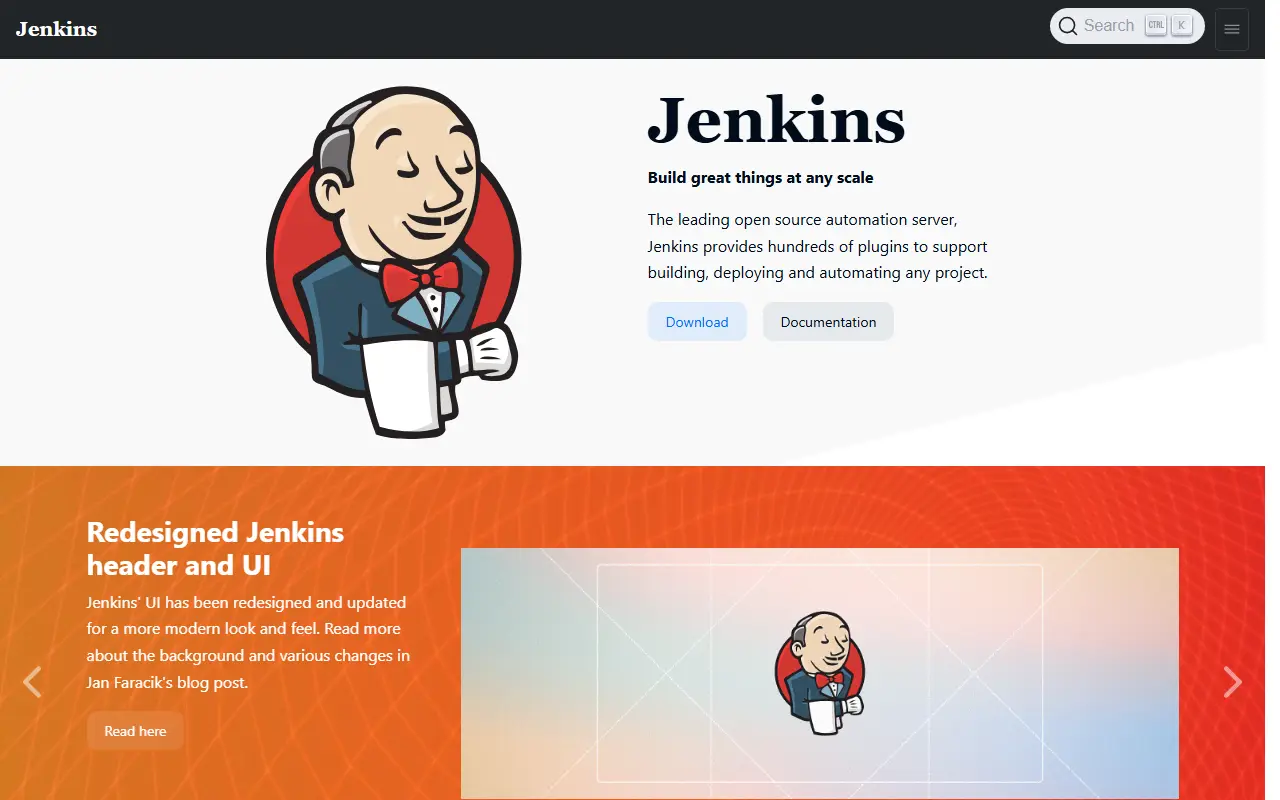
jenkins.ioJenkins homepage screenshot

Jenkins is an open-source automation server written in Java. Teams use it to automate parts of their development workflow, including building projects, running tests to catch bugs early, performing static code analysis and deploying software. The README states that more than 2,000 plugins extend it to automate nearly any task. It is released under the MIT license, and its topics include continuous integration, delivery and pipelines as code.

The project distributes official downloads as WAR archives, Docker images, and native packages or installers for several Linux distributions and Windows. Two release lines exist: weekly releases carrying all new features and fixes, and Long-Term Support releases that receive periodic backported bug fixes. The repository links to contributing guidelines, good first issues, developer documentation, governance and adopters information. As a self-managed server, you operate and secure your own Jenkins instance.

Key features

  • Automation server for build, test and deploy
  • Plugin ecosystem with over 2,000 plugins
  • Pipelines as code
  • WAR, Docker image and native package installs
  • Weekly and Long-Term Support release lines
  • Static code analysis and deployment automation

Pricing: Free and open source under the MIT license.

Concourse CI

A container-based automation system in Go, mostly used for CI/CD, that defines pipelines declaratively and runs them on stateless workers.

GitHub stars
7.9k
Last commit
today
Latest release
v8.3.1
Licence
Apache-2.0
Self-hosted
Yes
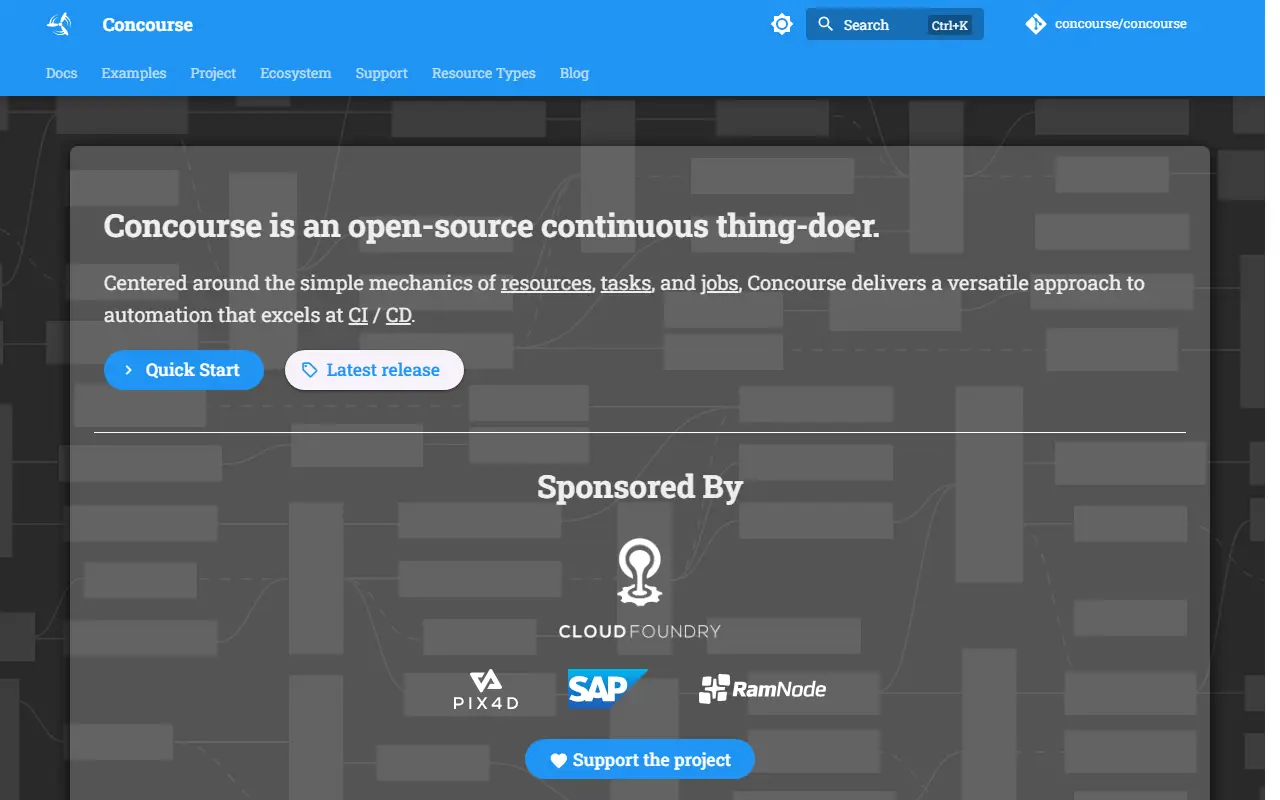
concourse-ci.orgConcourse CI homepage screenshot

Concourse is an automation system written in Go, most often used for CI/CD and built to scale from simple to complex pipelines. It is deliberately opinionated: the project emphasizes idempotency, immutability, declarative configuration, stateless workers and reproducible builds.

It is distributed as a single concourse binary on the releases page, and other supported formats include a Docker image, a Kubernetes Helm chart and a BOSH release. A quick start walks through running it locally. Topics show that tasks run in containers using containerd and runc, and the web interface was built with Elm.

Concourse is licensed under Apache-2.0. It is run on your own infrastructure by teams that prefer pipelines described as code, with each job's inputs and outputs explicit, over scripts configured through a UI. It suits platform and DevOps teams wanting repeatable, container-isolated build and deploy pipelines.

Key features

  • Declarative pipeline configuration
  • Container-based task execution
  • Stateless workers for scaling
  • Reproducible builds by design
  • Single binary distribution
  • Docker, Helm and BOSH packaging

Pricing: Free and open source under the Apache-2.0 licence.

GoCD

GoCD is a continuous delivery server that models build, test and release pipelines, sponsored by Thoughtworks and written mainly in Java and TypeScript.

GitHub stars
7.4k
Last commit
today
Latest release
26.1.0
Licence
Apache-2.0
Self-hosted
Yes
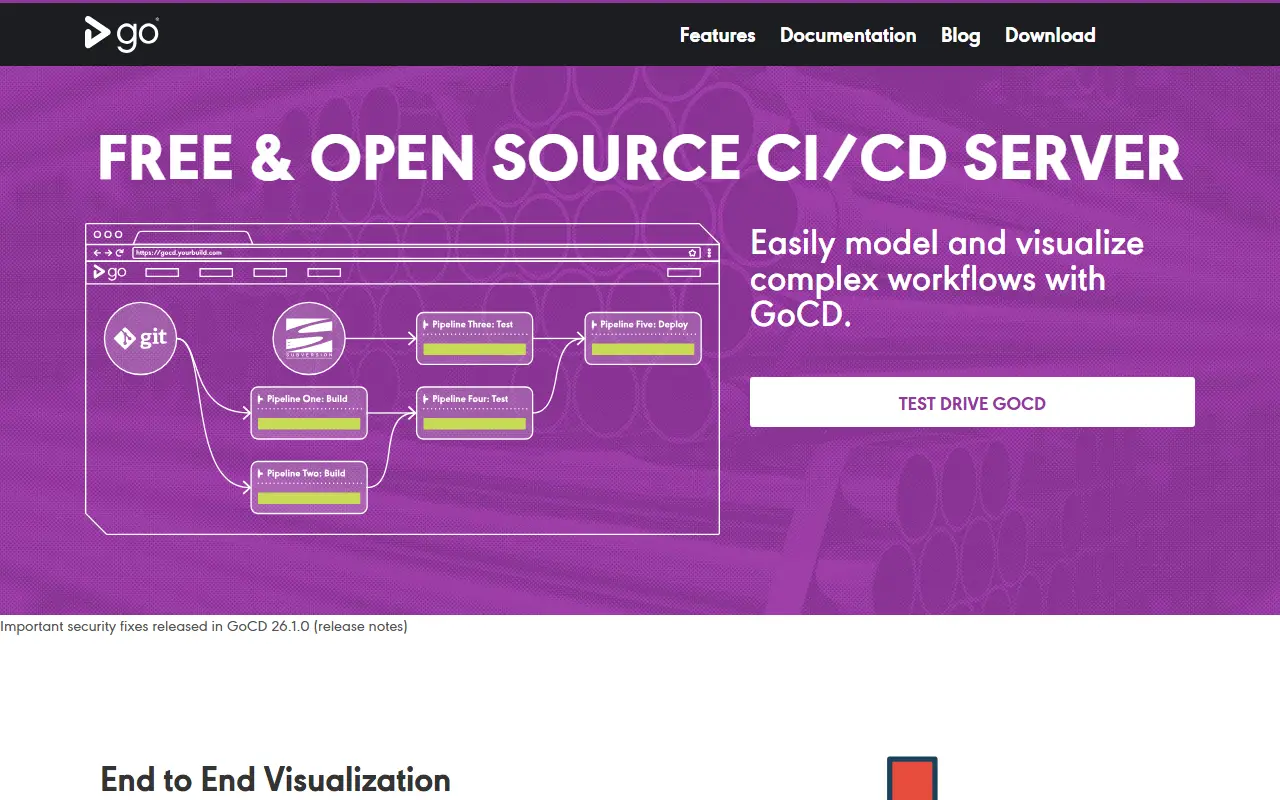
gocd.orgGoCD homepage screenshot

GoCD is a continuous delivery server that helps automate and streamline the build, test and release cycle so that software can be delivered continuously with fewer worries. The repository is the project's main code base, and the project is sponsored by Thoughtworks.

Newcomers can use the Test Drive GoCD page to build a first pipeline while learning the key concepts, download releases from the website and read the documentation for detailed help. It is predominantly a Java and TypeScript project that uses the Spring Framework, SparkJava and MithrilJS, is built with Gradle and Webpack and runs inside Eclipse Jetty, with a few older parts rendered server-side in JRuby on Rails. GoCD itself is built with GoCD.

The security policy explains how issues are reported, and contributing guides cover the development environment. GoCD is licensed under Apache-2.0 and is hosted by you. It suits teams that model deployment pipelines with explicit stages and dependencies across several services.

Key features

  • Pipelines for build, test and release
  • Test drive guide for first pipelines
  • Continuous delivery server
  • Java and TypeScript code base
  • Security policy and responsible disclosure
  • Built and released using GoCD itself

Pricing: Free and open source under the Apache-2.0 licence.

Buildbot

Buildbot is a Python-based framework for automating software builds, tests and releases, configured in code and run on your own infrastructure.

GitHub stars
5.5k
Last commit
4 days ago
Latest release
v4.3.0
Licence
GPL-2.0
Self-hosted
Yes
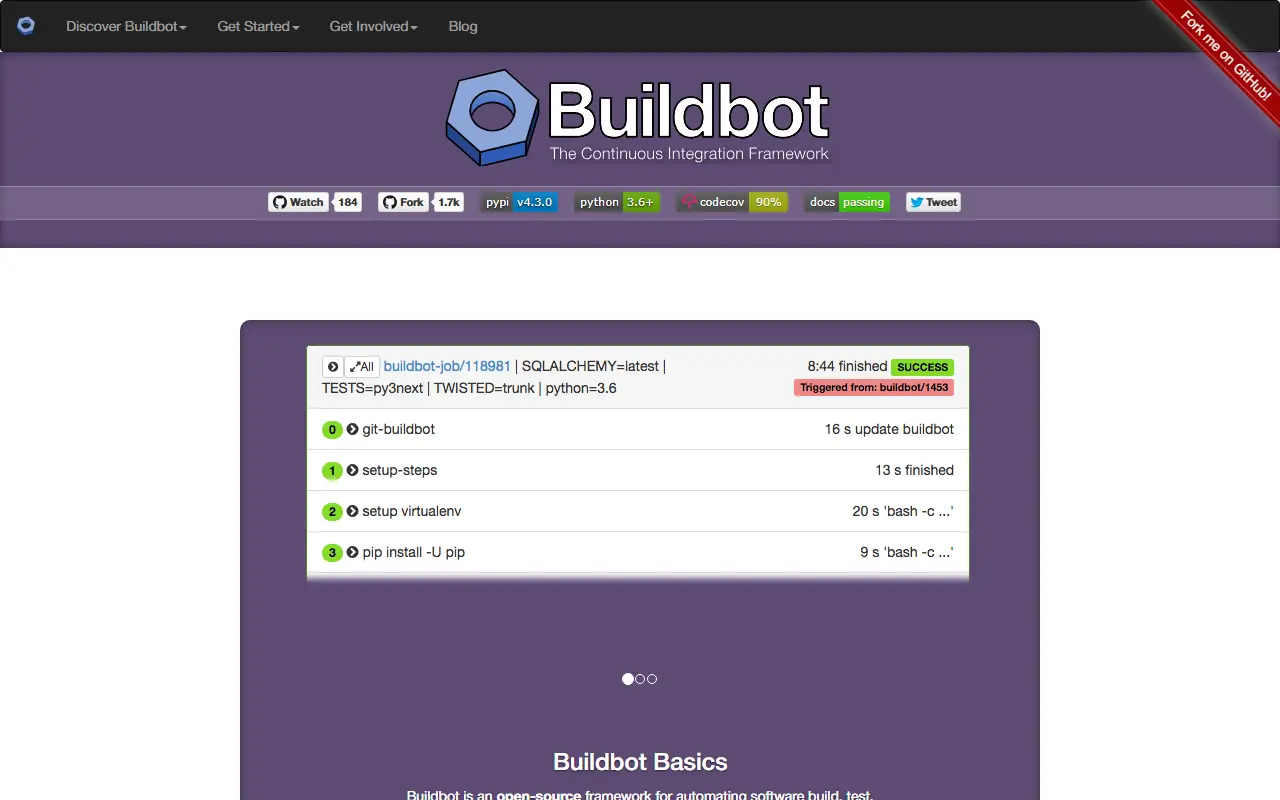
buildbot.netBuildbot homepage screenshot

Buildbot is an open-source continuous integration framework written in Python. Rather than a fixed service with a rigid workflow, it is a toolkit for automating the whole software development cycle, from compiling and testing code to packaging and releasing it, with configuration expressed in Python.

The project's site presents it as a framework with batteries included, covering automated build, test and release jobs, a web interface, and a tutorial and documentation to get started. A master process coordinates build workers that can run on different platforms, which makes it a good fit for projects that need to test across many operating systems and configurations. The site also lists success stories and a Metabuildbot used to build Buildbot itself.

Buildbot is licensed under GPL-2.0 and is typically self-hosted, with community support through a mailing list and IRC. It suits teams that want a highly customizable CI system they control, particularly for complex or multi-platform build setups.

Key features

  • Python-configured build automation
  • Automated build, test and release jobs
  • Distributed workers across platforms
  • Web interface for build status
  • Extensible with custom steps
  • Tutorial and extensive documentation

Pricing: Free and open source under GPL-2.0.

PHP Censor

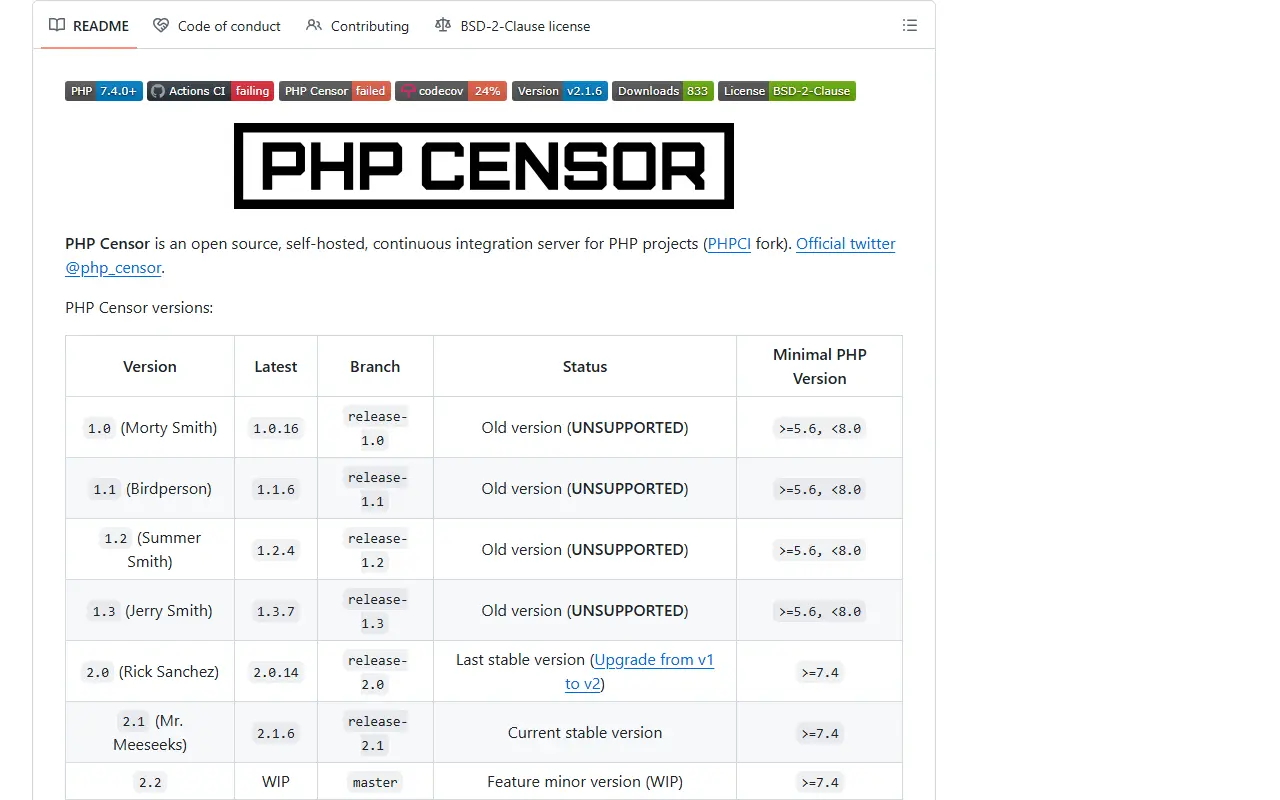
PHP Censor is a BSD-licensed, self-hosted continuous integration server for PHP projects, forked from PHPCI, with built-in test, code-quality and deploy plugins.

GitHub stars
687
Last commit
4 mo ago
Latest release
2.1.6
Licence
BSD-2-Clause
Self-hosted
Yes
php-censor.infoPHP Censor homepage screenshot

PHP Censor is a self-hosted continuous integration server built for PHP projects. It is a fork of PHPCI and lets teams automatically fetch code, install dependencies, run tests and quality checks, and send notifications about the results from a server they control.

Projects can be cloned from GitHub, Bitbucket, GitLab, generic Git, Mercurial, Subversion or a local directory. Builds can set up database tests for PostgreSQL, MySQL and SQLite, install Composer dependencies, run PHPUnit, Atoum, Behat, Codeception and PHPSpec, and apply linting and static analysis tools such as PHP CodeSniffer, PHP Mess Detector and PHPLoc. Plugins such as Deployer, Phing, Grunt and Gulp are included, along with notifications to email, Slack, IRC and Telegram, and LDAP authentication.

The server needs a Unix-like OS, PHP 7.4 or newer, Nginx or Apache, a MySQL, MariaDB or PostgreSQL database and a Beanstalkd queue; Windows is not supported. It is released under the BSD-2-Clause license, with version 2.1 as the current stable line.

Key features

  • Clone repositories from GitHub, GitLab, Bitbucket and SVN
  • Runs PHPUnit, Behat, Codeception and PHPSpec tests
  • Code style and static analysis plugins
  • Database test setup for MySQL, PostgreSQL, SQLite
  • Notifications to email, Slack, IRC and Telegram
  • LDAP authentication support
  • Deployment plugins like Deployer and Phing

Pricing: Free and open source under the BSD-2-Clause license.

flow.ci

flow.ci is a free, Apache-licensed, self-hosted CI/CD server written in Java, offering high availability, auto-scaling runners, online debugging and plugin-based pipeline steps.

GitHub stars
1.6k
Last commit
1 yr ago
Latest release
v1.23.01
Licence
Apache-2.0
Self-hosted
Yes
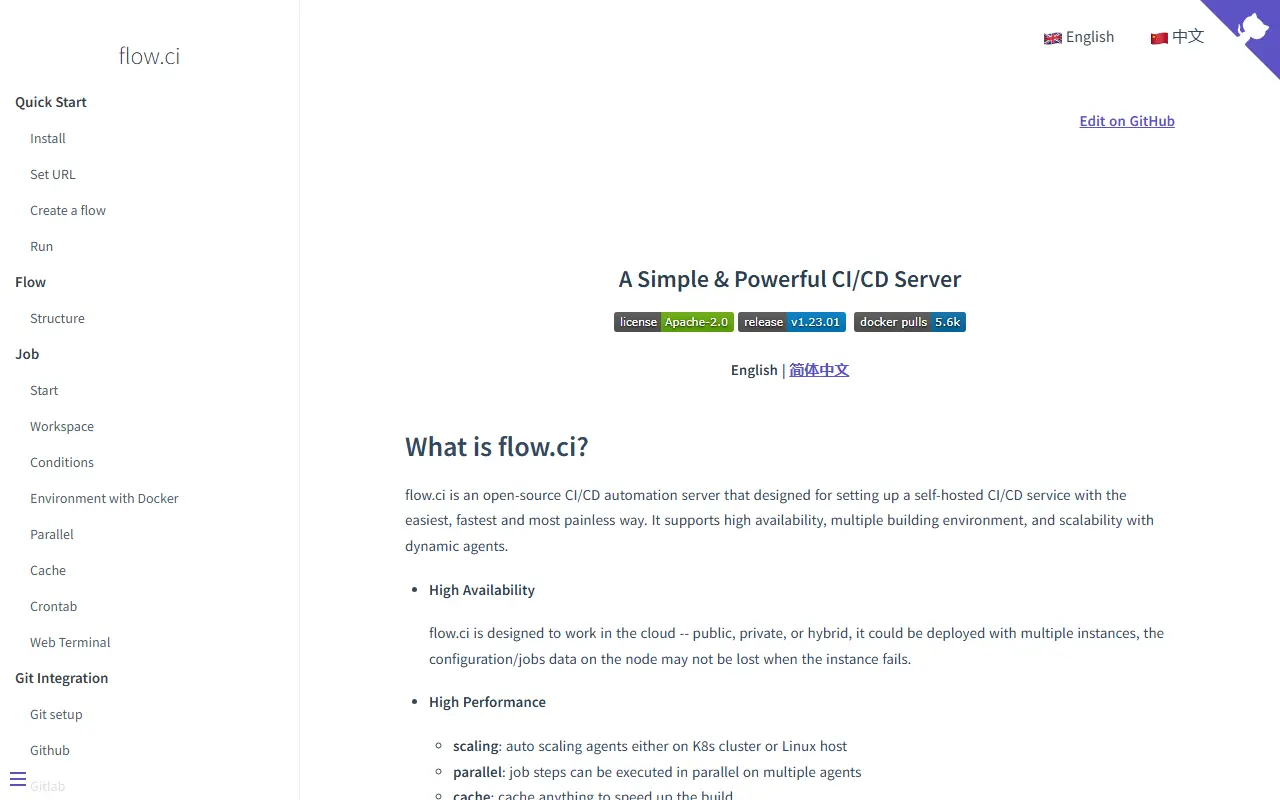
flowci.github.ioflow.ci homepage screenshot

flow.ci is an open-source CI/CD automation server built for teams that want to set up self-hosted continuous integration and delivery with minimal configuration. It is designed to run on public, private or hybrid cloud infrastructure, supporting deployment across multiple instances so job and configuration data is not lost if a single instance fails.

It features auto-scaling build agents on Kubernetes or a plain Linux host, parallel execution of job steps across multiple agents, build caching to speed up pipelines, an online TTY terminal for debugging a running job in real time, and a plugin system where plugins can be written in any language and simply referenced by name in a pipeline step. Each step or step group can run on any Docker image or directly on the native OS, and the server can be started with just three commands alongside ready-made build templates for languages such as Maven, npm, Go, Ruby and Android.

flow.ci is written in Java, requires Docker and Docker Compose, and is released under the Apache-2.0 license. Documentation is available in English and Chinese, with support offered through issues and email.

Key features

  • High-availability, multi-instance CI/CD server
  • Auto-scaling build agents on Kubernetes or Linux
  • Parallel job step execution
  • Online TTY terminal for debugging jobs
  • Any-language plugin system
  • Ready-made language build templates

Pricing: Free and open source under the Apache-2.0 license.

Bamboo alternatives: questions

What is the best open-source alternative to Bamboo?
Jenkins is the top-ranked open-source alternative to Bamboo on Enlisted: Jenkins is an open-source, Java-based automation server for building, testing and deploying software, extended through plugins. Other strong options are Concourse CI, GoCD, Buildbot and PHP Censor.
Are these Bamboo alternatives free?
All 6 are open source, so the code is free to use under its licence, and all of them can be self-hosted on your own server or computer.
How is this list of Bamboo alternatives ranked?
By a score built from GitHub stars, star growth over the last 30 days and how recently the code changed. 4 of these projects shipped code in the last 30 days. Data is refreshed daily, and nobody can pay to move up.

People also look for alternatives to…

View all