7,363 open-source and SaaS tools, with GitHub stats refreshed every day.

6 alternatives ranked by real activity

Open-source Azure Database for PostgreSQL alternatives

A curated, ranked list of the 6 best open-source alternatives to Azure Database for PostgreSQL.

The best open-source alternative to Azure Database for PostgreSQL is PostgreSQL. If that doesn't suit you, other good options are Citus, YugabyteDB, CloudNativePG and Neon.

Azure Database for PostgreSQL alternatives are mainly databases. 5 of them shipped code in the last 30 days, 6 can be self-hosted, and 3 use a permissive licence.

Last updated October 3, 2026 · ranked by GitHub stars, growth and recent commits

PostgreSQL

PostgreSQL is an object-relational database management system supporting SQL features such as transactions, foreign keys and triggers.

GitHub stars
22k
Last commit
today
Self-hosted
Yes
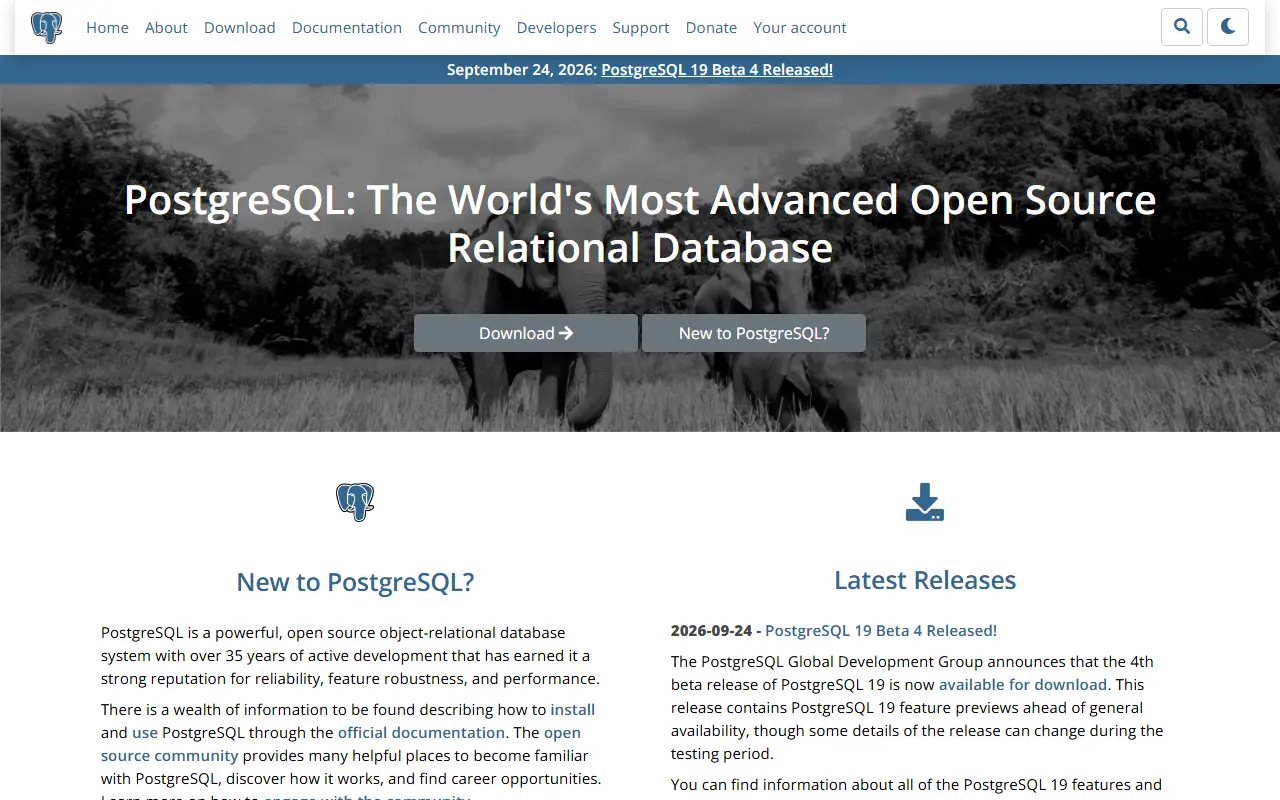
postgresql.orgPostgreSQL homepage screenshot

PostgreSQL is a feature-rich object-relational database management system covering a large part of the SQL standard. Its feature set includes transactions, foreign keys, subqueries, triggers, and user-defined types and functions, and the distribution also contains C language bindings. This GitHub repository is only a mirror of the official git repository, written in C, and the metadata lists the license as Other.

The project does not use GitHub pull requests; contributors submit patches through the process described on the PostgreSQL wiki. Copyright and license terms are in the COPYRIGHT file, general documentation for each version is published on the project site, and build instructions explain how to compile the server from source. The latest releases of the software and related software are available from the PostgreSQL website. Many hosting providers offer managed PostgreSQL, but the project itself is software you install and operate.

Key features

  • Object-relational database with SQL support
  • Transactions and foreign keys
  • Subqueries and triggers
  • User-defined types and functions
  • C language bindings
  • Documentation for building from source

Pricing: Free and open source; the repository lists the license as Other, so see the COPYRIGHT file for terms.

Read more about PostgreSQLWebsite GitHub

Citus

A PostgreSQL extension that turns Postgres into a distributed database by sharding tables across a cluster of nodes for scale-out performance.

GitHub stars
13k
Last commit
yesterday
Latest release
v14.2.0
Licence
AGPL-3.0
Self-hosted
Yes
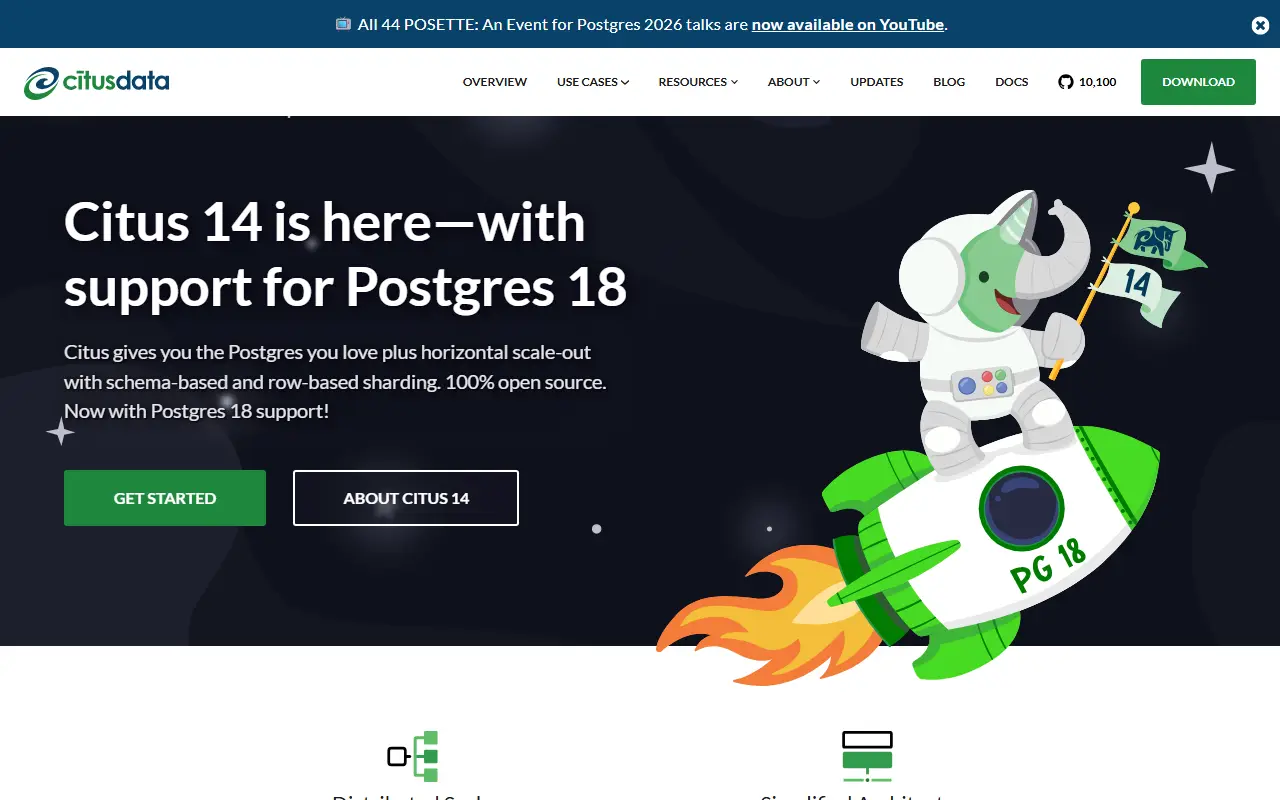
citusdata.comCitus homepage screenshot

Citus is an extension that transforms PostgreSQL into a distributed database so it can keep performing as data and traffic grow. Instead of replacing Postgres, it adds capabilities to it, and because it is an extension it works with recent PostgreSQL versions and the tools and extensions people already use.

Distributed tables are sharded across a cluster of nodes to pool CPU, memory, storage and I/O, while reference tables are replicated to every node for joins and foreign keys. A distributed query engine routes work to the right shards and runs SELECT, DML and other statements in parallel, columnar storage compresses data and speeds up scans, and queries can be sent to any node. More worker nodes can be added and shards rebalanced as data grows.

Typical uses include multi-tenant applications, real-time analytics, high-throughput transactional workloads and time-series or IoT data. Citus is written in C, licensed under AGPL-3.0 and described by its authors as fully open source, and it can start as a single node and scale out later. The project links a SIGMOD paper describing how it works.

Key features

  • Distributed tables sharded across nodes
  • Reference tables replicated to all nodes
  • Distributed query engine with parallel execution
  • Columnar storage with compression
  • Query from any node in the cluster
  • Shard rebalancing when adding workers

Pricing: The Citus extension is free and open source. The managed Azure Cosmos DB for PostgreSQL service starts at about $0.27 per hour, with reserved capacity pricing available.

Read more about CitusWebsite GitHub

YugabyteDB

A PostgreSQL-compatible, cloud-native distributed SQL database for transactional workloads that need scale, fault tolerance or multi-region deployment.

GitHub stars
11k
Last commit
today
Latest release
v2026.1.2.0
Self-hosted
Yes
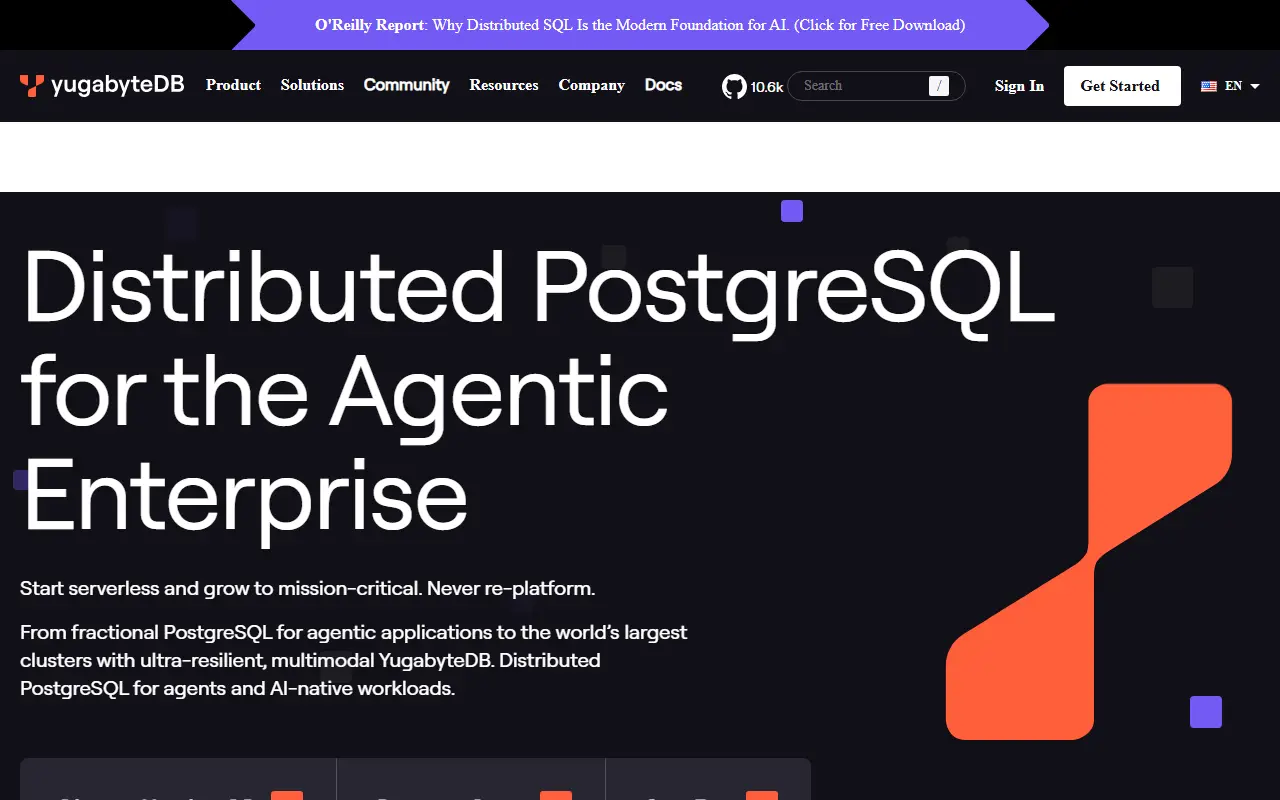
yugabyte.comYugabyteDB homepage screenshot

YugabyteDB is a distributed SQL database that is compatible with PostgreSQL. It combines the relational features of traditional databases with the scale-out design of NoSQL systems, and is intended for cloud-native OLTP applications that need correct data and at least one of scalability, tolerance to failures or global distribution.

Its SQL layer, YSQL, reuses the PostgreSQL query layer and so supports most PostgreSQL features, including data types, stored procedures, triggers and extensions. Its transaction model follows the design of Google Spanner, using Raft consensus for replication and hybrid logical clocks for distributed ACID transactions, with snapshot, serializable and read committed isolation. Reads are strongly consistent by default and can be tuned to read from followers and replicas.

The database can be configured to withstand failures at the level of a disk, rack, node, zone, region or whole cloud, recovering on its own, and the topics mention multi-region, multi-cloud and Kubernetes deployments. The project is written mainly in C and C++, the repository lists its license as Other, and documentation covers architecture, roadmap and how to build applications.

Key features

  • PostgreSQL-compatible SQL layer
  • Distributed ACID transactions
  • Replication using Raft consensus
  • Snapshot, serializable and read committed isolation
  • Automatic failover and repair
  • Multi-region and multi-cloud deployments
  • Kubernetes deployment support

Pricing: The open-source database is free. The managed Aeon service starts at $125 (Standard) or $167 (Professional) per vCPU per month plus storage and transfer, with a free trial; Enterprise is quoted.

Read more about YugabyteDBWebsite GitHub

CloudNativePG

A Kubernetes operator that manages the full lifecycle of PostgreSQL clusters, including high availability, failover, backups and updates, without external HA tools.

GitHub stars
9.4k
Last commit
today
Latest release
v1.30.1
Licence
Apache-2.0
Self-hosted
Yes
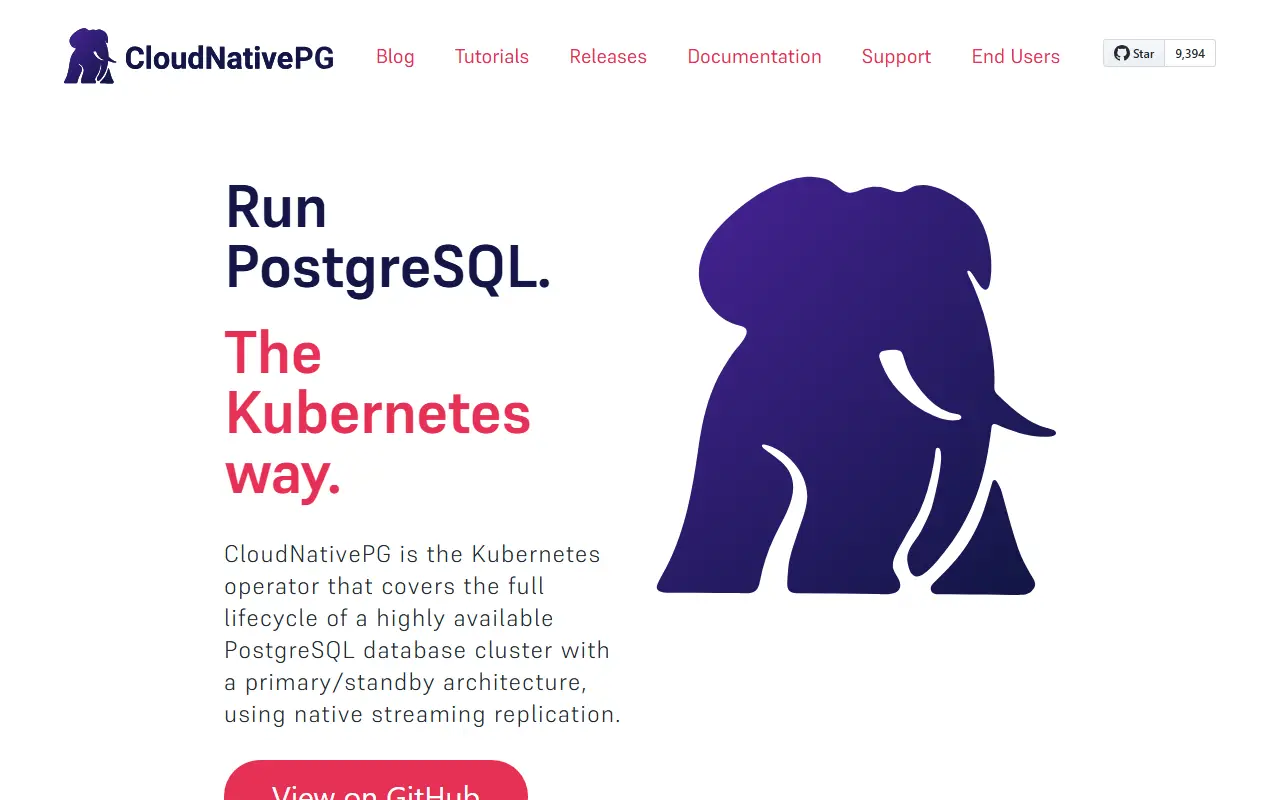
cloudnative-pg.ioCloudNativePG homepage screenshot

CloudNativePG, often shortened to CNPG, is an open-source platform for running PostgreSQL databases on Kubernetes. Its core component is an operator that handles the whole operational lifecycle, from deployment to ongoing maintenance, in a way that fits GitOps-driven CI/CD automation.

It takes a Kubernetes-native approach to primary and standby cluster management. Rather than relying on external high-availability tools such as Patroni, repmgr or Stolon, the operator integrates directly with the Kubernetes API, and the status of a PostgreSQL cluster is exposed on the Cluster resource. It follows the operator pattern to reconcile the desired state, and application containers are immutable. Topics also list failover, switchover, replication, disaster recovery, a kubectl plugin, a Prometheus exporter and JSON logging.

CloudNativePG is a CNCF project written in Go and licensed under Apache-2.0, with a quickstart guide, governance policies, a list of adopters and pointers to commercial support. It is intended for Kubernetes administrators who want PostgreSQL managed as a native workload.

Key features

  • Kubernetes operator for PostgreSQL clusters
  • Primary and standby cluster management
  • Automated failover and switchover
  • Direct Kubernetes API integration
  • Immutable application containers
  • Prometheus exporter and JSON logging
  • Companion kubectl plugin

Pricing: Free and open source under the Apache-2.0 licence; the project points to commercial support providers.

Read more about CloudNativePGWebsite GitHub

Neon

An open-source serverless Postgres platform that separates storage from compute to offer autoscaling, database branching and scale to zero.

GitHub stars
23k
Last commit
1 mo ago
Latest release
release-proxy-8853
Licence
Apache-2.0
Self-hosted
Yes
Hosted version
Available
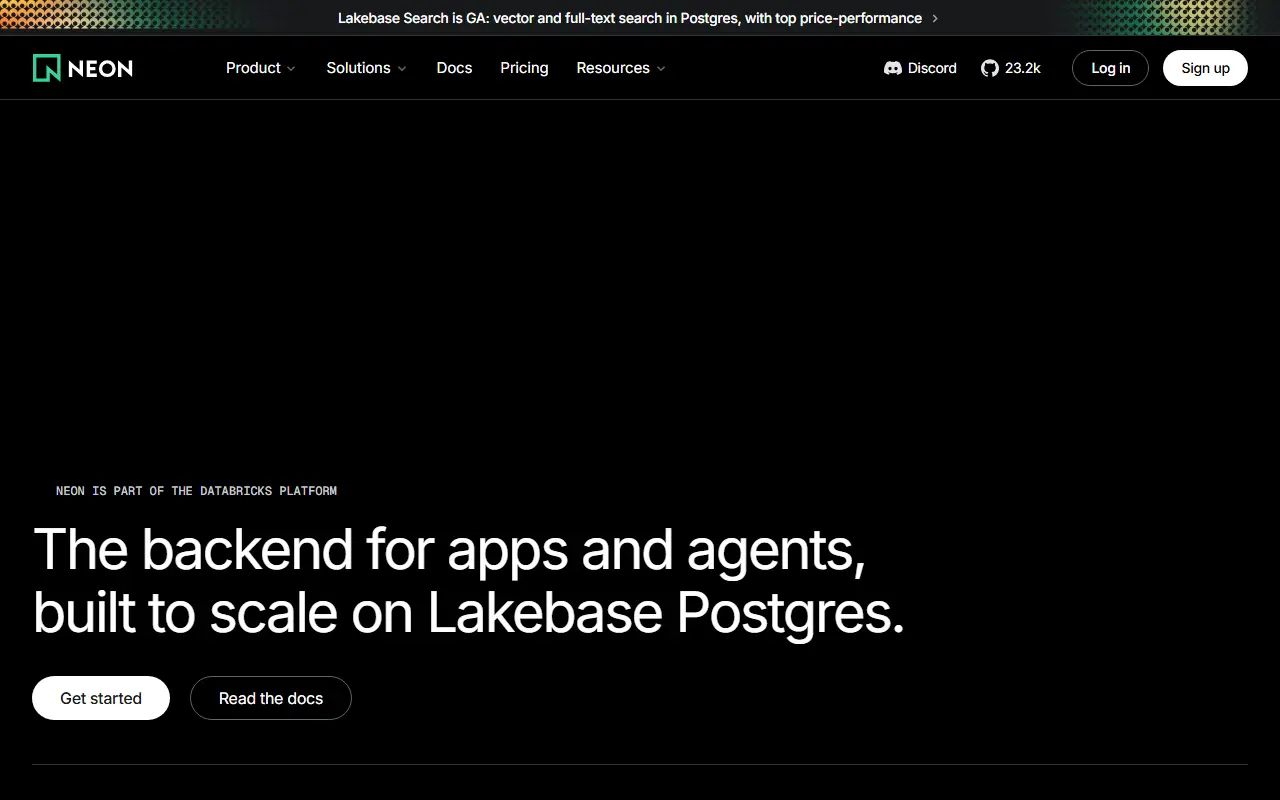
neon.techNeon homepage screenshot

Neon is a serverless Postgres database platform that is open source. It separates storage from compute and replaces the PostgreSQL storage layer with one that distributes data across a cluster of nodes, which enables autoscaling, branching of databases in the style of code, and scaling down to zero.

A running Neon system is made up of compute nodes plus a dedicated storage engine. The compute nodes are stateless PostgreSQL instances backed by that engine, whose two main components are the Pageserver, a scalable storage backend for the compute nodes, and the Safekeepers, a redundant write-ahead-log service that keeps WAL durably until the Pageserver has processed it and uploaded it to cloud storage. Developer documentation describes the architecture in more detail.

The easiest way to try Neon is the hosted Neon Free Tier, connecting with psql, DBeaver or the online SQL editor. The project is also written in Rust and licensed under Apache-2.0 so you can compile and run it locally for experiments, with build instructions for Linux and macOS. It suits teams that want Postgres with branching for development workflows and elastic scaling.

Key features

  • Serverless Postgres with autoscaling
  • Separated storage and compute
  • Database branching for development
  • Scale to zero when idle
  • Pageserver and Safekeeper storage engine
  • Hosted free tier available

Pricing: Free plan has no time limit. Launch is usage-based at $0.106 per CU-hour plus $0.35 per GB-month of storage; Scale is $0.222 per CU-hour.

Read more about NeonWebsite GitHub

Autobase

Autobase is an open-source platform that provides a DBaaS-like experience for PostgreSQL on your own infrastructure, automating clusters, failover and backups.

GitHub stars
4.4k
Last commit
yesterday
Latest release
2.11.0
Licence
MIT
Self-hosted
Yes
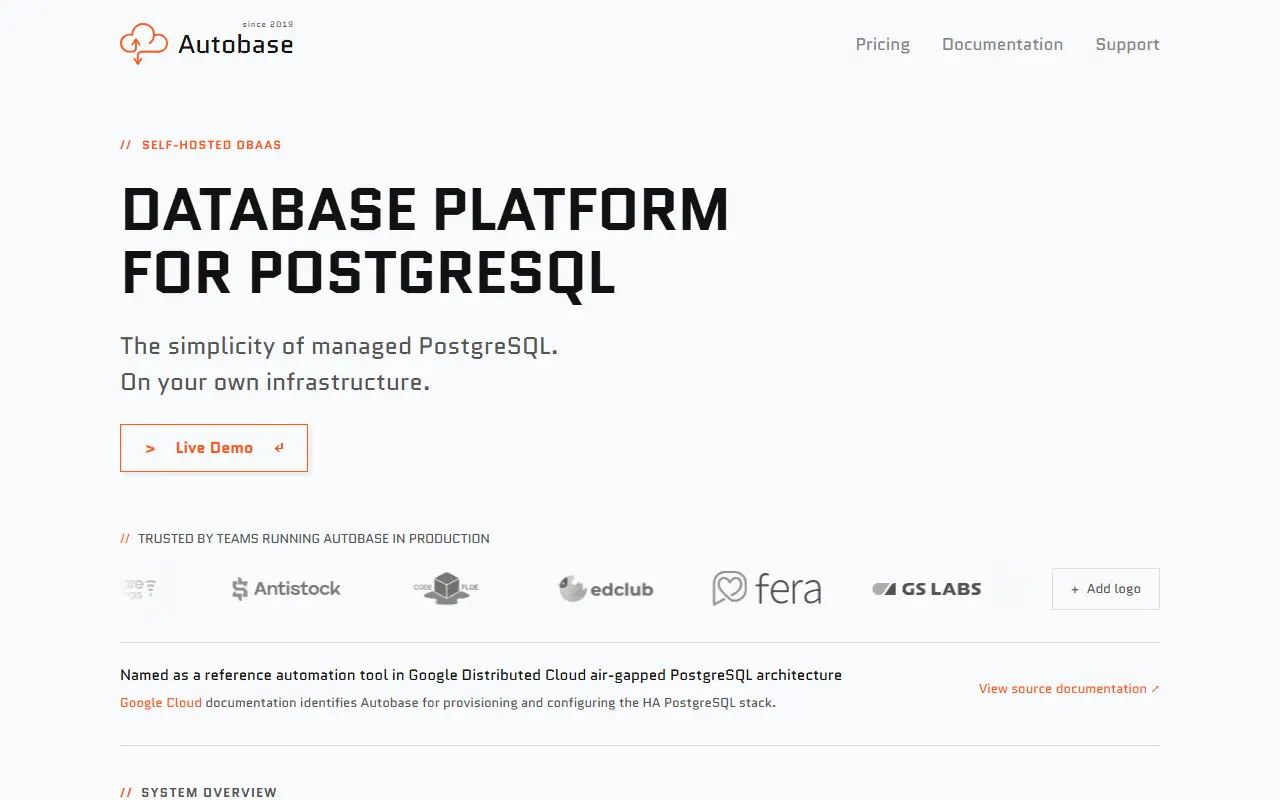
autobase.techAutobase homepage screenshot

Autobase is an internal database platform for PostgreSQL that brings the managed database experience of a cloud DBaaS onto infrastructure you control. You build and operate production-grade PostgreSQL clusters with high availability, and the tool aims to simplify deployment, reduce operating costs and make database management approachable even for teams without deep database expertise.

It automates deployment, failover, backups, restore, upgrades and scaling, with Patroni topics indicating a proven high-availability foundation, and offers a web interface written in TypeScript on top of automation scripts. The documentation includes an architecture overview. It is the successor to what was previously a PostgreSQL cluster automation project.

Autobase is MIT-licensed and self-hosted, running on your own servers, virtual machines or cloud accounts. It suits platform teams and companies that want managed-database convenience without paying for a hosted service, and that are ready to operate the underlying machines.

Key features

  • Highly available PostgreSQL cluster creation
  • Automatic failover between nodes
  • Backup and restore automation
  • Automated upgrades and scaling
  • Web interface for cluster management
  • Runs on your own infrastructure

Pricing: Free MIT-licensed edition with CLI management. Paid commercial plans are Standard at $256, Professional at $1024 and Premium at $4096 per month, with a month free on annual billing.

Read more about AutobaseWebsite GitHub

Azure Database for PostgreSQL alternatives: questions

What is the best open-source alternative to Azure Database for PostgreSQL?
PostgreSQL is the top-ranked open-source alternative to Azure Database for PostgreSQL on Enlisted: PostgreSQL is an object-relational database management system supporting SQL features such as transactions, foreign keys and triggers. Other strong options are Citus, YugabyteDB, CloudNativePG and Neon.
Are these Azure Database for PostgreSQL alternatives free?
All 6 are open source, so the code is free to use under its licence, and all of them can be self-hosted on your own server or computer. 1 also offers a paid or managed cloud version if you'd rather not host it yourself.
How is this list of Azure Database for PostgreSQL alternatives ranked?
By a score built from GitHub stars, star growth over the last 30 days and how recently the code changed. 5 of these projects shipped code in the last 30 days. Data is refreshed daily, and nobody can pay to move up.

People also look for alternatives to…

View all