 TrackMedia
 TrackRev

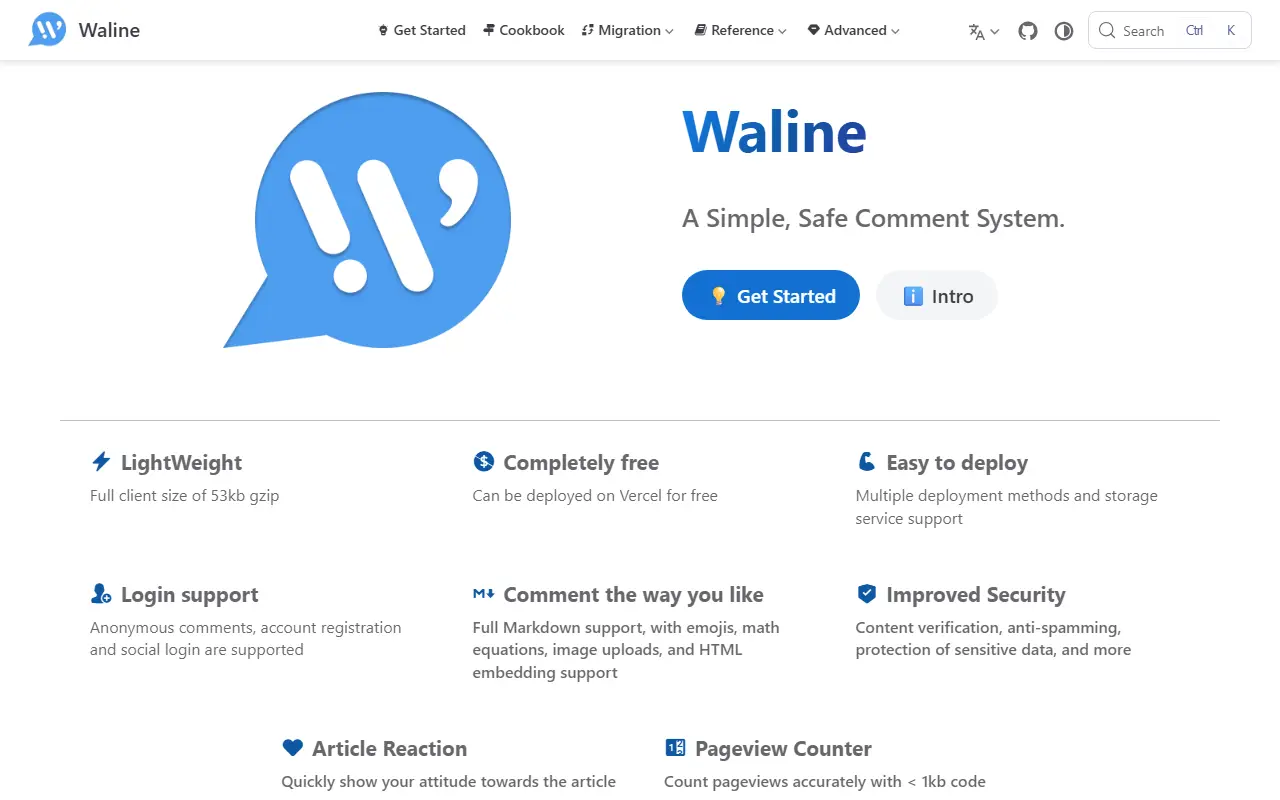
About Waline
Waline is a simple, lightweight comment system with its own backend, aimed at blogs and similar websites. It supports full Markdown syntax in comments and emphasizes safety, including spam and abuse controls. Its topics reference Disqus, so it is often considered by sites looking for a self-managed alternative to hosted commenting services.
A client library, @waline/client, is embedded in the page, while the server can run on Vercel, CloudBase, Railway, Render, Zeabur, Netlify, Alibaba Cloud ComputeNest or in Docker on your own machine. Storage options include PostgreSQL, MySQL, SQLite, TiDB, MongoDB, CloudBase and GitHub. The project advertises a very large number of deployment combinations.
Moderation and engagement features include email, WeChat, QQ and Telegram notifications, Akismet spam checking, IP-based rate limits, keyword restrictions, an IP disallow list, duplicate content checks, sticky comments, comment likes and comment management with deletion. Login support covers social accounts, there is an article counter, and the interface is internationalized with custom language support. It is licensed under GPL-2.0.
Key features
- Comment system with Markdown support
- Deploys to Vercel, Netlify, Railway or Docker
- Storage on PostgreSQL, MySQL, SQLite or MongoDB
- Akismet spam checking and IP rate limits
- Email, Telegram, WeChat and QQ notifications
- Sticky comments and comment likes
- Social login and comment management
Good fit for
- Adding comments to a static blog
- Replacing a hosted comment widget
Waline: questions and answers
- What is Waline used for?
- Waline is a lightweight comment system with a backend, designed for blogs and static sites and deployable on many platforms and databases. It is a good fit for adding comments to a static blog and replacing a hosted comment widget.
- Is Waline open source?
- Yes. Waline is open source under the GPL-2.0 licence. Its source code is on GitHub at walinejs/waline and is written mainly in JavaScript.
- Is Waline free?
- Yes. Waline is open source, so the software itself is free to use.
- Can I self-host Waline?
- Yes. Waline can be self-hosted on your own server or infrastructure.
- What is Waline an alternative to?
- Waline is an open-source alternative to Disqus. Other open-source alternatives to Disqus include Giscus, Utterances and Isso.
- Is Waline actively maintained?
- Yes. The most recent commit to Waline was on 11 November 2026. The project has 3.2k stars on GitHub, with 30 added in the last 30 days.
Open-source alternatives to Waline
See all
Giscus
CMS
A commenting system powered by GitHub Discussions. :octocat: :speech_balloon: :gem:
MITvs Disqus★ 12k
Utterances
CMS
:crystal_ball: A lightweight comments widget built on GitHub issues
MITvs Disqus★ 9.7k
Isso
Forums & Communities
a Disqus alternative
MITvs Disqus★ 5.3k
Remark42
Forums & Communities
comment engine
MITvs Disqus★ 5.6k
Discourse
Forums & Communities
A platform for community discussion. Free, open, simple.
GPL-2.0vs Reddit★ 48k
Talkyard
Forums & Communities
A community discussion platform: Brings together the main features from StackOverflow, Sla
AGPL-3.0vs Quora★ 1.8k
SaaS alternatives to Waline
See all
Disqus
Forums & Communities
Disqus is a commenting and community platform that publishers embed on their sites to engage and understand their audiences.
SaaS
IntenseDebate
CMS
Comment system for WordPress, Tumblr, Blogger and other website platforms
SaaS
BlogBowl
CMS
Open-source blog and newsletter management platform
SaaS
Blogsitefy
CMS
Create SEO-optimized blogs on your own domain without relying on a third-party platform
SaaS
JotBird
CMS
Turns Markdown, Word, PDF or screenshot content into a web page you can share with a link
SaaS
Marble
CMS
Simple headless CMS for publishing articles and managing a blog
SaaS