7 open-source alternatives ranked by real activity

Open-source Val Town alternatives

A curated, ranked list of the 7 best open-source alternatives to Val Town.

The best open-source alternative to Val Town is OpenFaaS. If that doesn't suit you, other good options are Pipedream, Nhost, Fission and Tau.

Commercial alternatives to Val Town include AWS Lambda, Azure Functions, Cloudflare Workers and Deno Deploy. See all 13.

Val Town alternatives are mainly hosting & PaaS tools, but some are also infrastructure & container tools and workflow automation tools. 6 of them shipped code in the last 30 days, 6 can be self-hosted, and 5 use a permissive licence.

Last updated November 13, 2026 · ranked by GitHub stars, growth and recent commits

OpenFaaS

OpenFaaS is a serverless framework for running event-driven functions and microservices on Kubernetes, with auto-scaling, metrics and a UI portal.

GitHub stars
26k
Last commit
21 days ago
Latest release
0.27.13
Self-hosted
Yes
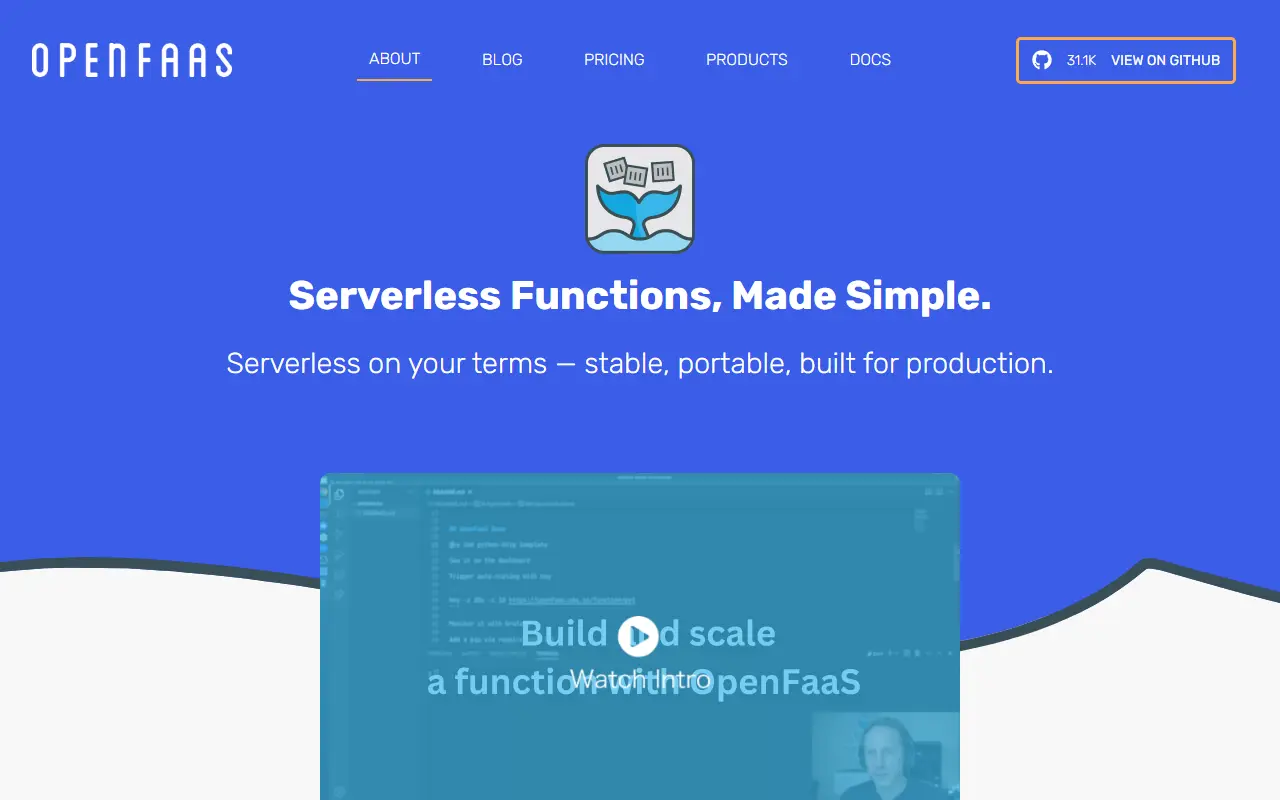
openfaas.comOpenFaaS homepage screenshot

OpenFaaS is a serverless platform that lets developers run event-driven functions and microservices on Kubernetes with little boilerplate code. Your code or a ready-made binary goes into an OCI-compatible container image, and you receive a scalable HTTP endpoint that auto-scales and exposes metrics.

Highlights include ease of use through a UI portal and a one-click install, and the ability to write services and functions in many languages. The project integrates with Prometheus for metrics and with GitOps workflows, and its topics place it in the functions-as-a-service and PaaS categories. The gateway and tooling are written in Go.

Licensing needs attention. The README states that the Community Edition is licensed for individual exploration and hobbyist use, with a 60-day limit for commercial proofs of concept, and that commercial and production use calls for the paid OpenFaaS Standard or Enterprise editions. GitHub reports the license as 'Other'. You run it on your own Kubernetes cluster.

Key features

  • Deploy functions and microservices to Kubernetes
  • OCI image-based packaging
  • Endpoints that scale automatically
  • Built-in Prometheus metrics
  • UI portal and one-click install
  • Functions in many languages

Pricing: Community Edition is free for personal use, with a 60-day limit on commercial use. Standard costs $1250 per month; Enterprise is custom. A 14-day trial is offered, subject to approval.

Pipedream

A hosted integration platform for developers to connect apps and build event-driven workflows using pre-built actions plus custom Node.js, Python, Go or Bash code.

GitHub stars
12k
Last commit
today
Self-hosted
No
Hosted version
Available
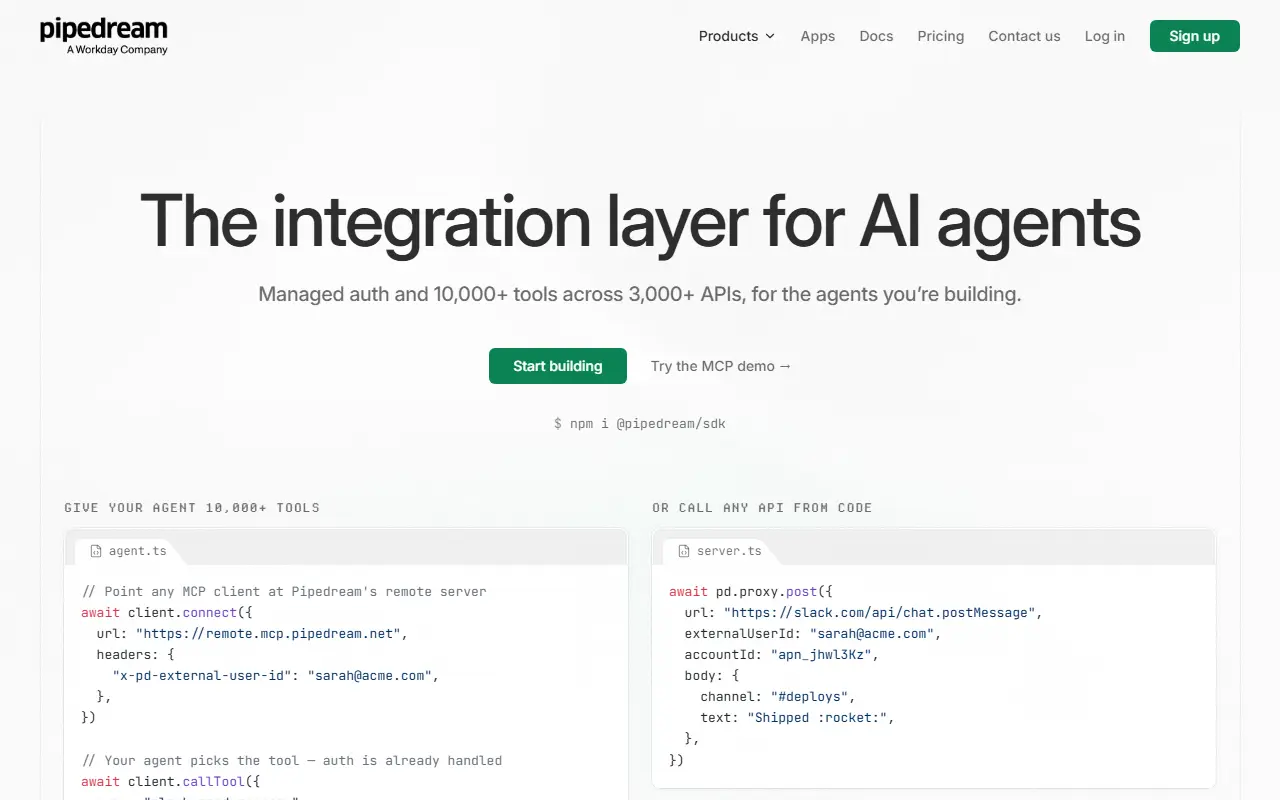
pipedream.comPipedream homepage screenshot

Pipedream is an integration platform for developers. It is a hosted platform, advertised as free for developers, for connecting applications and building event-driven automations. The GitHub repository holds the code for the pre-built integration components, the product roadmap and the documentation.

Workflows are sequences of steps, which can be pre-built actions or custom code, and each workflow is started by an event such as an HTTP request, a timer or a new row in a spreadsheet. Event sources emit events from services like GitHub, Slack, Airtable and RSS, while actions cover common operations such as sending a message or adding a spreadsheet row. More than 1,000 integrated applications are available, and any Node.js, Python, Go or Bash code can be run for custom logic.

The README says the company has demonstrated SOC 2 compliance. Because the platform itself is run by Pipedream, this is mostly a hosted service with an open repository of components rather than software you install, and the repository lists its license as Other. It suits developers who want webhook-driven glue code without managing servers.

Key features

  • Workflows triggered by HTTP, timers or app events
  • Event sources for GitHub, Slack and Airtable
  • Pre-built actions across 1,000+ apps
  • Custom code in Node.js, Python, Go or Bash
  • Import of packages from language ecosystems
  • Open repository of integration components

Pricing: Free to build and test. Startup, for production, is $150 per month ($99 billed annually) and includes 100 users and 10,000 usage credits; Business is custom.

Nhost

An open-source Firebase alternative built on PostgreSQL, Hasura GraphQL, authentication, storage and serverless functions, available hosted or self-hosted.

GitHub stars
9.4k
Last commit
today
Latest release
mcp@0.3.1
Licence
MIT
Self-hosted
Yes
Hosted version
Available
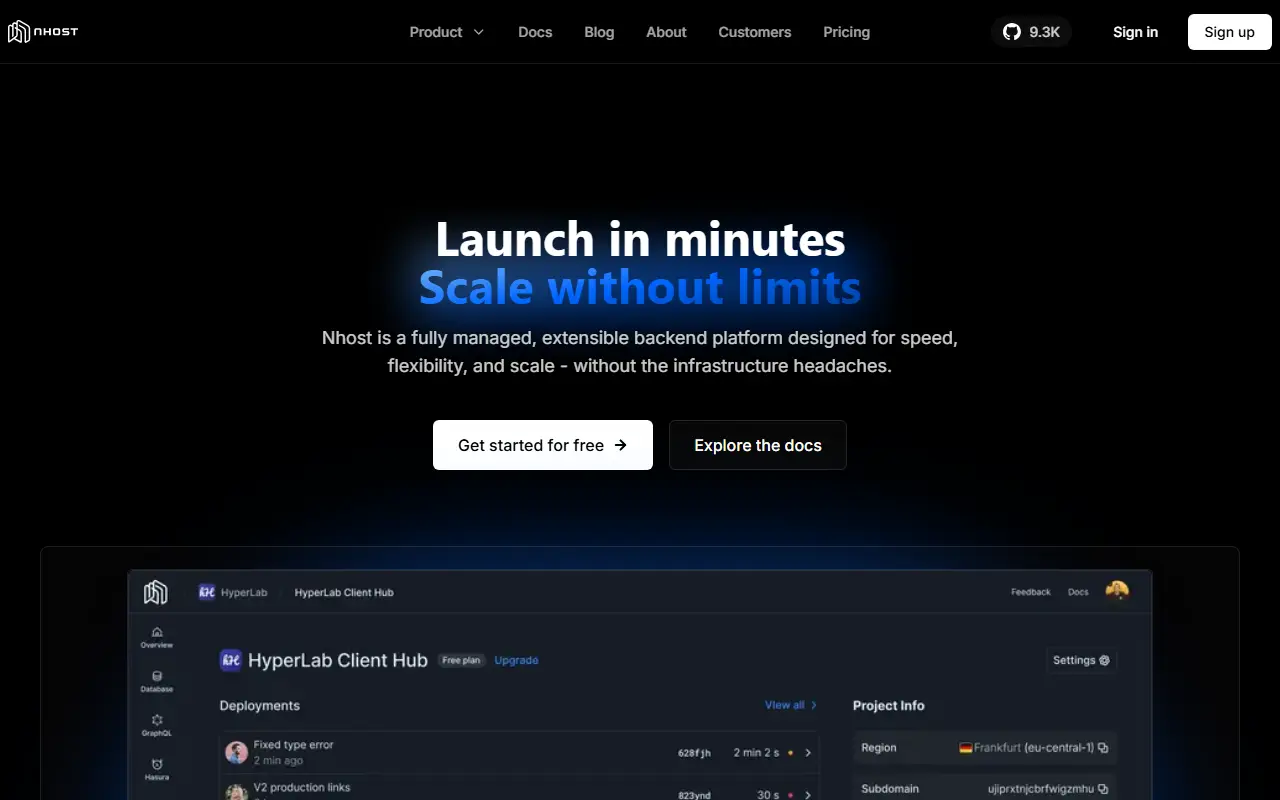
nhost.ioNhost homepage screenshot

Nhost is an open-source backend platform positioned as a Firebase alternative with GraphQL. It is built around open source, GraphQL, SQL and a good developer experience, and gives frontend developers a complete backend without writing server code.

The stack combines a PostgreSQL database, an instant GraphQL API through Hasura, an authentication service, a storage service and serverless functions written in Node.js, in JavaScript or TypeScript. The Nhost CLI creates a local development environment that follows database migrations and Hasura metadata, and a client package called nhost-js is used from the app. Nhost is frontend agnostic, with topics listing Next.js, React, Vue and Flutter.

You can use the Nhost hosted platform, develop locally with the CLI or self-host the entire stack, with an example docker-compose file provided. The project is written in TypeScript and licensed under MIT. It suits developers who prefer SQL and GraphQL to a proprietary NoSQL backend.

Key features

  • PostgreSQL as the core database
  • Instant GraphQL API via Hasura
  • Built-in authentication service
  • File storage service
  • Serverless functions in Node.js
  • CLI for local development
  • Docker Compose self-hosting

Pricing: Free Starter plan with one active project. Pro starts at $25 and Team at $599 per month plus usage; Enterprise is custom. A self-hosted option is also listed.

Read more about NhostWebsiteGitHub#3 Val Town alternative

Fission

Fission is an open source, Kubernetes-native framework for running serverless functions, with fast cold-start and support for multiple languages.

GitHub stars
8.9k
Last commit
2 days ago
Latest release
v1.27.0
Licence
Apache-2.0
Self-hosted
Yes
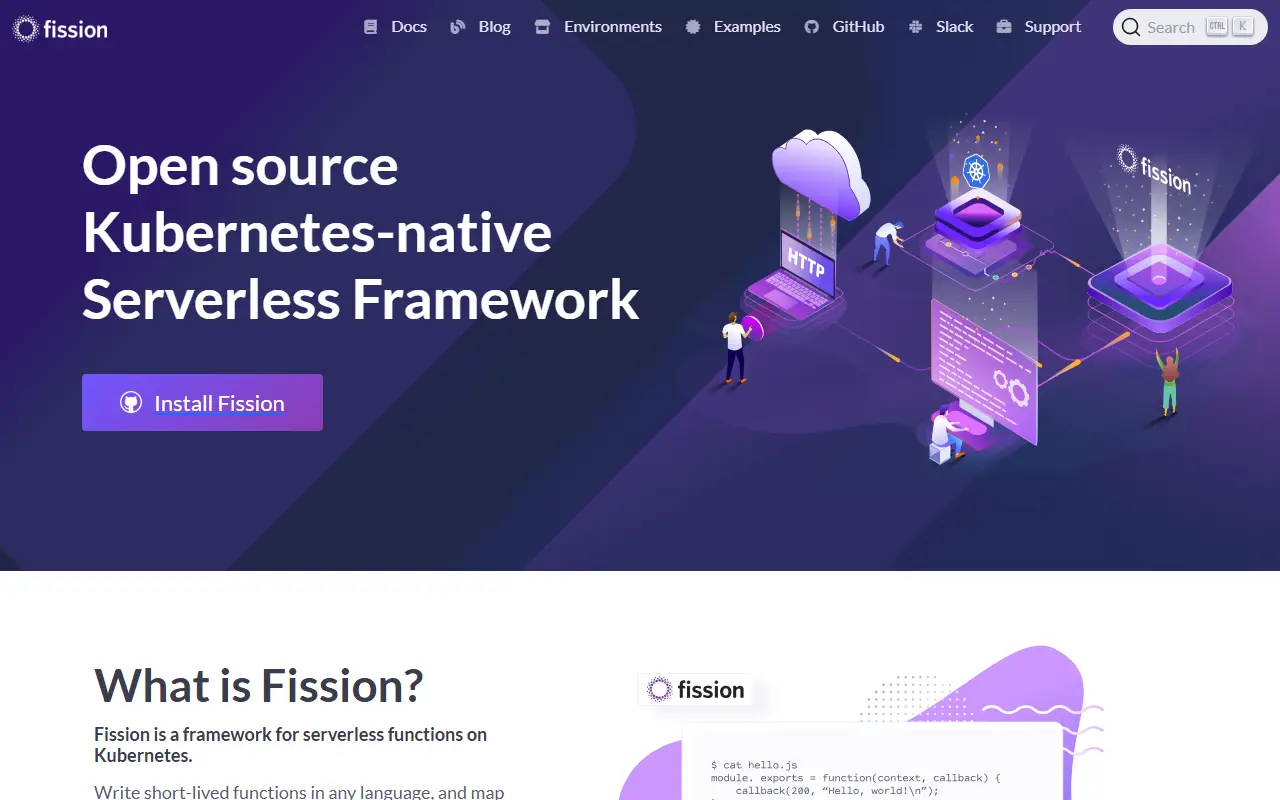
fission.ioFission homepage screenshot

Fission is a framework for serverless functions on Kubernetes. It allows developers to write short-lived functions in any language and map them to HTTP requests or other event triggers. Functions can be deployed instantly with one command, without building containers or managing Docker registries.

Fission is open source under the Apache license and works on any Kubernetes cluster, whether on a laptop, public cloud, or private data center. It aims to simplify operations by integrating with Fluentd for logs and Prometheus for metrics, and supports Istio for service mesh integration.

Key features

  • Kubernetes-native: runs on any Kubernetes cluster
  • Fast cold-start: maintains a configurable pool of containers for low latency (~100ms)
  • Declarative application specifications: define functions and triggers in source control
  • Administration simplicity: logs via Fluentd, metrics via Prometheus
  • Istio service-mesh integration for monitoring and tracing
  • Wide language support: Python, NodeJS, Go, Rust, C#, PHP

Tau

Taubyte's open-source cloud platform that combines development environment, build, and deployment so you can run a serverless, WebAssembly-based cloud on your own servers.

GitHub stars
5.2k
Last commit
yesterday
Latest release
v1.3.0
Licence
BSD-3-Clause
Self-hosted
Yes
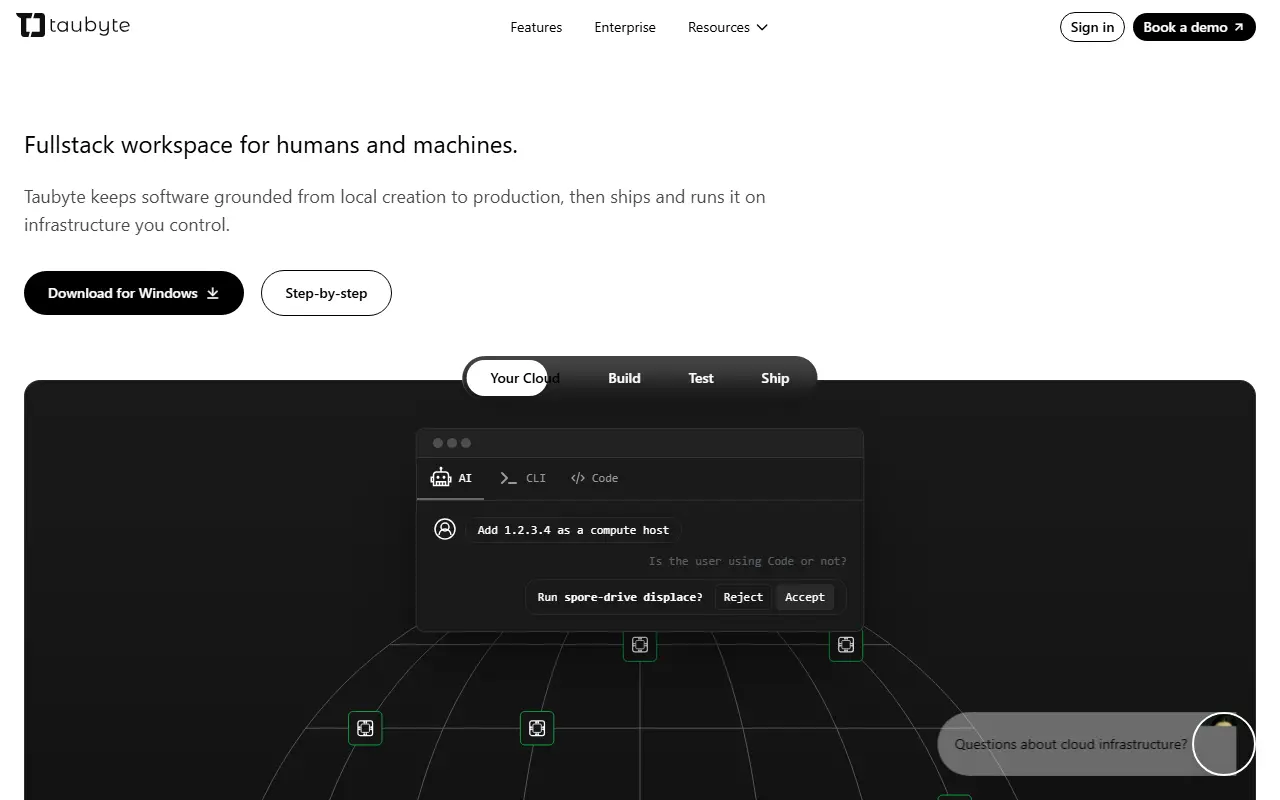
taubyte.comTau homepage screenshot

Tau is the open-source core of Taubyte, described as a fullstack workspace for humans and machines. It is a cloud platform written in Go that spans the development environment, building applications, and deploying and running them. Topics place it in serverless computing, WebAssembly, peer-to-peer distributed systems, CDN, and cloud-native platform-as-a-service. It is released under the BSD-3-Clause license.

The quickest way to try it is to start a local cloud with the dream tool. For real use, you deploy Taubyte to your own servers or VMs, either manually or with the automated Spore Drive tool, and the documentation at tau.how covers the platform, deployment, and getting started. A video series called the Hitchhiker's Guide to Taubyte provides guided demos.

The project welcomes contributions through a standard fork, branch, test, and pull request workflow, with good first issues labeled. Tau suits developers and platform teams that want to run their own cloud-like environment, avoid dependence on a single hyperscaler, and experiment with a WebAssembly-based serverless model.

Key features

  • Self-hosted cloud platform written in Go
  • Serverless functions with WebAssembly
  • Local cloud with the dream tool
  • Automated deployment with Spore Drive
  • Peer-to-peer distributed architecture
  • Guides and video walkthroughs

Pricing: Free and open source under the BSD-3-Clause license.

Read more about TauWebsiteGitHub#5 Val Town alternative

Supabase Auth

Go-based user management and authentication server from Supabase that issues JWTs and supports email, passwordless, phone, and social sign-in.

GitHub stars
2.6k
Last commit
yesterday
Latest release
v2.197.0
Licence
MIT
Self-hosted
Yes
Hosted version
Available
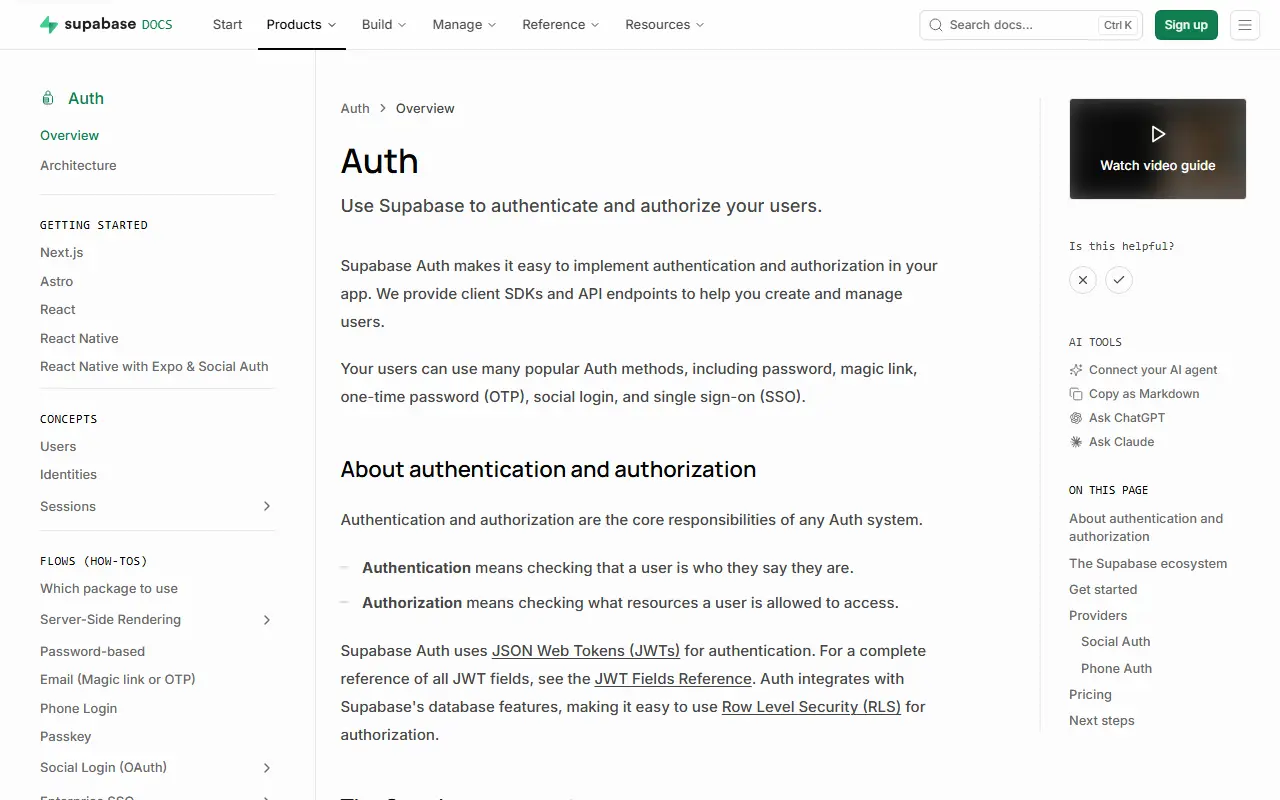
supabase.comSupabase Auth homepage screenshot

Supabase Auth is an authentication and user management server written in Go. It powers Supabase's sign-in features by issuing JSON Web Tokens that downstream services, such as PostgREST with Row Level Security, can trust. It started from Netlify's GoTrue codebase, but both projects have diverged significantly. It is released under the MIT license.

Supported sign-in methods include email and password, magic links, phone numbers, and external providers such as Google, Apple, Facebook, and Discord. The server exposes an HTTP API for managing users and sessions, and its configuration is handled through environment variables in a .env file, with an example file provided.

The README walks through a quick start using a local Postgres database and has sections on running in production, configuration, and endpoints. The service can be used as part of the Supabase hosted platform or run on its own, which suits teams that want an open-source JWT-based identity service they can host themselves.

Key features

  • JWT issuing for application sessions
  • Email and password sign-in
  • Magic link and phone number login
  • OAuth providers such as Google and Apple
  • User management API
  • Row Level Security integration with PostgREST

Pricing: Free and open source under the MIT license; it is also available through the hosted Supabase platform.

Functions

IronFunctions is an open-source serverless (functions as a service) platform written in Go that runs in any cloud, supports any language and Lambda functions.

GitHub stars
3.2k
Last commit
3 yr ago
Latest release
0.2.72
Licence
Apache-2.0
Self-hosted
Yes
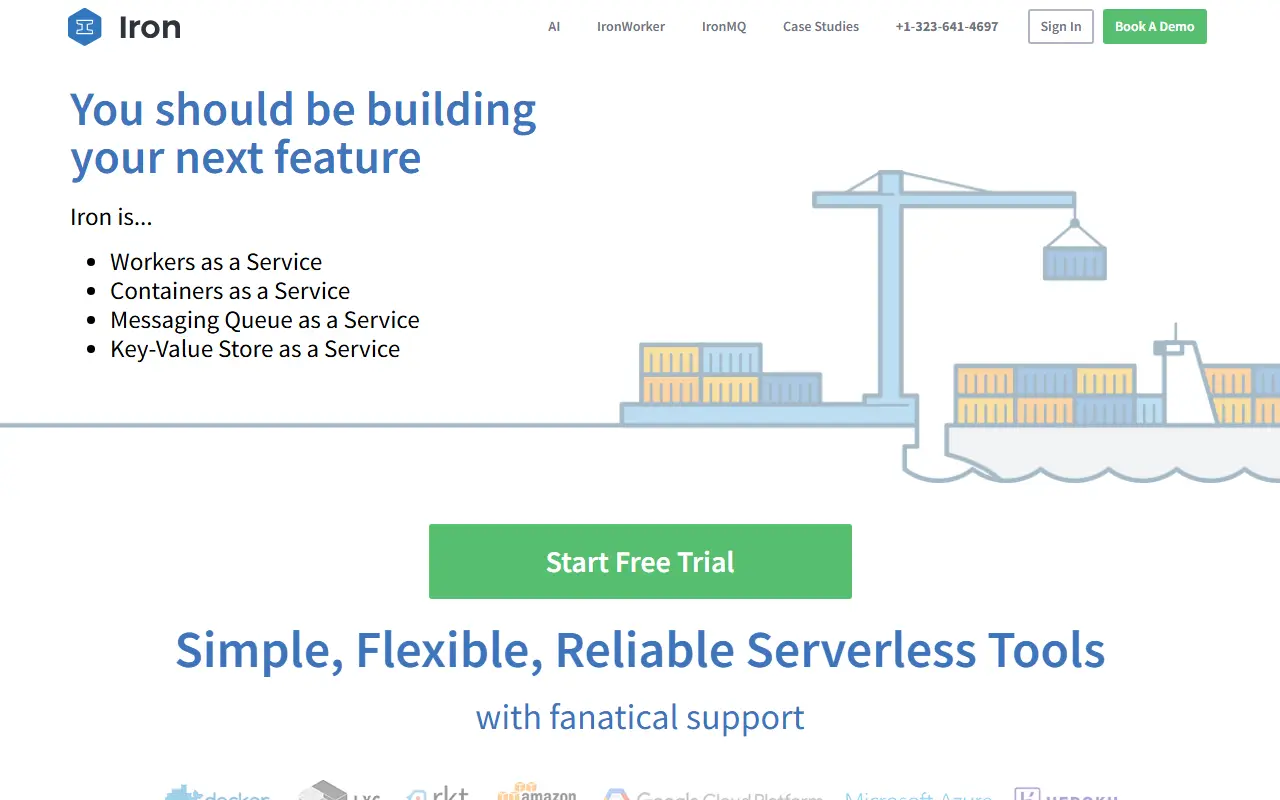
iron.ioFunctions homepage screenshot

IronFunctions is an open-source serverless platform, or Functions as a Service, that you run yourself. Functions can be written in any language, and the AWS Lambda format is supported, so existing Lambda functions can be imported and run elsewhere.

It runs on public, private and hybrid cloud. For developers the README highlights no servers to manage, small pieces of code instead of monoliths, and pay-per-millisecond billing in hosted settings. For operators it describes efficient resource use because functions only consume resources while running, one system for code in any language, a single place to monitor, and scaling by adding more nodes.

The platform is written in Go under Apache 2.0, with a Slack community for support. The quickstart assumes Docker 1.12 or later is installed and running.

Key features

  • Supports any language and the AWS Lambda format
  • Import functions directly from Lambda
  • Runs on public, private and hybrid cloud
  • Single system to monitor all functions
  • Scale by adding IronFunctions nodes
  • Written in Go

Commercial Val Town alternatives

Hosted, closed-source products that compete with Val Town. Showing 12 of 13.

See every Val Town alternative on its tool page

Val Town alternatives: questions

What is the best open-source alternative to Val Town?
OpenFaaS is the top-ranked open-source alternative to Val Town on Enlisted: OpenFaaS is a serverless framework for running event-driven functions and microservices on Kubernetes, with auto-scaling, metrics and a UI portal. Other strong options are Pipedream, Nhost, Fission and Tau.
What are the best commercial alternatives to Val Town?
AWS Lambda, Azure Functions, Cloudflare Workers, Deno Deploy and Google Cloud Functions are among the hosted, closed-source alternatives to Val Town listed on Enlisted, which lists 13 in total. Compare their pricing and features on each tool page.
Are these Val Town alternatives free?
All 7 are open source, so the code is free to use under its licence, and 6 of them can be self-hosted on your own server or computer. 3 also offer a paid or managed cloud version if you'd rather not host it yourself.
How is this list of Val Town alternatives ranked?
By a score built from GitHub stars, star growth over the last 30 days and how recently the code changed. 6 of these projects shipped code in the last 30 days. Data is refreshed daily, and nobody can pay to move up.

People also look for alternatives to…

View all