7,363 open-source and SaaS tools, with GitHub stats refreshed every day.

5 alternatives ranked by real activity

Open-source Sitefinity alternatives

A curated, ranked list of the 5 best open-source alternatives to Sitefinity.

The best open-source alternative to Sitefinity is Oqtane. If that doesn't suit you, other good options are Sulu, TYPO3, DNN and Concrete CMS.

Sitefinity alternatives are mainly CMS tools. 5 of them shipped code in the last 30 days, 5 can be self-hosted, and 4 use a permissive licence.

Last updated October 2, 2026 · ranked by GitHub stars, growth and recent commits

Oqtane

Open-source CMS and application framework for modern .NET, with Blazor hosting models, modular design, and multi-tenant SaaS support.

GitHub stars
2.3k
Last commit
8 days ago
Latest release
v10.2.6
Licence
MIT
Self-hosted
Yes
oqtane.orgOqtane homepage screenshot

Oqtane is an open-source content management system and application framework for building web, mobile, and desktop applications on modern .NET. Its motto is to build applications instead of infrastructure, so teams can concentrate on their own business problems. It is written in C# and released under the MIT license.

The framework is described as rocket fuel for Blazor: it supplies scalable services and a composable UI that can be hosted as static Blazor, Blazor Server, Blazor WebAssembly, or Blazor Hybrid through .NET MAUI. The topics highlight modular architecture and multi-tenancy, which make it suitable for SaaS products and sites with many tenants.

Oqtane acts both as a ready CMS and as a foundation for custom applications, with modules and themes that extend it. It suits .NET developers and agencies who want to deliver content-driven sites or business applications with a consistent Blazor-based stack.

Key features

  • CMS and application framework in one
  • Blazor Server, WebAssembly, and Hybrid hosting
  • Modular architecture with extensions
  • Multi-tenant and SaaS-ready design
  • Web, desktop, and mobile via .NET MAUI
  • Composable UI and scalable services

Pricing: Free and open source under the MIT license.

Read more about OqtaneWebsite GitHub

Sulu

Sulu is an extensible PHP content management system on Symfony, built for multilingual, multi-portal websites with an intuitive admin interface.

GitHub stars
1.4k
Last commit
yesterday
Latest release
3.0.10
Licence
MIT
Self-hosted
Yes
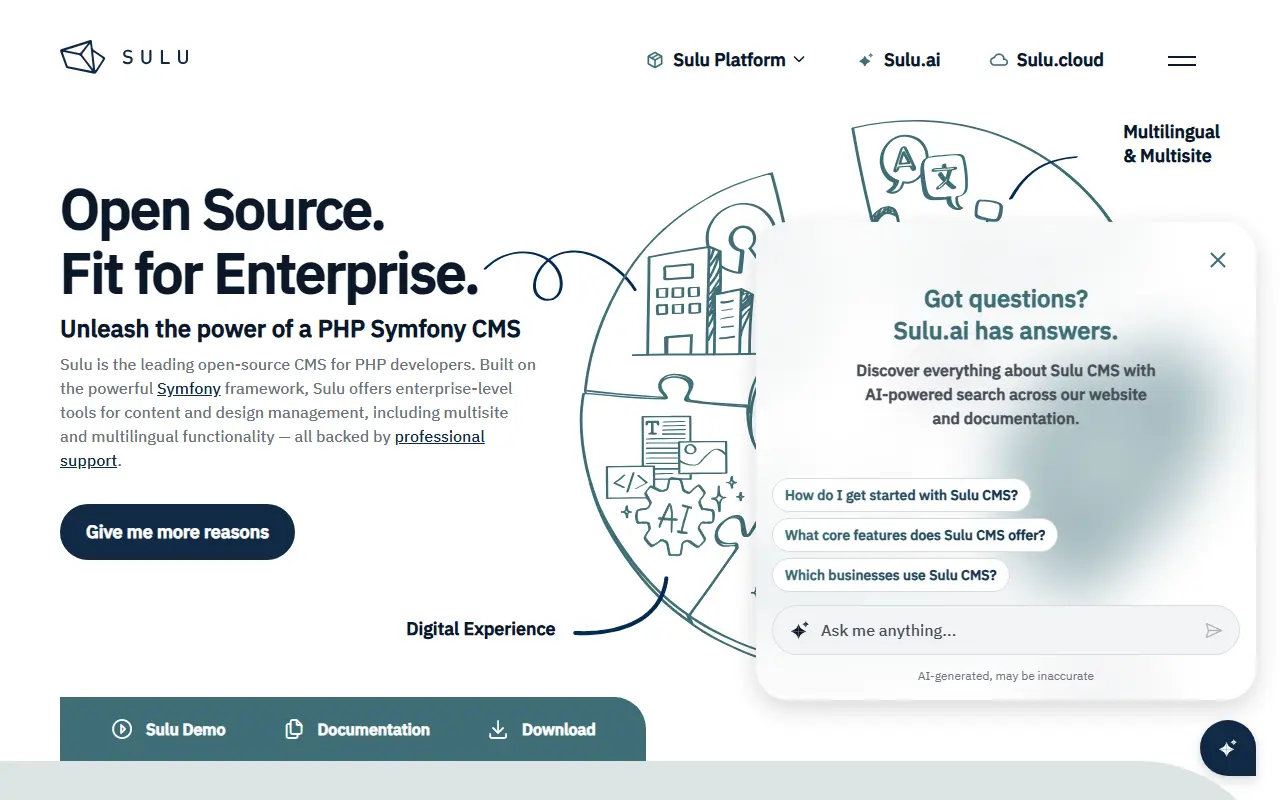
sulu.ioSulu homepage screenshot

Sulu is an open-source PHP content management system built on the Symfony framework. It is meant for robust multilingual and multi-portal websites, and it provides an administration interface for managing the whole content lifecycle that can be extended by developers.

This repository holds the core framework that implements the CMS functionality and is a dependency of every Sulu project. To start a new site, developers use the sulu/skeleton project template, and the Sulu organization on GitHub lists official bundles for extending existing projects. Documentation covers installation and usage, and community help is offered through Slack and GitHub Discussions.

The project is community-driven and backed by partner companies, with a transparent development process. It is written in PHP, licensed under MIT and runs on your own hosting. It suits PHP and Symfony agencies and teams building custom content-heavy sites that need flexibility beyond what an off-the-shelf blogging CMS gives.

Key features

  • Built on the Symfony framework
  • Multilingual and multi-portal websites
  • Extensible administration interface
  • Project skeleton template for quick start
  • Official bundles for added features
  • Community support through Slack

Pricing: Free and open source under the MIT licence.

Read more about SuluWebsite GitHub

TYPO3

TYPO3 is a mature open-source PHP content management framework with an extension system, used for enterprise websites and published under the GPL.

GitHub stars
1.2k
Last commit
yesterday
Licence
GPL-2.0
Self-hosted
Yes
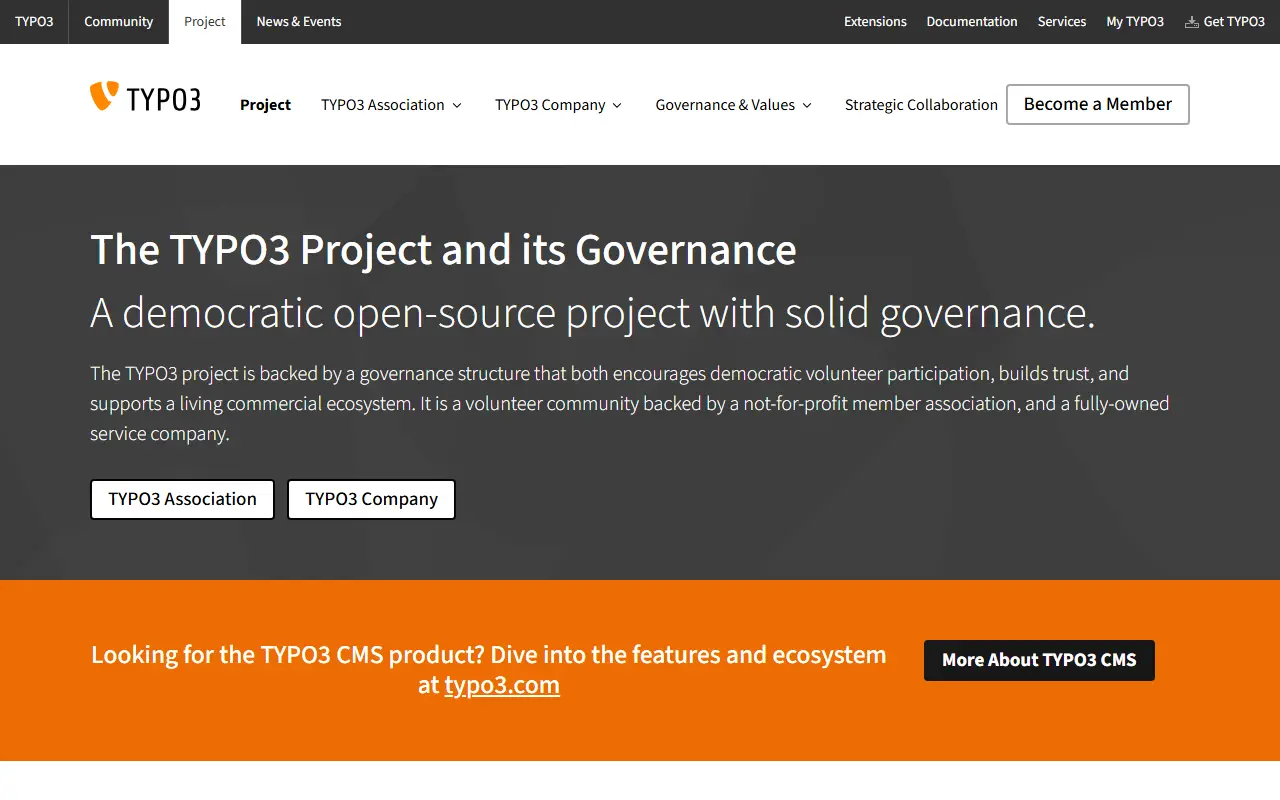
typo3.orgTYPO3 homepage screenshot

TYPO3 is an open-source, PHP-based content management system released under the GNU GPL. It was created by Kasper Skårhøj and is developed today by a community of contributors and the TYPO3 Core Development Team. This repository is a synchronized mirror of the core packages, which are reviewed on the project's own code review system.

It describes itself as a content management framework, meaning the streamlined core is separated from optional extensions, and an open API lets developers extend both the website frontend and the administration backend. Many ready-made extensions are available, or you can write your own. TYPO3 runs on web servers such as Apache, nginx or IIS, on Linux, Windows, FreeBSD and macOS, and uses a database such as MySQL.

The backend is accessed through a supported browser, and the installation guide explains how to set up a basic installation on your server. TYPO3 is self-hosted, with documentation and community resources linked from the README, and it is aimed at agencies and organizations building large, multilingual and customized sites. The repository lists the GPL-2.0 licence.

Key features

  • Content management framework with extensions
  • Open API for frontend and backend extension
  • Runs on Apache, nginx, or IIS
  • Database-backed with MySQL support
  • Browser-based administration backend
  • Large extension ecosystem

Pricing: Free and open source under the GNU GPL.

Read more about TYPO3Website GitHub

DNN

DNN, formerly DotNetNuke, is an open-source web content management platform for the Microsoft .NET ecosystem, with multi-site support and an extension store.

GitHub stars
1.1k
Last commit
yesterday
Latest release
v10.3.3
Licence
MIT
Self-hosted
Yes
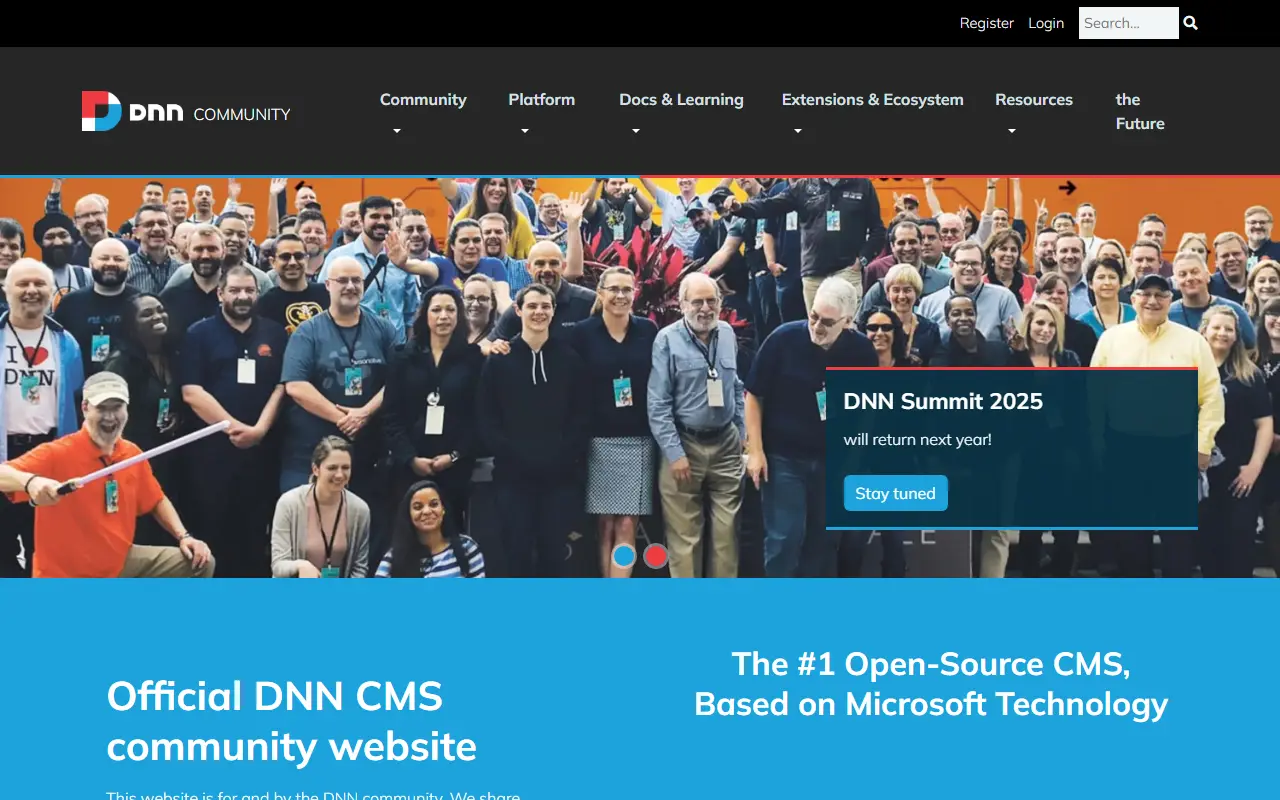
dnncommunity.orgDNN homepage screenshot

DNN, formerly known as DotNetNuke, is an open-source web content management platform built for the Microsoft ecosystem. It is used to build commercial websites, social intranets, community portals and partner extranets, and handles dynamic content of many types with sites that are straightforward to deploy and update.

Built-in features include a single installation with multi-site capability, file and folder management, localization with six languages out of the box, customizable site templates and themes, Azure compatibility, many REST APIs for site and content management, a drag-and-drop interface with an in-place rich-text editor, and administration tools such as security roles, protected content, SEO, a scheduler, SSL support and taxonomy. It is extensible through custom modules, with third-party extensions and skins available in the DNN Store.

DNN is written in C# and licensed under MIT, and runs on your own Windows and .NET hosting. The project has a community website, forums, documentation and a contribution process with a versioning policy and release schedule. It suits organizations and developers who already work in the Microsoft stack and want a mature open-source CMS.

Key features

  • Multi-site support from one installation
  • Localization with six built-in languages
  • Themes and site templates
  • REST APIs for site and content management
  • Drag-and-drop UI with in-place editing
  • Extensions and skins from the DNN Store

Pricing: Free and open source under the MIT licence; extensions in the DNN Store may be free or commercial.

Read more about DNNWebsite GitHub

Concrete CMS

Concrete CMS is an open-source PHP content management system, formerly concrete5, developed by a worldwide community and installed with Composer.

GitHub stars
852
Last commit
yesterday
Latest release
9.5.4
Licence
MIT
Self-hosted
Yes
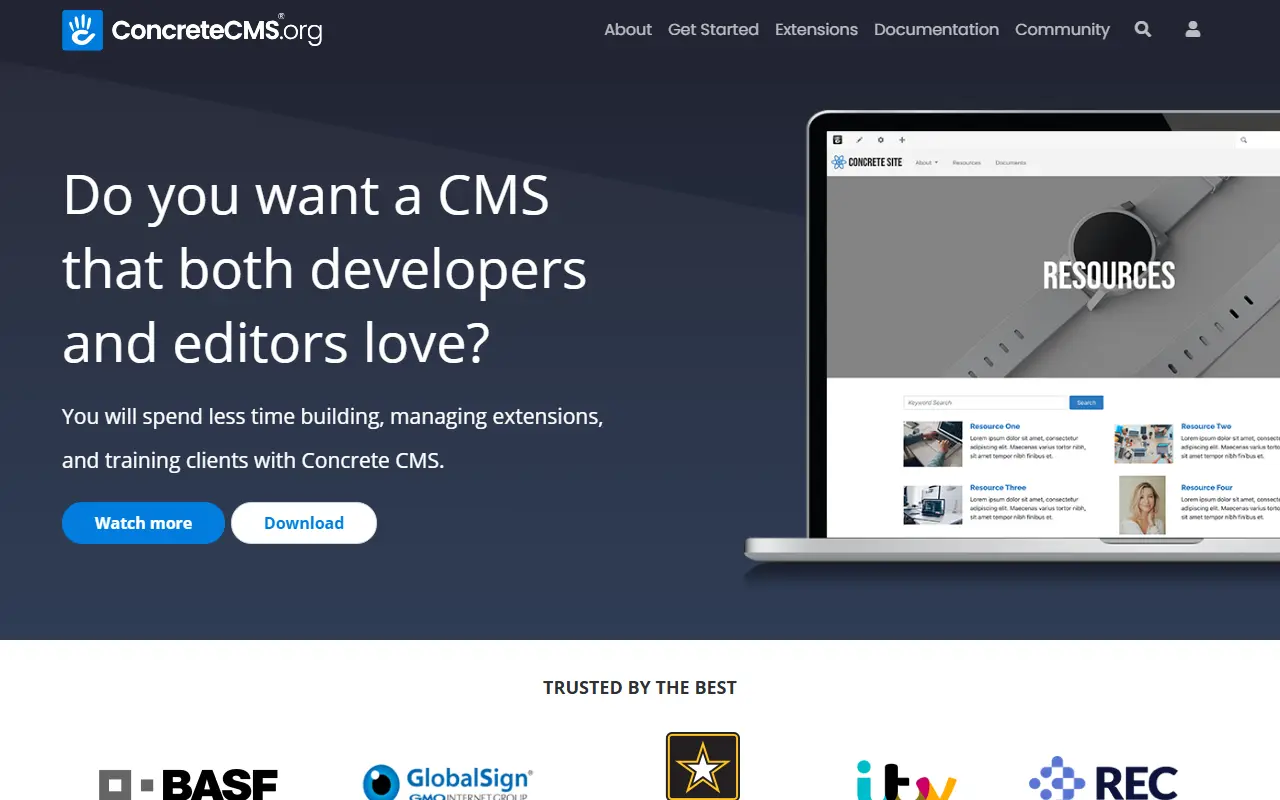
concretecms.orgConcrete CMS homepage screenshot

Concrete CMS is an open-source content management system written in PHP and built by contributors from around the world. It was previously known as concrete5, which explains the older names that still appear in repositories and projects.

This repository covers Concrete CMS 9.0 and later; concrete5 8.x and 5.7.x live in separate branches and older 5.6 releases in a legacy repository. To work from source you clone the repository and install third-party dependencies with Composer. Documentation is maintained on a dedicated site that community members can edit after logging in with their community account.

The software is licensed under MIT and runs on your own PHP hosting, with forums and a contributor guide for those who want to get involved. Topics also describe it as a framework that developers can build on.

Key features

  • PHP-based content management
  • Composer-based installation
  • Community-maintained documentation site
  • Separate branches for earlier versions
  • Framework for custom development

Pricing: Free and open source under the MIT license.
Sitefinity alternatives: questions

What is the best open-source alternative to Sitefinity?
Oqtane is the top-ranked open-source alternative to Sitefinity on Enlisted: Open-source CMS and application framework for modern .NET, with Blazor hosting models, modular design, and multi-tenant SaaS support. Other strong options are Sulu, TYPO3, DNN and Concrete CMS.
Are these Sitefinity alternatives free?
All 5 are open source, so the code is free to use under its licence, and all of them can be self-hosted on your own server or computer.
How is this list of Sitefinity alternatives ranked?
By a score built from GitHub stars, star growth over the last 30 days and how recently the code changed. 5 of these projects shipped code in the last 30 days. Data is refreshed daily, and nobody can pay to move up.

People also look for alternatives to…

View all