7,363 open-source and SaaS tools, with GitHub stats refreshed every day.

10 alternatives ranked by real activity

Open-source Shift4Shop alternatives

A curated, ranked list of the 10 best open-source alternatives to Shift4Shop.

The best open-source alternative to Shift4Shop is Bagisto. If that doesn't suit you, other good options are Magento Open Source, EverShop, WooCommerce and nopCommerce.

Shift4Shop alternatives are mainly e-commerce tools. 10 of them shipped code in the last 30 days, 10 can be self-hosted, and 2 use a permissive licence.

Last updated October 2, 2026 · ranked by GitHub stars, growth and recent commits

Bagisto

An open-source Laravel and Vue.js platform for building online stores, B2B commerce sites and multi-vendor marketplaces, with headless and multi-tenant options.

GitHub stars
28k
Last commit
yesterday
Latest release
v2.5.0-beta6
Licence
MIT
Self-hosted
Yes
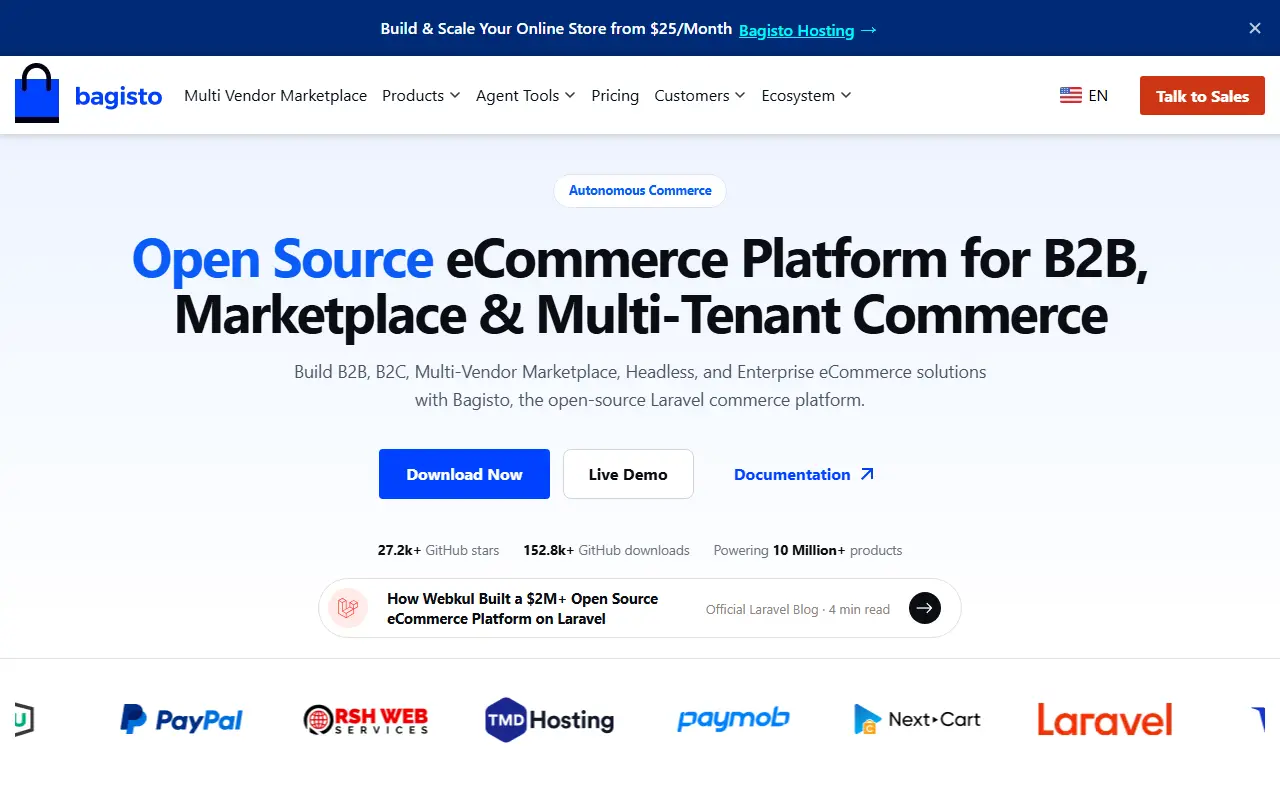
bagisto.comBagisto homepage screenshot

Bagisto is an open-source eCommerce and multi-vendor marketplace platform built on Laravel and Vue.js. It provides a flexible, customizable foundation for launching online stores, B2B commerce portals and marketplaces, and aims to cut the time and cost of development while leaving room to customize and scale.

The project's description claims support for catalogs of ten million or more SKUs, and its topics mention headless commerce, multi-tenancy and use as a Laravel package or framework. It is written in PHP and suits agencies and in-house teams that already know Laravel. The repository links to documentation, an installation guide, a Docker installation path and community forums, and the 2.x line was in beta at the time of writing.

Bagisto is MIT licensed, so you can host it on your own servers and modify it freely. It is a fit for merchants who prefer an open codebase over a hosted store builder, and for developers building custom commerce experiences who want Laravel conventions rather than a proprietary platform.

Key features

  • Single-vendor and multi-vendor store support
  • B2B commerce capabilities
  • Built on Laravel and Vue.js
  • Headless commerce and multi-tenancy options
  • Docker installation guide
  • Customizable and extensible codebase

Pricing: Free and open source under the MIT license.

Magento Open Source

Magento Open Source is a PHP ecommerce platform for building online stores, with Adobe Commerce as its full-featured commercial counterpart.

GitHub stars
12k
Last commit
yesterday
Latest release
2.4.9
Licence
OSL-3.0
Self-hosted
Yes

Magento Open Source is a PHP-based ecommerce platform used to build an online store from the ground up. The repository is magento/magento2, and the README presents it as software with the basic ecommerce capabilities, while directing merchants who need a more complete solution to Adobe Commerce.

Adobe Commerce adds an optimized cloud architecture with hosting, along with AI-powered merchandising and analytics, so the open-source edition is the self-managed starting point. The project has a large contributor community, with community maintainers who can review and merge pull requests, and the documentation covers system requirements, prerequisites and several installation options.

Magento is licensed under OSL-3.0, and contributors must sign the Adobe Contributor License Agreement. It runs on your own servers and fits developers, agencies and merchants who want control over the code of their store and are comfortable with the PHP ecosystem. Because it is a full platform, hosting, security updates and extensions are the store owner's responsibility.

Key features

  • Core ecommerce store functionality
  • PHP codebase for custom development
  • Quick-start and multiple installation options
  • Community maintainers reviewing contributions
  • Upgrade path to Adobe Commerce
  • Developer and end-user documentation

Pricing: Open source under OSL-3.0; the commercial Adobe Commerce edition adds cloud hosting and extra features.

EverShop

TypeScript-focused ecommerce platform using GraphQL and React, designed for developers who want a modular, fully customizable storefront.

GitHub stars
10k
Last commit
yesterday
Latest release
v2.2.1
Licence
GPL-3.0
Self-hosted
Yes
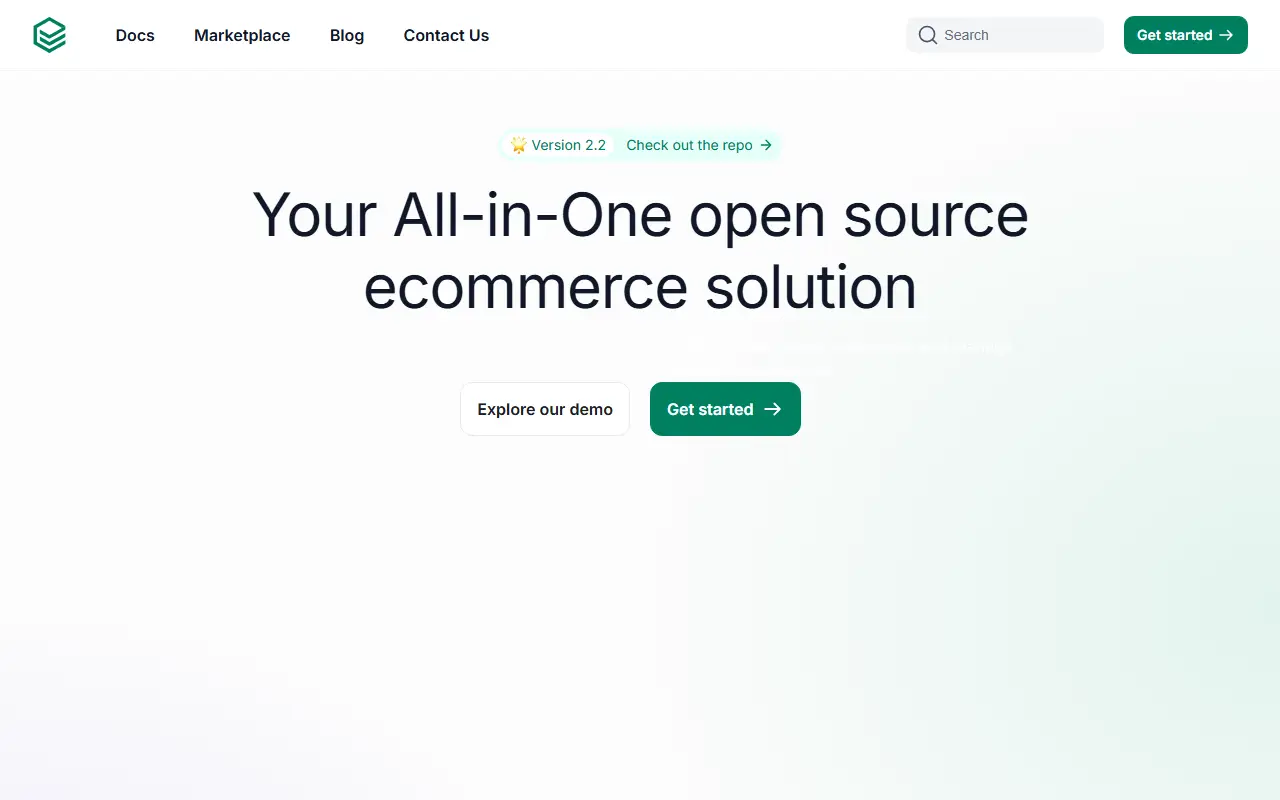
evershop.ioEverShop homepage screenshot

EverShop is an open-source ecommerce platform built with TypeScript, GraphQL and React. It is designed for developers and provides essential commerce features in a modular architecture that can be customized extensively, so teams can build tailored shopping experiences without starting from scratch.

The platform can be started quickly from a Docker image, which saves installing dependencies by hand, and a full installation guide is available. Its documentation covers extension development and theme development, which is how most customization is done, and a demo store lets you see the storefront and admin before installing anything.

EverShop is licensed under GPL-3.0 and runs on your own infrastructure. The project is community driven, with a Discord channel for questions and an issue tracker for bug reports and feature requests. It suits developers and agencies who prefer a JavaScript and TypeScript stack for online stores.

Key features

  • TypeScript-first ecommerce platform
  • GraphQL API with a React storefront
  • Modular, customizable architecture
  • Extension and theme development
  • Docker image for quick start
  • Public demo store to try

Pricing: The self-hosted edition is free. Hosted Personal ($10) and Professional ($20) plans are listed per month but marked as coming soon.

WooCommerce

A customizable open-source ecommerce platform built as a plugin for WordPress; this repository is the monorepo for the core plugin and its extensions.

GitHub stars
11k
Last commit
today
Latest release
11.1.2
Self-hosted
Yes
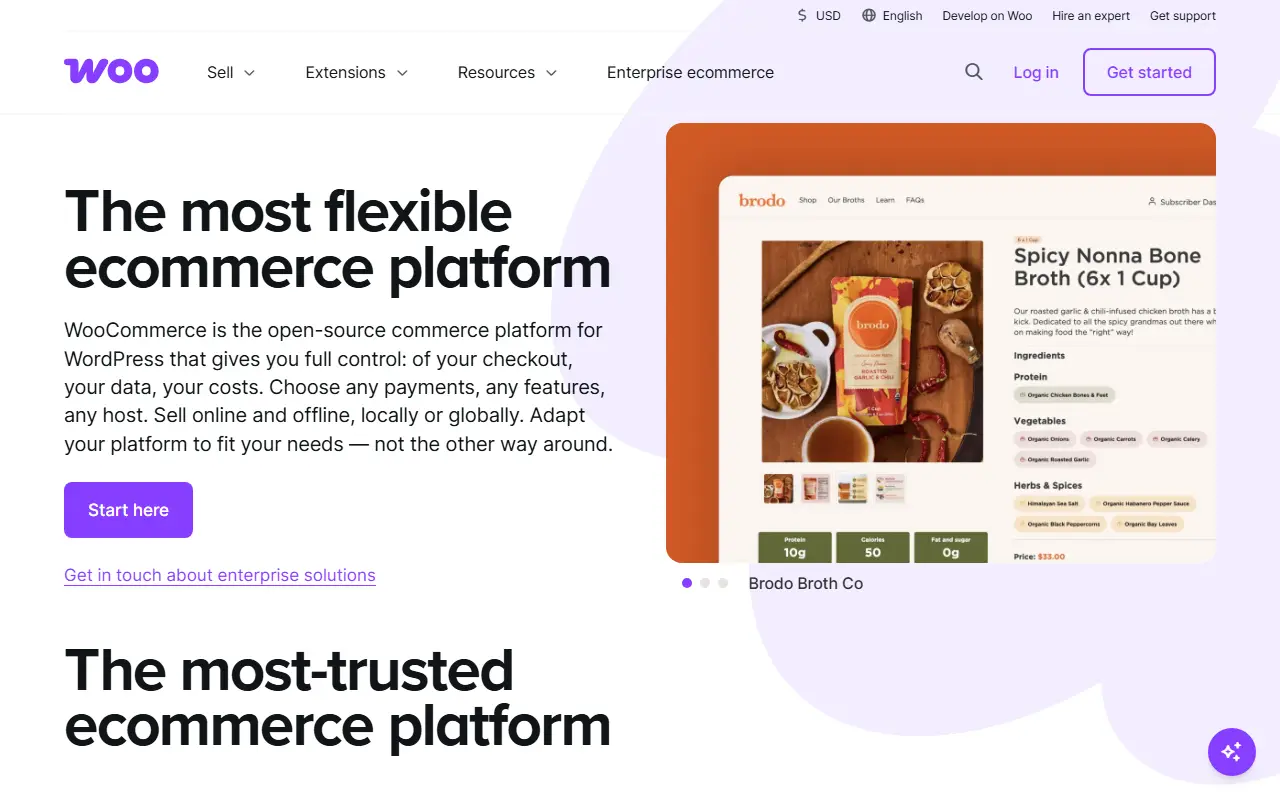
woocommerce.comWooCommerce homepage screenshot

WooCommerce is a customizable ecommerce platform that runs on WordPress, written mainly in PHP. The GitHub repository is a monorepo with the plugins, packages and tooling for developing the core WooCommerce plugin together with its extensions, so it is where the project's code, issues and development discussions live.

Developers working on it need Node.js, PNPM, PHP 7.4 or higher and Composer, and a POSIX-compliant operating system is assumed, with WSL recommended on Windows. The project maintains a development blog and a developer account on X for updates, and the topics reference React, since parts of its admin interface use it.

Because it is built on WordPress, merchants typically run WooCommerce on their own hosting, adding products, payments and shipping through extensions. The repository lists the license as Other, so check the licence terms in the repository. It suits small and mid-sized shops, agencies and developers who already work in the WordPress ecosystem.

Key features

  • Ecommerce functionality on WordPress
  • Extensions add features to the core
  • Monorepo of plugins and packages
  • PHP codebase with React-based admin parts
  • Developer blog and documentation
  • Large ecosystem of third-party extensions

Pricing: The core platform is free with no subscription or revenue share. You pay separately for hosting (about $25 to $350 a month) and optional extensions ($29 to $299 a year each).

nopCommerce

A free, open-source ASP.NET Core ecommerce platform and shopping cart that runs on Windows, Linux and macOS with SQL Server, PostgreSQL or MySQL.

GitHub stars
10k
Last commit
today
Latest release
release-4.90.8
Self-hosted
Yes

nopCommerce is a free, open-source ecommerce solution built on ASP.NET Core. It has been developed and supported by a professional team since 2008 and provides the core features needed to run an online store of nearly any size, with a source code base that can be customized freely.

It runs on .NET with a Microsoft SQL Server backend, and also supports PostgreSQL and MySQL. It is cross-platform on Windows, Linux or Mac, supports Docker out of the box, works with web farms and Azure, uses async methods throughout and offers multi-factor authentication. Its pluggable architecture makes it straightforward to add custom functionality, and the project offers documentation and an online course for developers.

nopCommerce is written in C#, and the repository lists its license as Other, so check the project's licence terms before commercial use. You host it yourself, which suits agencies, .NET shops and merchants that prefer a Microsoft technology stack for their store.

Key features

  • ASP.NET Core ecommerce platform
  • SQL Server, PostgreSQL and MySQL support
  • Cross-platform with Docker support
  • Web farm and Azure compatibility
  • Multi-factor authentication built in
  • Pluggable architecture for extensions
  • Developer documentation and online course

Pricing: Described as a free and open-source shopping cart; the repository lists the license as Other.

PrestaShop

A PHP open-source e-commerce platform for building online stores, with payment integrations, translations, responsive front and back offices and a customizable architecture.

GitHub stars
9.2k
Last commit
yesterday
Latest release
9.2.0
Self-hosted
Yes
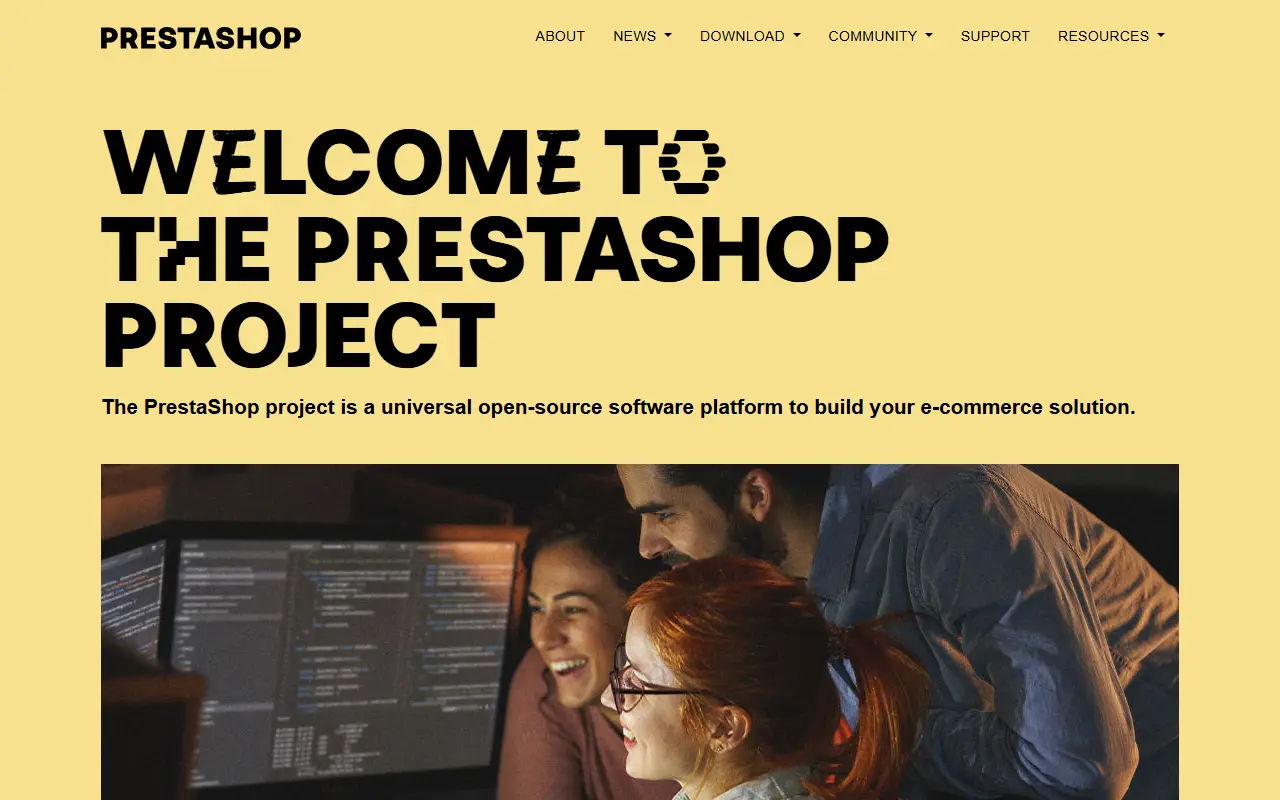
prestashop-project.orgPrestaShop homepage screenshot

PrestaShop is an e-commerce web application written in PHP and released as open source, built to give merchants and shoppers a solid shopping cart experience. It is described as highly customizable, supports the major payment services, is translated into many languages, is localized for many countries and has a responsive design for both the storefront and the back office.

The GitHub repository contains the source code for development and preview, while stable downloads come from the releases page. The stable line is PrestaShop 9.0, first released in June 2025, and the develop branch holds work in progress toward version 9.1. Installing it requires a web server with PHP 8.1 or newer and MySQL 5.6 or later, or a compatible fork such as MariaDB, plus a database tool such as phpMyAdmin. Apache or Nginx are recommended.

PrestaShop is a self-hosted platform, so merchants run it on their own hosting, and the repository lists the licence as Other. Its topics mention CMS and PHP framework use. It suits small and mid-sized merchants and agencies building custom shops with extensions and themes.

Key features

  • Full e-commerce storefront and back office
  • Support for major payment services
  • Translations and country localization
  • Responsive front and back office
  • Highly customizable modules and themes
  • PHP 8.1+ with MySQL or MariaDB

Pricing: Free open-source software; the repository lists the license as Other.

OpenCart

OpenCart is a free, open-source PHP e-commerce platform that online merchants install on their own hosting to run a web store.

GitHub stars
8.2k
Last commit
today
Latest release
4.1.0.4
Self-hosted
Yes
opencart.comOpenCart homepage screenshot

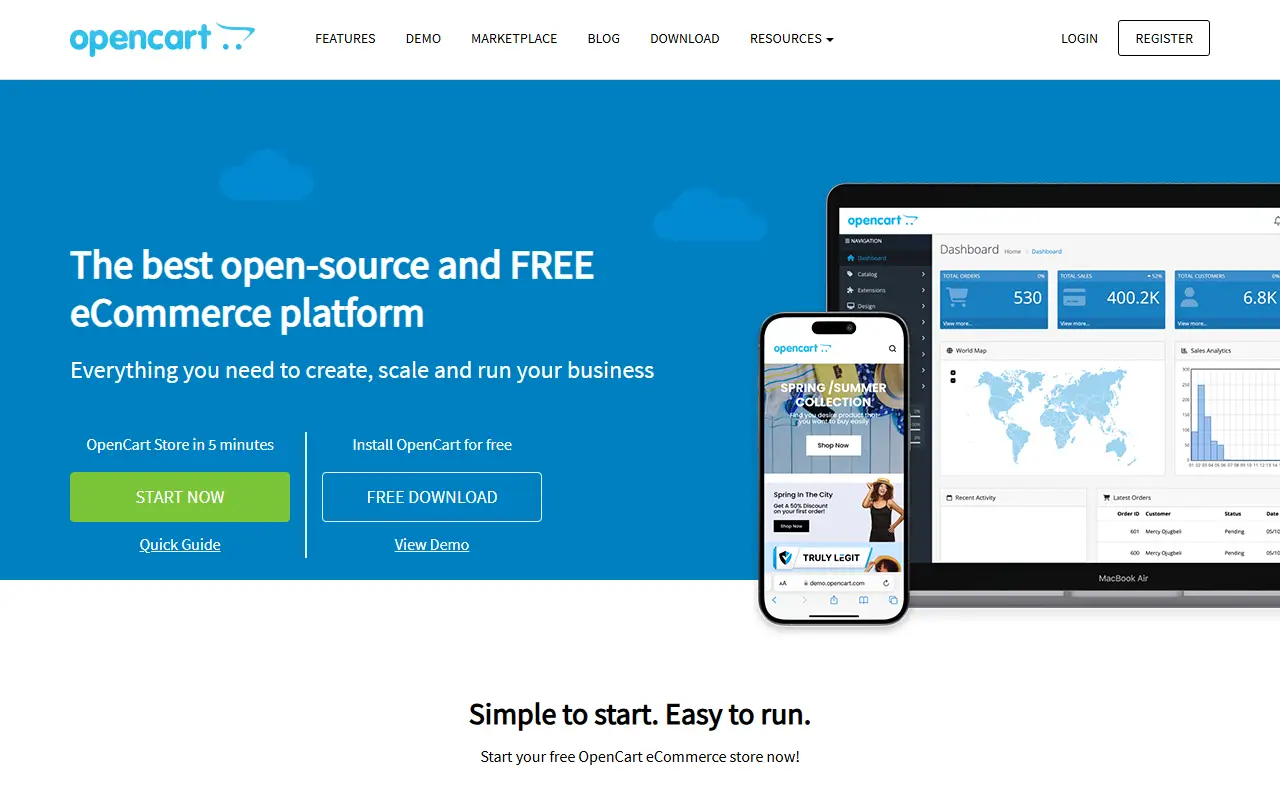
OpenCart is a free and open-source e-commerce platform for online merchants. It is a PHP-based shopping cart system that you install on your own web hosting and use as the foundation of an online store, with JavaScript and HTML on the storefront side.

The repository includes installation and upgrade instructions that ship with the download, and the project directs users to a community forum, a GitHub bug tracker and a changelog for the master branch. Bug reports must relate to the core code, since problems with third-party modules or server configuration are referred back to the extension developer, the forum or commercial partners. Security issues are handled through private messages to moderators instead of public posts.

Contributions follow a documented guide covering environment setup, coding standards and pull request expectations. The repository lists a licence of other, so check the project for its exact terms before redistributing. A hosted version of the store software is not described in the repository.

Key features

  • PHP-based shopping cart system
  • Self-installed on your own hosting
  • Documented upgrade path between versions
  • Community forum and bug tracker
  • Extension ecosystem from third-party developers

Pricing: Free and open source; installed on your own hosting.

Shopware

Open-source, API-first e-commerce platform built on Symfony and Vue.js, used by merchants and agencies to run online shops and headless storefronts.

GitHub stars
3.4k
Last commit
today
Latest release
v6.7.15.0
Licence
MIT
Self-hosted
Yes
Hosted version
Available
shopware.comShopware homepage screenshot

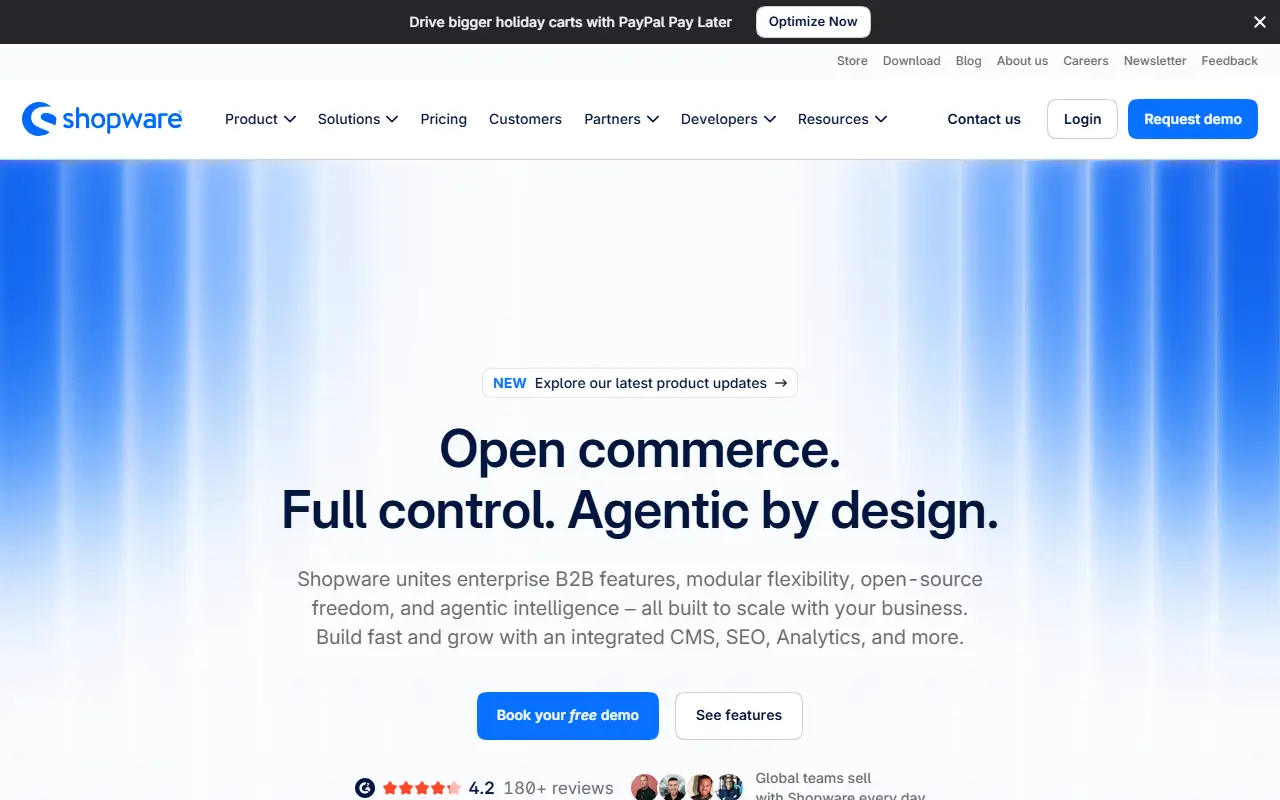
Shopware 6 is an open-source e-commerce platform written in PHP on top of the Symfony framework, with a Vue.js administration interface. It gives merchants, agencies, and developers a foundation for running online shops, from a conventional storefront to a headless setup in which a separate front end talks to the platform through its API.

The platform is API-first, so catalog, cart, and checkout functions can be consumed by custom storefronts, apps, or other business systems. Built-in experience-management tools let content teams assemble shopping pages, and a large extension store of community and commercial add-ons extends shop behavior without changing the core. Developers can build their own plugins and customize themes.

The code is published under the MIT license and can be self-hosted on a standard PHP and database stack, which suits agencies delivering custom shops and merchants who want control over their commerce stack. It competes in the same space as Magento and PrestaShop, both of which appear among the project's topics.

Key features

  • API-first headless commerce architecture
  • Storefront and administration built on Symfony and Vue.js
  • Experience manager for building shopping pages
  • Extension store with community and commercial add-ons
  • Plugin system for custom functionality
  • Product catalog, cart, and checkout management

Pricing: The Community Edition is free. Rise starts at €600 and Evolve at €2,400 per month excluding VAT; Beyond is custom. An optional Intelligence+ add-on costs €29 per month for Community or €19 for paid editions.

EC-CUBE

EC-CUBE is an open-source e-commerce platform from Japan, built with PHP, Symfony and Doctrine for creating customizable online stores.

GitHub stars
789
Last commit
today
Latest release
4.3.1-p1
Self-hosted
Yes
ec-cube.netEC-CUBE homepage screenshot

EC-CUBE is an open-source e-commerce platform developed in Japan and written in PHP on the Symfony framework with Doctrine ORM and Twig templates. The repository README, which is in Japanese, is aimed mainly at developers, while ready-to-install packages are distributed from the official EC-CUBE site.

The current development line is 4.4, with older 2.x and 3.x versions maintained in separate repositories. The documented environment is Apache 2.4 with mod_rewrite and mod_ssl, PHP 8.2 through 8.5, and PostgreSQL 13 through 18 or MySQL 8.4 LTS. Front-end styles are written in Sass and JavaScript is bundled with esbuild, and a Docker Compose setup is available for development.

Developer documentation lives at doc4.ec-cube.net and accepts pull requests, community discussion happens in a developer forum and Slack, and contributions follow a published guide with CI checks for code style, static analysis and tests. The license is listed as Other, so review the terms before commercial use.

Key features

  • Symfony, Doctrine and Twig foundation
  • Packages distributed from the official site
  • Sass and esbuild front-end build
  • Docker Compose development environment
  • Developer documentation for 4.x
  • Support for PostgreSQL and MySQL

InnoShop

InnoShop is an open-source Laravel e-commerce system with multi-language and multi-currency support, plugin and theme extensibility and built-in AI and MCP features.

GitHub stars
661
Last commit
4 days ago
Latest release
v0.9.2
Self-hosted
Yes
innoshop.comInnoShop homepage screenshot

InnoShop is an open-source e-commerce system built on Laravel 13. It supports multiple languages and currencies out of the box, integrates with several AI models, and includes native Model Context Protocol (MCP) support for intelligent automation. The project's topics frame it as an alternative to platforms such as Shopify and WooCommerce.

Its modular architecture and plugin and theme system are designed to adapt to different business needs. Requirements are PHP 8.3 with common extensions, Composer 2, Node.js 18 or newer for building assets, and MySQL 5.7 or 8.0 or newer, or SQLite for local try-outs. You can install it with Composer's create-project command, from a release ZIP that needs only PHP on the server, or from a git clone for contributors, then follow the browser installation wizard to configure the database and admin account.

InnoShop is written in PHP, is self-hosted, and lists its license as Other, so review the repository terms. The README describes it as the product of fifteen years of ongoing development in the industry.

Key features

  • Laravel 13 e-commerce platform
  • Multi-language and multi-currency
  • Native MCP and AI model integration
  • Plugin and theme system
  • Browser installation wizard
  • Composer or ZIP installation
Read more about InnoShopWebsite GitHub

Shift4Shop alternatives: questions

What is the best open-source alternative to Shift4Shop?
Bagisto is the top-ranked open-source alternative to Shift4Shop on Enlisted: An open-source Laravel and Vue.js platform for building online stores, B2B commerce sites and multi-vendor marketplaces, with headless and multi-tenant options. Other strong options are Magento Open Source, EverShop, WooCommerce and nopCommerce.
Are these Shift4Shop alternatives free?
All 10 are open source, so the code is free to use under its licence, and all of them can be self-hosted on your own server or computer. 1 also offers a paid or managed cloud version if you'd rather not host it yourself.
How is this list of Shift4Shop alternatives ranked?
By a score built from GitHub stars, star growth over the last 30 days and how recently the code changed. 10 of these projects shipped code in the last 30 days. Data is refreshed daily, and nobody can pay to move up.

People also look for alternatives to…

View all